
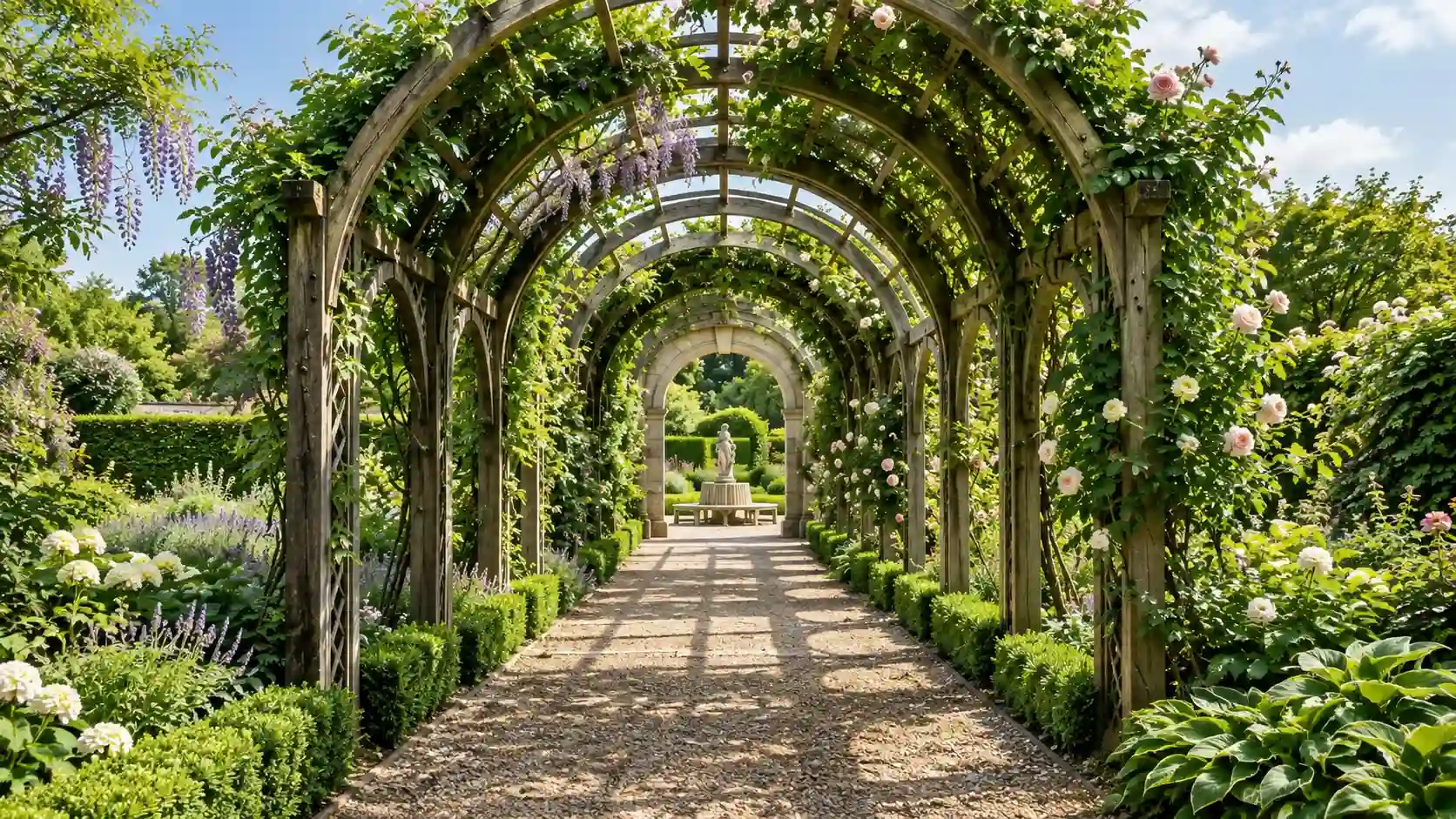
A plain path or empty garden corner can make your yard feel unfinished. The right arbor gives that space a clear purpose. It can mark an entrance, frame a view, support climbing plants, or create a quiet place to sit.
But choosing an arbor takes some planning. A structure that looks perfect in a photo may feel too small in your yard. Heavy vines can damage a weak frame. Poor placement can also block a mower, gate, or walkway.
These garden arbor ideas will help you choose a design that fits your space. You will find options for paths, gates, seating areas, and small yards. You will also learn how different materials and plants affect upkeep.
Start by deciding what you want the arbor to do. Then use these backyard arbor ideas to find a style that works with your home and garden…
How to Choose a Garden Arbor That Fits Your Yard
Before buying an arbor, decide on its main job. Do you want to mark an entrance? Support plants? Add privacy? Create shade? Your answer will guide the size, material, and placement.
Measure the full area, including the path below the arbor. Leave enough room for people, garden tools, and equipment to pass through. A clear opening of about 36 inches may work for a footpath, but wider access is better for wheelbarrows and mowers.
Look at the size of your house, fence, and planting beds. A thin metal arch may disappear beside a large home. A wide wooden structure may overwhelm a small side yard.
You should also check:
- Daily sun exposure
- Soil drainage
- Strong wind direction
- Mature size of nearby plants
- Weight of the planned vines
- Access for pruning and repairs
Which Arbor Material Should You Choose?
| Material | Main benefit | Upkeep | Watch for |
| Wood | Warm and natural look | Sealing, staining, or painting | Rot and loose joints |
| Metal | Slim frame with good strength | Rust checks and paint repairs | Hot surfaces and weak coatings |
| Vinyl | Easy to clean | Washing and joint checks | Limited colors and styles |
| Natural branches | Rustic and low-cost | Frequent joint inspections | Rot and uneven strength |
Before You Buy
- Measure the width and height of the site.
- Check how the arbor will be anchored.
- Confirm that it can hold your chosen plants.
- Make sure gates can open fully.
- Plan how you will reach the top for pruning.
Garden Arbor Ideas for Entrances and Paths
An arbor can show people where to enter or which path to follow. It also creates a clear change between the lawn and garden.
1. Match a Gate Arbor to Your Fence
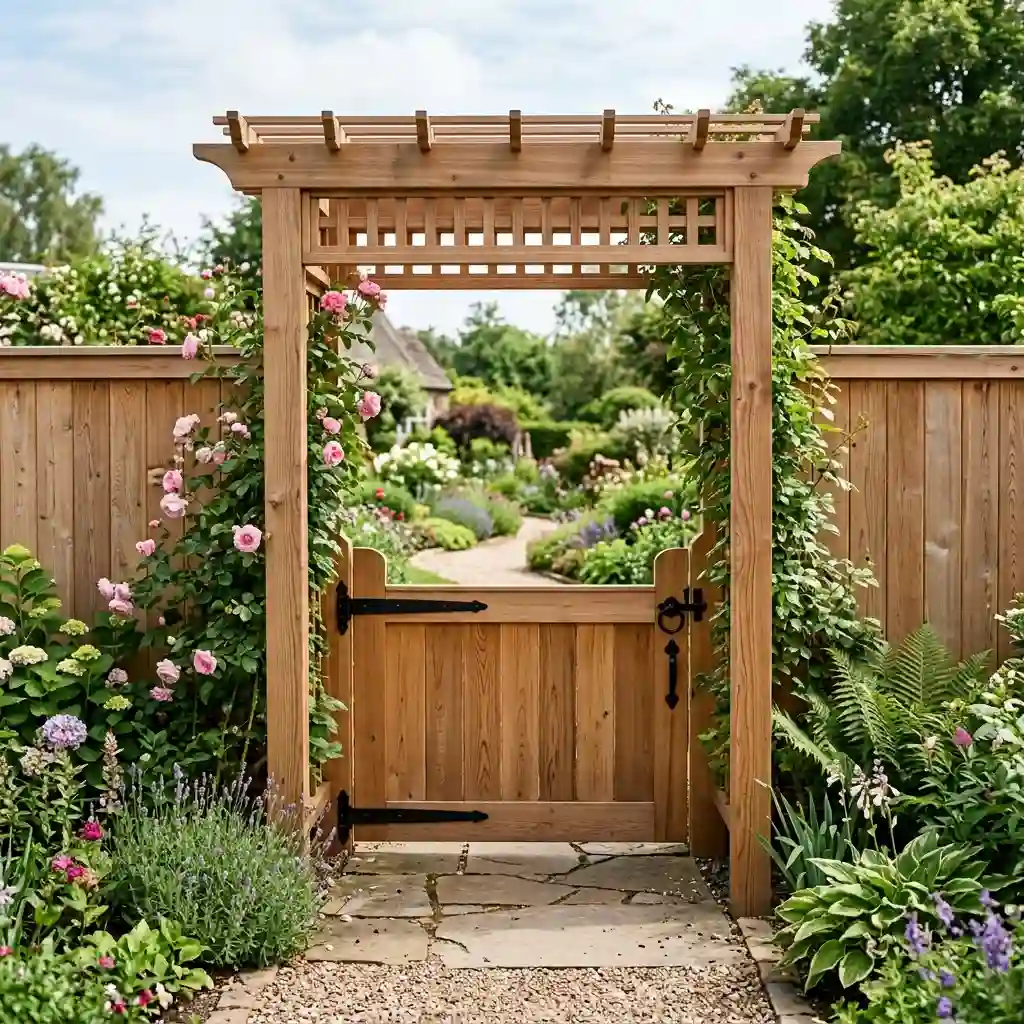
Use the same color, material, or top detail on both features. A cedar arbor works well with a cedar fence. A white arbor can connect with white pickets or painted trim.
Line up the arbor opening with the gate and path. Matching hinges, handles, and latches will help the whole entrance feel planned.
Best for: Front gardens and fenced backyards
Design tip: Repeat one fence detail on the arbor.
Watch for: A gate that hits the posts or climbing plants.
2. Frame the Start of a Garden Path
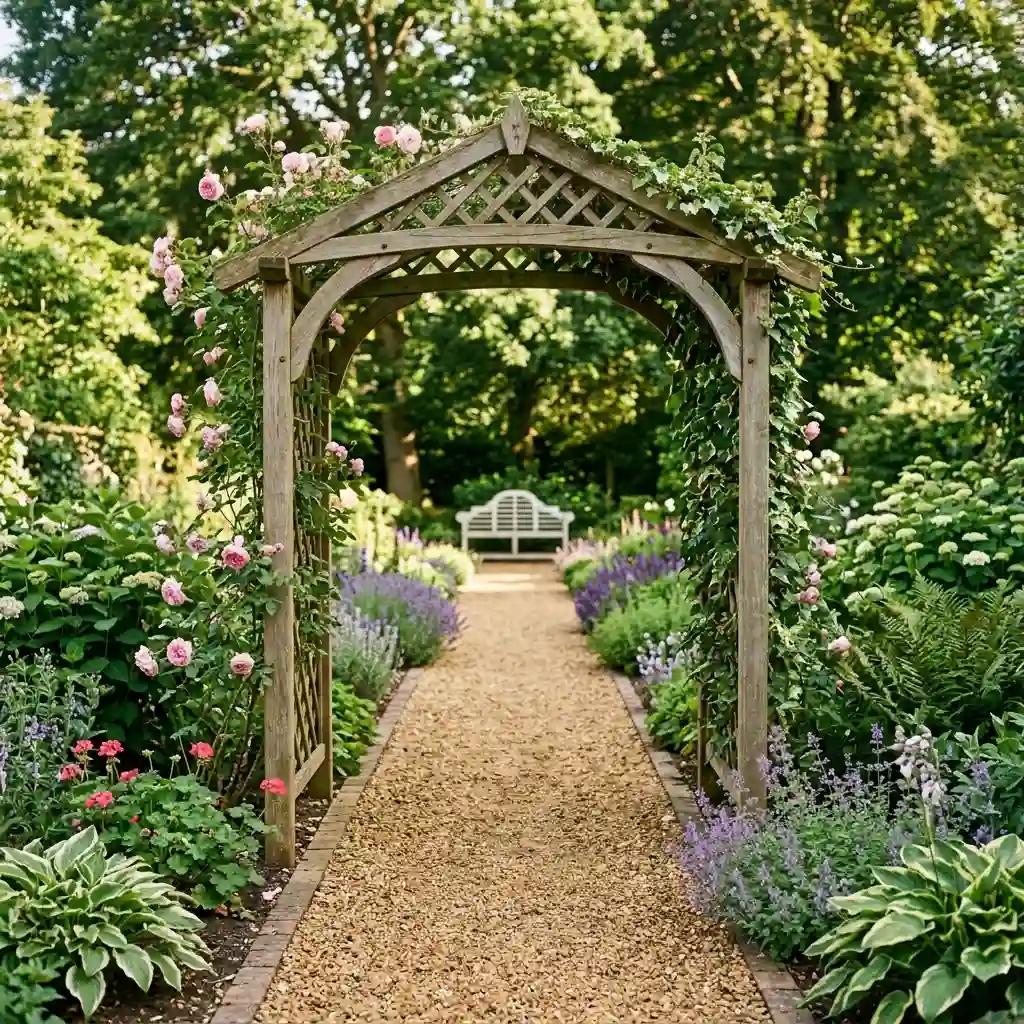
Place an arbor where gravel, brick, or stepping stones begin. This tells visitors that they are entering a different part of the yard.
Use the opening to frame something attractive in the distance. It could be a bench, tree, fountain, or large planter. This simple trick can make a small garden seem deeper.
Best for: Informal paths and garden entrances
Design tip: Stand at the entrance and check the framed view.
Watch for: Plants that grow into the walking space.
3. Build a Long Arbor Tunnel
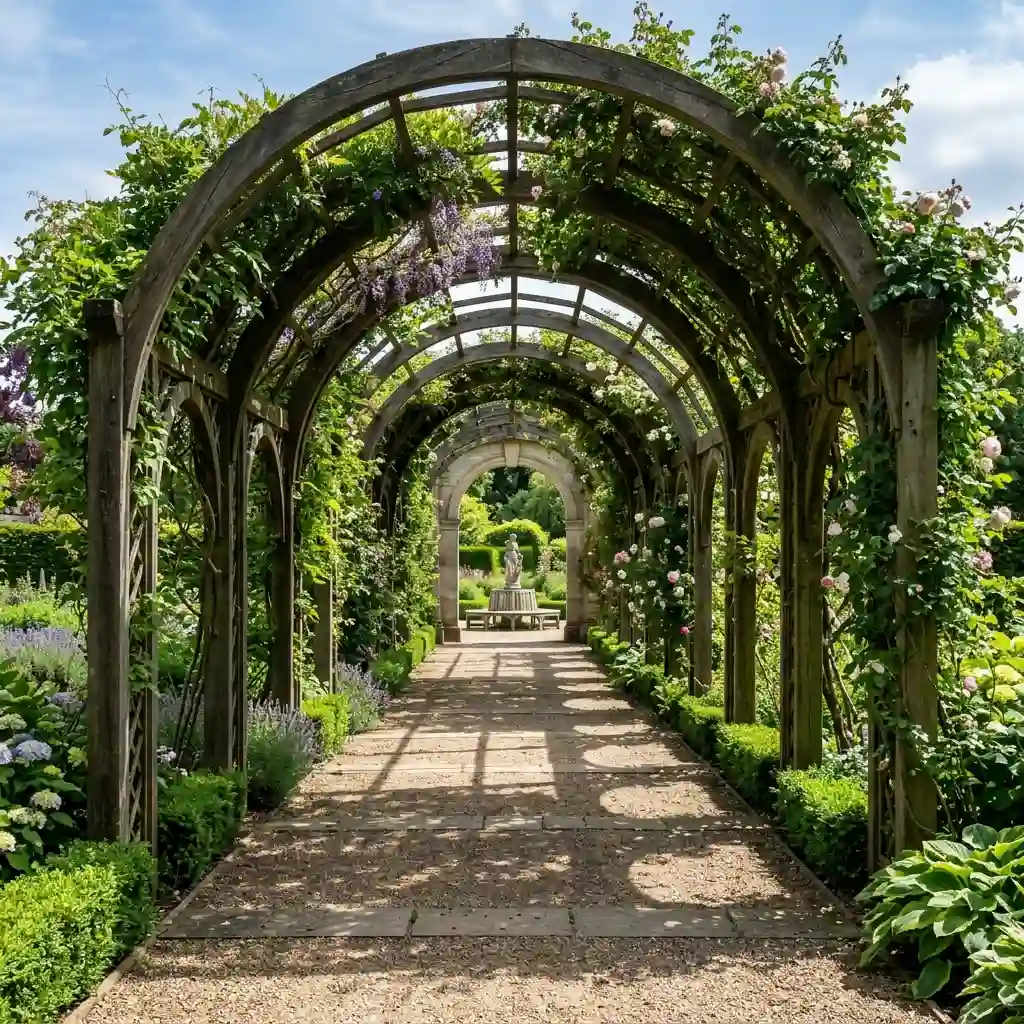
A row of connected arches can turn a basic walkway into a shaded passage. Train vines along the sides and over the top.
A long tunnel needs more room and support than one arch. Leave a few open sections so the path still receives light and air. This will also make the tunnel feel less closed in.
Best for: Medium and large gardens
Design tip: Place a focal point at the far end.
Watch for: Heavy vines pulling weak sections out of line.
4. Add an Arbor to a Narrow Side Yard
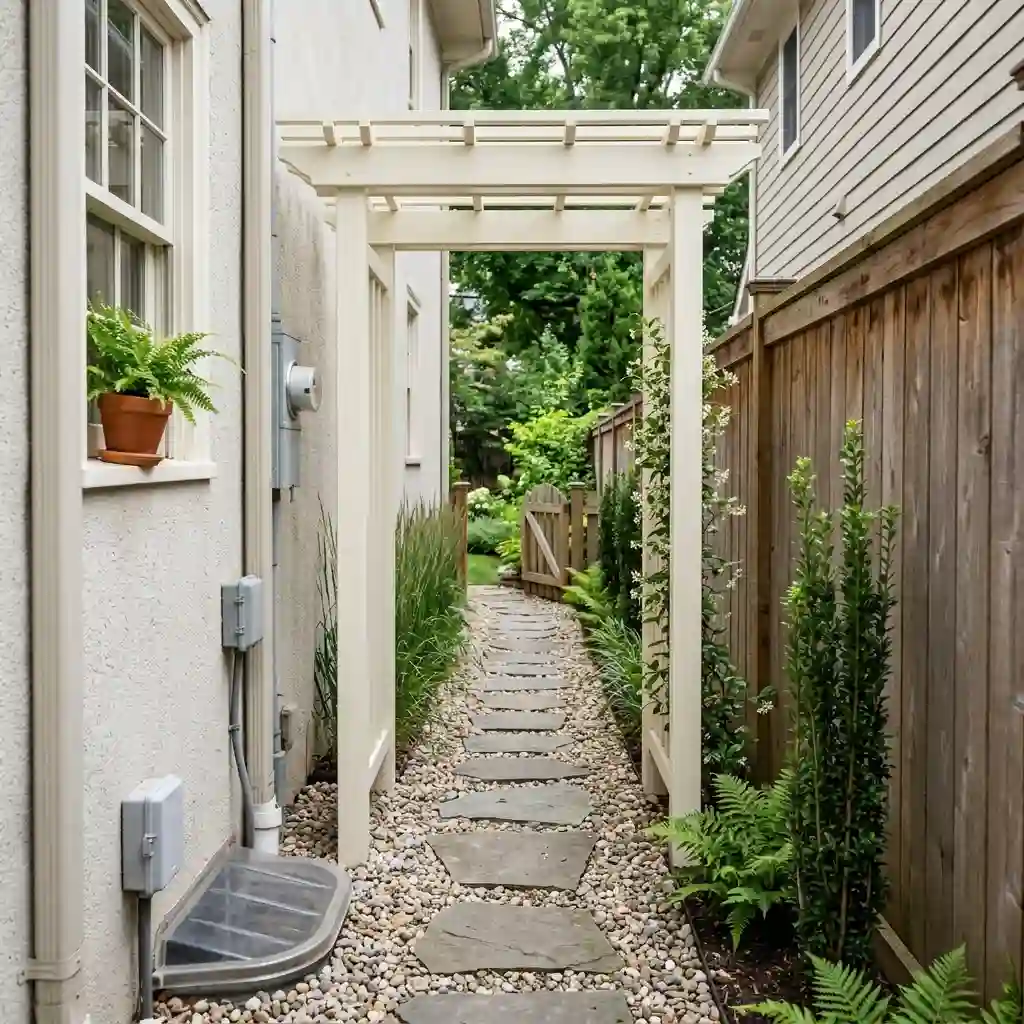
A slim arbor can give a side passage more character without using much ground space. Choose a shallow frame with straight sides.
Use upright plants instead of wide vines. Light paint can also help a dark passage feel brighter. Finish the area with gravel or simple stepping stones.
Best for: Narrow spaces between a house and fence
Design tip: Keep the color and plant list simple.
Watch for: Blocking bins, meters, drains, or utility access.
5. Use a Moon-Gate-Inspired Arbor
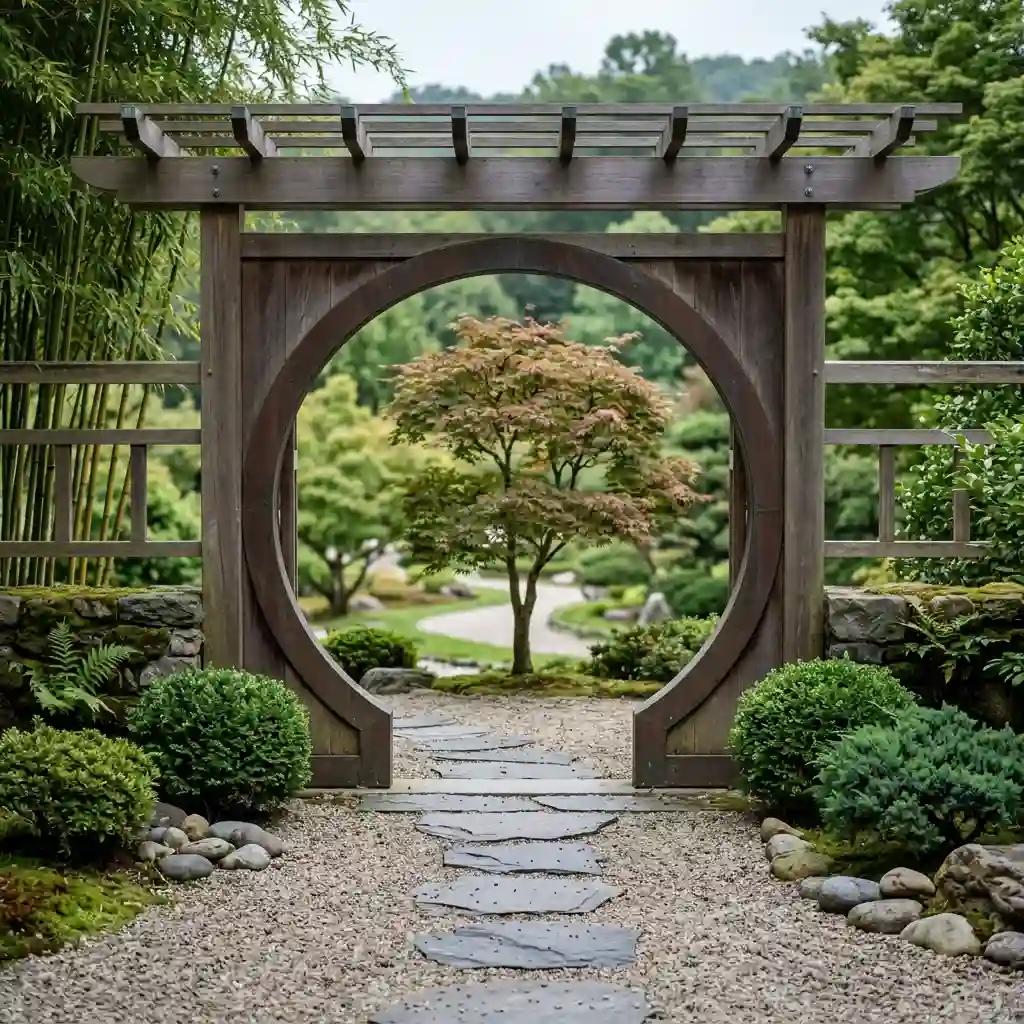
A round opening creates a strong shape and frames the garden beyond it. You can use wood, metal, or a mix of both.
Keep nearby planting simple so the circle remains easy to see. Stone, gravel, bamboo, and clipped shrubs work well around this style.
Best for: Calm gardens and strong focal points
Design tip: Frame one tree, seat, or sculpture.
Watch for: An opening that feels too low or narrow.
Backyard Arbor Ideas That Create a Destination
A seating arbor gives you a reason to spend more time outside. Place it where you can enjoy a view, afternoon shade, or a little privacy.
6. Add a Built-In Arbor Bench
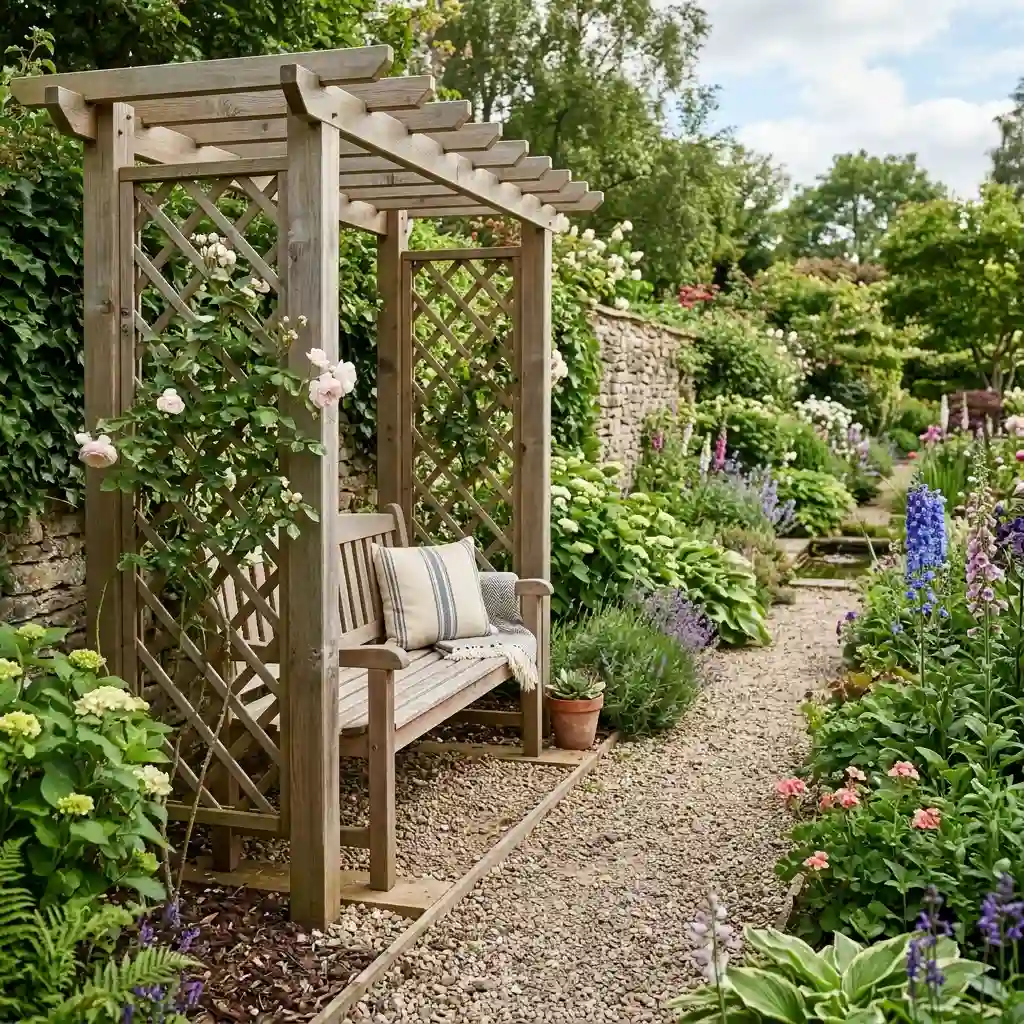
A bench between two trellis panels creates an instant garden retreat. Add a slatted roof for light shade without making the seat feel dark.
Face the bench at the best part of your yard. Use weather-resistant wood and exterior-grade fasteners. Make sure water can drain away from the posts.
Best for: Flower beds and quiet corners
Design tip: Leave enough room to clean behind the seat.
Watch for: Thorny vines or insects close to your head.
7. Hang a Swing From a Strong Arbor
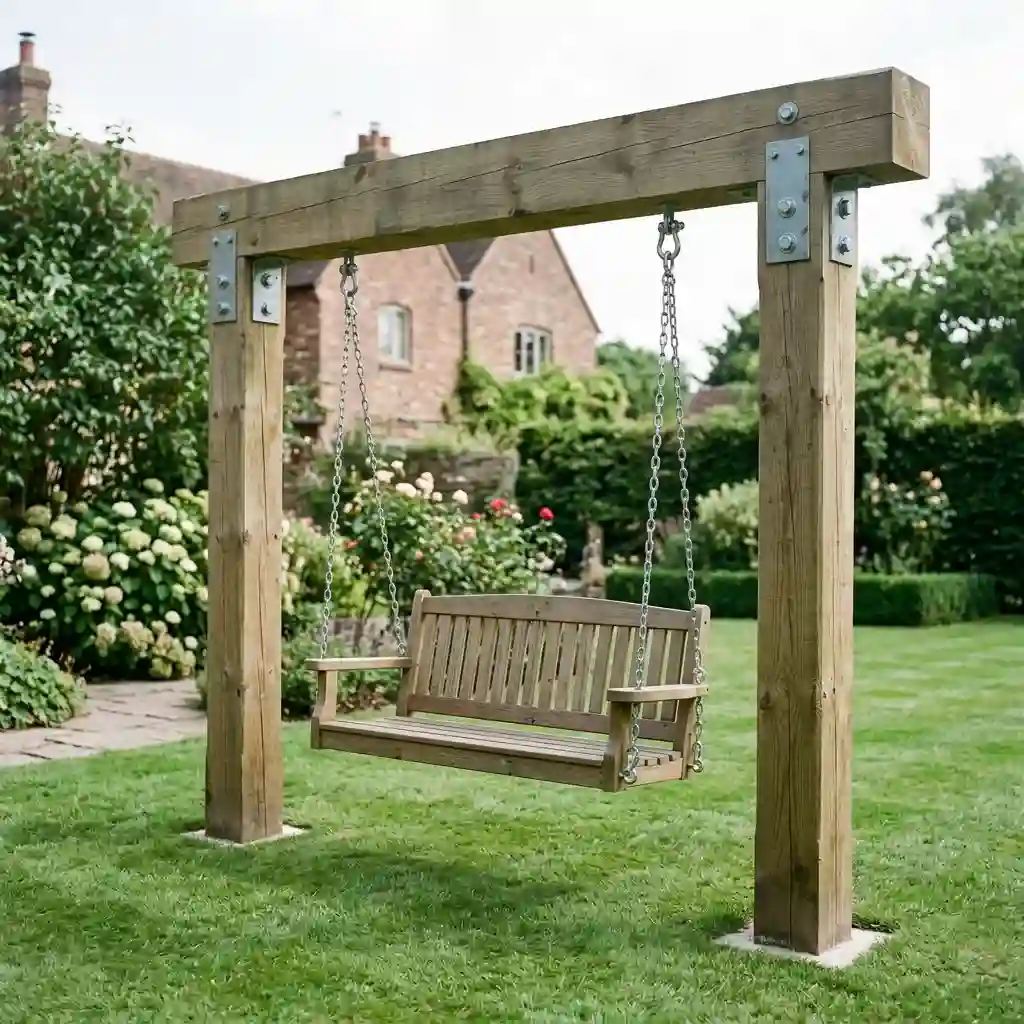
A garden swing needs a frame made for moving weight. A light plant arbor is not safe for this job.
Use thick posts, strong overhead beams, and secure anchors. Leave open space in front of and behind the seat. Keep vines away from chains, hooks, and moving joints.
Best for: Open lawns and family gardens
Design tip: Check the frame’s load rating before installation.
Watch for: Soft soil, loose anchors, and low branches.
8. Shelter a Small Bistro Table
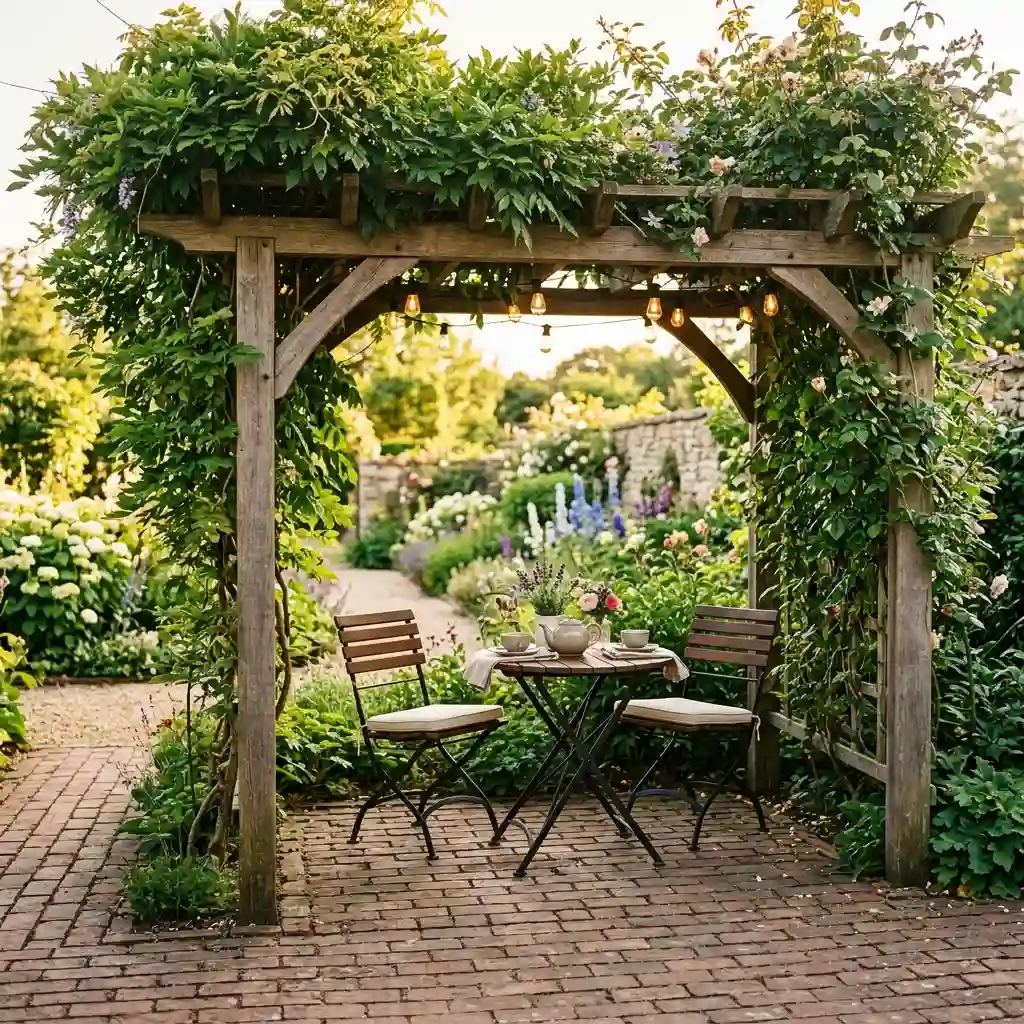
A wide arbor can create an outdoor dining area for two. Place the table on brick, gravel, or pavers so the chairs stay level.
Add outdoor-rated lights for evening meals. Choose light vines that will not drop large amounts of fruit, sap, or dead flowers onto the table.
Best for: Small patios and sunny corners
Design tip: Test the table and chair layout before setting posts.
Watch for: Chairs sinking into soil or blocking the path.
9. Create a Quiet Reading Nook
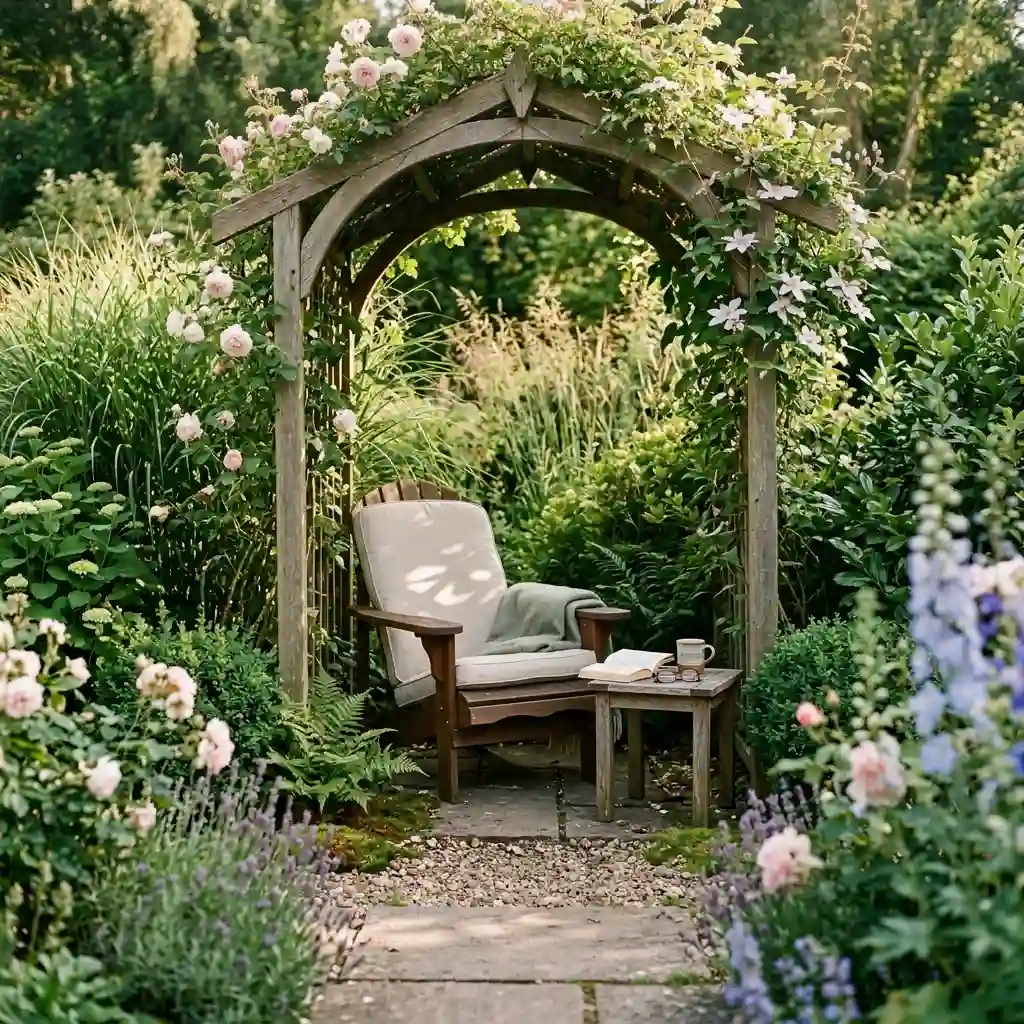
Place an arbor in a calm part of the garden. Add one comfortable chair, a small table, and a cushion made for outdoor use.
Shrubs and tall grasses can screen nearby views. Plant scented flowers near the entrance instead of beside the chair. Strong scents and visiting insects may become distracting at close range.
Best for: Private garden corners
Design tip: Check the shade at the time you plan to use the seat.
Watch for: Damp ground and poor access after rain.
Arbor Ideas With Plants for Color, Shade, and Privacy
The plant and arbor must work as a pair. A thin frame can support light annual vines, but it may bend under an old grapevine or mature wisteria.
Climbers also attach in different ways. Twining vines wrap around narrow supports. Self-clinging plants use small roots or pads. Scrambling plants, such as climbing roses, need to be tied in place.
10. Cover an Arbor With Climbing Roses
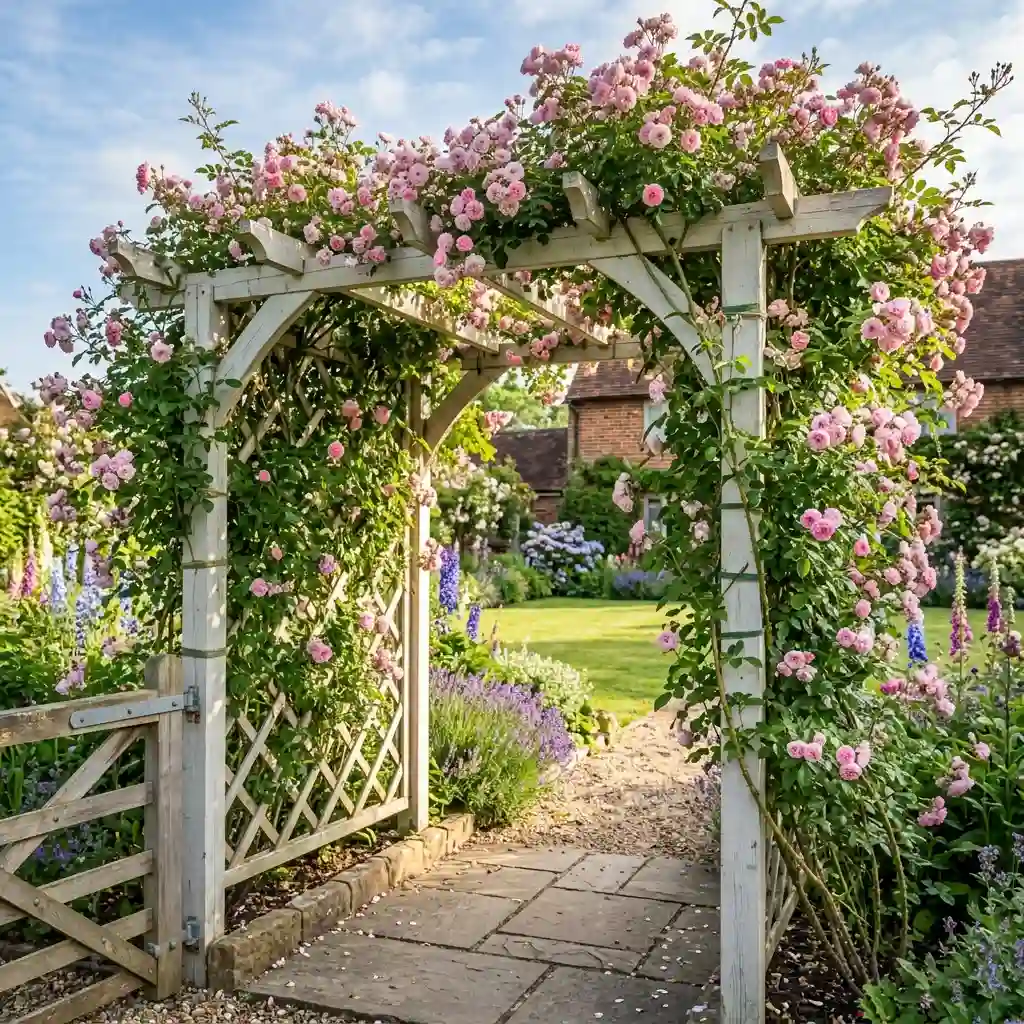
Climbing roses create a classic garden entrance. Their long canes can be trained along the sides and roof of an arbor.
Tie the canes with soft plant ties. Keep thorny growth away from faces, clothing, and narrow paths. Leave enough access for pruning and removing old flowers.
Best for: Cottage gardens and sunny entrances
Design tip: Train main canes at an angle to encourage more flowers.
Watch for: Thorns near gates and seating areas.
11. Grow Wisteria on a Heavy-Duty Arbor
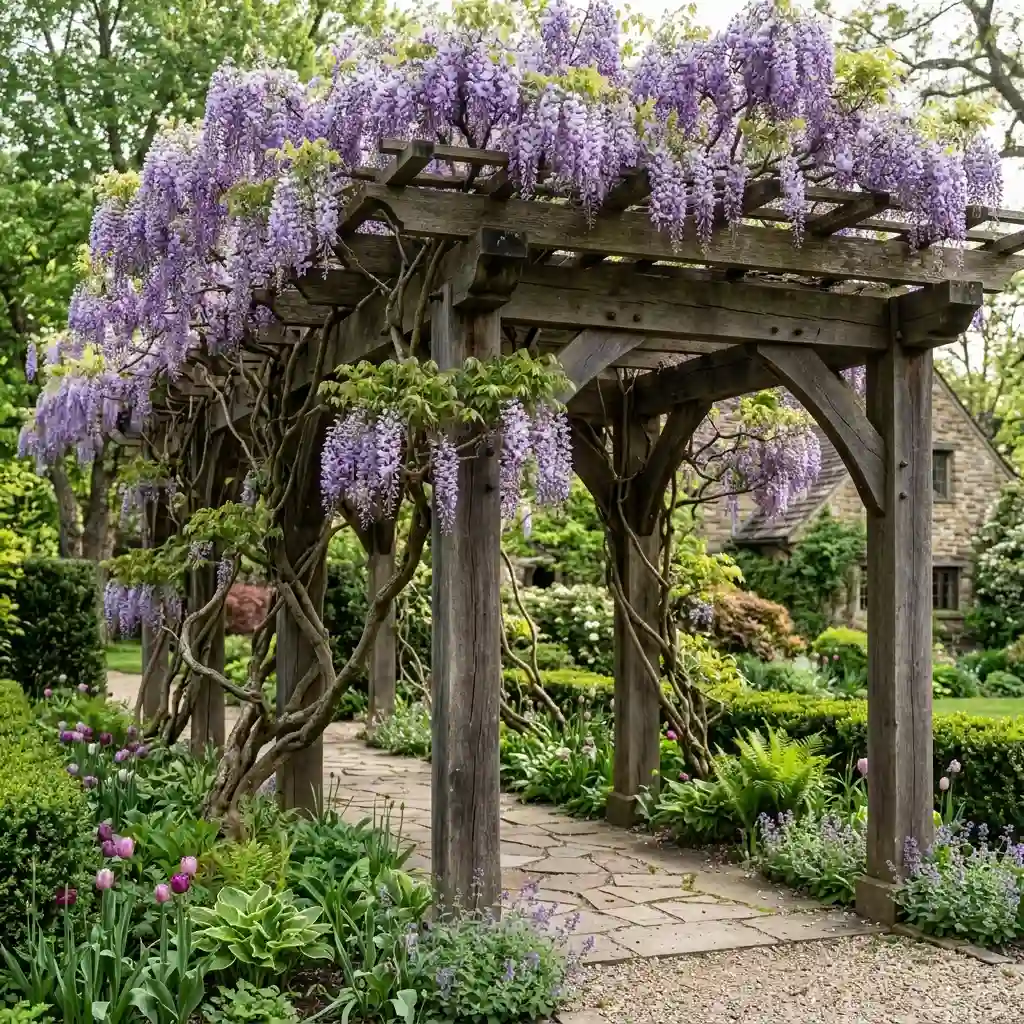
Wisteria can create deep shade and hanging spring flowers. It also becomes large and heavy as it matures.
Use a solid arbor with strong posts and joints. Regular pruning will be needed to control the growth. Check local guidance before planting because some types can spread into natural areas.
Best for: Large, strong structures
Design tip: Choose the plant before building the support.
Watch for: Invasive growth and damage to weak frames.
12. Create an Edible Grape Arbor
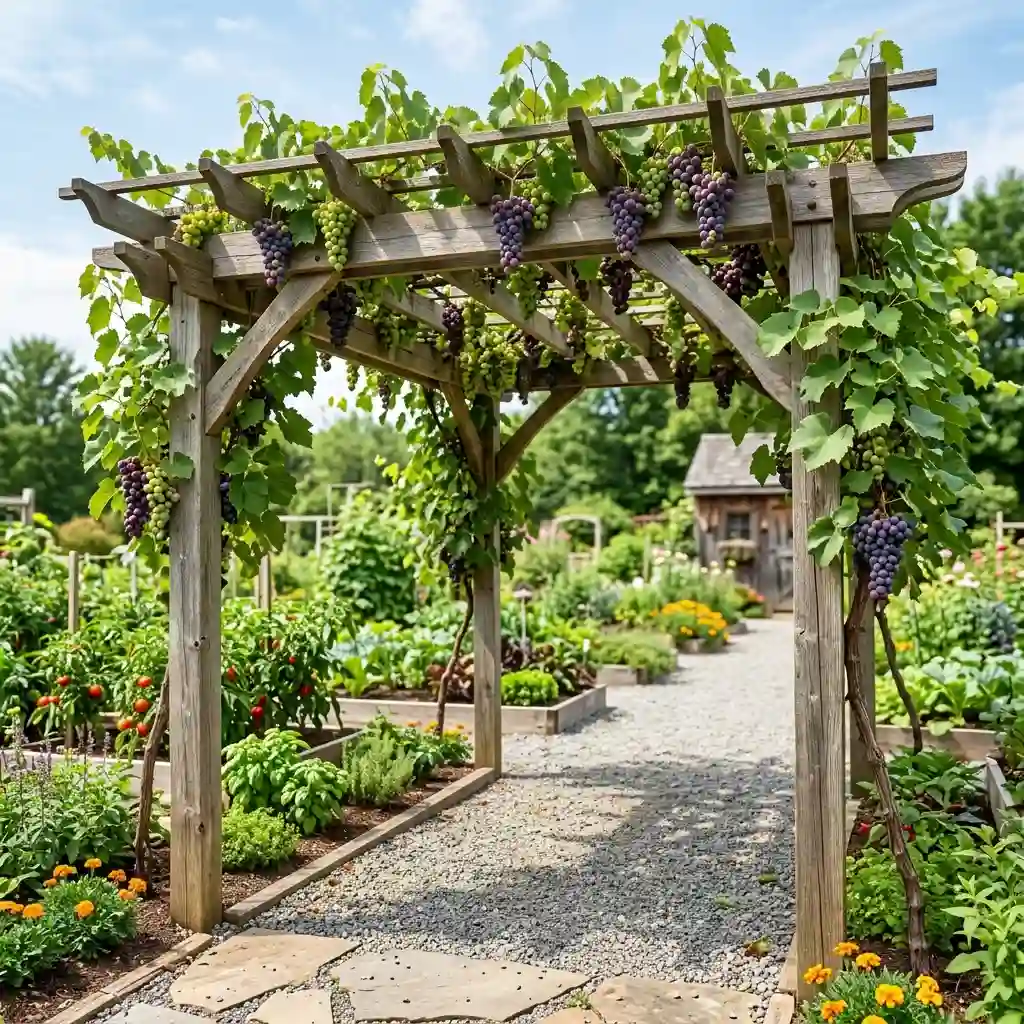
A grape arbor gives you summer shade and fresh fruit. Use an open roof so sunlight can reach the leaves and ripening grapes.
Leave room for yearly pruning and harvesting. Avoid placing furniture where fallen fruit may cause stains or attract pests. Choose a grape variety that fits your climate.
Best for: Sunny gardens and edible landscapes
Design tip: Build access into both sides of the arbor.
Watch for: Fruit drop and the mature weight of old vines.
13. Train Annual Vines for Fast Color
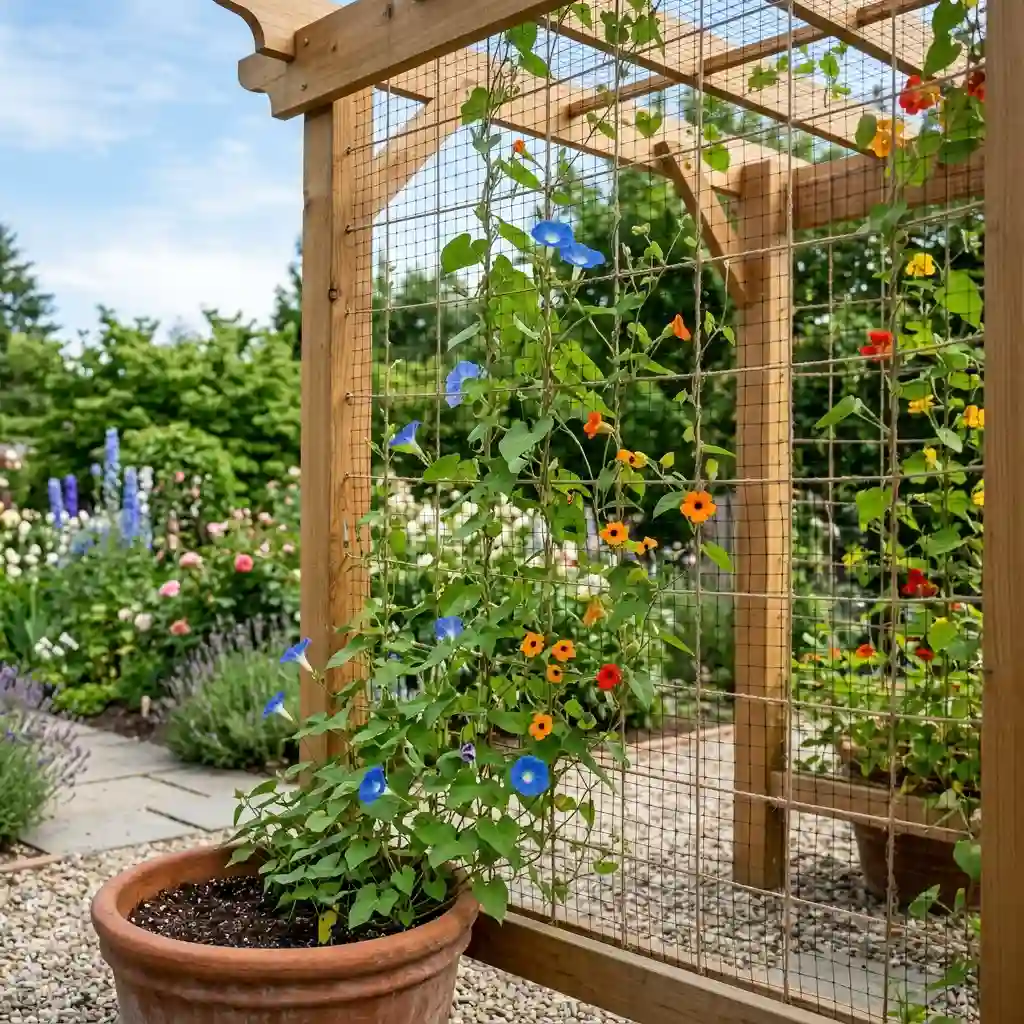
Annual vines are useful when you want quick coverage without permanent weight. Sweet peas, black-eyed Susan vines, hyacinth beans, and some morning glories can work where locally suitable.
You can grow them in large pots if the soil beside the arbor is poor. They die back at the end of the season, so cleanup is simple.
Best for: Renters and new gardens
Design tip: Use string or mesh to help young vines climb.
Watch for: Plants that reseed heavily in your region.
14. Mix Evergreen and Flowering Climbers
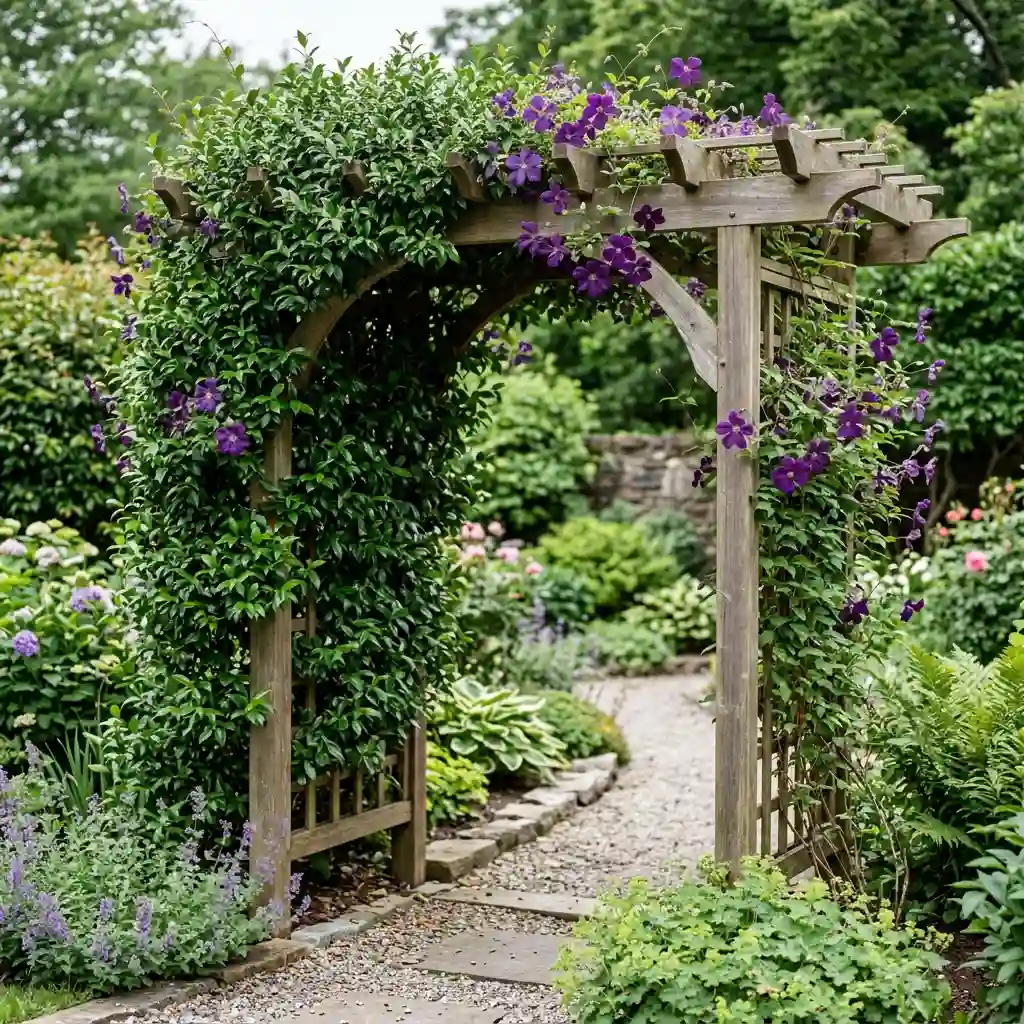
An evergreen climber can provide year-round cover. A lighter flowering vine can add seasonal color.
Choose plants with similar light, water, and soil needs. Prune them separately so one plant does not cover or weaken the other.
Best for: Privacy screens and year-round structure
Design tip: Make one vine the main plant and the other an accent.
Watch for: Tangled growth that becomes hard to prune.
Garden Arbor Designs for Different Yard Styles
Your arbor should repeat at least one feature from your house or yard. That feature could be a color, material, shape, or small detail.
15. Use a Rustic Cedar Arbor
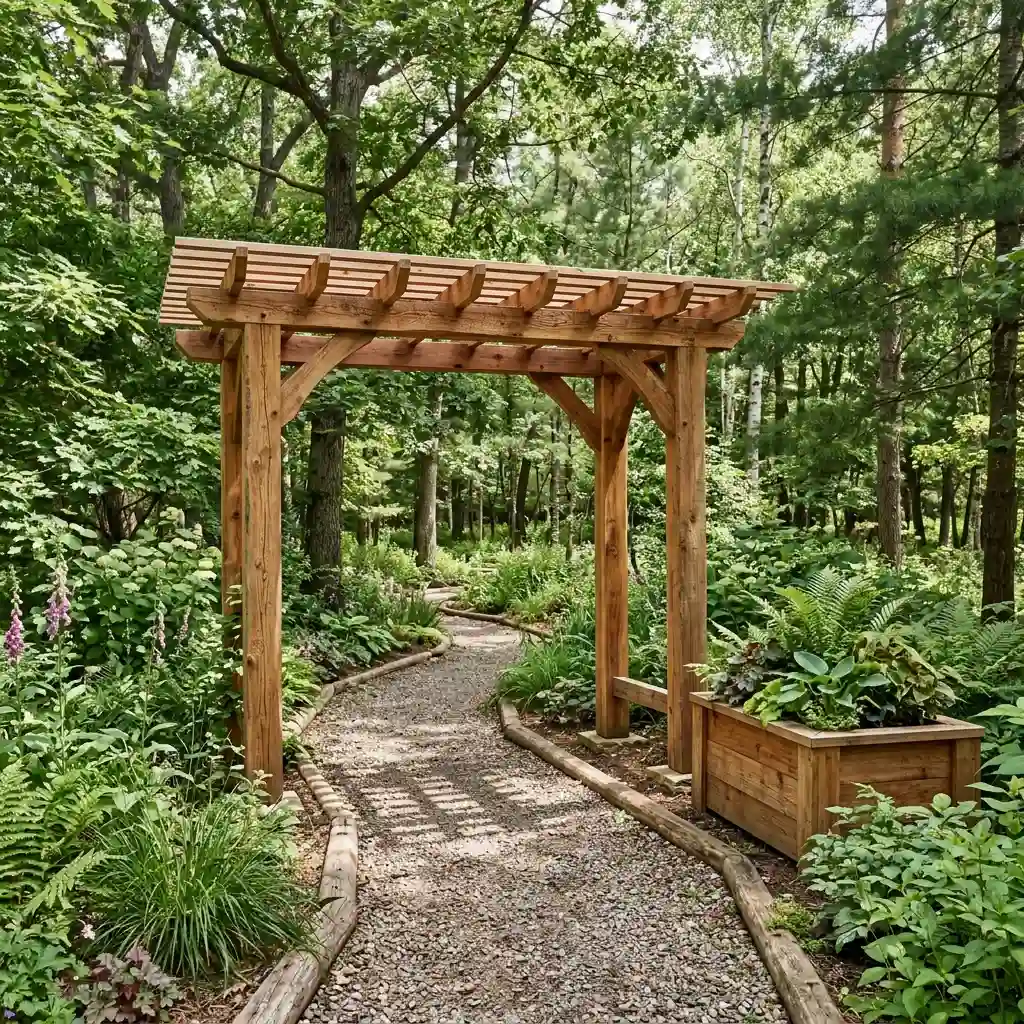
Cedar has a warm color that fits informal gardens. You can seal it or let it age to a soft gray.
Pair the structure with gravel, timber edging, and loose planting. A simple slatted roof will add interest without making the design feel heavy.
Best for: Rustic and woodland-style gardens
Design tip: Repeat cedar in a nearby bench or planter.
Watch for: Damp soil around the post bases.
16. Choose a Black Metal Arbor for a Modern Yard
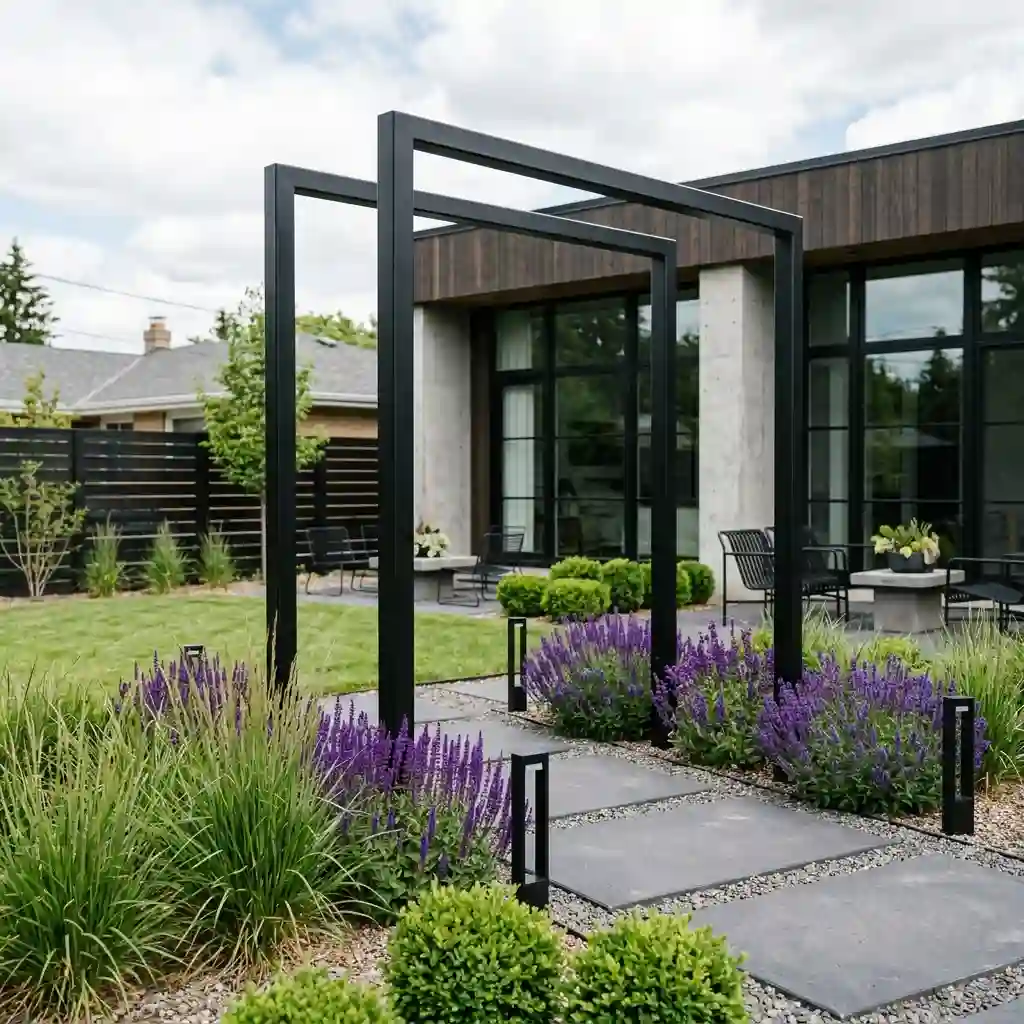
A black metal arbor can look clean and light. Choose straight lines with little decoration.
Repeat the black finish on lights, furniture, window frames, or railings. Pair it with grasses, clipped shrubs, or one strong flower color.
Best for: Modern homes and small yards
Design tip: Use fewer plant types in larger groups.
Watch for: Scratches that expose metal to rust.
17. Add a White Arbor to a Cottage Garden
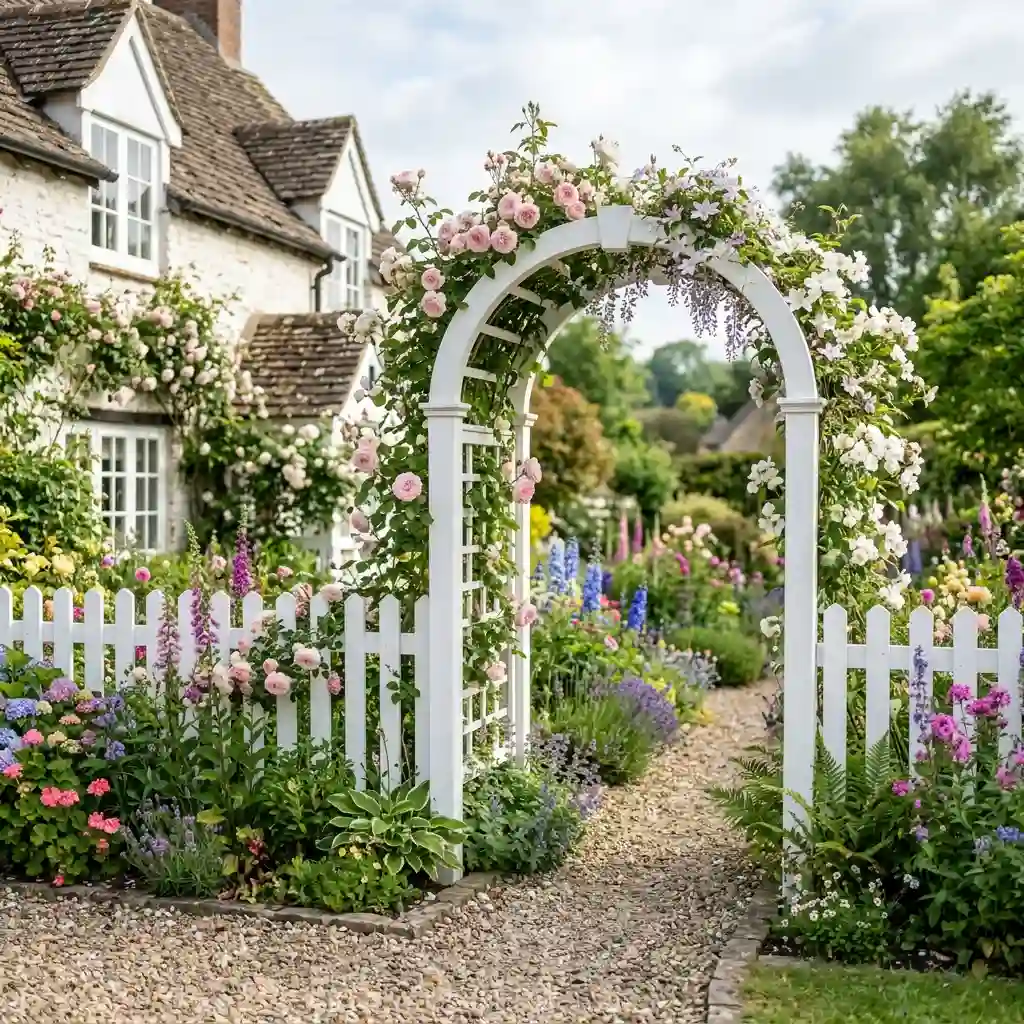
A white arbor looks fresh beside a picket fence and loose flower beds. Repeat white in nearby pots, chairs, or window trim.
Climbing roses and soft flowering vines fit this style well. White surfaces will show dirt and green marks, so plan for regular cleaning.
Best for: Cottage gardens and front entrances
Design tip: Let a few plants soften the base of the posts.
Watch for: Peeling paint and mildew.
18. Build a Natural-Branch Arbor
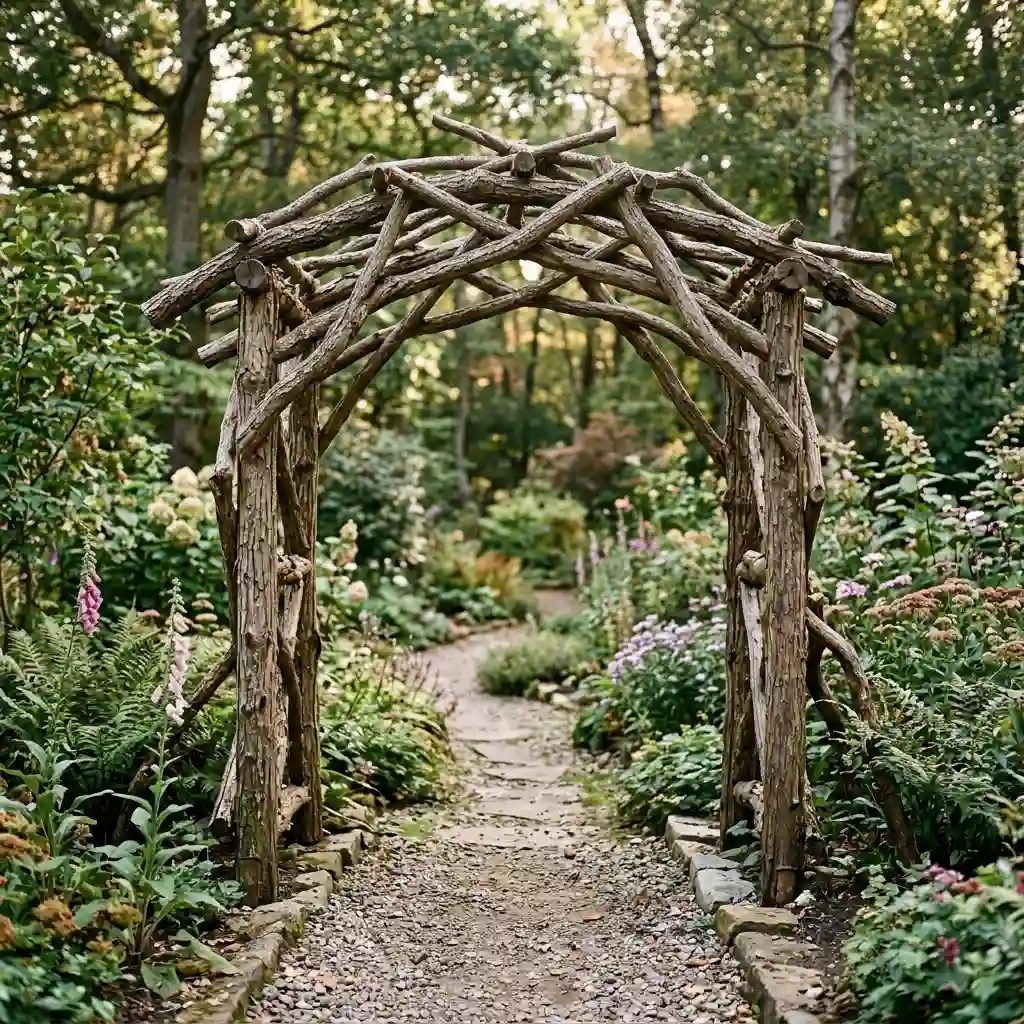
A branch arbor can blend into a woodland or country garden. Use sound, rot-resistant branches with enough thickness for the planned size.
Join the pieces with strong hidden fasteners. Treat it as decoration unless it has been properly built for weight. Do not hang a swing from an untested branch frame.
Best for: Rustic gardens and low-cost projects
Design tip: Keep the walking opening even and clear.
Watch for: Cracks, decay, and weak joints.
19. Light an Arbor for Evening Use
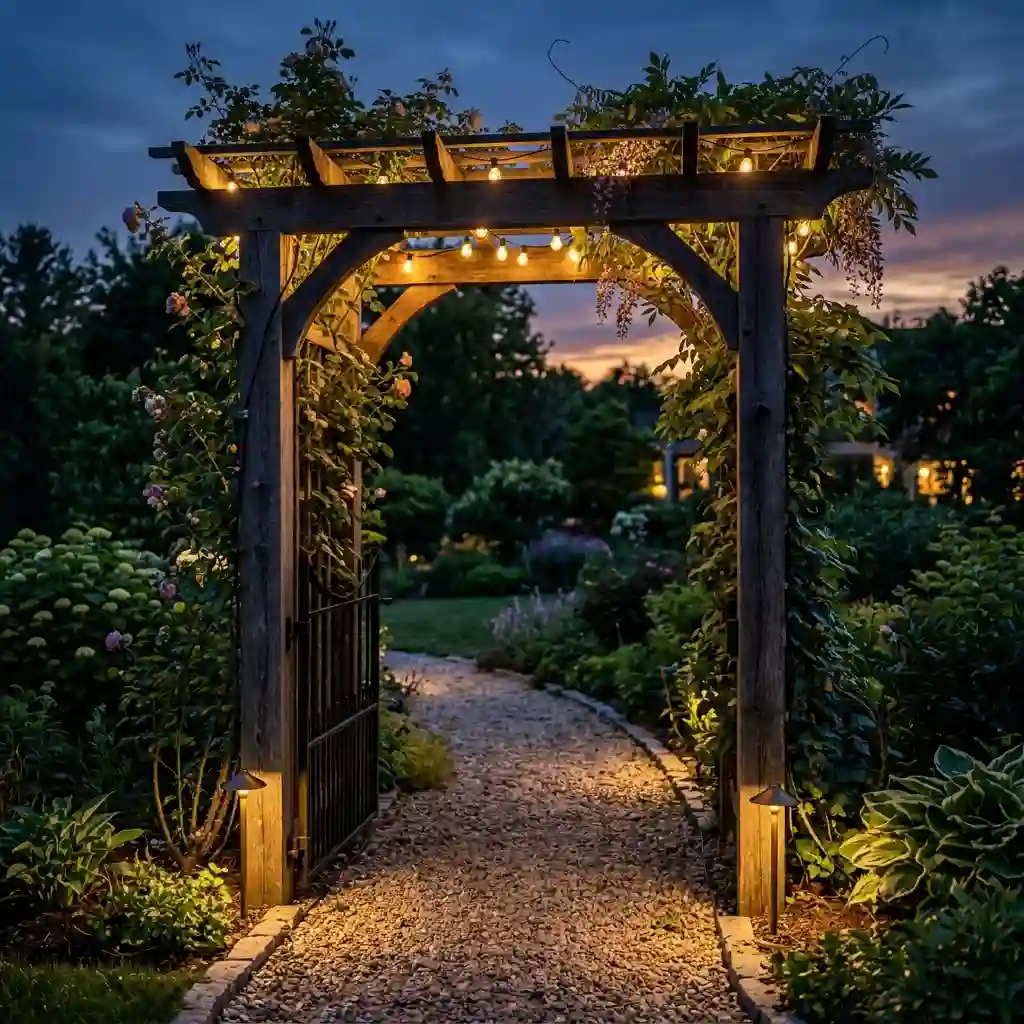
Warm lights can turn an arbor into an evening feature. Place small lights along the top or use low fixtures near the posts.
Choose lights and cables rated for wet outdoor areas. Keep wires away from pruning points and moving gates. Solar lights are easy to add, but shaded panels may not charge well.
Best for: Paths, gates, and seating areas
Design tip: Use soft light instead of one bright fixture.
Watch for: Loose cables and lights made for indoor use.
Placement and Installation Mistakes to Avoid
Arbor mistakes become harder to fix after plants cover the structure. Check the site and measurements before digging.
Avoid these common problems:
- Choosing an opening that blocks a mower or wheelbarrow
- Using a light arbor for a heavy mature vine
- Placing untreated wood against wet soil
- Forgetting the full swing of a gate
- Planting thorny vines beside a busy path
- Failing to anchor the structure for wind
- Digging before checking for buried utilities
Water should drain away from wooden posts. If water collects at the base, the wood may rot faster.
Follow three basic steps: measure, check, and anchor. Measure the space twice. Check plants, drainage, and underground services. Then anchor the arbor as required for your soil and local weather.
Choose an Arbor That Works for Your Space
The best garden arbor ideas connect purpose, size, style, and plant choice. Your arbor can mark a gate, frame a path, cover a seat, or support colorful vines.
Start with the area that needs a stronger focal point. Decide what the arbor must do, and measure the full space. Shortlist two designs before buying materials or plants.
A simple arbor in the right place will often look better than a large structure in the wrong one. Choose a design that fits your yard, light, and daily use.