
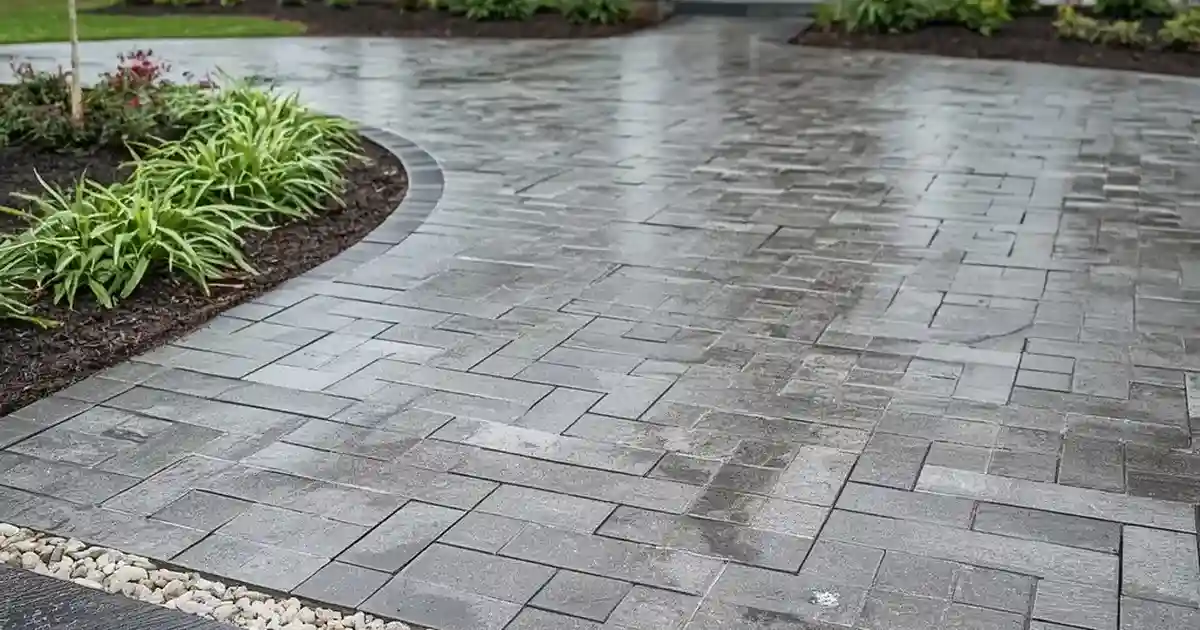
Your driveway takes up a large part of your front yard. When it looks cracked, plain, or dated, the whole property can feel unfinished.
The problem is that choosing a new driveway is not as simple as picking a color. You need to think about rain, heat, vehicle space, cleaning, repairs, and cost. The surface should also match your house.
These modern driveway ideas can help you find a design that looks clean and works well each day. Some use concrete or pavers. Others use gravel, grass, stone, lighting, and simple landscaping.
You will also learn where each design works best. Every option includes a main benefit, a possible drawback, and a useful planning tip.
A strong modern driveway design should improve your front yard without making daily parking harder. Start by saving the ideas that suit your home, space, climate, and budget.
Quick Modern Driveway Comparison
| Driveway Style | Best For | Maintenance | Cost Level | Main Benefit |
| Large concrete slabs | Minimalist homes | Low | Medium | Clean lines |
| Permeable pavers | Rainy areas | Medium | Medium to high | Better drainage |
| Resin-bound gravel | Smooth finishes | Low | Medium to high | Neat surface |
| Loose gravel | Budget projects | Medium | Low | Lower starting cost |
| Mixed materials | Custom designs | Medium | Medium | More visual interest |
Modern Concrete Driveway Ideas for a Cleaner Look
Concrete can look cold or basic when it is installed as one large plain surface. But the right slab size, joint pattern, color, and texture can create a clean entrance.
These three concrete driveway ideas work well with modern, mid-century, and updated traditional homes.
Use Large-Format Concrete Slabs
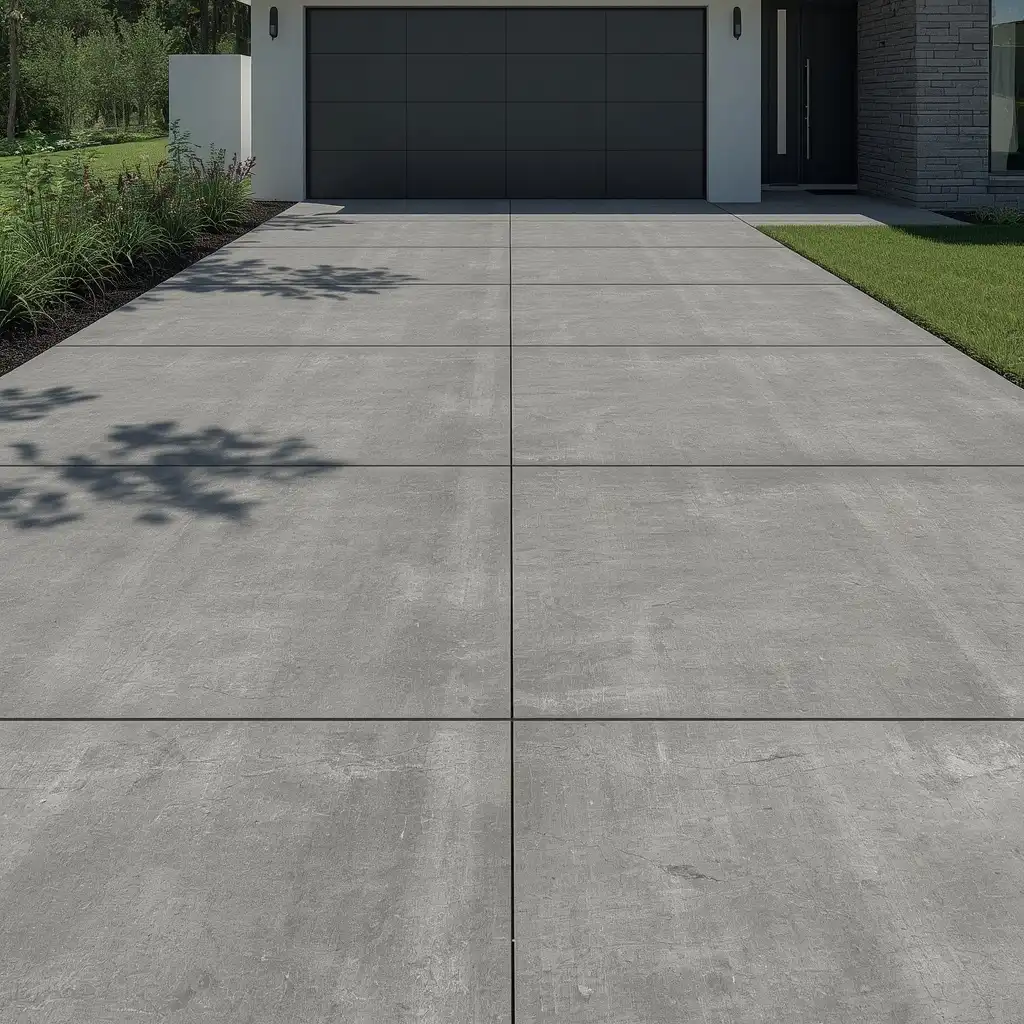
Large concrete slabs create a simple look with fewer visible lines. They can also make a small driveway feel less crowded.
Choose long rectangular slabs for a narrow driveway. The wider lines can help the space look broader. Square slabs can work well in front of a large double garage.
Try to line up the concrete joints with parts of your house. You may match them with the garage door panels, front steps, windows, or walkway.
Medium gray concrete is often easier to keep looking clean than bright white concrete. It can hide light dust, tire marks, and small stains.
Best for: Minimalist and mid-century homes
Main benefit: Makes the entrance look open and organized
Possible drawback: Large slabs need proper joint planning to control cracks
Maintenance level: Low
Ask your contractor to show you the joint plan before work begins. The lines should look planned, not random.
Add a Linear Saw-Cut Grid
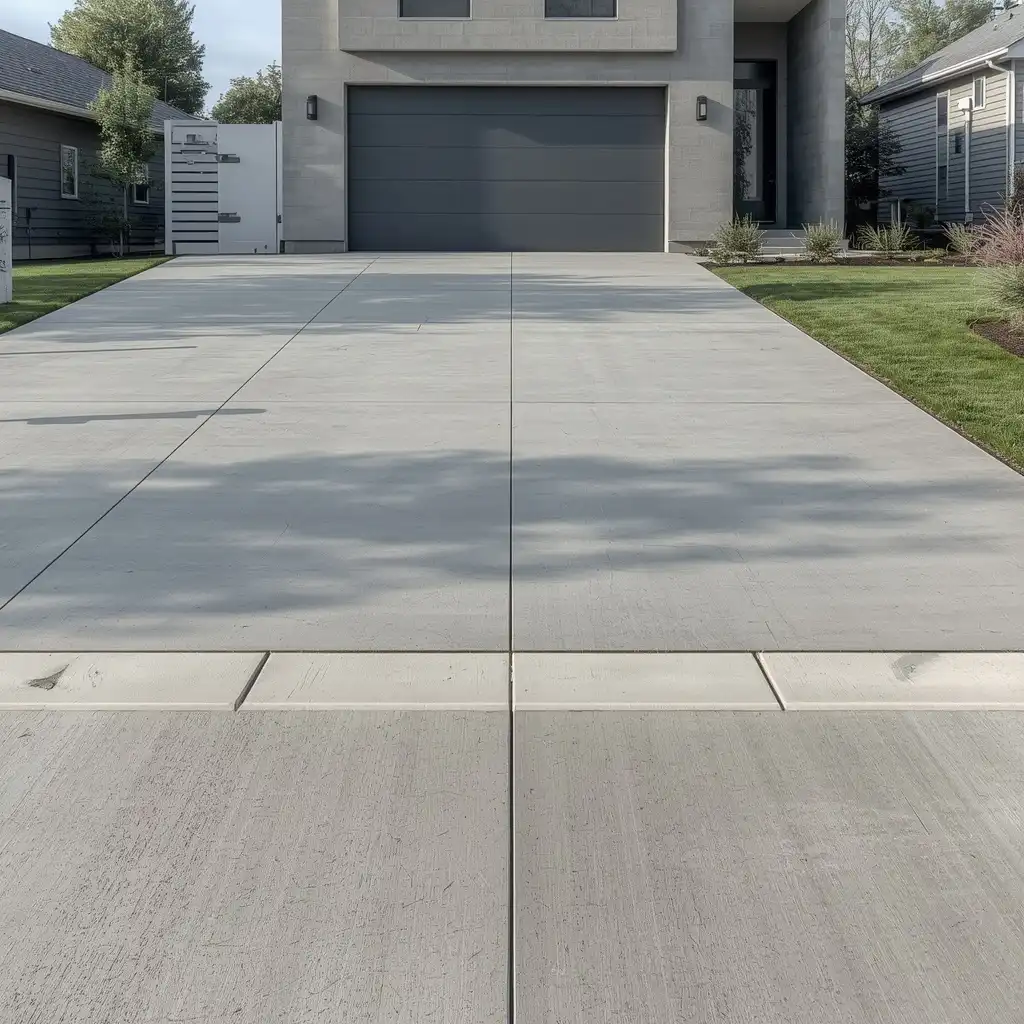
A saw-cut grid can turn basic concrete into a strong design feature. Straight cuts divide the surface into neat squares or rectangles.
Long rectangular sections can guide the eye from the road to the garage. A square grid creates a more balanced look on wide driveways.
These cuts are more than decoration. Correctly placed control joints can help manage where concrete cracks as it moves over time.
Keep the grid simple if your house already has several colors or textures. A busy driveway beside a busy exterior can make the front yard feel crowded.
Best for: Wide driveways and homes with strong straight lines
Main benefit: Adds pattern without using another material
Possible drawback: Poorly placed cuts may weaken the final look
Maintenance level: Low
Choose the grid before the concrete is poured. Changing it later can be hard and costly.
Choose Lightly Textured Concrete
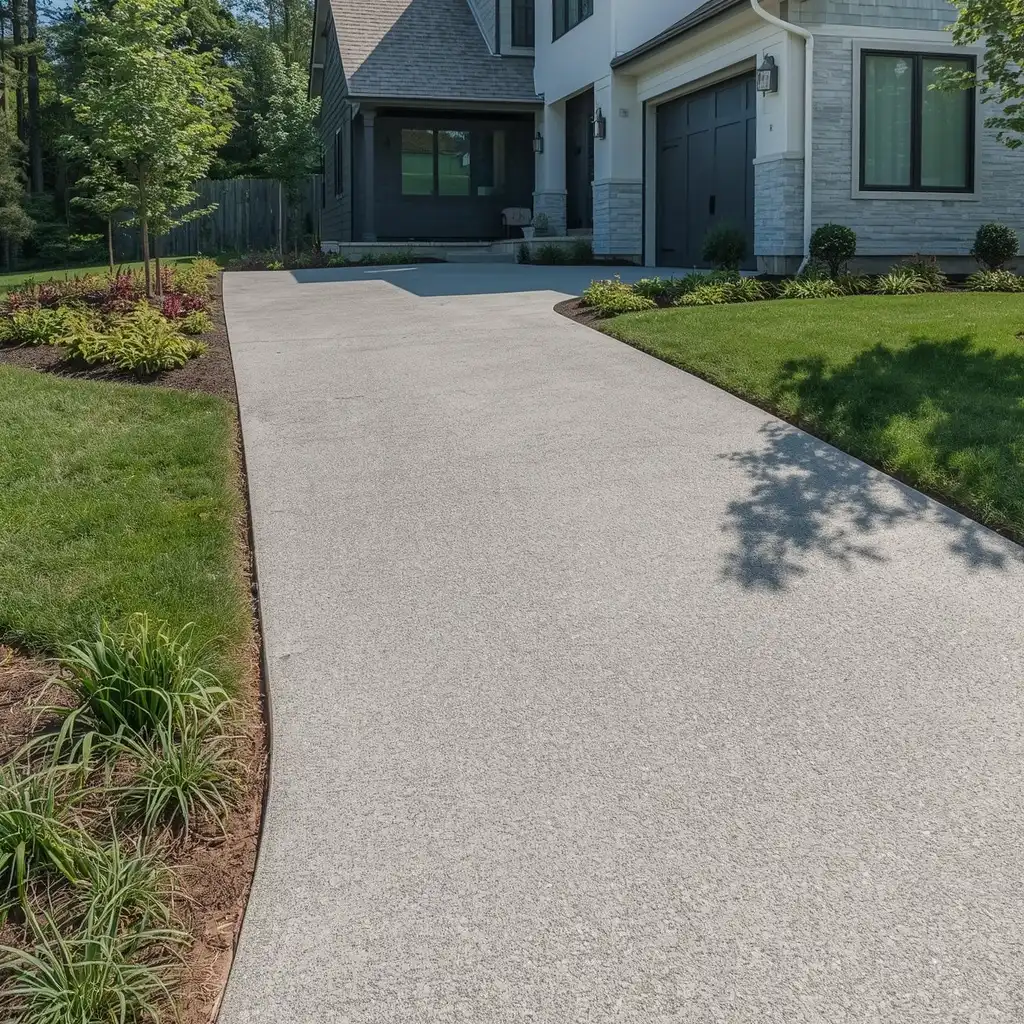
Smooth concrete may look clean in photos. However, a very smooth finish can become slippery when wet.
A light broom finish adds grip without creating a rough appearance. Light sandblasting can also give the surface a soft, even texture.
Texture helps hide small marks and surface flaws. It can also reduce glare on a bright driveway.
This option is useful on sloped driveways or in areas that receive regular rain. Ask to see a full-size sample in daylight before choosing the finish.
Best for: Wet areas, slopes, and busy family homes
Main benefit: Adds grip while keeping a modern look
Possible drawback: Deep texture can trap dirt
Maintenance level: Low to medium
Avoid picking a finish from a small indoor sample. Sunlight and moisture can change how the texture looks.
Modern Paver Driveway Ideas With More Pattern
Pavers give you more control over color, shape, and pattern than poured concrete. You can also replace one damaged paver without rebuilding the full driveway.
The key is restraint. Use one main paver color and one accent color for a clean result.
Create a Two-Tone Geometric Pattern
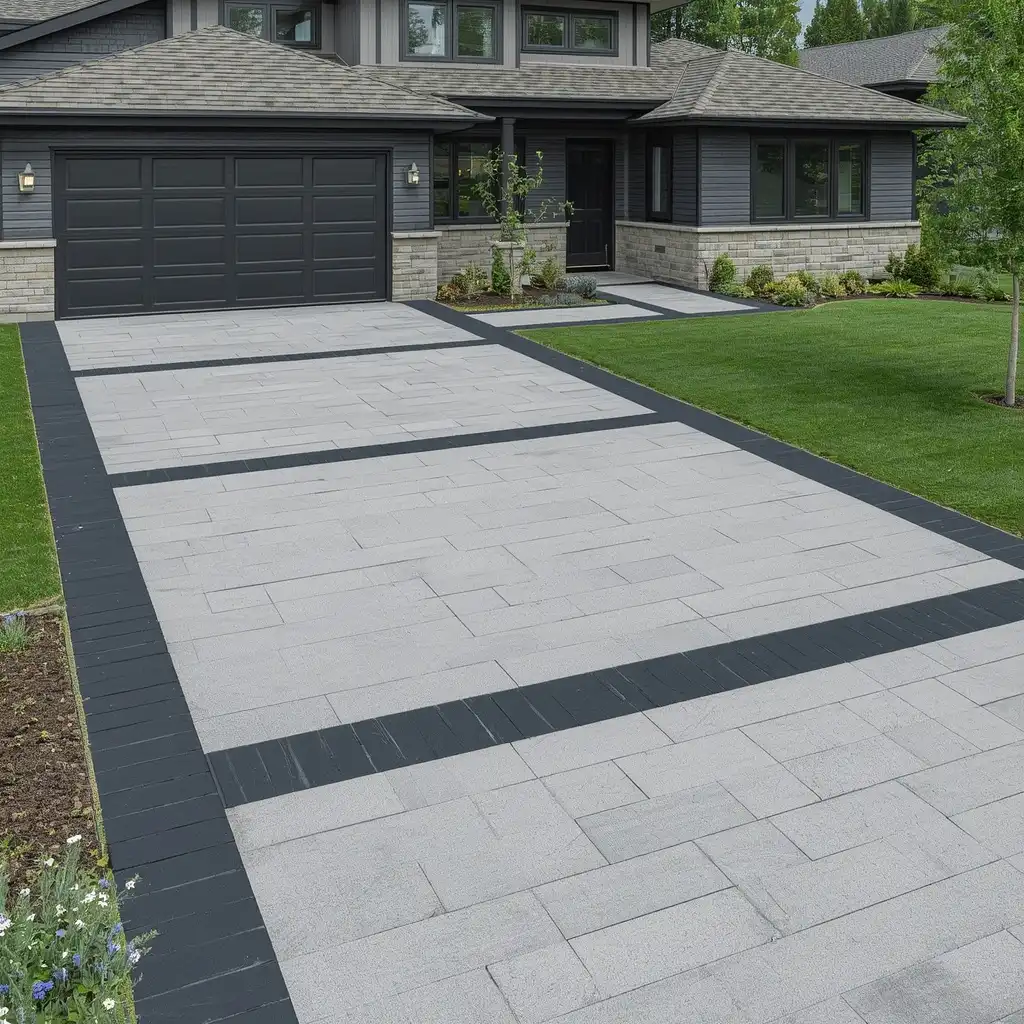
A two-tone pattern can mark the driveway edges, parking spaces, or walkway. It adds structure without making the surface look too busy.
Choose one main shade for most of the driveway. Use the second shade in narrow lines, borders, or simple blocks.
For example, pair light gray pavers with charcoal strips. The dark strips can frame the driveway or separate two parking areas.
Repeat a color already found on the roof, gate, front door, or house trim. This helps the driveway feel connected to the property.
Best for: Large driveways that need clear zones
Main benefit: Adds contrast and guides parking
Possible drawback: Too many shapes can make the surface look crowded
Maintenance level: Medium
Limit the design to two colors and one main paver shape. Simple patterns often age better than trendy ones.
Use Permeable Pavers to Reduce Puddles
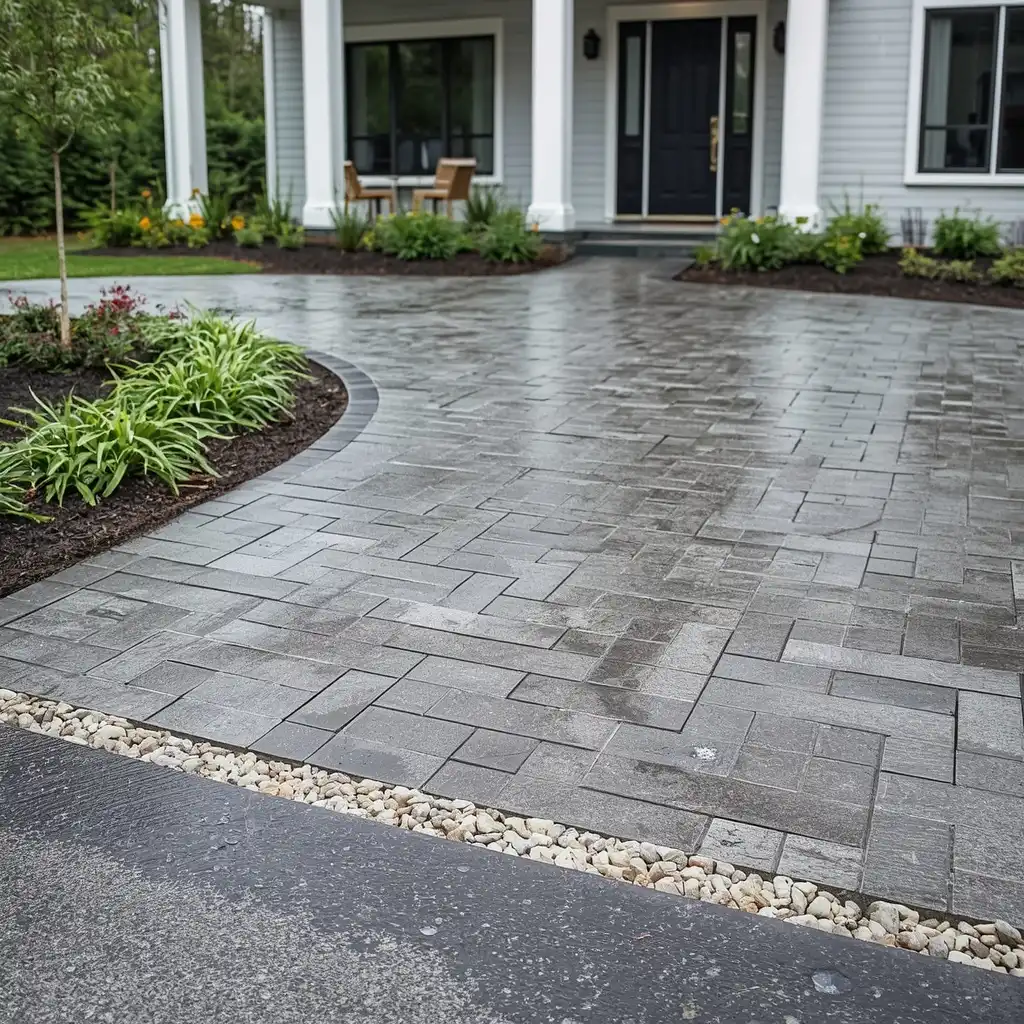
Permeable pavers allow rainwater to pass through wider joints and move into a prepared stone base. This can reduce puddles and surface runoff.
The full system matters. Regular pavers with sand-filled joints do not always provide the same drainage.
The base must be built with the correct layers. The soil must also be suitable for water movement. Poor installation can cause sinking or blocked joints.
Leaves, soil, and fine dirt may collect in the gaps. The surface may need cleaning to keep water moving through it.
Best for: Rainy areas and properties with drainage concerns
Main benefit: Helps manage rainwater on the property
Possible drawback: The base requires careful installation
Maintenance level: Medium
Check local drainage rules before choosing this option. Some areas may have special rules for paved front yards.
Modern Gravel and Aggregate Driveway Ideas
Gravel does not have to look rural or unfinished. Clean edges, controlled colors, and a firm base can give it a modern feel.
These options range from fixed aggregate surfaces to loose stone. Each one has a different level of movement and care.
Add Exposed Aggregate Concrete
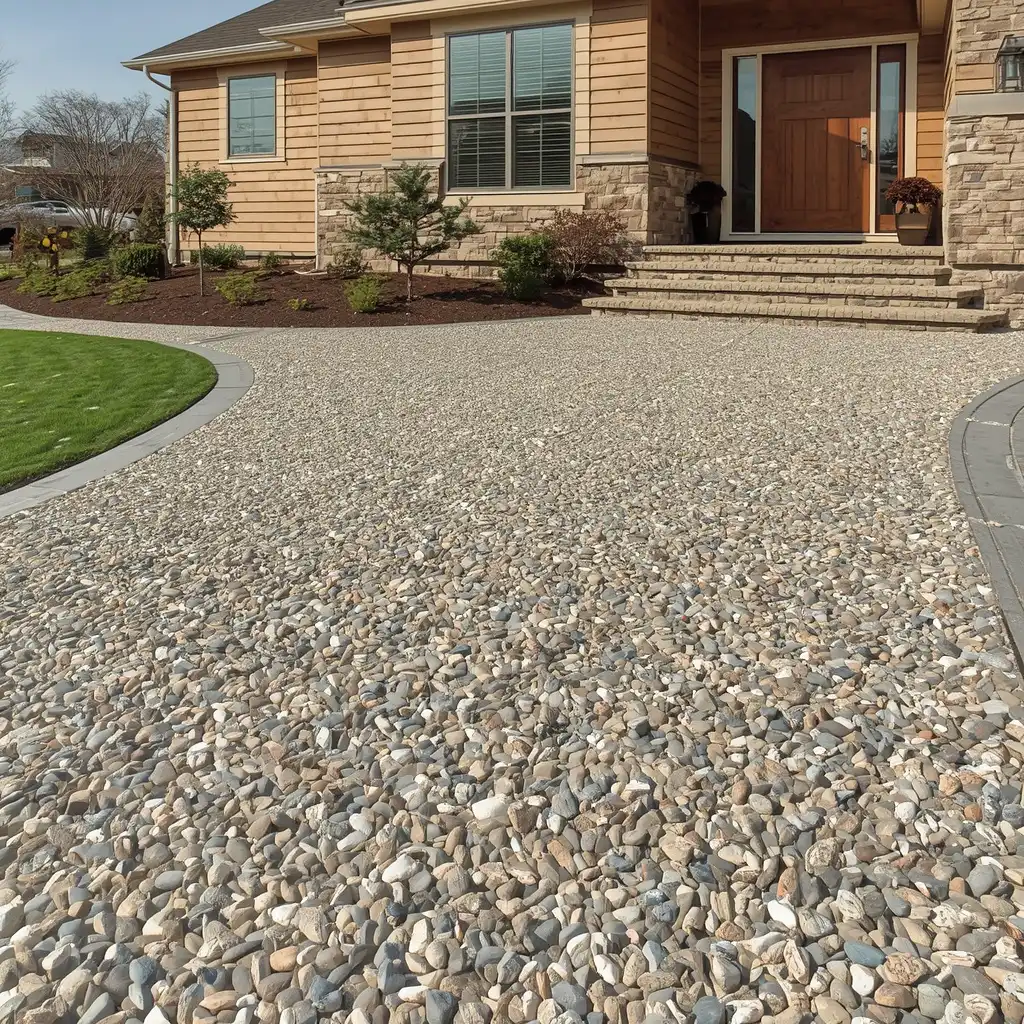
Exposed aggregate is concrete with visible stone at the surface. The small stones add color and texture without using a separate border.
Choose stone colors that match your house. Cream, warm gray, and brown stones can work well beside brick or wood. Dark gray stone suits cooler exterior colors.
The textured surface may offer better grip than very smooth concrete. It can also hide small stains and tire marks.
However, a mix with too many stone colors may look busy. Ask for a sample that shows the full range of stone.
Best for: Brick, stone, and natural wood homes
Main benefit: Adds texture while keeping a firm surface
Possible drawback: Repairs may be harder to blend
Maintenance level: Low to medium
Use the same aggregate on front steps or a small path. This can connect the driveway with the rest of the entrance.
Choose a Resin-Bound Gravel Surface
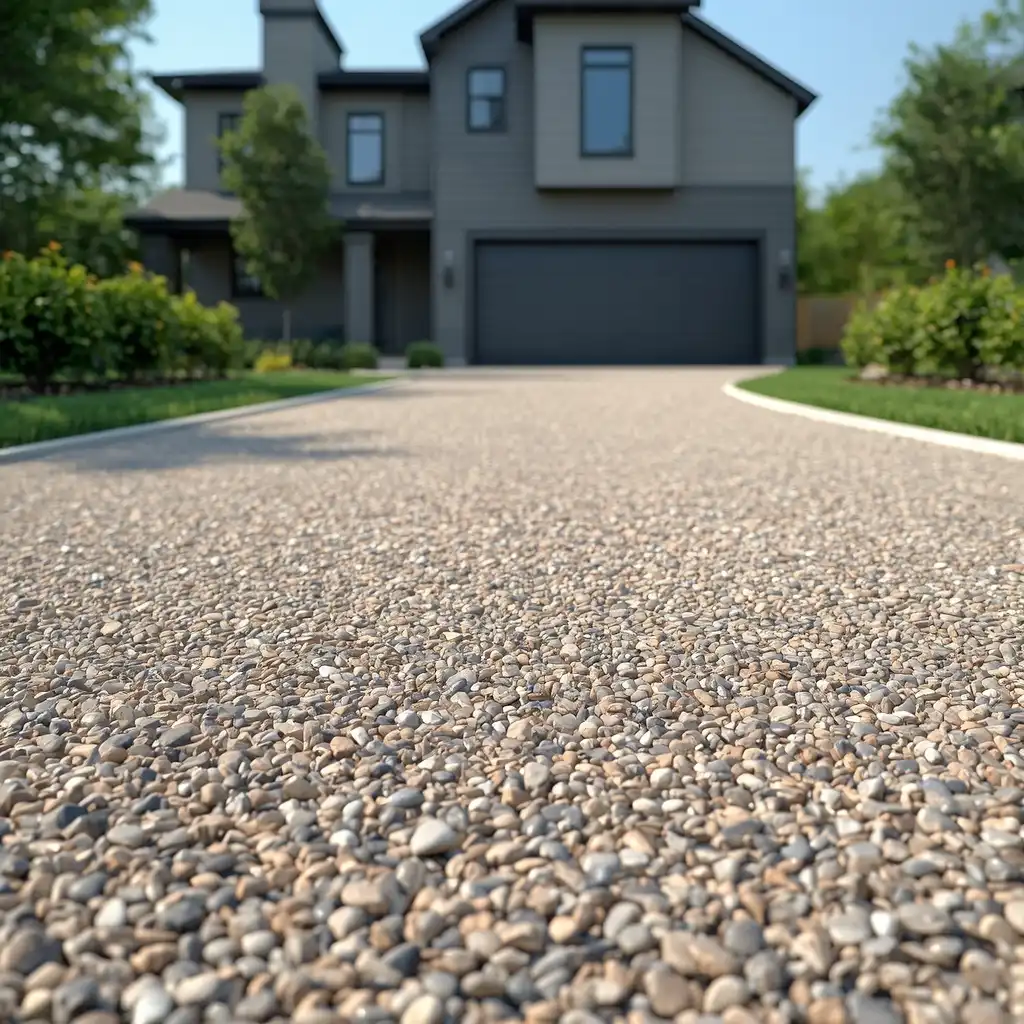
A resin-bound driveway uses small stones mixed with resin. The mixture is spread across a prepared base to create a firm, even surface.
It gives you the look of gravel without loose stones moving across the yard. The finish can feel softer than plain concrete.
Choose a simple stone blend with two or three related shades. A mix of gray, cream, and soft brown can suit many house styles.
Proper drainage and base work are important. A weak base can cause cracks or dips.
Best for: Homeowners who like gravel but want a stable finish
Main benefit: Creates a smooth surface with natural texture
Possible drawback: Repairs may leave visible patches
Maintenance level: Low
Ask the installer whether the system is resin-bound or resin-bonded. The two methods create different surfaces and may handle water differently.
Frame Loose Gravel With Steel Edging
Loose gravel is one of the more affordable driveway materials. Strong edging can help it look neat instead of unfinished.
Use steel, concrete, stone, or brick edges to hold the gravel in place. The edge should sit high enough to stop stones from spreading into garden beds.
Angular gravel locks together better than smooth round stones. It may move less under vehicle tires.
Loose gravel still needs care. You may need to rake low spots, remove weeds, and add fresh stone over time.
Best for: Long driveways and lower-budget projects
Main benefit: Offers a simple look at a lower starting cost
Possible drawback: Stones can move and form uneven areas
Maintenance level: Medium
Loose gravel can be hard for wheelchairs, bikes, and strollers. Add a firm paved strip between the parking area and front door.
Mixed-Material Driveway Ideas That Add Contrast
Using two materials can break up a large paved space. It can also help you mark walking paths, parking zones, or planted areas.
Do not use every material you like. Let one cover most of the driveway and use the second as an accent.
Combine Concrete Slabs With Grass Strips
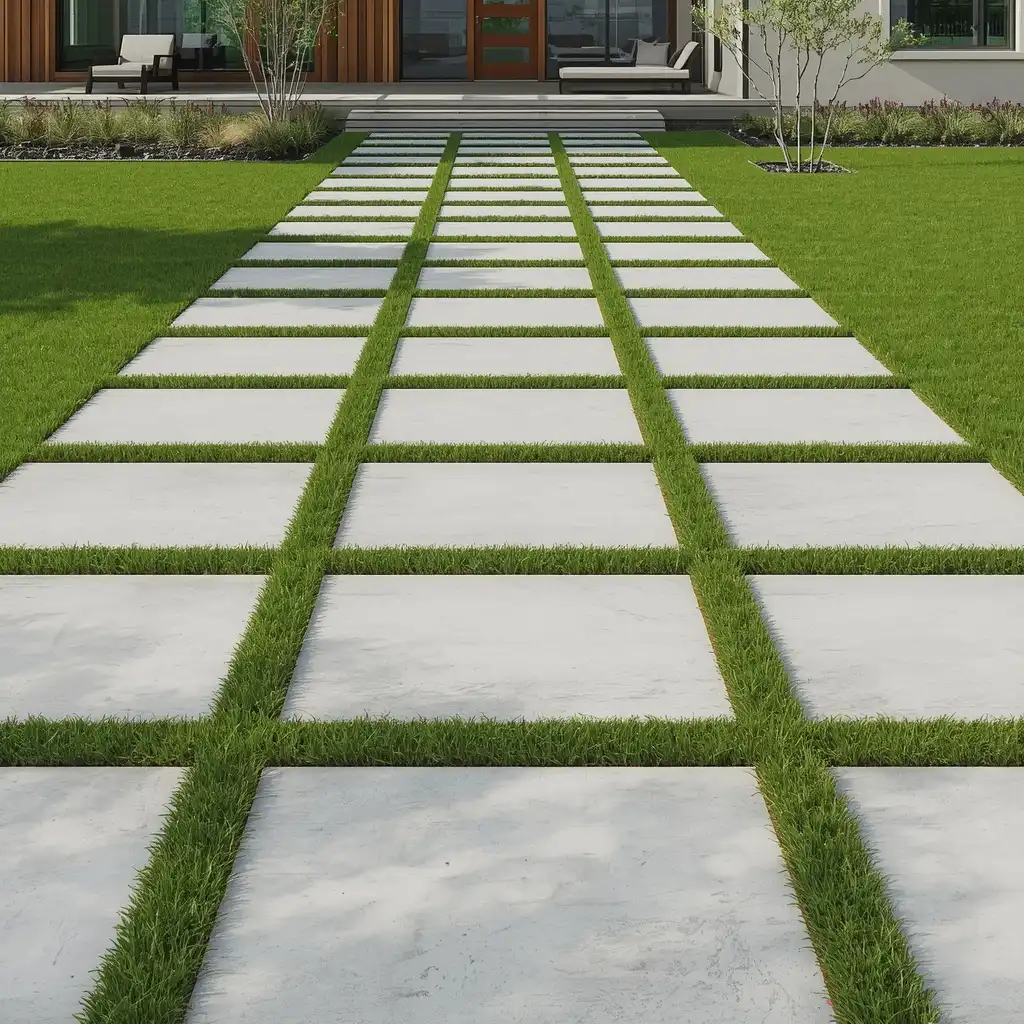
Concrete slabs with narrow grass strips create a fresh and open look. The green lines soften the hard surface and reduce the feel of a large paved yard.
This design works well with modern and mid-century homes. It can also connect the driveway with a simple lawn.
Real grass needs water, trimming, and healthy soil. It may struggle in hot areas or where vehicle tires turn often.
Low groundcover may work better than lawn in some climates. Artificial grass is another option, but it still needs cleaning.
Best for: Warm modern homes with simple landscaping
Main benefit: Adds green space between hard surfaces
Possible drawback: Grass can be damaged by tires and heat
Maintenance level: Medium to high
Keep soft strips away from sharp turning points. Tires can tear the edges when drivers turn into a garage.
Pair Asphalt With a Paver Border
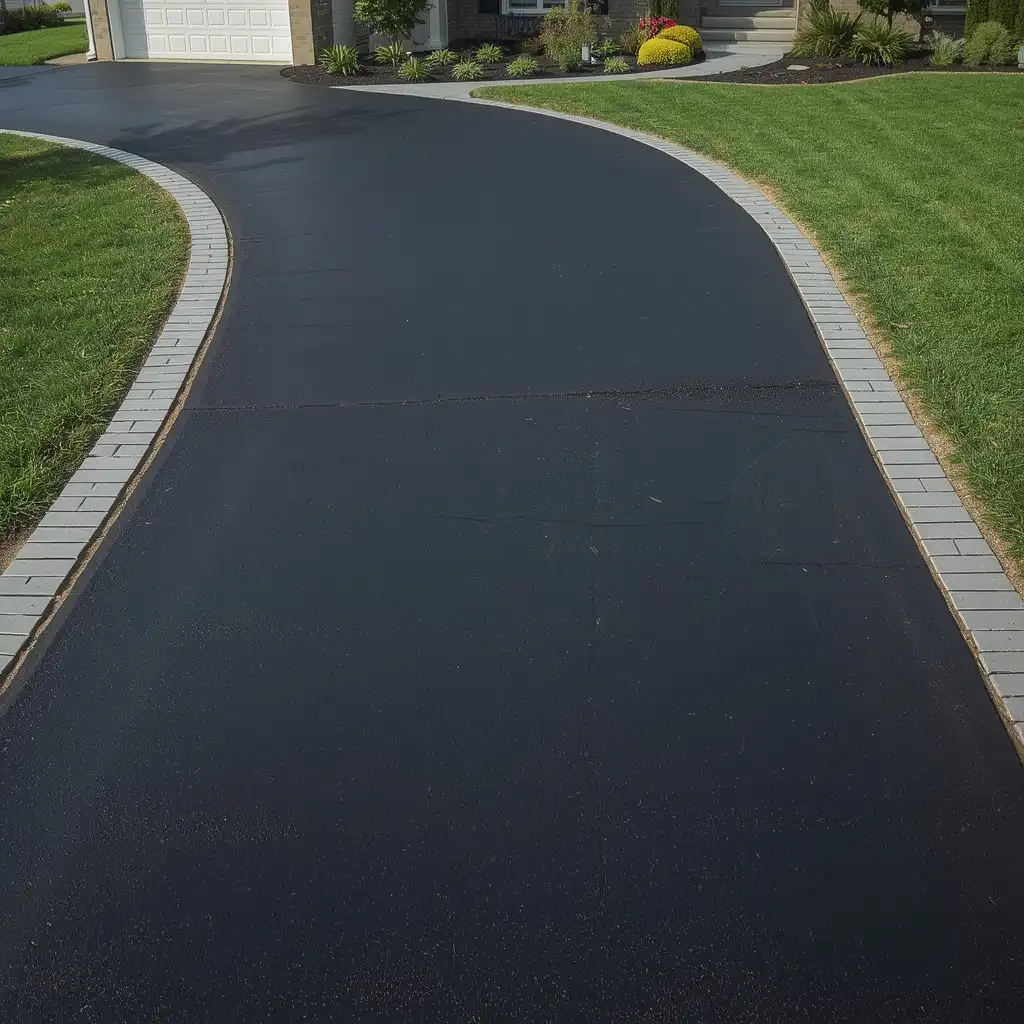
Asphalt provides a smooth and practical surface. A paver border can make it look more finished.
Choose a border that contrasts with the dark asphalt. Light gray, beige, or warm concrete pavers can create a clear frame.
You can also use the same pavers for the path to the front door. This connects the driveway with the main entrance.
The border needs a firm base. Weak edges may move when vehicles drive close to them.
Best for: Large driveways and practical family homes
Main benefit: Gives plain asphalt a more finished appearance
Possible drawback: The two materials may age at different rates
Maintenance level: Medium
Keep the border pattern simple. A single row or narrow double row is often enough.
Mix Concrete With Decorative Stone Bands
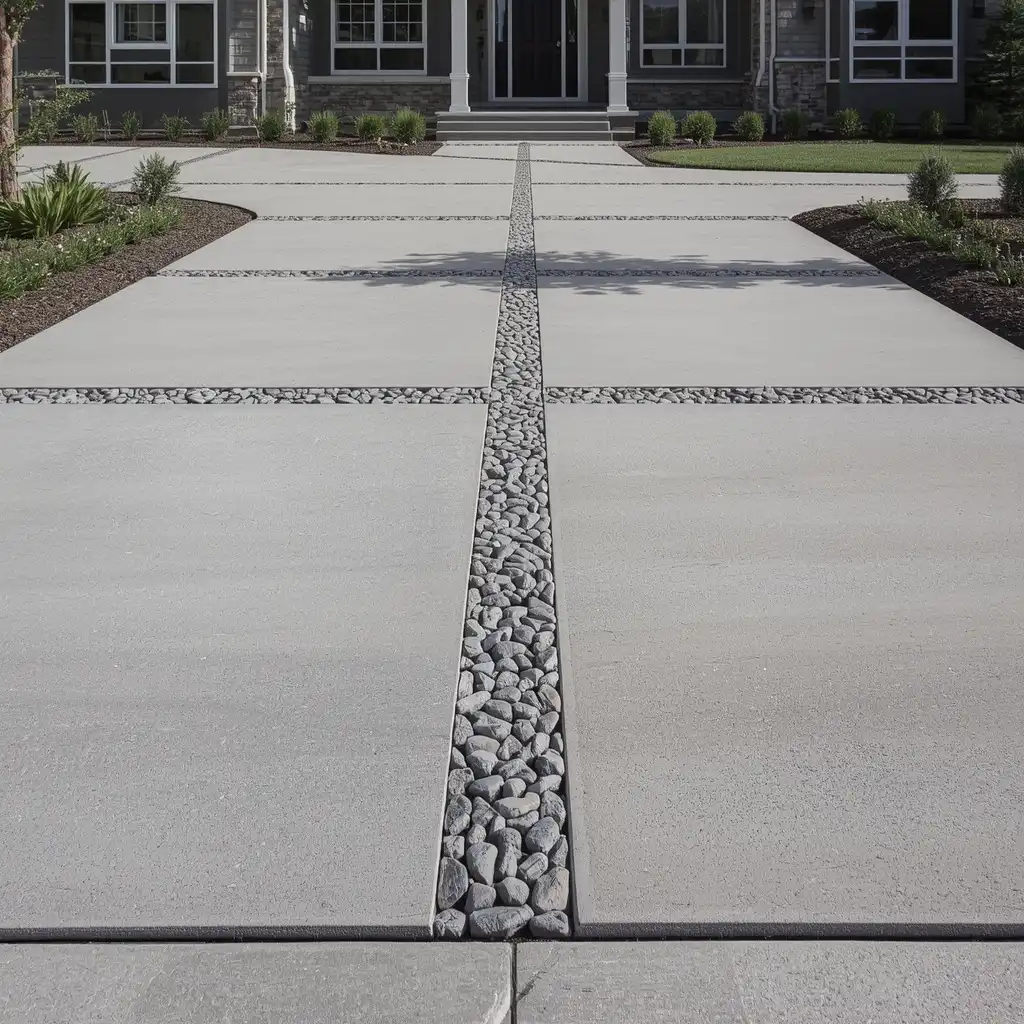
Narrow stone bands can separate large concrete slabs. They can also add texture without covering the whole driveway in loose material.
Use stone in areas where vehicles move in a straight line. Avoid placing loose bands where tires turn sharply.
Choose a stone that already appears in your garden beds or house exterior. Repeating the material helps the design feel planned.
Strong edging is needed on both sides of each band. This keeps stones out of the driving area.
Best for: Wide concrete driveways that need visual breaks
Main benefit: Adds texture without replacing the main surface
Possible drawback: Loose stones may move under tires
Maintenance level: Medium
Use an 80/20 balance. Let concrete cover most of the space and keep stone as the smaller accent.
Modern Driveway Layout Ideas for Different Lots
A good surface cannot fix a poor driveway layout. You need enough space to park, open doors, reach the garage, and walk safely.
Plan vehicle movement before choosing colors, plants, and borders.
Use One Clean Driveway Curve
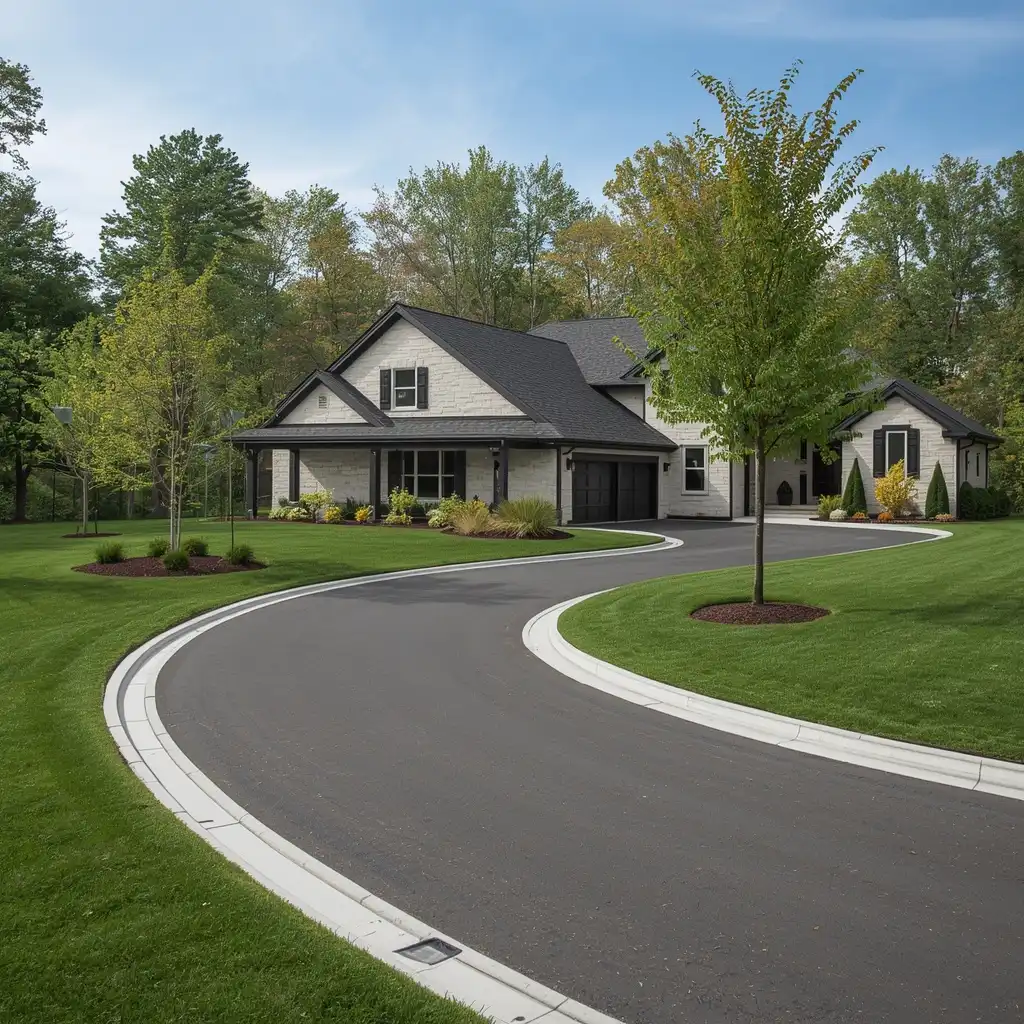
A gentle curve can soften a square home and make the entrance feel less rigid. It may also help you avoid a tree, slope, or garden bed.
Use one smooth bend instead of several tight turns. Sharp curves can make parking harder and may cause tires to cross the edges.
Keep plants low on the inside of the curve. Drivers need a clear view of the road, people, and other vehicles.
A continuous border can help the curve look clean. Stone, concrete, or metal edging can all work.
Best for: Wide or deep front yards
Main benefit: Creates a softer entrance and protects key landscape features
Possible drawback: Curves may use more yard space
Maintenance level: Depends on the chosen surface
Before construction, mark the proposed curve with rope or a garden hose. Drive through the marked space to test it.
Design a Simple Circular Driveway
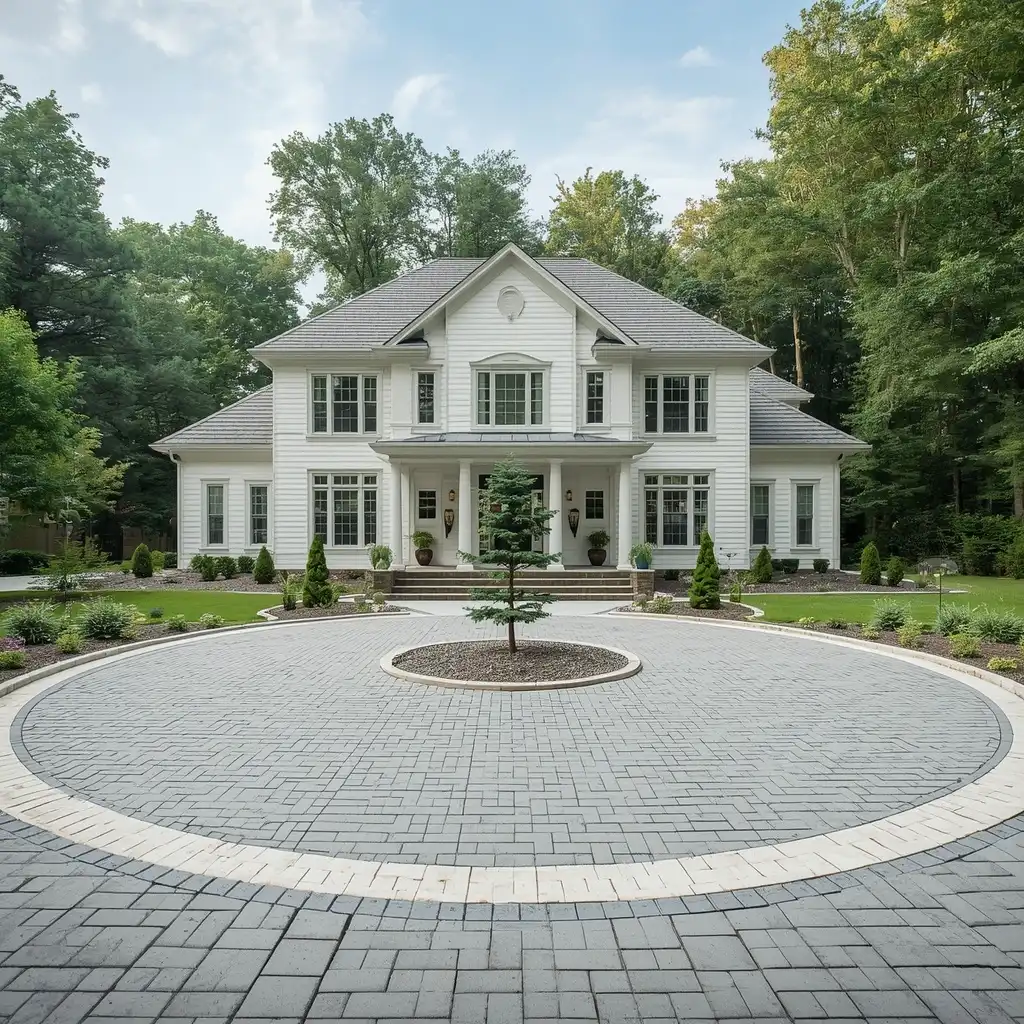
A circular driveway can make entry and exit easier because drivers may not need to reverse into the road.
The center island should remain simple. One tree, low shrubs, gravel, or a small sculptural feature may be enough.
Avoid tall plants near the road. They can block the view of people, bikes, or cars.
Use the same paving pattern around the full circle. Several pattern changes can make the entrance look smaller.
Best for: Wide front yards with enough turning space
Main benefit: Supports smoother vehicle movement
Possible drawback: Requires more land and more paving material
Maintenance level: Depends on the surface and center planting
Check local rules before building. Setbacks and driveway access rules may limit where the entrance and exit can sit.
Make a Narrow Driveway Feel Wider
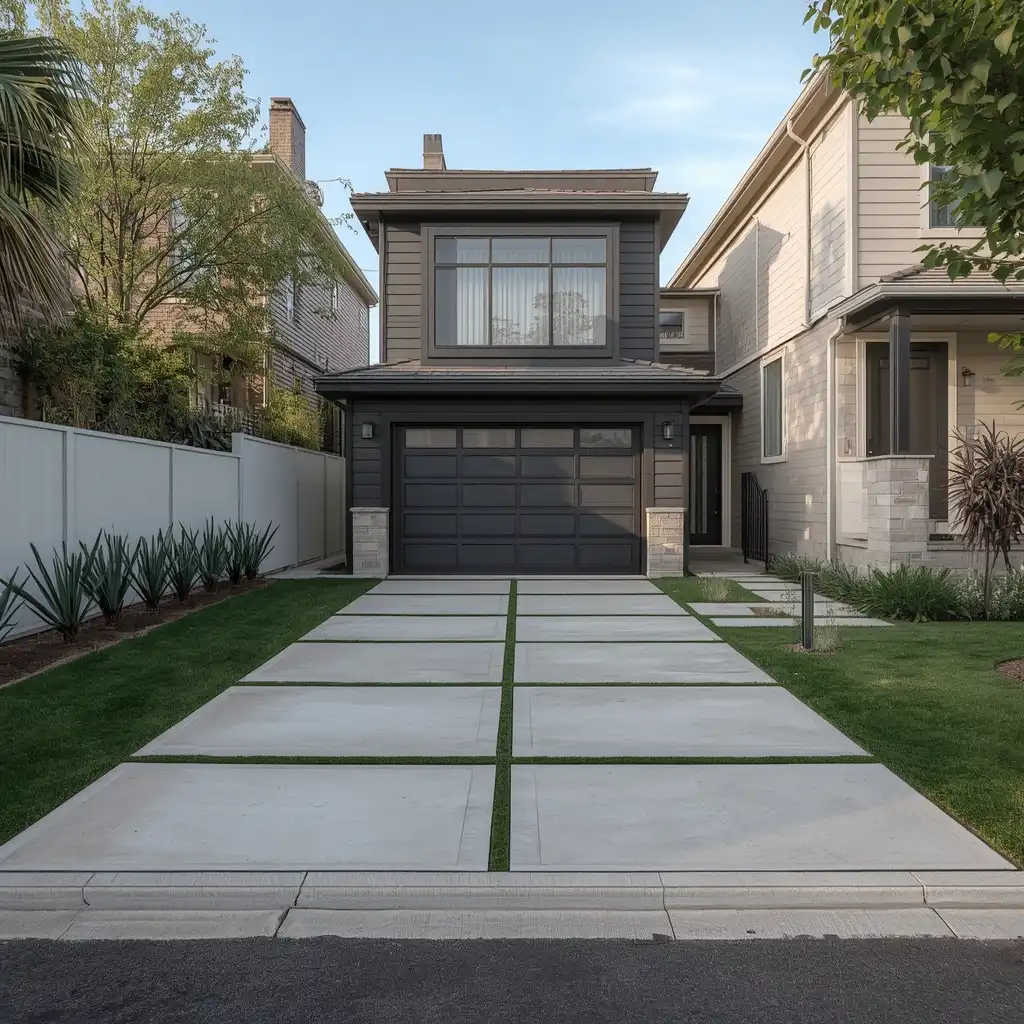
A narrow driveway can feel tight even when it has enough room for one car. Simple visual changes can make it look more open.
Use wide rectangular pavers or horizontal concrete joints. These lines can make the space appear broader.
Keep borders narrow. Wide garden beds, large walls, and thick hedges can reduce useful door space.
Place the walking path beside the driveway when possible. A path through the middle may break up the parking area.
Best for: Small urban homes and single-car garages
Main benefit: Improves the sense of space
Possible drawback: Decorative features must be kept small
Maintenance level: Depends on the chosen materials
Park your largest vehicle in the space and open every door. Do this before adding walls, posts, lights, or raised beds.
Modern Driveway Landscaping That Finishes the Entrance
Paving forms the main surface. Lighting, planting, and entrance features make it feel complete.
Good modern driveway landscaping should guide people without blocking cars or creating extra work.
Add Simple Linear Driveway Lighting
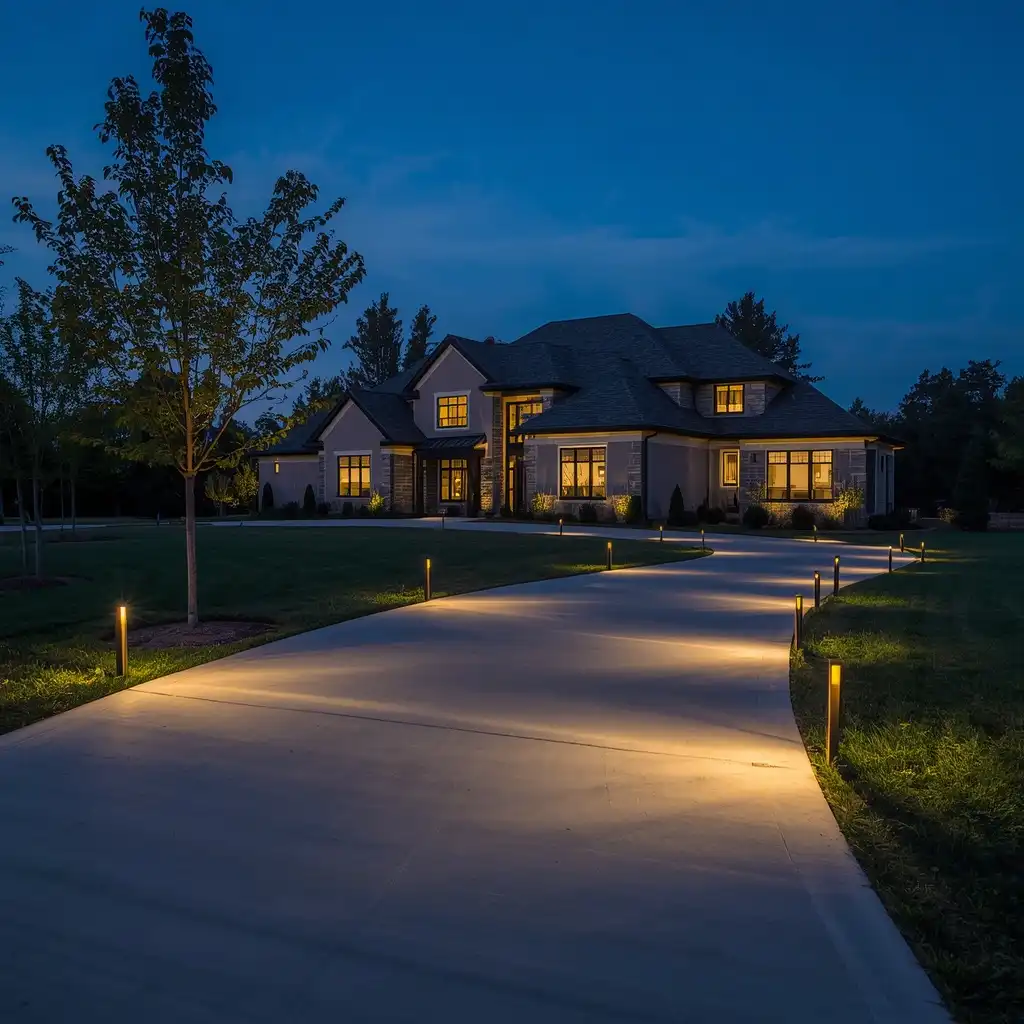
Low lights can make a driveway safer after dark. They can also highlight its shape without filling the yard with large fixtures.
Use recessed lights, low bollards, or lights built into a retaining edge. Place them at regular gaps for a calm look.
Focus light on bends, steps, gates, and walking paths. Avoid pointing fixtures into a driver’s eyes or a neighbor’s window.
Plan the wiring before the driveway is installed. Adding cables later may require cutting into the finished surface.
Best for: Long, curved, or sloped driveways
Main benefit: Improves visibility and marks the driveway edges
Possible drawback: Poor placement can create glare
Maintenance level: Low to medium
Use fewer fixtures with clear jobs. Too many lights can make a small front yard feel busy.
Use Drought-Tolerant Border Plants
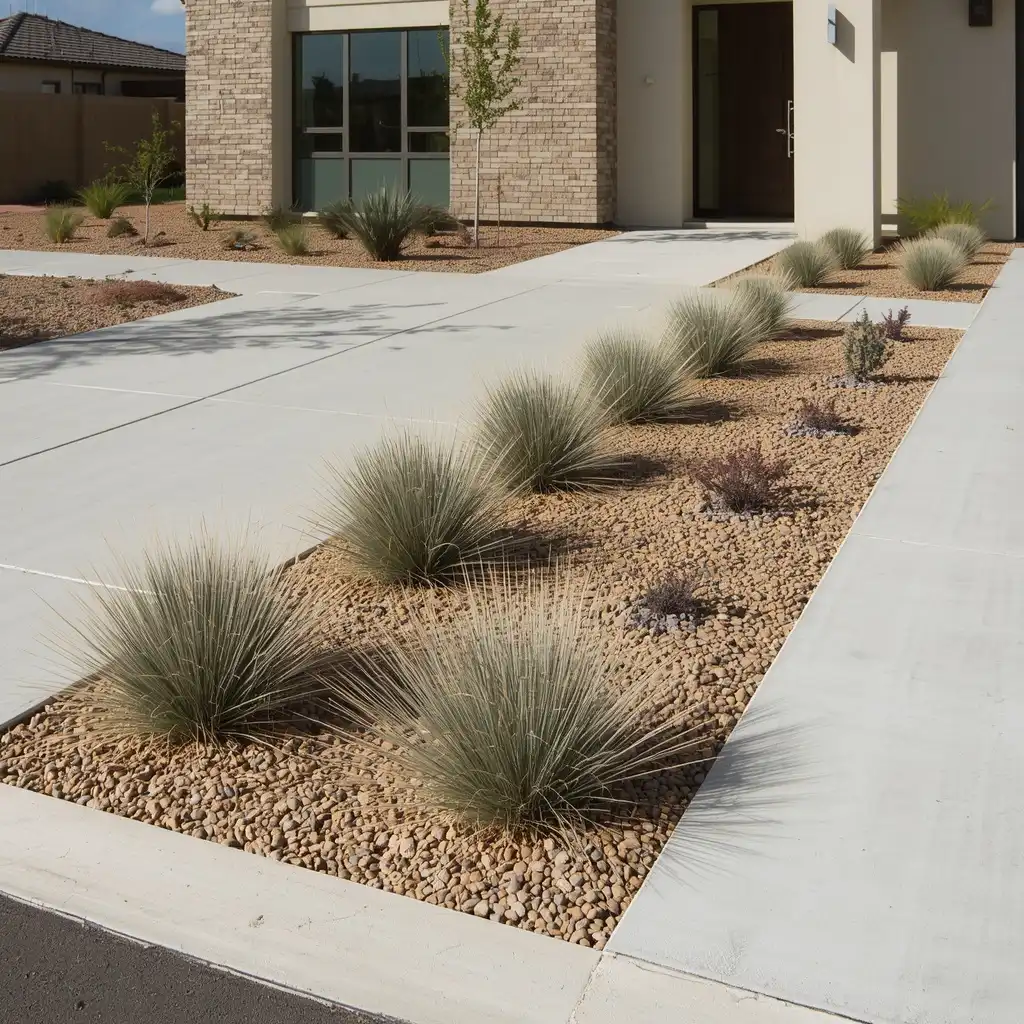
Driveway plants face heat, dust, car doors, and reflected sunlight. Choose strong plants that stay compact.
Repeat the same plant in small groups. Repetition creates a cleaner look than using a different plant every few feet.
Low ornamental grasses, compact shrubs, and structural plants can work well. Gravel mulch can reduce weeds and connect the bed with the driveway.
Avoid thorny plants beside parking areas. They can scratch cars and catch on clothing.
Best for: Hot areas and homeowners who want less watering
Main benefit: Softens the driveway without adding heavy care
Possible drawback: Some plants may struggle with reflected heat
Maintenance level: Low to medium
Check the mature width of every plant. A small nursery plant may spread across the driveway after a few years.
Build a Modern Gate and House-Number Wall
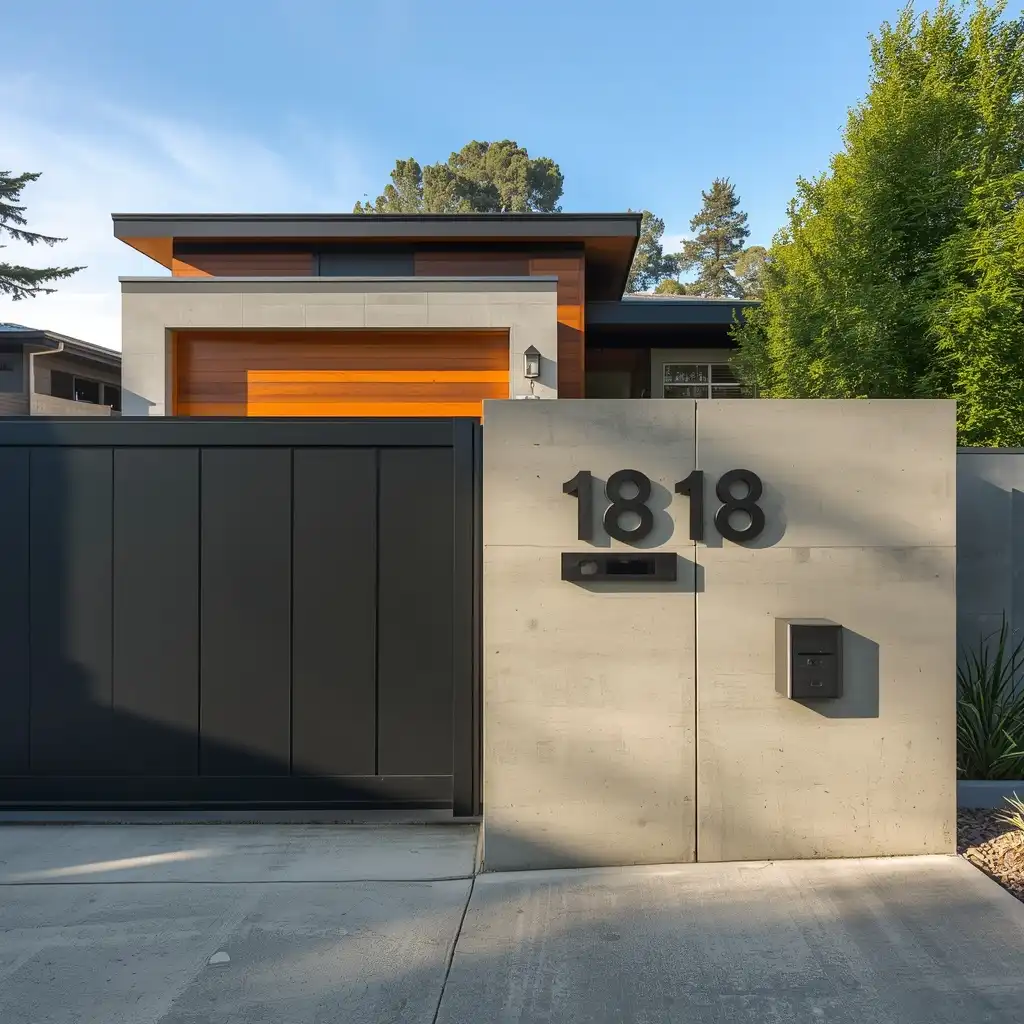
A gate or number wall can make the driveway entrance easier to find. It can also connect the driveway with the rest of the house.
Match the gate material with the garage door, front door, or window frames. Wood, dark metal, and smooth concrete all suit modern homes.
Choose house numbers that can be read from the road. Small or low-contrast numbers may look neat up close but fail at a distance.
Plan space for a mailbox, intercom, parcel box, or entrance light. Combining these items can reduce clutter.
Best for: Gated homes and properties set back from the road
Main benefit: Creates a clear and useful entrance point
Possible drawback: A poor layout can block views or vehicle movement
Maintenance level: Medium
Check the gate opening direction before building the wall. The gate must clear parked cars, visitors, and the public road.
How to Choose the Right Modern Driveway Design
A driveway can look great in a photo and still be wrong for your home. Use these five steps before choosing a design.
- Measure the full space. Include door clearance, turning areas, walkways, and garage access.
- Check how water moves. Look for puddles, low points, and water flowing from the roof.
- Study your house colors. Choose driveway shades that repeat or support the exterior.
- Think about weekly care. Be honest about how much raking, washing, sealing, or trimming you will do.
- Compare real samples outside. Materials can look very different in sun, shade, rain, and dust.
Ask each contractor how the surface will handle your local weather. You should also ask how repairs will look after several years.
Final Thoughts
The best driveway balances appearance with daily use. It should suit your house, provide enough vehicle space, and handle rain without causing new problems.
Concrete gives you clean lines. Pavers offer more pattern and easier small repairs. Gravel can lower the starting cost, while mixed materials add contrast. Lighting and low plants can finish the entrance without making it crowded.
Save three designs that fit your property. Then measure the area, check local rules, compare samples, and request clear quotes.
Use these modern driveway ideas to create an entrance that looks connected to your home and remains practical for years.