
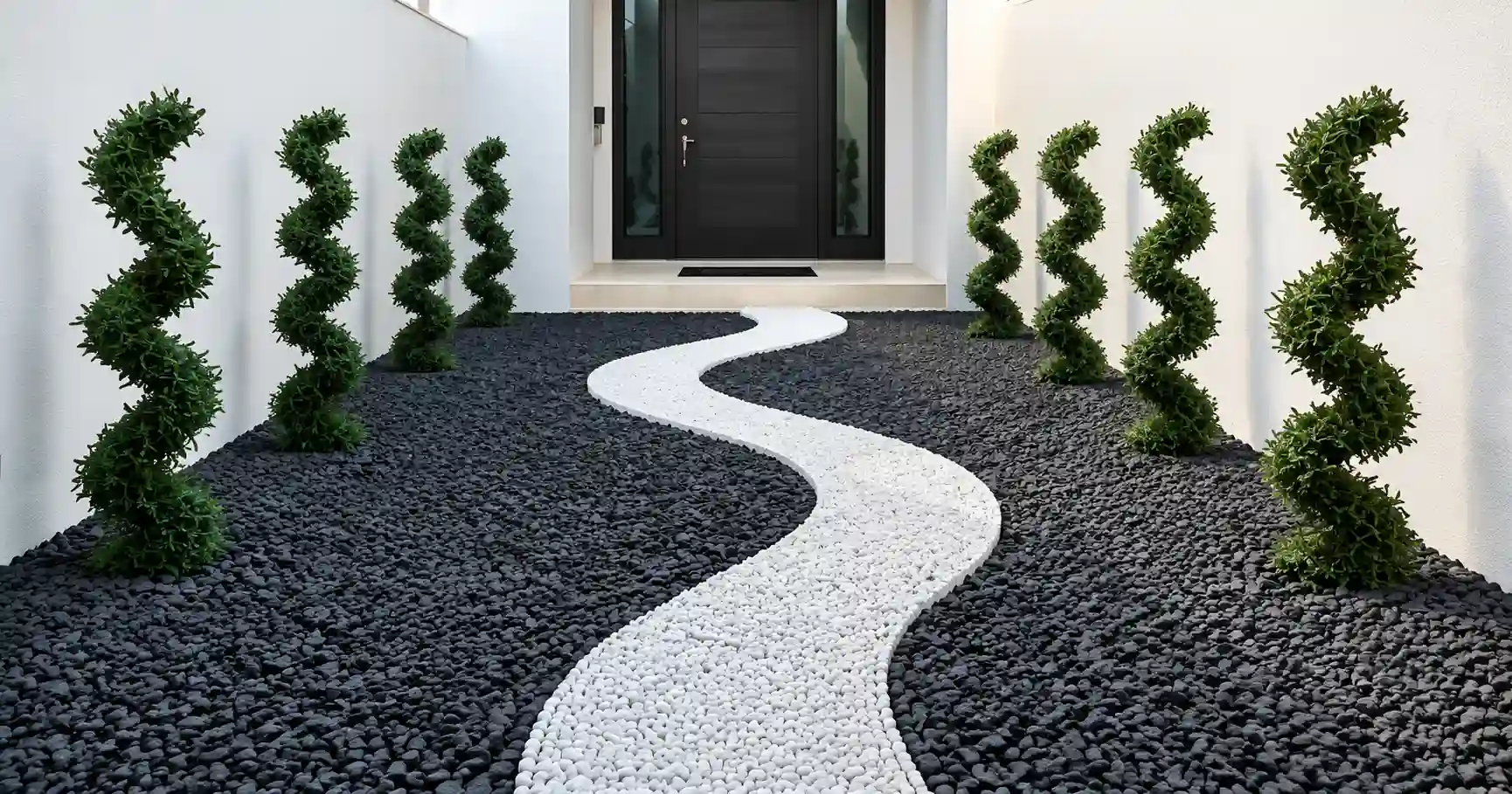
Your yard may still look plain even after you add plants, edging, and fresh mulch. Sometimes the space needs stronger contrast to make each feature stand out.
These black rock landscaping ideas can help you create that contrast without rebuilding your whole yard. Black lava rock works well around paths, patios, garden beds, and modern homes. It can also make green, silver, and colorful plants look brighter.
Still, black rock is not perfect for every location. It can become hot in full sun. Loose stones can move into your grass or driveway. Leaves and soil can also collect between the rocks and allow weeds to grow.
The key is to use black rock in the right places. Strong edging, suitable plants, and good preparation make a big difference.
Below, you will find 17 lava rock landscaping ideas for front yards, backyards, slopes, patios, and water-wise gardens. You will also learn how to install the rock, keep it clean, and avoid common mistakes.
What You Need to Know Before Using Black Rock
Black landscaping rock comes in several forms. The product labeled “black rock” at one store may look very different from a product sold under the same name somewhere else.
Black lava rock has a rough, porous surface. It is often lighter than dense natural stone because small air spaces form inside it.
Basalt gravel is usually heavier and more solid. It has a deep gray or black color and works well in modern landscape designs.
Black slate chips are thin and flat. Their sharp shape creates a clean look in decorative beds.
Crushed black stone has smaller pieces. Some types can be packed down for pathways or utility areas.
| Material | Appearance | Best Use |
| Black lava rock | Rough and porous | Succulent beds and decorative accents |
| Basalt gravel | Dense and dark | Borders, paths, and modern yards |
| Black slate chips | Flat and angular | Contemporary garden beds |
| Crushed black stone | Small and compact | Walkways and utility spaces |
Dark rock can collect heat in sunny areas. This may place extra stress on young or heat-sensitive plants.
Balance the rock with green plants, pale paving, wood, or gray boulders. This keeps the area from looking too dark or bare.
Strong edging is also important. Without it, black rock can spread into the lawn, driveway, or walking path.
1. Frame Your Front Walkway With Black Lava Rock
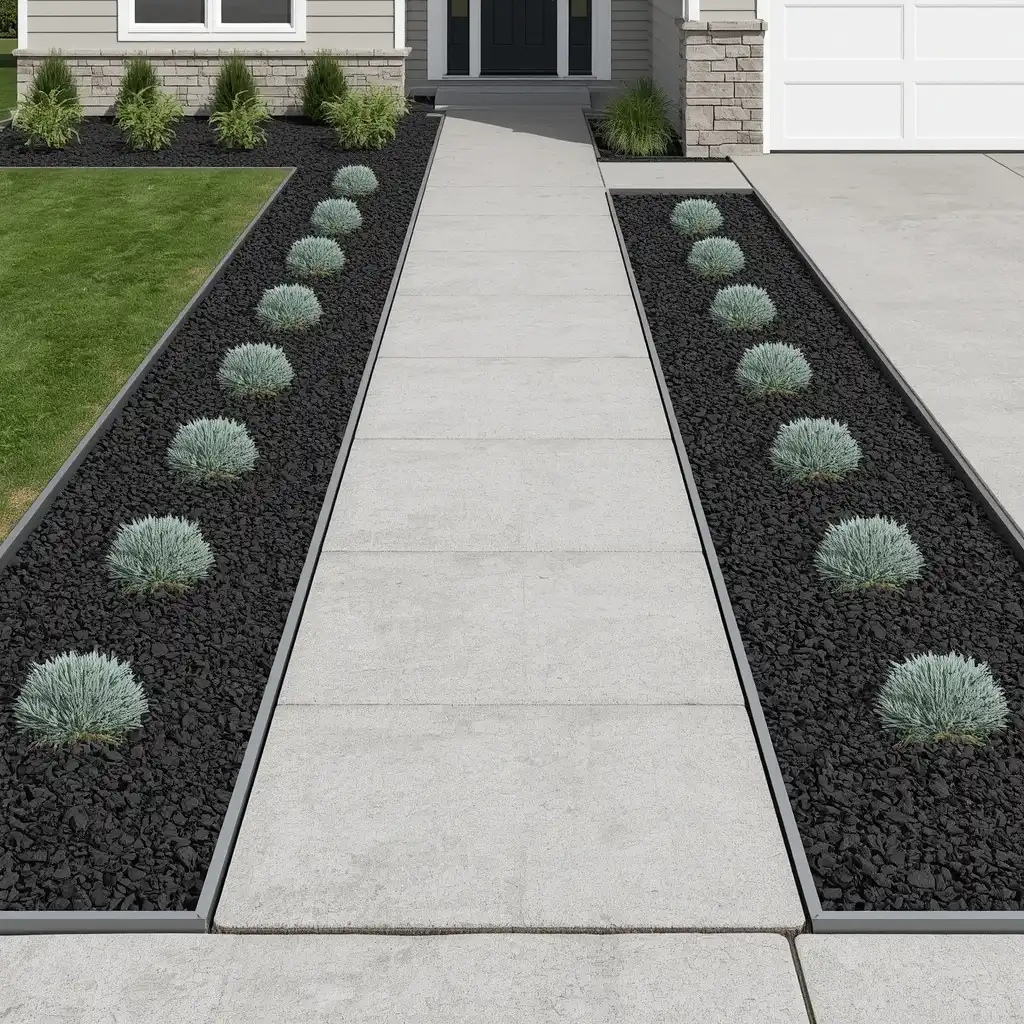
A narrow strip of black lava rock can make a basic walkway look clean and finished. It also creates a clear line between the path and nearby plants.
Keep the rock strip about 8 to 18 inches wide. A wider strip may overpower a small entrance.
Add steel, brick, or concrete edging on both sides. This keeps the stones away from the walkway and lawn.
Place small plants at even spaces along the border. Blue fescue, low sedum, and compact ornamental grasses can soften the dark rock.
Gray concrete pavers look sharp beside black lava rock. White or cream pavers create even stronger contrast.
Do not cover the whole entrance with dark stone. A narrow accent usually looks better and stays easier to maintain.
Best for: Small front yards and simple concrete paths.
2. Create a High-Contrast Foundation Bed
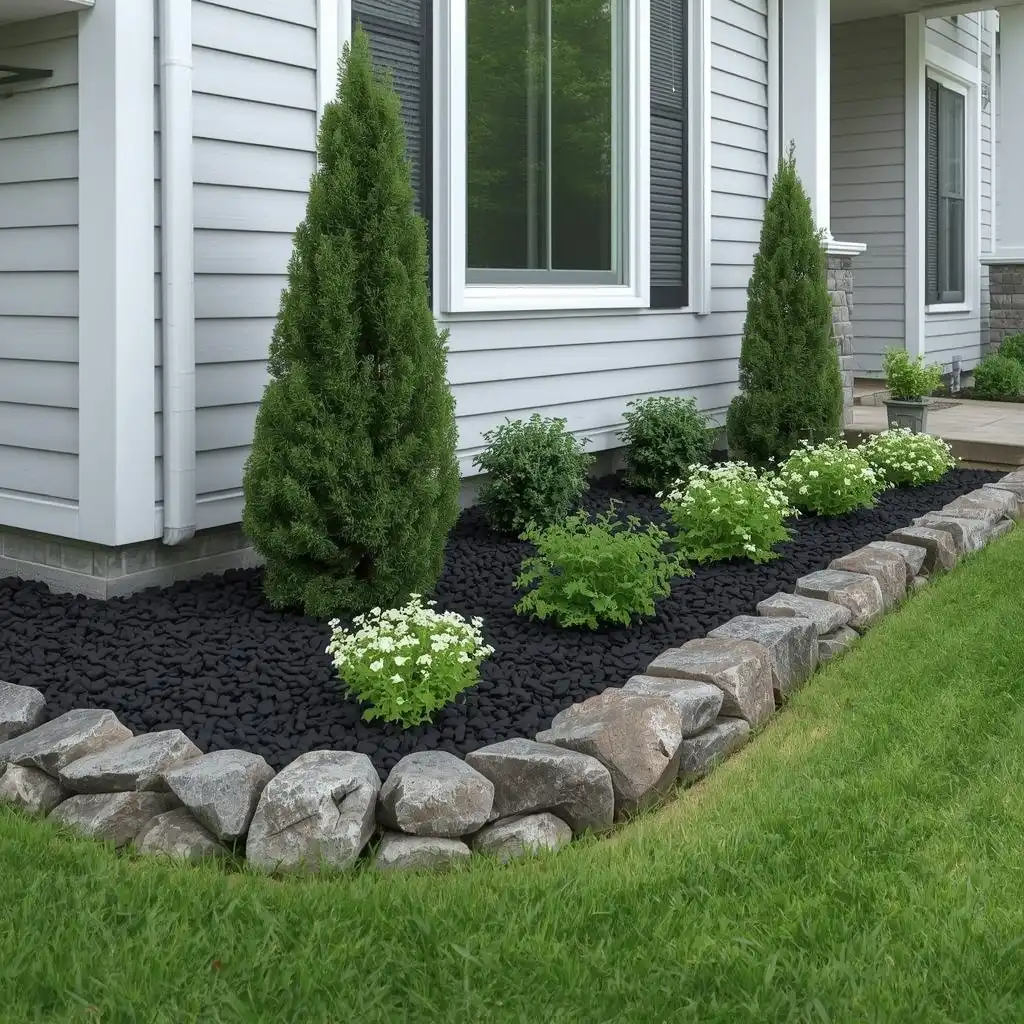
Black rock can make a light-colored home look sharper. It works well beside white, cream, tan, and pale gray siding.
Start with a curved or straight bed along the foundation. Choose a shape that matches the style of the house.
Use taller shrubs near blank walls. Place shorter plants near windows, steps, and walkways.
A simple mix may include dwarf boxwood, white flowers, and soft green ground cover. The plants break up the dark surface and keep the bed from looking empty.
Leave space around vents, pipes, and utility boxes. You should still be able to reach these areas without moving heavy stones.
Keep black rock away from direct contact with siding. A small gap helps reduce trapped moisture and makes inspections easier.
Best for: Light-colored homes that need stronger curb appeal.
3. Add a Clean Black Rock Driveway Border
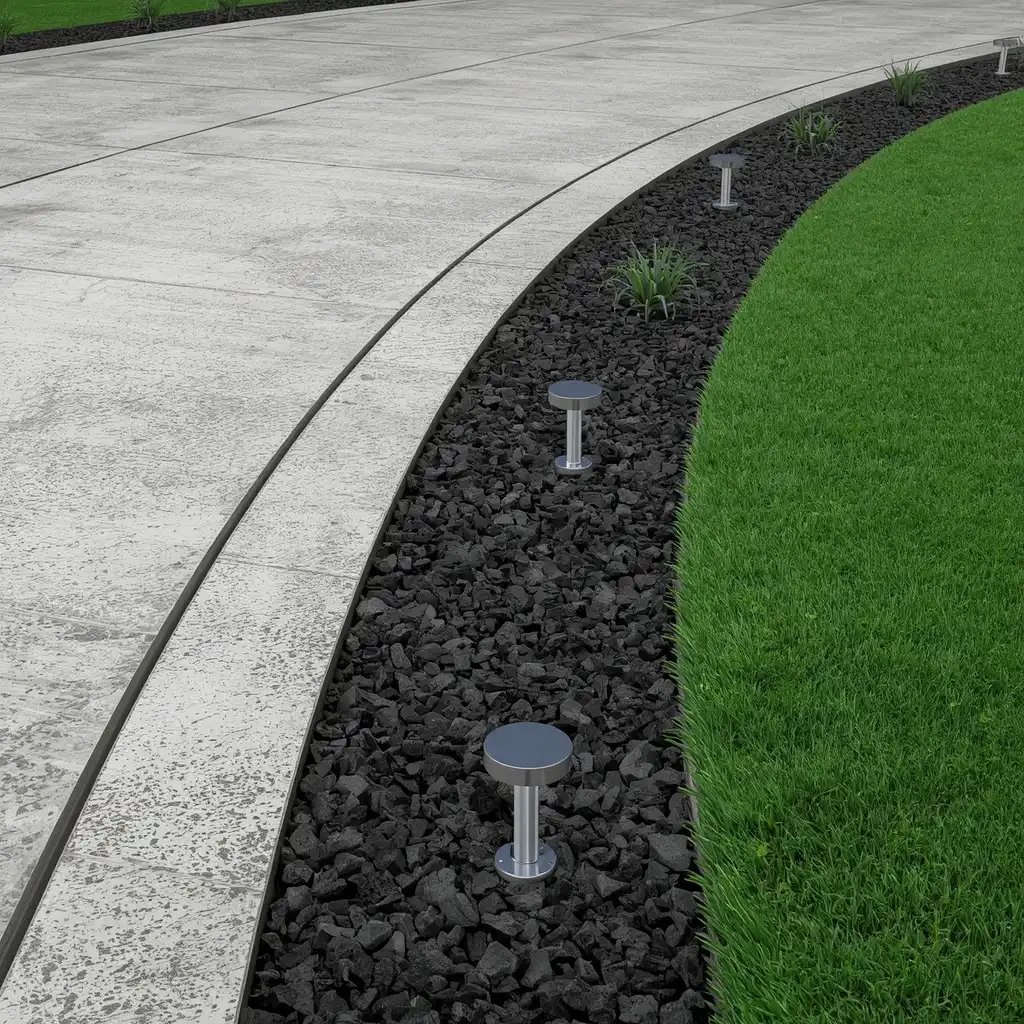
A dark border can give a plain driveway a more planned look. It can also create separation between the driveway and the lawn.
Use a strip that is at least 10 to 12 inches wide. Very thin borders often look uneven once stones begin to shift.
Install a solid edge beside the driveway. Steel, concrete, or brick works better than weak plastic edging in areas with vehicle traffic.
Do not place loose lava rock where tires will roll over it. The stones may move across the driveway or become caught in tire grooves.
Add low lights or spaced grasses along the border. Keep plants far enough from the driveway so they do not scratch cars.
Black basalt is often a better choice than light lava rock beside a busy driveway. Its extra weight can help it stay in place.
Best for: Concrete driveways beside lawns or simple planting beds.
4. Build a Small Black Rock Mailbox Garden
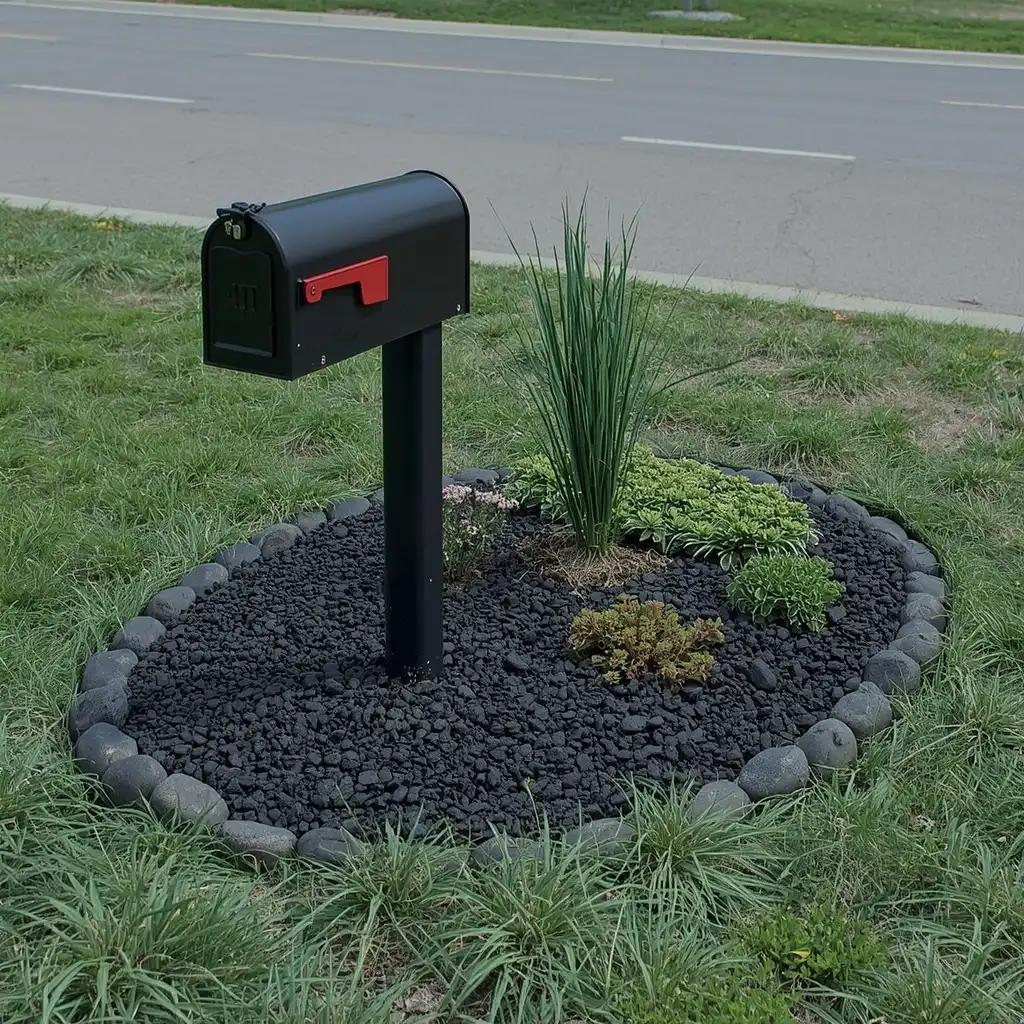
A mailbox garden can make the edge of your property feel connected to the rest of the yard. Black rock gives this small space a clear shape.
Create a round, square, or gently curved bed around the mailbox. Keep the design compact so it does not block road views or mail access.
Use one upright plant as the main feature. Add two or three shorter plants around it.
For example, pair a dwarf grass with sedum and a low flowering plant. Choose plants that can handle road heat, dust, and limited watering.
Add a strong edge around the bed. This stops the rock from spreading into the grass or street.
Avoid tall plants near the mailbox door. Your mail carrier should be able to reach it without pushing through leaves or sharp branches.
Best for: Small budget projects with a clear visual result.
5. Shape Geometric Beds With Steel Edging
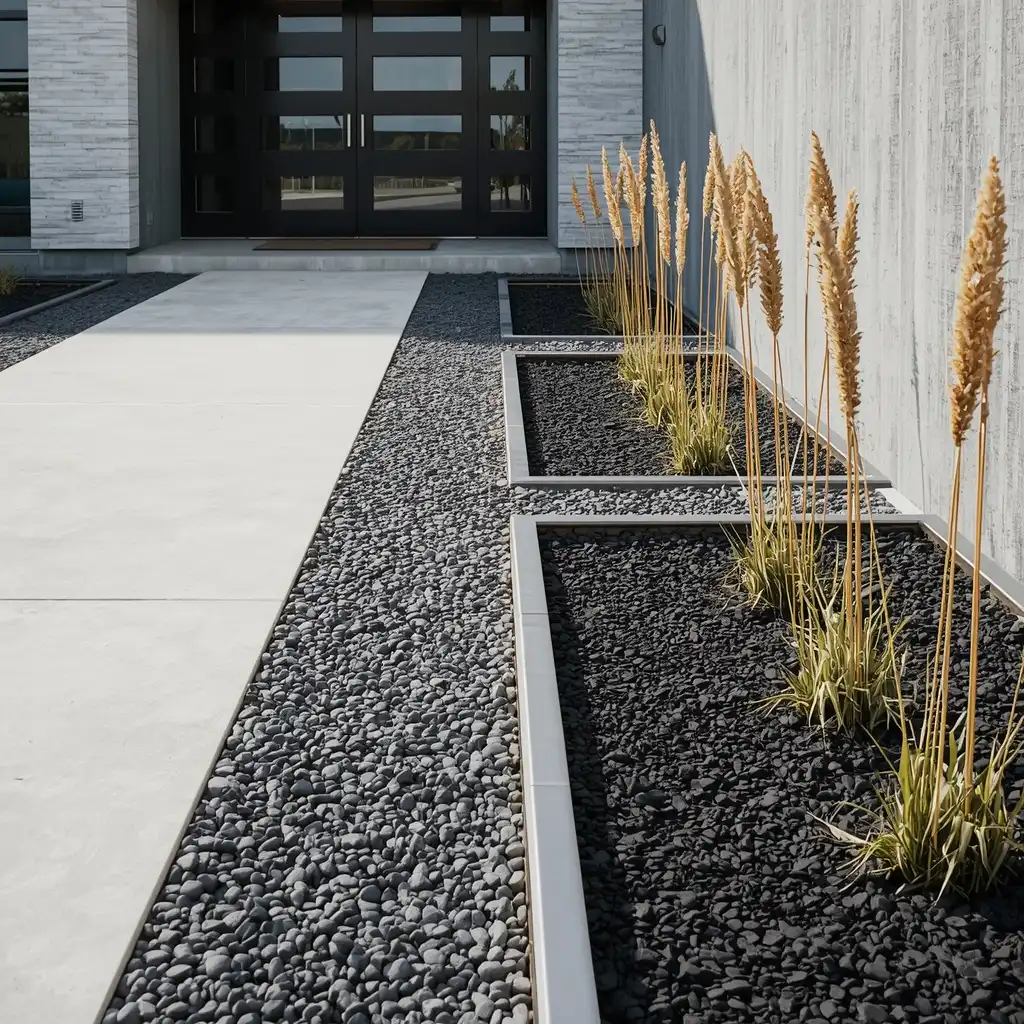
Straight lines and simple shapes work well with black rock. They can make a small yard feel more ordered.
Create square, rectangular, or angled garden beds. Use thin steel edging to hold each shape.
Fill the beds with black basalt or black lava rock. Then repeat one plant type in each section.
Three narrow beds with upright grasses can look better than one large bed filled with many unrelated plants.
Keep the spacing even. This makes the design feel calm and planned.
Rust-colored steel creates a warm contrast against dark rock. Black steel gives the area a more seamless look.
Use this idea beside a modern home, garage wall, patio, or front entrance.
Best for: Modern homes with straight paths and simple architecture.
6. Set Concrete Stepping Stones Into Black Rock
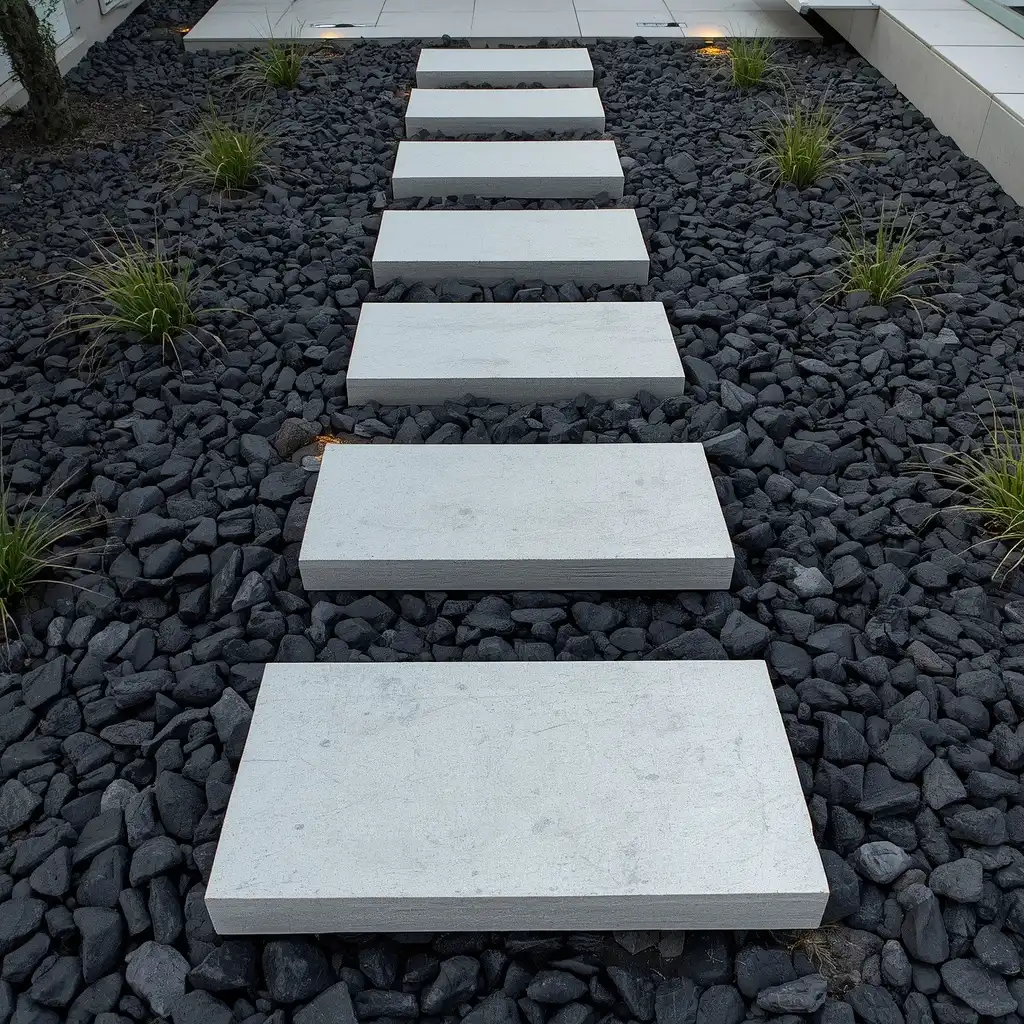
Large concrete stepping stones can appear to float over a bed of black rock. This creates a bold path without adding many materials.
Choose square or rectangular slabs. Keep the size and spacing consistent.
Place each slab on a stable base. Do not depend on loose lava rock to hold heavy stepping stones level.
Leave enough space for a natural walking step. Test the layout before setting the stones in place.
Keep the top of the rock slightly below the top of each slab. This reduces the chance of loose pieces moving onto the walking surface.
Add small lights beside every second or third stone. Soft lighting can bring out the texture of the rock after dark.
This path may not work well for wheelchairs, strollers, or people who need a smooth surface. Use solid paving for the main route.
Best for: Side yards, garden paths, and modern courtyards.
7. Soften Black Rock With Ornamental Grasses
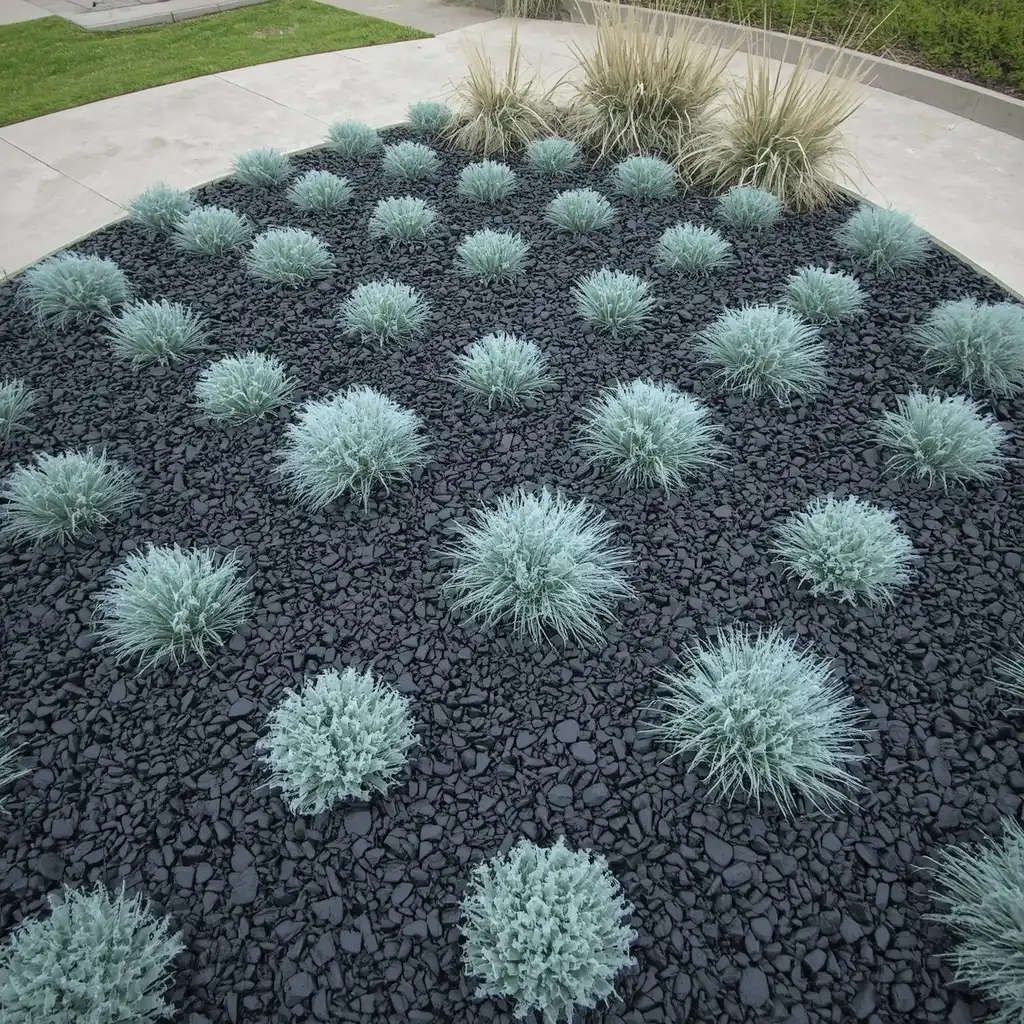
Black rock can feel hard when used alone. Ornamental grasses add movement and a softer shape.
Choose one or two grass types that grow well in your climate. Repeating the same plant often looks better than using many different varieties.
Blue-green grass creates a cool contrast. Bright green grass gives the area a fresh look. Golden grass can warm up the dark color.
Check the mature width before planting. A small plant may become much wider after two or three seasons.
Leave a clear space around each plant crown. Do not pile rock against the base.
Use drip irrigation where needed. It places water near the roots without soaking the whole rock bed.
Best for: Modern beds that need more texture and movement.
8. Form a Dry Creek With Black and Gray Stone
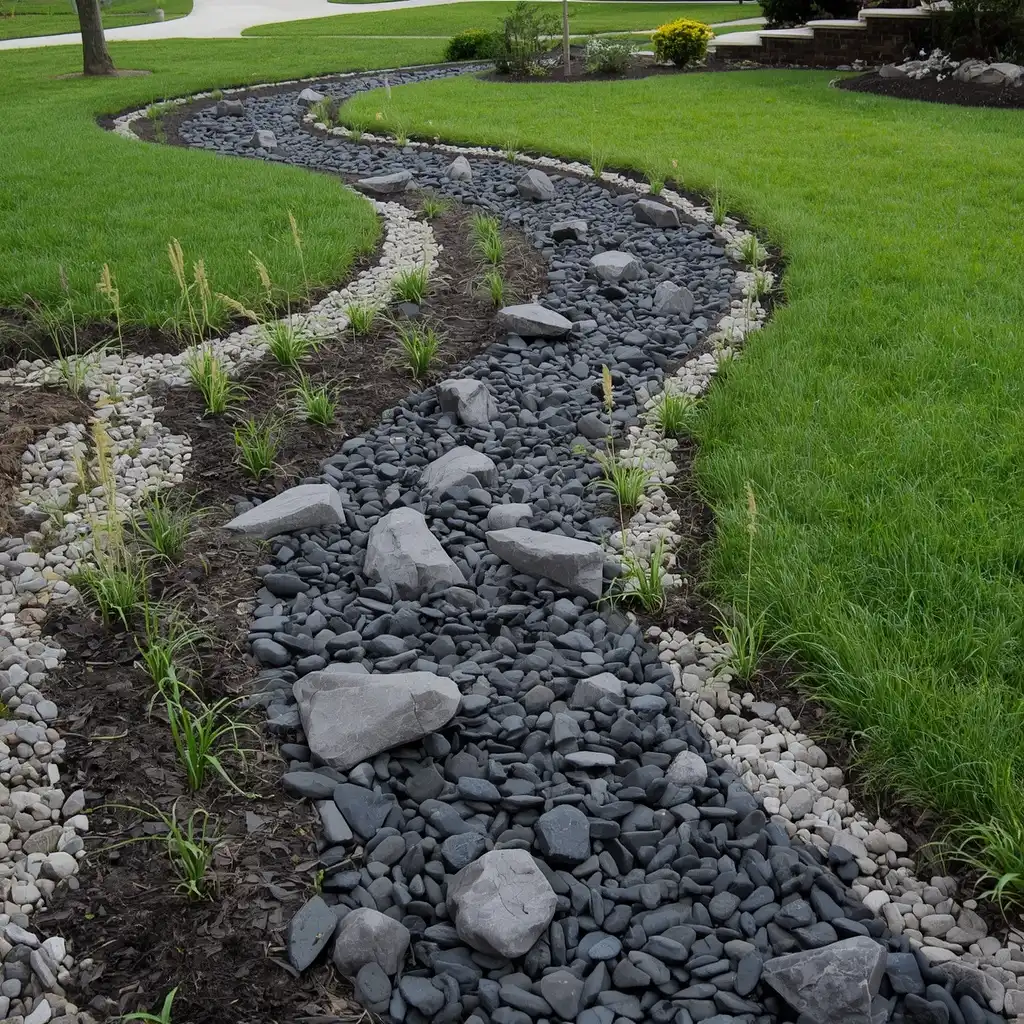
A dry creek can add shape to a wide or sloped yard. It may also help guide rainwater when properly planned.
Start with a gentle curve. A straight trench often looks less natural.
Place larger gray or dark boulders along the bends. Fill the center with smaller black and gray stones.
Mix two or three rock sizes. A single stone size can make the creek look flat.
Add grasses or low plants near the edges. Leave some open areas so the stone pattern remains visible.
Do not direct water at your foundation, fence, or neighbor’s property. Serious drainage problems may need help from a landscape or drainage professional.
The creek should follow the natural grade of the yard. It should never force water into an unsafe area.
Best for: Slopes, wide beds, and yards with minor runoff paths.
9. Make a Black Lava Rock Succulent Garden
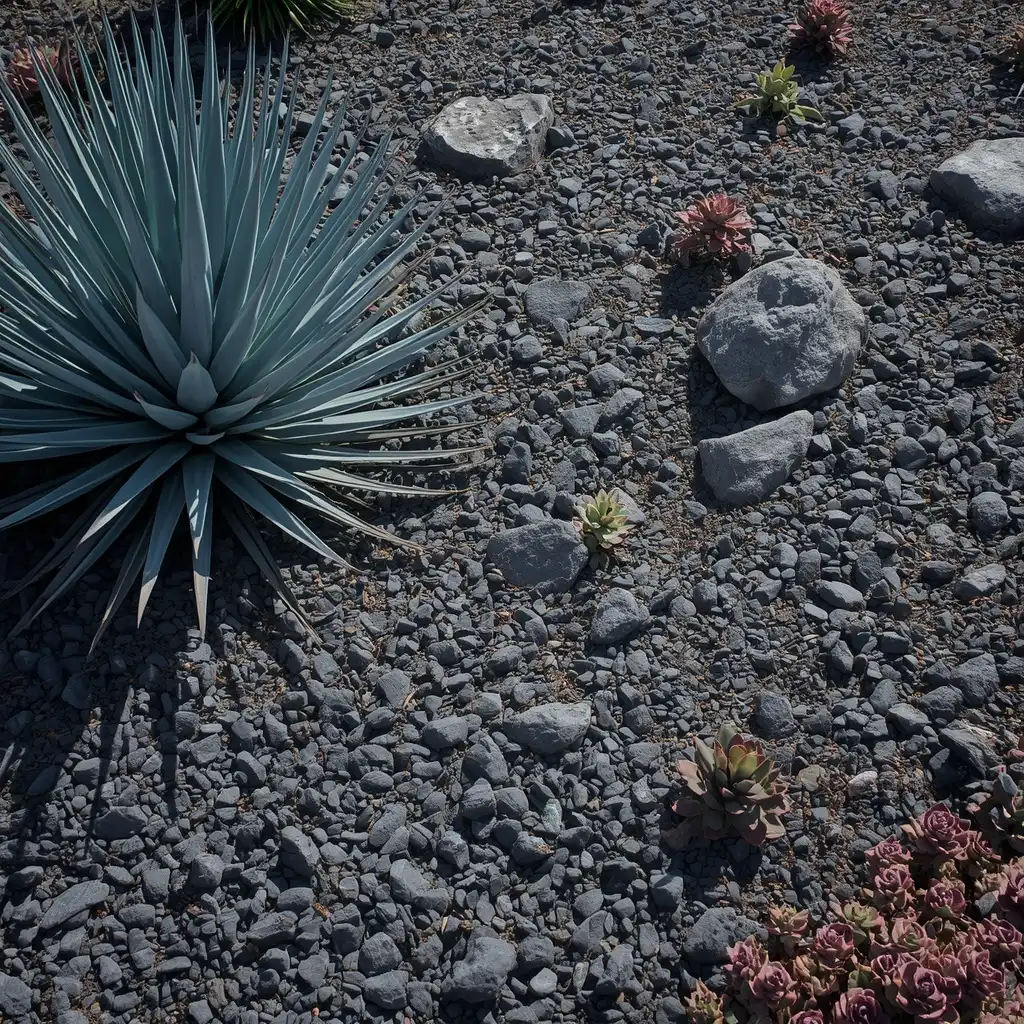
Black lava rock can create a strong background for succulents. Green, blue, silver, and red leaves stand out against the dark surface.
Choose plants that can handle your winters, rainfall, and summer heat. A plant that grows well in a dry desert may fail in a cold or wet climate.
Place taller plants at the back or center. Use smaller rosette-shaped plants near the front.
Add one or two larger boulders to give the bed more height. Avoid filling every empty space with plants.
Aloe, sedum, echeveria, and hardy ice plants may work in suitable climates. Check local growing advice before buying.
Succulents still need proper soil and drainage. Black rock cannot fix heavy soil that holds too much water.
Best for: Sunny beds with fast-draining soil.
10. Use One Agave as a Strong Focal Point
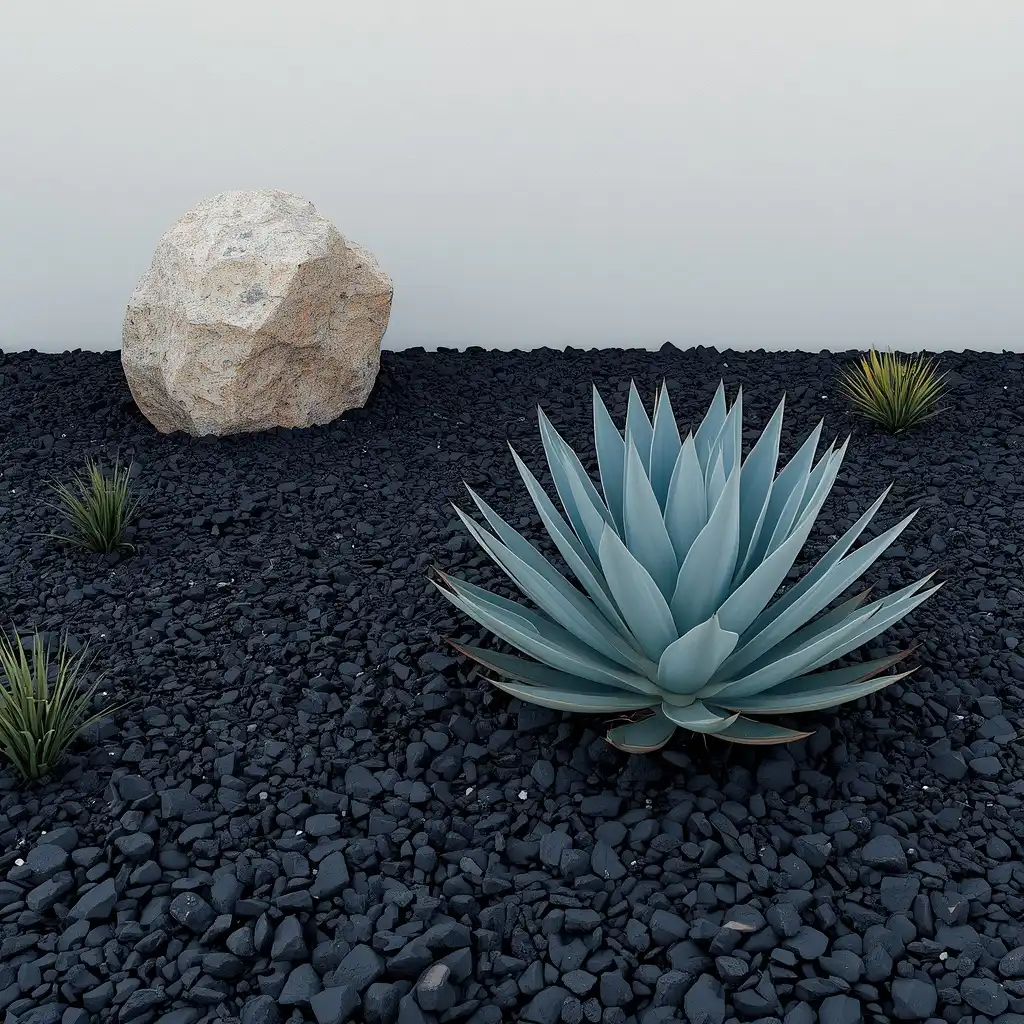
One bold plant can have more impact than a crowded bed. Agave works well because its strong shape stands out against black rock.
Place one main agave in the center or slightly off-center. Check its full mature size before planting.
Add two or three smaller plants around it. Keep the supporting plants simple so the agave remains the main feature.
Use black lava rock as the background. Add one large gray or tan boulder for contrast.
Keep sharp leaves away from paths, doors, seating, and play spaces. Some agave plants can become much larger than expected.
Choose a species that can survive your local winter. Many types cannot handle long periods of frost.
Best for: A bold feature beside a driveway, wall, or front entrance.
11. Mix Black Rock With Drought-Tolerant Native Plants
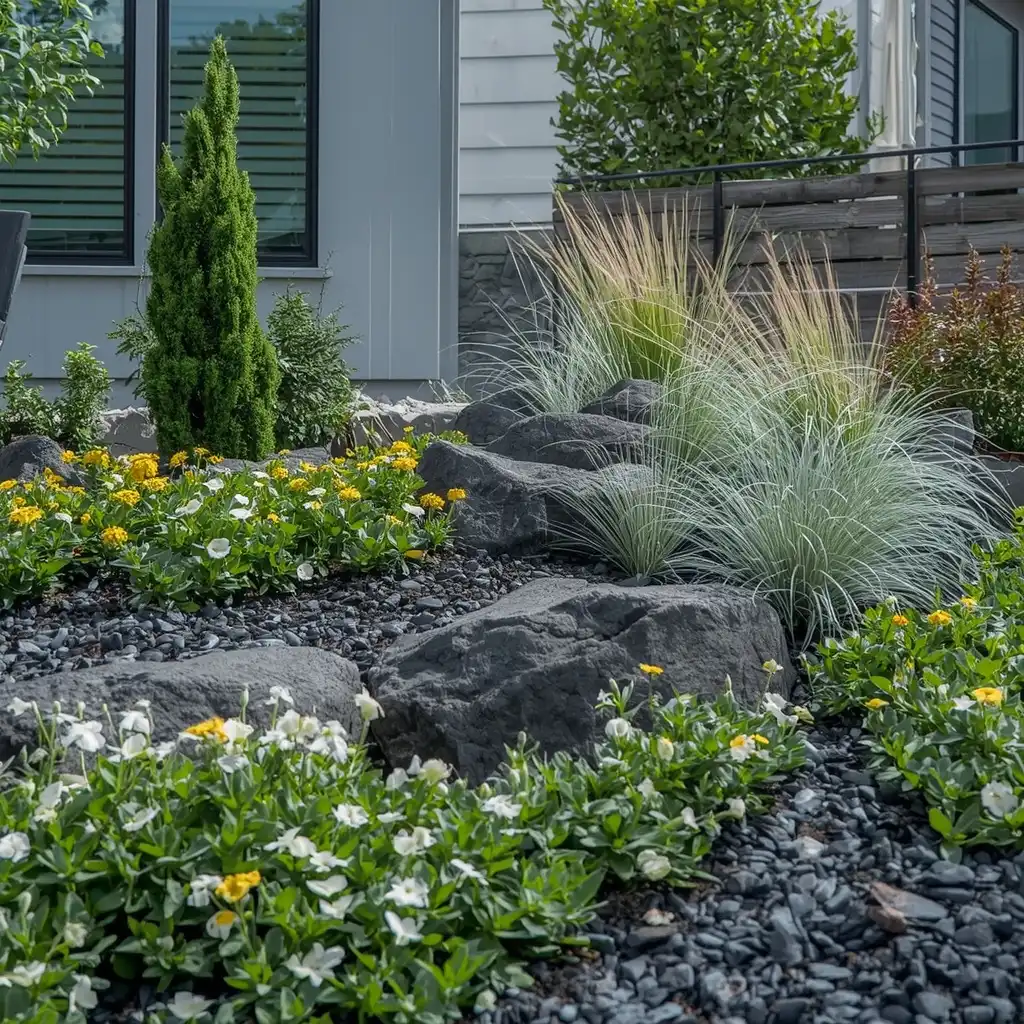
Native plants can help a rock bed feel connected to the local area. They may also need less care once established.
Choose plants that match the amount of sun, soil type, and rainfall in your yard. “Native” does not mean every plant will grow well in every spot.
Group plants with similar water needs. This makes irrigation easier and lowers the risk of overwatering one group.
Use a mix of plant forms. Add one upright plant, one flowering plant, one ground cover, and one soft grass.
Silver and blue-green leaves often look bright against black rock. Yellow, pink, or white flowers can add small areas of color.
Leave enough plant cover to soften the heat from large open rock areas.
Best for: Water-wise gardens that still need color and wildlife value.
12. Support a Sunny Slope With Mixed Rock Sizes
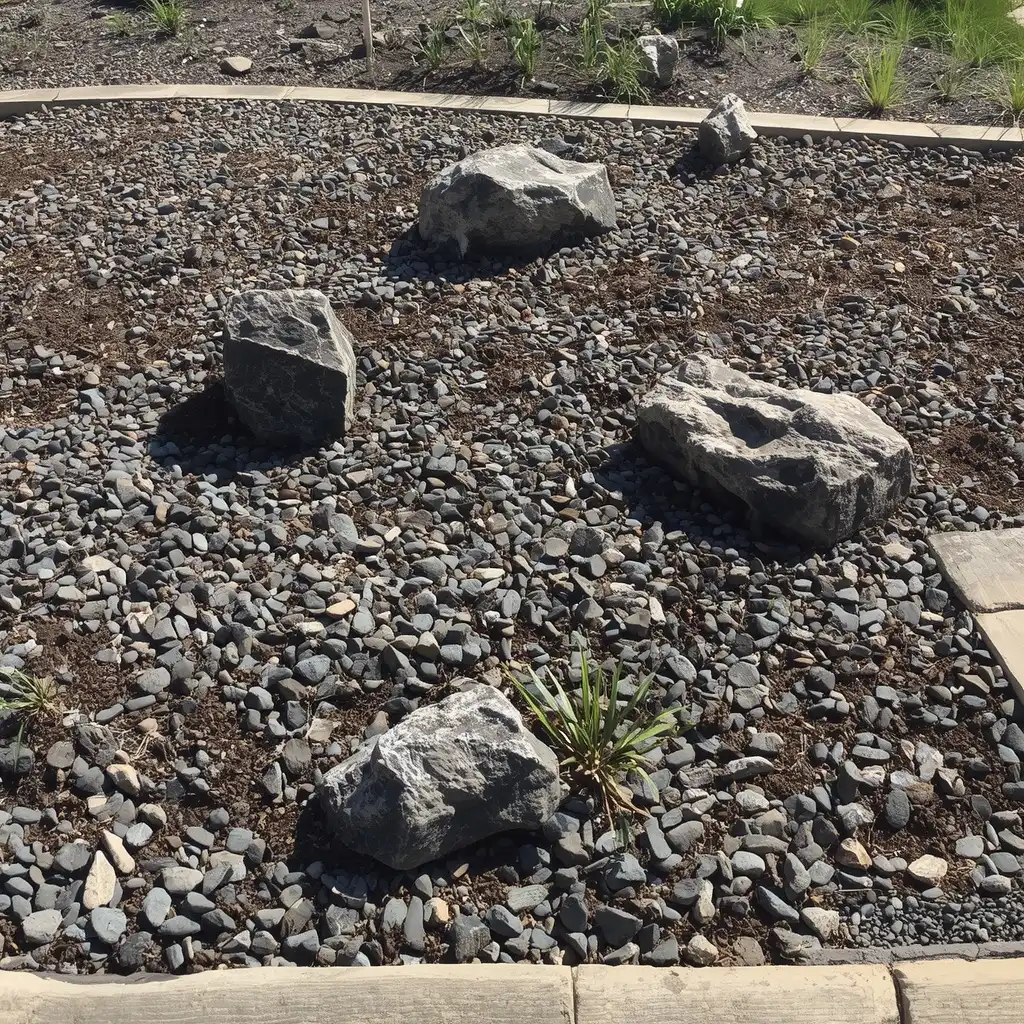
A sunny slope can be hard to mow and plant. Black and gray rock can help create a cleaner surface, but the setup must be stable.
Use larger stones as anchor points. Place smaller rock around them.
Create flat planting pockets where possible. These pockets give plant roots a better place to grow.
Choose low plants that spread across the soil. Their roots may help hold loose ground in place.
Avoid using light lava rock on a very steep slope. Heavy rain can move it downhill.
Edging at the bottom may catch some loose stones. It will not solve a serious erosion problem.
Deep washouts, moving soil, or water flowing near a building may need professional help.
Best for: Gentle slopes with minor soil movement.
13. Create a Black-and-White Rock Pattern
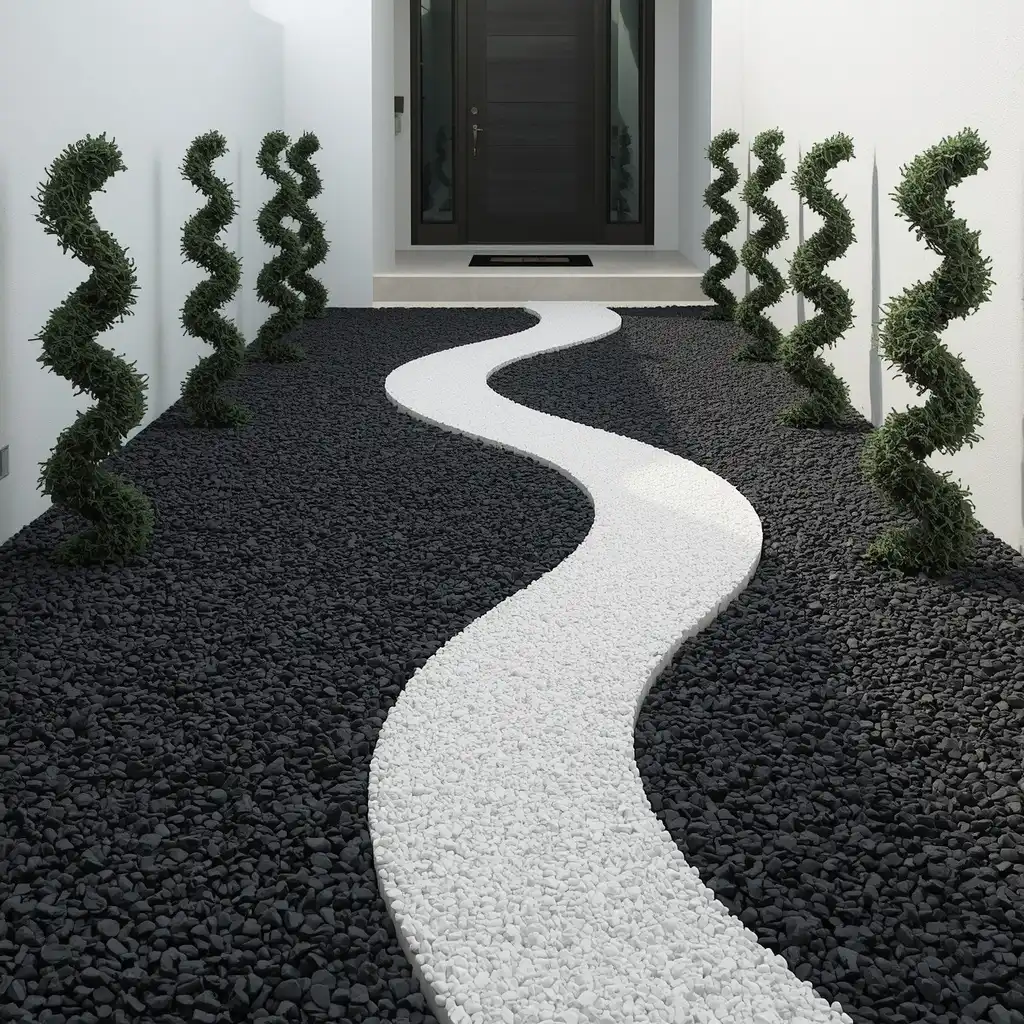
Black and white gravel can create a sharp, graphic look. The design works best when the pattern is simple.
Use one color as the main material. Add the second color as a narrow curve, border, or straight band.
Install hidden or visible edging between the colors. Without a divider, the stones will mix over time.
Repeat the same plants on both sides. This stops the pattern from looking too busy.
A white gravel ribbon through a black rock bed can look like a small stream. A black border around a pale gravel area can make the shape stand out.
Avoid adding several other stone colors. Two main colors are enough.
Best for: Courtyards, modern front yards, and low-water designs.
14. Add a Black Rock Band Around Your Patio
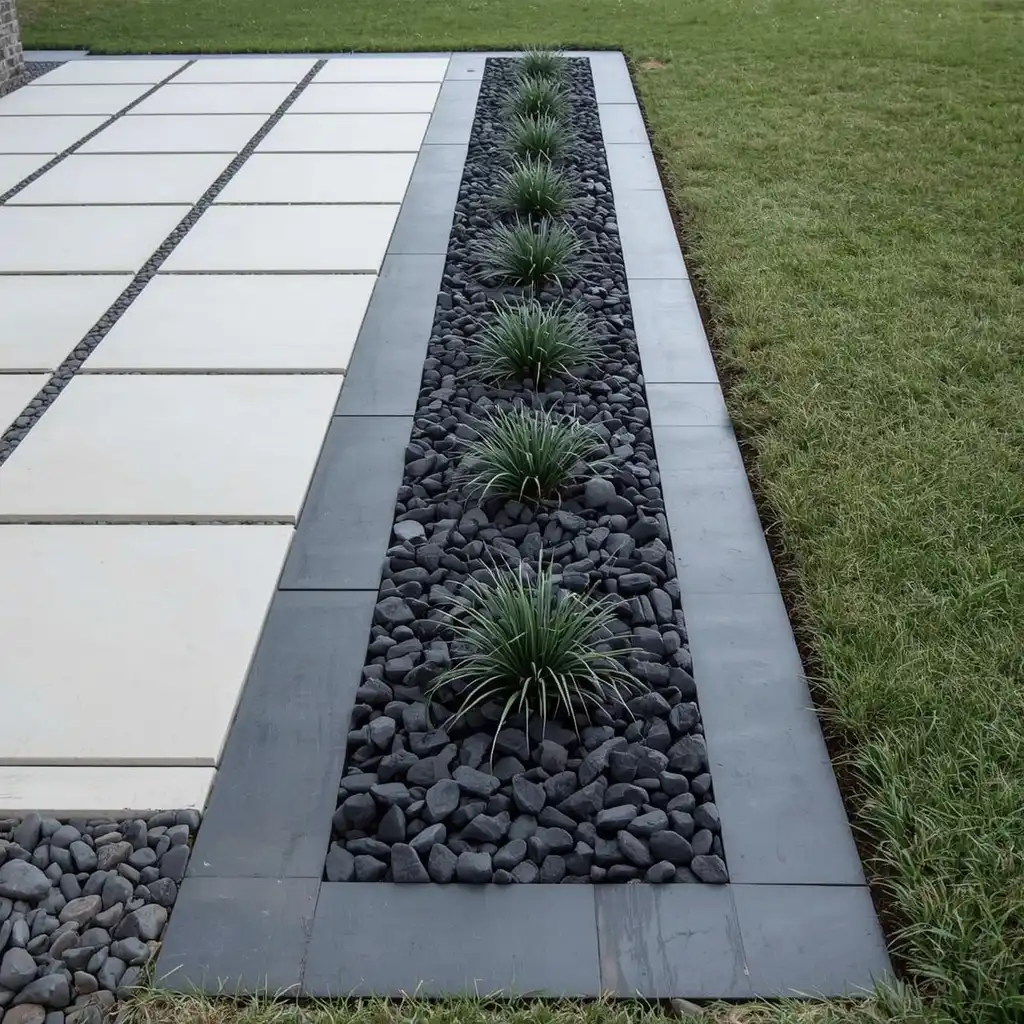
A black rock border can separate a patio from the lawn or nearby garden beds. It also gives the patio a more finished edge.
Make the band about 12 to 24 inches wide. Match the width to the size of the patio.
Use strong edging between the patio and rock. This keeps stones away from chair legs and walking areas.
Add a few low plants at even spaces. Do not fill the whole border if you want a clean look.
Pale pavers create strong contrast with black basalt. Warm brick looks softer beside dark lava rock.
Avoid placing black stone where people often walk barefoot. The surface may become hot in direct sun.
Best for: Pale patios that need a clear border.
15. Surround a Water Feature With Black Stone
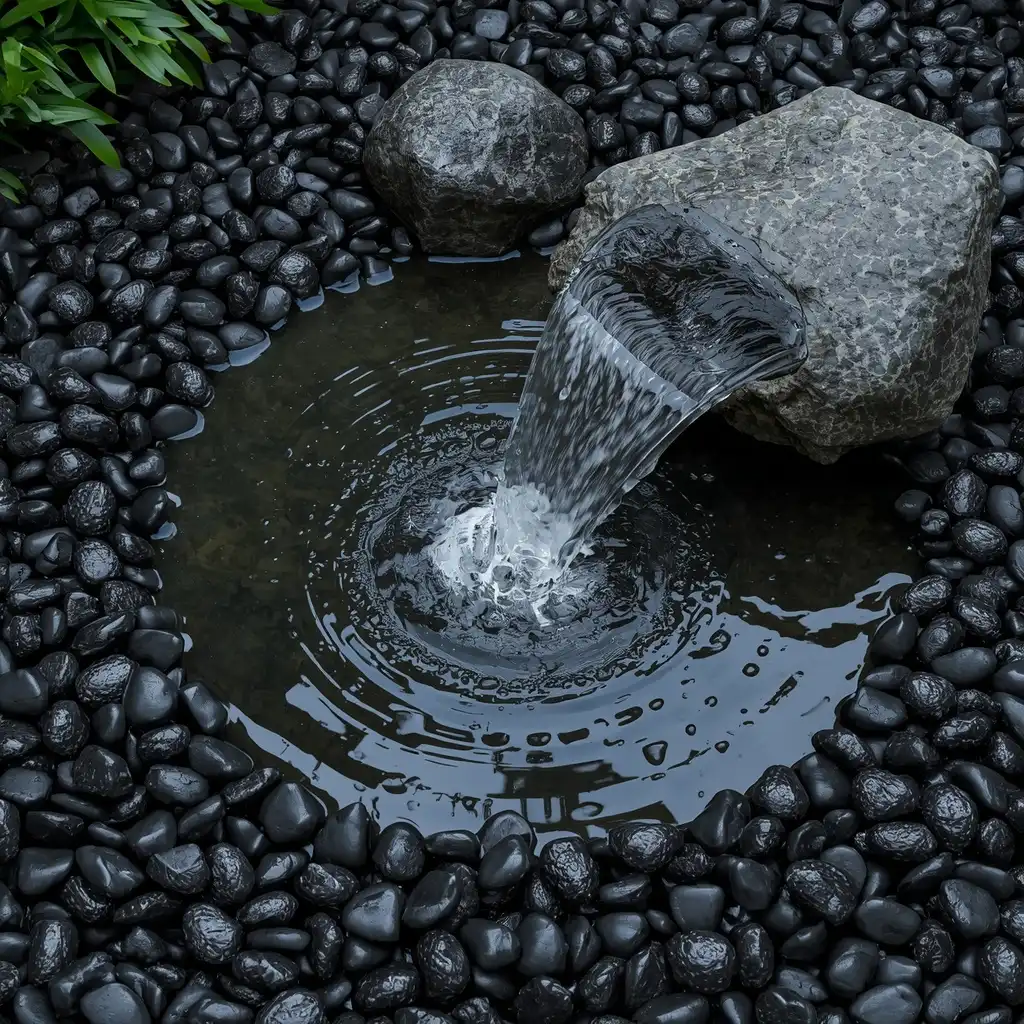
Dark stones can make moving water look brighter. It also helps hide pumps, pipes, and basin edges.
Use smooth black pebbles near the water. Add rough lava rock farther from the splash area.
Place one larger boulder beside the feature. This creates height and makes the design feel more natural.
Keep loose rock away from pump openings. Small pieces can block filters or enter the system.
Add plants that can handle the moisture level near the feature. Keep dry-climate plants outside the main splash zone.
Soft lighting can reflect on wet black stone at night. Use outdoor fixtures that are approved for wet areas.
Best for: Small fountains, pondless waterfalls, and courtyard water bowls.
16. Finish the Ground Around Raised Planters
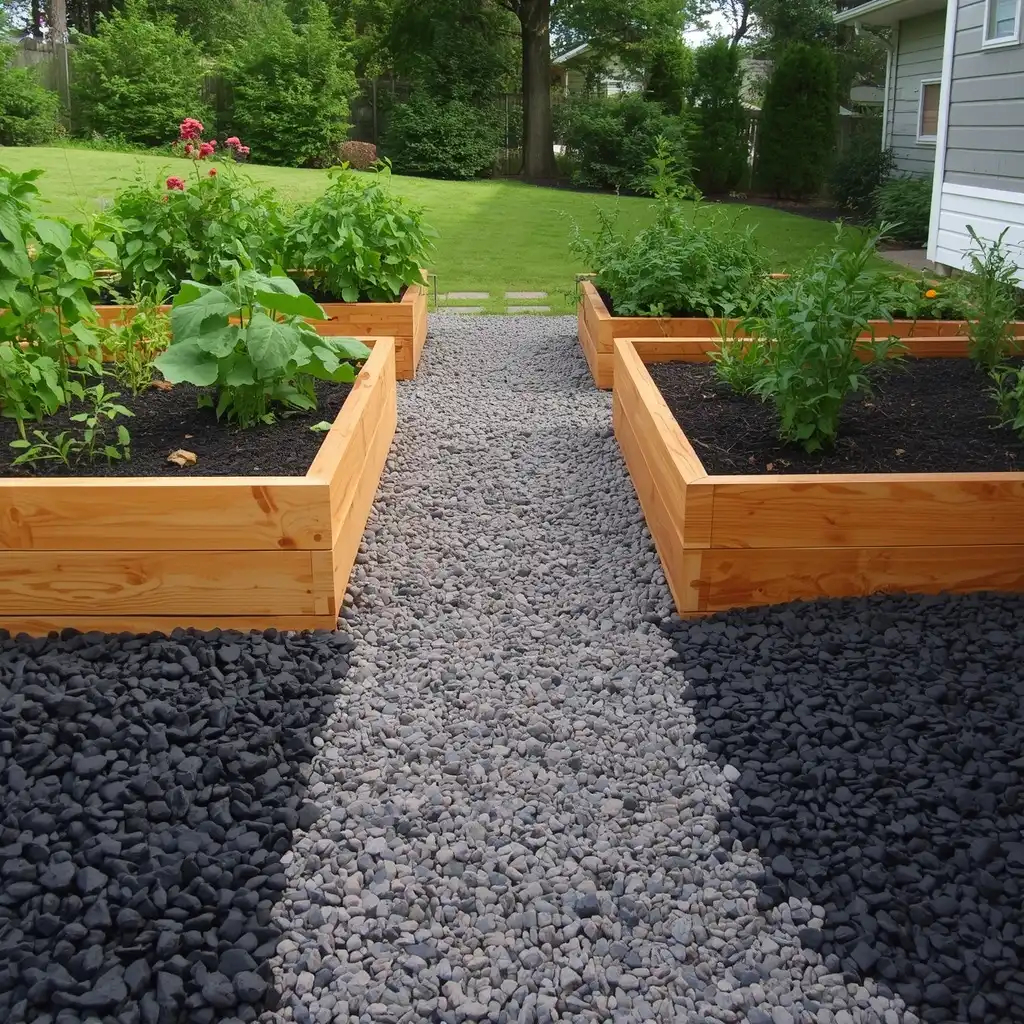
Black rock can make raised beds look neat while reducing exposed soil around them.
It pairs well with cedar, concrete, brick, and rust-colored steel planters. Each material creates a different mood.
Use compacted gravel or solid pavers for the main walking path. Add black lava rock in the areas beside the beds.
Make the path wide enough for a wheelbarrow. Check that the surface stays level after rain.
Keep loose rock away from areas where you often kneel or place tools. Rough lava rock may be uncomfortable.
Use edging around each section. This stops the dark rock from mixing with path gravel or garden soil.
Best for: Vegetable gardens and modern raised-bed areas.
17. Border a Fire-Pit Seating Area
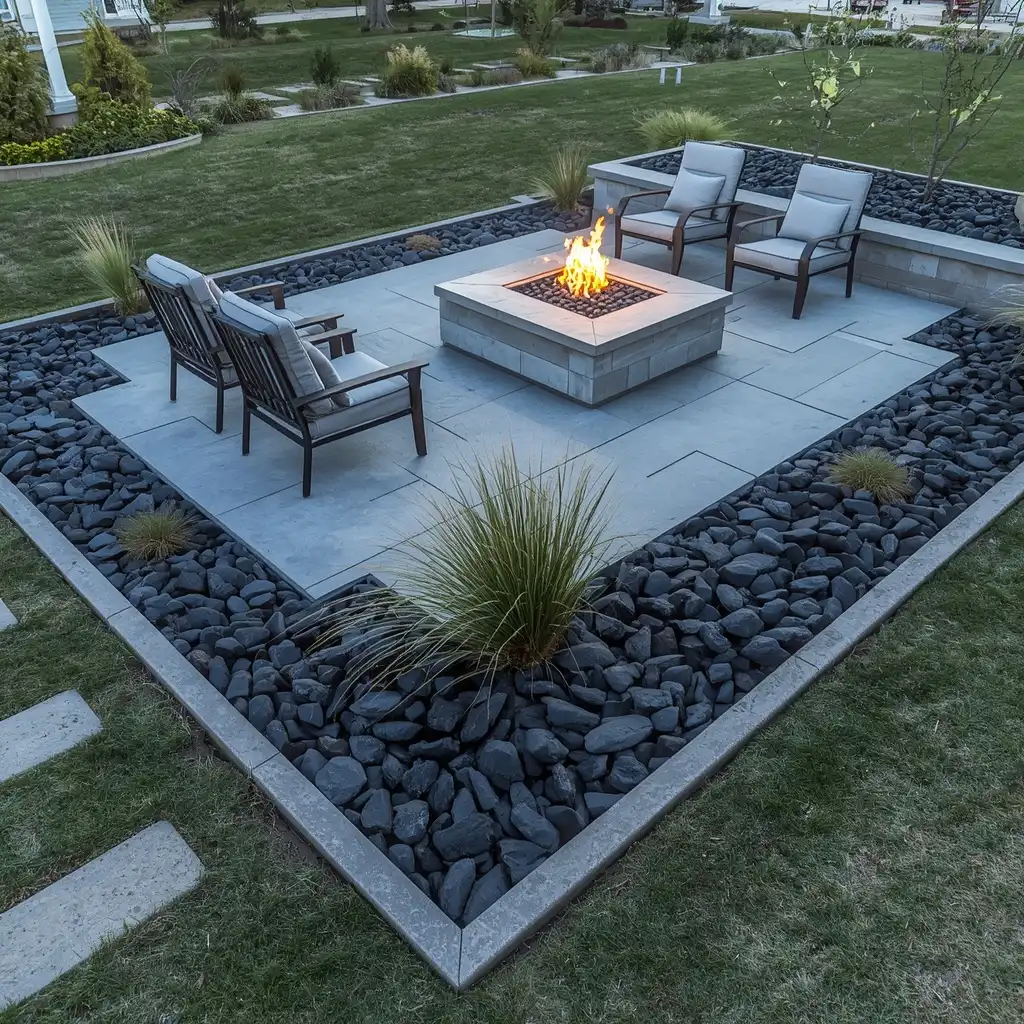
Black rock can create a clear edge around a fire-pit zone. It fits well with metal, concrete, and stone fire features.
Use the black rock outside the main seating and walking area. Chair legs may sink or wobble in loose stone.
Choose solid pavers, compacted gravel, or another stable surface under the chairs.
Do not place random landscape rock inside a fire pit. Some stones may crack when heated.
Use materials approved by the fire-pit maker. Follow local fire rules and required distances from buildings, fences, and plants.
Remove leaves, grass, and dry plant matter from the rock. Rock itself may resist fire, but debris caught between the stones can still burn.
Best for: Modern outdoor seating areas with a clear safety zone.
How to Install Black Lava Rock Without Creating a Mess
Good preparation matters more than the final raking. A poorly prepared bed can develop weeds, low spots, and loose edges within a few months.
1. Mark the Shape
Use a garden hose, rope, or marking paint to outline the bed.
Look at the shape from the street, patio, and windows. Make changes before removing any grass.
2. Measure the Area
For a square or rectangle, use this formula:
Length × width = square feet
For a circular bed, use:
Radius × radius × 3.14 = square feet
Irregular areas can be divided into smaller shapes. Measure each part and add the totals.
3. Remove Grass and Established Weeds
Remove the grass, roots, and large weeds before adding rock.
Do not cover active weeds and expect the rock to solve the problem. Strong perennial weeds may grow through gaps.
4. Check the Grade
The ground should direct water away from buildings.
Fill deep low spots. Remove high areas that may send water onto a path or patio.
5. Decide Whether to Use Landscape Fabric
Landscape fabric may help in permanent decorative beds with few plants.
It will not stop every weed. Seeds can grow in dust, leaves, and soil that collect above the fabric.
Fabric may also become a problem in beds where plants spread or need to be moved.
6. Install the Edging
Place metal, concrete, brick, or another strong edge around the bed.
The top should be high enough to hold the rock without creating a trip risk.
7. Add Plants and Irrigation First
Plant shrubs, grasses, and flowers before spreading the rock.
Install drip lines at the same time. Repairs become harder once the whole bed is covered.
8. Spread the Rock Evenly
Check the supplier’s coverage guide. Rock weight and coverage change based on size and material.
Do not order by appearance alone. Measure the space and ask how much product is needed for the planned depth.
9. Inspect the Bed After Watering
Water the area lightly or wait for the first rain.
Look for pooling water, moving stones, exposed fabric, and weak edging.
Fix these problems early. They become harder to repair once soil and leaves collect between the rocks.
How to Keep Black Rock Looking Clean
Black rock looks best when its dark color is easy to see. Leaves, dust, and soil can quickly hide that contrast.
Remove fallen leaves before they break into small pieces. A leaf blower on a low setting may work well.
Pull weeds while they are small. Large roots may become tangled in fabric or move the stones when removed.
Rake the surface when low spots appear. Cover exposed fabric with existing rock before buying more.
Sweep stones away from paths, patios, and driveways. Check the edging if the same area keeps spilling.
Wash dusty rock with a gentle hose spray when needed. Strong water pressure can move lightweight lava rock.
Keep stone away from tree trunks and shrub stems. Do not build a mound around the bark.
A simple care schedule can help:
- Weekly: Remove visible leaves and litter.
- Monthly: Pull weeds and check the edges.
- Each season: Rake low spots and check drainage.
- Once a year: Look for thin areas or exposed fabric.
Small, regular jobs are easier than cleaning a neglected rock bed.
10 Black Rock Landscaping Mistakes to Avoid
Black rock often looks bad because of poor design or setup. The material itself is usually not the main problem.
Covering Too Much of the Yard
A large empty field of black rock can feel harsh. Break it up with plants, boulders, paths, or lighter materials.
Skipping the Edging
Loose rock will spread into grass and paved areas. Install the edge before adding the stone.
Ignoring Heat
Dark rock can become hot in full sun. Use it carefully around young plants, pets, and barefoot walking areas.
Crowding the Plants
Small plants grow. Leave enough room for their full width.
Piling Rock Around Trunks
Keep the tree flare and main stems clear. Rock against bark can trap heat and moisture.
Mixing Too Many Stone Colors
One main rock and one accent material are usually enough. Too many colors can make the yard look messy.
Using Loose Rock on a Steep Grade
Small stones may wash downhill. Use larger anchors, terraces, or another erosion plan.
Expecting Fabric to Stop Every Weed
Weeds may grow in soil that collects on top. Regular cleaning and early removal still matter.
Using Rough Rock as the Main Path
Lava rock can be hard to walk on. It may also be difficult for wheels and strollers.
Putting Decorative Rock Inside a Fire Feature
Use approved fire media inside the pit. Decorative landscape stones may not be safe under high heat.
| Common Mistake | Better Choice |
| Large empty rock bed | Add grouped plants and one focal boulder |
| Rock placed against lawn | Install a solid edge |
| Heat-sensitive plants in full sun | Use lighter mulch near the root area |
| Several unrelated rock colors | Use one main color and one accent |
| Rock piled around a trunk | Leave the trunk flare open |
Frequently Asked Questions About Black Lava Rock
Does Black Lava Rock Make the Soil Hotter?
Yes, dark rock can collect heat in direct sun. The effect may be stronger in hot and dry climates.
Use more plant cover in these areas. You can also place lighter mulch near plants that struggle with heat.
Does Lava Rock Stop Weeds?
Lava rock can reduce some weed growth when the soil is prepared first. It will not create a weed-free bed.
Seeds may grow in leaves, dust, and soil that gather between the stones.
Should You Put Landscape Fabric Under Lava Rock?
Fabric may help in permanent decorative spaces with limited planting. It can keep the rock from sinking into soft soil.
It may be less useful in beds that change often. Plant roots can also grow through holes and gaps.
Is Black Lava Rock Safe Around Plants?
It can be safe around plants that suit the site. You still need to think about heat, drainage, soil, and watering.
Keep the rock away from stems, crowns, and tree trunks.
How Much Black Rock Do You Need?
Measure the total square footage of the bed. Then choose the planned rock depth.
Use the supplier’s calculator because each product has a different weight and coverage rate.
Is Lava Rock Good for Pathways?
It works better beside a path than on the main walking surface.
Its rough and loose texture may be uncomfortable. It can also make movement harder for strollers, wheelchairs, and garden carts.
Choose One Small Area and Test the Look
The best black rock landscaping ideas use dark stone as a strong accent. They do not let it take over the whole yard.
Start with one walkway border, mailbox bed, patio edge, or small succulent garden. Add good edging before you spread the rock.
Choose plants that can handle the sun and heat in that location. Leave enough room for each plant to grow.
You should also plan for leaves, weeds, and future repairs. Black rock is low care, but it is not free from maintenance.
Landscaping with black rocks works best when dark stone, green plants, and lighter surfaces support each other. Test one small section first. Then repeat the same material in other parts of the yard if you like the result.