
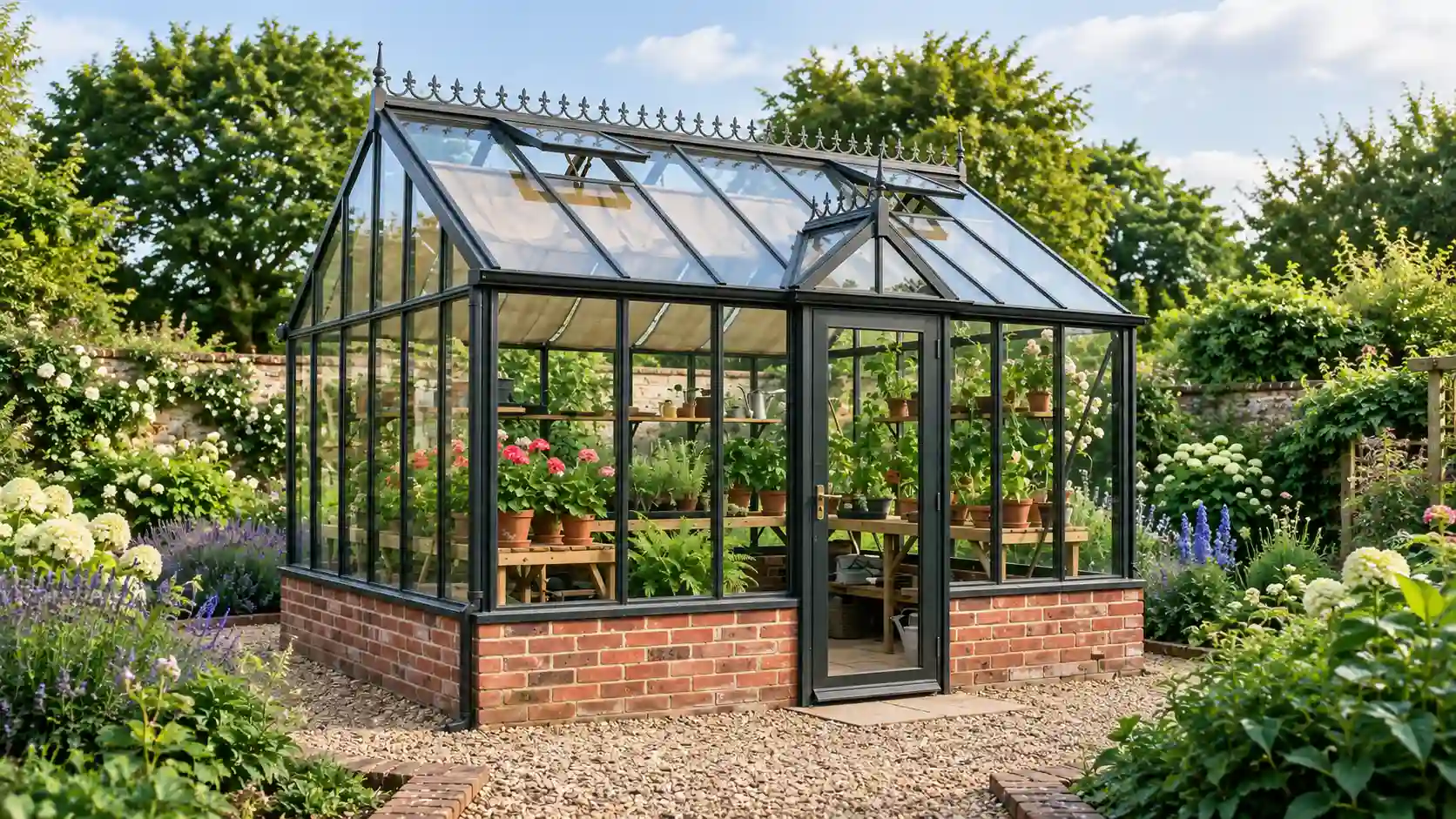
A backyard greenhouse can give you fresh seedlings, herbs, and vegetables long before the outdoor growing season begins. It can also protect tender plants when cold weather arrives.
Still, choosing a greenhouse can feel hard. You need to think about space, sunlight, weather, materials, airflow, and cost. A beautiful greenhouse will not help much if it sits in deep shade or becomes too hot each afternoon.
The good news is that you have plenty of choices. Some greenhouses fit beside a garage. Others cover raised beds or turn an old shed into a useful growing space.
These backyard greenhouse ideas will help you compare 15 practical designs. You will find options for small gardens, DIY projects, stylish landscapes, and longer growing seasons. You will also learn how to choose the right location, covering, and layout for your needs.
Choose the Right Backyard Greenhouse Before You Build
Start by deciding what you want to grow. A greenhouse used for starting seeds needs different features than one filled with tall tomato plants.
Complete this simple sentence:
My greenhouse will be used for ______ from ______ to ______.
Your answer will help you choose the right size and greenhouse design. Seed trays need shelves and good airflow. Tomatoes and cucumbers need height, strong supports, and open beds. Tropical plants may need extra heat during winter.
Measure the proposed site before looking at greenhouse kits. Mark the corners with flags or stakes. Then walk around the marked space to see whether you can open the door and reach each side.
Watch the area during the morning, midday, and afternoon. Most greenhouse crops grow best with several hours of direct sunlight. However, some afternoon shade can help control summer heat in very warm areas.
You should also check:
- Access to a hose or water line
- Access to safe outdoor electricity
- Ground slope and drainage
- Space around fences and property lines
- Paths, gates, and yard equipment
- Local permits and building rules
- Homeowners association restrictions
Permit and setback rules vary by location. Contact your local permit office before buying a large or permanent structure.
Small Backyard Greenhouse Ideas That Save Space
You do not need a large lawn to grow plants under cover. These small backyard greenhouse ideas use walls, side yards, and compact kits to make better use of limited space.
1. Add a Lean-To Greenhouse
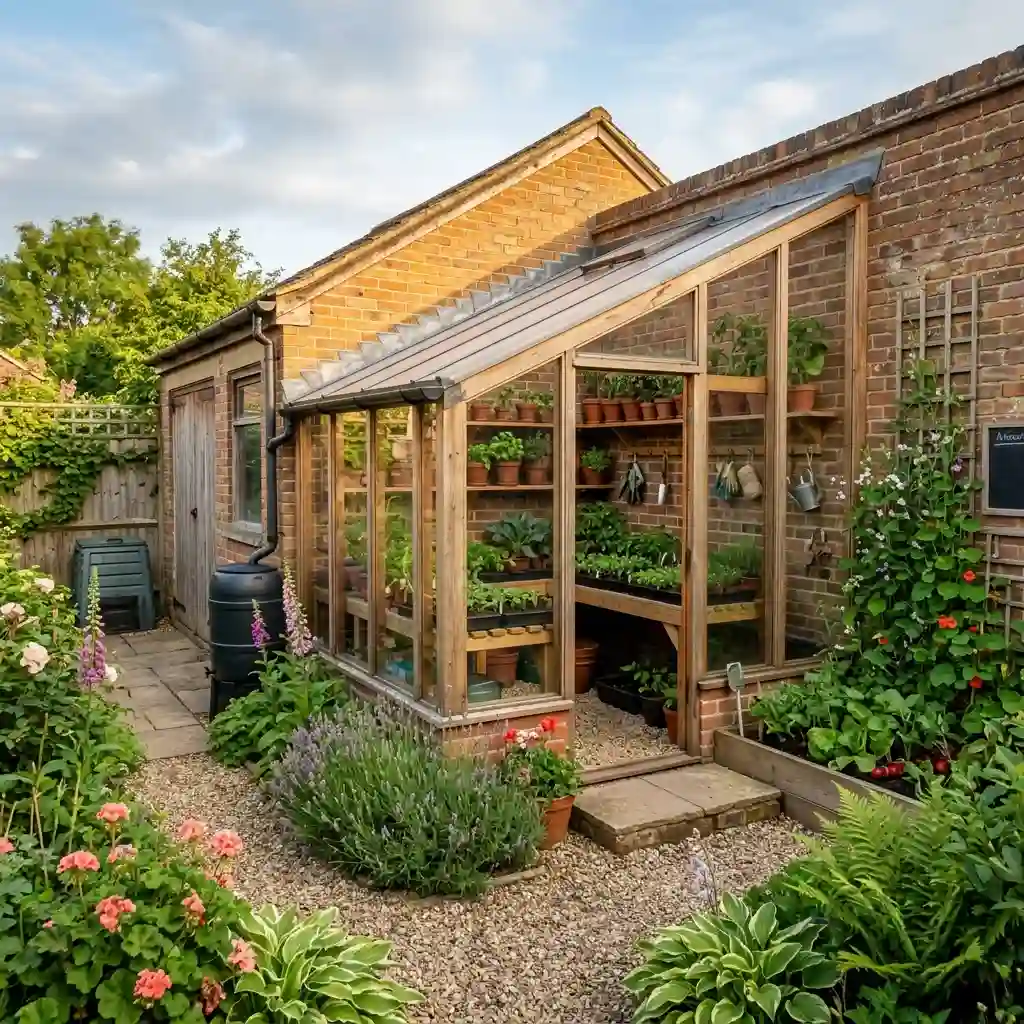
Best for: Small yards with a sunny garage or shed wall
Space needed: About 4 feet wide or more
Main caution: Water must not enter the shared wall
A lean-to greenhouse rests against an existing wall. This design uses less space and fewer building materials than a freestanding structure.
The solid wall gives you a place for shelves, hooks, and vertical plant supports. It may also absorb heat during the day and release some of it after sunset.
Choose a wall that receives enough direct light. A south-facing location often receives strong light in the Northern Hemisphere, but nearby trees and buildings can change the result.
Install proper flashing where the greenhouse meets the wall. You must also direct roof water away from the foundation. Check local building rules before attaching anything to a house or garage.
2. Use a Narrow Side Yard
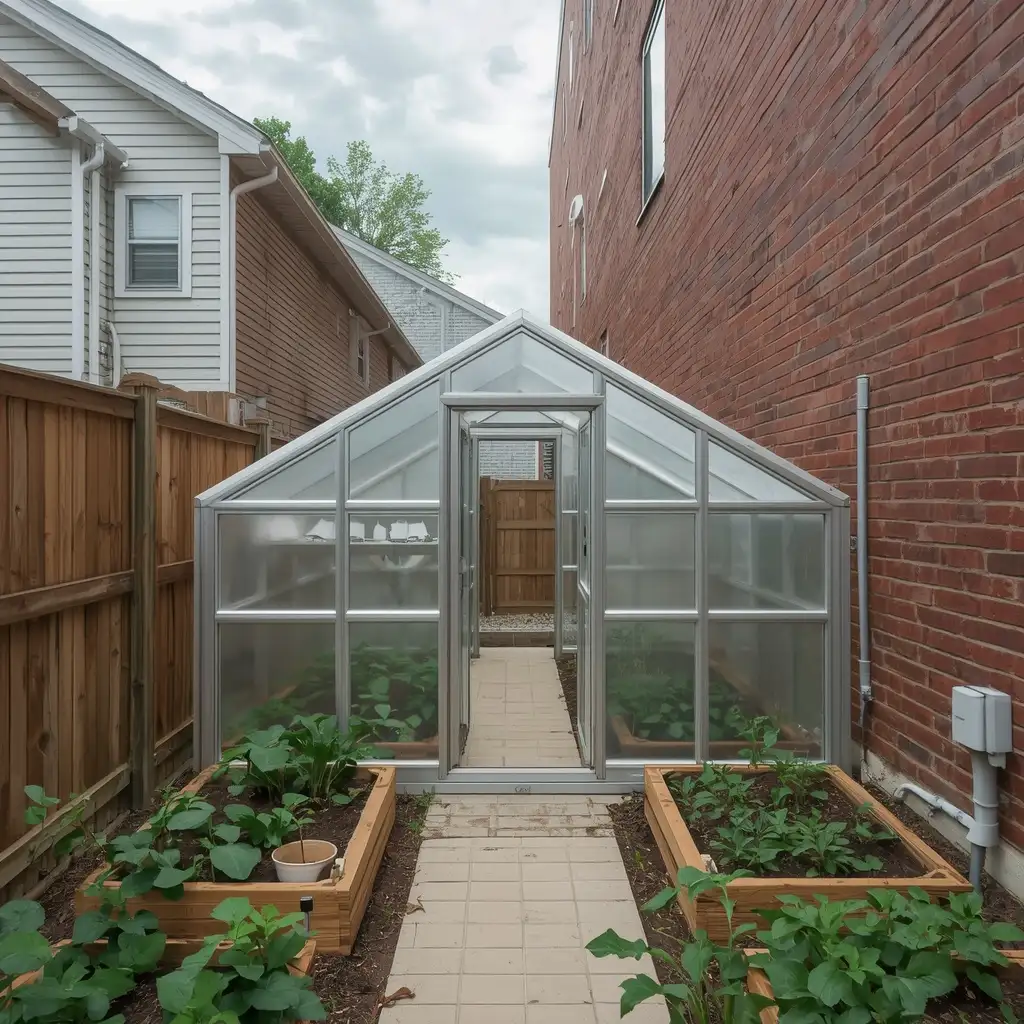
Best for: An unused strip beside a house
Space needed: A clear path about 3 to 6 feet wide
Main caution: Many side yards receive too much shade
A narrow greenhouse can turn an empty side yard into a productive space. Place slim shelves along one wall and leave the other side open for walking.
A sliding door works well where there is little room outside. An outward-opening door may be better if the structure has more exterior clearance.
Measure the usable width after accounting for roof overhangs, drains, utility meters, and air-conditioning equipment. You must leave enough room to service each item.
Light is the main concern. Track the sun before choosing this location. A side yard between two tall buildings may stay too dark for healthy vegetables.
3. Set Up a Walk-In Greenhouse Kit
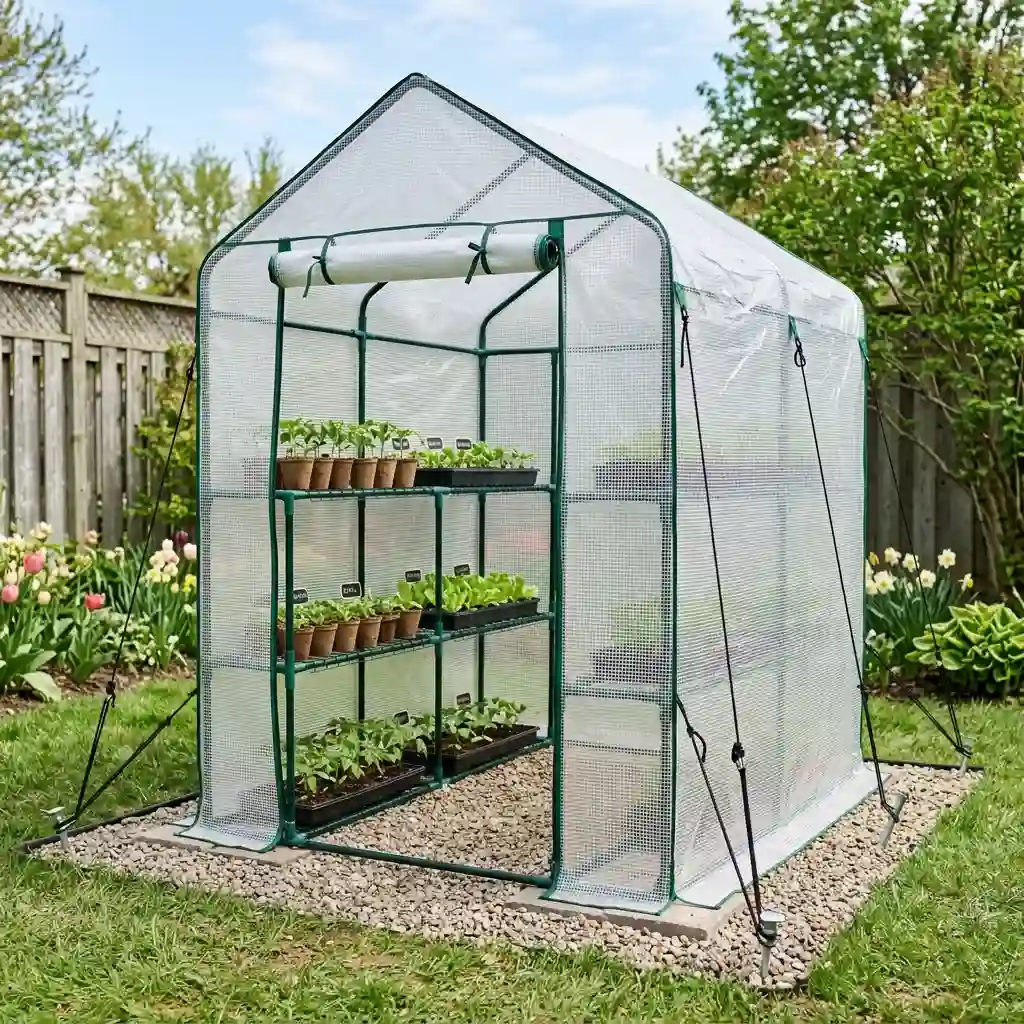
Best for: Beginners, renters, and seasonal growing
Space needed: Common compact sizes start near 4 by 6 feet
Main caution: Lightweight kits need strong anchors
A walk-in kit is one of the easiest greenhouse options to install. Many kits include a frame, cover, shelves, and a zippered door.
Soft-cover models cost less and are easy to move. Rigid polycarbonate kits tend to last longer and handle weather better. However, they usually cost more and need a level base.
Anchor the frame according to the maker’s instructions. Light kits can shift or blow over during strong winds.
Check whether replacement covers are available before buying. A low-cost kit may become waste if you cannot replace a torn cover.
4. Build a Mini Greenhouse from Old Windows
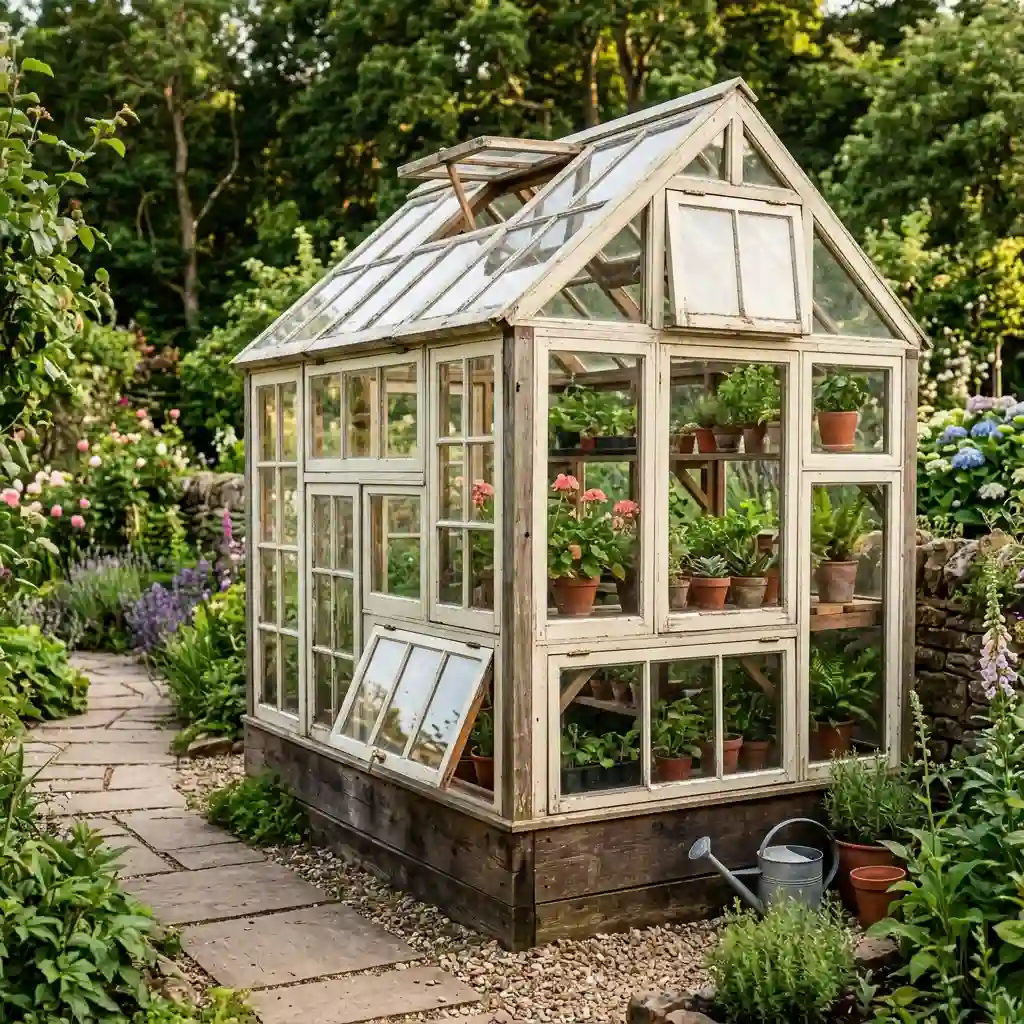
Best for: Creative gardeners with reusable materials
Space needed: Based on the number and size of the windows
Main caution: Old glass and paint may be unsafe
Old windows can give a DIY backyard greenhouse plenty of charm. They also allow you to reuse materials that might otherwise be thrown away.
Build a strong, square base before adding the windows. Glass is heavy, so the frame must support its weight without twisting.
Include at least one window that opens. Better yet, place opening windows at low and high points so warm air can escape.
Wear gloves and eye protection when handling old glass. Painted frames may contain lead, especially if they came from an older building. Test questionable paint before sanding or cutting it.
Suggested image alt text: Backyard greenhouse ideas using reclaimed windows on a wooden base.
Practical DIY Backyard Greenhouse Ideas
A homemade greenhouse lets you control the shape, size, and materials. But DIY does not always mean cheap. Price the base, covering, vents, doors, and anchors before you start.
5. Build a Simple Hoop House
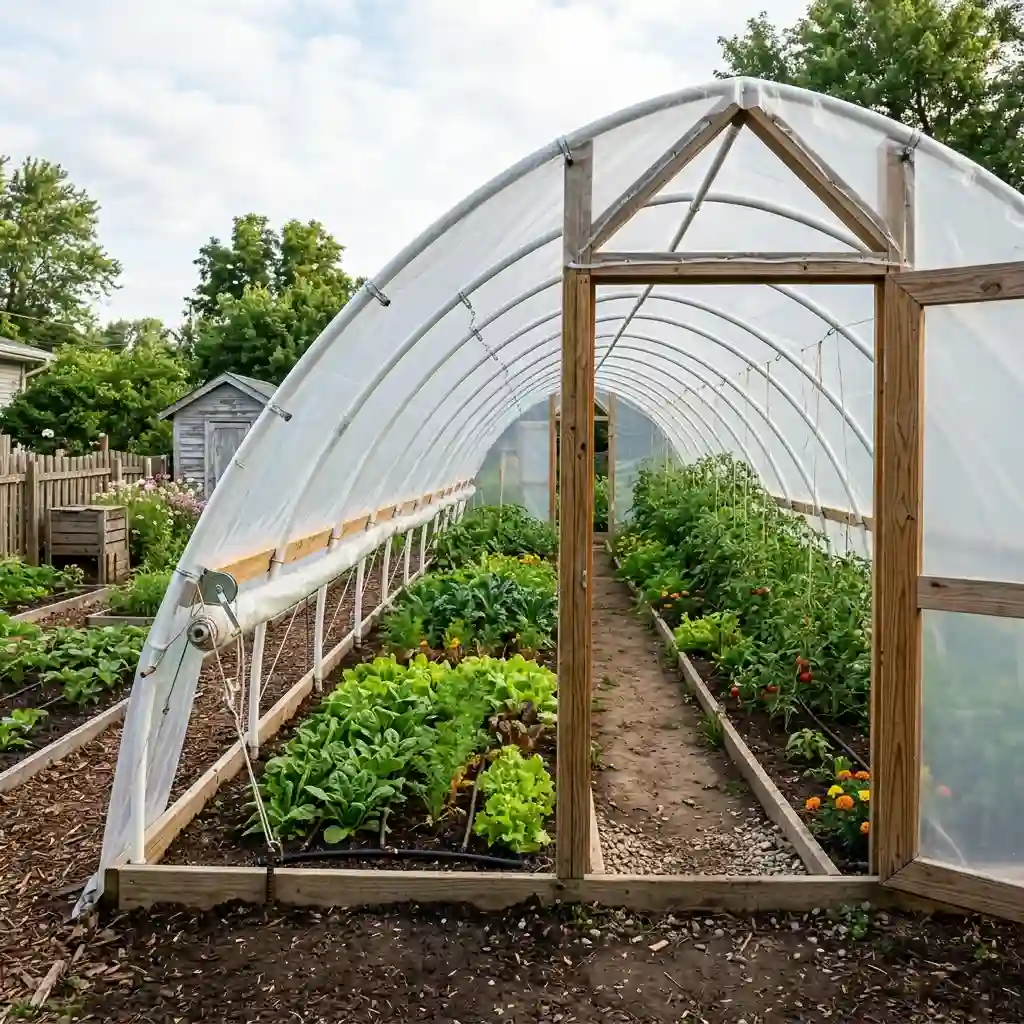
Best for: Seasonal vegetables and larger garden beds
Basic materials: Hoops, base rails, greenhouse film, anchors, and a door
Main caution: Basic household plastic breaks down quickly outdoors
A hoop house uses curved pipes or metal hoops covered with clear greenhouse film. The simple shape makes it one of the most affordable ways to cover a large growing area.
Use film made for greenhouses instead of thin household plastic. Greenhouse film is designed to handle sunlight and outdoor exposure for longer periods. Its expected life depends on its grade, local weather, and installation.
Add roll-up sides or large end vents. A closed hoop house can become dangerously hot on a sunny day.
Secure every hoop to a firm base. Ask the supplier whether the frame is rated for your local wind and snow conditions.
6. Arrange Cold Frames Along a Wall
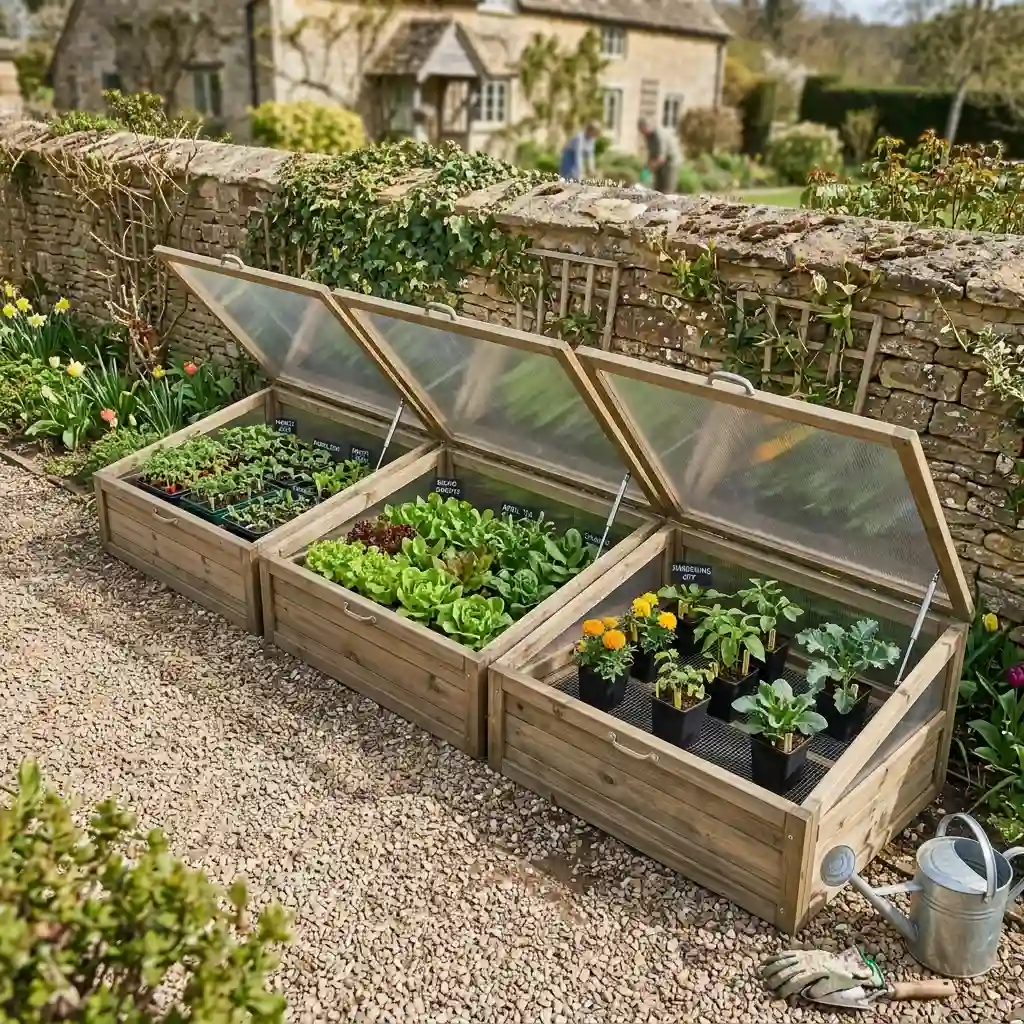
Best for: Seedlings, salad greens, and hardening off plants
Basic materials: Low frames, clear lids, hinges, and vent supports
Main caution: Small cold frames heat up fast
Cold frames are low boxes with clear, sloped lids. They work well when you lack space for a walk-in greenhouse.
Place several frames along a sunny wall or fence. This setup creates separate growing zones. You can use one for seedlings, another for greens, and another for plants moving outdoors.
Angle each lid so it catches light and sheds rain. Hinged lids make watering and temperature control easier.
Check the temperature each day. Automatic vent openers can lift the lids when the air becomes too warm.
7. Convert a Garden Shed
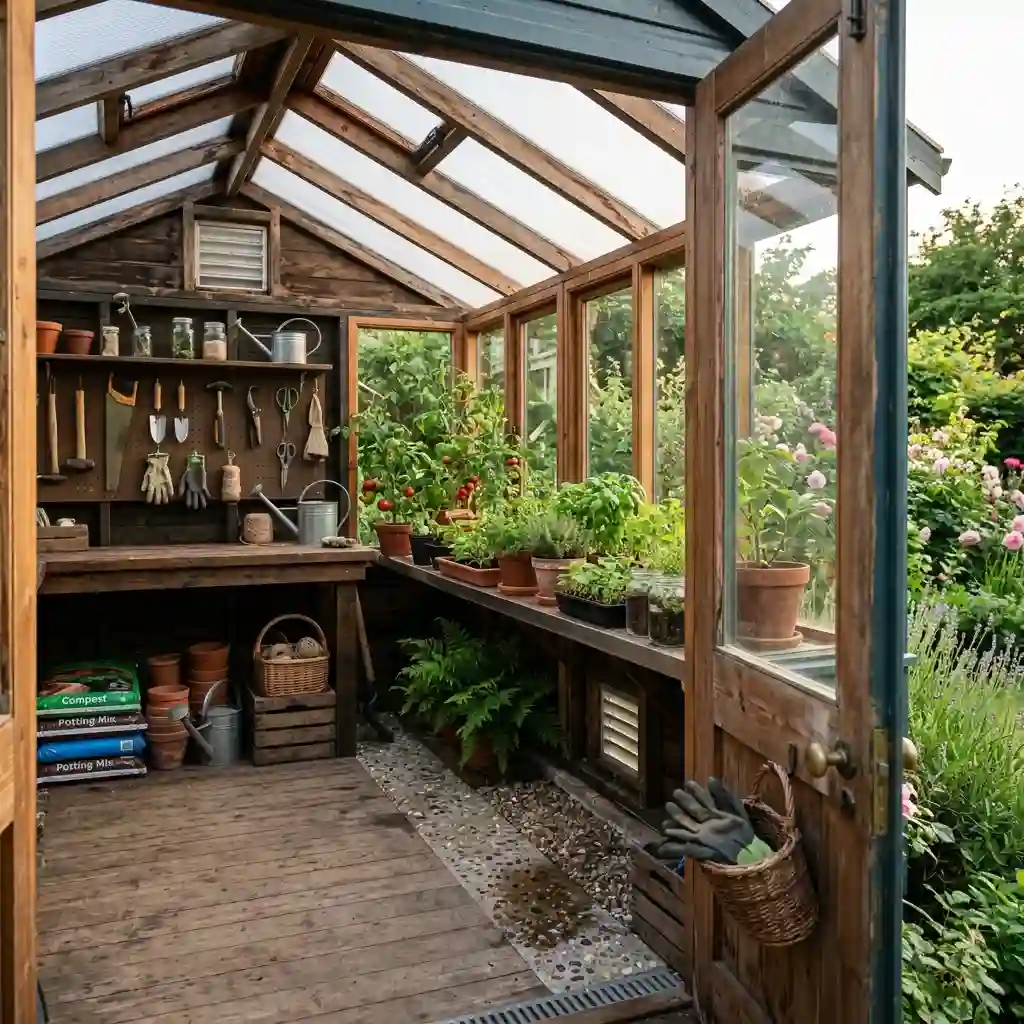
Best for: Gardeners who need growing and storage space
Basic materials: Clear roof panels, vents, waterproof surfaces, and shelves
Main caution: The existing frame must support the changes
A shed-greenhouse combination gives you a protected growing area without losing all your storage. Replace part of the roof or one sunny wall with clear panels.
Keep one section covered with solid walls. Use this area for tools, pots, soil, and a workbench. Place plants in the brighter section.
Add vents near the roof and lower on the walls. This setup allows rising hot air to escape while cooler air enters below.
Check the floor before making changes. Untreated wood may rot when exposed to spills and high humidity. Use water-resistant materials and provide a clear drainage path.
8. Cover Permanent Raised Beds
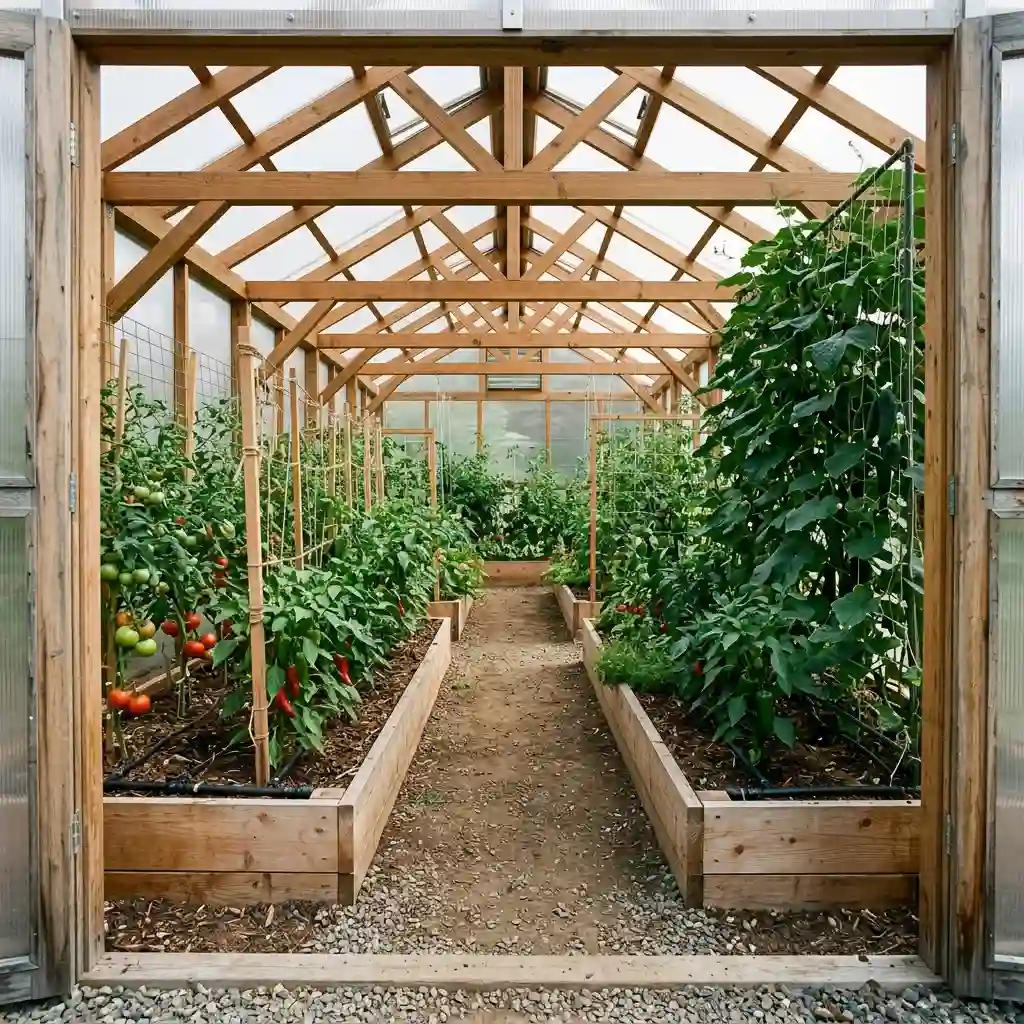
Best for: Tomatoes, peppers, cucumbers, and other food crops
Basic materials: A strong frame, raised beds, clear panels, and irrigation
Main caution: Narrow paths make gardening difficult
Build the greenhouse around permanent beds placed along its sides. Leave a central path so you can water, prune, and harvest without stepping on the soil.
Beds about 3 feet wide are easy to reach from one side. You can use wider beds when you can reach them from both sides. Your path should fit you, your tools, and any cart you plan to use.
Plan irrigation before adding soil. Drip lines reduce the need to carry watering cans through a tight space.
You should also decide how you will refresh or replace the soil later. Tall crops need enough roof height and sturdy supports.
9. Make an Arch with Cattle Panels
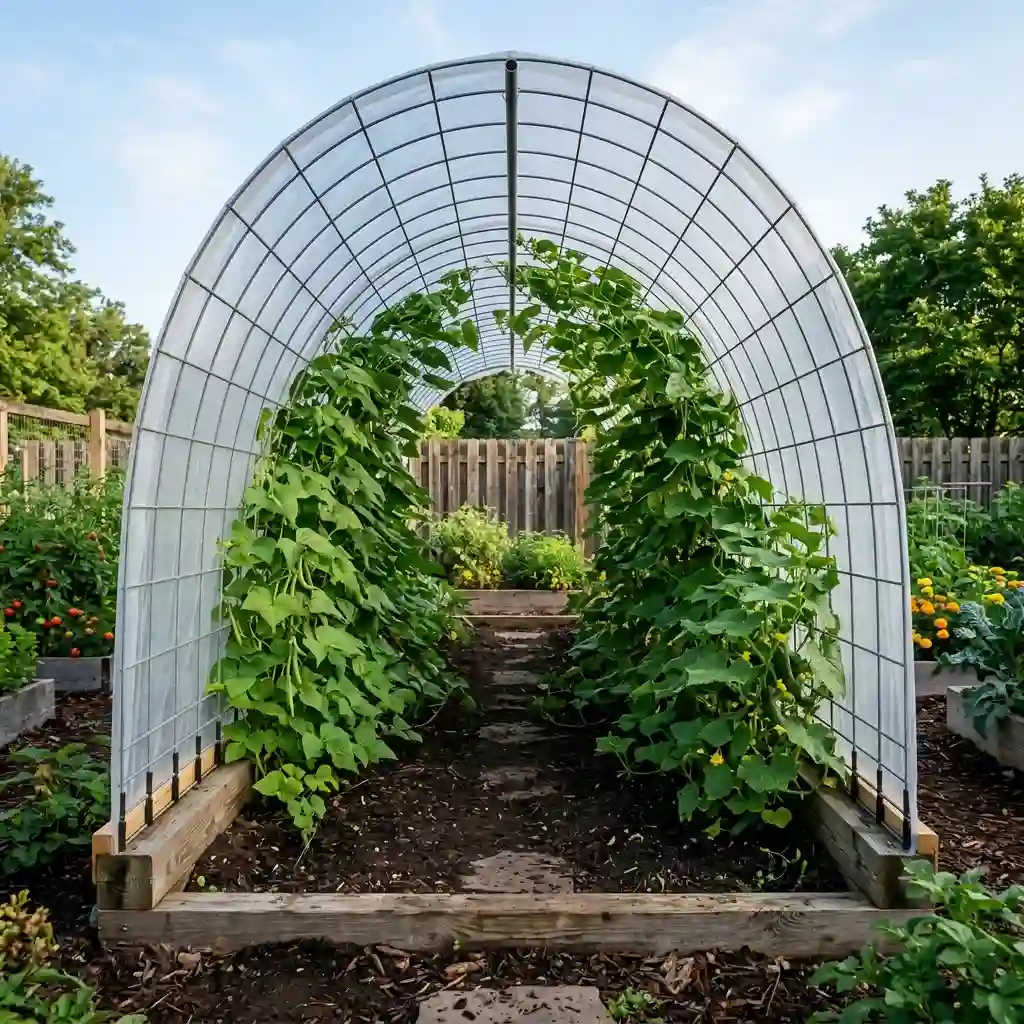
Best for: Strong, low-cost garden structures
Basic materials: Cattle panels, base rails, fasteners, film, and edge guards
Main caution: Sharp wire can tear the covering
Cattle panels can form a strong arch when bent between secure wooden or metal base rails. The arched shape gives tall plants more headroom in the center.
Cover the frame with greenhouse-grade film. Smooth or protect every cut wire end first. Even a small sharp point can tear the film when the wind moves it.
The metal grid can also support beans, cucumbers, or other climbing plants. Keep heavy fruit supported so it does not pull on the covering.
Panel sizes vary by supplier. Measure each panel and plan the finished height before building the base.
Attractive Greenhouse Designs That Improve Your Yard
A greenhouse can become part of your landscape instead of looking like a separate utility building. Repeat a color, shape, or material already found in your home, fence, shed, or path.
10. Install a Classic Glass Greenhouse
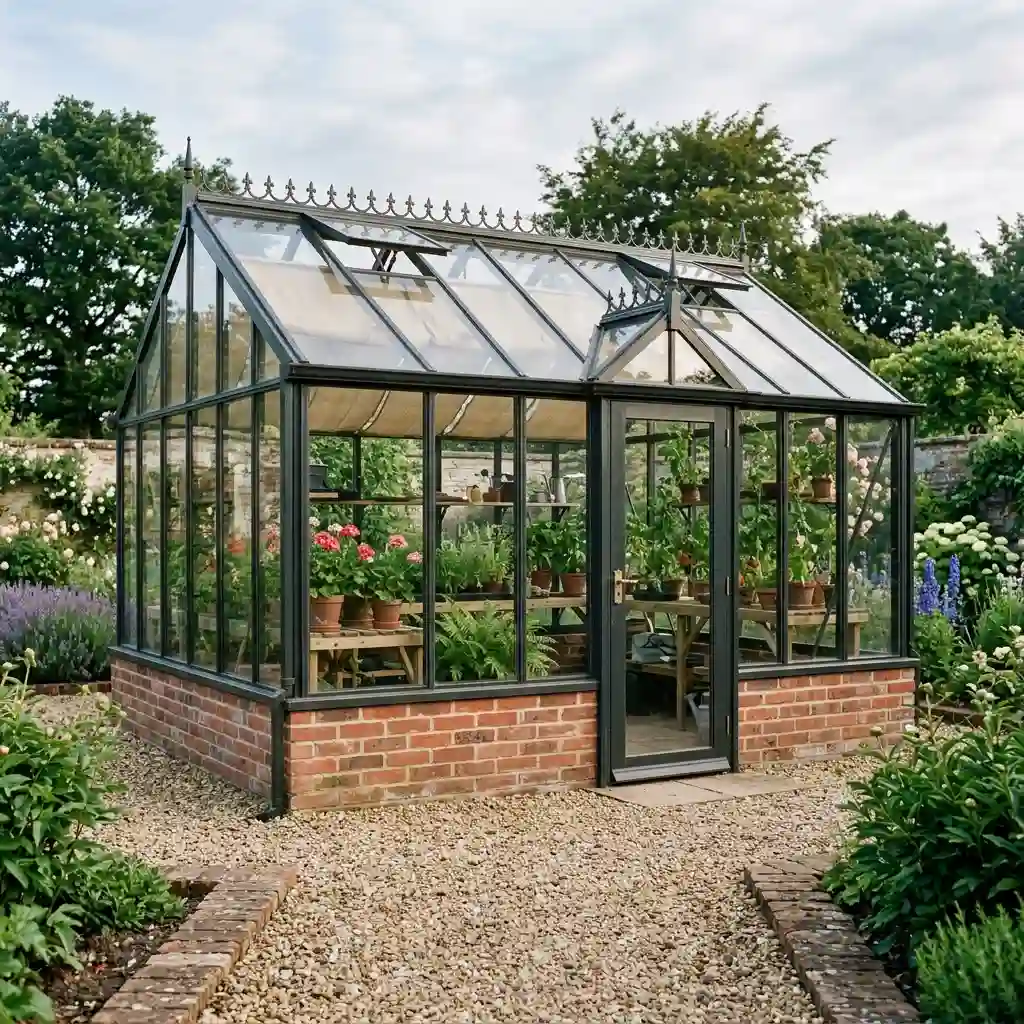
Best for: A permanent garden feature
Cost level: High
Main caution: Glass is heavy and can break
A glass greenhouse has a clear, classic look. It works well as a central garden feature beside brick, stone, or gravel paths.
Glass stays clear and is easy to clean. However, it is heavy and often costs more than other coverings. Broken panes can also create a safety risk.
Build a level, solid base that can carry the structure’s weight. Include roof vents and a way to add shade cloth during hot weather.
If children play nearby, ask the supplier about safety glass. Compare the structure’s wind and snow ratings with local conditions before ordering it.
11. Choose a Cedar Frame
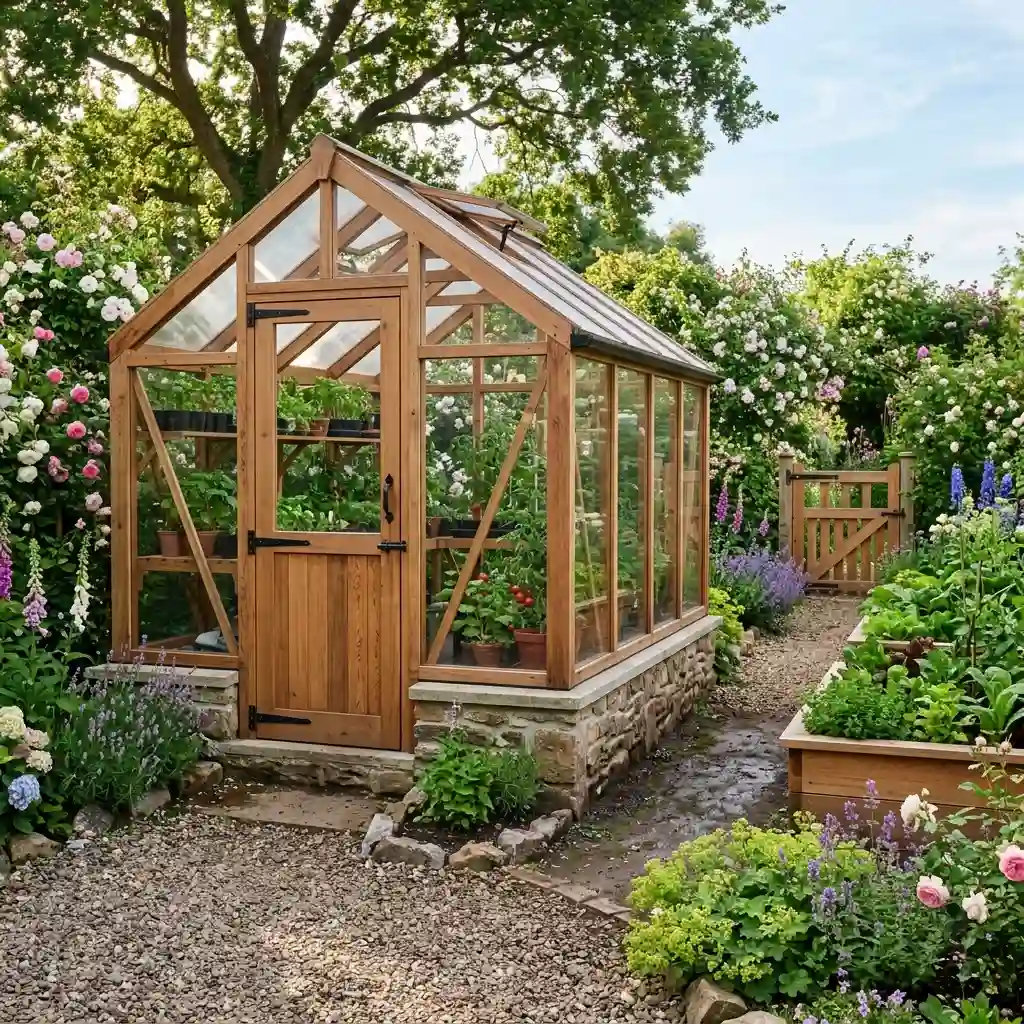
Best for: Natural or cottage-style gardens
Cost level: Medium to high
Main caution: Wood needs regular care
Cedar gives a greenhouse a warm look that fits well with garden beds, wooden fences, and natural paths. It also works with glass or polycarbonate panels.
Keep untreated wood away from constant ground moisture. A raised foundation or curb can reduce direct contact with wet soil.
Use hardware that will not stain or react badly with the wood. Follow the wood supplier’s advice for sealing and maintenance.
You can repeat the cedar color in raised beds, gates, or benches. This simple choice helps the greenhouse feel connected to the rest of the yard.
12. Combine a Greenhouse and Potting Shed
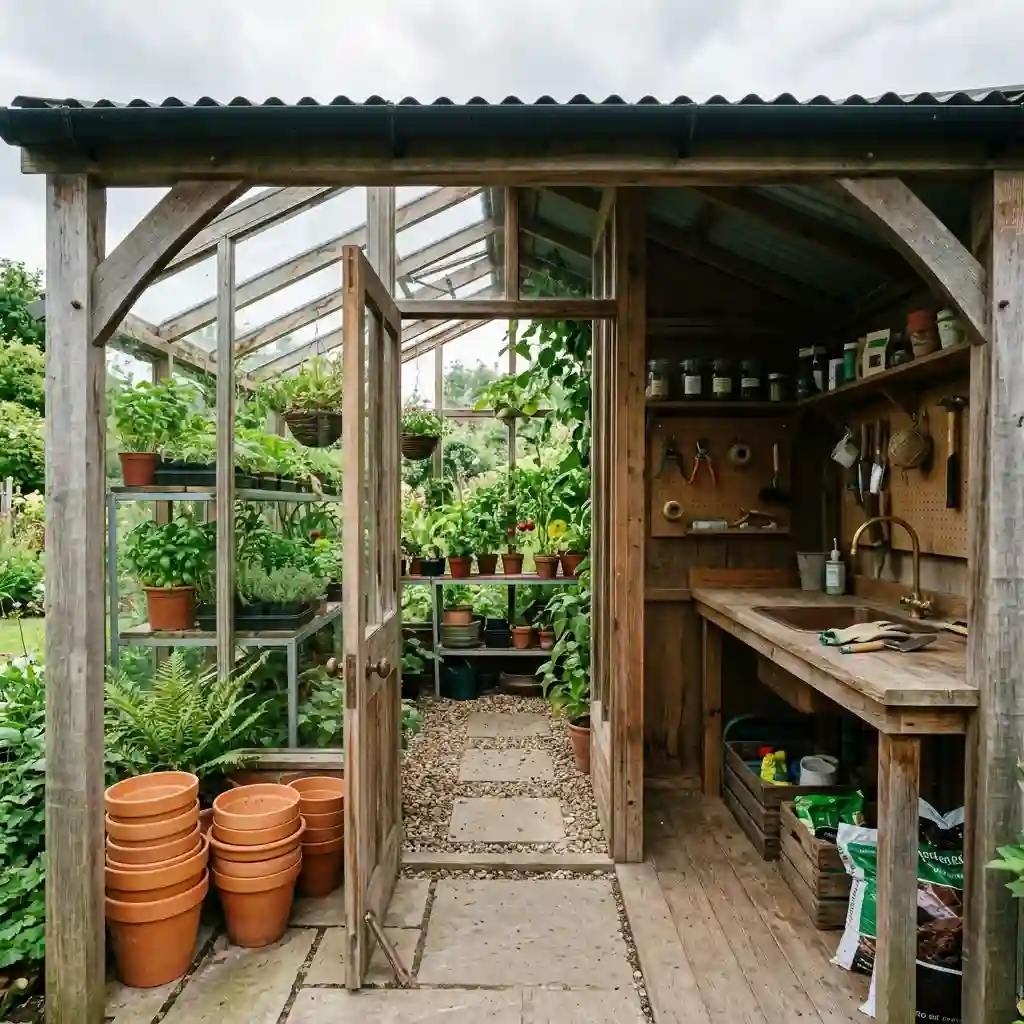
Best for: Gardeners who need an all-in-one workspace
Cost level: Medium to high
Main caution: Wet and dry areas need separation
Divide the building into two zones. Use the bright side for plants and the shaded side for tools, soil, and potting work.
Add a comfortable workbench, shelves, a sink, and tool hooks. Store fertilizer in a dry and secure spot away from children and pets.
A covered entrance gives you a place to remove muddy boots or stack empty pots. It also protects the doorway during rain.
Use washable surfaces around the sink and potting bench. Keep cardboard boxes and moisture-sensitive supplies away from watering areas.
13. Add a Greenhouse Seating Corner
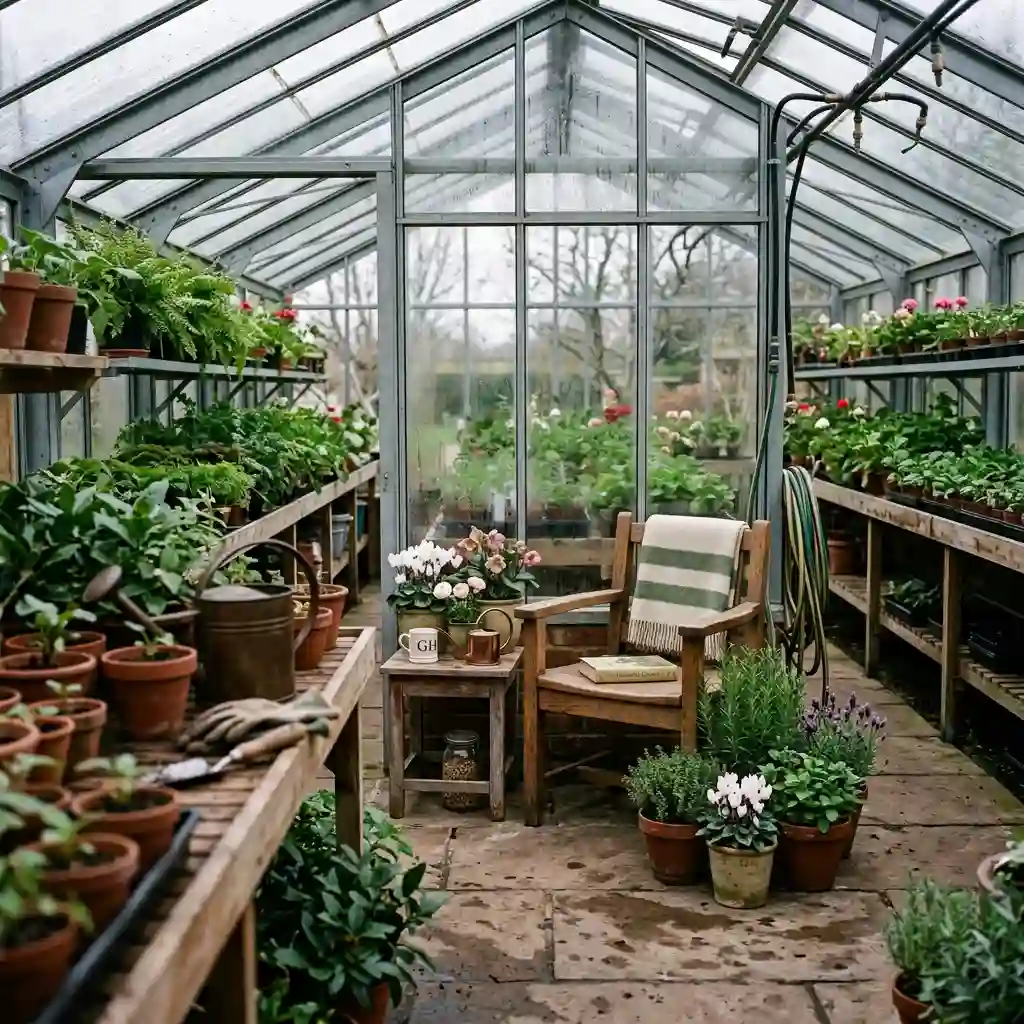
Best for: Gardeners who want a calm place to sit
Space needed: Enough room for one compact chair or bench
Main caution: Seating should not block plant care
Reserve a small corner for a chair or narrow bench. It gives you a comfortable place to check seedlings, enjoy winter flowers, or drink tea.
Choose furniture that handles water and humidity. Metal, sealed wood, and washable outdoor fabric are practical choices.
Keep the chair away from hoses and main watering zones. Make sure it does not block shelves, vents, or the central path.
Place scented herbs or flowers nearby. Just remember that every seating area uses space that could hold plants.
Greenhouse Ideas for Longer Growing Seasons
Extending the growing season by a few weeks is fairly simple. Keeping plants alive through a cold winter needs more insulation, energy, and planning.
14. Add a Solar-Powered Setup
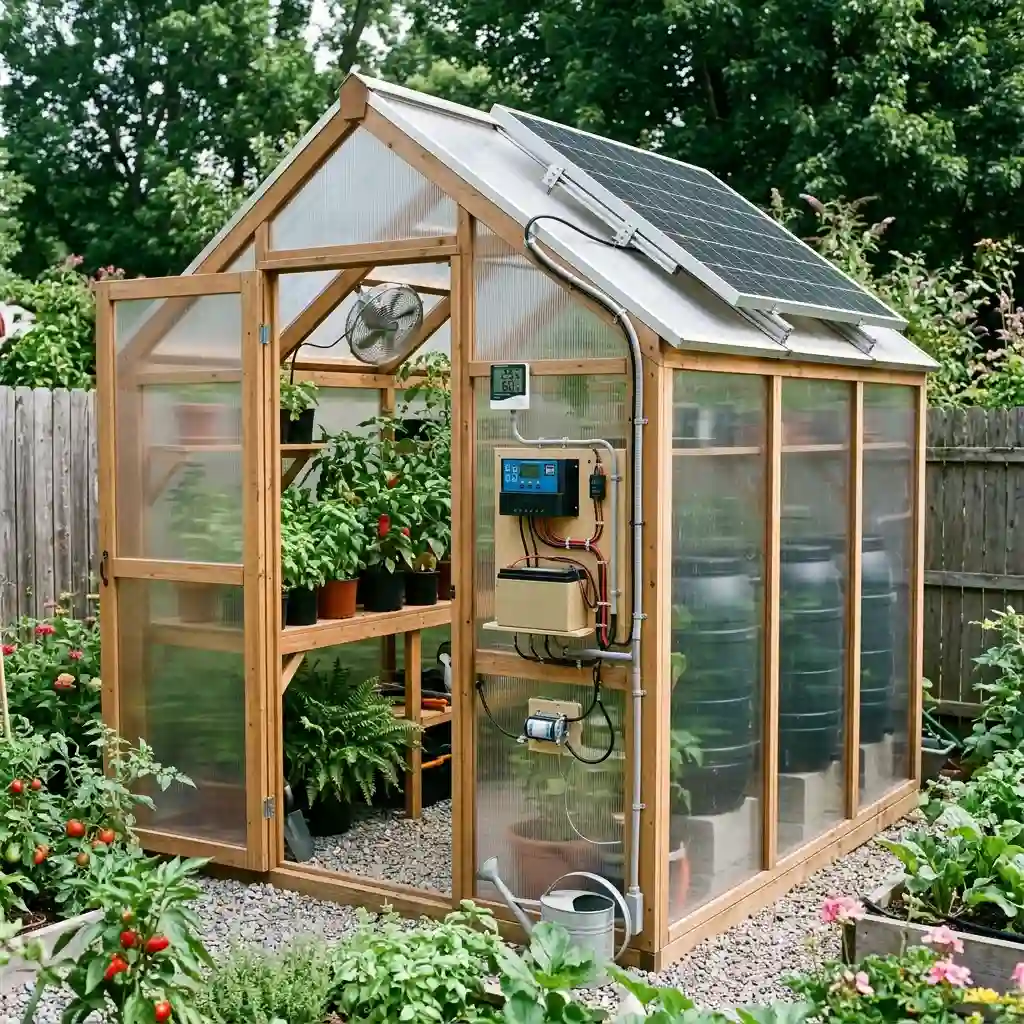
Best for: Fans, sensors, vent controls, and small pumps
Cost level: Varies by system size
Main caution: A small panel may not power winter heating
Solar panels can run low-energy greenhouse equipment. Common uses include circulation fans, temperature sensors, vent openers, and small irrigation pumps.
Heating requires far more power than running a fan. Calculate the heater’s energy use before expecting a small solar setup to keep the greenhouse warm all winter.
Water barrels or masonry can act as thermal mass. They absorb some heat during sunny hours and release it when the air cools. They cannot replace active heating during severe cold.
Solar production changes by season and location. Ask a qualified installer to size the system based on local sunlight and the equipment you plan to use.
15. Build a Partially Sunken Greenhouse
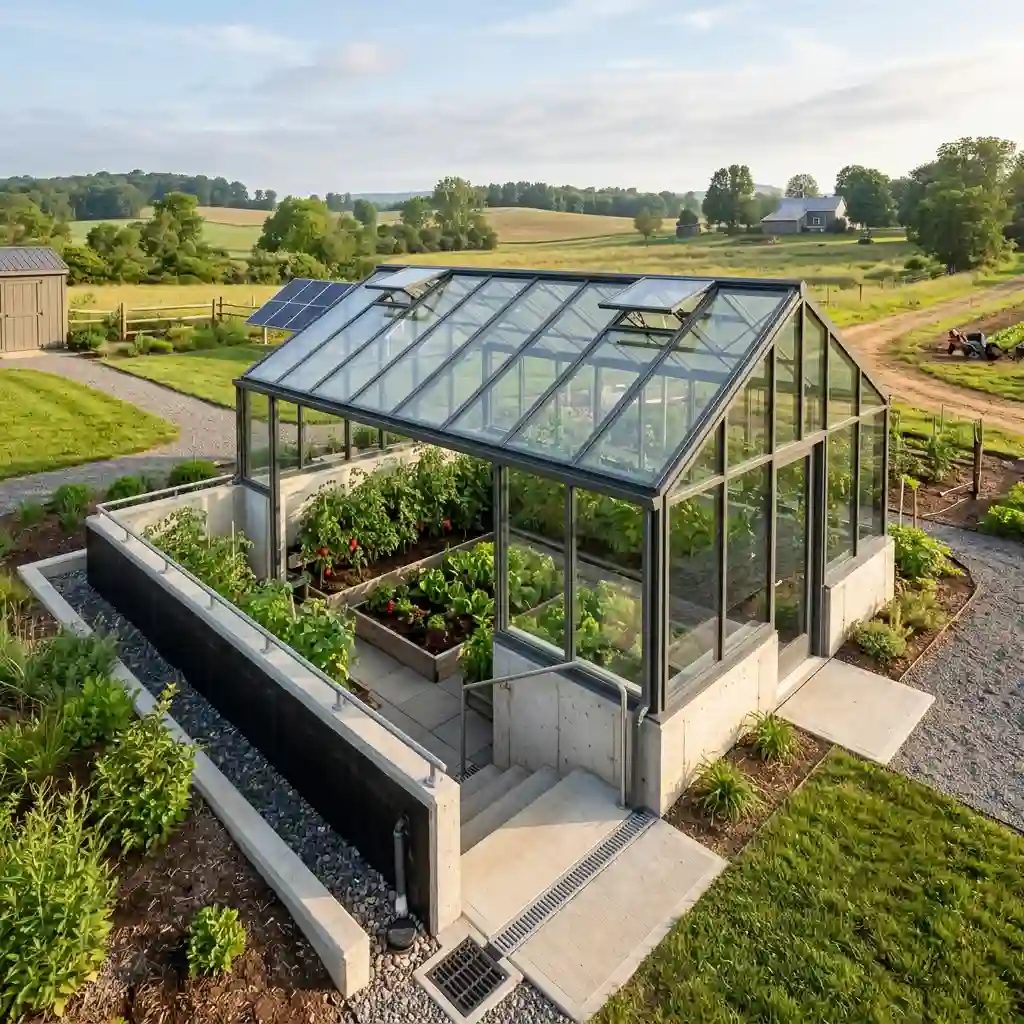
Best for: Experienced gardeners planning a permanent structure
Cost level: High
Main caution: Poor drainage can ruin the project
A partially sunken greenhouse places part of the growing area below ground. The nearby soil can reduce rapid temperature changes and protect the lower walls from cold air.
This design needs careful drainage and waterproofing. Water can collect inside if the site has heavy soil, a high water table, or poor grading.
Test the soil and check the water table before digging. You may also need excavation and building permits.
A sunken greenhouse is an advanced project. A structural engineer or experienced builder can help you plan retaining walls, roof loads, drainage, and safe access.
Compare Greenhouse Materials, Costs, and Care
The lowest starting price may not provide the best long-term value. Compare the covering’s life, strength, insulation, appearance, and replacement cost.
| Material | Best use | Main benefit | Main drawback |
| Glass | Permanent garden feature | Clear and classic appearance | Heavy, costly, and breakable |
| Polycarbonate | Most home greenhouses | Durable and more insulating | May lose clarity over time |
| Greenhouse film | Hoop houses | Low starting cost | Needs regular replacement |
| Fiberglass | Simple utility structures | Lightweight and strong | Surface may lose clarity |
Glass often suits a permanent showpiece. Twin-wall or multiwall polycarbonate is practical when strength and heat control matter more than perfect clarity.
Greenhouse film works well for seasonal hoop houses. Buy film made for this use and ask about its rated service life. Fiberglass panels are light, but their appearance can change after years of weather exposure.
Calculate the full project cost. Include:
- Foundation or ground anchors
- Delivery charges
- Doors and vents
- Shelves and benches
- Shade cloth
- Irrigation
- Electrical work
- Installation
- Replacement parts
- Annual cleaning and repairs
Choose the material based on your climate and how long you plan to use the structure.
Common Backyard Greenhouse Mistakes to Avoid
Poor temperature control is one of the biggest greenhouse problems. An enclosed structure can overheat quickly in direct sun, even when the outdoor air feels comfortable.
Avoid these common mistakes:
- Placing the greenhouse in deep afternoon shade
- Buying a structure that is too small
- Forgetting roof and side vents
- Failing to anchor a lightweight frame
- Building on ground with poor drainage
- Ignoring summer heat
- Blocking paths, gates, or utility access
- Using indoor electrical equipment outside
- Leaving no room for water storage or irrigation
- Filling every inch before testing the layout
Plan your vents, fans, shade cloth, and water access before adding plants. Use a greenhouse thermometer and hygrometer to track temperature and humidity.
Any outlet, light, fan, or heater must be suitable for a damp outdoor space. Ask a licensed electrician to install new power safely.
Before buying, confirm these seven points:
- The site receives useful sunlight.
- The greenhouse fits the marked area.
- Doors and vents can open fully.
- Water drains away from the base.
- The frame suits local weather.
- Replacement parts are available.
- The full cost fits your budget.
Choose a Greenhouse That Fits How You Garden
The best greenhouse is one that matches your space, climate, budget, and daily gardening habits. A compact kit may be enough for seed trays. A hoop house can cover vegetable beds, while a glass greenhouse can become a major garden feature.
Start with one possible location. Measure it, track the sunlight, and check access to water and power. Then shortlist three designs that fit the site.
Think about summer airflow as carefully as winter warmth. A well-placed vent or shade cloth can protect plants from damaging heat.
Use these backyard greenhouse ideas to choose a structure that fits your yard and makes gardening easier throughout the year.