
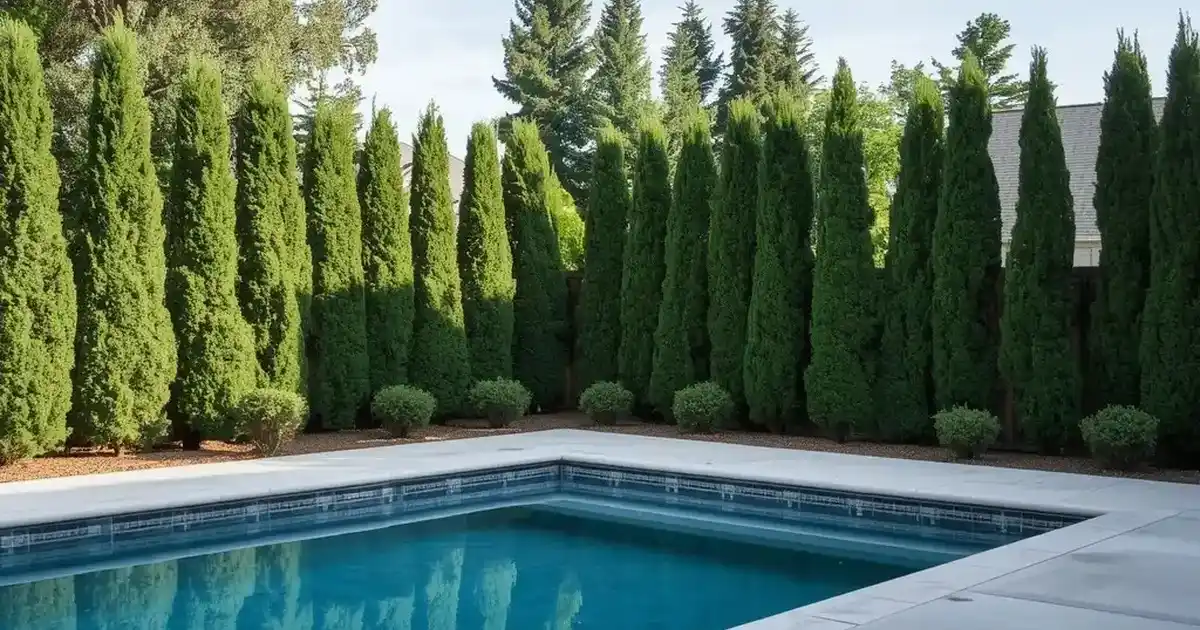
A small pool yard can quickly feel crowded. One large chair, a wide hedge, or too many plant pots may take away the little open space you have.
The good news is that you do not need a large yard to create a relaxing pool area. The right layout can give you more privacy, shade, seating, and style.
These small backyard pool landscaping ideas focus on using space wisely. You will learn how to choose better plants, reduce clutter, create clear walking paths, and make your pool area feel larger.
You do not need to use every idea. Start with the problem that bothers you most. It may be a lack of privacy, a hot pool deck, or too much cleaning.
Then choose one or two changes that fix that problem.
Plan Your Small Pool Yard Before You Spend Money
Poor planning can make a small pool area harder to use. A planter may block the main path. A tree may grow too close to the water. A large sofa may leave no room for walking.
Start by measuring the pool, deck, fence, doors, planting areas, and pool equipment. Write down each measurement instead of guessing.
Next, mark four key zones:
- The main walking path
- The seating area
- The planting area
- The pool maintenance area
Watch the yard during the day. Note which parts receive strong sun and which areas stay shaded. Check where water gathers after rain or pool use.
You should also find out where neighbors can see into the yard. This will help you place screens or plants only where they are needed.
Before buying anything, use this four-space test:
- Can people still walk safely?
- Can you reach the pool equipment?
- Is there enough room to sit?
- Can water drain away?
Check local pool, fence, gate, and electrical rules before starting major work. These rules may be different in each city.
3 Small Backyard Pool Landscaping Ideas for Privacy
Privacy can be hard to create in a small yard. A full hedge may use too much space, while a tall solid fence may make the pool area feel closed in.
The goal is to block the main views without surrounding the whole yard.
1. Add a Vertical Slatted Privacy Screen
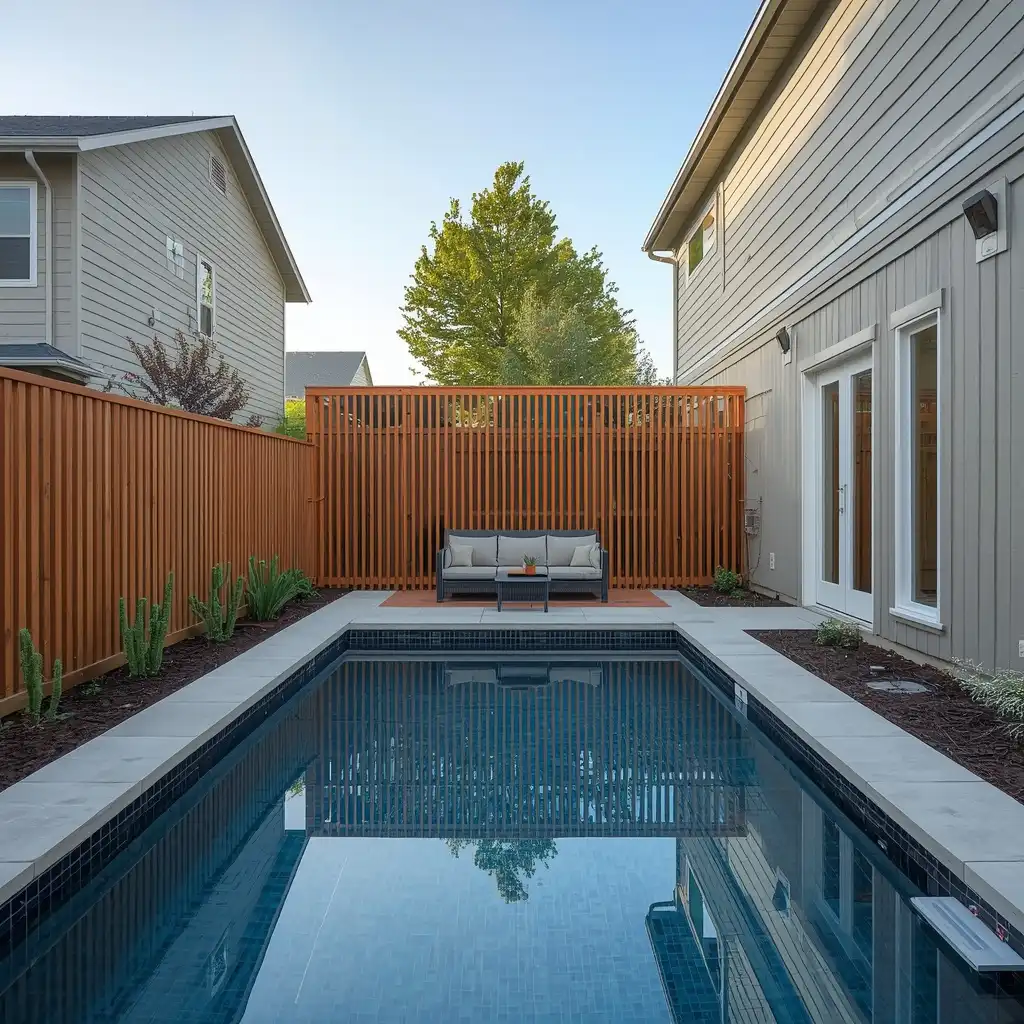
A slatted screen gives you privacy without using the deep planting space required by a hedge.
Place the screen behind a seating area or along the section of fence that faces a neighbor’s window. You may only need one or two panels.
Vertical boards can make the boundary look taller. Small gaps between the boards allow some air and light to pass through.
Use a material that matches your deck, fence, or outdoor furniture. Wood adds warmth. Metal or composite panels can create a cleaner, modern look.
Best for: Narrow yards and exposed seating areas
Space needed: Very little
Maintenance: Low to medium
Budget: $$
Watch out for: Poorly secured screens may move in strong wind
2. Plant a Slim Evergreen Hedge
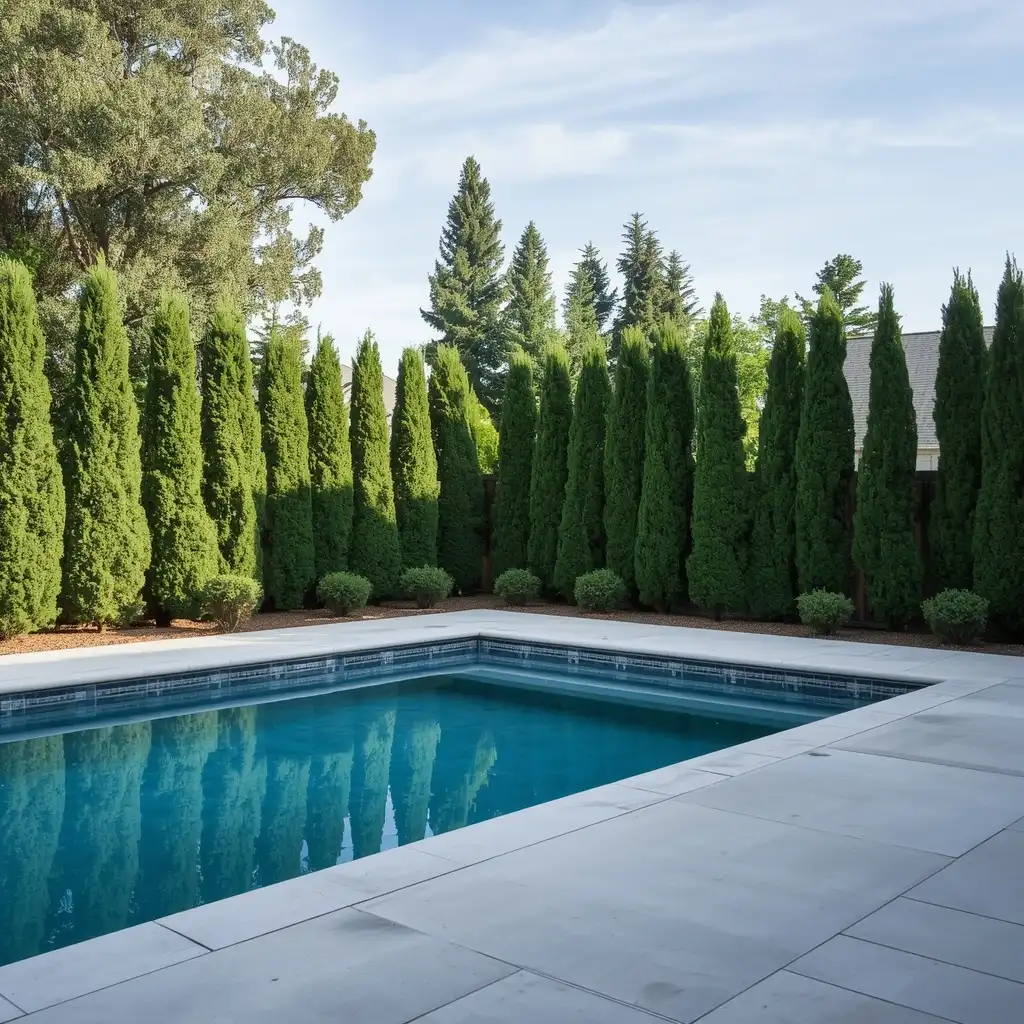
A narrow evergreen hedge gives you year-round privacy. It also softens the hard lines created by fences and paving.
Choose plants based on their mature width. Do not judge them by their small size at the nursery.
Avoid plants with thorns, invasive roots, heavy fruit, or lots of falling leaves. These plants may create more pool cleaning.
Plant the hedge only where screening is needed. A short row behind the pool may work better than a full border.
Leave clear access around pumps, filters, gates, and pipes.
Best for: Natural privacy
Space needed: Moderate
Maintenance: Medium
Budget: $$
Watch out for: Regular trimming may be needed
3. Use a Pergola with Outdoor Curtains
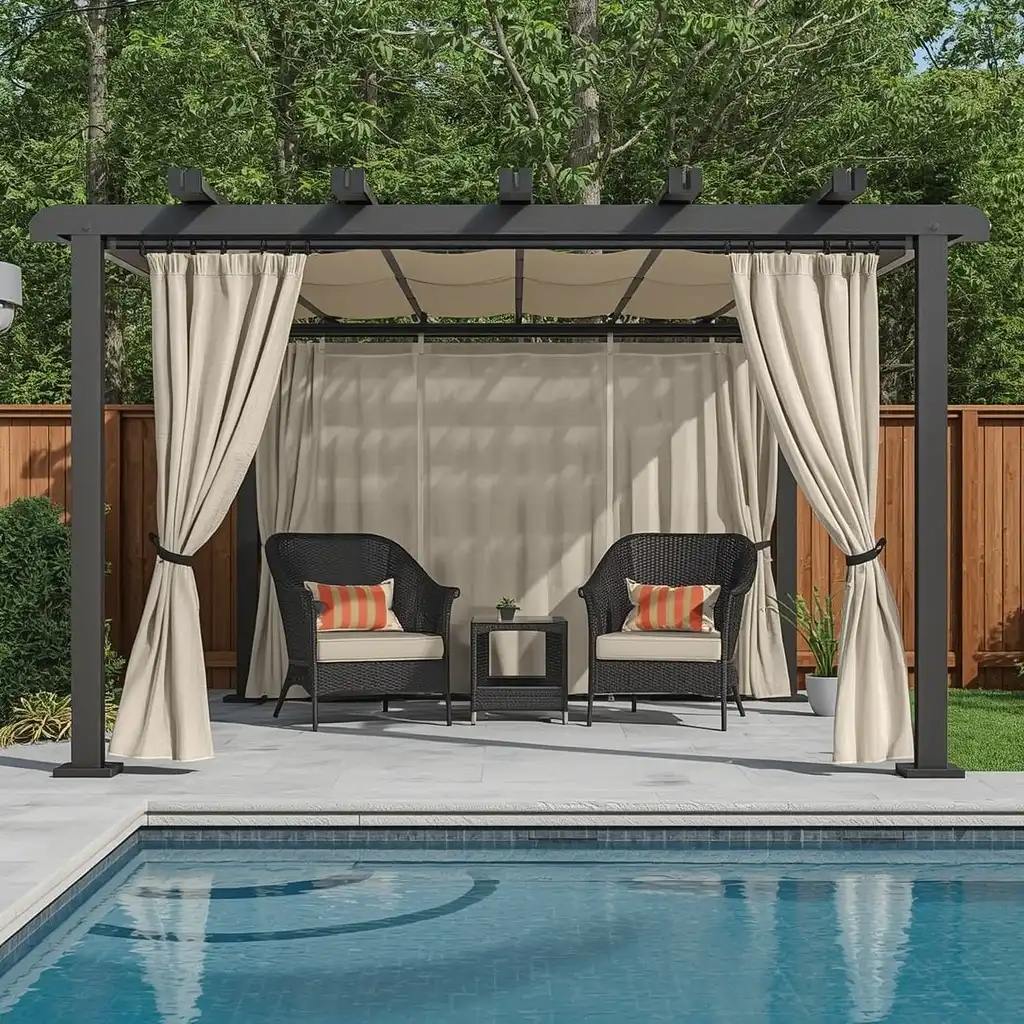
A slim pergola can give you shade and privacy in one area. Add outdoor curtains that can be opened or closed as needed.
This setup works well over a small bench or two chairs. It creates a clear place to relax without covering the full pool.
Choose outdoor fabric made for sun and moisture. Secure the lower part of each curtain so it does not blow into the pool.
A pergola costs more than a screen or umbrella. Still, it can add structure and make the seating area feel complete.
Best for: Privacy and shade
Space needed: Moderate
Maintenance: Medium
Budget: $$$
Watch out for: Curtains must be secured in windy weather
4 Space-Saving Plant Ideas for a Small Pool
Plants can make a pool area feel calm and inviting. But the wrong plants can block paths, damage paving, or fill the water with leaves.
Choose plants that fit the space when fully grown.
4. Frame the Pool with Raised Planter Beds
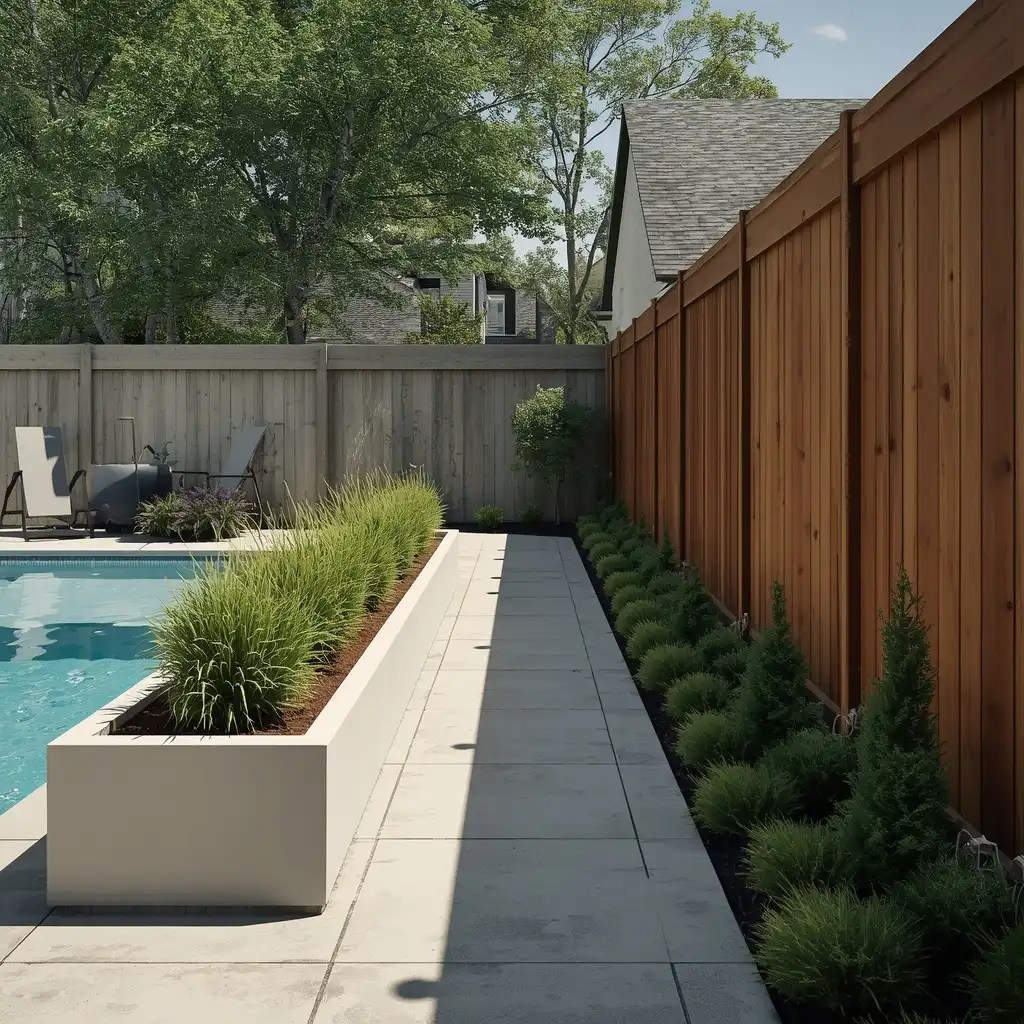
A narrow raised bed gives plants a clear home. It also keeps loose soil and mulch away from the pool deck.
Build one long bed along a fence instead of placing small pots across the yard. This creates a cleaner look and leaves more open walking space.
A raised bed can also work as a low divider between the pool and seating area. Keep it narrow so it does not take over the yard.
Choose plants with roots that will fit inside the bed. Add proper drainage so water does not collect after rain.
Best for: Clean planting lines
Space needed: Low to moderate
Maintenance: Medium
Budget: $$
Watch out for: Poor drainage can harm plants and nearby paving
5. Group Plant Pots in Sets of Three
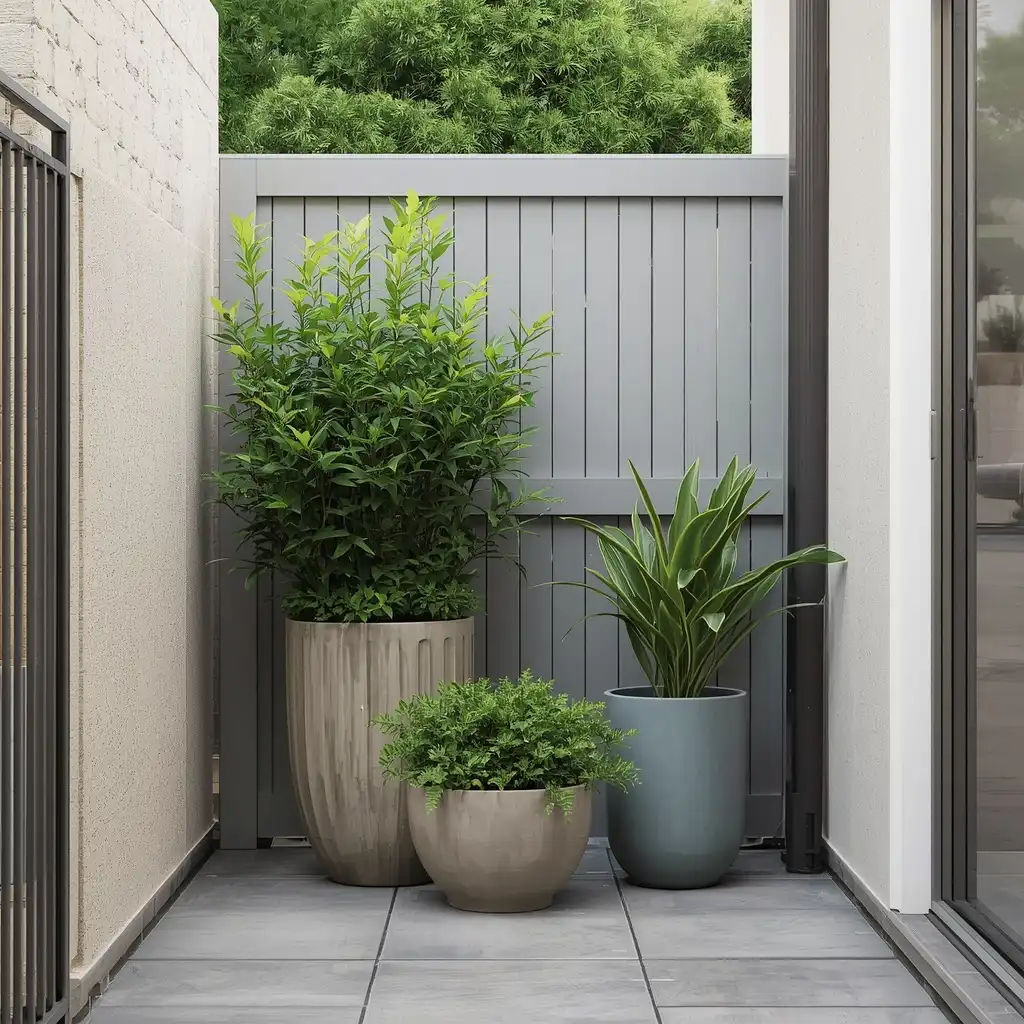
Too many small pots can make a compact pool area look messy. Grouping pots creates one strong display instead of many weak ones.
Use three pots with different heights. Place a tall plant in the back, a medium plant in the middle, and a trailing plant near the front.
Keep the pot colors and materials similar. This helps the group look planned.
Place the group in an unused corner. Do not line pots along a narrow walkway.
Best for: Renters and quick updates
Space needed: Very little
Maintenance: Medium
Budget: $ to $$
Watch out for: Small pots may dry out quickly in hot weather
6. Use Narrow Ornamental Grasses
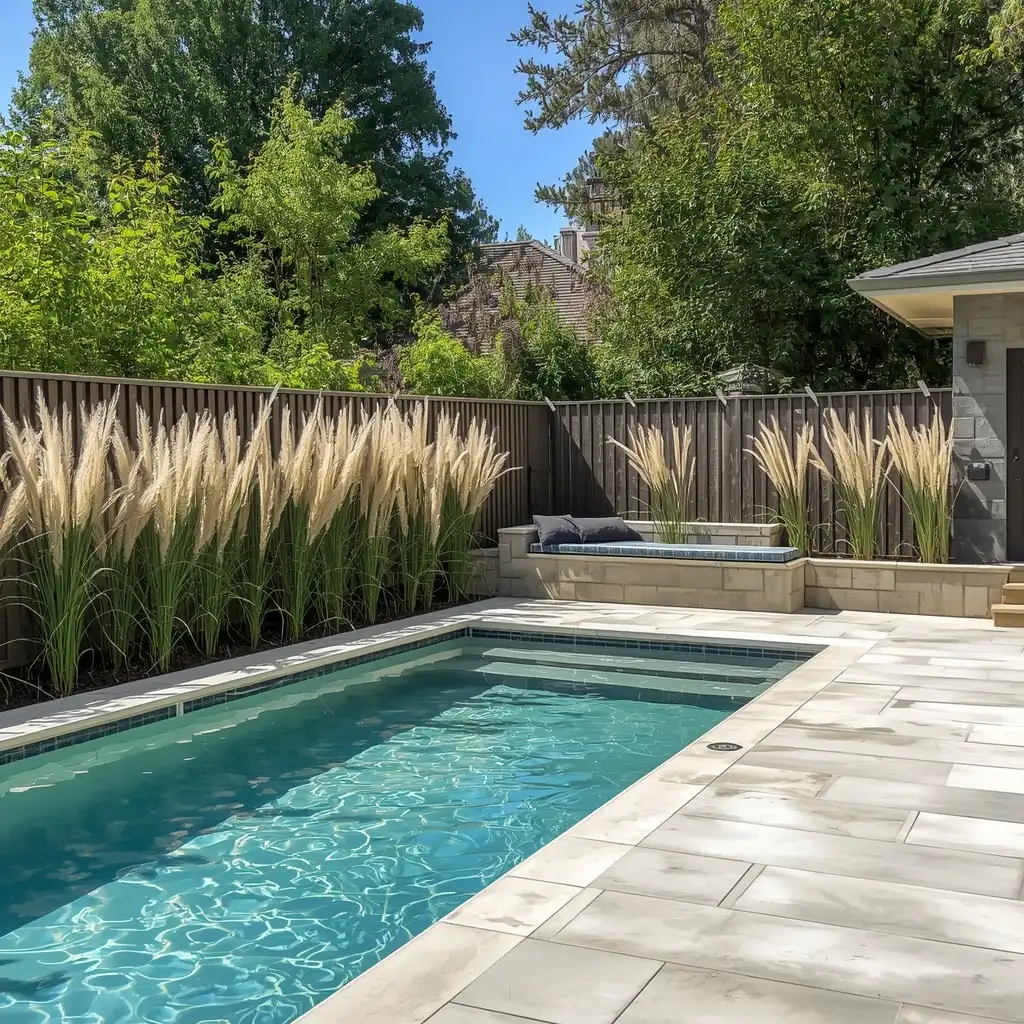
Upright grasses can soften a fence without creating a wide planting bed. Their movement also adds life to a yard filled with hard surfaces.
Choose a type that stays in a neat clump. Avoid grasses that spread through underground roots.
Check how much dry plant material the grass produces. Some types need cutting back each year and may shed near the pool.
Place grasses behind a bench, beside a screen, or inside a long raised bed.
Best for: Soft texture and movement
Space needed: Low
Maintenance: Low to medium
Budget: $
Watch out for: Some grasses spread or shed more than expected
7. Choose One Small Statement Tree
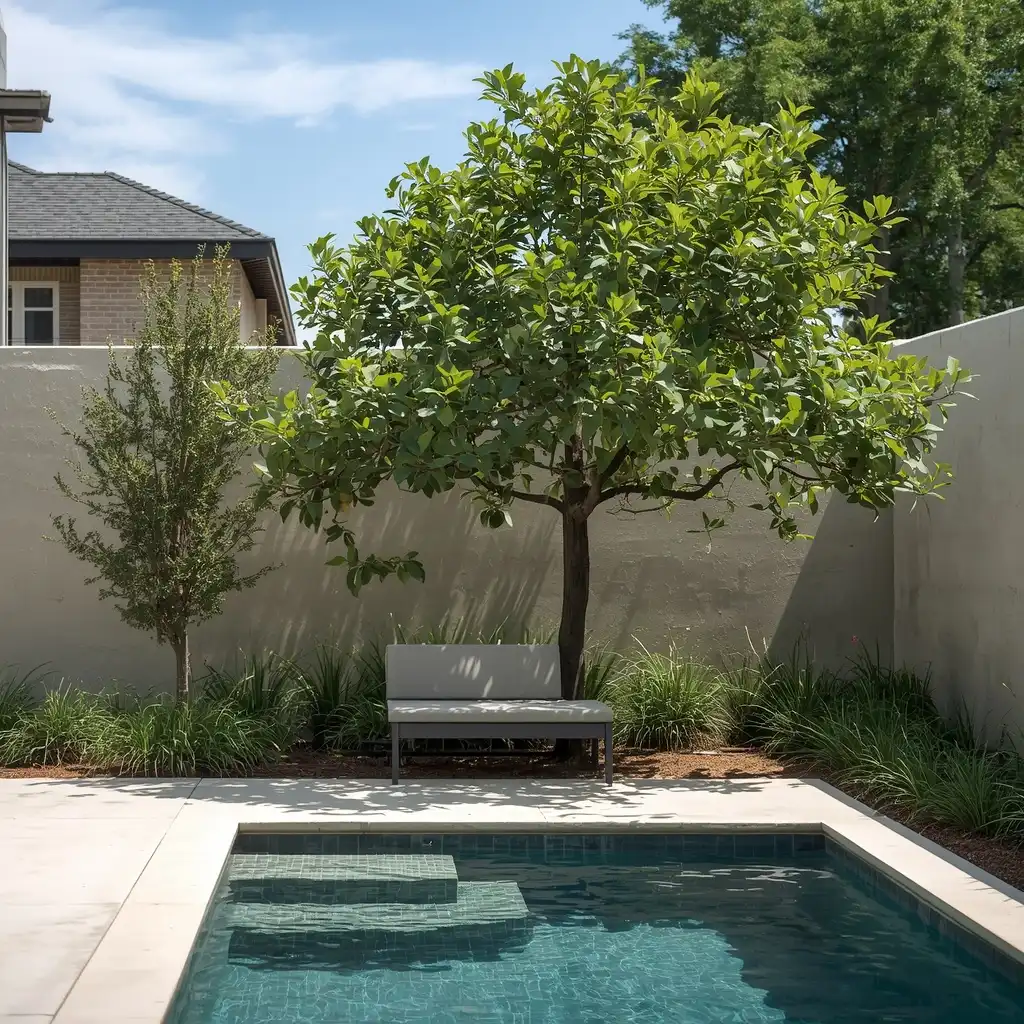
One carefully placed tree can make a stronger impact than several small plants. It can also provide afternoon shade.
Look for a tree with a controlled root system and a canopy that fits your yard. Check its final height and width before planting.
Avoid trees that drop fruit, large seed pods, thorns, or heavy amounts of leaves. Do not plant the tree where branches will hang over the pool.
Place it where it can shade a chair or bench during the hottest part of the day.
Best for: Shade and a strong focal point
Space needed: Moderate
Maintenance: Medium
Budget: $$
Watch out for: Roots and falling leaves can cause problems
4 Hardscaping Ideas That Make a Small Pool Look Bigger
Hardscaping includes the solid parts of your yard, such as paving, walls, steps, and built-in seating.
These surfaces cover a large part of a small pool yard. Simple choices often work best.
8. Use Large-Format Pavers
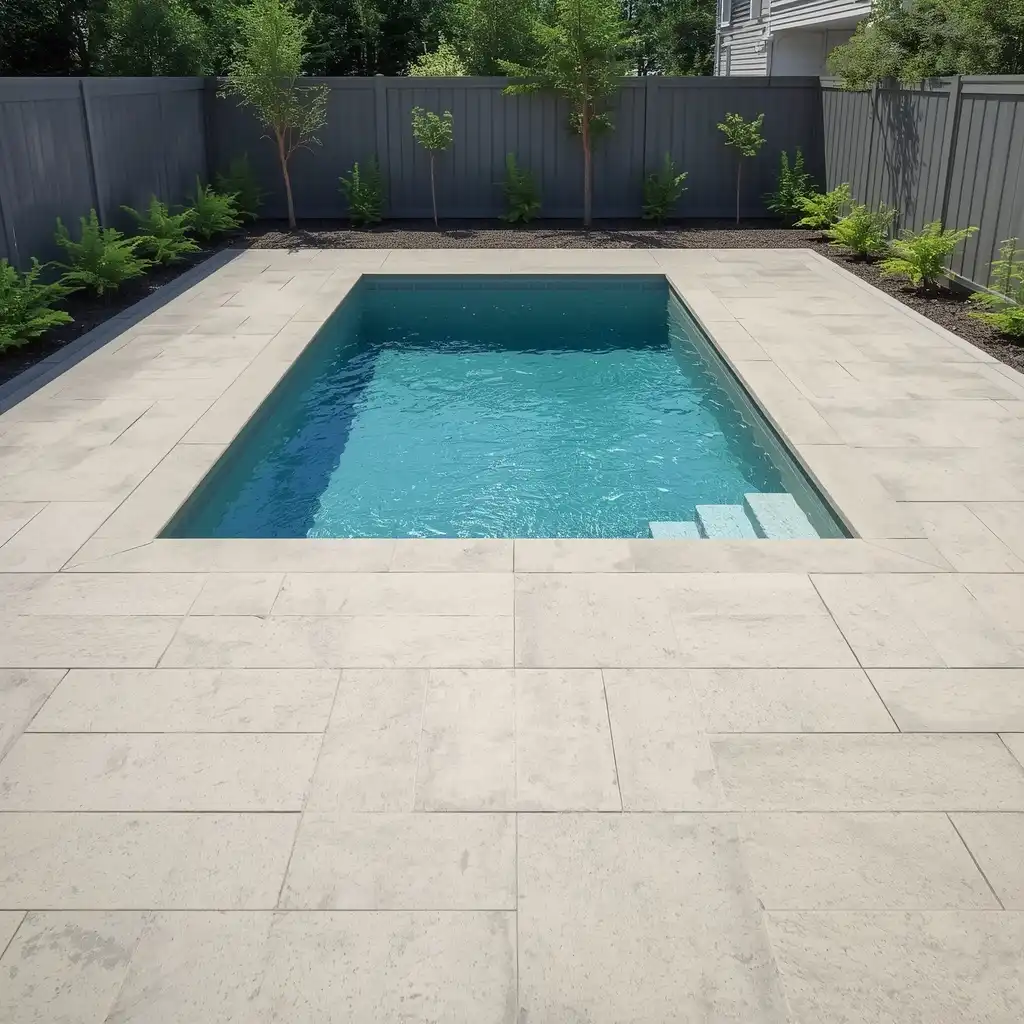
Large pavers create fewer lines across the ground. This can make the pool deck feel less busy and more open.
Choose a light or medium neutral shade that works with the house. Soft gray, sand, and light beige can create a calm base.
The surface must be suitable for wet areas. Avoid polished stone or tile that may become slippery.
Ask the supplier how hot the material becomes in direct sun. Some dark surfaces can feel uncomfortable under bare feet.
Best for: A clean and open look
Space needed: No extra space
Maintenance: Low to medium
Budget: $$ to $$$
Watch out for: Some materials become hot or slippery
9. Use One Main Surface Across the Yard
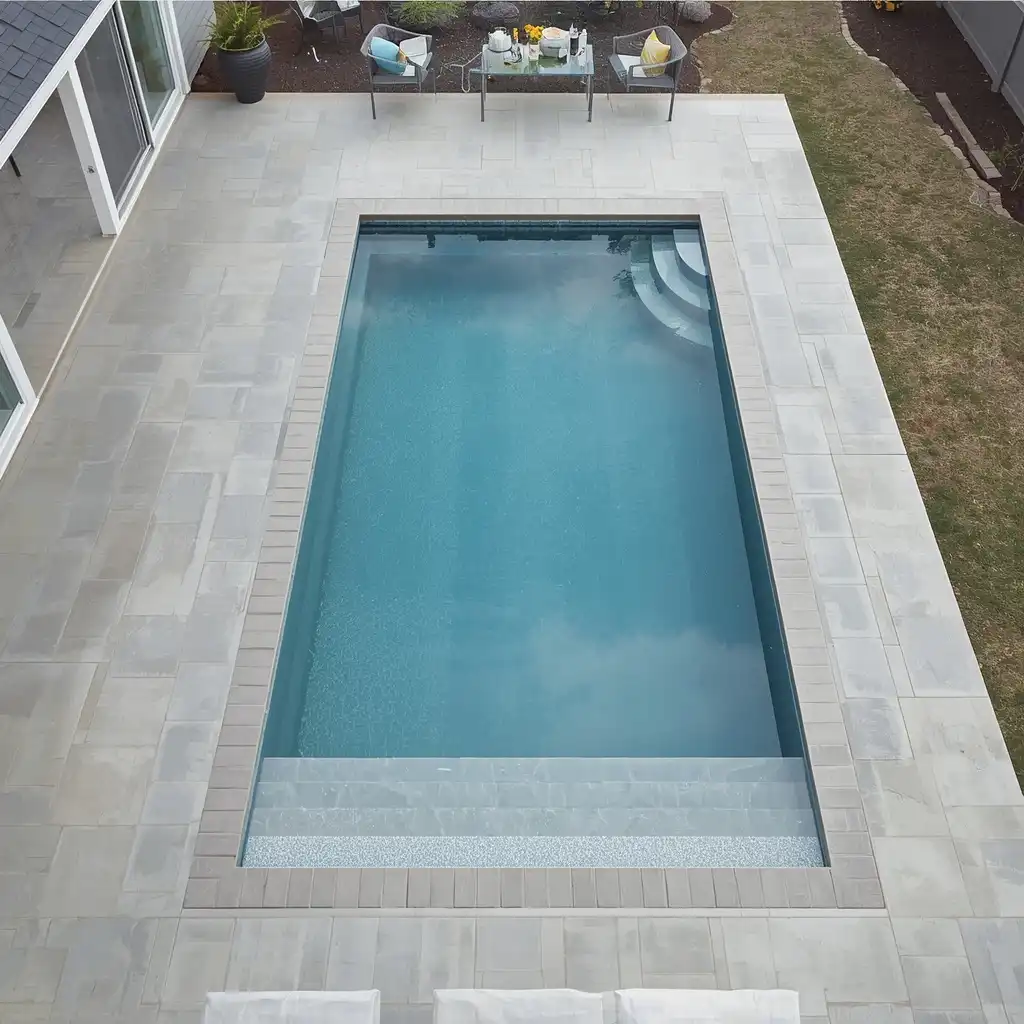
Several paving materials can divide a small yard into even smaller areas.
Try using one main deck surface around the pool and seating zone. You may add one simple border, but avoid several colors and patterns.
A continuous surface also makes the path from the house to the pool feel smoother. It can reduce visual breaks.
Match steps, planter edges, and built-in seating with the main material when possible.
Best for: Making the yard feel connected
Space needed: No extra space
Maintenance: Depends on material
Budget: $$ to $$$
Watch out for: Repairs may be harder if the material is discontinued
10. Lay Pavers on a Diagonal
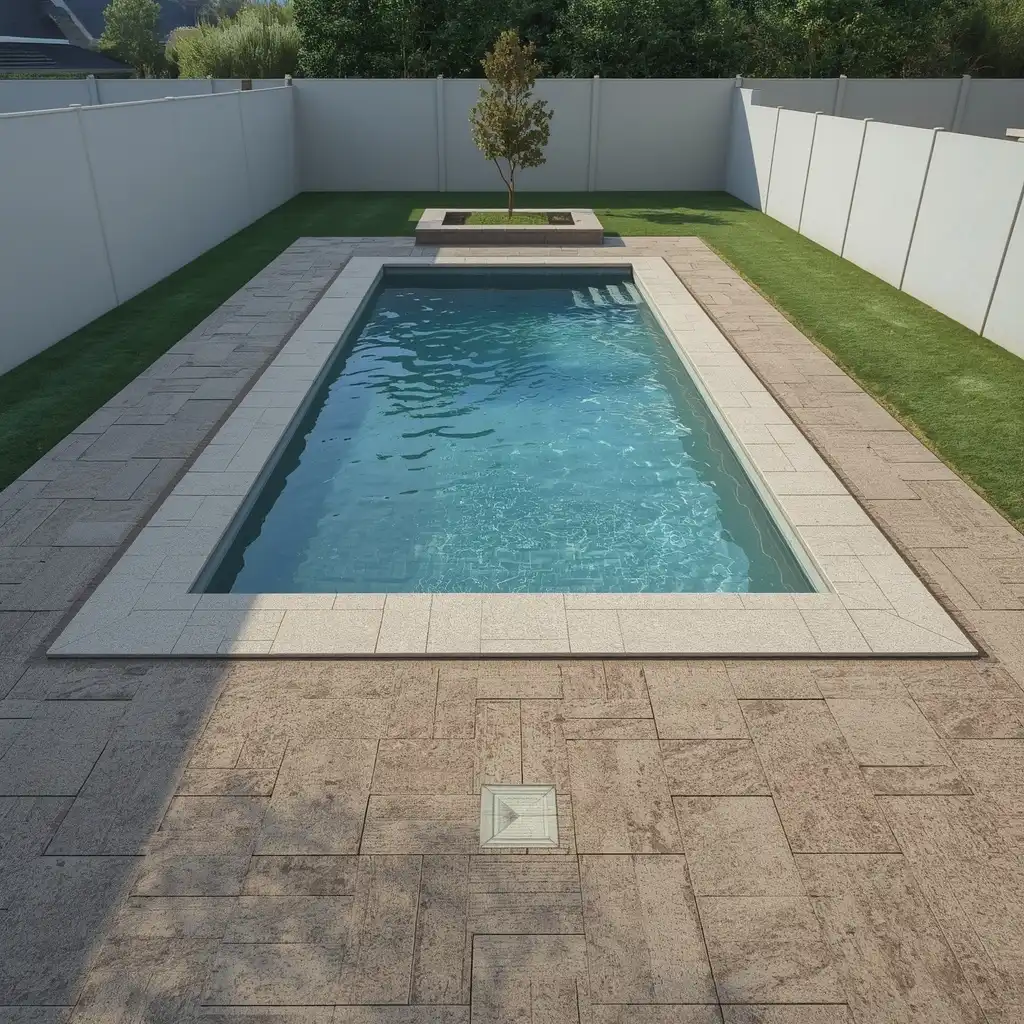
A diagonal paving pattern can make a narrow yard appear wider. The lines lead the eye across the space instead of straight to the fence.
This works well beside a long rectangular pool. A soft curve can also reduce the boxy feel of the yard.
Choose one clear direction. Too many angles may create visual clutter.
Use the pattern to guide the eye to a tree, water feature, bench, or planted corner.
Best for: Long and narrow yards
Space needed: No extra space
Maintenance: Low
Budget: Depends on paving
Watch out for: Extra cutting may increase installation costs
11. Build Seating into a Wall or Planter
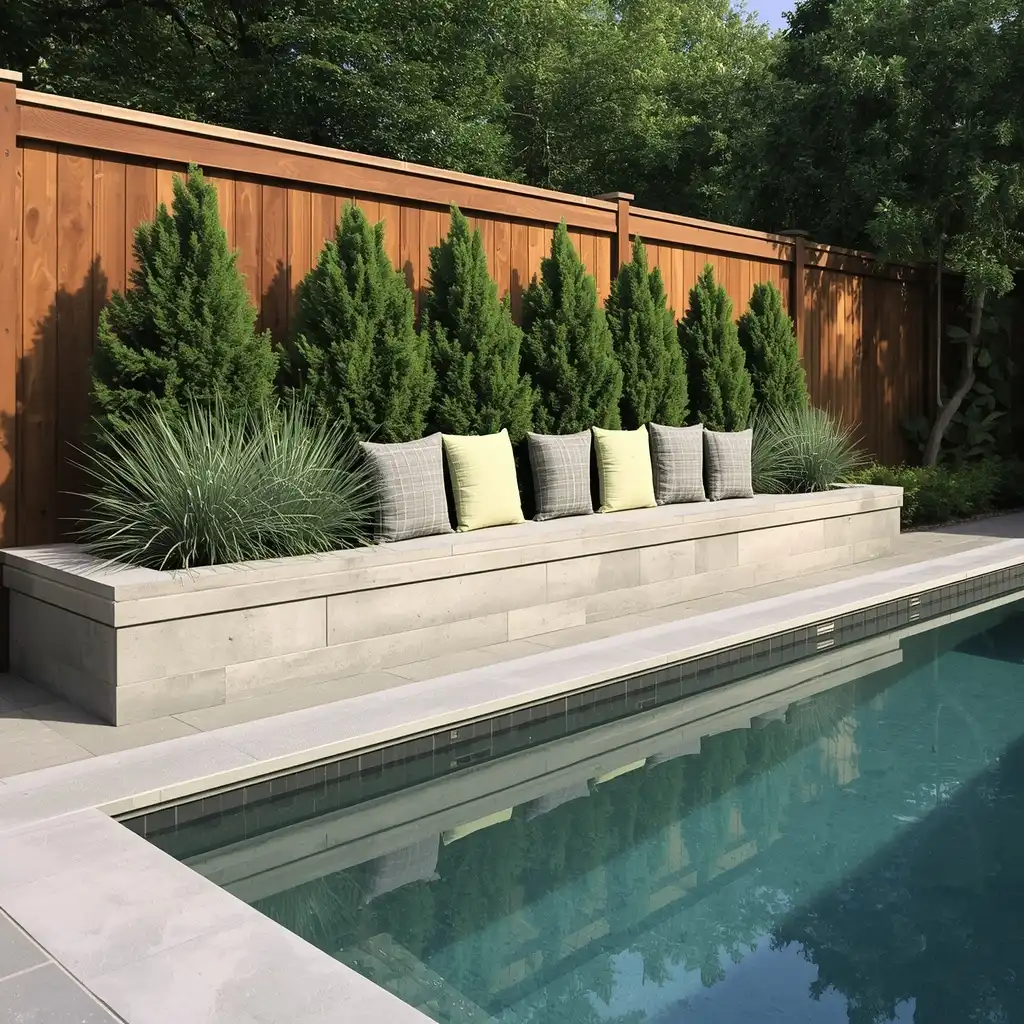
Built-in seating saves space because you do not need several separate chairs.
Add a bench along a fence, low wall, or raised planter. The area under the seat may also provide storage for pool towels or small items.
Use outdoor cushions that can be washed and stored easily. Keep the bench depth in scale with the yard.
Do not build seating where it blocks the main route around the pool.
Best for: Seating and hidden storage
Space needed: Low
Maintenance: Low to medium
Budget: $$ to $$$
Watch out for: Fixed seating cannot be moved later
3 Ways to Add Shade Without Filling the Yard
Shade makes a pool area more comfortable. But a large roof or oversized outdoor sofa can make a small yard feel packed.
Focus on shading the seating area instead of covering every part of the pool.
12. Use a Cantilever Umbrella
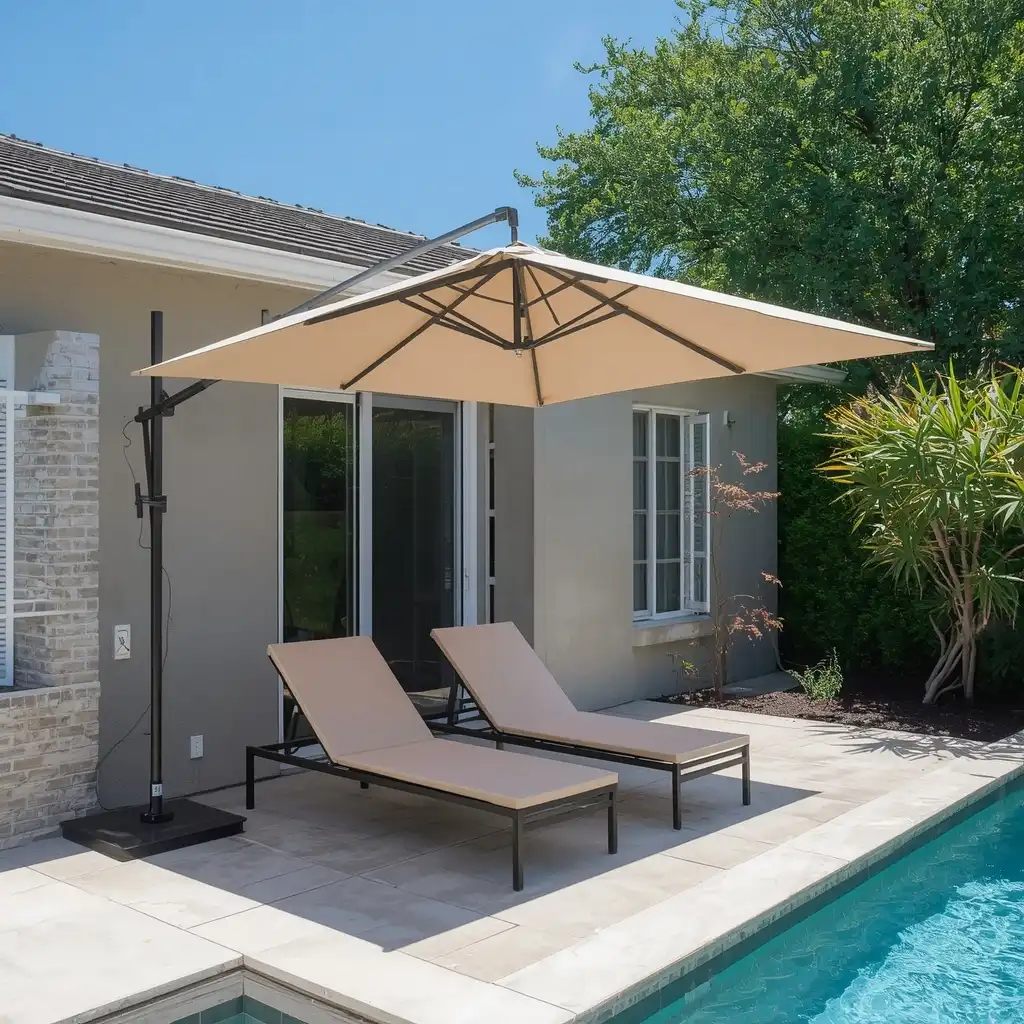
A cantilever umbrella has a side pole instead of a center pole. This leaves the area under the canopy open.
Place the base beside the seating area. The canopy can extend over chairs, a bench, or part of the pool.
A rotating model lets you move the shade as the sun changes. This can be useful in a yard with limited room.
Choose a heavy base that suits the umbrella size. Close the umbrella during strong winds.
Best for: Flexible shade
Space needed: Low
Maintenance: Low
Budget: $$
Watch out for: A light base may not be safe in wind
13. Build a Slim Pergola Along the Fence
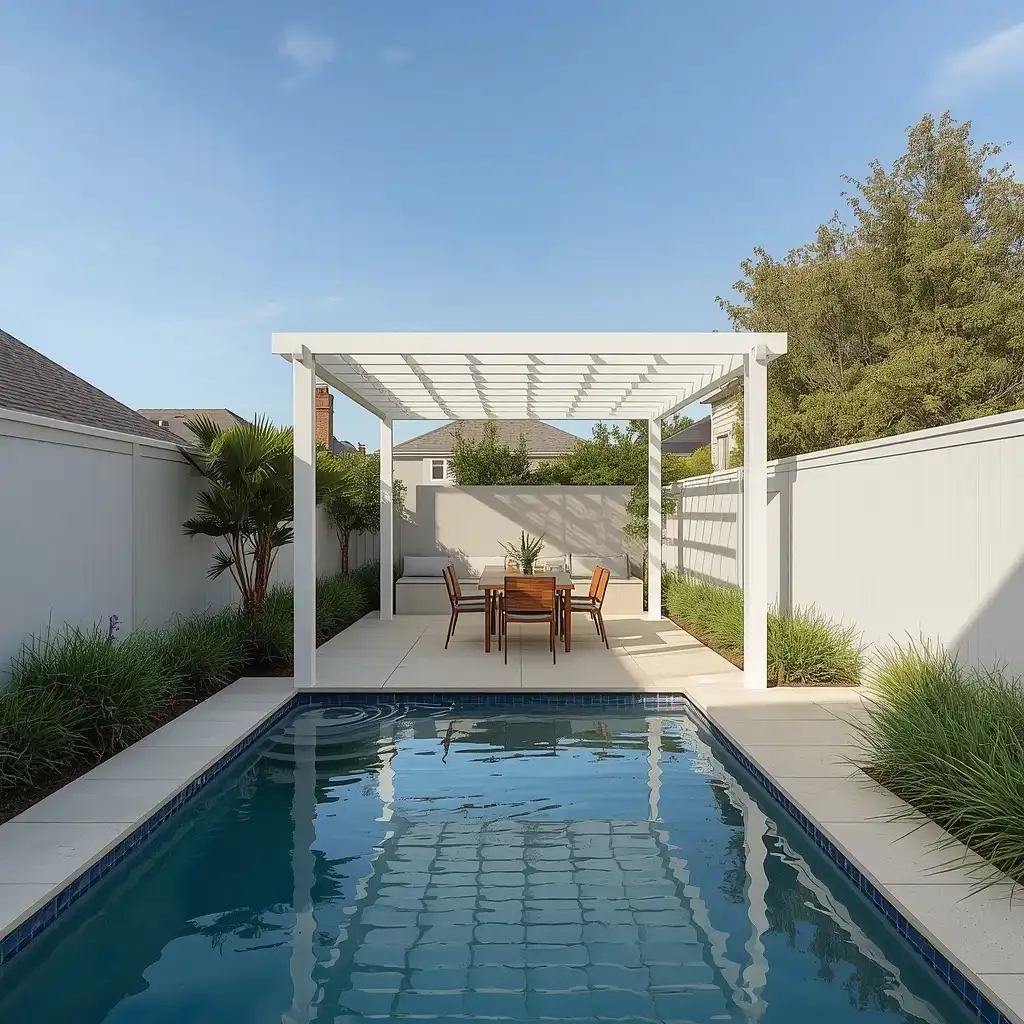
A pergola placed along the edge of the yard keeps the center open. It can cover a bench, outdoor dining spot, or small lounge area.
An open roof allows air and light to pass through. You can add a shade panel if the sun is strong.
Be careful with climbing plants. Some produce flowers, leaves, or berries that may fall into the pool.
A pergola is a larger project, so measure the space carefully before building.
Best for: Permanent shade
Space needed: Moderate
Maintenance: Medium
Budget: $$$
Watch out for: A deep pergola may make the yard feel smaller
14. Pick Furniture You Can Move or Stack
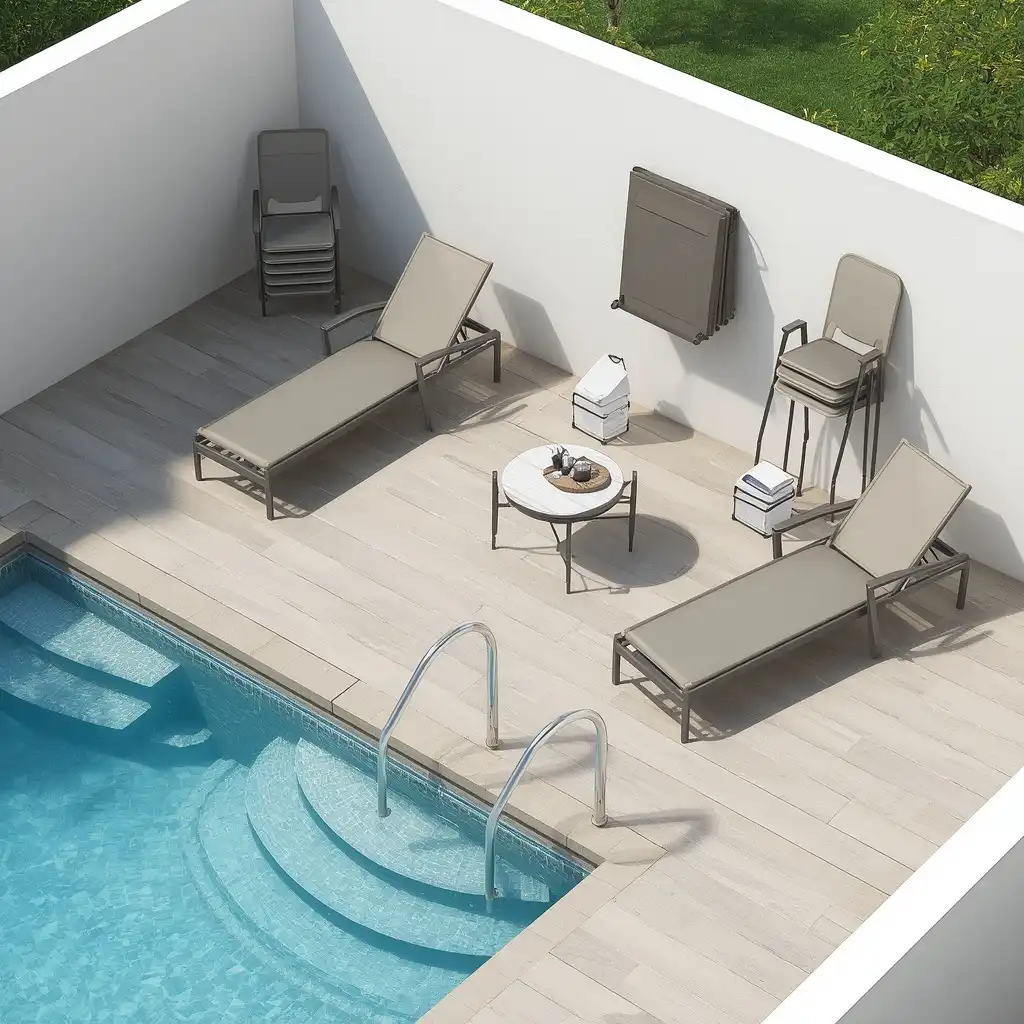
Large outdoor sectionals often look good in showrooms. They may be far too big for a small pool deck.
Choose folding chairs, slim loungers, or stackable seats. These pieces can be moved when you need more walking room.
Use one small table that can serve more than one chair. Avoid adding a table beside every seat.
Wall hooks or a storage bench can hold folded chairs when they are not in use.
Best for: Flexible seating
Space needed: Very little
Maintenance: Low
Budget: $ to $$
Watch out for: Very light furniture may move in wind
2 Simple Ways to Improve Lighting and Style
A small pool yard does not need many decorations. Each item is easy to notice, so choose a few pieces that work well together.
15. Add Lighting at Different Heights
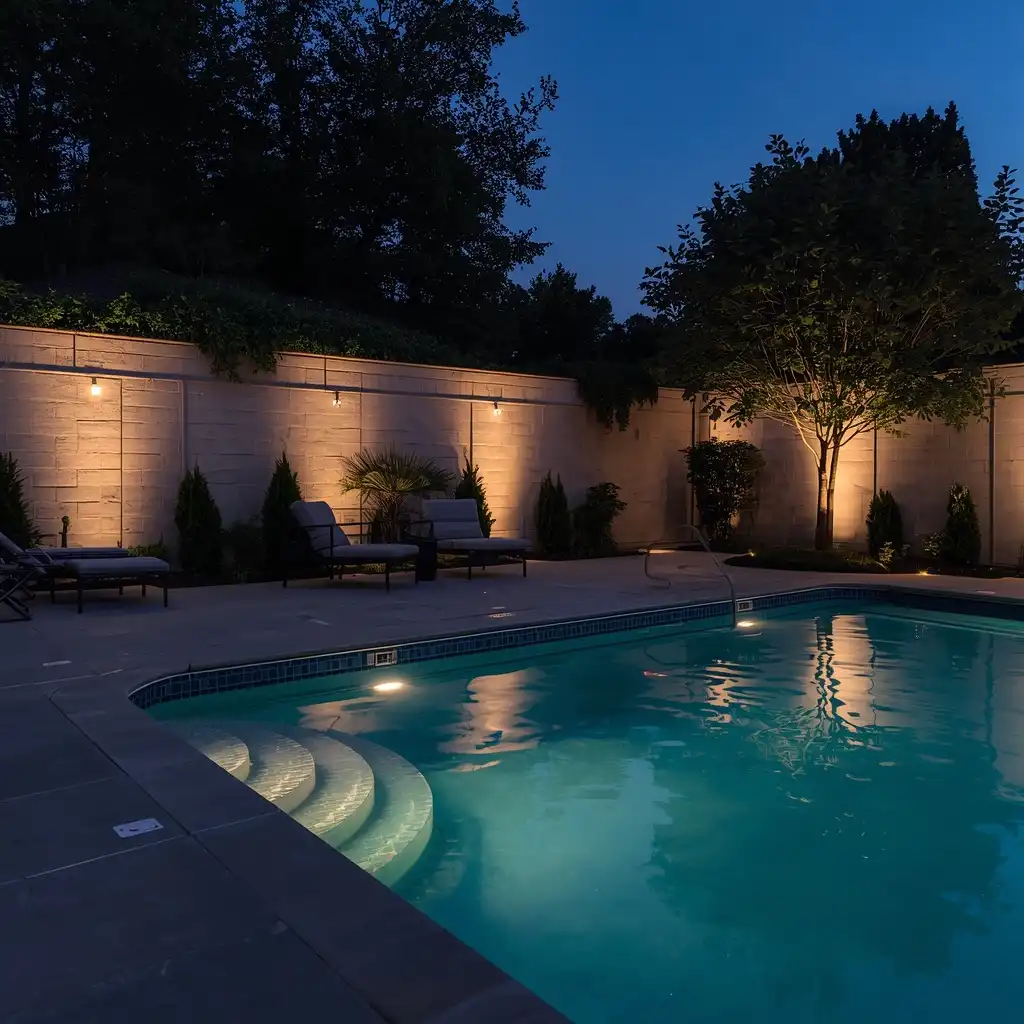
Use lighting for safety first. Add small lights near steps, paths, and level changes.
Next, place soft lights on a wall or fence. These can brighten the seating area without creating glare.
Highlight one tree, planter, or textured wall. You do not need to light every plant.
Choose fixtures made for outdoor use and suitable for areas near water. Hire a qualified electrician for fixed electrical work.
Keep bright lights pointed away from nearby homes.
Best for: Safer evening use
Space needed: None
Maintenance: Low
Budget: $ to $$$
Watch out for: Too much light can make the yard feel harsh
16. Limit the Yard to Three Main Colors
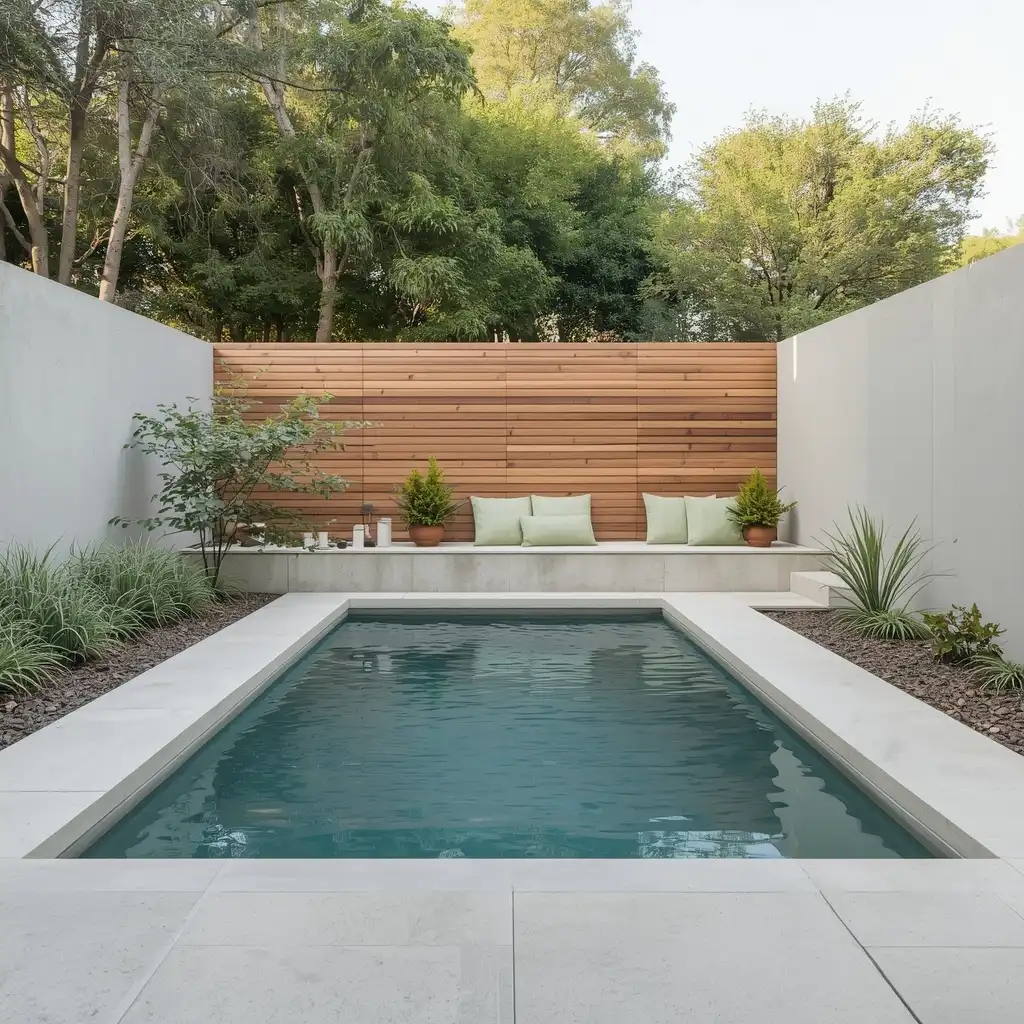
Too many colors can make a small area feel busy. A simple palette creates a calmer look.
Use one main color for about 60% of the space. This may be the deck or wall color.
Use plants and a second material for about 30%. Add one accent color through cushions, towels, or pots.
Here are three easy combinations:
- Light concrete, warm wood, and sage green
- Charcoal paving, black metal, and white fabric
- Sand-colored stone, terracotta, and deep green plants
This is a guide, not a strict rule. The goal is to repeat colors instead of adding a new shade with every item.
Best for: A clean, finished look
Space needed: None
Maintenance: Low
Budget: $
Watch out for: Light fabrics may show stains
2 Low-Maintenance Ideas That Reduce Pool Cleaning
Your landscaping choices affect how often you clean the pool. Loose soil, falling leaves, and water spray can create extra work.
A simple setup can look good and stay easier to manage.
17. Add a Narrow Gravel Buffer
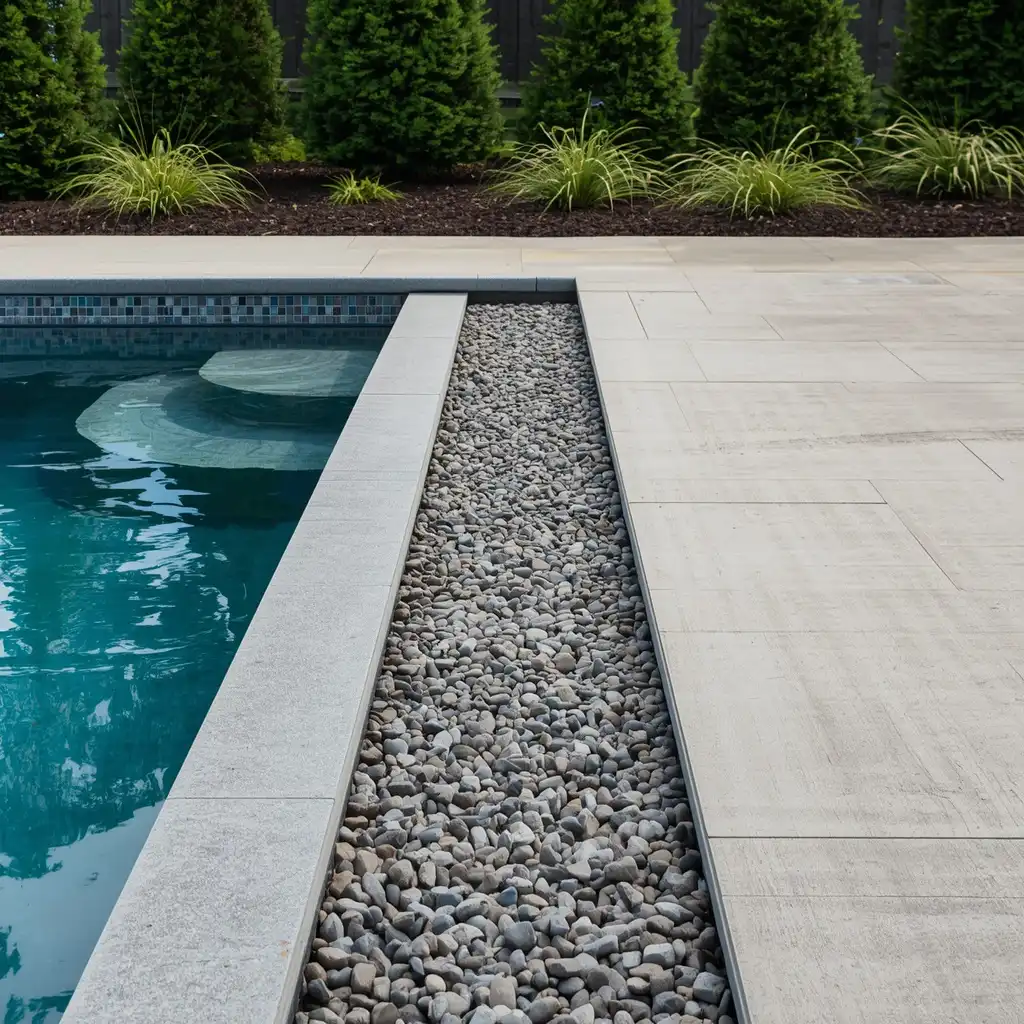
Place a narrow gravel strip between planted areas and the pool deck. It can catch loose soil and reduce muddy water near the paving.
Use solid edging to keep the stones in place. Choose gravel that is large enough to stay inside the bed.
Do not use loose stones where young children may throw them into the pool. In that case, fixed paving or planted ground cover may be safer.
Keep the gravel below the top of the edging so it does not roll onto the walking surface.
Best for: Cleaner planting edges
Space needed: Low
Maintenance: Low
Budget: $
Watch out for: Loose stones may move onto the deck
18. Install Drip Irrigation or Self-Watering Pots
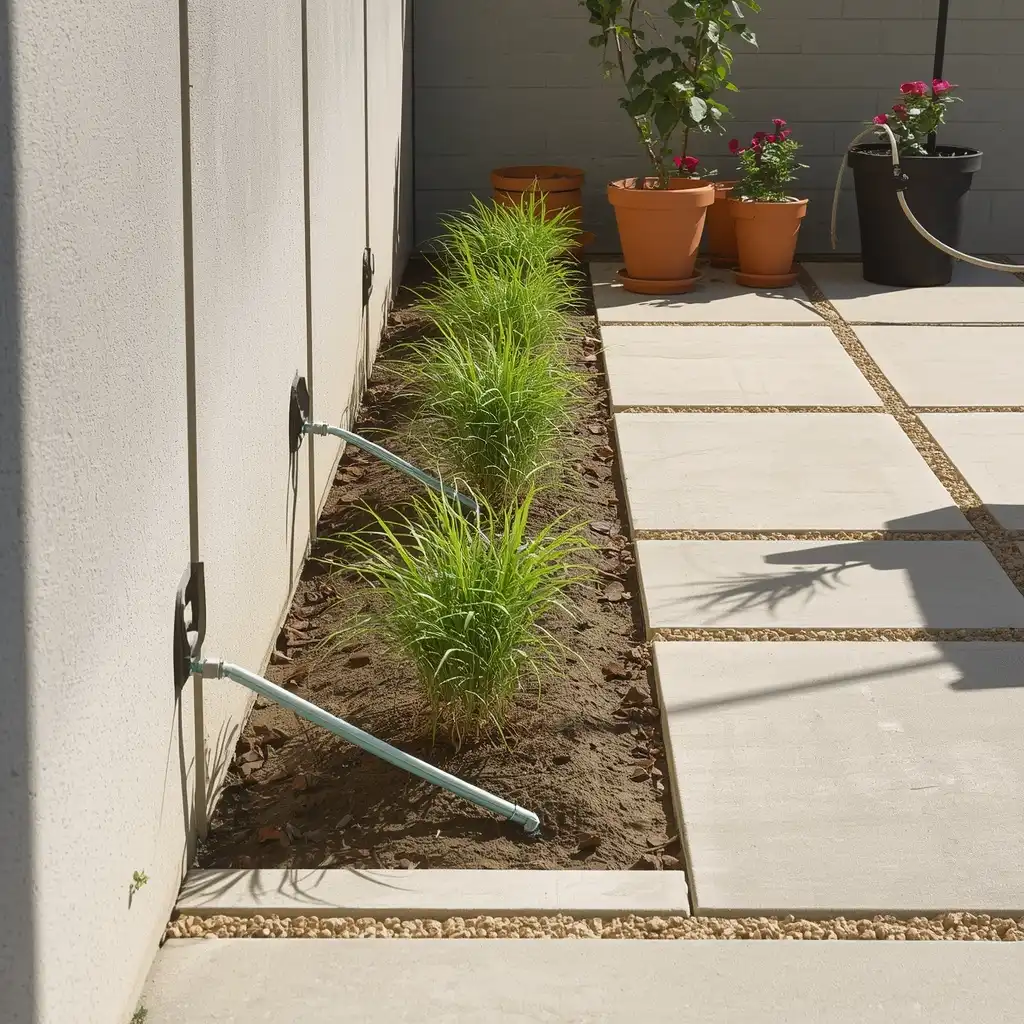
Drip irrigation sends water close to the plant roots. This reduces water spray on fences, walls, and paving.
It also helps you water long raised beds without dragging a hose across the pool deck.
Self-watering pots are useful for container plants. They can help during hot weather, but they still need regular checks.
Group plants with similar water needs. This prevents one plant from receiving too much water while another stays dry.
Check the system for leaks and blocked lines each month.
Best for: Busy homeowners
Space needed: None
Maintenance: Low
Budget: $ to $$
Watch out for: Hidden leaks may waste water
Choose the Right Ideas for Your Backyard Shape
You do not need all 18 ideas. Choose a small group that fits the shape of your yard and the way you use the pool.
For a Long, Narrow Backyard
Use:
- A slatted screen on one side
- Diagonal paving
- A slim built-in bench
- One narrow raised planter
- A cantilever umbrella
Keep the center path open from the house to the pool.
For a Small Square Backyard
Use:
- One small statement tree
- Three grouped pots
- Corner seating
- One continuous deck material
- Soft fence lighting
Place the tallest feature in one corner. This keeps the middle of the yard clear.
For a Pool Close to the House
Use materials that match or support the indoor colors. This helps the indoor and outdoor areas feel connected.
Choose movable furniture and wall-mounted lights. Keep the route from the back door to the pool open.
Place pots in corners rather than beside the doorway.
For a Low-Maintenance Pool Yard
Use:
- Large pavers
- A gravel buffer
- Drip irrigation
- A few evergreen plants
- Built-in seating with storage
This setup reduces clutter and limits the number of loose items around the pool.
Which Pool Landscaping Ideas Fit Your Main Goal?
| Main Goal | Best Ideas |
| More privacy | Slatted screen, slim hedge, outdoor curtains |
| More shade | Statement tree, umbrella, pergola |
| Less cleaning | Gravel buffer, drip irrigation, low-shedding plants |
| More seating | Built-in bench, folding chairs, stackable furniture |
| A larger-looking yard | Large pavers, one surface, diagonal lines |
| A small budget | Grouped pots, gravel, paint, movable furniture |
10 Small Pool Landscaping Mistakes to Avoid
A small yard is less forgiving than a large one. One poor choice can block a path or make the whole space feel crowded.
Avoid these common mistakes:
- Buying plants without checking their mature size
- Blocking the main walking route
- Placing furniture too close to the pool edge
- Using plants that drop fruit, thorns, or many leaves
- Adding several paving colors and patterns
- Choosing slippery deck materials
- Ignoring water drainage
- Blocking pool pumps, filters, or gates
- Filling every empty corner with pots
- Planting large trees near pipes or paving
Six small pots may create more clutter than one long planter. Three chairs may work better than a large outdoor sofa.
Measure every item before you buy it. Mark its size on the ground with tape or chalk.
Walk around the marked area. This quick check can stop you from buying something that does not fit.
Questions to Ask Before You Buy Anything
Use this checklist before choosing plants, furniture, paving, or screens:
- How much room will it use?
- Will it block a path?
- How large will it become?
- Will it drop leaves into the pool?
- Can I still reach the pool equipment?
- Will it create shade where I need it?
- Is it safe when the ground is wet?
- How much cleaning will it add?
- Can it handle the local weather?
- Does it match the rest of the yard?
If an item creates more problems than it solves, leave it out.
Frequently Asked Questions
What Plants Work Best Around a Small Pool?
Choose plants that fit your local climate and stay within the available space.
Look for low-shedding plants without thorns or messy fruit. Check the root system, mature width, and water needs.
Evergreen shrubs, compact grasses, and well-managed container plants often work well. The best choice will depend on your weather, soil, and available sunlight.
How Can I Make a Small Pool Area Look Bigger?
Use one main paving surface and keep the color palette simple. Large pavers may make the ground look less busy.
Keep paths clear. Use vertical screens and narrow plants instead of wide garden beds.
Built-in seating also helps because it uses less floor space than several chairs.
How Can I Add Privacy Without Losing Space?
Block the main views instead of screening the full yard.
Use a narrow slatted screen where a neighbor can see the pool. You can also use a slim hedge or outdoor curtain beside the seating area.
Targeted privacy often feels more open than a tall barrier around every side.
What Should I Avoid Planting Near a Pool?
Avoid plants with thorns, sharp leaves, invasive roots, messy fruit, or heavy leaf drop.
You should also avoid plants that attract large numbers of stinging insects near seats and paths.
Check the mature plant size before buying. A small nursery plant may grow wider than the space allows.
How Much Space Should I Leave Around the Pool?
The correct amount depends on the pool type and local rules.
Leave enough room for safe walking, cleaning, repairs, and access to equipment. Do not place plants, benches, or pots where they block a gate or narrow the main path.
Check local pool safety rules before changing fences, gates, electrical fixtures, or permanent structures.
Make Your Small Pool Yard Work Harder
A small backyard pool can still feel private, open, and comfortable. The key is choosing fewer items that solve clear problems.
Use vertical screens for privacy. Pick plants based on their full-grown size. Keep paving simple, and choose furniture that does not block the main path.
Start by measuring your yard and finding its biggest weakness. Then choose one privacy idea, one comfort idea, and one visual idea.
The best small backyard pool landscaping ideas give you more usable space without adding clutter. A few smart changes can make the pool easier to enjoy and easier to care for.