
A small garden does not need a large patio to give you a comfortable place to sit. Still, finding the right furniture can be hard. A standard patio set may block your path, hide your plants, or make the whole area feel crowded.
The best small garden seating ideas use walls, corners, and flexible furniture. A slim bench can create a quiet reading spot. Folding chairs can make room for guests without staying outside all week. Built-in storage can also keep cushions and tools out of sight.
Below, you will find 15 practical options for patios, balconies, courtyards, and narrow yards. Each idea includes space needs, comfort advice, and a possible drawback. You will also learn how to plan your layout and choose weather-ready materials.
These seating ideas for small gardens can help you create a useful outdoor space without giving up your plants.
Plan Your Small Garden Seating Area First
Furniture often looks smaller in a shop than it does in your garden. Measure your available area before you buy anything.
Start with these four steps:
- Measure the length and width of the usable space.
- Mark doors, steps, drains, gates, and planting areas.
- Leave a walking path about 30 to 36 inches wide when possible.
- Use painter’s tape or cardboard boxes to mark each seat.
Next, decide how you plan to use the area. A reading corner needs one comfortable chair and a small table. An outdoor dining area needs firmer seats and space for people to move around the table.
Pay attention to the weather as well. Watch where the sun falls during the day. Look for spots protected from strong wind, dripping roof edges, and water runoff.
A 6-by-8-foot patio may feel crowded with four chairs and a large table. A two-seat bench against one wall and a narrow table will leave more open floor space.
Use graph paper or a garden-planning app to test your compact garden layout. If the space has several uses, choose furniture you can fold, stack, or move.
5 Space-Saving Small Garden Seating Ideas
1. Place a Slim Bench Against a Wall
Best for: Narrow patios and side gardens
Space needed: About 16 to 20 inches of depth
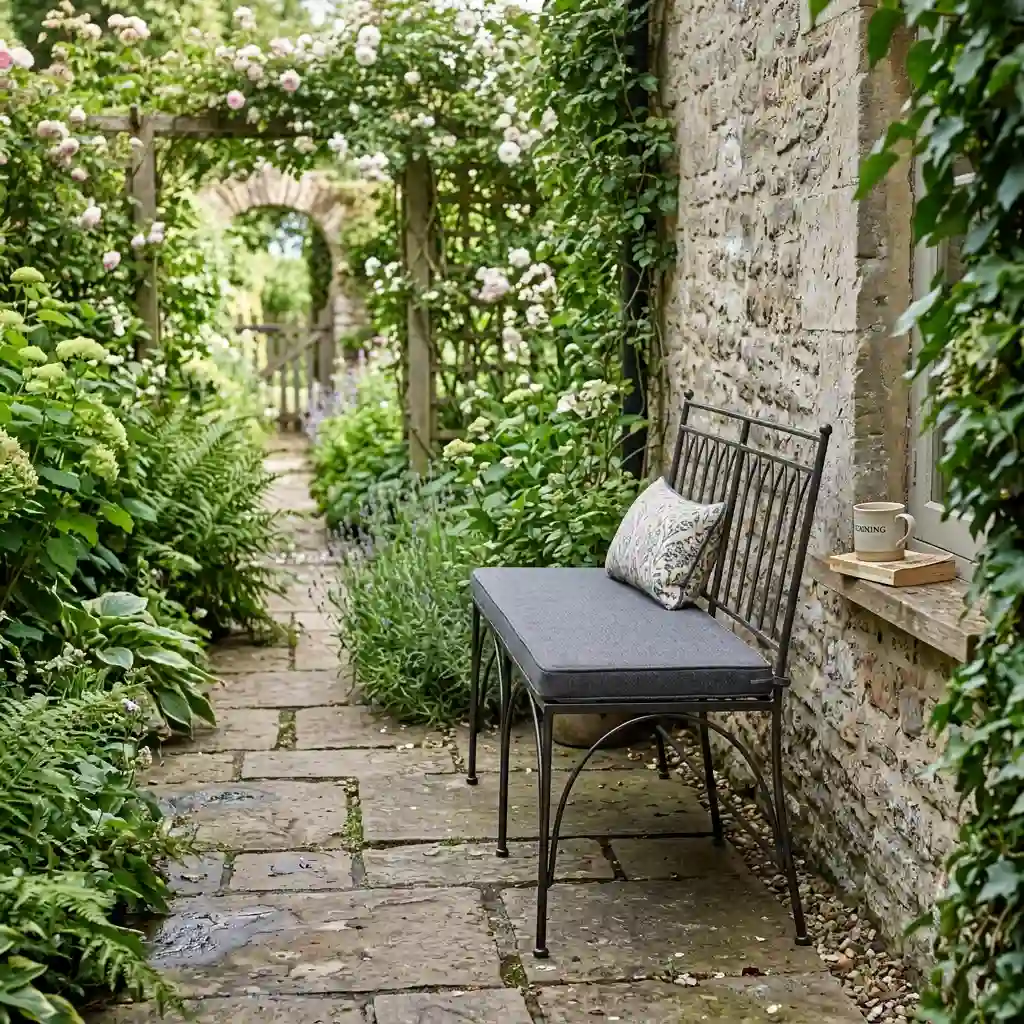
A slim bench gives you two or three seats without filling the center of your garden. Place it against a wall or solid fence to keep the main path clear. Open legs will make the bench look less heavy.
Choose a firm seat pad instead of thick back cushions. You can also add one small lumbar pillow for support.
The main drawback is comfort. A very narrow bench may not suit long meals. Test the seat depth before buying.
Quick tip: Add a narrow wall ledge beside the bench for drinks and books.
2. Install a Fold-Down Wall Seat
Best for: Very narrow courtyards
Space needed: Wall width plus room for the open seat
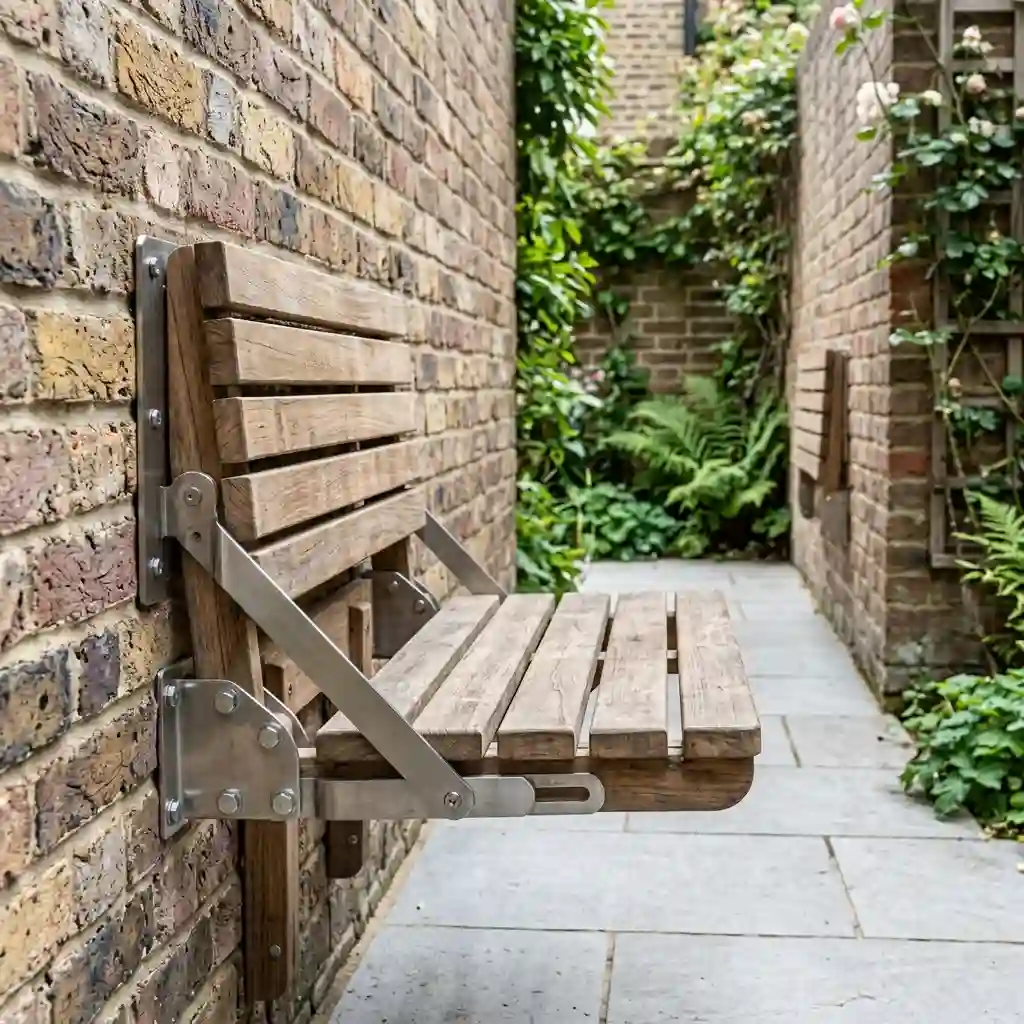
A fold-down seat stays flat against the wall when you do not need it. This makes it useful in areas that also serve as garden paths or work zones.
Use weatherproof timber, exterior screws, and strong hinges. The wall must support the seat and the person using it. A stud finder and spirit level can help with safe placement.
Installation takes more work than buying a chair. Renters will also need the property owner’s approval.
Quick tip: Follow the hardware maker’s weight and fitting instructions.
3. Choose Stackable Garden Chairs
Best for: People who host occasional guests
Space needed: Based on the number of chairs in use
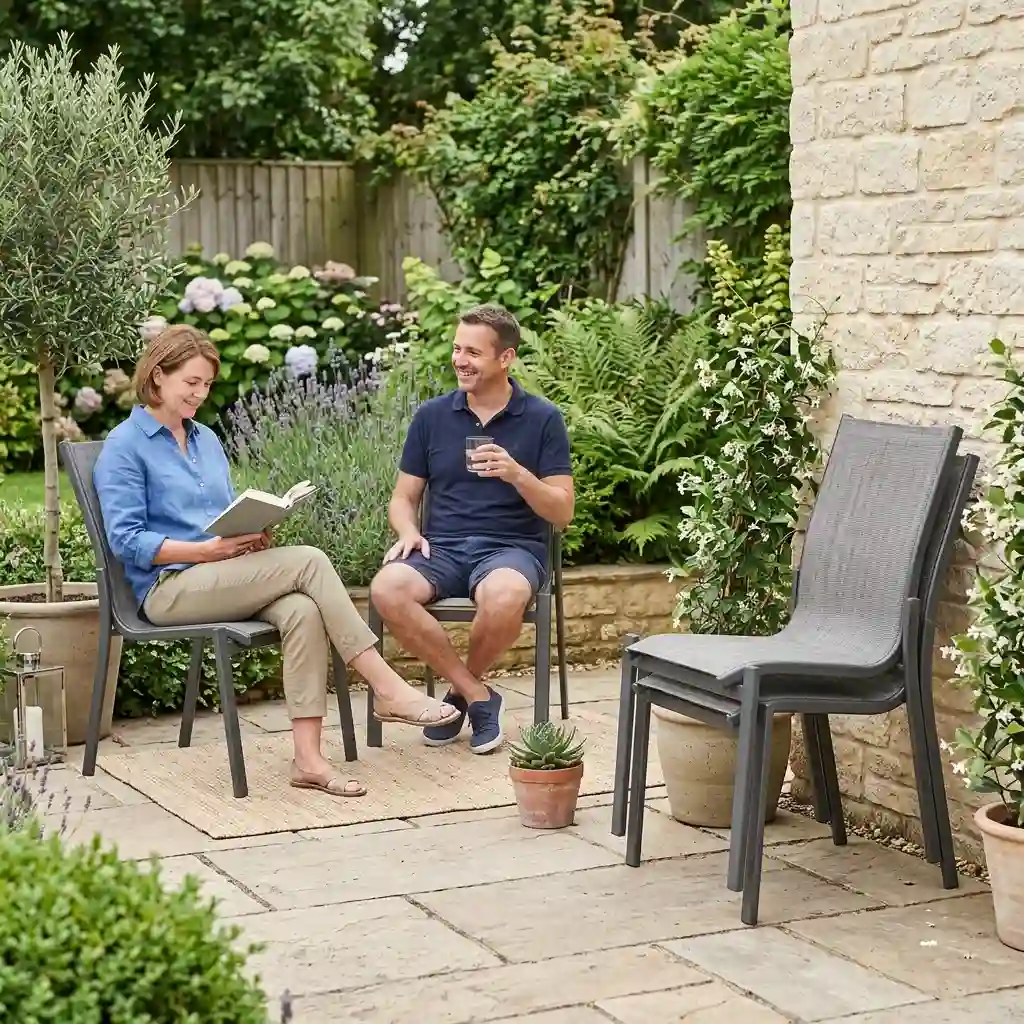
Stackable chairs let you keep extra seating without covering the whole patio. Store the unused chairs in a vertical stack beside a wall or inside a shed.
Choose chairs with narrow arms or no arms if your space is tight. Aluminum chairs are light and easy to move. Steel chairs feel more stable but may be heavier.
The stack can still take up space when every chair is stored. Check the stacked height before buying.
Quick tip: Buy enough chairs for daily use, then add only two extras for visitors.
4. Use Folding Bistro Chairs
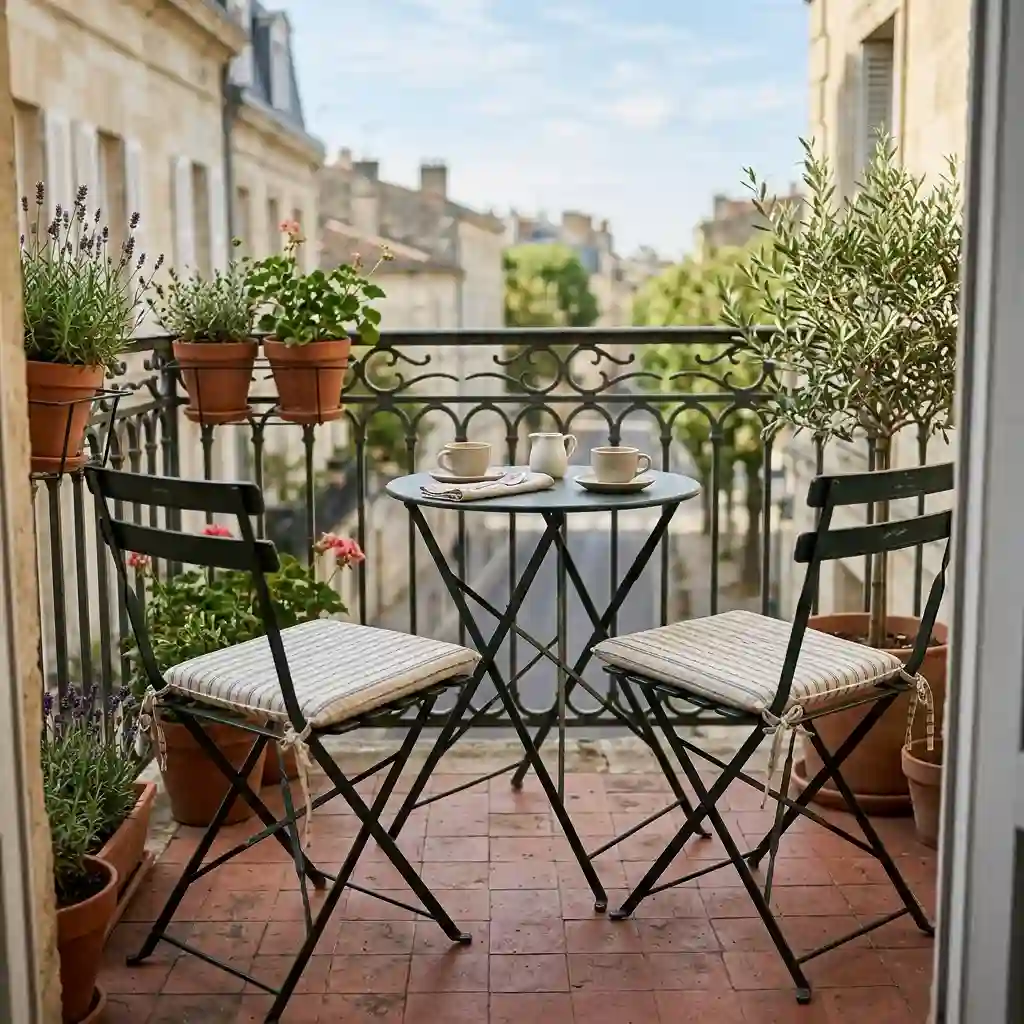
Best for: Renters and small balconies
Space needed: About 2 feet per open chair
Folding bistro chairs work well for coffee, reading, and light meals. You can move them into the sun on cool mornings or into the shade during hot afternoons.
Pair two chairs with a compact folding table. Choose a round table if people need to walk past it. Round edges are easier to move around in a tight area.
These chairs are easy to store, but some models feel hard after an hour.
Quick tip: Add thin seat pads with ties. Thick cushions can make the chairs harder to fold.
5. Add Nesting Stools
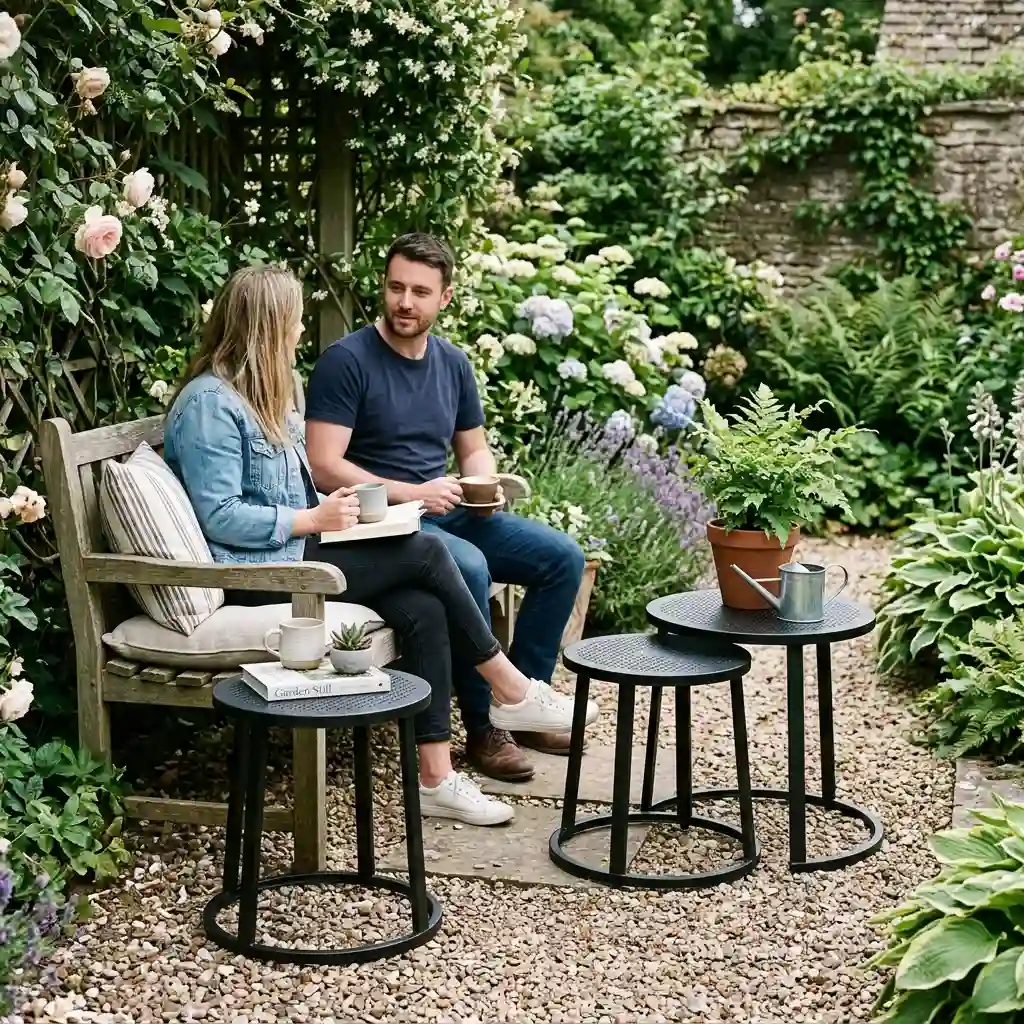
Best for: Gardens that need flexible furniture
Space needed: The floor area of the largest stool
Nesting stools fit under one another when you are not using them. Pull them apart when guests arrive. They can serve as seats, side tables, or plant stands.
Lightweight metal is easy to move. Sealed wood offers a warmer look. Choose stools with wide bases so they do not tip on gravel or soft soil.
Most stools do not have back support. They work better for short visits than long evenings.
Quick tip: Keep the smallest stool beside your main seat as a table for a drink or lamp.
5 Built-In Seating Ideas for Small Gardens
6. Build a Corner Bench
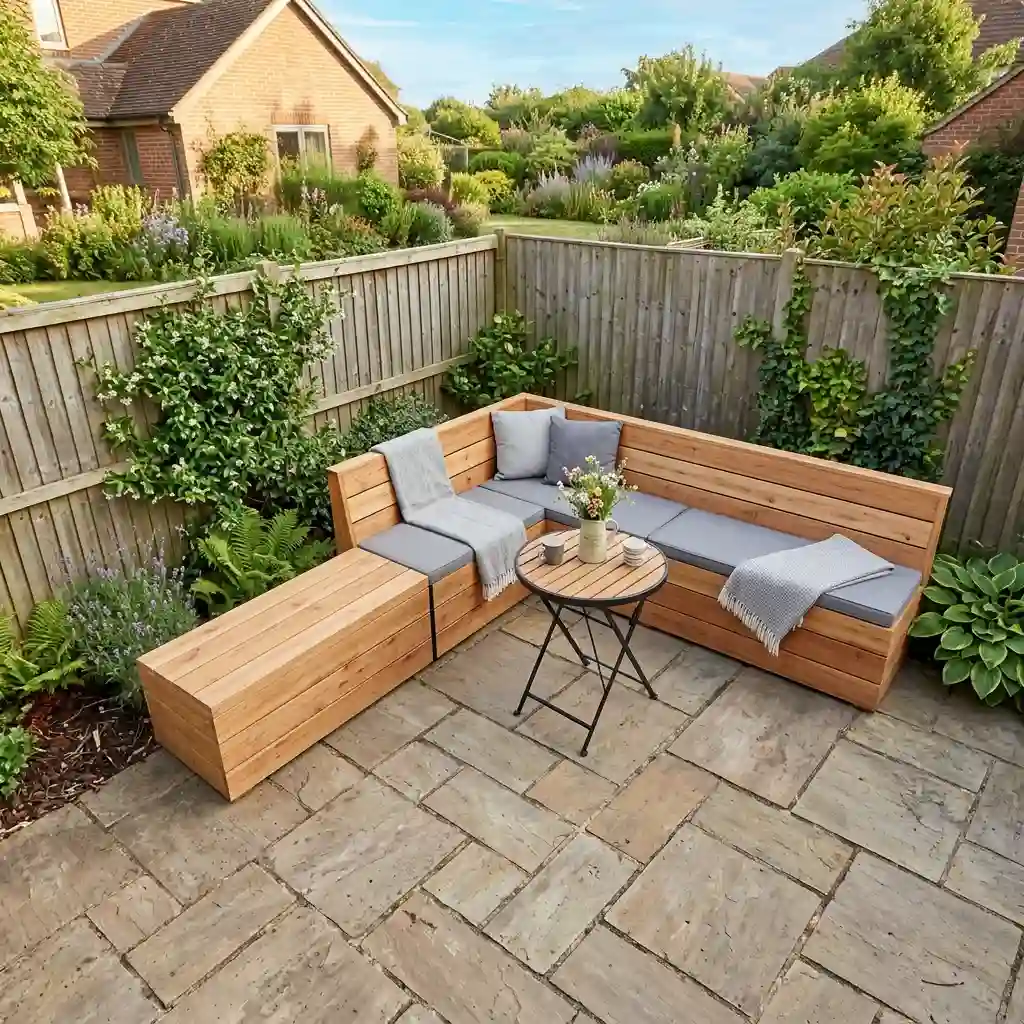
Best for: Square patios and empty corners
Space needed: Two walls or fence lines
A corner bench uses two boundaries while leaving the center open. It can often seat more people than separate chairs in the same area.
Place a small round table in front of it. This shape makes it easier for people to enter and leave the bench. A bench built around a square planter can also connect your seating with the garden.
Built-in benches cannot follow the shade during the day. Test the location with boxes or spare chairs before building.
Quick tip: Make one section removable so you can reach the wall, fence, or plants behind it.
7. Combine a Seat With a Raised Garden Bed
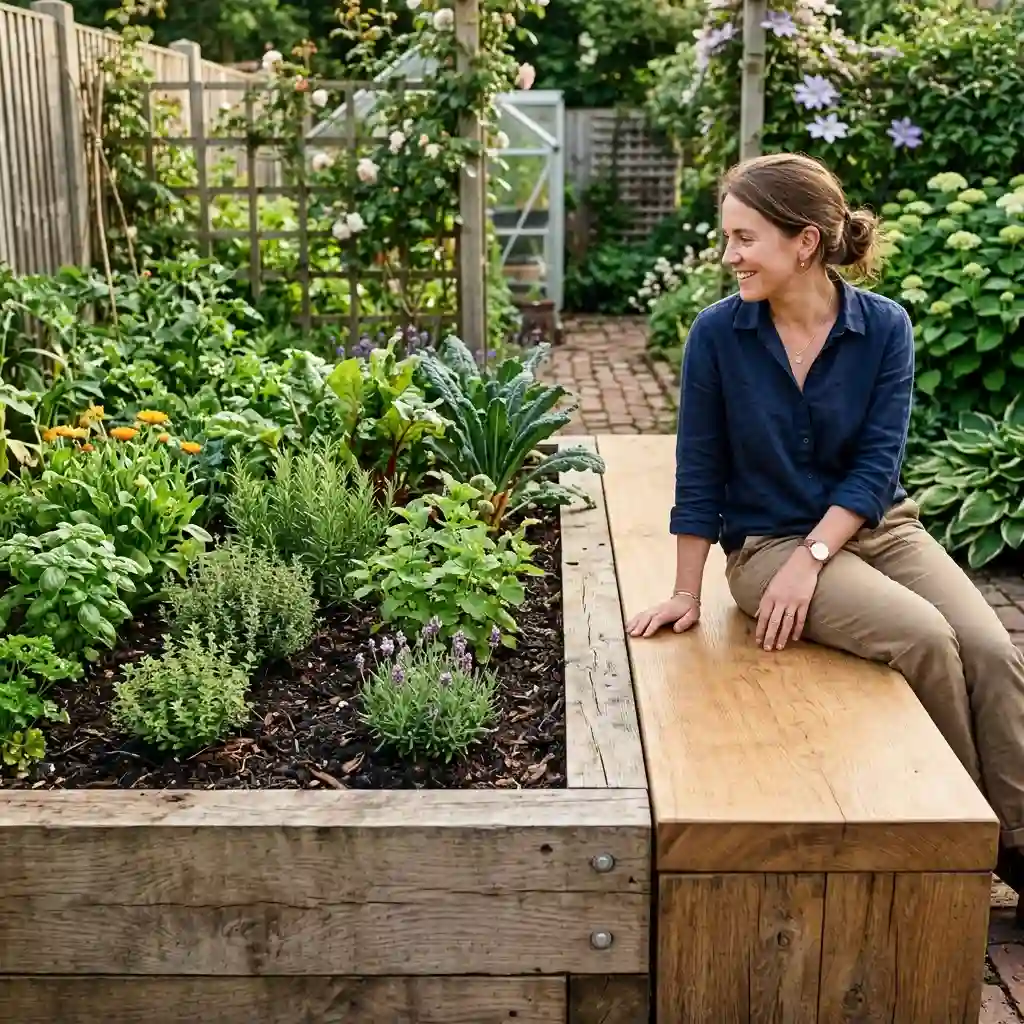
Best for: Gardeners who want plants and seating
Space needed: A raised bed with a wide edge
A raised bed can include a smooth timber or stone ledge for occasional sitting. This gives you a resting spot without adding another piece of furniture.
Keep wet soil and irrigation water away from the seating surface. Avoid placing thorny plants beside the seat. Plants that attract many bees may also be uncomfortable beside a busy sitting area.
The ledge must be wide and strong enough to support a person.
Quick tip: Keep the seat section free from pots so it is ready when you need a break.
8. Create a Storage Bench
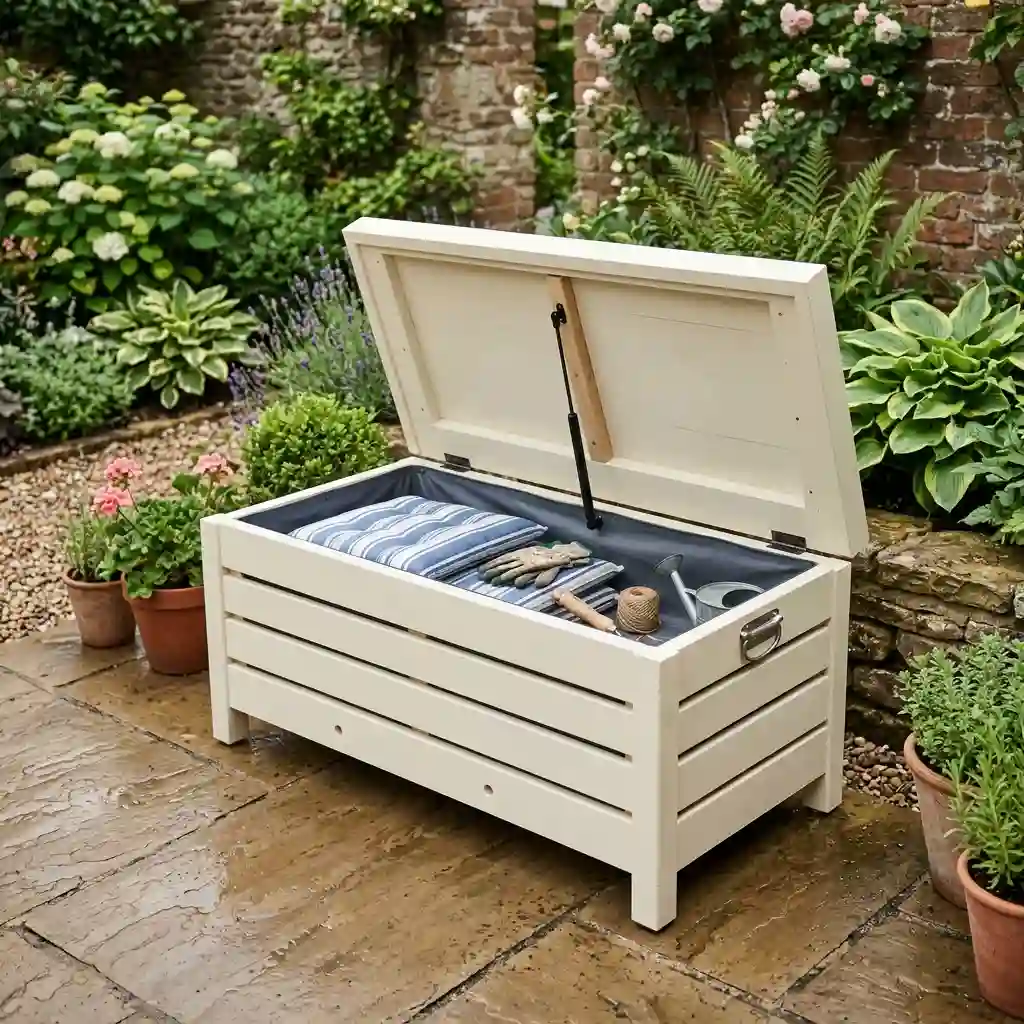
Best for: Gardens with limited storage
Space needed: Similar to a standard two-seat bench
A storage bench gives you a seat and a place for cushions, small tools, or outdoor games. Look for a lid that stays open safely while you reach inside.
Outdoor storage needs ventilation and drainage. A sealed inner box or waterproof liner will give cushions extra protection. Even then, damp items should be dried before storage.
Storage benches can look bulky in a very small garden. Choose a simple design with straight sides and a light color.
Quick tip: Check that the base sits above wet paving or soil.
9. Add a Seat Beneath a Garden Arbor
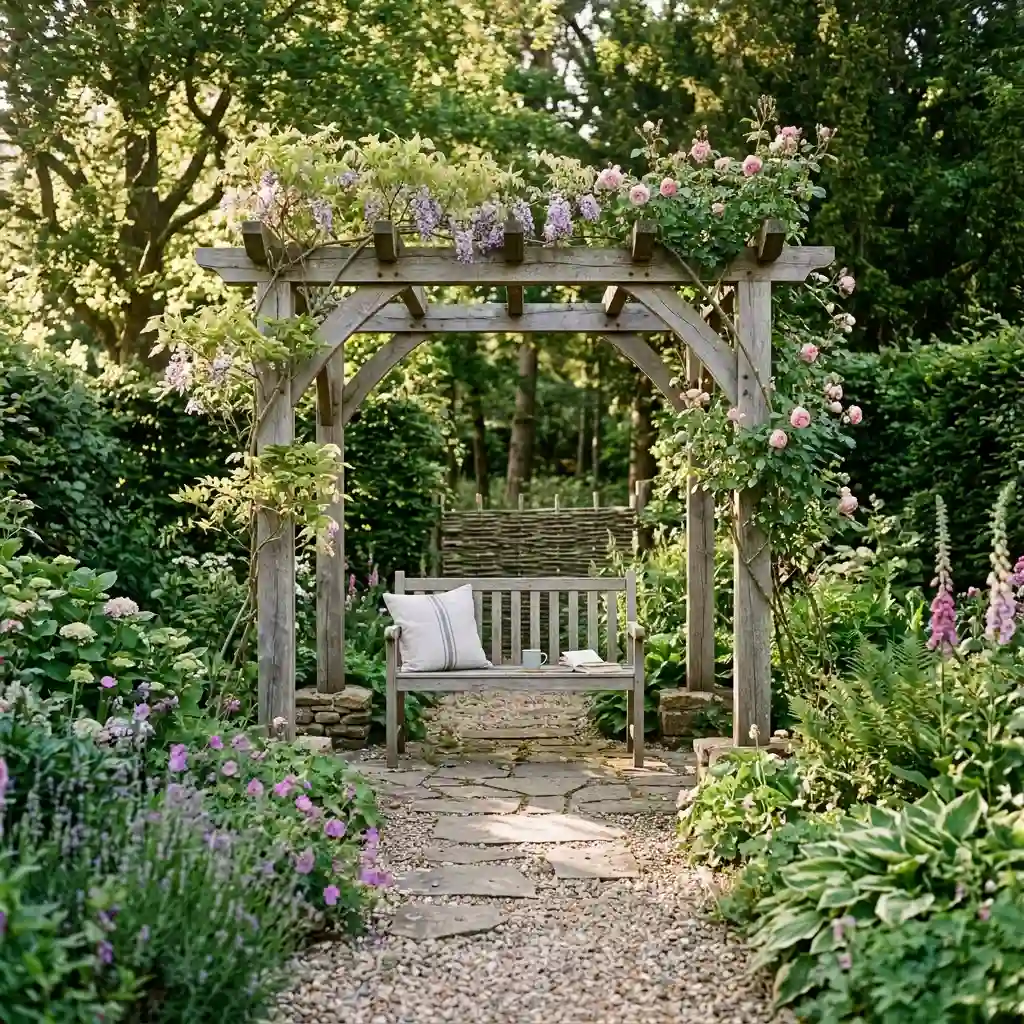
Best for: Creating a private reading spot
Space needed: A bench-width section at the end of a path
An arbor adds height and makes a small seat feel like a special destination. Place it at the end of a short path or against the back boundary.
Choose a climber that suits the light in that location. Keep dense growth trimmed so air can move around the seat. You should also check for insects before sitting beneath thick leaves.
An arbor needs firm supports and may shade nearby plants.
Quick tip: Use a slim bench with open sides so the structure does not look too heavy.
10. Turn a Retaining Wall Into a Seat
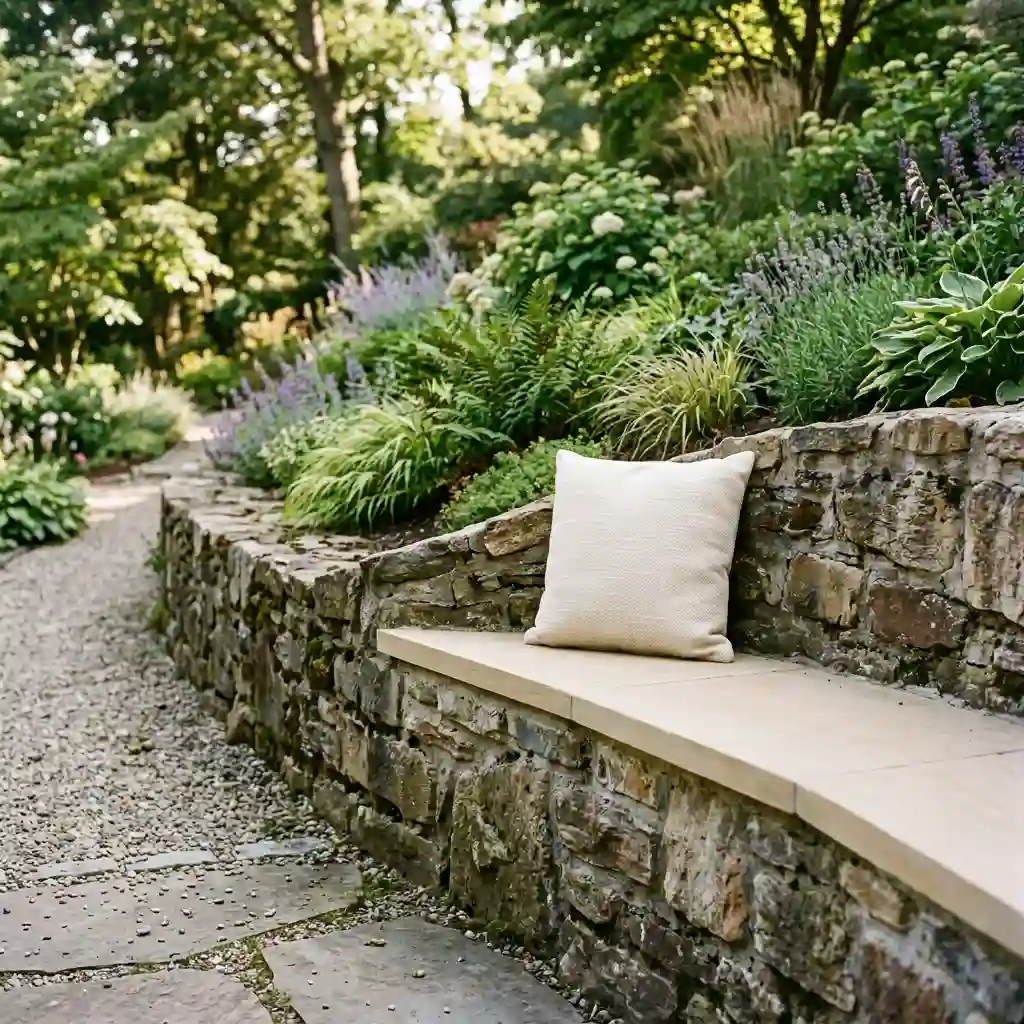
Best for: Sloped gardens with existing walls
Space needed: No extra floor space if the wall is suitable
A low retaining wall may provide occasional seating when it has a smooth, wide cap. Add a removable cushion when the surface is dry.
Do not change a structural wall without proper advice. Its height, strength, and purpose matter. A high wall may also create a fall risk, especially for children.
Masonry stays outside all year and needs little care. However, it can feel cold in winter and hot in direct summer sun.
Quick tip: Ask a qualified professional to check the wall before adding a seat cap or changing its structure.
5 Flexible and Multi-Purpose Seating Ideas
11. Use Lightweight Cube Seats
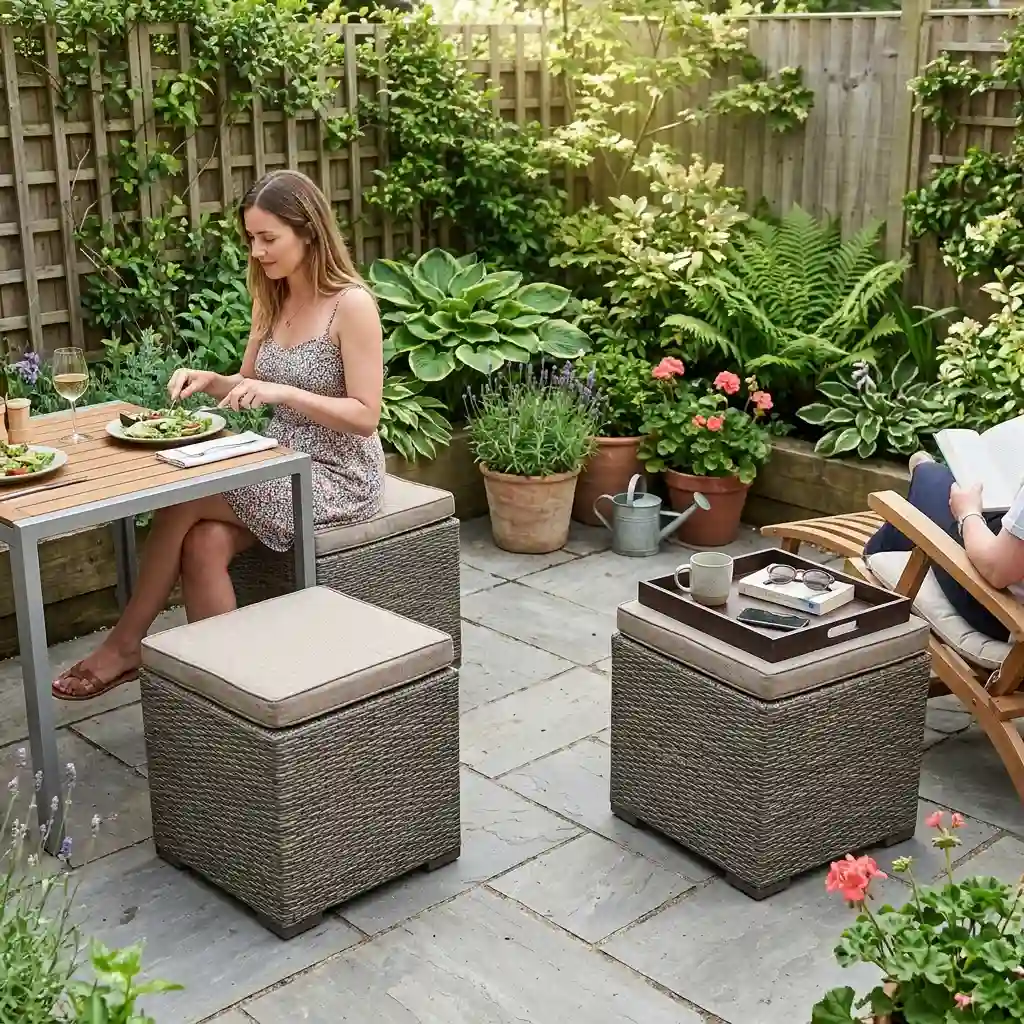
Best for: Changing garden layouts
Storage: Easy
Portability: High
Weather resistance: Depends on the material
Cube seats can move from a sunny corner to a dining table in seconds. Between visits, use them as side tables or low plant stands.
Look for cubes that are light enough to lift but wide enough to stay stable. Hollow plastic models may tip in strong wind. Solid wood options are heavier but need more care.
A cube has no back support, so it suits short breaks.
Quick tip: Choose a flat top that can safely hold both a person and a drink tray.
12. Make an Outdoor Floor-Cushion Corner
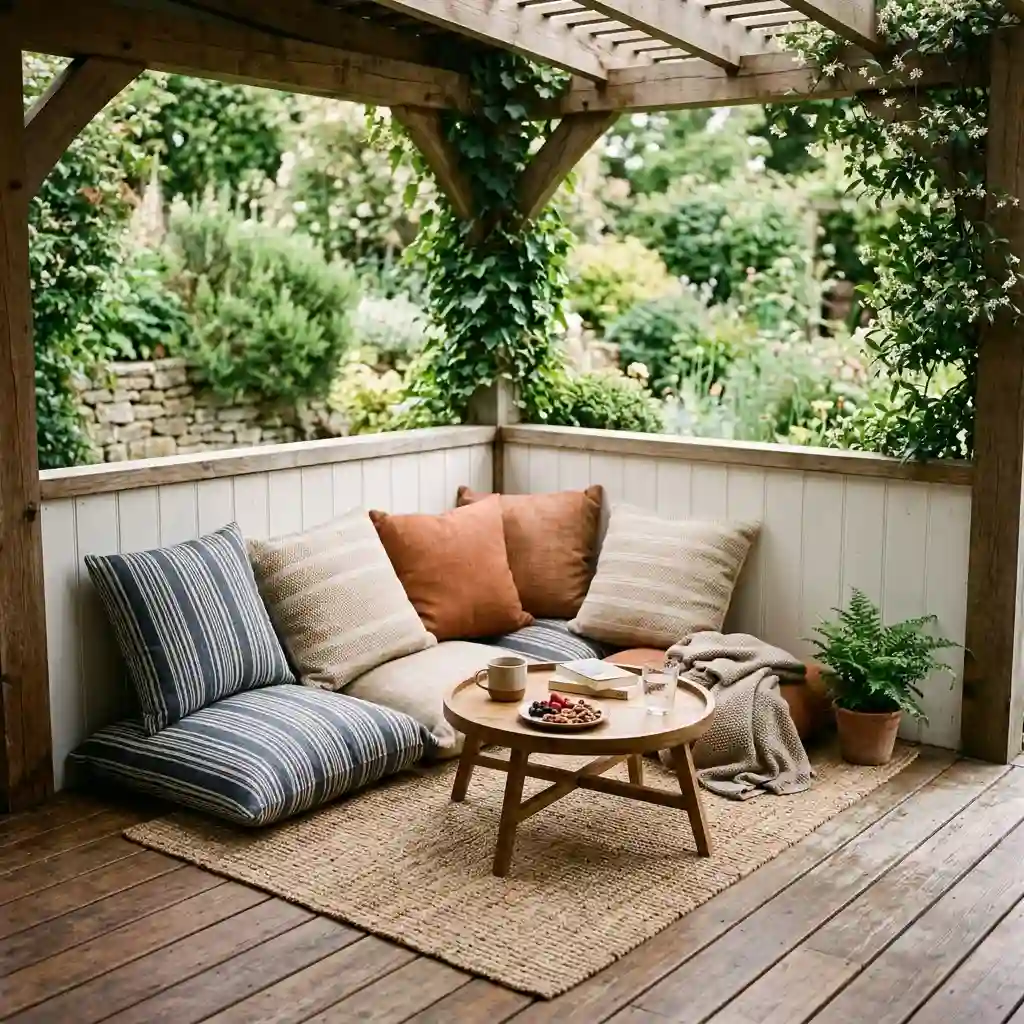
Best for: Covered patios and dry climates
Storage: Indoor storage needed
Portability: High
Weather resistance: Low to medium
Large floor cushions can turn a quiet corner into a casual seating area. Place them on clean decking or an outdoor rug. Add a low tray table for drinks and snacks.
This idea works well when you want soft seating without permanent furniture. However, getting down to floor level may be hard for some people.
Moisture is the biggest concern. Even outdoor fabric can develop stains or odors when left wet.
Quick tip: Store the cushions indoors or in a dry storage bench after each use.
13. Choose a Compact Storage Ottoman
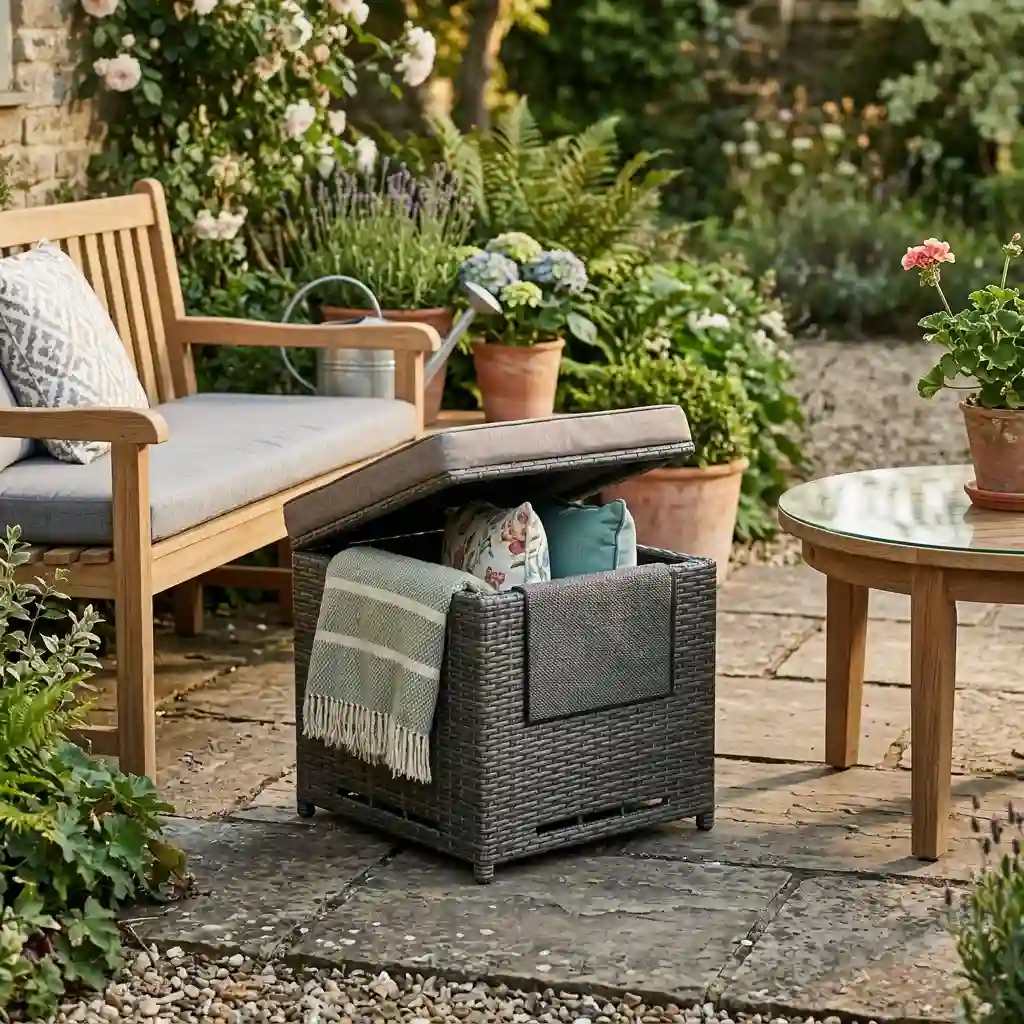
Best for: Adding a seat, footrest, and storage
Storage: Built in
Portability: Medium
Weather resistance: Medium to high
A small storage ottoman can serve three jobs. Use it as an extra seat when friends visit. Use it as a footrest when you are alone. The inside can hold a blanket, small cushions, or garden items.
Check that the lid is made to support a person. A normal storage box may crack if someone sits on it.
Pick a model with drainage holes or a weather-resistant inner section.
Quick tip: Choose an ottoman that slides under your table or beside your bench.
14. Hang a Single Garden Chair
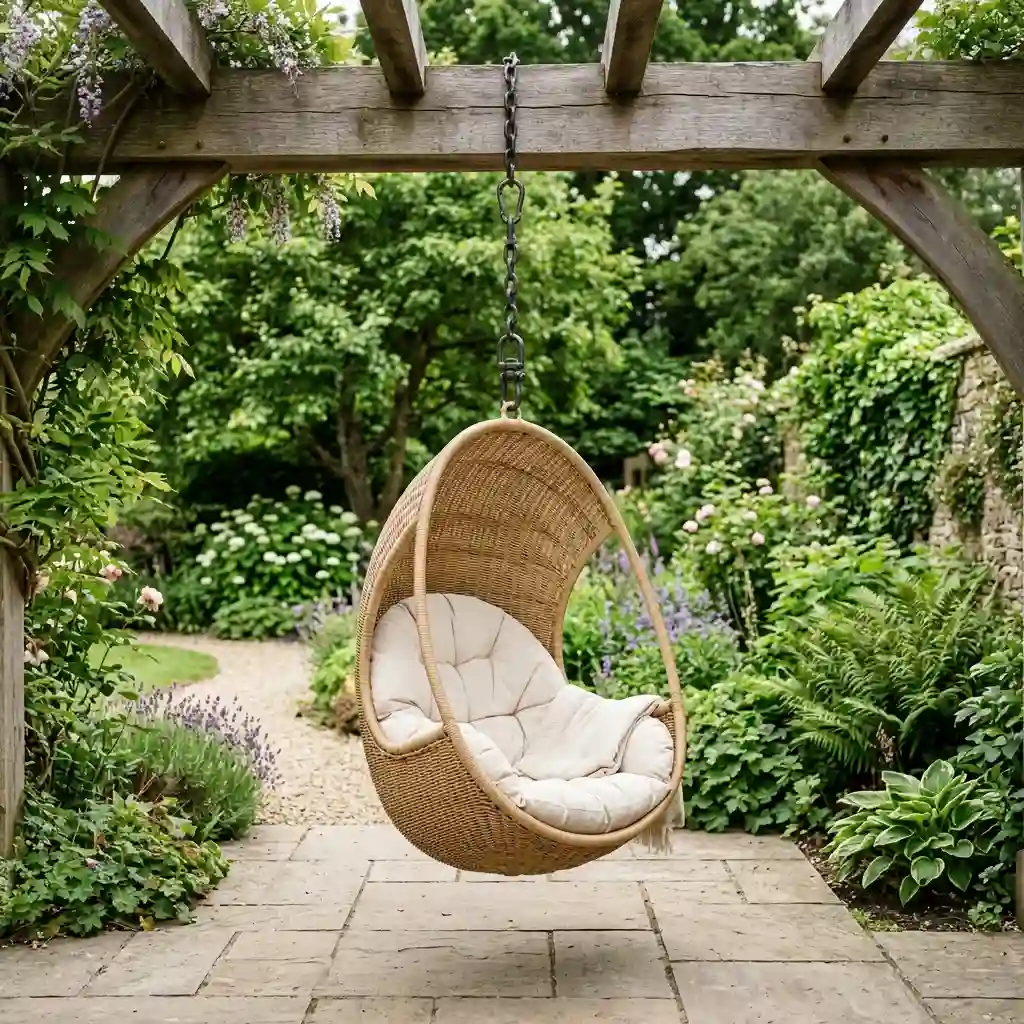
Best for: A quiet reading seat
Storage: No floor storage needed
Portability: Low
Weather resistance: Depends on the frame and fabric
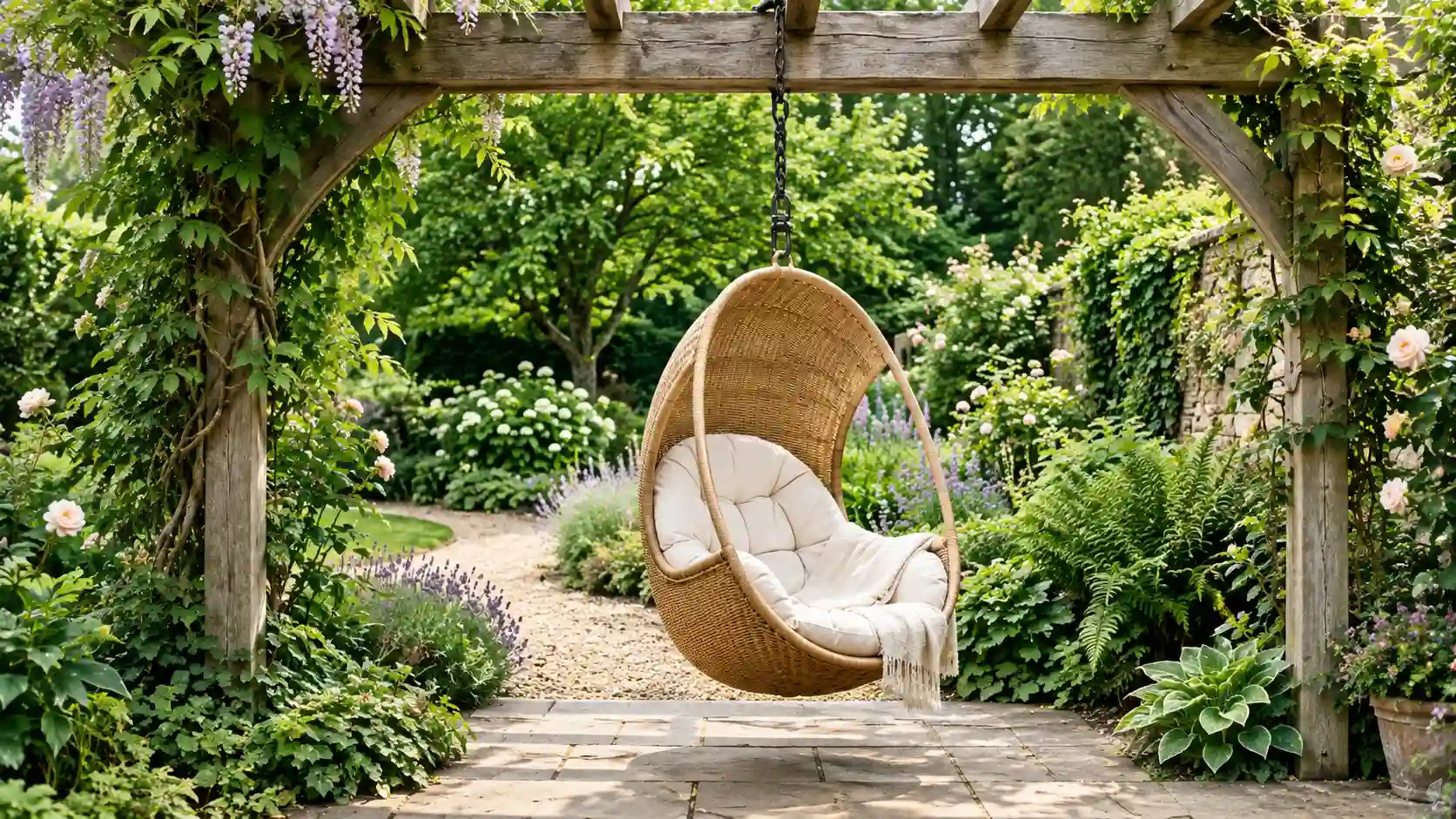
A hanging chair creates a strong focal point without adding several furniture legs to the patio. It can work beneath a strong beam or on a rated freestanding frame.
Safe support is essential. Confirm the weight limit for the chair, hardware, beam, and frame. Leave enough open space around the chair for gentle movement.
The swing area may take more room than expected. It can also block a narrow path.
Quick tip: Mark the full movement area on the floor before installation.
15. Create a Movable Tree-Stump Seating Cluster
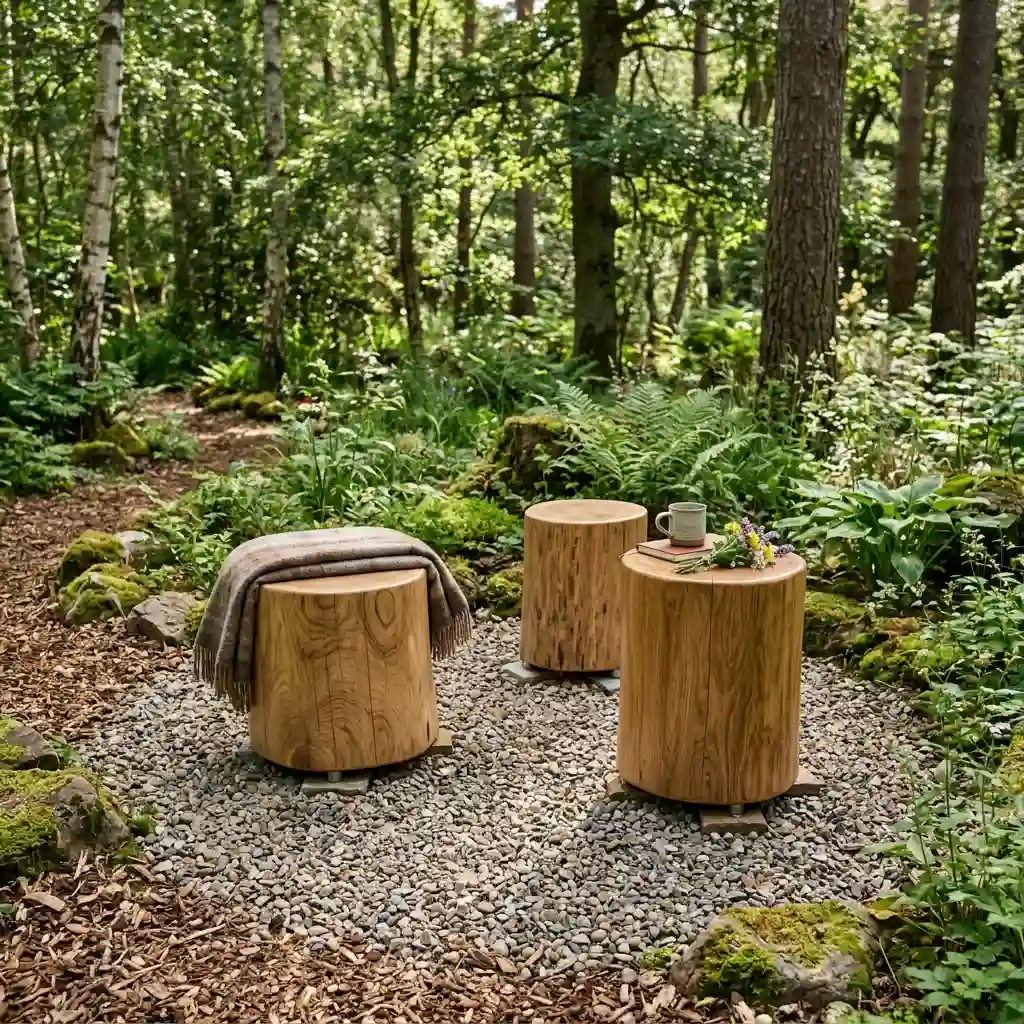
Best for: Rustic or woodland gardens
Storage: Stacks are not practical
Portability: Medium
Weather resistance: Medium
Smooth tree stumps can work as seats or side tables. Arrange two or three around a small gravel area. Move them apart when you need a wider path.
Sand rough edges and remove loose bark. Raise each stump slightly above wet soil to slow decay. An exterior wood sealer can give the surface more protection.
Stumps are heavy, and their shapes may be uneven. Check each piece for cracks or movement before use.
Quick tip: Use stumps of different heights, but keep the main seats close to normal chair height.
Compare Flexible Seating at a Glance
| Seating choice | Storage | Portability | Maintenance | Weather resistance |
| Cube seats | Easy | High | Low | Medium to high |
| Floor cushions | Indoor space needed | High | High | Low |
| Storage ottoman | Built in | Medium | Low | Medium to high |
| Hanging chair | None needed | Low | Medium | Varies |
| Tree stumps | Difficult | Medium | Medium | Medium |
Make Compact Outdoor Seating Feel Comfortable
A seat may fit your garden but still feel unpleasant. Before buying it, check the seat height, depth, back support, and edge shape.
Thin, firm cushions usually work better than large cushions in tight areas. They add comfort without pushing you too far forward. One lumbar pillow can support your lower back while keeping the bench neat.
Shade matters too. Try a wall-mounted umbrella, a small shade sail, or an arbor. Make sure the shade does not block a door or trap heat against the wall.
Place a rechargeable lamp near the seat for soft evening light. Aim it at a wall, table, or path instead of at people’s eyes. A slim ledge or nesting stool will give you a place for drinks.
Try this five-minute comfort check:
- Sit down and stand up several times.
- Check whether your knees and back feel supported.
- Reach for your table without leaning too far.
- Look for branches, sharp leaves, or dripping water.
- Walk around the seat without turning sideways.
Small changes can make a cozy small garden much easier to enjoy.
How to Choose the Best Seating Material
Your local weather should guide your material choice. Think about rain, heat, wind, frost, and the amount of care you can give the furniture.
| Material | Main benefit | Main drawback |
| Wood | Warm, natural look | Needs cleaning and periodic sealing |
| Aluminum | Light and rust resistant | May move in strong wind |
| Steel | Strong and stable | Scratched coatings may allow rust |
| Resin | Easy to clean | Low-quality products can fade or crack |
| Masonry | Durable and permanent | Cannot be moved |
Wood suits planted gardens, but it should not sit directly on wet soil. Powder-coated metal works well in modern spaces. Light-colored metal may feel cooler than dark metal in direct sun.
Resin furniture is useful when you want low maintenance. Check the joints and weight rating because quality can vary.
For folding furniture, inspect the hinges and locking parts. Strong joints and replaceable hardware can extend its useful life. Always check the exterior-use label and follow the care instructions.
Choose durability before color. You can add color later with washable cushions or small accessories.
Small Garden Seating Mistakes to Avoid
The most common mistake is buying furniture before measuring the space. A chair may fit on the patio but fail to pass through the garden gate.
Avoid these other problems:
- Blocking a door, drain, storage box, or planting bed
- Forgetting the space needed to pull out a chair
- Filling the garden with several furniture styles
- Choosing deep lounge seats for a narrow patio
- Placing seats in strong wind or harsh afternoon sun
- Leaving outdoor cushions without dry storage
- Installing a permanent bench before testing the location
- Ignoring water that collects after rain
Use painter’s tape to mark the full furniture size on the ground. Include the space needed for legs, doors, and chair movement. Then walk through the garden as you normally would.
Leave the outline in place for a day or two. This simple test can stop you from buying furniture that looks good but makes your garden harder to use.
Choose One Seat and Build Around It
You do not need a full patio set to make a small garden comfortable. A wall bench can create a calm reading spot. Folding chairs suit renters, while storage seating helps keep a busy patio tidy.
Measure the space and choose its main purpose first. Then test your preferred location with painter’s tape or spare boxes. Check the sun, shade, walking path, and nearby plants before buying anything.
Start with one useful seat and add other pieces only when you need them. The best small garden seating ideas give you comfort while leaving room to move, garden, and enjoy the plants around you.