
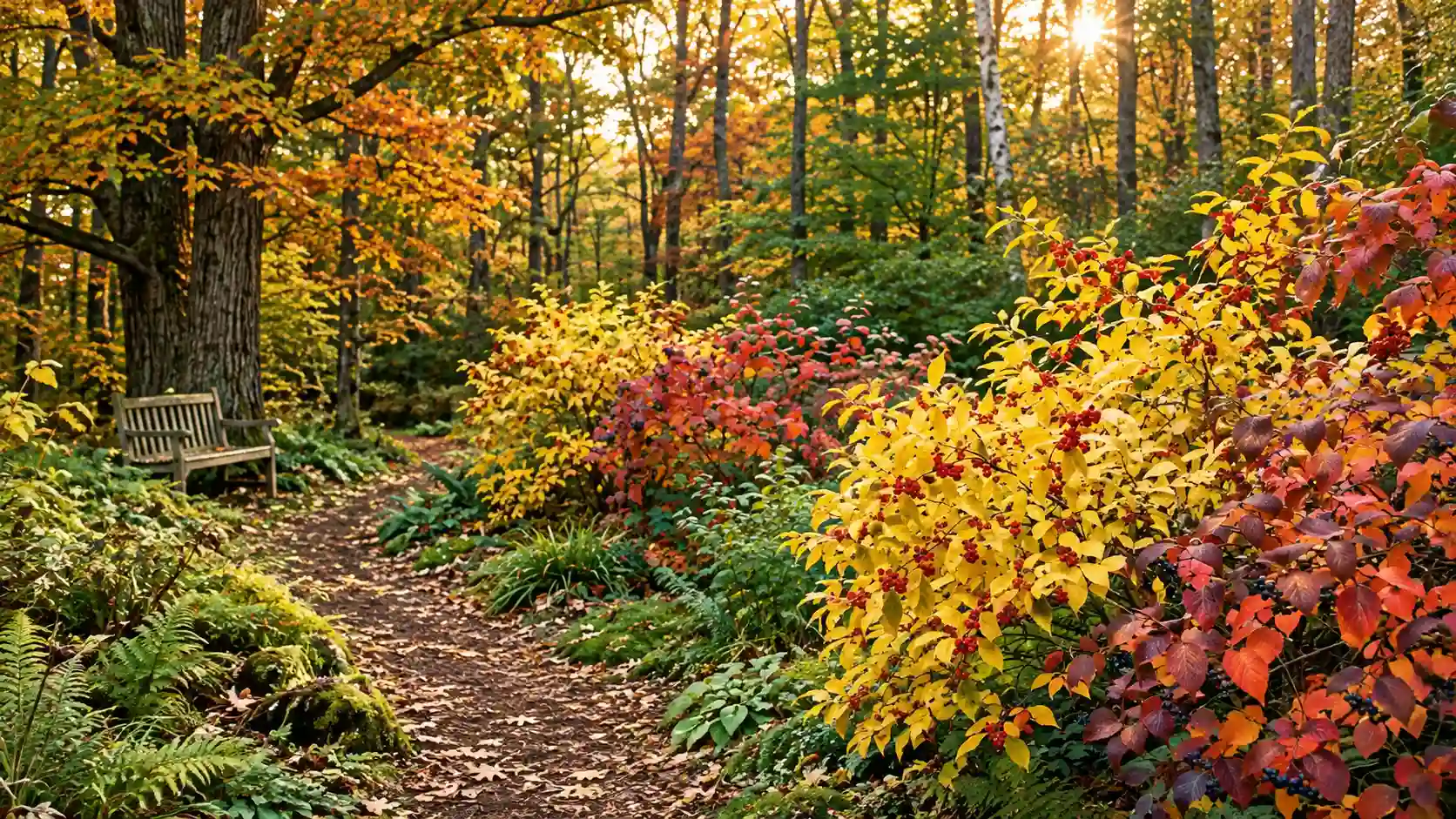
A yard filled with shade can become one of the most peaceful parts of your landscape. The challenge is knowing what to plant beneath trees where roots, dry soil, and low light can limit your choices.
These woodland shade garden ideas help you work with those conditions. You can create layers of foliage, build a simple path, add a quiet seat, and bring color into dark corners.
A good woodland garden design does not fight the site. It uses the trees, light, soil, and fallen leaves already there. Start with a small area, then let the garden grow over time.
The natural shade garden ideas below include options for dry and moist soil. Plant needs can vary by region, so check your growing zone and local plant lists before buying.
Plan Your Woodland Garden Around Existing Conditions
Spend a few days studying your yard before you buy plants. Watch the light in the morning, at midday, and during the late afternoon. Repeat this check after deciduous trees grow their spring leaves.
Full shade often means an area gets less than three hours of direct sun per day. Partial shade usually means about three to six hours. Dappled shade changes as sunlight passes through moving leaves.
Next, check the soil. Ground beneath mature trees can be much drier than it looks. Tree roots may take up most of the available water, even after rain.
A soil test can show the pH and nutrient levels. It can also help you avoid adding products the soil does not need.
Protect tree roots while planning your garden beneath trees. Do not cut large roots to create planting holes. Avoid adding a thick layer of new soil because this can reduce the oxygen reaching the roots. Penn State Extension also recommends respecting existing roots when planting beneath mature trees.
Create a simple site map that marks:
- Full, partial, and dappled shade
- Dry and damp areas
- Exposed roots
- Slopes and drainage routes
- Existing plants you want to keep
- Possible paths and seating areas
Choose a general style before planting. A natural garden may include soft paths, fallen logs, and loose groups of plants. A polished garden may use clean edging, repeated colors, and a more defined path.
8 Woodland Shade Garden Ideas for Layered Planting
Natural woodland areas contain plants at several heights. Using the same idea at home will make your garden feel full without making it look crowded.
1. Build Layers with Trees, Shrubs, and Groundcovers
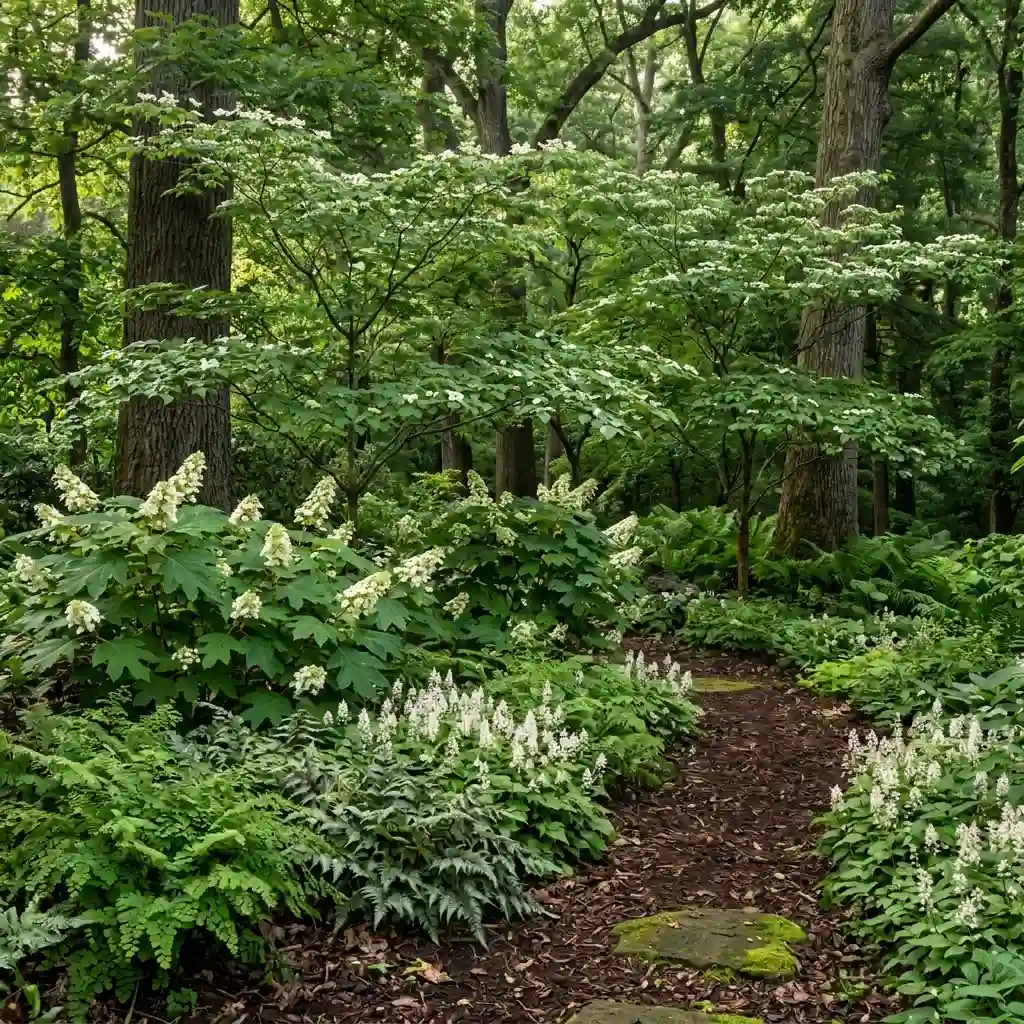
The best plants for a woodland garden work together at different heights. Begin with the existing tree canopy. Add small trees or tall shrubs below it, followed by shorter shrubs, perennials, and groundcovers.
For example, you might place dogwood beneath a deciduous canopy. Oakleaf hydrangeas can form the shrub layer. Ferns and foamflowers can cover the lower level.
Repeat each plant in groups instead of using one of every type. This gives the garden a calm and connected look. Leave enough room for the mature width of each plant.
Best for: Medium and large wooded yards.
Watch out for: Planting shrubs too close to tree trunks or major roots.
2. Create a Fern-Filled Garden Floor
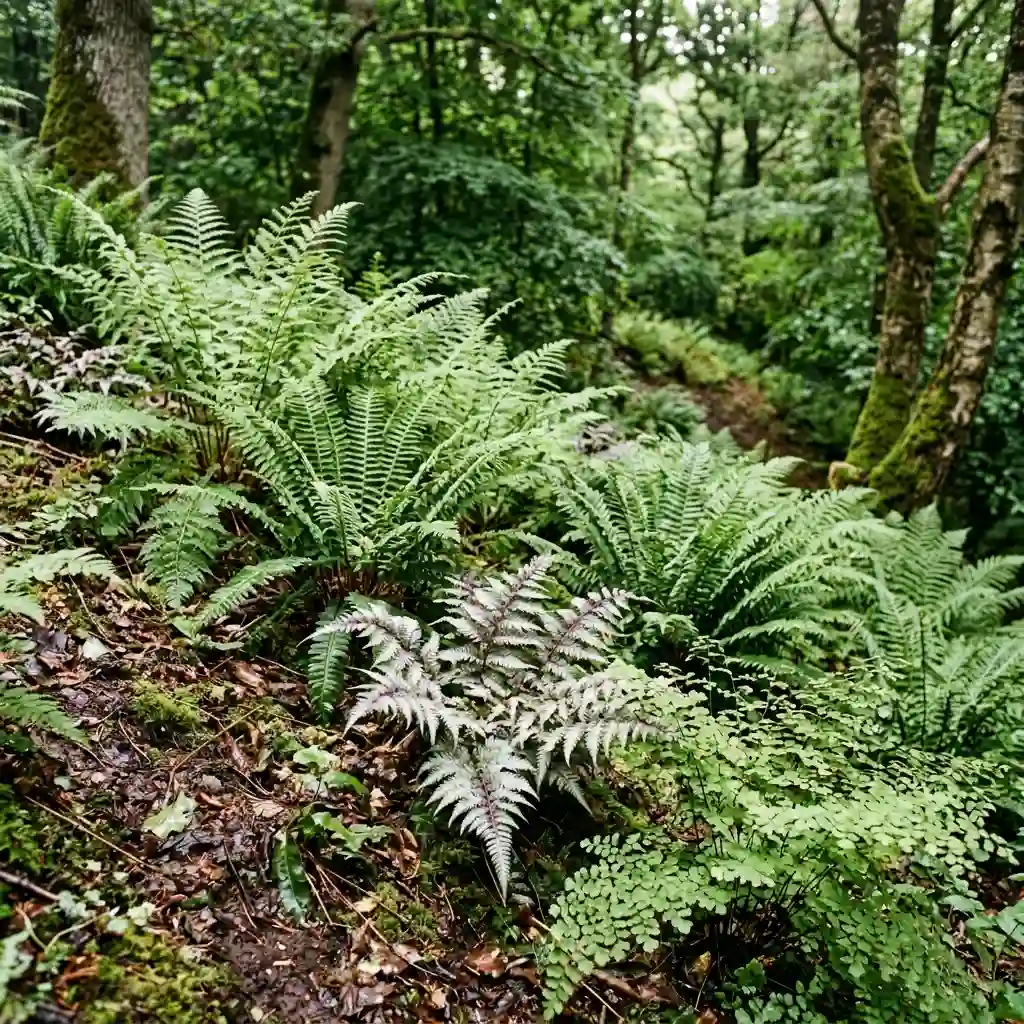
Ferns can fill a shaded garden with soft texture and rich green color. Combine several leaf shapes and heights, but keep the total number of varieties limited.
Christmas fern may remain green through winter in suitable climates. Lady fern offers a light, open shape. Japanese painted fern adds silver tones, while maidenhair fern has thin, dark stems.
Place them in wide groups for a natural effect. Match each type to your soil. Some ferns need steady moisture, while others handle dry shade once established.
Best for: Damp slopes, shaded side yards, and spaces near drainage areas.
Watch out for: Assuming every fern can grow in dry soil. Check moisture needs before planting.
3. Plant Native Woodland Flowers
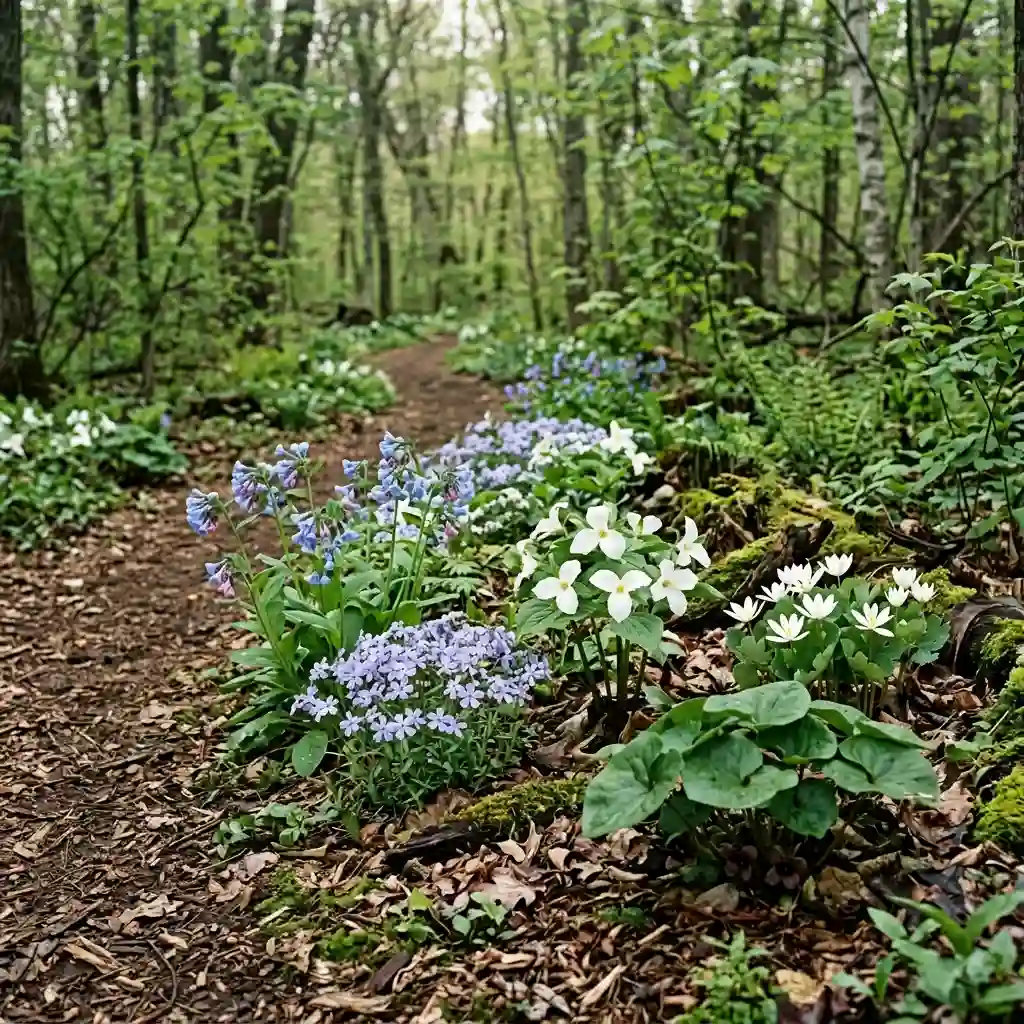
Native woodland flowers can connect your garden with the plants and wildlife of your region. They are often better suited to local weather than plants from distant climates.
Possible choices include Virginia bluebells, woodland phlox, trillium, bloodroot, and wild ginger. These examples are not suitable for every location, so use a regional native-plant database.
Plant small flowers in groups where you can see them from the path. Combine spring blooms with plants that hold their leaves through summer.
Buy nursery-grown native plants. Never remove plants from public land or wild areas.
Best for: Wildlife-friendly gardens and natural planting plans.
Watch out for: Buying a plant labeled “native” without checking where it is native.
4. Add Spring Flowers Before the Trees Leaf Out
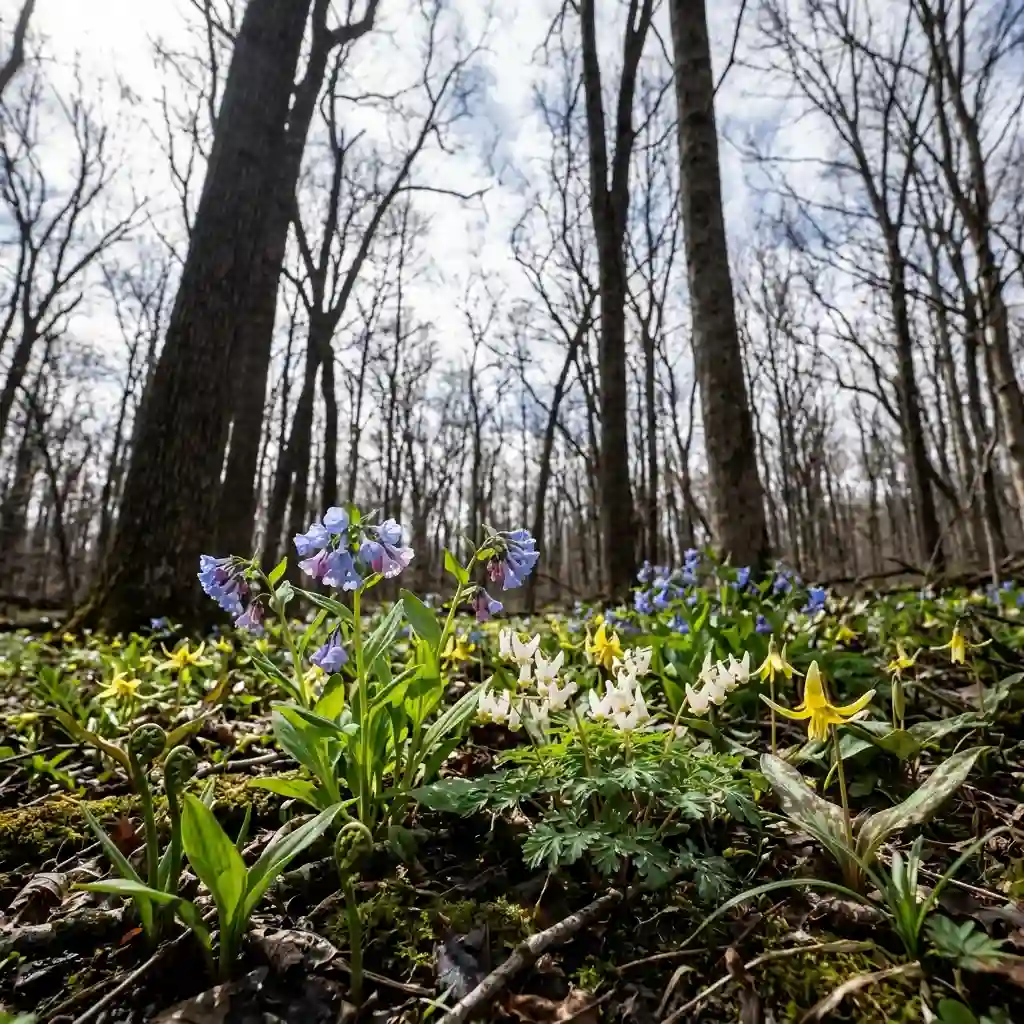
Spring ephemerals bloom while sunlight can still pass through bare branches. Many finish flowering before the tree canopy becomes dense.
Dutchman’s breeches, trout lilies, and Virginia bluebells are common examples in parts of North America. Pair them with later plants such as ferns, hostas, or native sedges. These plants will fill the gaps left when early flowers go dormant.
Some spring ephemerals disappear completely in summer. Mark their locations with small labels so you do not dig into them later.
Best for: Gardens beneath deciduous trees.
Watch out for: Mistaking dormant plants for dead ones and removing them during summer.
5. Brighten Deep Shade with Pale Foliage
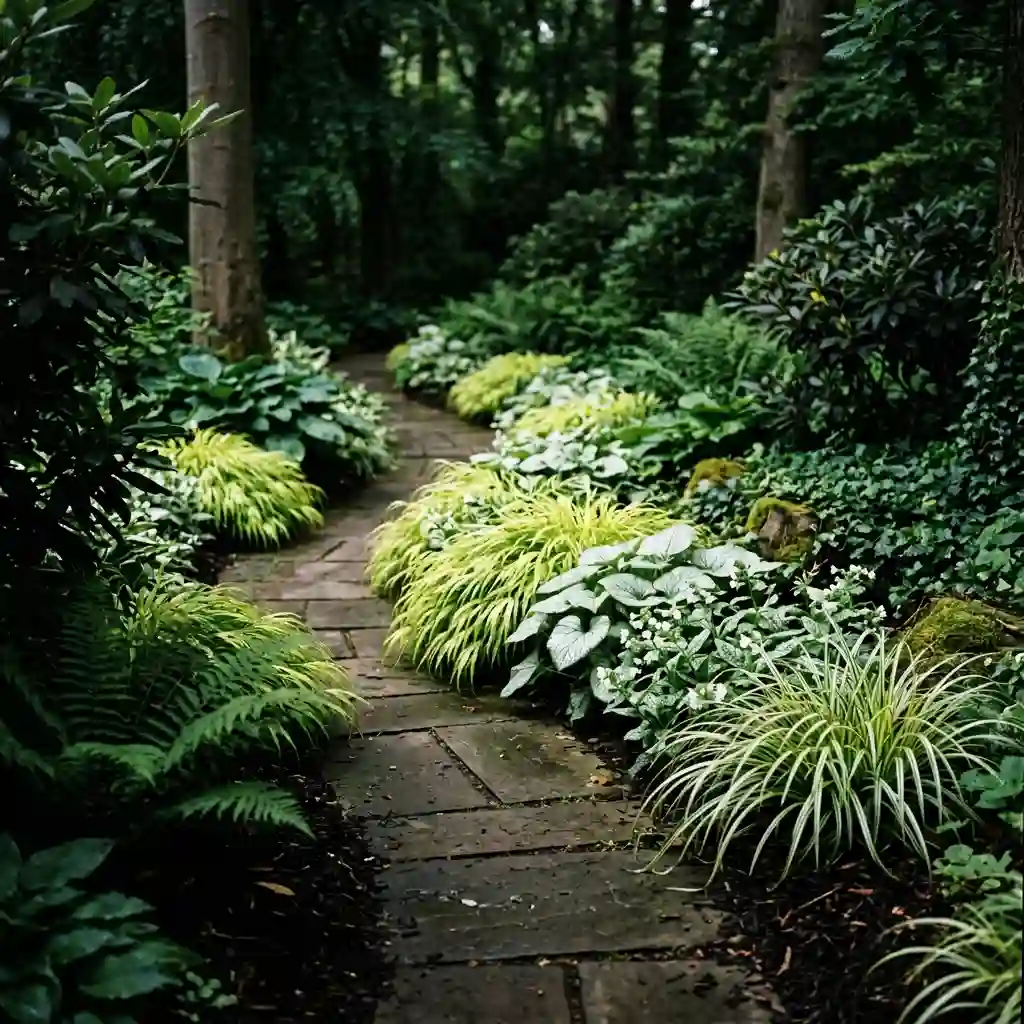
Flowers are not the only way to add color. Chartreuse, silver, blue-green, and variegated leaves can brighten a dark planting bed for months.
Try Japanese forest grass, brunnera, lungwort, or a suitable variegated sedge. Place pale foliage beside a bench or near a dim bend in the path.
Repeat one light-colored plant in several spots. This guides your eye through the garden and makes separate beds feel connected.
A few bright leaves have more impact than many unrelated colors. Keep deep green foliage around them to provide contrast.
Best for: Dark corners and gardens viewed from a window.
Watch out for: Some variegated plants may lose their markings in very deep shade.
6. Cover Bare Soil with Woodland Groundcovers
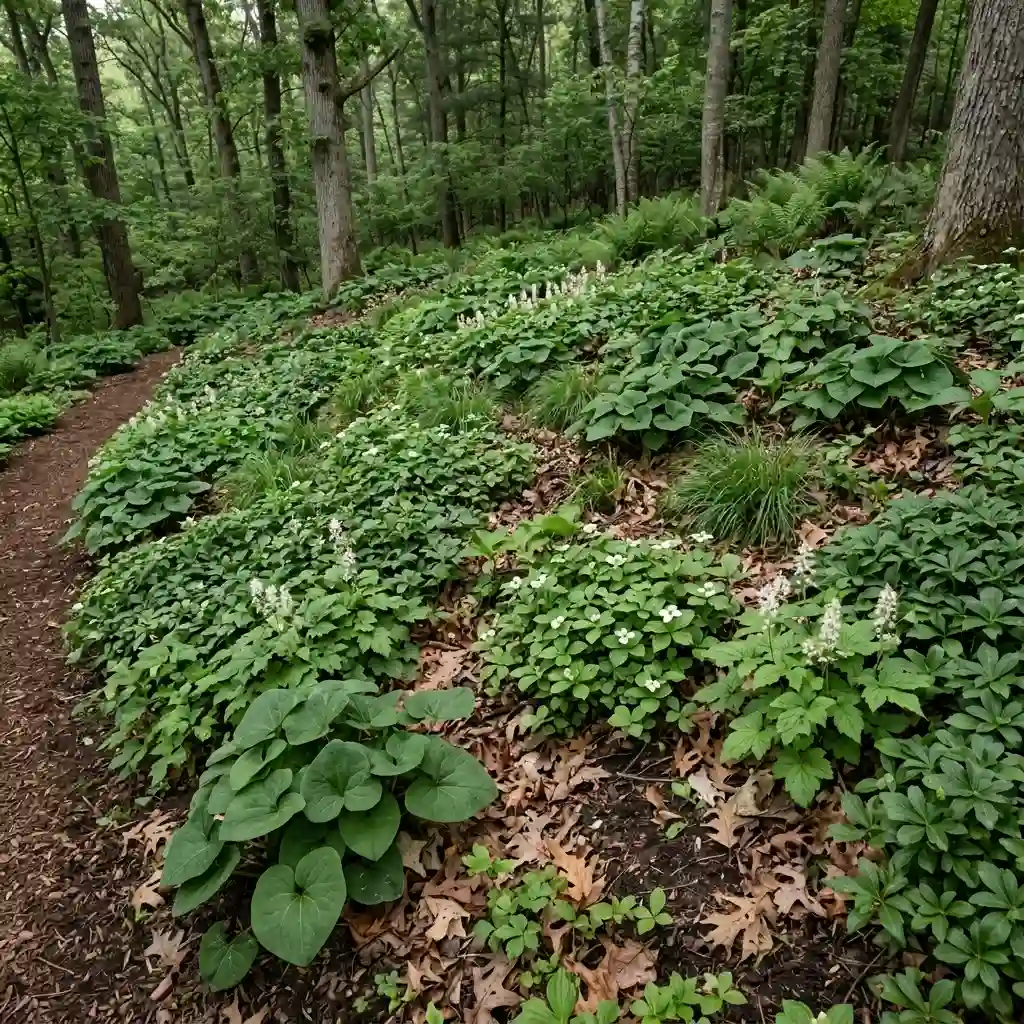
Groundcovers soften path edges and reduce large patches of bare soil. They can also handle places where lawn grass grows poorly.
Wild ginger, foamflower, bunchberry, Allegheny spurge, and native sedges may work, depending on your region. Choose plants that can handle root competition and the site’s moisture level.
Allow some fallen leaves to remain between suitable woodland plants. Leaves protect the soil and support small organisms as they break down.
Check local invasive-species lists before buying any fast-spreading groundcover. A plant that behaves well in one region can become a serious problem in another.
Best for: Bed edges, gentle slopes, and gaps between larger plants.
Watch out for: Aggressive plants that spread into nearby woods.
7. Use Shade-Tolerant Shrubs for Structure
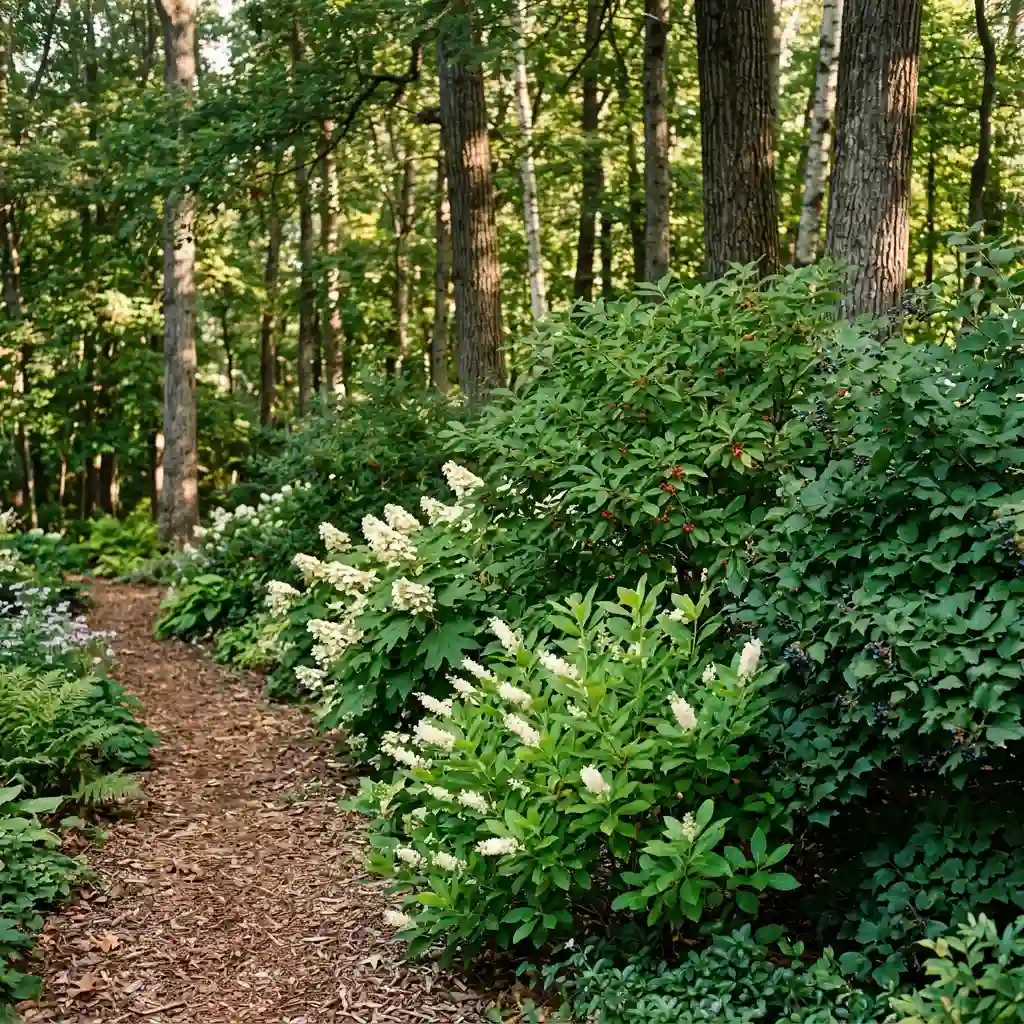
Shrubs fill the space between tall trees and low perennials. They also provide shape when smaller plants are dormant.
Oakleaf hydrangea, spicebush, summersweet, and native viburnums are possible choices. Their needs differ, so compare each plant with your soil, climate, and available light.
Place flowering shrubs where filtered light is strongest. In deeper shade, choose shrubs for their leaves, bark, berries, or fall color instead of expecting heavy blooms.
Check the mature width before planting. A shrub that looks small at the garden center may become several feet wide.
Best for: Garden boundaries, woodland edges, and background planting.
Watch out for: Blocking paths or windows with shrubs that outgrow their space.
8. Create a Mossy Garden Feature
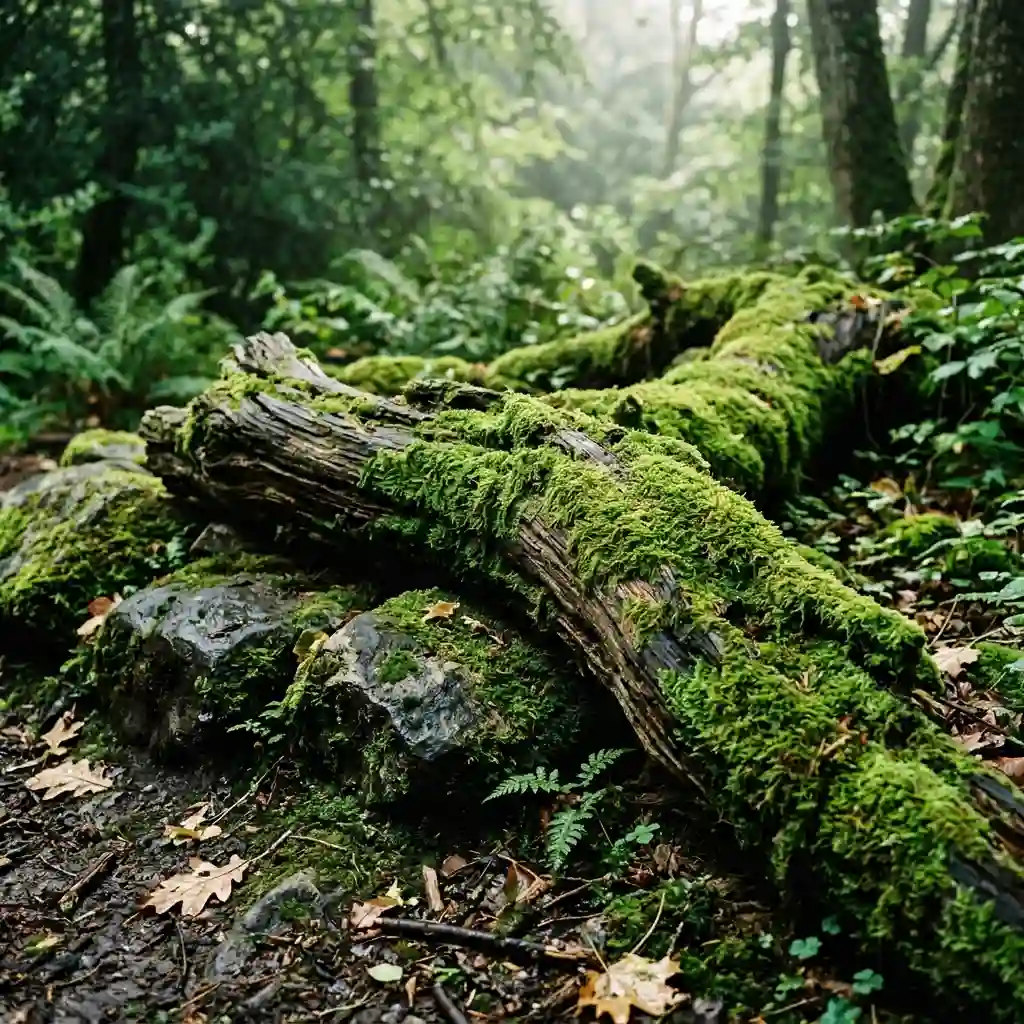
Moss can make damp stone, old logs, and shaded ground feel settled and peaceful. It works best where the surface is already cool, shaded, and moist.
Start by protecting moss that grows naturally in your yard. Reduce foot traffic, remove weeds by hand, and keep heavy leaf piles from covering small patches.
Moss does not suit every shaded yard. It may dry out in hot weather or fail beneath trees that take up most of the moisture.
If you add moss, buy it from a responsible grower. Do not collect it from parks or protected areas.
Best for: Damp stones, compact garden corners, and shaded water features.
Watch out for: Treating moss as a no-care lawn replacement.
6 Natural Shade Garden Ideas with Paths and Structure
Natural shade garden ideas need more than plants. A clear path, a place to sit, or one strong feature gives the space a purpose.
9. Add a Curving Woodland Path
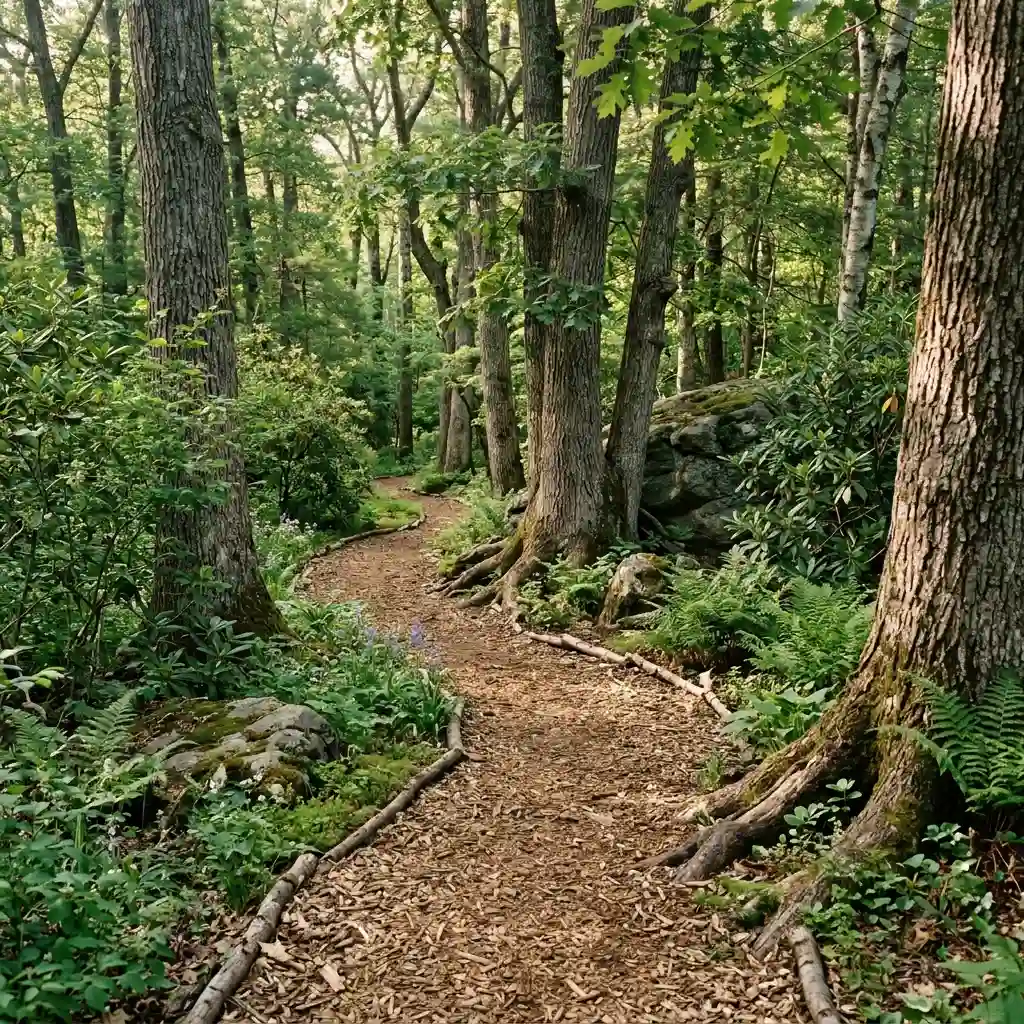
A curving path encourages you to slow down and notice the garden. It can move around tree trunks, large roots, shrubs, and rocks without forcing a straight route.
Use wood chips or bark for a soft path in a low-traffic area. Compacted gravel gives firmer footing. Stepping stones work well where roots make excavation difficult.
Frequently used paths should be stable and wide enough for comfortable movement. A narrow trail may be fine for occasional garden walks.
Use edging only where it helps contain loose material. Let plants soften parts of the edge.
Best for: Connecting entrances, seating areas, and garden views.
Watch out for: Digging deeply or cutting roots to create a level path.
10. Lay Stepping Stones Between Planting Pockets
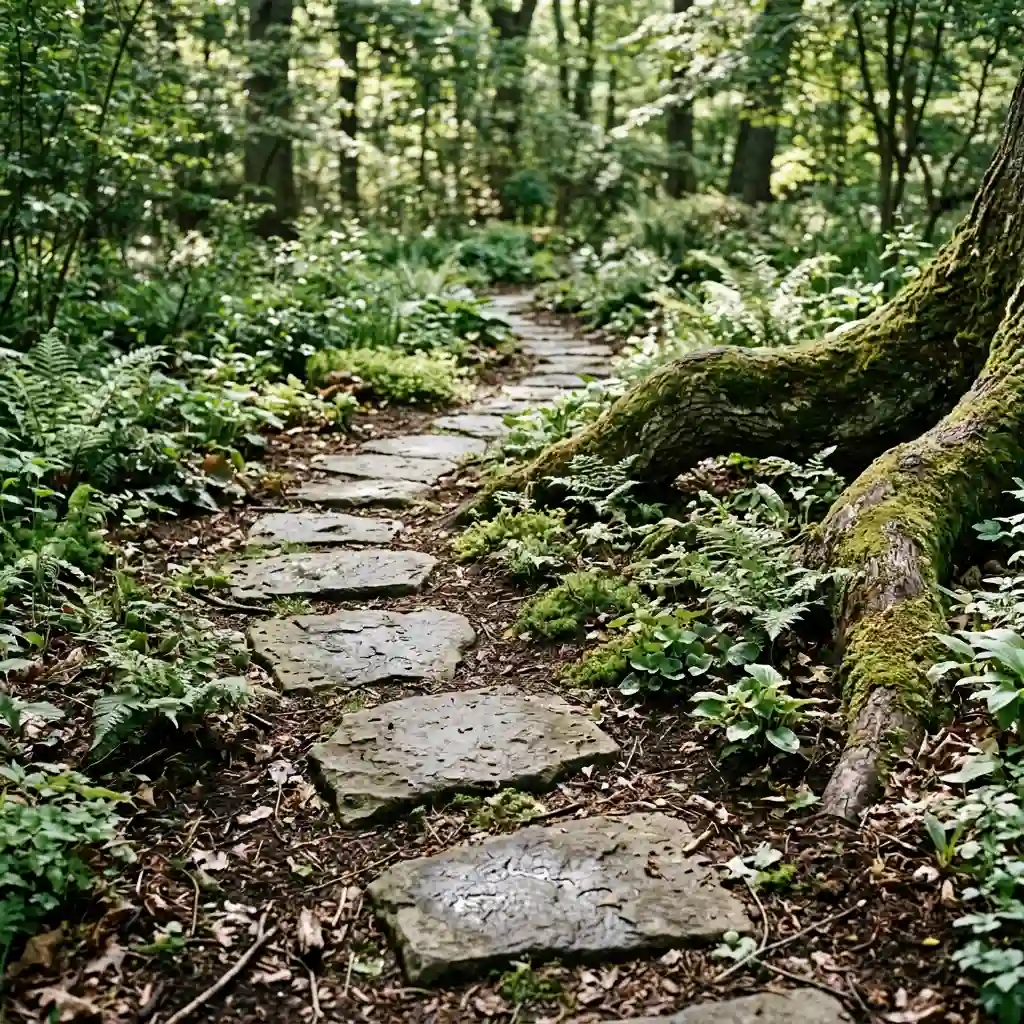
Stepping stones can cross a root-filled area with less digging than a solid path. They also divide a large bed into smaller planting pockets.
Test the spacing before setting the stones. Walk the route several times and adjust each piece to match a natural stride.
Set the stones firmly enough to prevent rocking. If a large root blocks the route, move the stone instead of cutting the root. Perfect alignment is less important than protecting the tree.
Add ferns or low groundcovers along the sides. Keep leaves and stems away from the walking surface so the stones do not become slippery.
Best for: Narrow side yards and informal garden routes.
Watch out for: Uneven stones that create a trip risk.
11. Build a Small Woodland Seating Nook
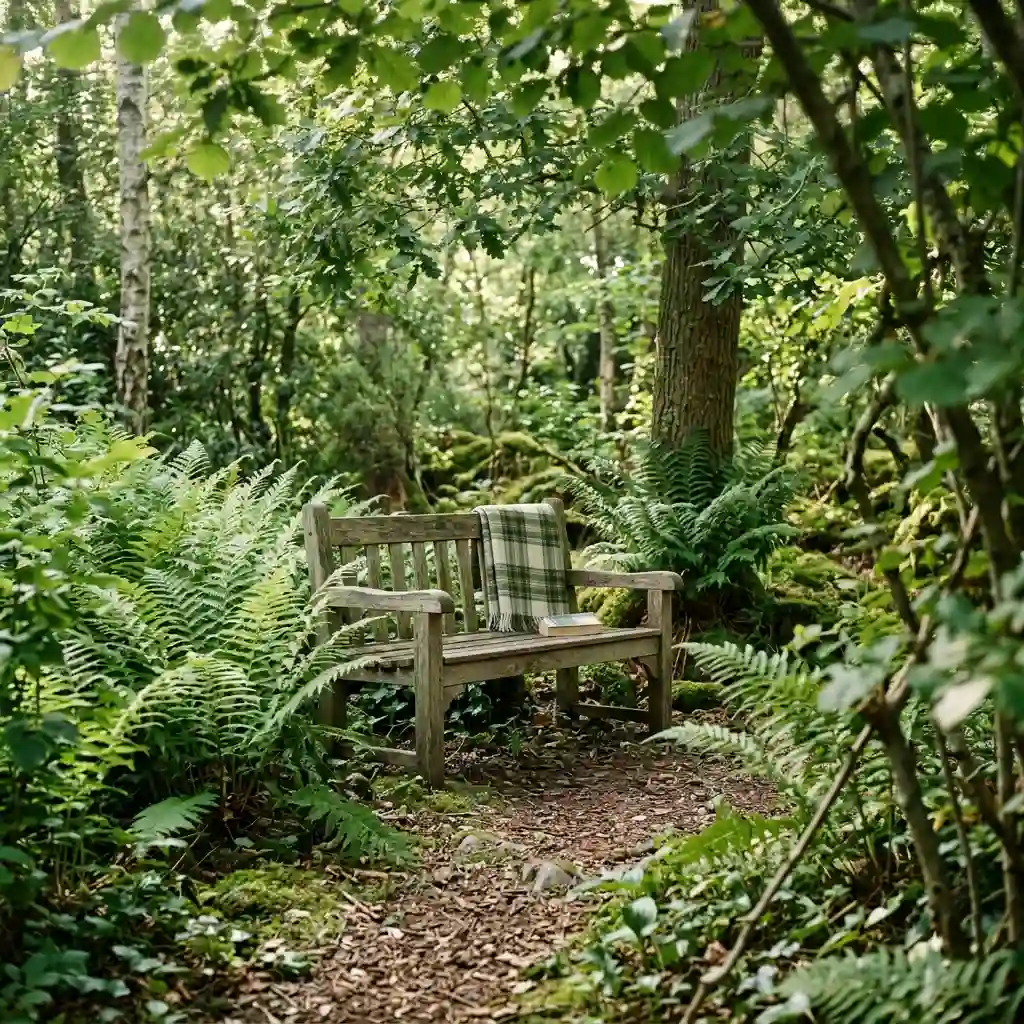
A bench gives you a reason to spend time in the garden. Place it where you can see a strong plant group, a birdbath, or light moving through the leaves.
Test the spot at several times of day before placing permanent furniture. A cool morning area may feel damp or attract mosquitoes in the evening.
A bench, two chairs, or a small bistro set may be enough. Use a firm surface beneath the furniture to prevent sinking and wobbling.
Look up before choosing the spot. Avoid damaged branches and ask a certified arborist to inspect any tree that raises concern.
Best for: Quiet reading, morning coffee, or watching birds.
Watch out for: Poor drainage and unsafe overhead branches.
12. Use Fallen Logs as Natural Features
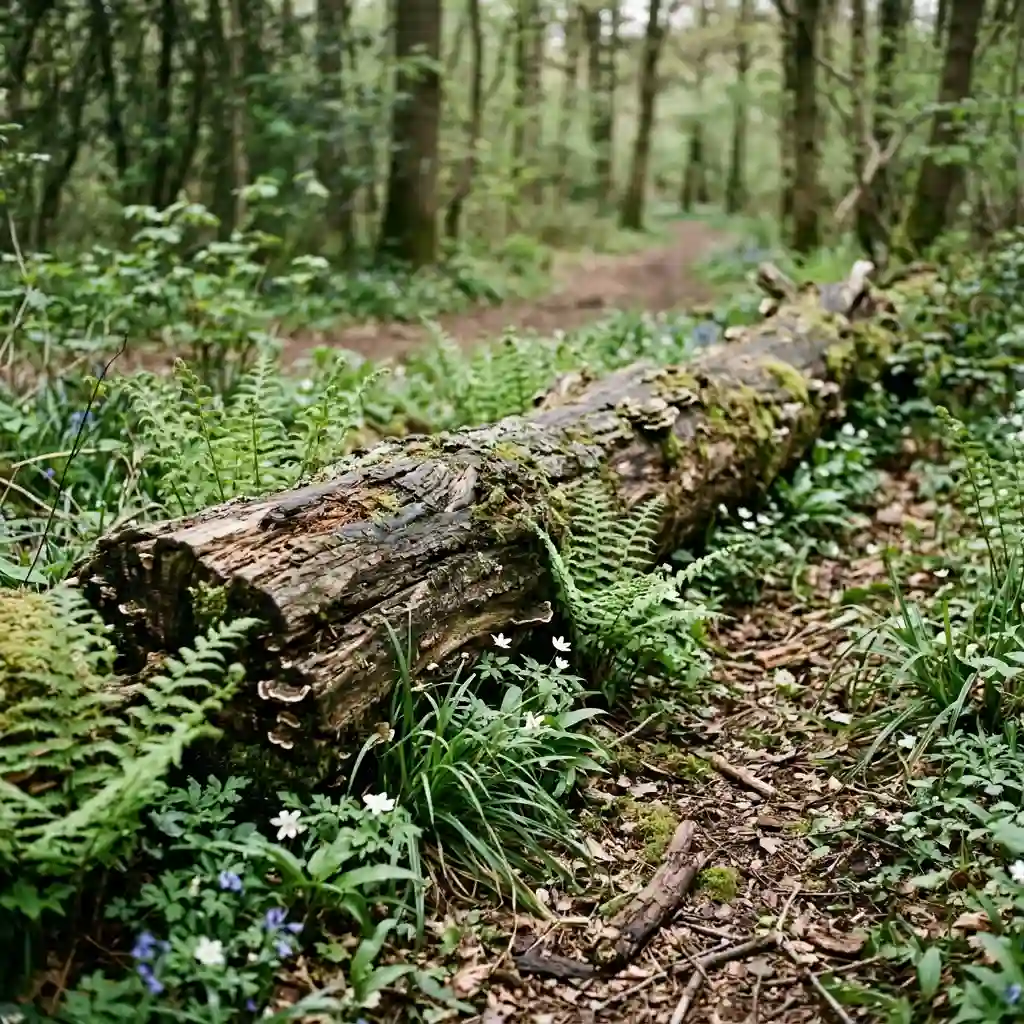
A sound fallen log can become a strong feature without looking out of place. Position it away from the main path and surround it with ferns, sedges, or woodland flowers.
Decaying wood provides food and shelter for fungi, insects, and other organisms. The U.S. Forest Service notes that many plants and animals use forest debris for food and habitat.
Keep logs only where they do not create a fire, pest, or safety problem. Local conditions matter. Ask a forestry professional for advice if you live in an area with high wildfire risk.
Best for: Natural gardens with enough room for habitat features.
Watch out for: Moving dead wood from forests, parks, or protected land.
13. Edge Planting Beds with Local Stone
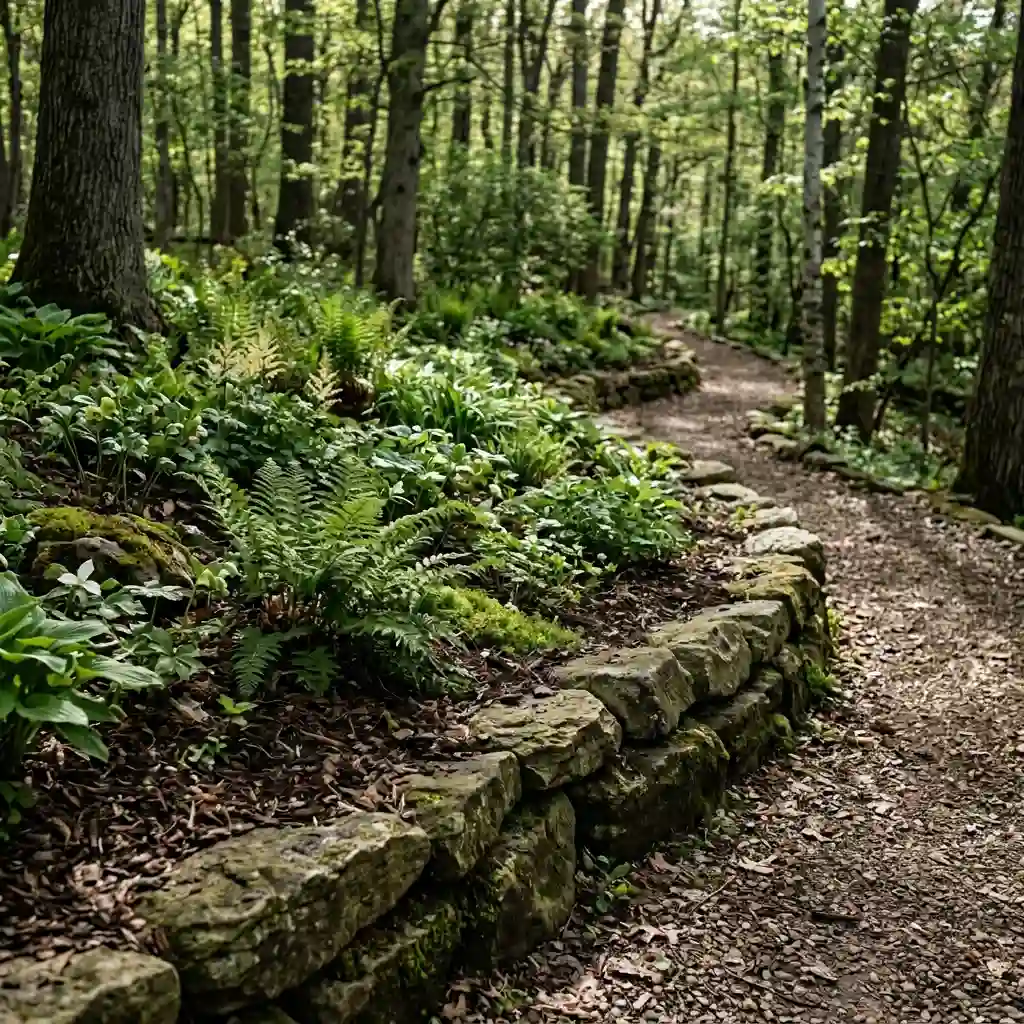
Stone can define a bed without making the woodland garden feel formal. It also helps hold soil and mulch on a gentle slope.
Use one local stone type throughout the space. Repeat it beside the path, near the bench, or around a small water basin.
Partly bury each stone so it appears settled into the ground. Avoid creating high raised beds over tree roots. Added soil can change the flow of air and water around them.
A loose stone edge is often enough. You do not need to build a wall around every planting area.
Best for: Slopes, curved beds, and planting pockets.
Watch out for: Heavy equipment that may compact soil above tree roots.
14. Add a Simple Water Feature
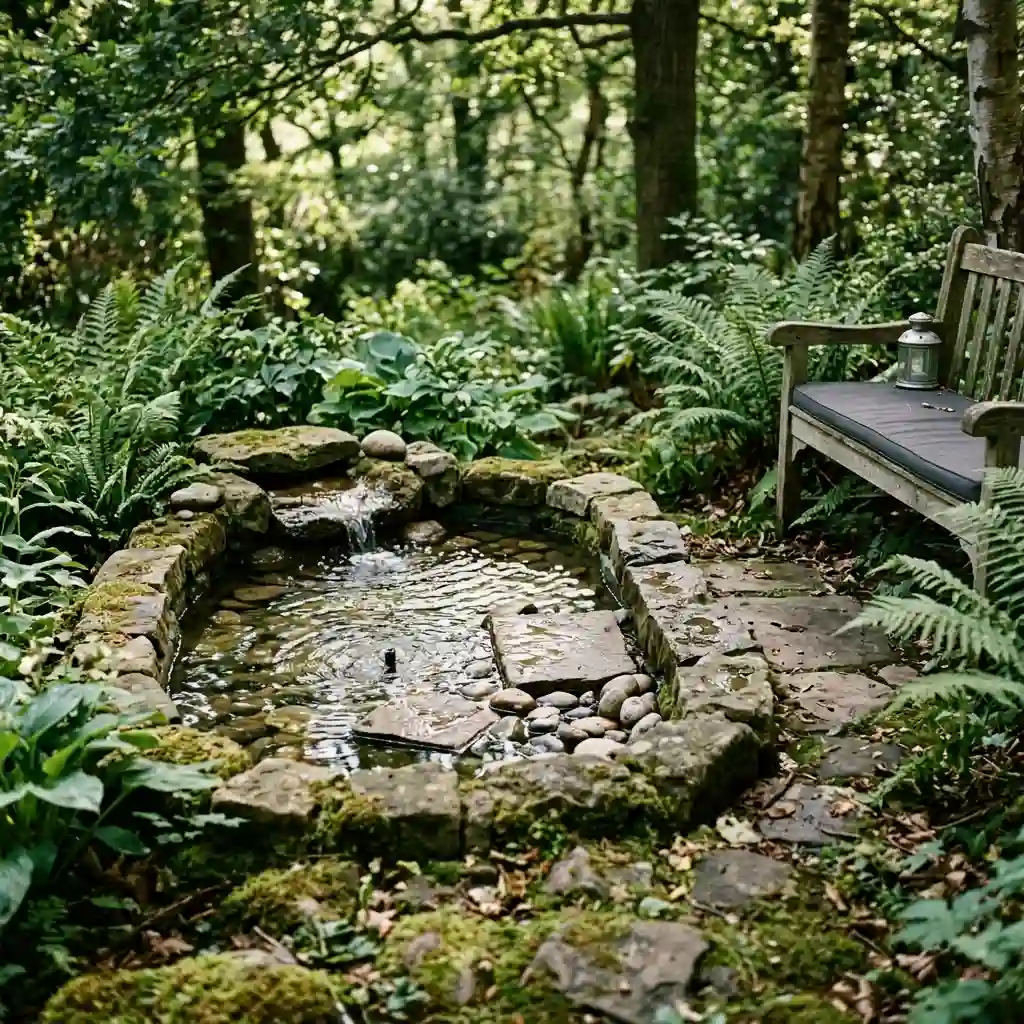
Water adds movement and a gentle sound to a shaded garden. You do not need a large pond. A shallow basin, recirculating fountain, or wildlife dish may be enough.
Place flat stones in deeper containers so small animals have a safe way out. Change or circulate the water and clean the container often. This helps prevent algae, odors, and mosquito breeding.
If the feature uses electricity, choose outdoor-rated parts and follow local safety rules. A solar pump needs enough direct sunlight to work well, which may be hard to provide beneath trees.
Best for: Seating areas and small wildlife gardens.
Watch out for: Stagnant water, exposed cables, and deep containers without escape stones.
6 Ways to Add Color, Wildlife, and Seasonal Interest
A shade garden does not need to look dull. Plan for spring flowers, summer foliage, fall color, and winter structure.
15. Create a White-Flower Woodland Garden
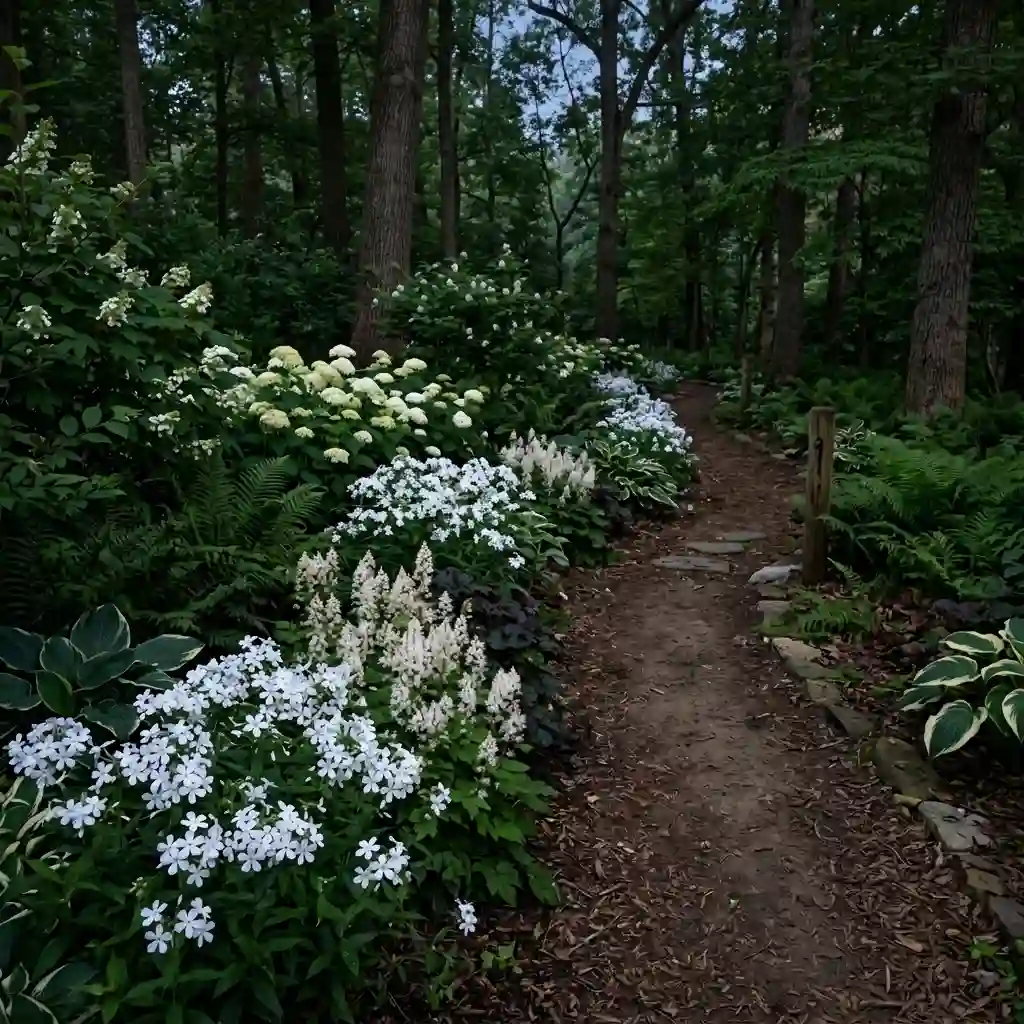
White flowers reflect limited light and remain visible during early evening. They can make a dark garden corner feel fresh without adding too many colors.
Choose plants with different bloom times. Depending on your region, you might use white woodland phlox, foamflower, hydrangea, or white-flowering native shrubs.
Mix the flowers with deep green leaves. You can also add silver or cream foliage to carry the pale color after the blooms fade.
Use white as a repeating accent instead of filling the entire garden with it. Small groups placed along a path will lead the eye through the space.
16. Design a Blue-and-Purple Shade Border
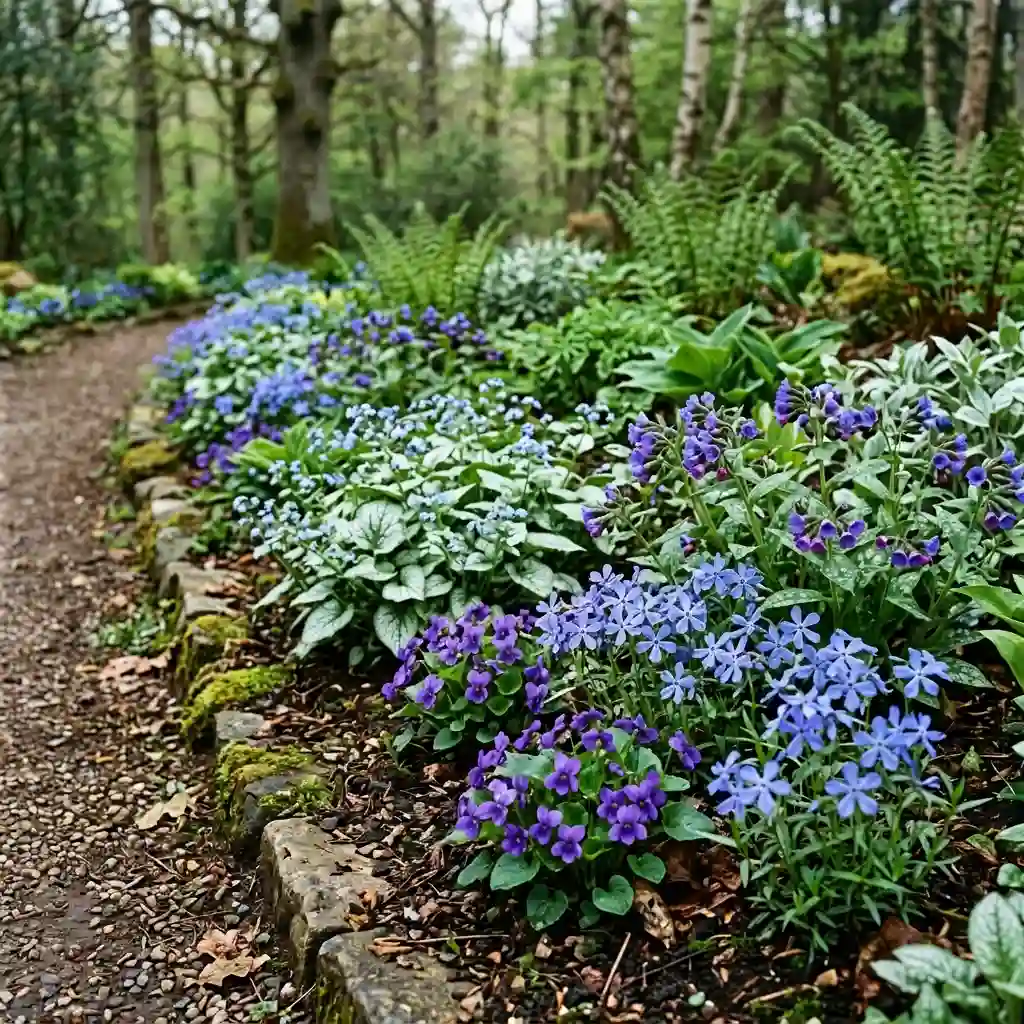
Blue and purple flowers create a cool, calm border beneath trees. Woodland phlox, brunnera, violets, and lungwort are possible options where their growing needs fit.
Repeat the same flower color in several groups. Add fresh green leaves between them so the border does not become one dark mass.
Silver foliage can make purple flowers easier to see. Place the strongest color near the path or seating area.
Check local guidance before choosing plants. Some options may spread too fast or fail in dry shade. Penn State’s garden design guidance notes that color can change how a shaded space feels.
17. Grow Plants That Support Woodland Wildlife
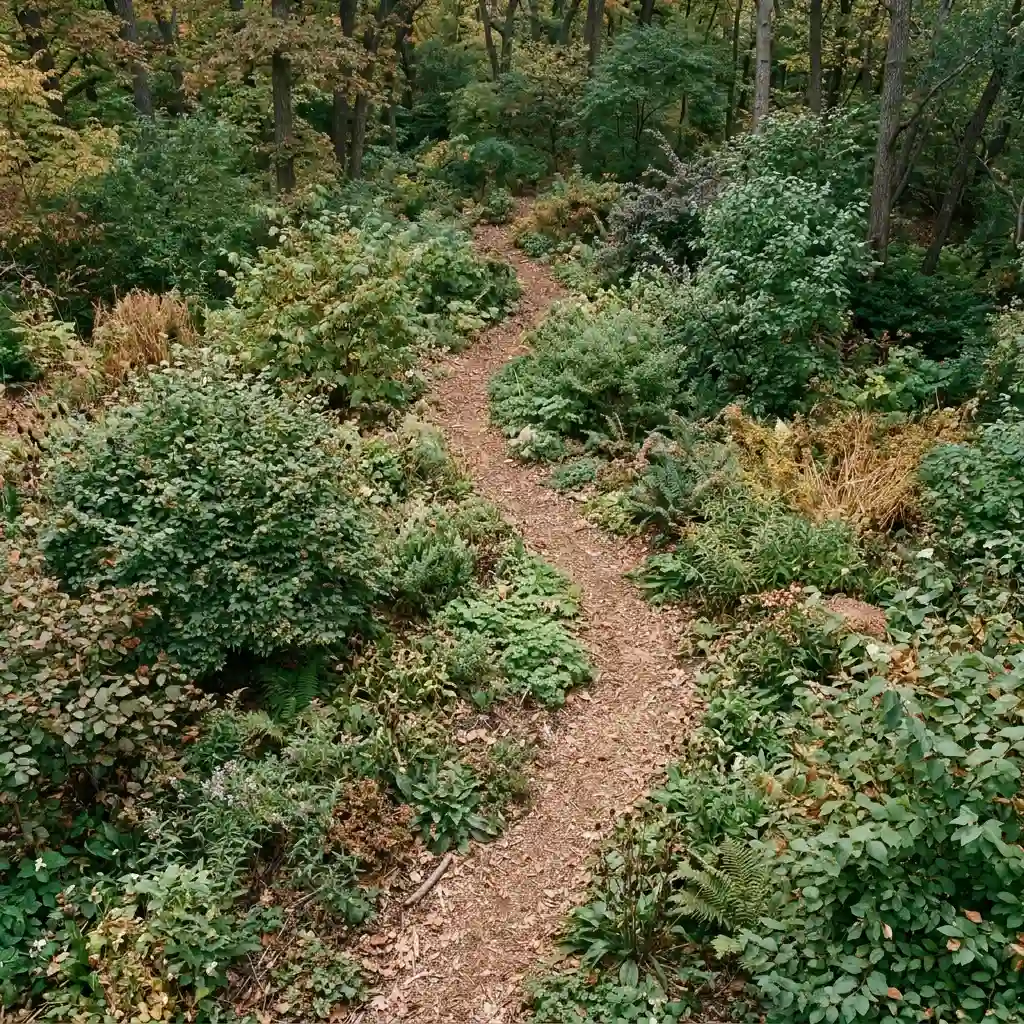
Native flowers, shrubs, and groundcovers can provide food and shelter for local wildlife. Choose several species that bloom at different times instead of relying on one plant.
Leave some seed heads standing during fall and winter. Keep a thin layer of leaves in low-traffic planting beds when it will not smother small plants.
Shrubs can give birds places to rest or nest. Fallen leaves may shelter insects and other small creatures.
Skip broad claims that one plant supports every pollinator. Wildlife relationships vary by species and region. Local native-plant societies and Cooperative Extension offices can help you find suitable choices.
18. Include Berries and Fall Foliage
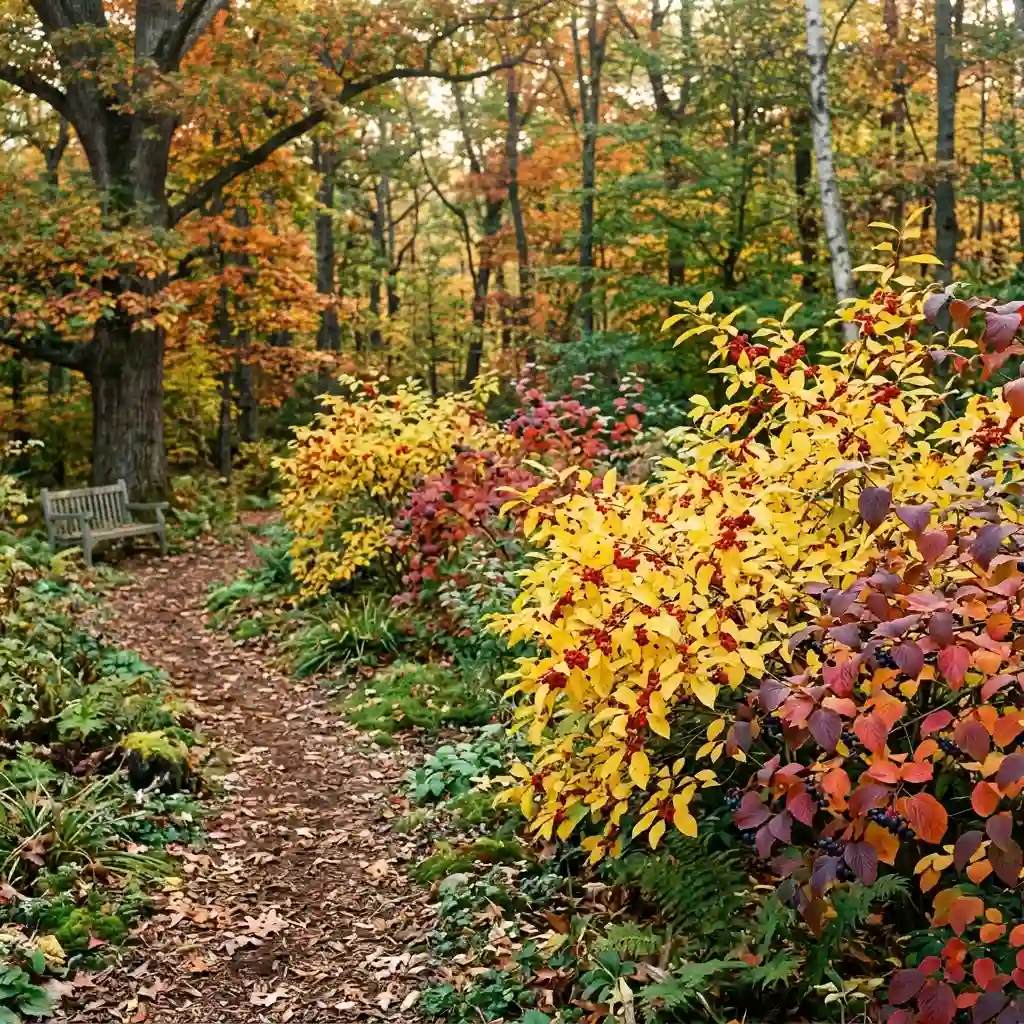
Shrubs with berries or strong fall color keep the garden interesting after summer flowers fade. Spicebush, native viburnums, and other regional shrubs may provide both.
Check whether a berry-producing plant needs a second plant for pollination. Some shrubs may flower but produce little fruit when planted alone.
Keep messy fruit away from paths and seating areas. Choose nonaggressive species so berries do not lead to unwanted spreading.
Use fall color in two or three repeated areas. A small number of well-placed shrubs will have more impact than many unrelated plants scattered across the yard.
19. Add Evergreens for Winter Structure
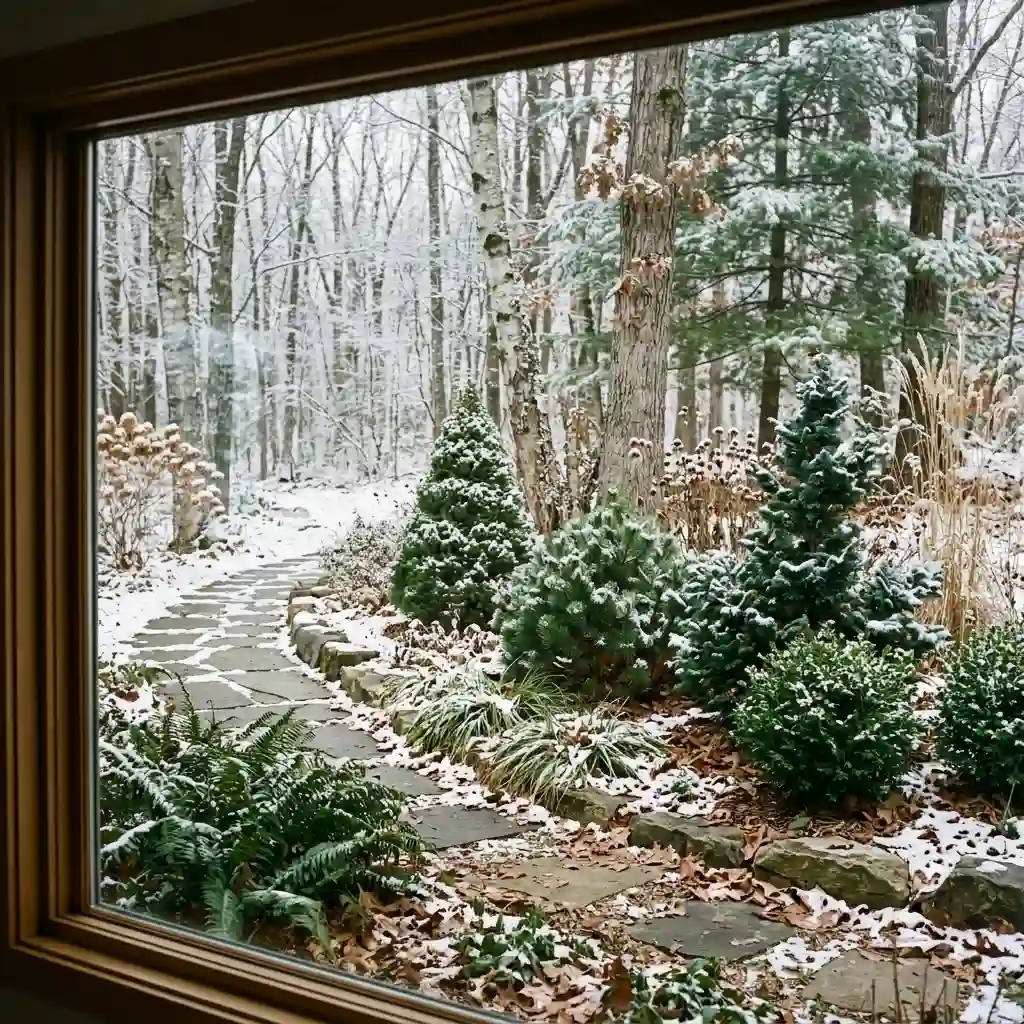
Evergreen plants stop a woodland bed from looking empty in winter. Depending on your climate, options may include Christmas fern, native sedges, low shrubs, or small conifers.
Place evergreens near entrances, paths, and windows. These are the areas you will notice most during the cold months.
Combine green foliage with textured bark, stones, seed heads, and fallen leaves. This creates interest without depending on flowers.
Check each plant’s hardiness, mature size, and deer resistance. A plant listed as evergreen may lose leaves or look worn after a severe winter in colder zones.
20. Light the Path with Low, Warm Fixtures
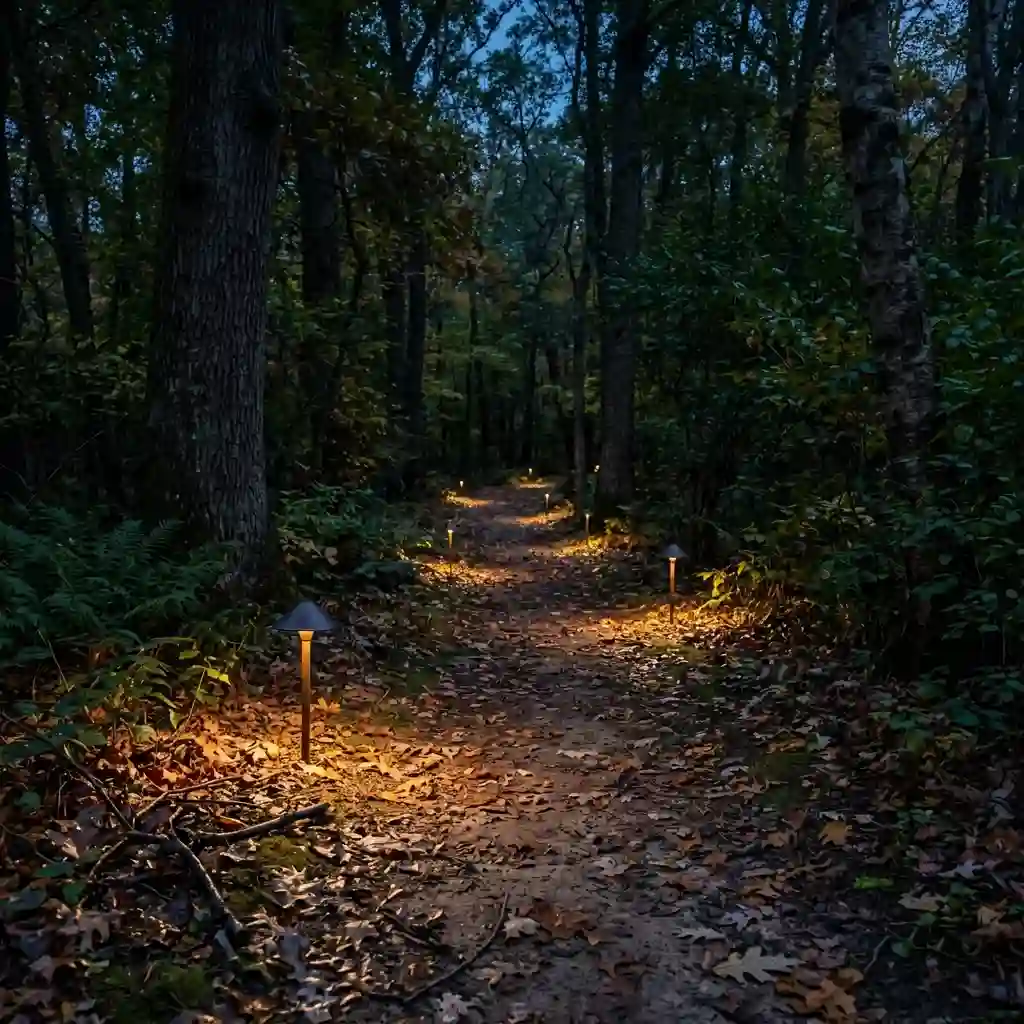
Use outdoor lights to mark path edges, steps, and changes in ground level. Low fixtures are usually more useful than bright lights aimed into the tree canopy.
Choose warm, shielded lighting that points down. Keep the light focused on areas where people walk. This reduces glare and limits light reaching wildlife habitat or neighboring homes.
Place lights at key turns instead of lining the entire path. The goal is safe movement, not daytime brightness.
Solar fixtures may perform poorly under dense trees because their panels need sunlight. In deep shade, a wired low-voltage system may be more reliable.
How to Choose the Right Plants for Your Site
Finding the right plants for a woodland garden starts with a simple rule: match each plant to the place where it will grow.
Check your USDA hardiness zone or local climate guide. Then compare your soil and light with the plant’s needs. A plant that loves moist woodland soil may struggle beneath a dry maple canopy.
Also check mature width, growth rate, spreading habit, and resistance to local deer or rabbits.
| Site condition | Plant traits to seek |
| Dry soil beneath trees | Plants that handle drought and root competition |
| Moist, rich soil | Ferns and perennials suited to steady moisture |
| Filtered morning light | Flowering shrubs and blooming perennials |
| Deep shade | Plants valued for foliage and texture |
| Sloping ground | Fibrous-rooted groundcovers that help hold soil |
Favor local native plants when they fit your site and design. Check a regional invasive-species list before buying fast-spreading groundcovers.
Begin with a few small groups. You can add more woodland shade garden ideas after you see how the first plants handle a full growing season.
Avoid These Common Woodland Garden Mistakes
Planting beneath trees is different from creating a standard flower bed. The first goal is to protect the trees already growing there.
Avoid cutting large roots to fit new plants. Use small nursery plants that need smaller planting holes. You can also place plants between exposed roots instead of forcing a fixed pattern.
Do not bury the base of a tree beneath new soil or deep mulch. The root flare, where the trunk widens at ground level, should remain visible. The University of Minnesota Extension recommends a two- to three-inch mulch layer and warns against piling mulch against the trunk.
Other common mistakes include:
- Choosing moisture-loving plants for dry shade
- Installing invasive groundcovers
- Using single plants that disappear in a large space
- Expecting heavy flowering in deep shade
- Leaving bright garden lights on all night
- Placing mulch against tree trunks
- Ignoring the mature size of shrubs
Start small and disturb the soil as little as possible. When important trees are involved, ask a certified arborist before changing soil levels, installing walls, or cutting roots.
Start with One Woodland Corner
The best woodland shade garden ideas work with your existing trees, light, soil, and moisture. You do not need to rebuild the whole yard at once.
Choose one manageable corner. Map its light, check the soil, and select two or three ideas from this list. You might begin with a fern group, a curved path, and a simple bench.
Watch how the area changes through each season before adding more plants. This steady approach protects tree roots and reduces costly mistakes. It also gives your woodland garden design time to develop a natural, settled look.