
A bare corner, dry slope, or muddy strip can make your whole yard feel unfinished. You may want to fix it, but adding more grass or flower beds often means more watering, weeding, and work.
A rock garden gives you another choice.
You can use stones to fill an awkward space, guide rainwater, frame a path, or create a strong focal point. Many DIY rock garden ideas also need fewer plants than a standard garden bed. This can lower both the cost and the amount of care needed.
You do not need a large yard or heavy equipment to get started. Some easy rock garden ideas fit inside a pot. Others work beside a mailbox, along a fence, or under a rain chain.
This guide covers 17 projects for small spaces, slopes, patios, and backyards. You will also learn how to choose rocks, pick suitable plants, build the area, and avoid common mistakes.
Which Rock Garden Idea Fits Your Space?
Use this quick guide to narrow your choices.
| Your Yard Problem | Ideas to Try | Effort Level |
| Empty corner | Mini corner garden or boulder garden | Easy |
| Muddy area | Dry creek bed or rain-chain garden | Medium |
| Small patio | Container or alpine trough | Easy |
| Dry sunny area | Succulent garden or herb spiral | Easy |
| Steep slope | Alpine slope or terraced garden | Medium to hard |
| Narrow side yard | Gravel strip with stepping stones | Medium |
| Need more wildlife | Pollinator-friendly rock garden | Easy |
| Want a relaxing feature | Gravel garden or bubbling rock | Medium |
How to Plan Your Rock Garden Before Buying Anything
Do not order a pile of stone until you know how much space you need to fill. Landscaping rocks are heavy. Moving extra stone across your yard is not a fun way to spend your weekend.
Start by measuring the area. Mark its shape with a garden hose, rope, or a line of flour. Curved shapes often look more natural than perfect squares.
Next, check the sunlight. Watch the area during the morning, afternoon, and early evening. A place that looks shaded at breakfast may receive strong sun later in the day.
You also need to check drainage. Look at the ground after heavy rain. Find out where the water enters, where it collects, and where it leaves. Do not block a natural drainage path with a row of large stones.
Think about how the garden will match your home. Smooth river rock can suit a clean, simple yard. Rough fieldstone may look better beside a rustic fence or cottage-style house.
Set a basic budget for:
- Large feature rocks
- Medium stones
- Gravel
- Soil or compost
- Plants
- Edging
- Delivery
- Tool rental
A small 4-by-6-foot garden is a good first project. You can always add another section later.
Check These 6 Things Before You Buy
- Measure the space.
- Check the daily sunlight.
- Watch how rainwater moves.
- Choose a garden style.
- Set your spending limit.
- Plan how you will move the rocks.
Once you know what the area needs, you can choose a design that looks good and works well.
5 Easy Rock Garden Ideas You Can Build First
These five projects use simple shapes and common garden tools. You can also build them in stages if your time or budget is limited.
1. Fix an Empty Corner with a Mini Rock Garden
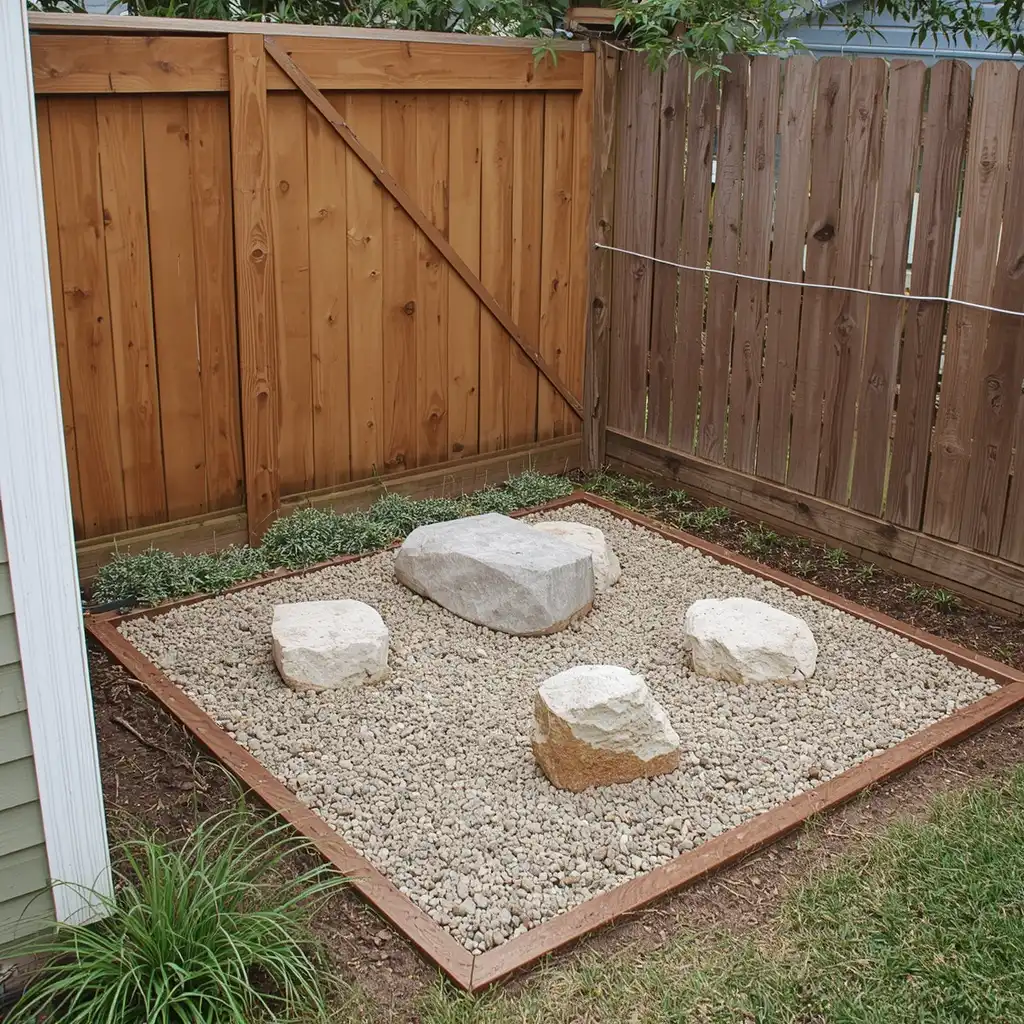
An unused corner near a fence, shed, or patio is a good place to begin. You can create a clear focal point without changing the rest of your yard.
Mark a space about 4 feet wide. Place one medium rock slightly away from the center. Add three to five smaller stones around it. Do not line them up like a border. Uneven groups look more natural.
Fill the open areas with gravel and three small plants. Creeping thyme, low sedum, or dwarf grass may work if they suit your climate.
Best for: Small yards and first projects
Skill level: Easy
Cost: Low to medium
Care: Low
2. Guide Rainwater with a Dry Creek Bed
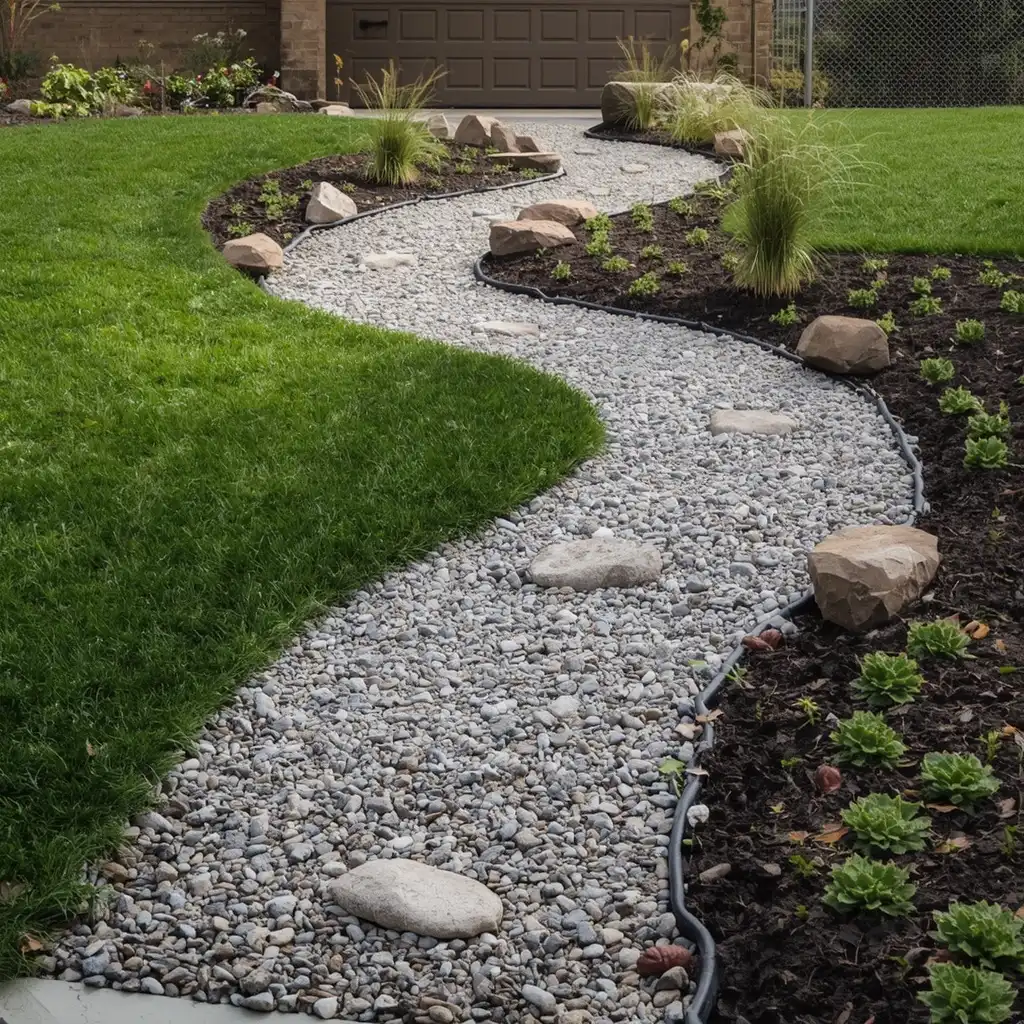
A dry creek bed can make a wet area look planned instead of forgotten. It may also help guide light surface water when built in the correct place.
Mark a curved channel through the yard. Place larger rocks along the outside bends. Add smooth river rock or gravel through the center. A straight strip often looks like a drain, so use gentle curves where the space allows.
You can run the creek from a downspout to a safe drainage point. Add grasses or moisture-tolerant plants along the edges.
Important: Do not send water onto a nearby property or against your home. Serious drainage problems need professional help.
Best for: Muddy areas and visible runoff
Skill level: Medium
Cost: Medium
Care: Low
3. Make a Gravel Path Feel Softer with Planting Pockets
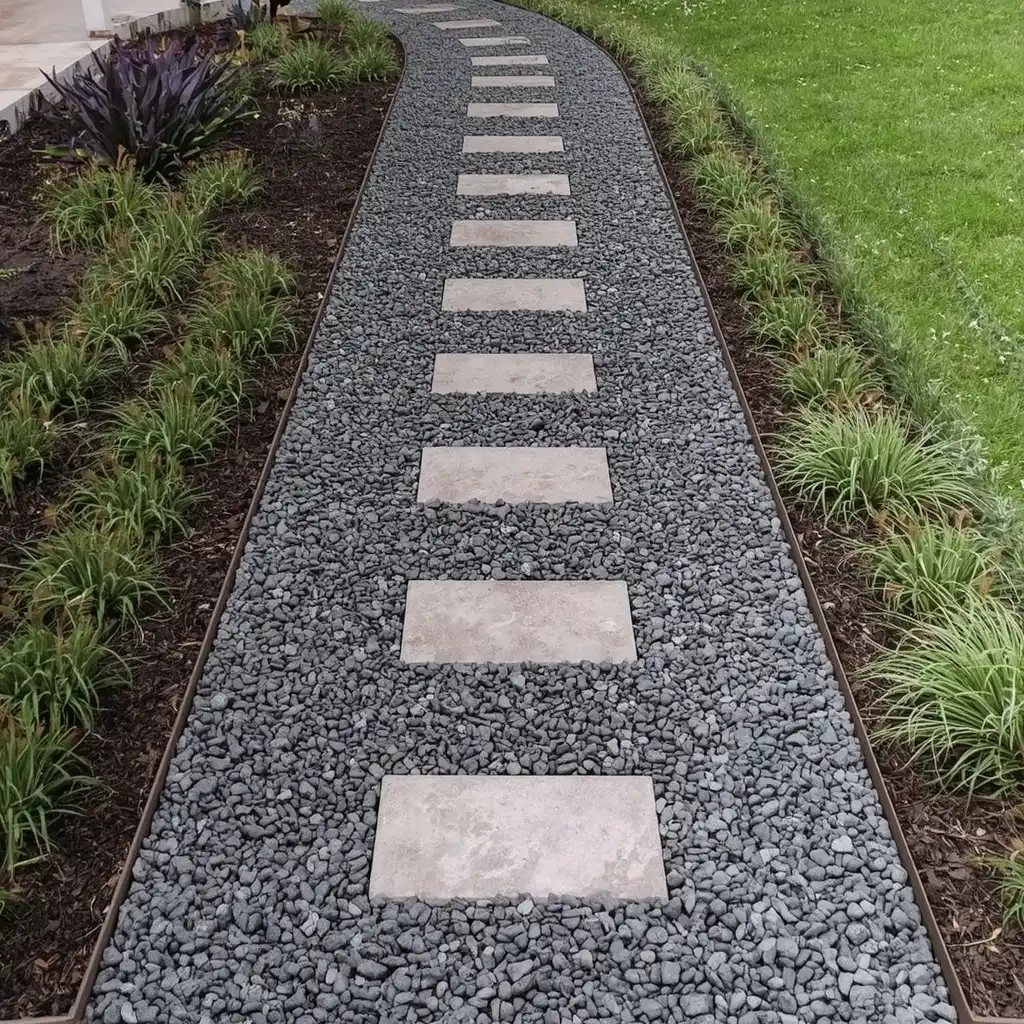
A plain gravel path may look hard or unfinished. Small planting pockets can soften the edges while keeping the walkway clear.
Build a path about 3 feet wide. Add edging to stop the gravel from spreading into nearby soil. Place flat stepping stones where you want people to walk.
Leave small gaps beside the path for plants. Use low types that will not cover the walking area. Creeping thyme, sedum, and small ornamental grasses are common choices.
Repeat the planting pockets every 3 to 4 feet. This gives the path a steady pattern without making it feel crowded.
Best for: Garden paths and side yards
Skill level: Medium
Cost: Medium
Care: Medium
4. Improve Poor Soil with a Raised Stone-Edged Bed
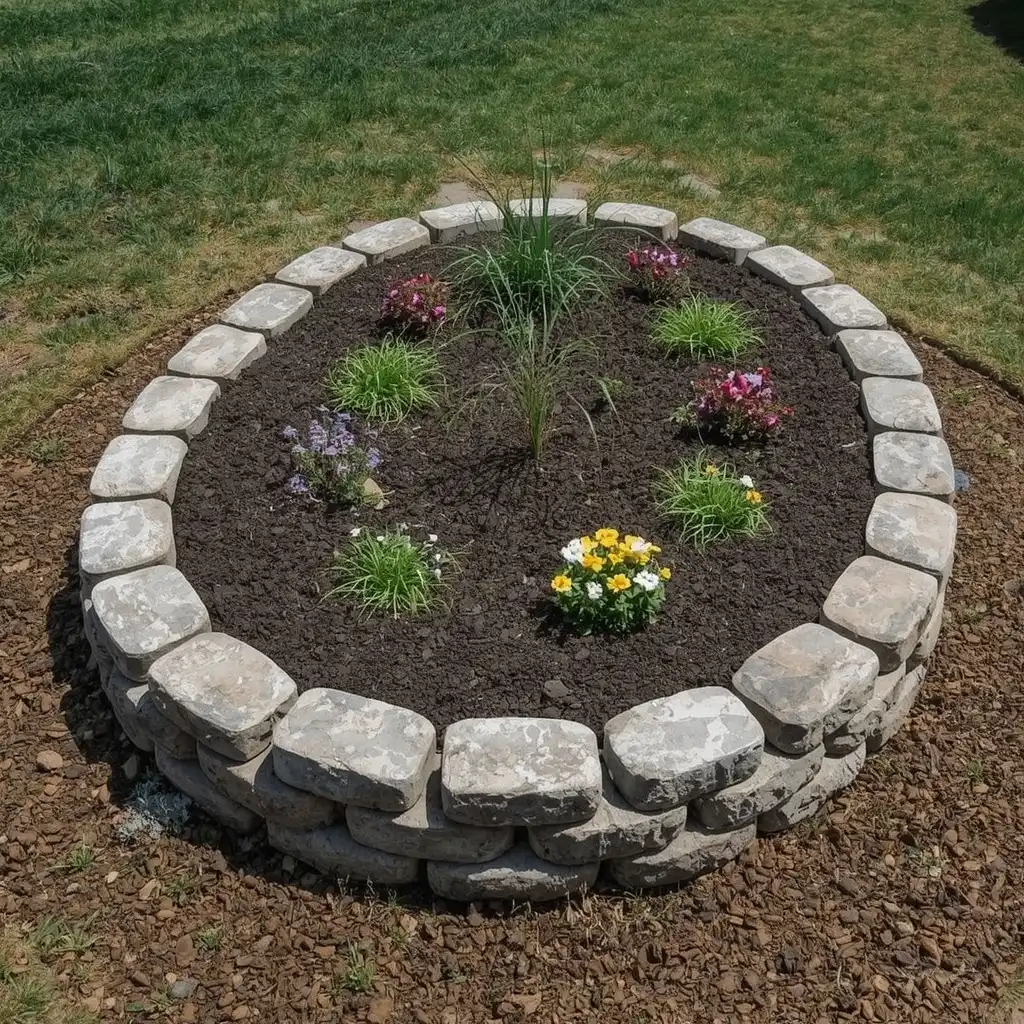
A low raised bed lets you add better soil without digging deeply into hard ground. The stone edge also gives the garden a clear shape.
Use flat stones to create a circle, oval, or curved border. Keep the wall low unless you know how to build a safe retaining structure. Fill the center with soil that suits your plants.
You can build the bed around a birdbath, small tree, garden ornament, or group of flowers. Leave small spaces between some stones so extra water can escape.
Do not stack loose rocks where children or pets may knock them down.
Best for: Hard soil and clear garden borders
Skill level: Medium
Cost: Medium
Care: Medium
5. Cut Watering with a Succulent Rock Garden
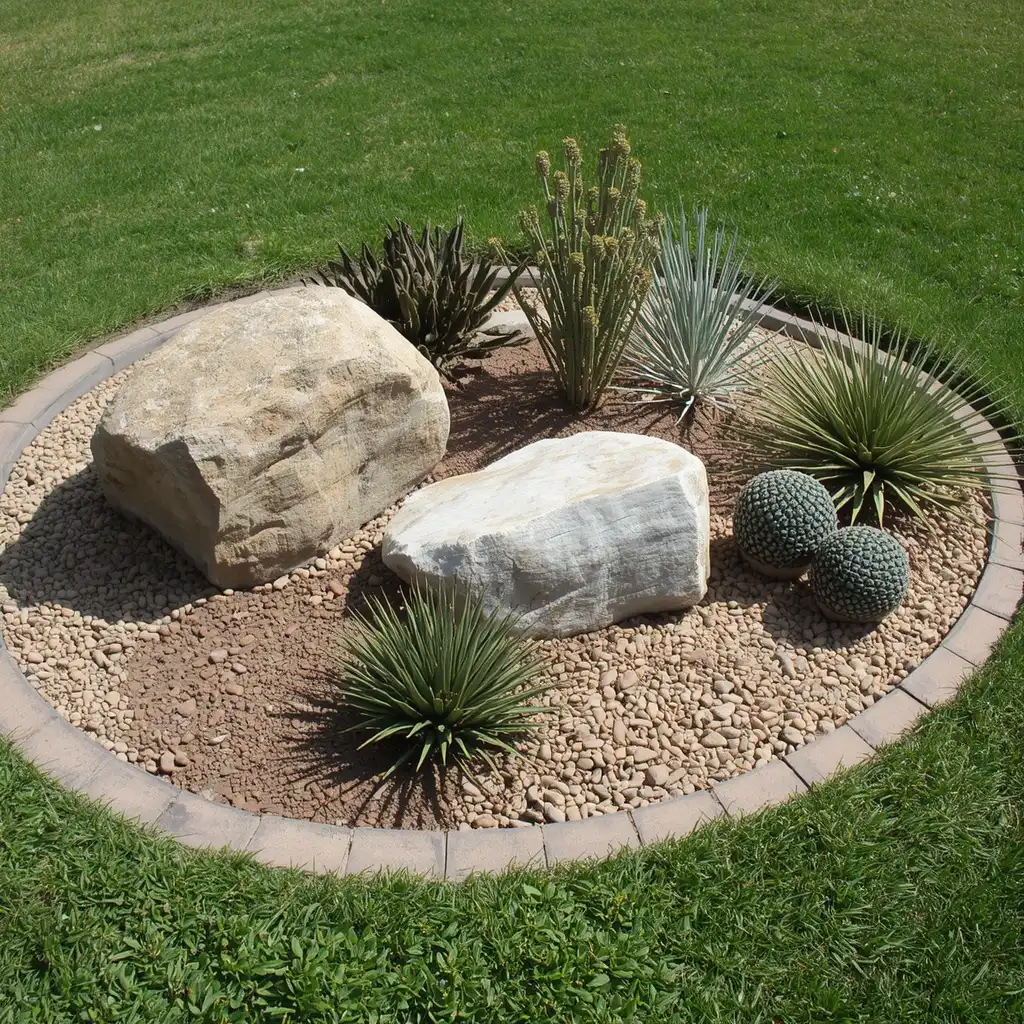
A succulent rock garden can work well in a sunny spot with fast-draining soil. It also gives you color and shape without a thick flower bed.
Start with one or two weathered stones. Add gravel mulch around them. Plant a mix of upright, spreading, and round succulents so the area has different forms.
Hardy sedum and hens-and-chicks can survive cold winters in many places. Other succulents may need to come indoors during cold weather. Check the needs of each plant before buying it.
Keep gravel away from the center of each plant. Trapped moisture can cause rot.
Best for: Dry, sunny spaces
Skill level: Easy
Cost: Low to medium
Care: Low
The corner garden is the easiest option. The dry creek bed works best for visible water flow. A raised bed can help when your soil is poor.
4 Small Rock Garden Ideas for Patios and Tight Yards
A rock garden does not have to sit in the ground. These small rock garden ideas work on patios, balconies, and narrow outdoor spaces.
6. Create a Portable Rock Garden in a Container
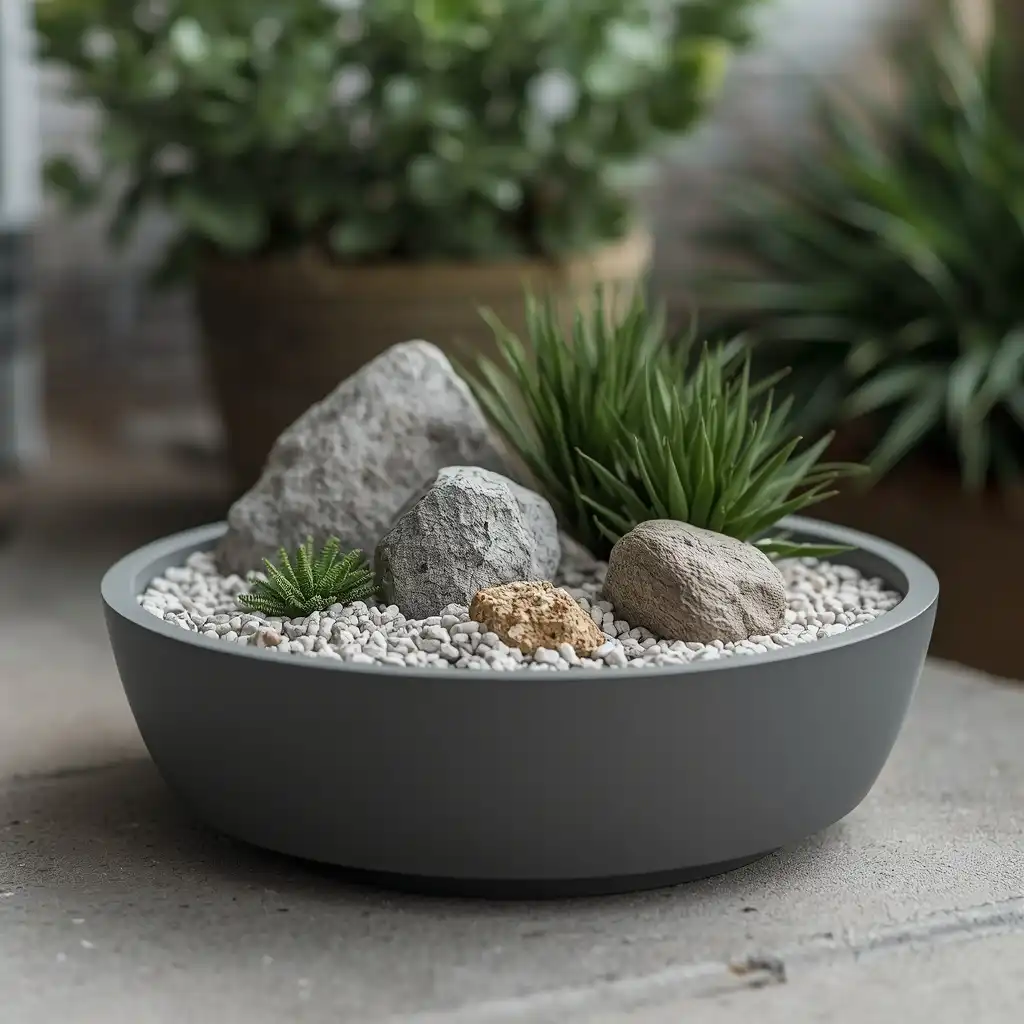
A container rock garden is a smart choice for renters or anyone who does not want to dig. You can also move it when the weather changes.
Choose a wide pot with open drainage holes. A shallow container about 18 inches across gives you room for a few plants and stones.
Fill it with a fast-draining potting mix. Add one feature stone and two or three smaller rocks. Use compact plants that will not quickly outgrow the pot. Finish the surface with fine gravel.
Do not fill the bottom with a thick layer of loose rocks. This may reduce the amount of soil without improving drainage.
Best for: Patios, balconies, and renters
Skill level: Easy
Cost: Low
Care: Low
7. Build a Tiny Mountain Scene in an Alpine Trough
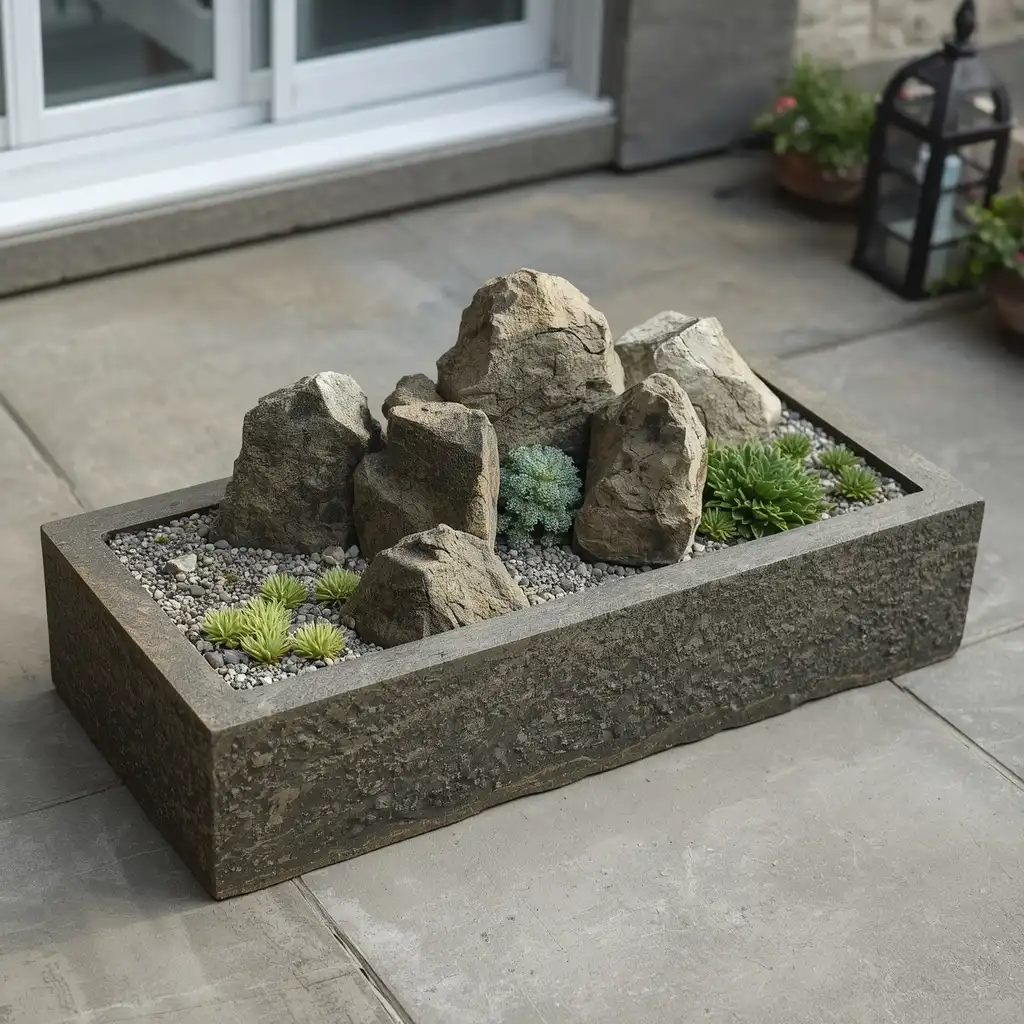
An alpine trough turns a small planter into a tiny mountain-style garden. It works well when you want detail without using much space.
Use a stone, concrete, or hypertufa trough with drainage holes. Hypertufa is a light, rough material often used for garden pots.
Place small pieces of slate or rough stone at slight angles. This creates height and gives the display a natural shape. Add small alpine plants, dwarf dianthus, or creeping thyme if they suit your local weather.
Leave open gravel between plants. Many alpine plants dislike wet soil and poor airflow.
Best for: Small patios and detailed displays
Skill level: Easy to medium
Cost: Low to medium
Care: Medium
8. Make the Area Around Your Mailbox Easier to Maintain
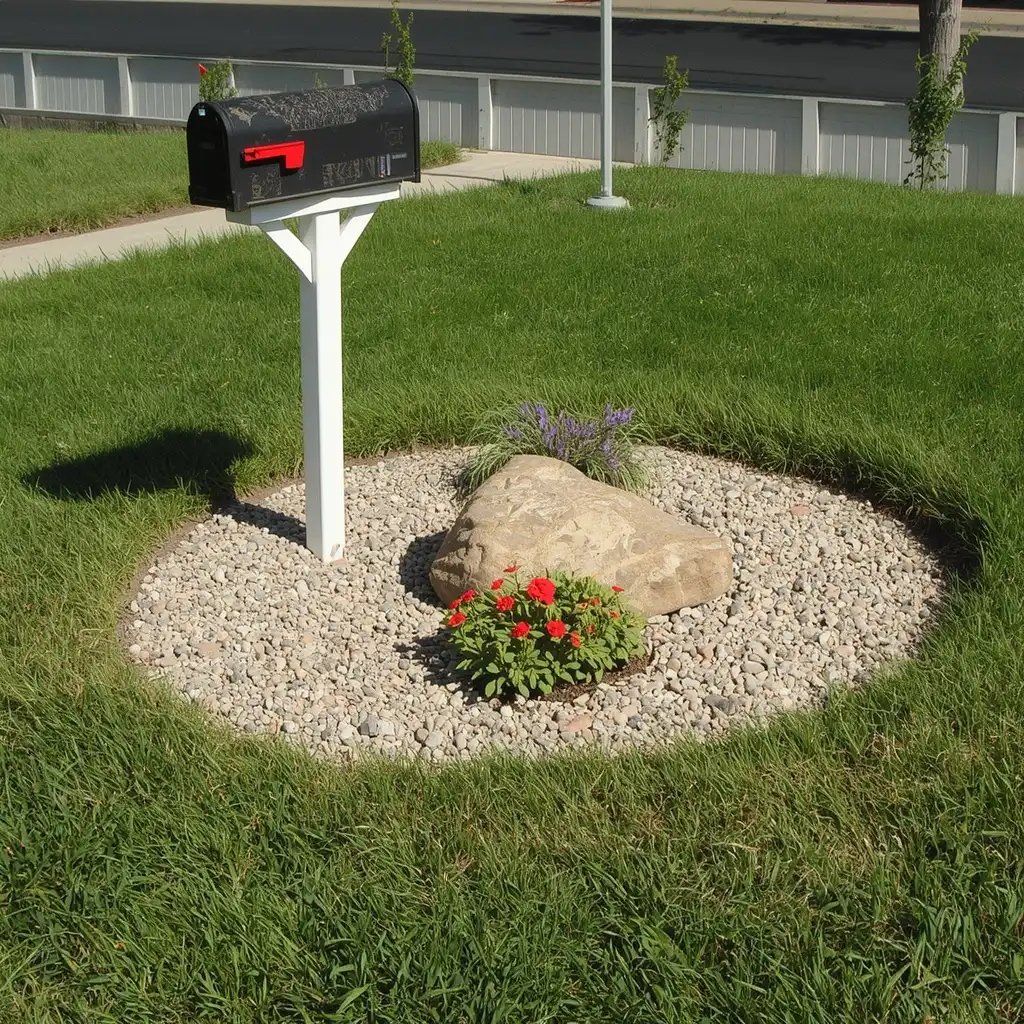
Grass around a mailbox can be hard to cut. A small rock bed can clean up the area and reduce trimming.
Remove a simple circle or curved patch of grass. Add edging to keep the shape neat. Place one small boulder near the back, then add gravel and a few heat-tolerant plants.
Keep plants below the mailbox opening. Leave enough room for the postal worker to reach it. Avoid sharp stones near the road or walking edge.
Ornamental grass, creeping plants, and compact flowers can add shape without blocking access.
Best for: Roadside heat and hard-to-mow grass
Skill level: Easy
Cost: Low to medium
Care: Low
9. Keep a Narrow Side Yard Dry with a Gravel Strip
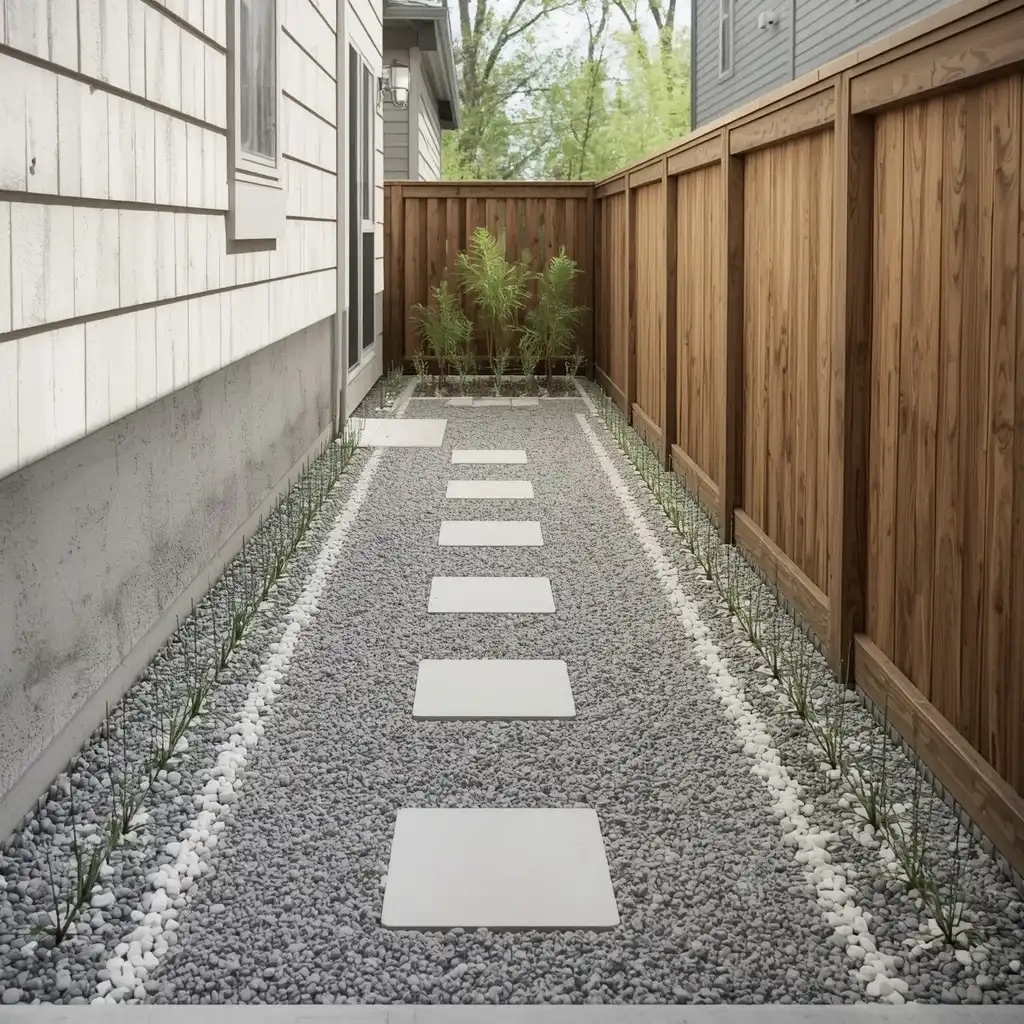
A narrow side yard can stay muddy because it receives little sun. It may also be too tight for a standard flower bed.
Create a gravel strip about 2 feet wide. Add flat stepping stones through the center. Use slim plants beside the path instead of wide shrubs.
Light-colored stones can brighten a dark area. Still, very pale gravel may show mud and fallen leaves more clearly.
Make sure the ground slopes away from the house. Gravel should not trap water beside the foundation.
Best for: Narrow walkways and shaded side yards
Skill level: Medium
Cost: Medium
Care: Low to medium
Small gardens use fewer materials. Still, each rock and plant needs to match the size of the space.
3 Backyard Rock Garden Ideas That Help with Slopes
Slopes and wet areas need function before decoration. These backyard rock garden ideas can help slow surface water, hold soil, or make a hard-to-mow area more useful.
10. Add Stable Planting Pockets to a Sunny Slope
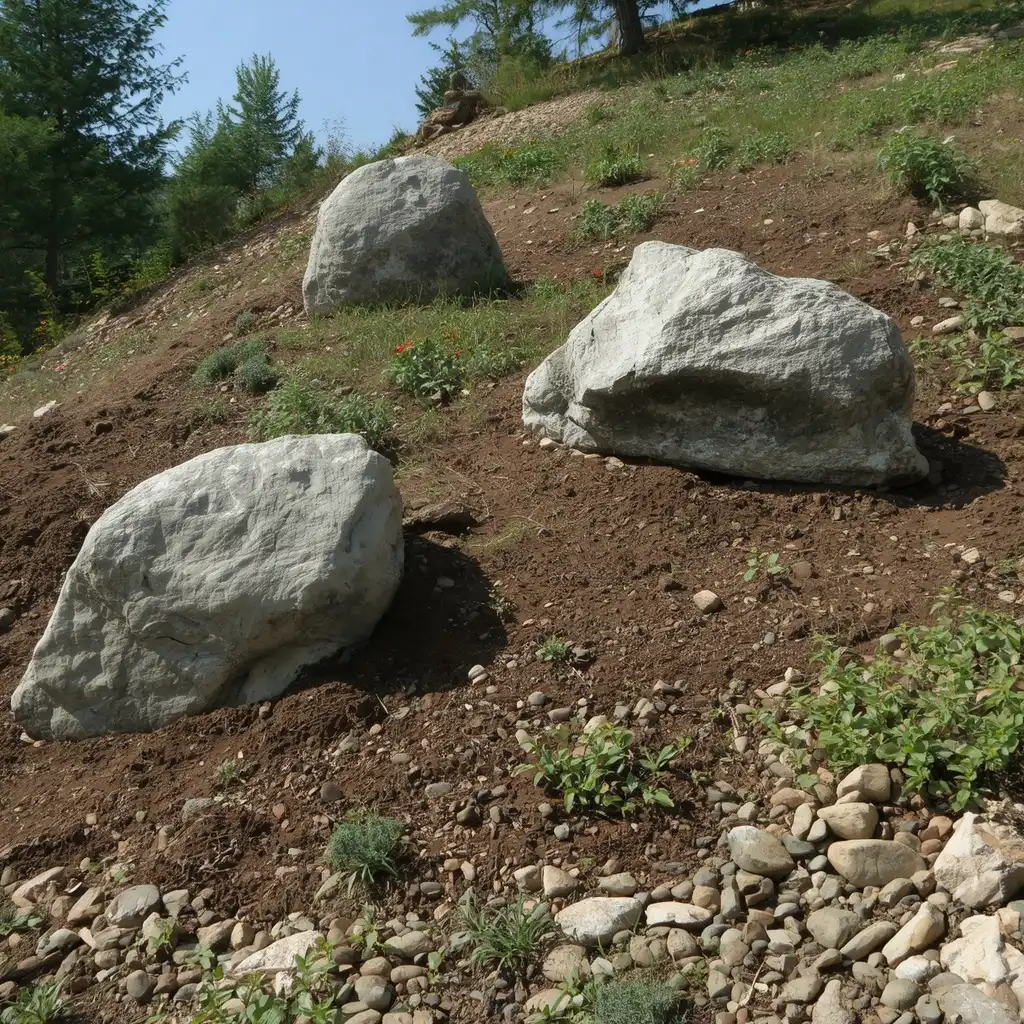
A sloped alpine garden works best when large rocks help create small, level planting areas.
Place the biggest rocks first. Set part of each rock into the soil so it does not look like it was dropped on top. Use three large stones as anchors, then add smaller rocks between them.
Fill the gaps with well-draining soil. Add low plants with spreading roots. These may help cover bare soil, but plants alone will not fix a serious erosion problem.
Leave clear paths for rainwater. Do not build a solid rock line that traps water behind it.
Best for: Sunny slopes and dry banks
Skill level: Medium
Cost: Medium to high
Care: Medium
11. Make a Short Slope Easier to Plant with Low Terraces
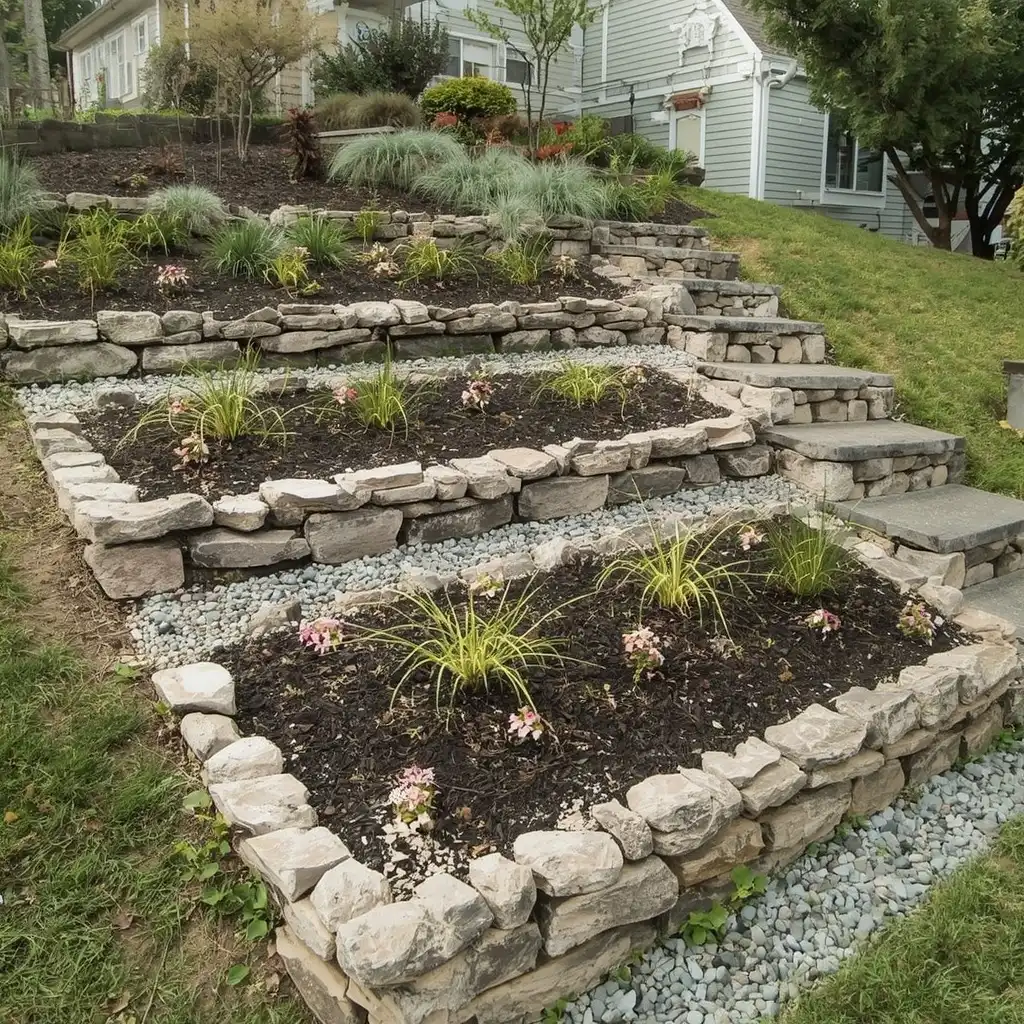
A short slope can be hard to mow and water. Dividing it into low levels gives plants flatter places to grow.
Build two or three shallow terraces instead of one tall wall. Use low stone edges to hold each level. Add gravel behind the stones if the design needs better drainage.
Each planting level should be deep enough for the chosen plants. Ground covers can help protect open soil between rocks.
High retaining walls can fail when water builds behind them. They may also need permits or structural plans. Get expert advice before building a wall that supports a heavy slope.
Best for: Short garden slopes
Skill level: Medium to hard
Cost: Medium to high
Care: Medium
12. Control Splashing Below a Rain Chain
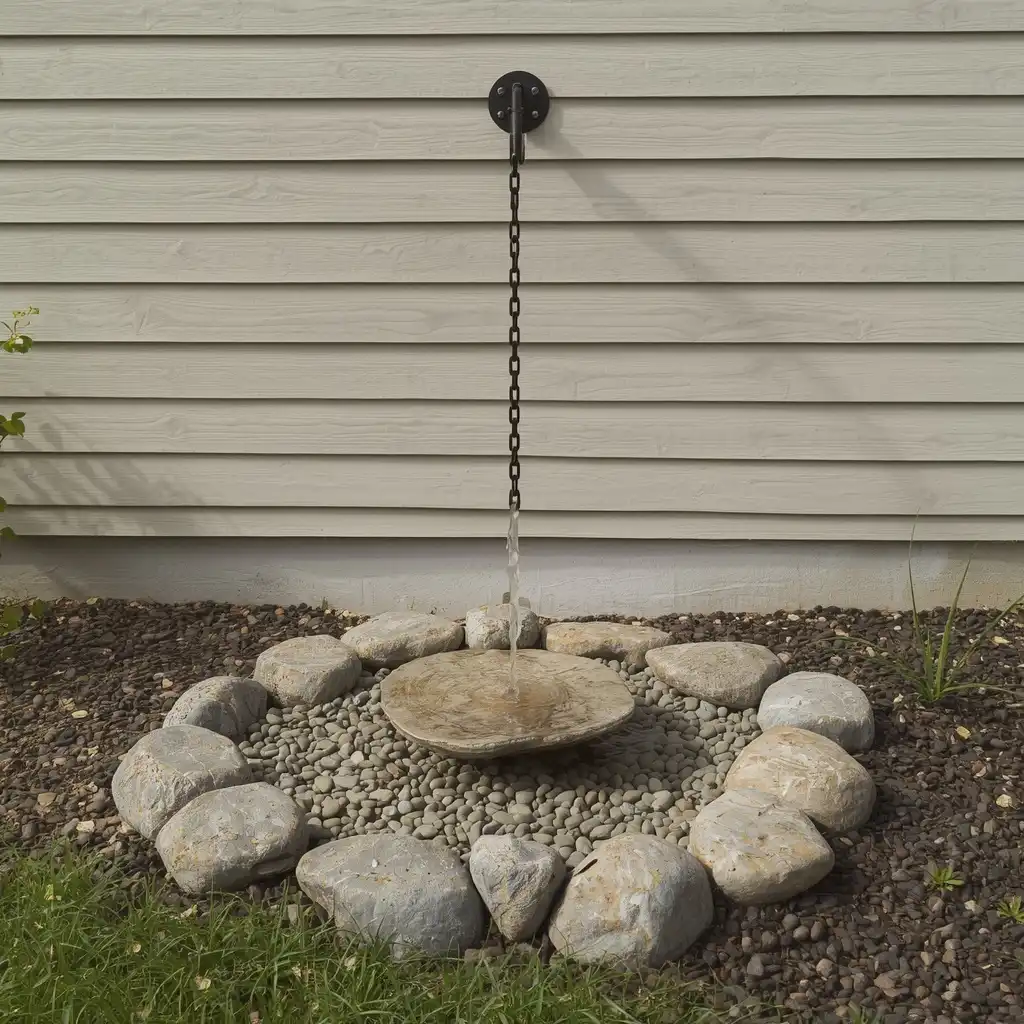
Water from a rain chain can dig a hole in the soil or splash mud onto nearby walls. A shallow rock basin can help spread the water.
Place a large flat stone where the water lands. Add medium stones around it. Use smaller gravel near the outer edge.
Choose plants that can handle both wet and dry periods. Keep them away from the strongest flow.
The basin still needs a safe overflow path. Water should move away from the building when the area becomes full.
Best for: Rain chains and downspouts
Skill level: Medium
Cost: Medium
Care: Low
Rocks can slow light surface water and protect exposed soil. They are not a safe fix for major flooding, foundation leaks, or a failing retaining wall.
5 DIY Rock Garden Ideas That Serve a Real Purpose
Some DIY rock garden ideas can do more than fill empty ground. They can grow food, support wildlife, add sound, or create a quiet place to sit.
13. Grow More Herbs in a Small Stone Spiral
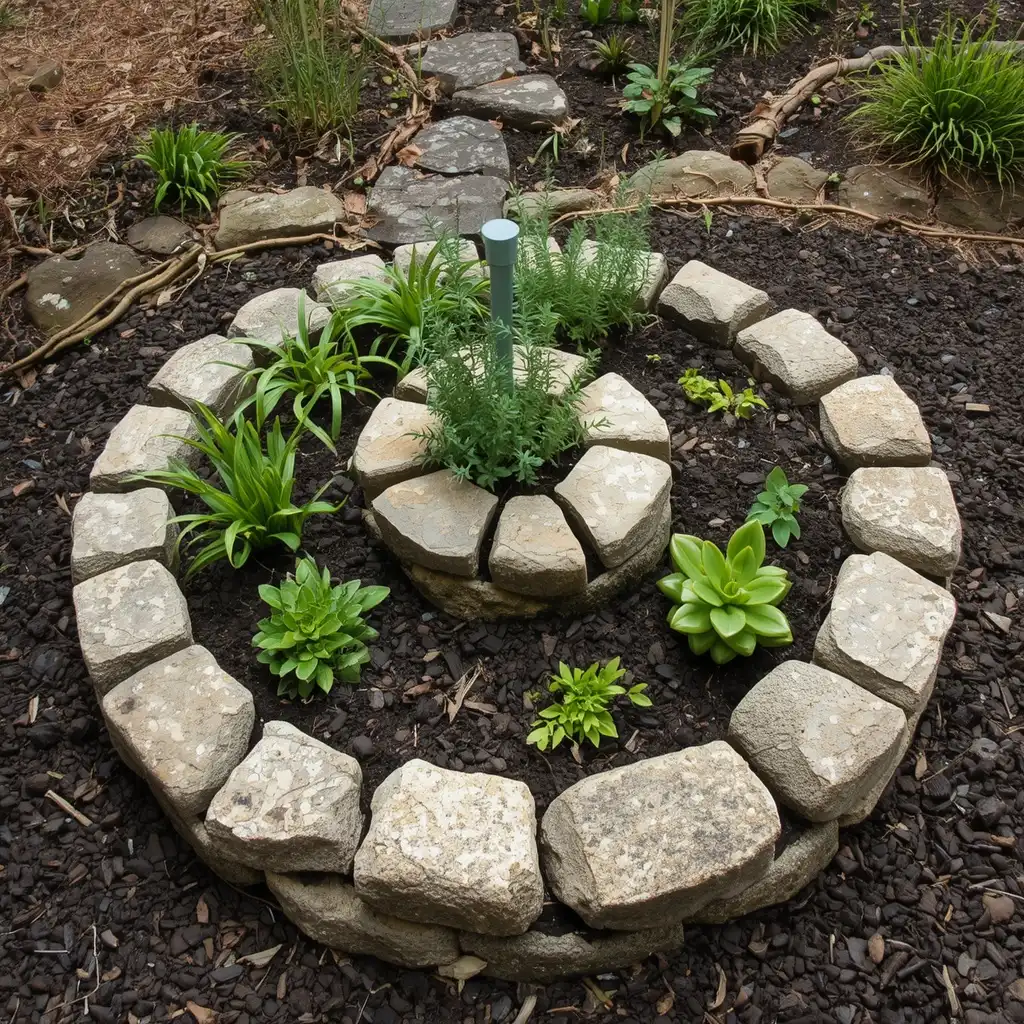
A herb spiral gives you more planting space by building upward. It can also create different soil conditions in one small area.
Arrange stable stones in a spiral that rises toward the center. Fill the inside with soil as you build. Keep the finished shape narrow enough to reach from every side.
Place herbs that like dry soil near the top. Thyme and rosemary may fit this area in warm climates. Put herbs that need more moisture near the bottom.
Mint spreads fast. Keep it inside a buried pot if you do not want it taking over the bed.
Best for: Small edible gardens
Skill level: Medium
Cost: Low to medium
Care: Medium
14. Create a Quiet Gravel Corner for Rest
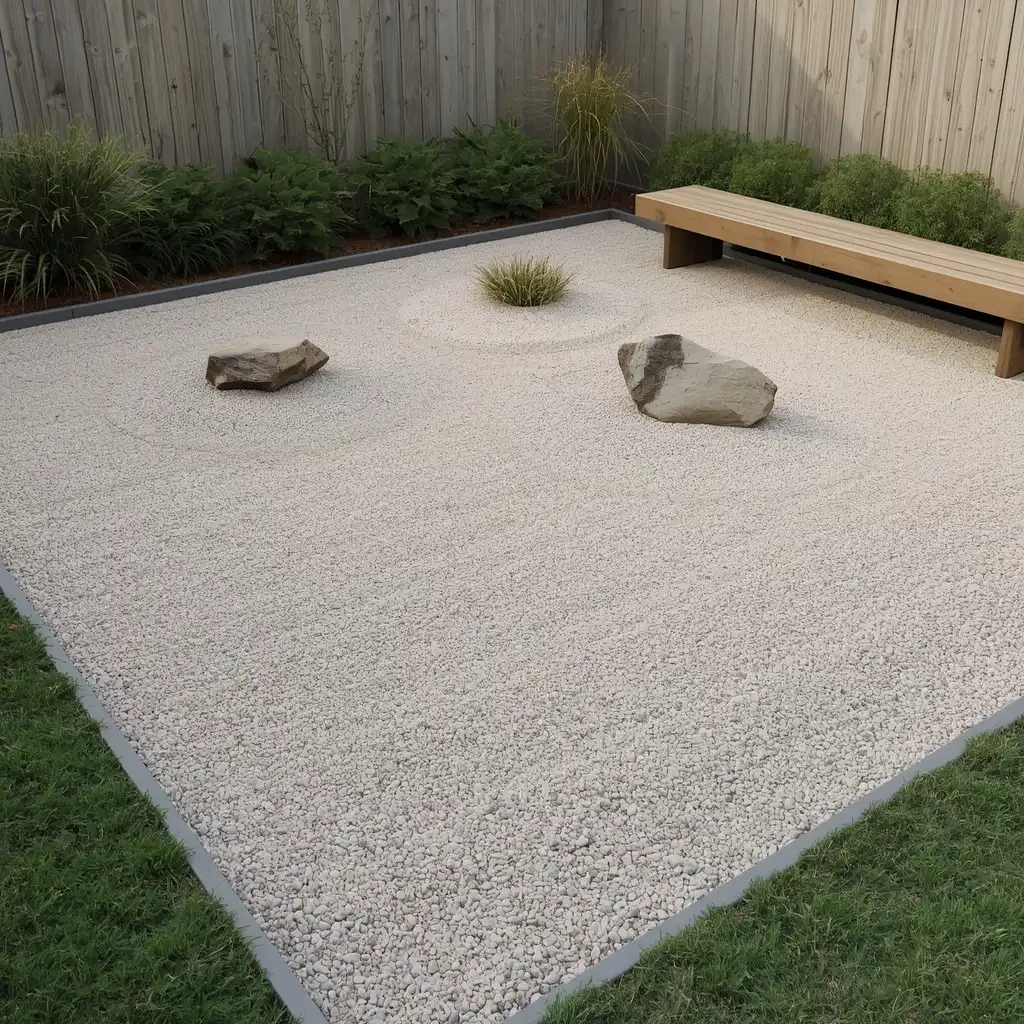
A simple gravel garden can make an unused corner feel calm without filling it with plants.
Mark an area about 6 by 8 feet. Add edging, then spread fine gravel across the surface. Place three feature stones in an uneven group. Add one grass, small shrub, or simple bench.
You can use a hand rake to make soft patterns in the gravel. Keep the design open. Too many objects can make a small space feel messy.
This can be inspired by simple Japanese garden design. Do not label it as an authentic Japanese garden unless it follows the cultural and design traditions behind that style.
Best for: Quiet seating areas
Skill level: Easy
Cost: Medium
Care: Medium
15. Give a Plain Yard One Strong Boulder Feature
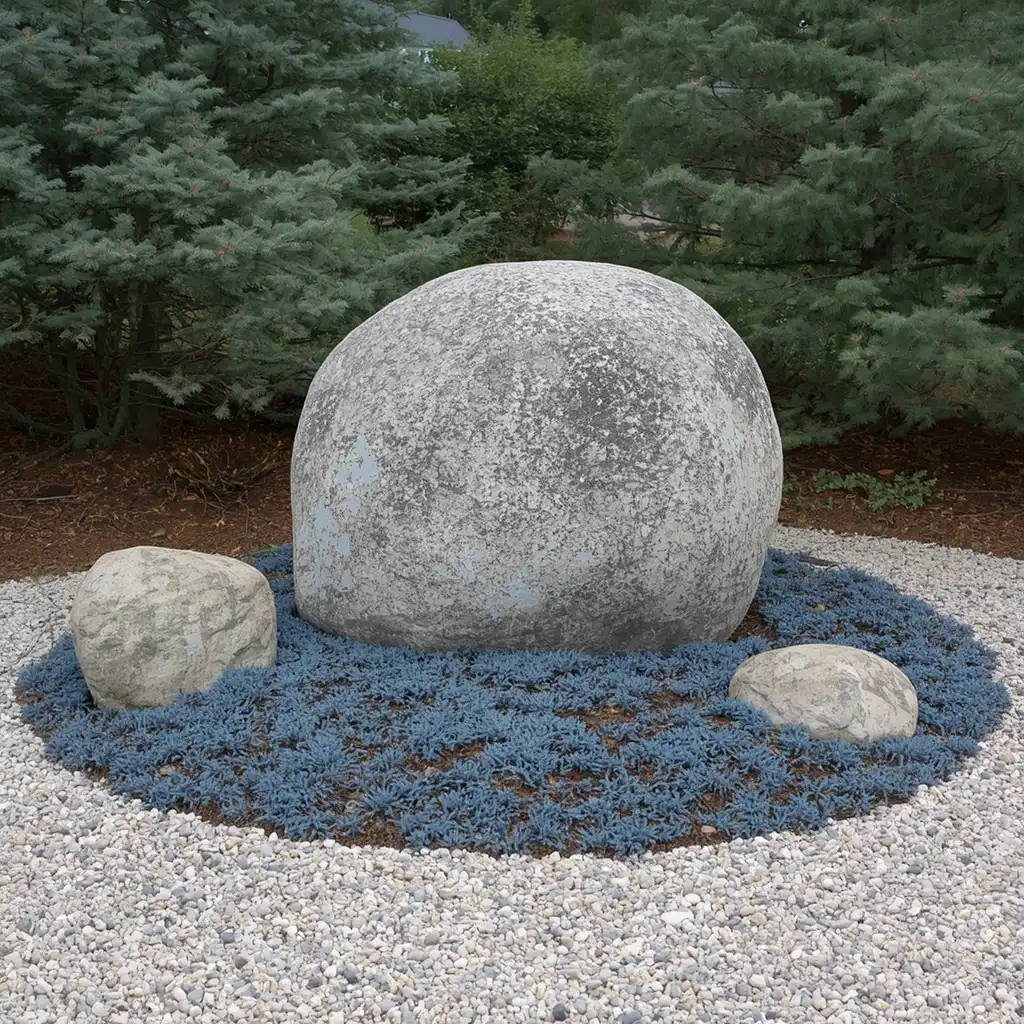
You do not always need many rocks. One well-placed boulder can give the yard a clear focal point.
Choose a stone with an interesting shape or surface. Place it slightly away from the center of the garden. Bury part of the base so the rock looks settled into the land.
Add a few smaller stones from the same color family. Use low plants around the boulder so they do not hide it.
A weathered stone beside blue fescue, creeping thyme, or soft gravel can create a clean look with few materials.
Best for: Plain lawns and patio edges
Skill level: Medium
Cost: Medium to high
Care: Low
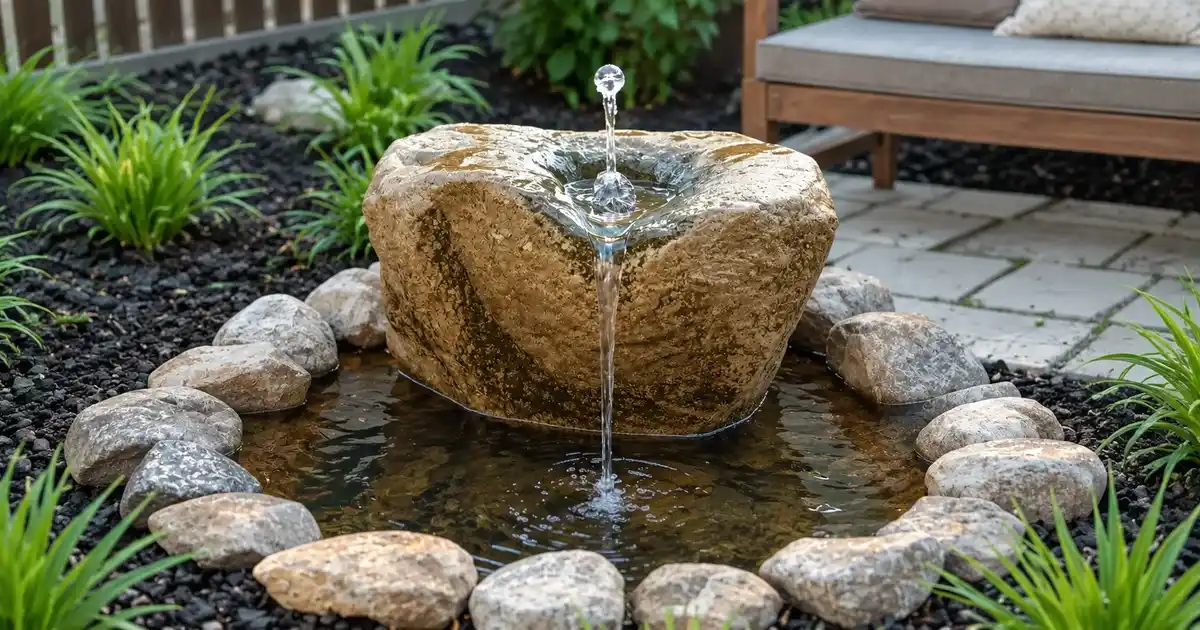
16. Add Soft Water Sounds with a Bubbling Rock
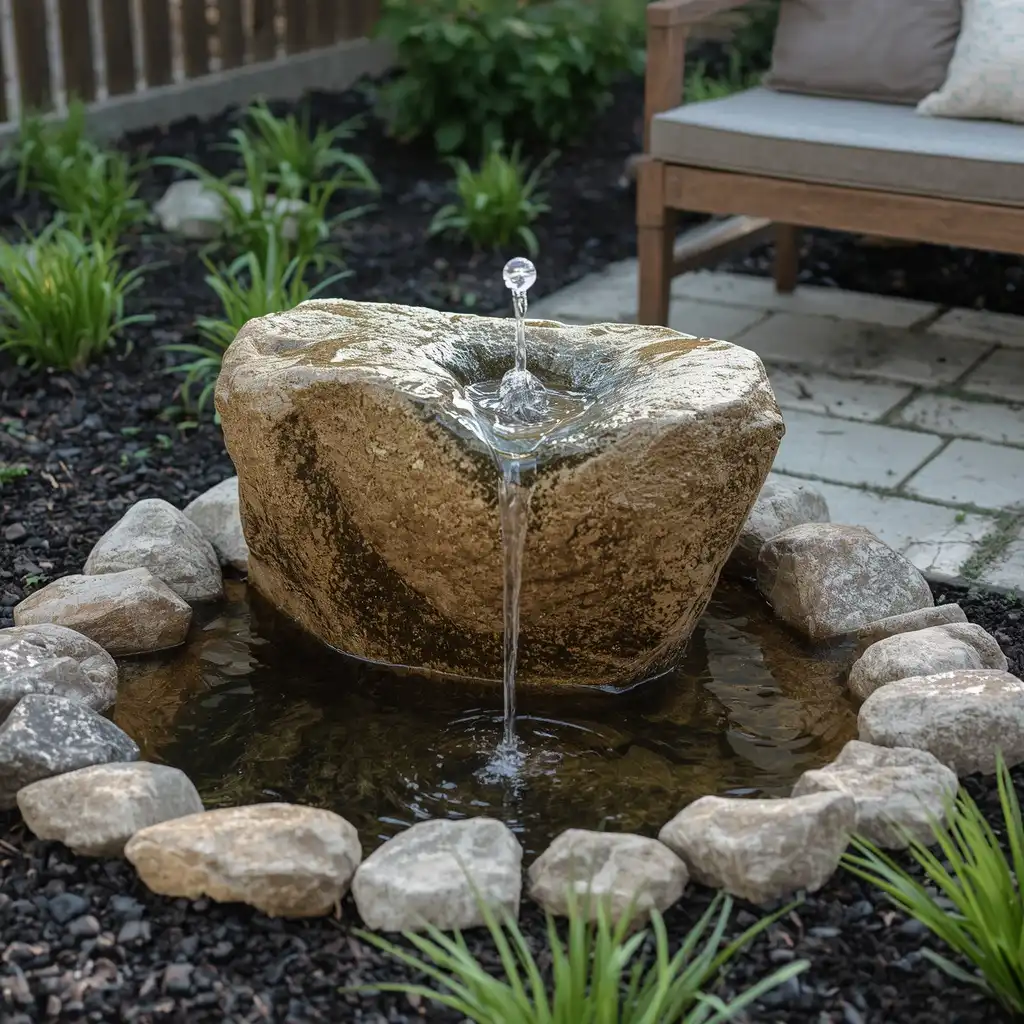
A bubbling rock adds gentle sound without the open water of a deep pond. It can work beside a patio, bench, or front entrance.
The basic system uses a hidden water basin, a strong cover, a pump, and a drilled stone. Water moves up through the rock and returns to the basin below.
Cover the basin with stones so the equipment stays out of sight. Leave a way to reach the pump for cleaning.
Use outdoor-rated electrical parts. Keep cords and connections dry. Check local water rules before adding the feature.
Think about child and pet safety, even when the water looks shallow.
Best for: Seating areas and small patios
Skill level: Medium to hard
Cost: Medium to high
Care: Medium
17. Support Bees and Butterflies with a Pollinator Rock Garden
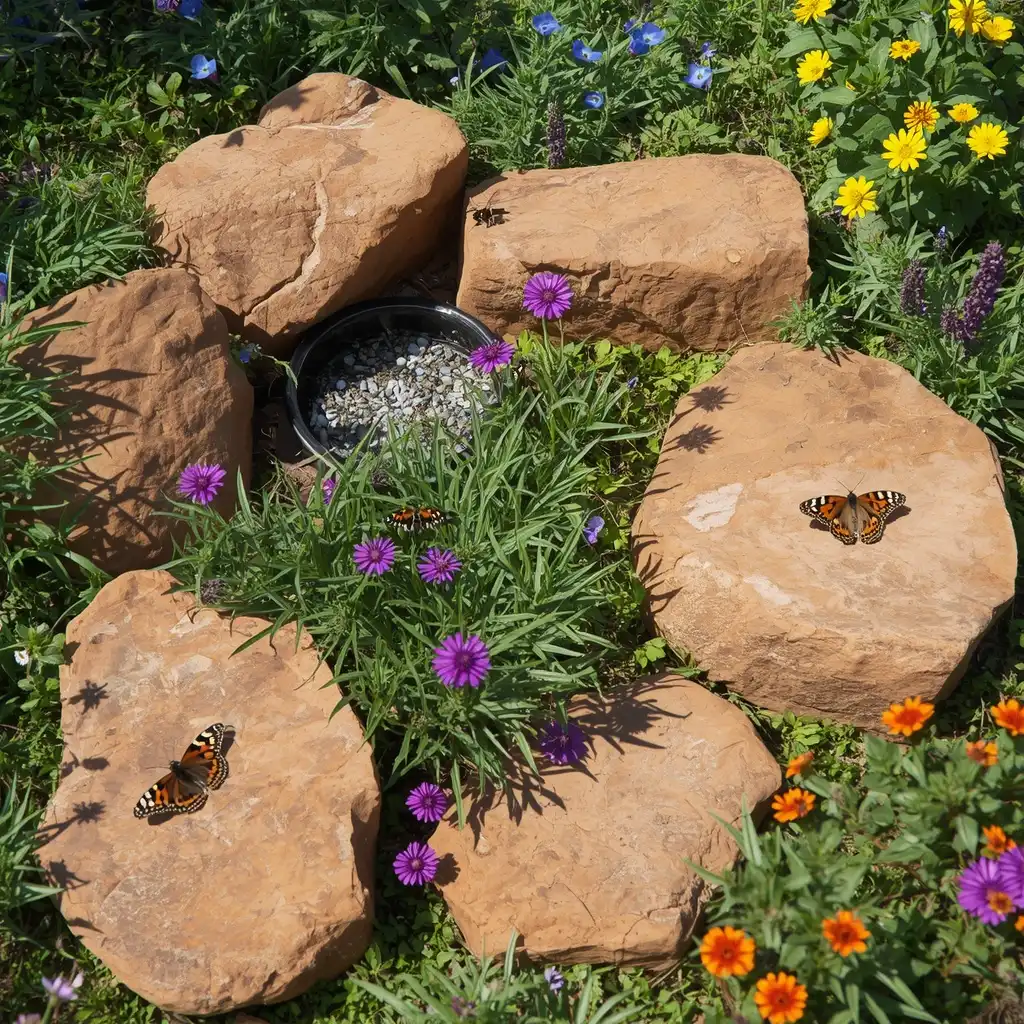
Warm stones and flowering plants can create useful spaces for bees, butterflies, and other small garden visitors.
Choose a sunny place. Add flat stones where insects can rest and warm their bodies. Leave a few small gaps between rocks for shelter.
Plant native flowers that bloom at different times. This can provide food across more of the growing season. Your local extension office or native plant group can help you choose the right plants.
Avoid spraying pesticides near the area. A shallow dish filled with clean water and pebbles may help, but change the water often.
Best for: Wildlife-friendly yards
Skill level: Easy
Cost: Low to medium
Care: Medium
Choose a design that solves a problem you already have. The best option may grow herbs, manage water, support wildlife, or give you a peaceful place to sit.
How to Match Rocks and Plants Without Making the Garden Look Busy
A common mistake is choosing every plant and stone as a separate item. The pieces may look good alone but clash once placed together.
Use two or three rock sizes.
Large rocks create the main structure. Medium stones connect the larger pieces. Gravel covers open soil and gives the garden a finished surface.
Try to stay within one rock color family. You can mix shades, but avoid using many stones that look unrelated. Rocks from local suppliers often fit the natural look of the area.
Match plants to the site rather than choosing them by appearance alone. Check:
- Daily sunlight
- Soil drainage
- Summer heat
- Winter cold
- Rain levels
- Mature plant size
Creeping thyme may work between path stones in sunny areas. Hardy sedum can fit beside warm rocks. Dwarf grasses can soften the base of a large boulder. Moisture-tolerant plants may suit the edge of a rain basin.
Leave open space between new plants. A small plant may double or triple in size after a few growing seasons.
Buy fewer plants at first. You can fill any remaining gaps after you see how the garden develops.
How to Build a Simple Rock Garden in 9 Steps
Build from the largest parts to the smallest details. This helps you avoid moving gravel and plants each time a rock needs to change.
- Mark the shape.
Use rope, a hose, or landscape paint. View the shape from your windows and main seating area. - Remove weeds and unwanted grass.
Dig out deep roots. Covering live weeds with gravel may slow them down, but many will return. - Check the slope.
Make sure water moves away from your home, shed, or fence posts. - Prepare the soil.
Add the right soil for your plants. Succulents need faster drainage than many flowering plants. - Place the largest rocks.
Set part of each stone below the soil line. This makes it look more natural and improves stability. - Add medium stones.
Use them to link the main rocks. Avoid placing every stone at the same angle. - Plant the area.
Give each plant room to reach its mature size. Keep roots covered but do not bury plant crowns. - Spread the gravel.
Add a steady layer across bare soil. Keep it away from tree trunks, woody stems, and the center of small plants. - Water and inspect the area.
Look for loose rocks, washed gravel, or places where water collects.
Tools You May Need
- Garden shovel
- Hand trowel
- Steel rake
- Wheelbarrow
- Strong gloves
- Measuring tape
- Hose or rope
- Hand tamper
- Level
- Hand truck
- Lifting straps
Ask for help when moving heavy rocks. Wear closed shoes and gloves. Contact local utility services before deep digging.
8 Rock Garden Mistakes That Create More Work
A rock garden may look good on the first day but become hard to care for later. Most problems begin with poor placement or the wrong plant choices.
1. Using One Rock Size
A bed filled with the same small stones can look flat. Add at least one larger feature rock and a few medium stones.
2. Leaving Large Rocks on Top of the Soil
A loose boulder may move or look out of place. Set part of it into the ground.
3. Mixing Too Many Colors
Red, white, black, and brown stones in one small bed may compete for attention. Choose a simple color group.
4. Blocking Water
A solid row of stones can trap rainwater. Leave a safe path for water to move through or around the area.
5. Buying Plants That Grow Too Wide
Check the mature size on the plant label. A small shrub may hide every rock after a few years.
6. Piling Gravel Against Stems
Gravel can trap heat and moisture against plants. Leave a small clear ring around each stem or crown.
7. Expecting Fabric to Stop Every Weed
Landscape fabric may slow weeds for a time. Dust and soil can still collect above it, which gives new weed seeds a place to grow.
8. Building Unsafe Stone Walls
Loose walls can fall. Get help when the structure is tall, carries soil weight, or sits beside a busy path.
Fixing scale, drainage, and plant spacing at the start is easier than rebuilding the whole area later.
How to Keep Your Rock Garden Clean with Less Work
Low maintenance does not mean no maintenance. A small amount of regular care can stop weeds and fallen leaves from taking over.
Spring Tasks
- Reset rocks moved by frost or heavy rain.
- Pull young weeds.
- Cut back dead plant growth.
- Check for blocked drainage paths.
Summer Tasks
- Water new plants during dry periods.
- Check plants near dark rocks for heat stress.
- Trim growth that covers paths.
- Remove weeds before they produce seeds.
Fall Tasks
- Rake or blow heavy leaf buildup from gravel.
- Clear dry creek beds and drainage channels.
- Remove dead annual plants.
- Clean pumps and water basins.
Winter Tasks
- Move tender container plants indoors when needed.
- Drain water equipment in freezing climates.
- Avoid harsh ice-melting products near plants.
- Check loose stones after storms.
Add more gravel only where it has become thin or washed away. Adding a fresh layer every year can slowly raise the surface too high around plants and paths.
Start with One Small Part of Your Yard
A rock garden can fill a bare corner, improve a path, soften a slope, or make a patio feel more complete. It can also help you reduce grass, grow herbs, manage light runoff, or support local pollinators.
Start with the space that causes you the most trouble. Check its sun, soil, drainage, and size. Then choose rocks and plants that fit those conditions.
You do not need to finish the whole yard at once. Mark one small area and place the largest rock first. Add plants and gravel after the main shape feels right.
These DIY rock garden ideas can help you turn an empty or difficult outdoor space into a useful part of your yard.