
That utility box, trash bin, or tangled hose may seem small. Yet it can pull attention away from your whole garden.
You might have healthy plants and a clean patio. But an exposed AC unit, damaged fence, or messy compost pile can make the space feel unfinished.
The good news is that you do not need a full yard makeover. Disguising eyesores in the yard often takes a few plants, a simple screen, fresh paint, or better storage.
The right fix depends on what you need to hide. It also depends on how often you need to reach it. Some objects need open airflow. Others need clear access for repair workers.
This guide covers 18 practical ideas for hiding unattractive garden features. You will find options for large yards, small patios, rental homes, and tight budgets.
You will also learn what not to cover. That part matters because a pretty screen should never create a safety or drainage problem.
Before Disguising Eyesores in the Yard, Check Safety
Before you buy plants or build a screen, look closely at the object you want to hide.
Ask yourself three questions:
- Does it need airflow?
- Will someone need regular access to it?
- Could a screen block water, controls, or warning labels?
An outdoor AC unit needs open space around it. Utility meters, valves, and electrical boxes may need quick access. Drain covers must remain clear so water can move away from your home.
Do not seal these features inside a tight box.
Instead, hide them from the main viewing angle. You may only need a screen on one or two sides.
Take photos of the eyesore from three places:
- Your main seating area
- The most-used door or path
- The street or property entrance
These photos will show where the problem is most visible.
Next, measure the object and the open space around it. Check the manufacturer’s instructions before placing anything near mechanical equipment. Contact your utility company if you are unsure about a meter or service box.
Once safety is clear, choose one of three approaches. You can hide the object, help it blend in, or turn the area into a useful feature.
Use Plants to Hide Yard Eyesores Naturally
Plants soften hard lines and help outdoor equipment blend into the garden. They work well when you want a screen that feels calm and natural.
The main challenge is choosing plants that fit the space after they mature.
1. Plant a Small Evergreen Shrub Screen
Best for: Utility boxes, tanks, plain fences, and equipment
Cost: Medium
Difficulty: Easy to moderate
Watch out for: Mature plant size and service access
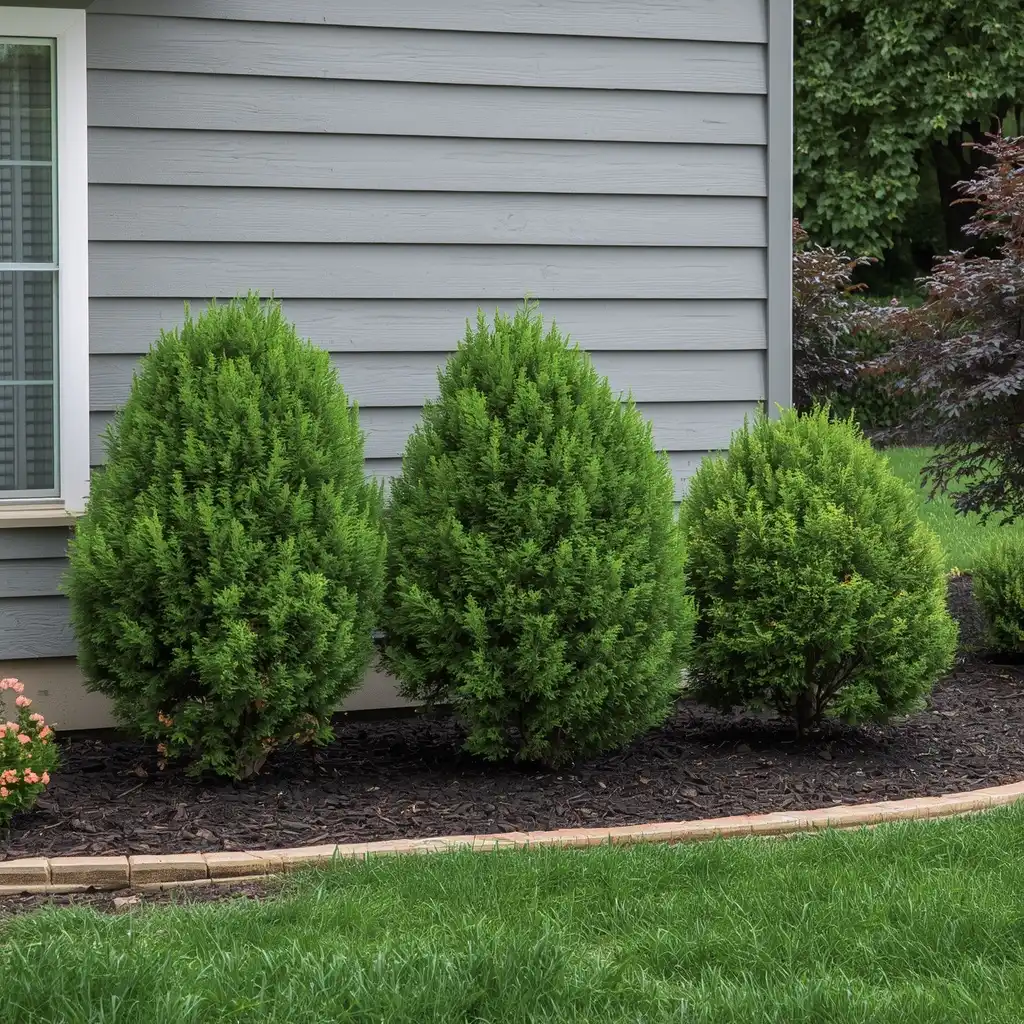
Compact evergreen shrubs provide coverage through every season. They can hide a low utility box or soften the view of bulky equipment.
Choose plants that suit your climate, sunlight, and soil. Dwarf yew, inkberry holly, compact juniper, dwarf pittosporum, and podocarpus may work in suitable regions.
Read the plant label before buying. A shrub that looks small at the garden center may become wide and dense within a few years.
Leave a clear path to meters, valves, and service panels. Do not plant shrubs directly against equipment or your home’s foundation.
A row of three compact shrubs often looks more natural than one large plant placed in front of the problem.
2. Use Ornamental Grasses for a Softer Screen
Best for: Low boxes, tanks, fence gaps, and wide open areas
Cost: Low to medium
Difficulty: Easy
Watch out for: Seasonal changes and spreading roots
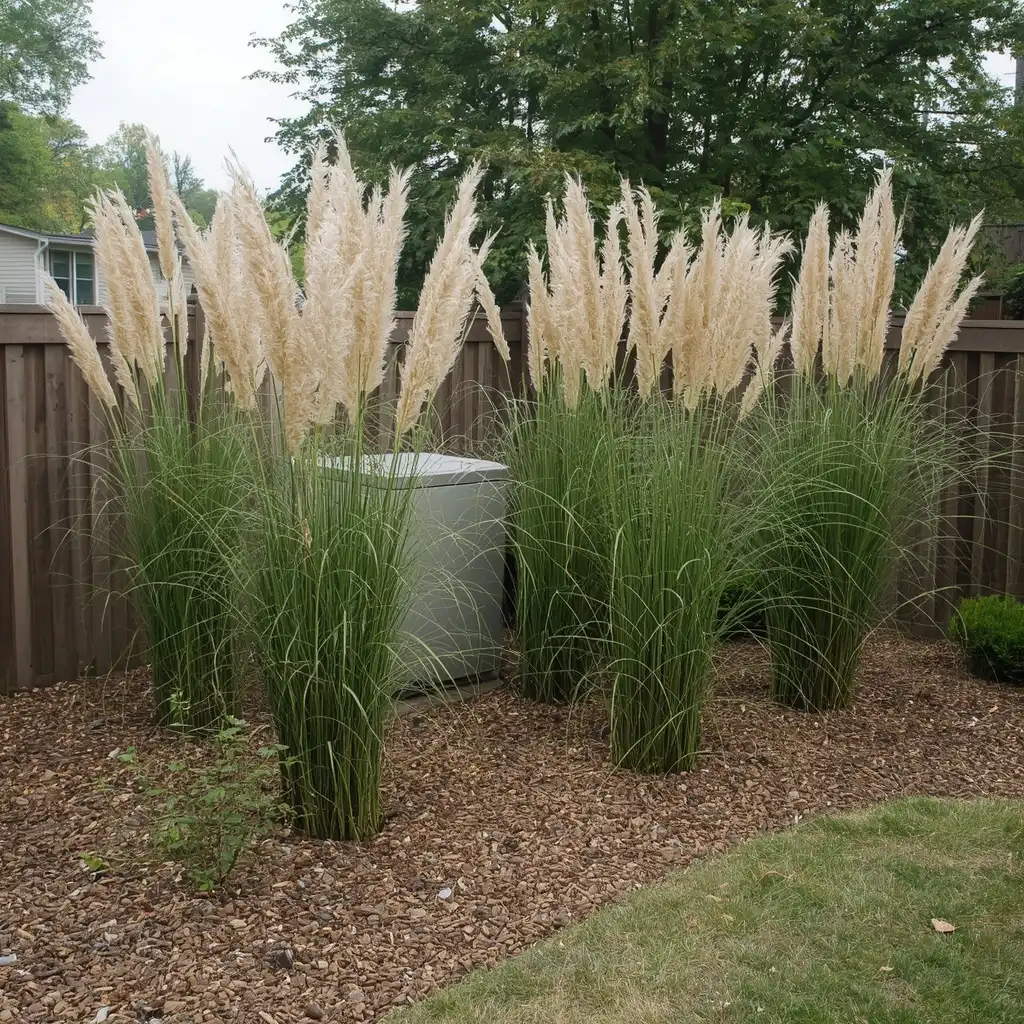
Tall grasses can hide unattractive features without creating a heavy wall. Their thin leaves add movement and texture to the yard.
Clumping grasses are often easier to control than spreading types. Possible choices include switchgrass, feather reed grass, fountain grass, and native grasses suited to your area.
Some grasses turn brown in winter. This can still look attractive, but it may provide less cover after the stems are cut back.
Use grasses in groups of three or five. A single plant may look lost beside a large utility feature.
Keep dry leaves away from hot equipment. You should also leave enough space for repair work.
3. Add a Trellis With a Climbing Plant
Best for: Plain walls, old fences, and narrow side yards
Cost: Low to medium
Difficulty: Moderate
Watch out for: Invasive vines and surface damage
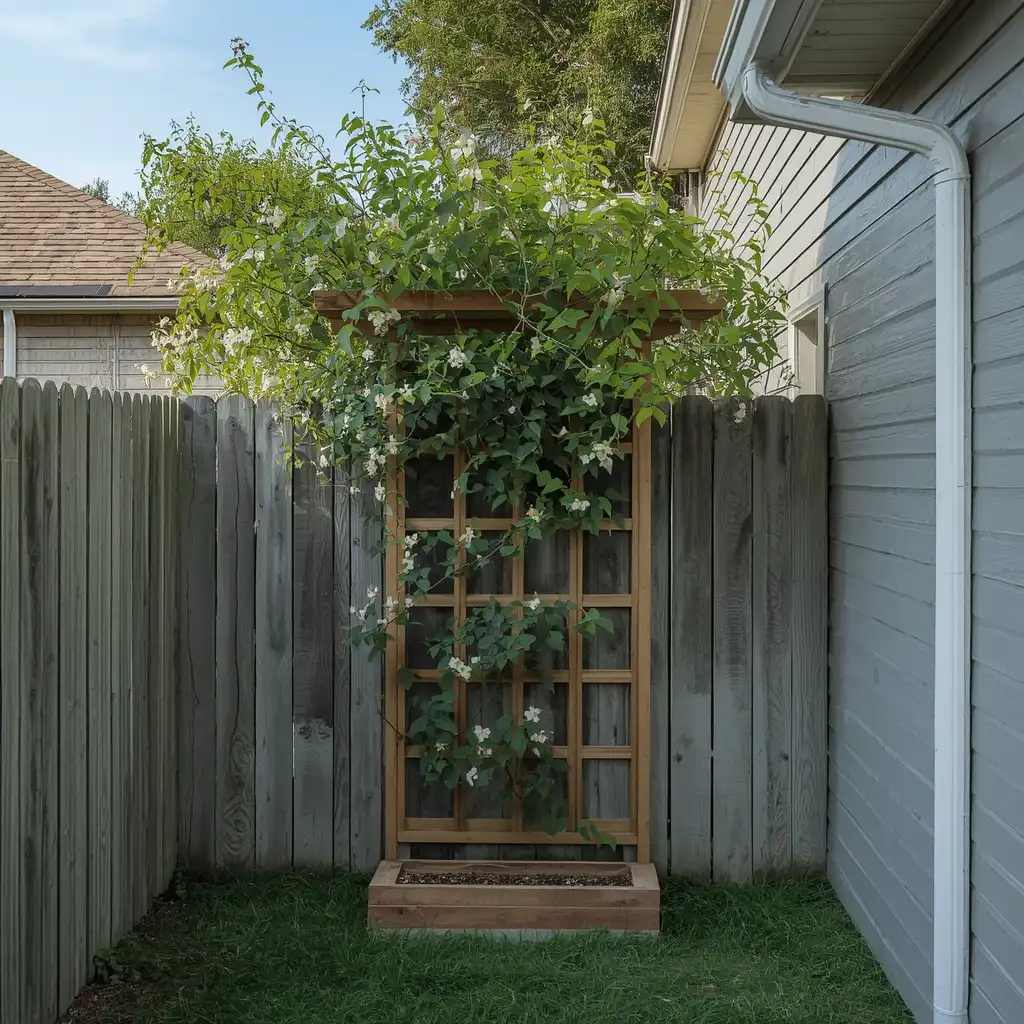
A freestanding trellis creates height without taking up much ground space. It can hide a plain shed wall, stained fence panel, or awkward corner.
Place the trellis a short distance in front of the surface. This allows air to move and makes repairs easier.
Clematis, climbing roses, star jasmine, and suitable honeysuckle varieties can add flowers and cover. Check whether a plant is invasive in your area before planting it.
Avoid letting thick vines grow into gutters, roof gaps, vents, or siding. Fast-growing vines can become a new problem when they are not pruned.
For an easy-care option, use a trellis with a narrow planter box. You can move or replace the planting without touching the wall.
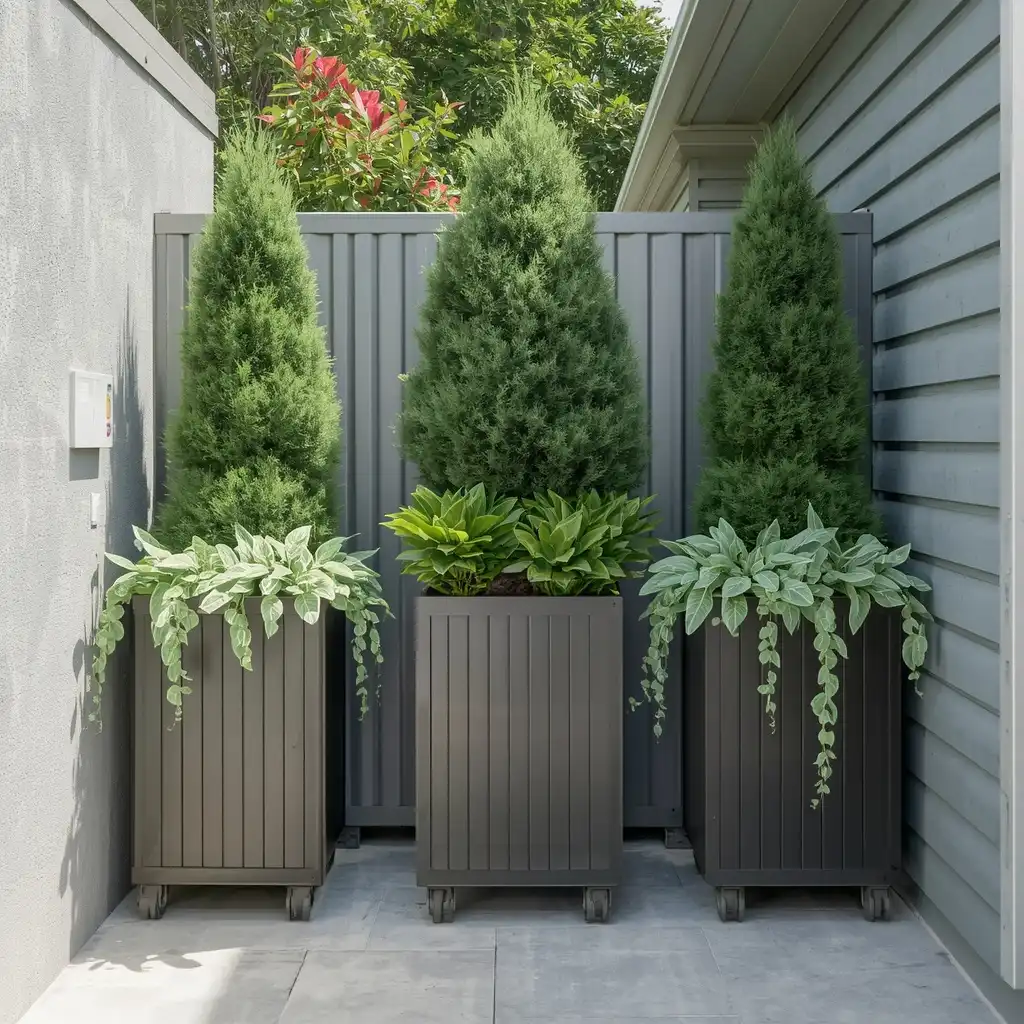
4. Arrange Tall Containers as a Movable Screen
Best for: Renters, patios, small yards, and utility access
Cost: Low to medium
Difficulty: Easy
Watch out for: Watering and strong wind
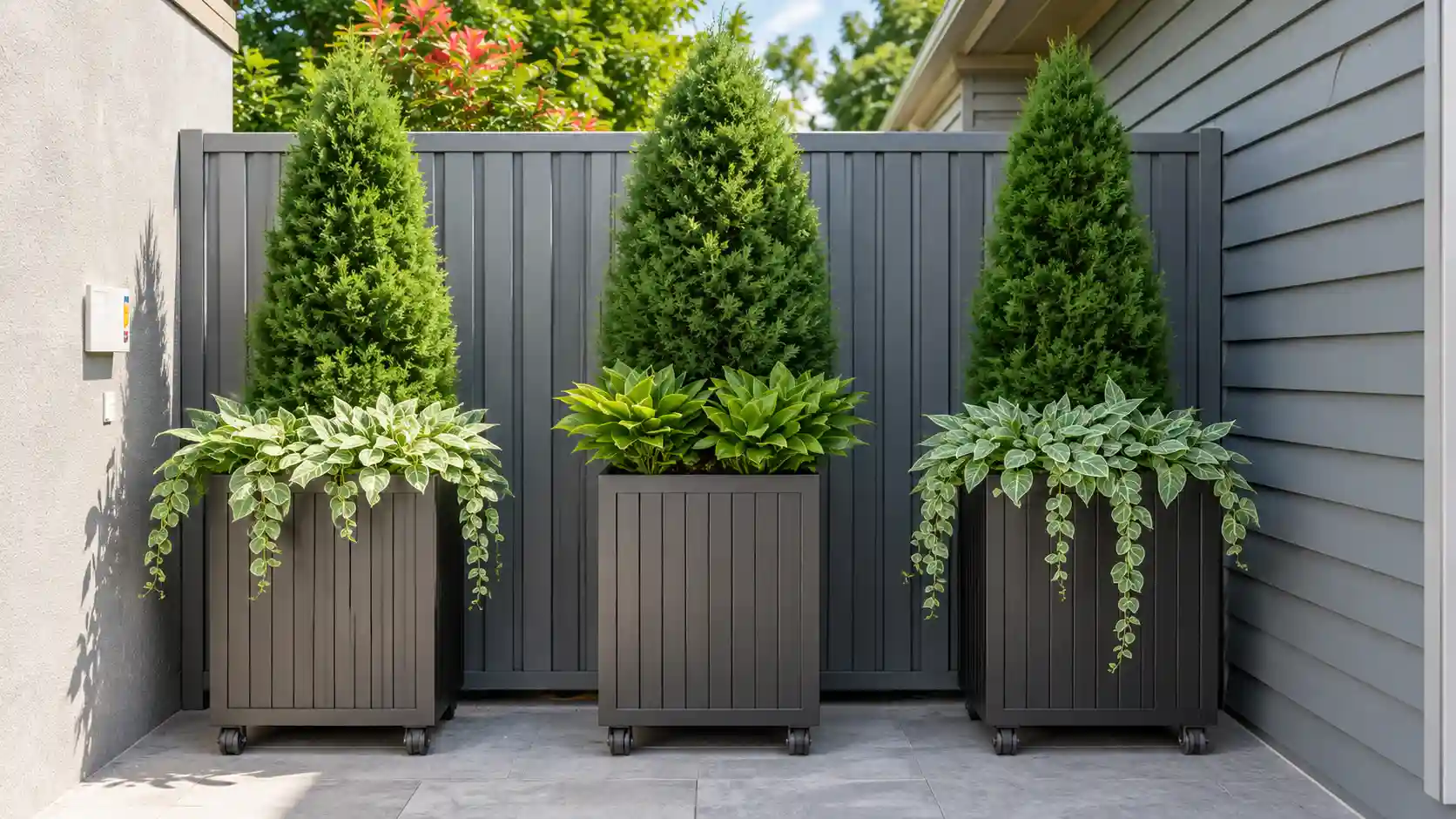
Tall containers are one of the easiest landscaping ideas to hide ugly areas. They provide fast cover and can be moved when someone needs access.
Use three or five pots rather than one. Different heights will make the group feel more natural.
Place tall plants in the back. Add medium plants in the center and trailing plants near the edges.
Choose lightweight pots if you expect to move them often. Add locking plant stands or wheeled bases under heavy containers.
This method works well around a low utility box, beside a patio, or in front of a plain wall.
Containers dry out faster than garden beds. Check the soil often during hot weather.
Build Smart Screens for Bins, AC Units, and Equipment
A built screen gives quick and dependable cover. It can also match your fence, deck, or house trim.
The key is to avoid building a tight box around equipment.
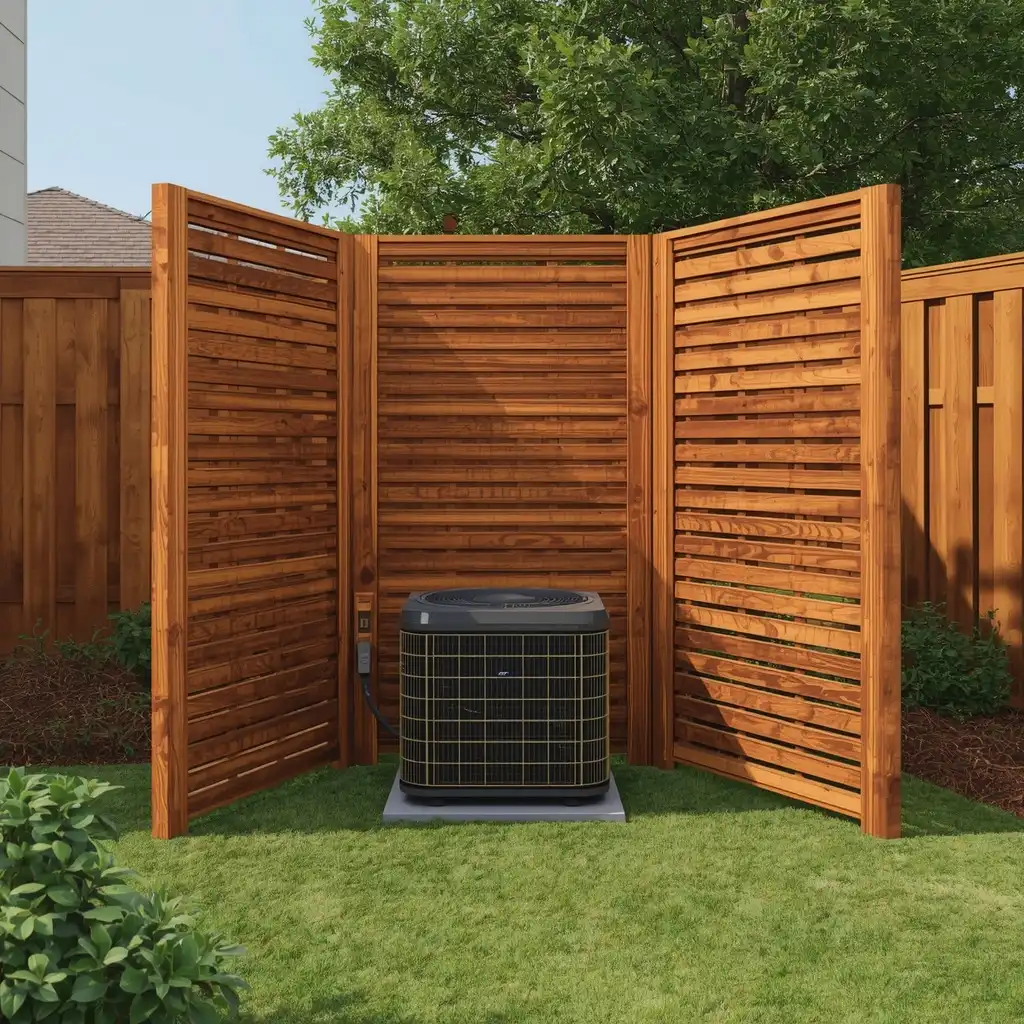
5. Install a Three-Sided Slatted Wood Screen
Best for: AC units, pool equipment, and large utility features
Cost: Medium
Difficulty: Moderate
Watch out for: Blocked airflow
A slatted screen hides bulky equipment while allowing air to pass through the gaps.
Keep the top open. Leave the service side open or add a wide hinged panel.
Use outdoor-rated wood, composite boards, screws, and hinges. Cedar and other weather-resistant woods can work well, but they may still need regular care.
Check the equipment manual before choosing the screen’s position. Different systems have different space needs.
Paint or stain the screen to match your fence. This helps it look like part of the yard instead of a separate object.
Do not attach heavy screens directly to equipment. Each panel should have its own support.
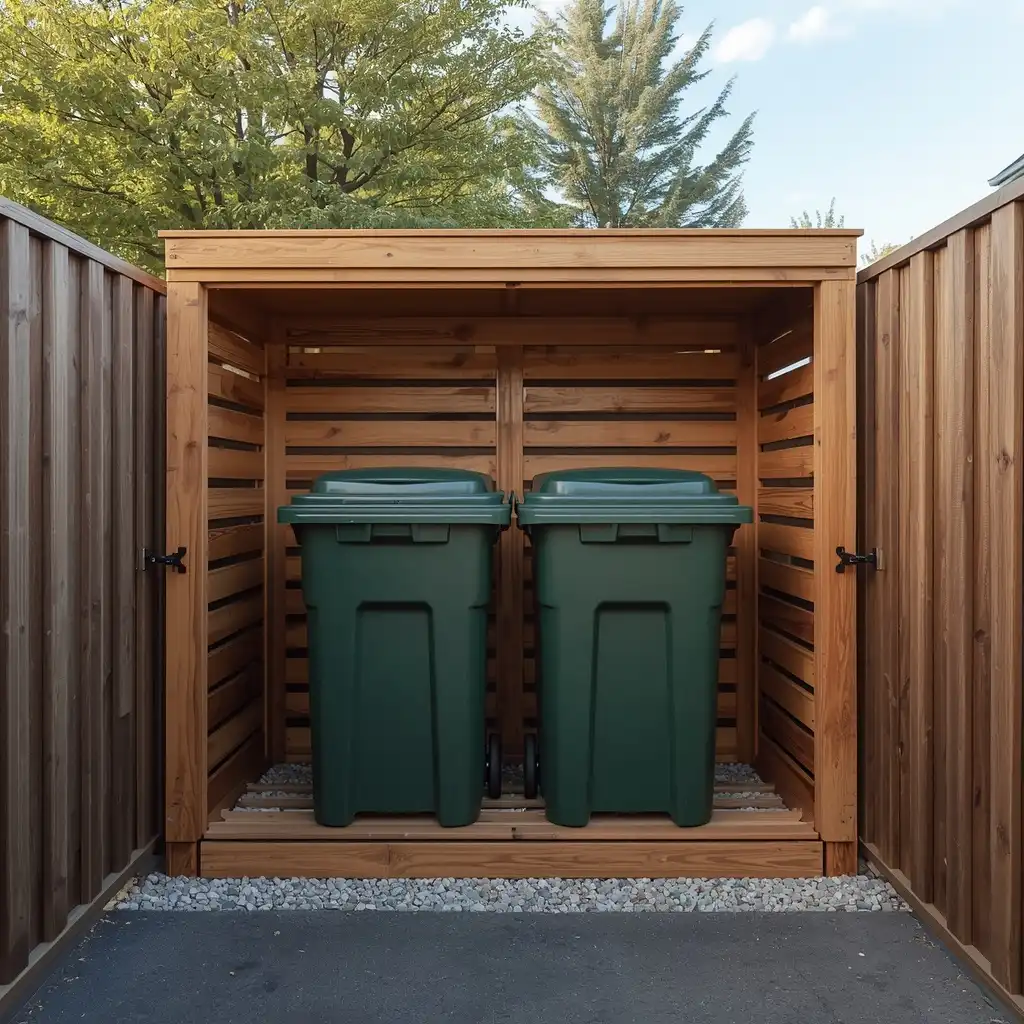
6. Build a Gated Trash-Bin Enclosure
Best for: Trash cans, recycling bins, and side yards
Cost: Medium
Difficulty: Moderate
Watch out for: Narrow gates and poor ventilation
Trash bins are useful, but they rarely improve a garden view. A gated enclosure keeps them together and hides them from the street or patio.
Make the opening wider than the bins. You should be able to roll each bin out without twisting or lifting it.
Place the enclosure on a flat surface. Concrete, pavers, or compacted gravel can make cleaning easier.
Use spaced slats to improve airflow. This can help reduce trapped heat and odors.
Place the enclosure close to the normal collection route. A beautiful bin screen becomes annoying when you must drag heavy bins across the entire yard.
Add a simple latch that adults can open with one hand.
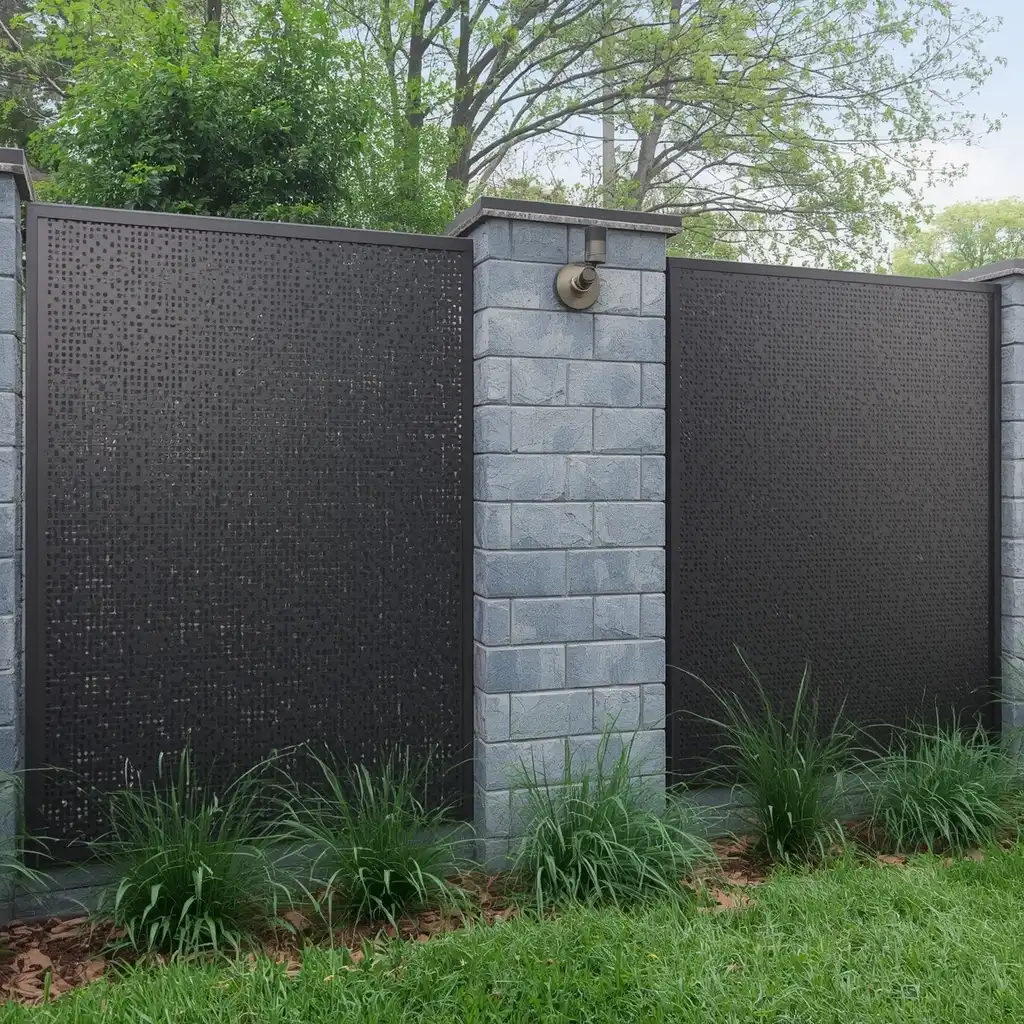
7. Use Decorative Metal Panels for a Modern Look
Best for: Pool equipment, utility areas, and modern homes
Cost: Medium to high
Difficulty: Moderate
Watch out for: Rust and blocked controls
Decorative metal panels can turn a problem area into a design feature. Perforated or cutout patterns allow some air and light to pass through.
Choose a rust-resistant material or an outdoor finish. Dark gray, black, bronze, and soft green often blend well with garden plants.
Use removable panels near meters and equipment. Workers should be able to reach controls without removing a permanent structure.
Repeat the same panel style in another part of the garden. You might use it behind a bench or as a small trellis. This makes the screen feel planned.
One or two large panels usually look calmer than several small panels.
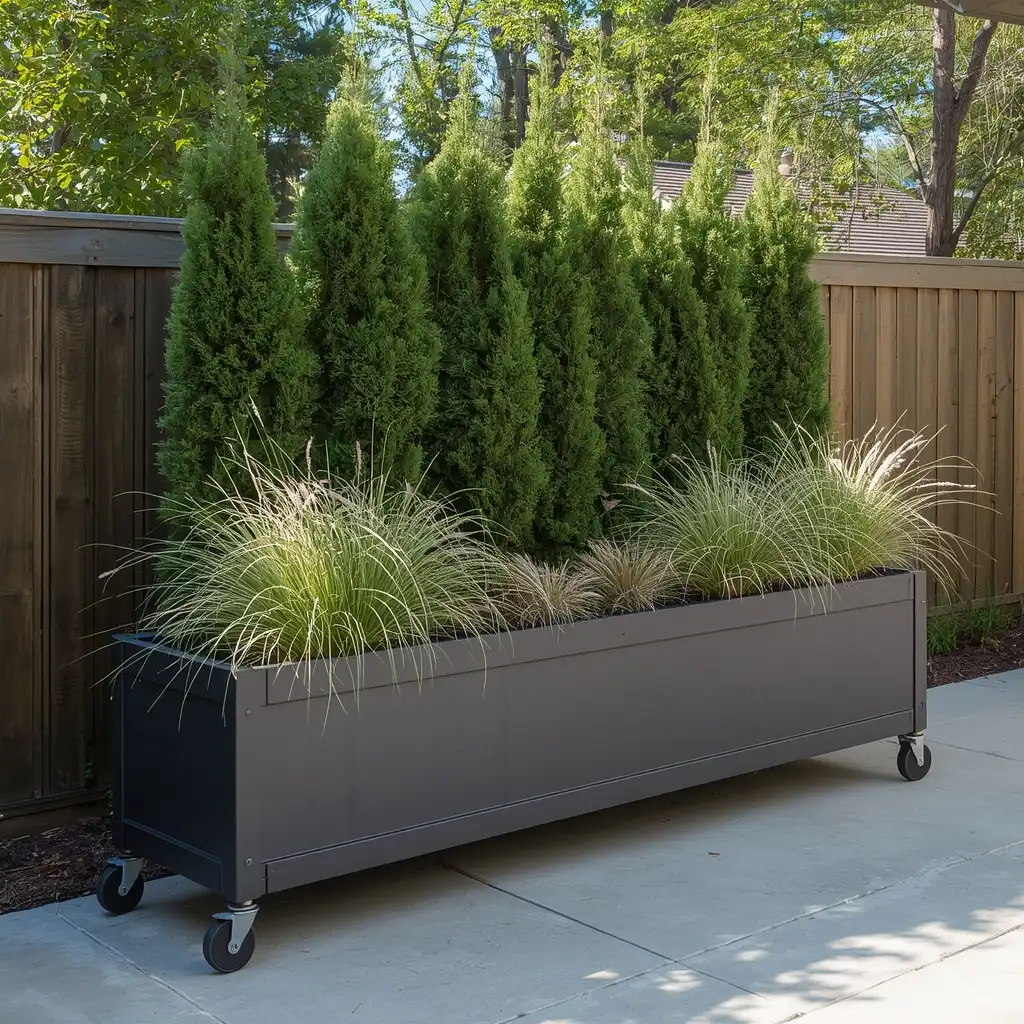
8. Make a Rolling Planter Screen
Best for: Rental homes, temporary screening, and changing layouts
Cost: Medium
Difficulty: Moderate
Watch out for: Weight and wheel strength
A long planter on locking wheels can hide an eyesore and add plants at the same time.
Use a strong planter with a solid base. Soil becomes very heavy after watering, so choose wheels made for the full load.
Tall grasses, narrow evergreens, bamboo-like plants that are safe in containers, and seasonal flowers can create useful cover.
A rolling screen works well near pool equipment, low utility boxes, and areas used for outdoor events.
Move the planter aside when repair work is needed.
Never use a planter or screen to enclose a running generator. Follow all generator instructions for distance, airflow, and safe use.
Turn Ugly Walls, Fences, and Sheds Into Features
Some outdoor surfaces are too large to hide. In that case, improving the surface may work better than placing something in front of it.
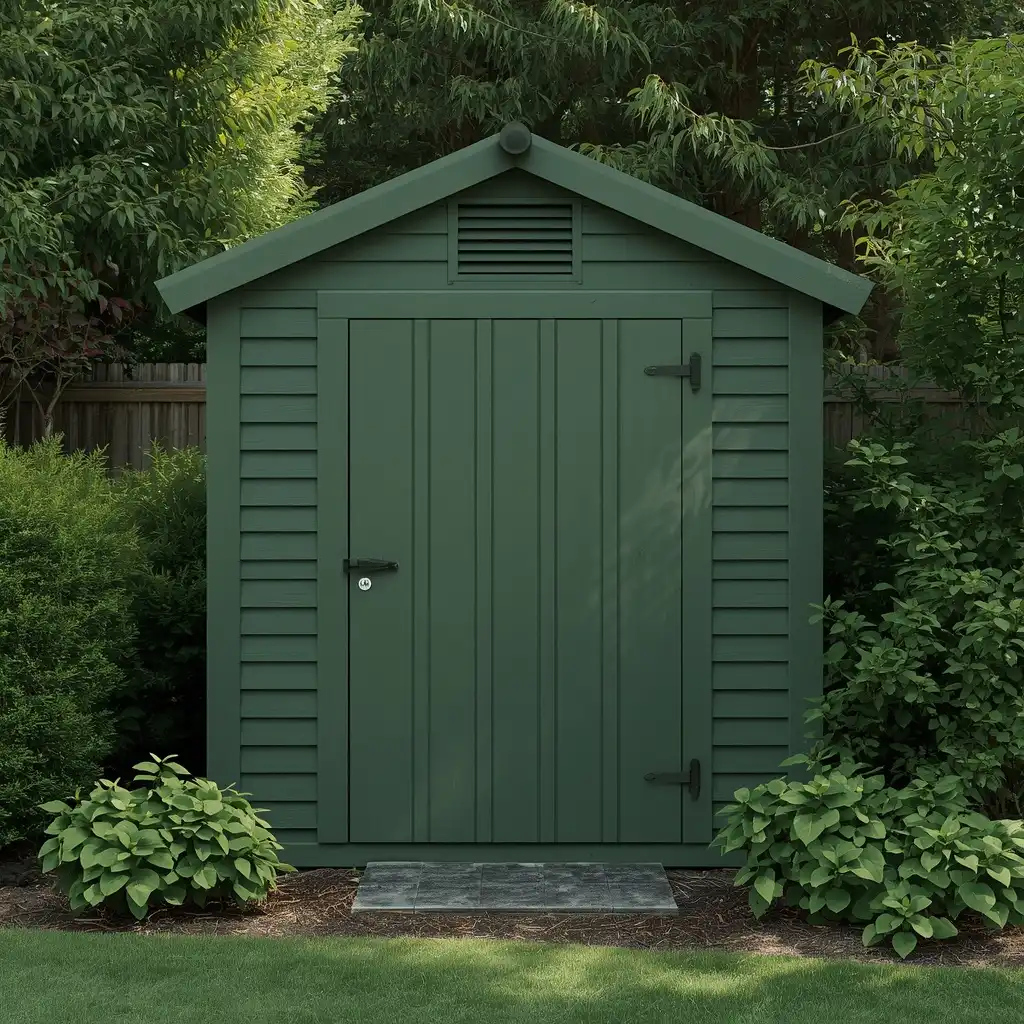
9. Paint the Surface a Color That Blends In
Best for: Sheds, fences, cabinets, and plain walls
Cost: Low
Difficulty: Easy
Watch out for: Moisture, rust, and peeling paint
Paint is often the fastest fix for a large outdoor eyesore.
Deep green can help a shed blend with plants. Charcoal may make a fence fade into the background. Soft brown or gray can work well near stone and wood.
Clean and repair the surface before painting. Paint will not fix rot, rust, or deep cracks.
Use a product made for the material. Wood, metal, masonry, and plastic may need different primers and paints.
Test the color in both sun and shade. A shade that looks soft indoors may appear much brighter outside.
Do not paint over labels, controls, vents, or warning marks on equipment.
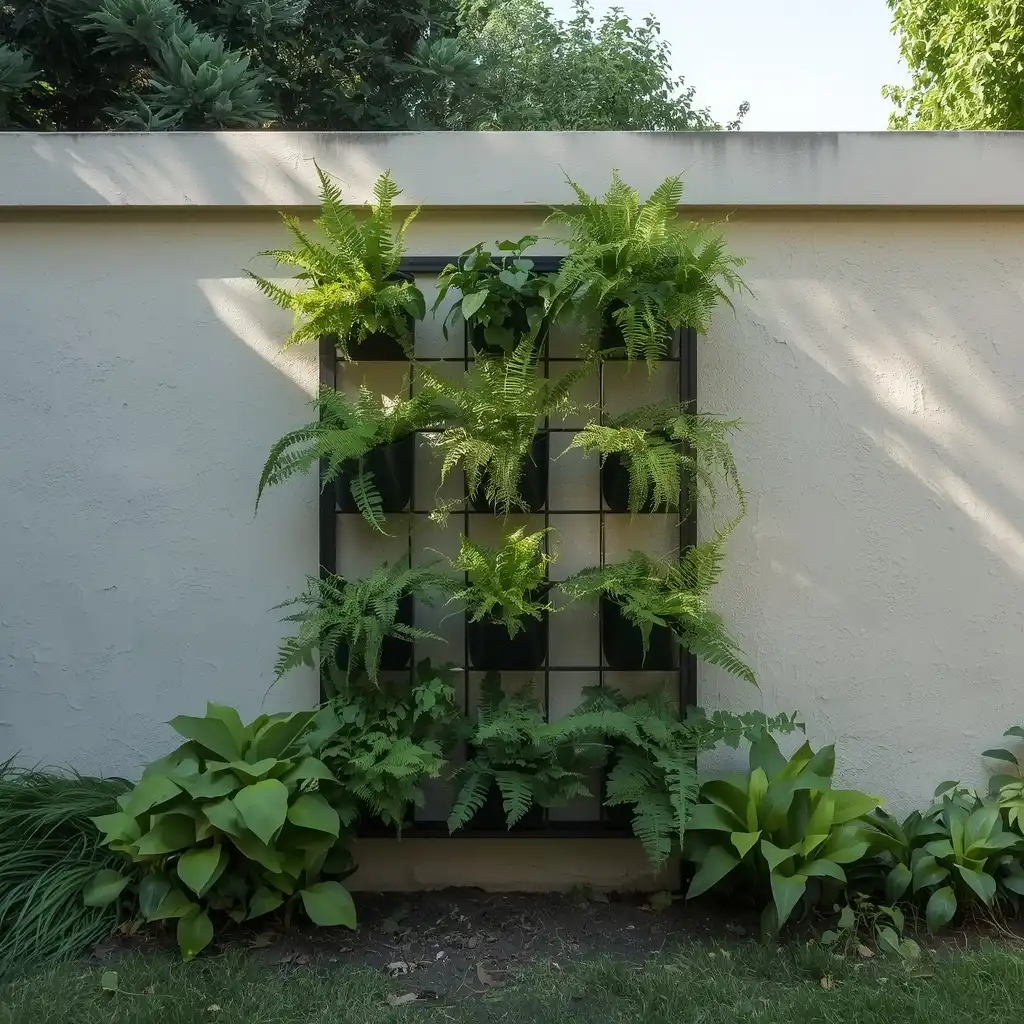
10. Add a Vertical Garden
Best for: Small yards, blank walls, and sunny patios
Cost: Medium to high
Difficulty: Moderate
Watch out for: Water damage and plant care
A vertical garden adds life to a plain surface without using much floor space.
You can use wall planters, planting pockets, stacked pots, or a freestanding frame.
Check whether the wall can hold the full weight of wet soil and plants. Use a freestanding system if you are unsure.
Protect the wall from constant moisture. Leave an air gap and make sure extra water can drain safely.
Choose plants based on the amount of light. Ferns and some leafy plants suit shade. Herbs and many flowers need more sun. Succulents need fast drainage and should not stay wet.
A vertical garden looks good, but it needs regular care. Keep the design simple if you want less work.
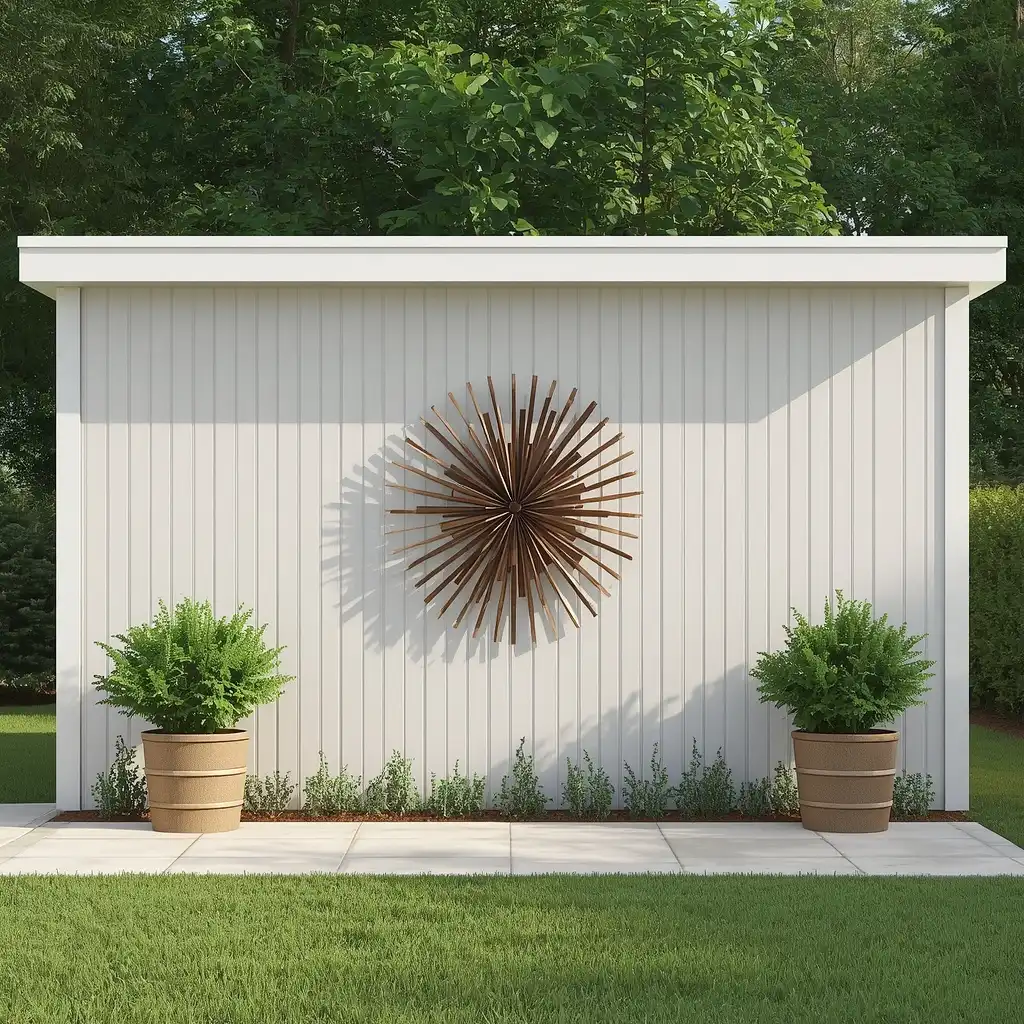
11. Hang One Large Piece of Outdoor Art
Best for: Shed walls, patios, and covered garden areas
Cost: Low to medium
Difficulty: Easy
Watch out for: Weather damage and weak fittings
One strong feature can shift attention away from an unattractive wall.
Try a metal sculpture, weatherproof artwork, ceramic tile panel, decorative shutter, or painted wood design.
Choose a size that fits the wall. Tiny decorations may make a large blank surface feel even more cluttered.
Use outdoor fittings that can handle wind and rain. Heavy art must be fixed to a secure part of the wall.
Decide whether you want to blend the surface or feature it.
To blend it, use simple colors and plants. To feature it, choose one bold piece and keep the area around it calm.
Hide Hoses, Tools, and Compost Without More Clutter
Small loose items can make a yard look messier than one large structure. The best fix is often better storage.
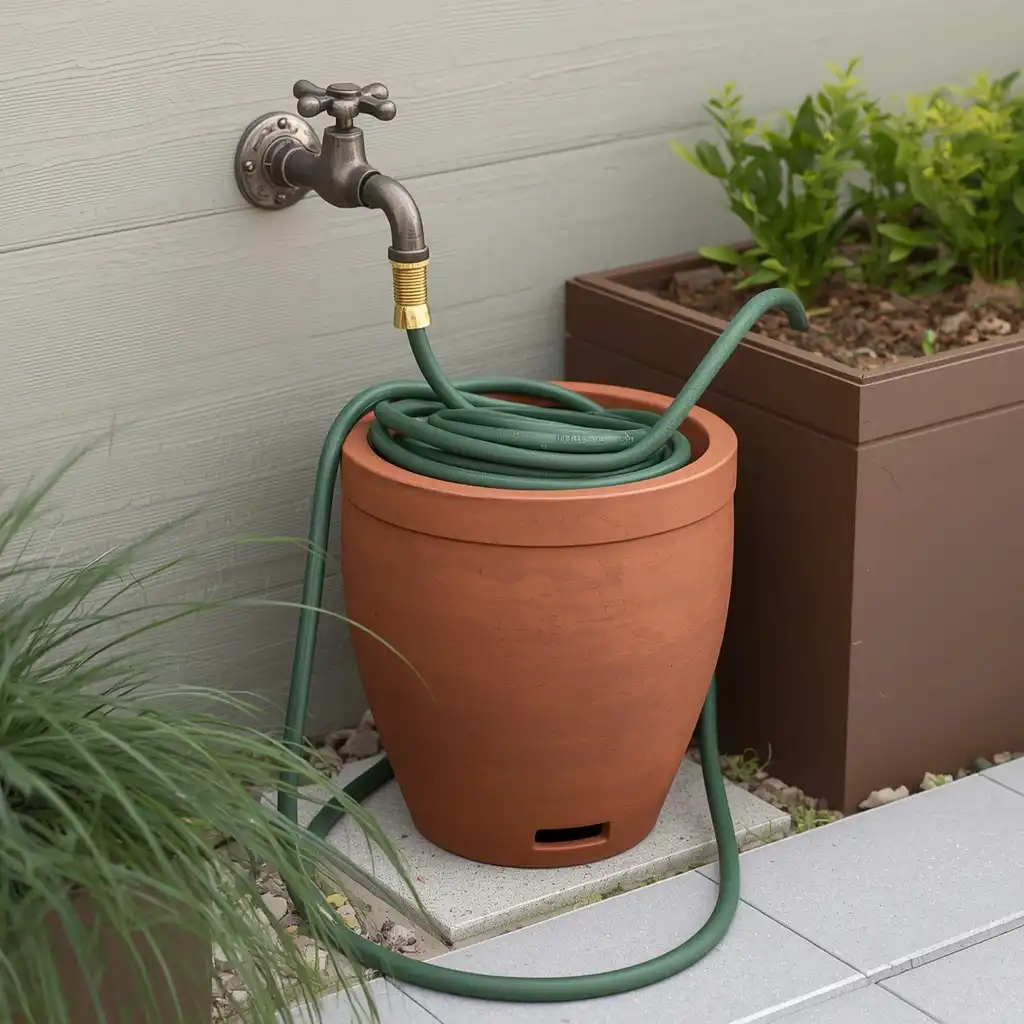
12. Store the Garden Hose in a Decorative Pot
Best for: Patios, front yards, and small gardens
Cost: Low
Difficulty: Easy
Watch out for: Poor drainage and hose kinks
A large hose pot keeps the hose close at hand without leaving it across the ground.
Choose a pot with an opening near the base for the hose connection. It also needs drainage holes.
Coil the hose loosely. Tight coils can cause bends and make the hose harder to use.
Match the pot with nearby containers or the color of your home.
A wall-mounted reel is another good option. A covered reel gives a cleaner look and protects the hose from direct sun.
Place the storage close to the tap. This stops the hose from crossing paths and planting beds.
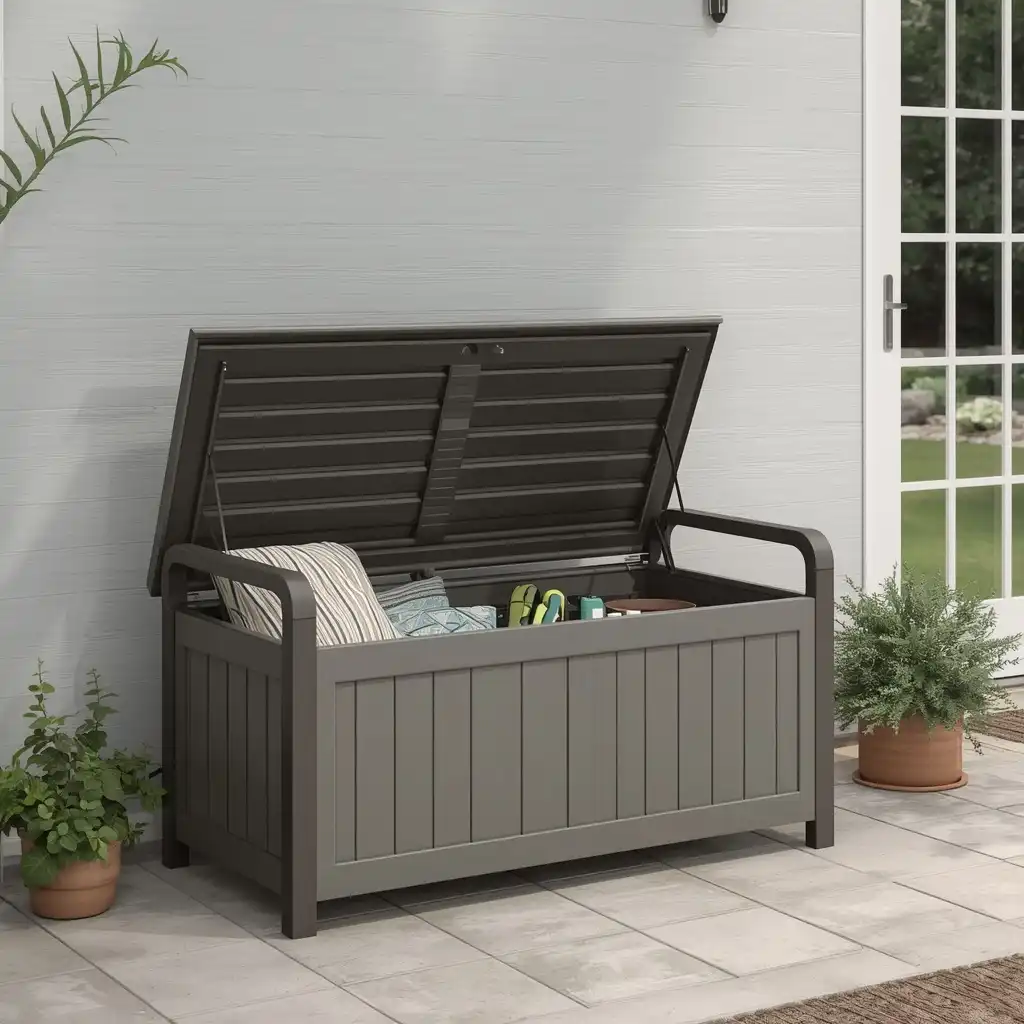
13. Add a Storage Bench
Best for: Patios, decks, and family yards
Cost: Medium
Difficulty: Easy
Watch out for: Damp storage and unsafe items
A storage bench gives you seating and a place to hide outdoor clutter.
Use it for gloves, small tools, watering cans, toys, or outdoor cushions. Make sure wet items can dry before you close the lid.
Choose a bench made for outdoor use. Look for drainage or airflow around the storage area.
Do not store fuel, pool chemicals, pesticides, or other dangerous products inside a general seating bench.
Place the bench near the area where you use the stored items. A bench beside the back door can hold daily garden tools. One near the patio can store cushions and toys.
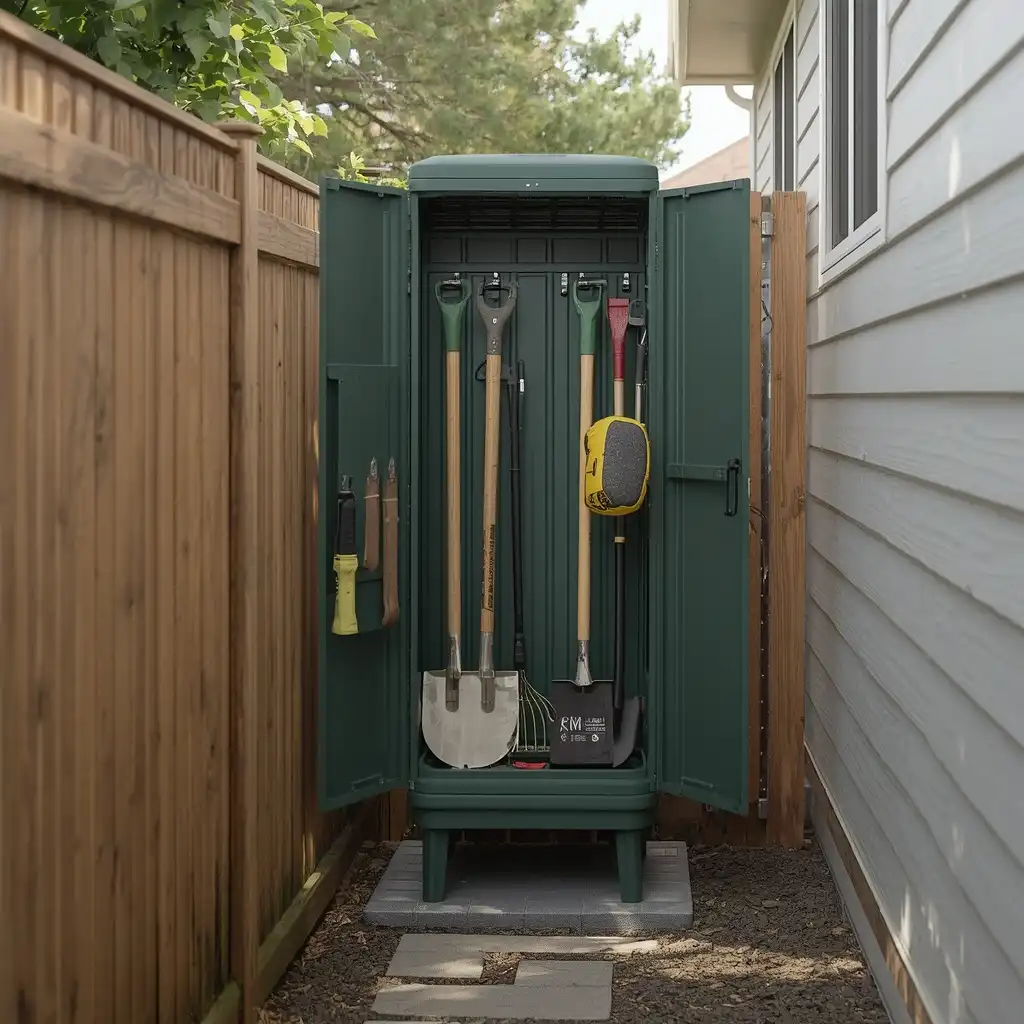
14. Install a Slim Outdoor Tool Cabinet
Best for: Narrow side yards and small storage areas
Cost: Medium
Difficulty: Easy to moderate
Watch out for: Wind and ground moisture
A tall, narrow cabinet uses vertical space without taking over the yard.
Add hooks for hand tools and shelves for pots, gloves, and watering supplies. Store long tools upright so they are easy to reach.
Raise the cabinet slightly above wet soil. A paved or gravel base can reduce moisture damage.
Secure tall cabinets to a stable wall or strong post where local conditions allow. This is important in windy areas.
Choose a lockable design if children may reach sharp tools.
Keep the outside simple. A cabinet painted to match the fence may almost disappear.
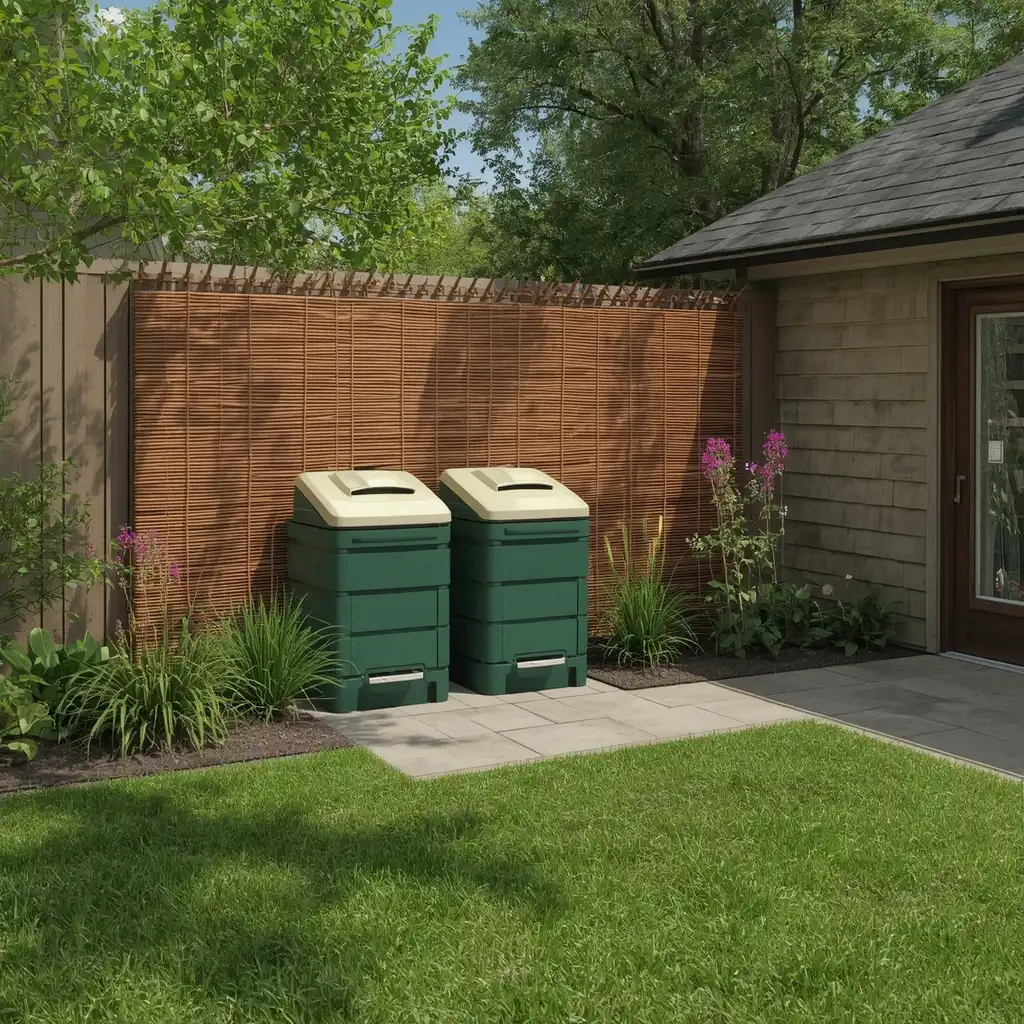
15. Screen the Compost Area With Woven Fencing
Best for: Compost bins, garden work zones, and cottage gardens
Cost: Low to medium
Difficulty: Easy
Watch out for: Blocked airflow
Compost needs air and access. It does not need to sit in full view of your patio.
Use willow panels, timber slats, recycled composite boards, or other outdoor screening materials.
Place the screen between the compost and the main viewing area. You may only need one panel.
Leave enough room to turn the compost and remove finished material. Do not make the space so tight that garden work becomes difficult.
Woven panels suit relaxed and cottage-style gardens. Simple slats work well in modern spaces.
You can also plant herbs or flowers nearby. Keep roots and stems out of the compost access path.
Improve Tree Stumps, Drains, and Awkward Corners
Some yard eyesores cannot be hidden behind a standard screen. These features need a more creative fix.
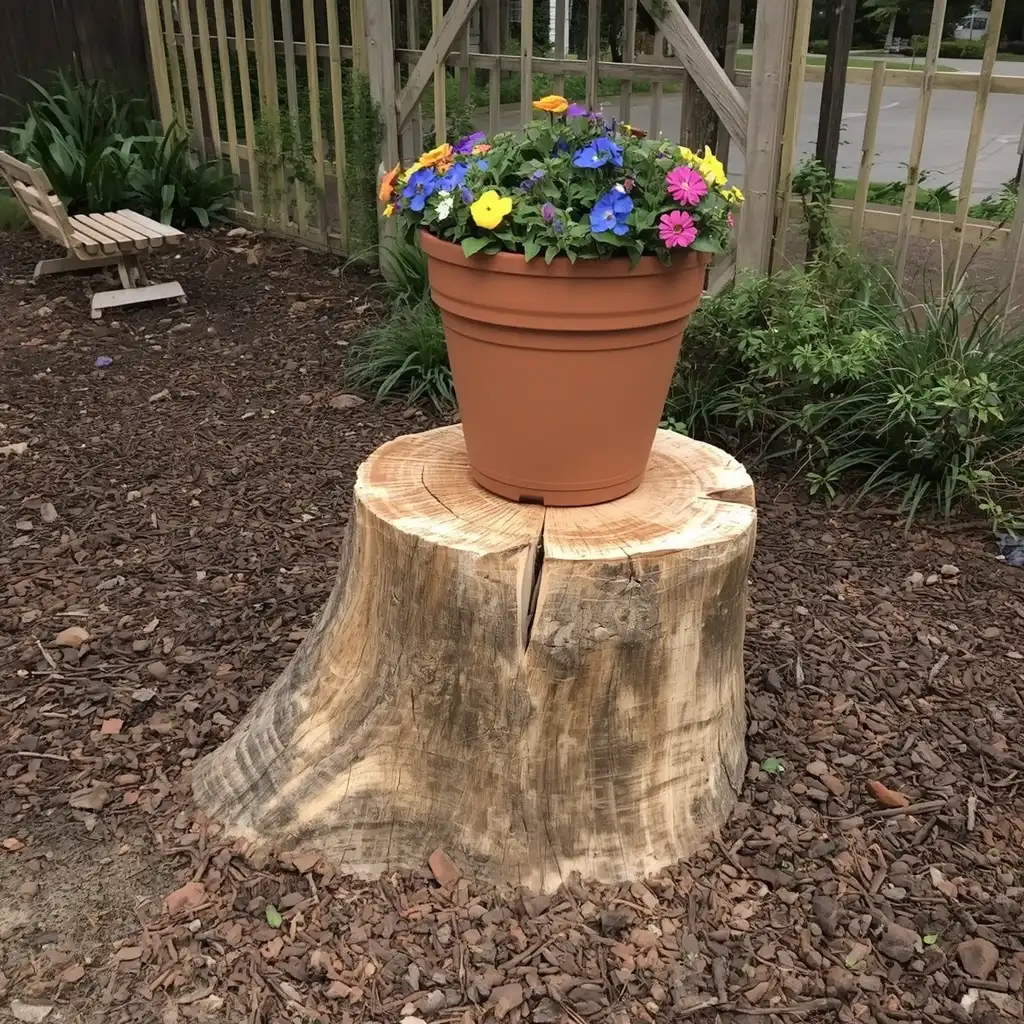
16. Turn a Safe Tree Stump Into a Planter or Table
Best for: Stable stumps away from buildings
Cost: Low
Difficulty: Easy
Watch out for: Decay, pests, and loose wood
A low tree stump can become a plant stand or small outdoor table.
First, check its condition. The wood should feel stable and firm. Do not keep a stump that is loose, badly rotted, or damaged by pests.
Place a removable pot on top rather than cutting a deep planting hole. A removable pot is easier to water and replace.
A flat stump near a seating area may work as a rustic side table. Sand rough edges and check for splinters.
Speak with a certified arborist if the stump is close to your home, a wall, pipes, or paving.
Safety matters more than keeping a decorative feature.
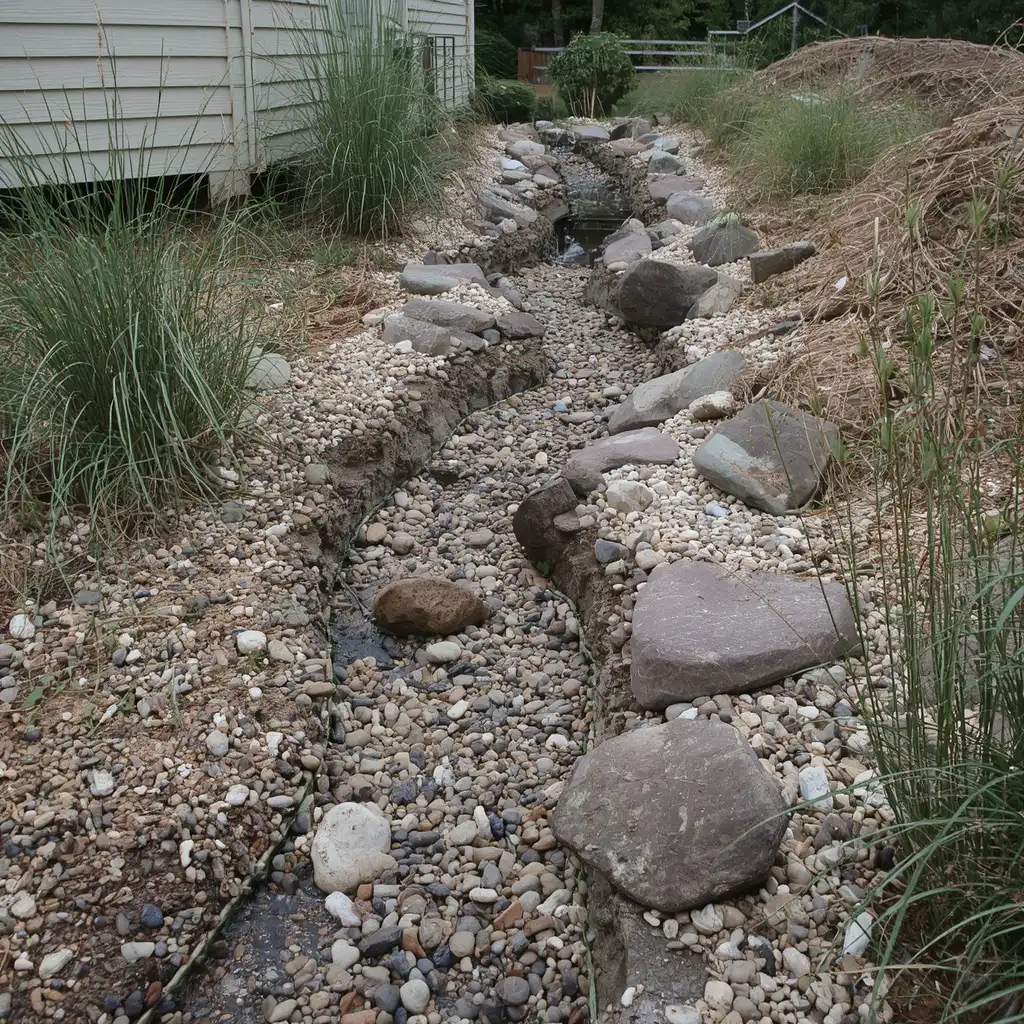
17. Shape a Drainage Area Into a Dry Creek Bed
Best for: Shallow channels and areas that collect runoff
Cost: Medium
Difficulty: Moderate
Watch out for: Blocking the water route
A shallow drainage line can look harsh when it is left as bare soil. Stones and plants can make it look like a planned dry creek bed.
Keep the natural water path open. Do not fill the channel until water can no longer move through it.
Use different stone sizes for a more natural look. Place larger stones near bends and along the edges.
Add plants that can handle changing moisture levels. Keep roots, mulch, and loose soil away from the outlet.
A dry creek bed can improve the look of a drainage area. It will not fix a serious water problem.
Contact a drainage professional if water reaches the foundation, stays for long periods, or causes soil loss.
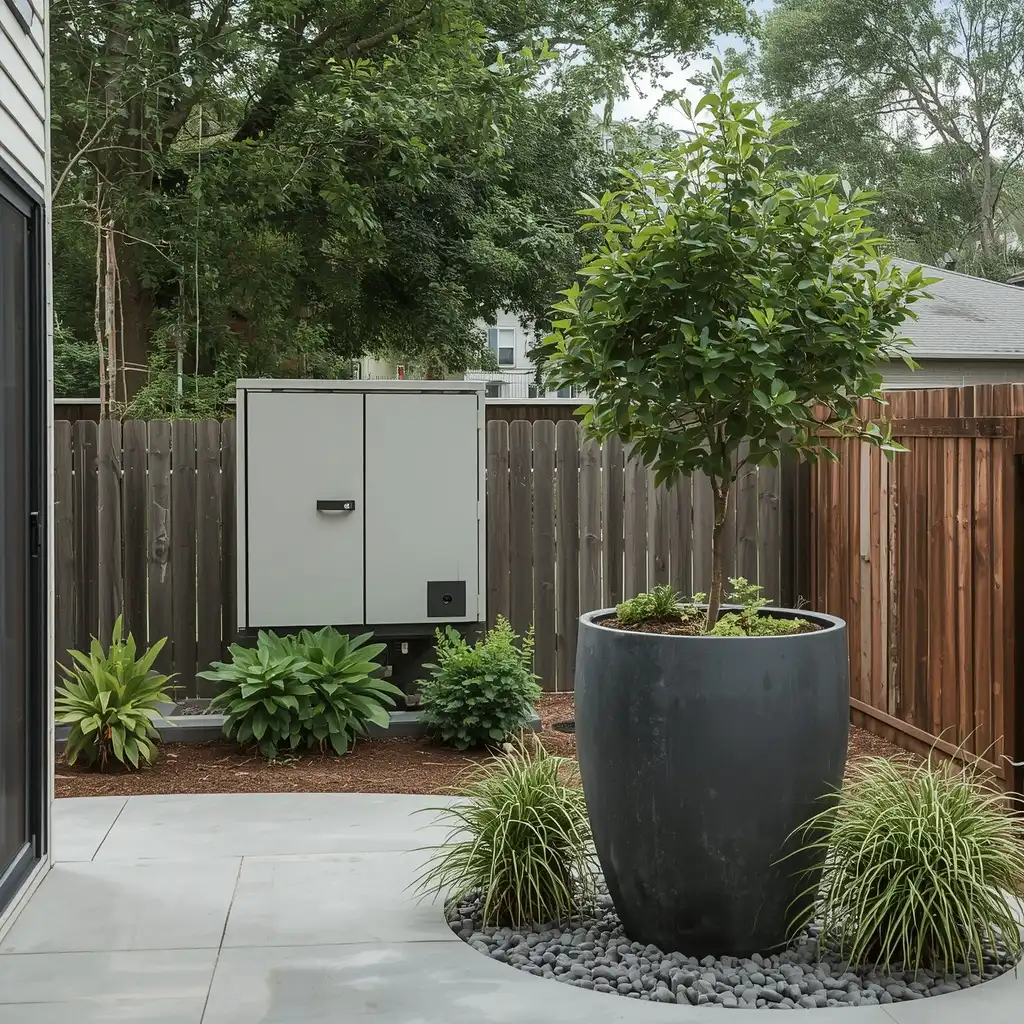
18. Redirect Attention With a Strong Focal Point
Best for: Awkward corners and eyesores that cannot be covered
Cost: Low to high
Difficulty: Easy
Watch out for: Creating more clutter
You do not always need to hide the problem. Sometimes you can guide the eye somewhere else.
Place an attractive feature close to the eyesore, but not directly against it.
Good choices include:
- A large planted container
- A birdbath
- A garden bench
- A specimen shrub
- A sculpture
- A small fountain
- Three matching pots
The feature should be large enough to catch attention. It should also match the size and style of the yard.
Do not add many small items. Too many decorations can make the area feel busier.
This method works best when the eyesore is safe but difficult to move or cover.
Pick the Right Fix for Your Budget and Yard
The most expensive solution is not always the best one.
Paint may be enough for a faded shed. Movable pots may work better than a fixed screen in a rental home. Shrubs may suit a large yard, but they could take up too much room beside a narrow path.
Use this simple guide:
| Solution | Cost | Care Level | Best Use |
| Paint | Low | Low | Fences, sheds, and cabinets |
| Containers | Low to medium | Medium | Renters and small spaces |
| Shrubs | Medium | Medium | Long-term natural screening |
| Wood screens | Medium | Low to medium | Bins and equipment |
| Metal panels | Medium to high | Low | Modern yards |
| Storage cabinets | Medium | Low | Tools and outdoor clutter |
| Vertical gardens | Medium to high | High | Blank walls and tight spaces |
Before spending money, test the size of your idea.
Use cardboard, empty pots, or a temporary fabric panel. View it from your windows, doors, patio, and street.
Then follow these five steps:
- Repair damage first.
- Check safety and access.
- Decide whether to hide, blend, or improve the feature.
- Choose a care level you can manage.
- Test the shape and height before installation.
These steps make it easier to find affordable outdoor screening ideas that suit your real space.
Avoid These Common Screening Mistakes
A screen should solve a problem. It should not create a new one.
Avoid these mistakes:
- Blocking AC airflow: Use open slats and check the equipment guide.
- Covering utility controls: Keep meters, valves, and labels easy to reach.
- Planting too close: Check the mature width of every shrub.
- Choosing invasive vines: Ask a local garden expert before planting.
- Covering drain openings: Keep water routes clear.
- Building a narrow bin enclosure: Measure the bins with their lids open.
- Using indoor materials outside: Choose products made for sun and rain.
- Creating an oversized screen: Hide the object without making the screen more noticeable.
- Ignoring property rules: Check local codes and neighborhood rules.
- Building over underground services: Contact the correct marking service before digging.
The best outdoor screening ideas look like a natural part of the yard. They are also easy to clean, move, and repair.
Frequently Asked Questions
What is the cheapest way to hide an eyesore in the yard?
Paint, container plants, and simple trellis panels are often low-cost options. The cheapest choice depends on the size of the object and the