
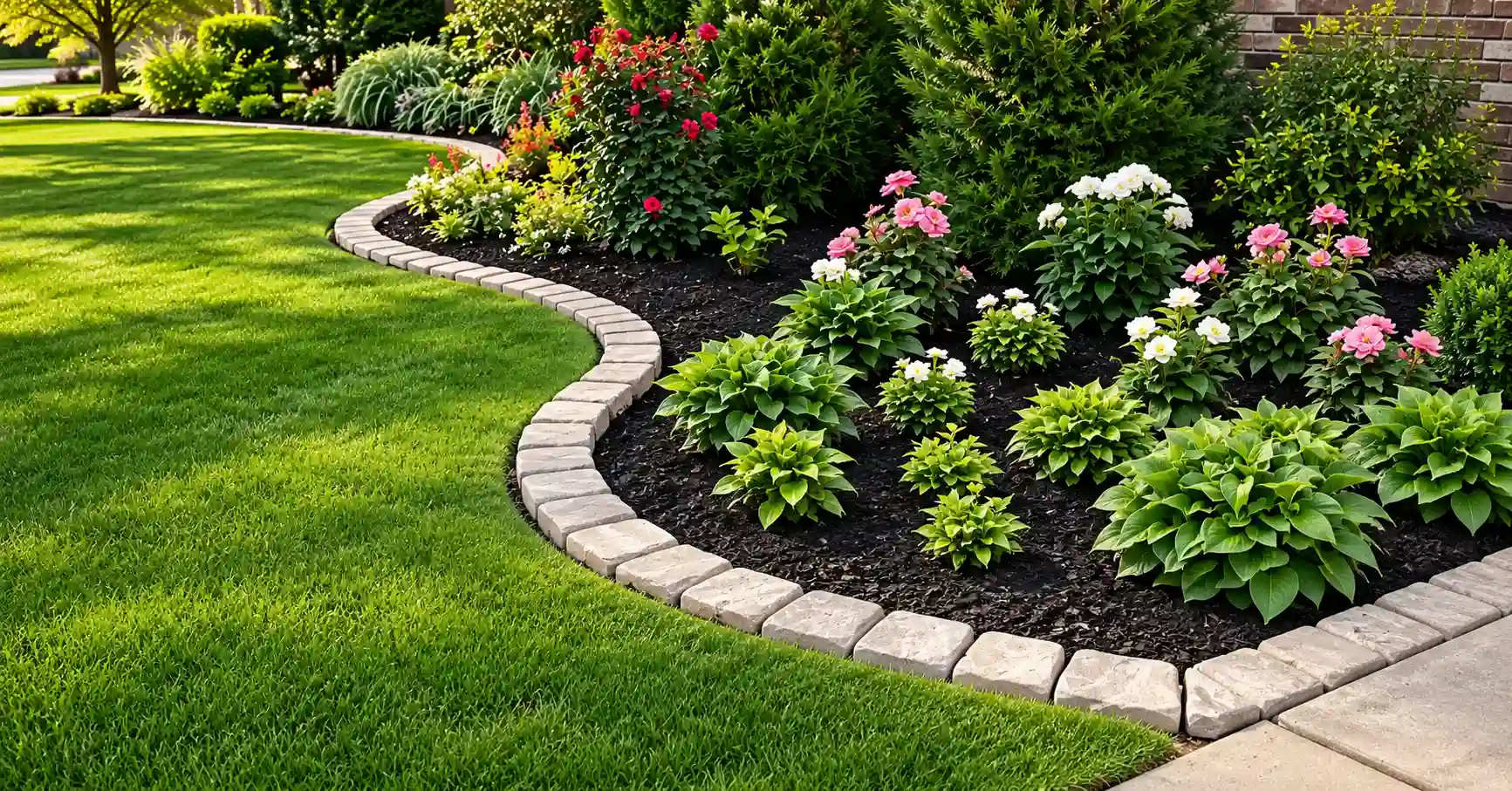
A beautiful yard should not demand hours of mowing, watering, and pulling weeds. Yet many homeowners spend every weekend trying to keep grass and garden beds under control.
These rock landscaping ideas can help you create a cleaner yard with less routine work. You can use rocks to mark pathways, improve drainage, control soil, and fill areas where plants struggle to grow.
Landscaping with rocks still needs a good plan. The wrong stone can make walking difficult. Dark gravel can also make a sunny garden bed too hot for some plants.
The best results come from mixing stone with plants that suit your local weather. You also need to think about water flow, mature plant size, and how you use your yard.
Here are 19 practical ideas for using river rock, gravel, boulders, and stone without making your outdoor space feel bare.
1. Fix a Wet Yard With a Dry Creek Bed
Best for: Low areas, drainage paths, and sloped yards
Estimated cost: Medium to high
Maintenance level: Low to medium
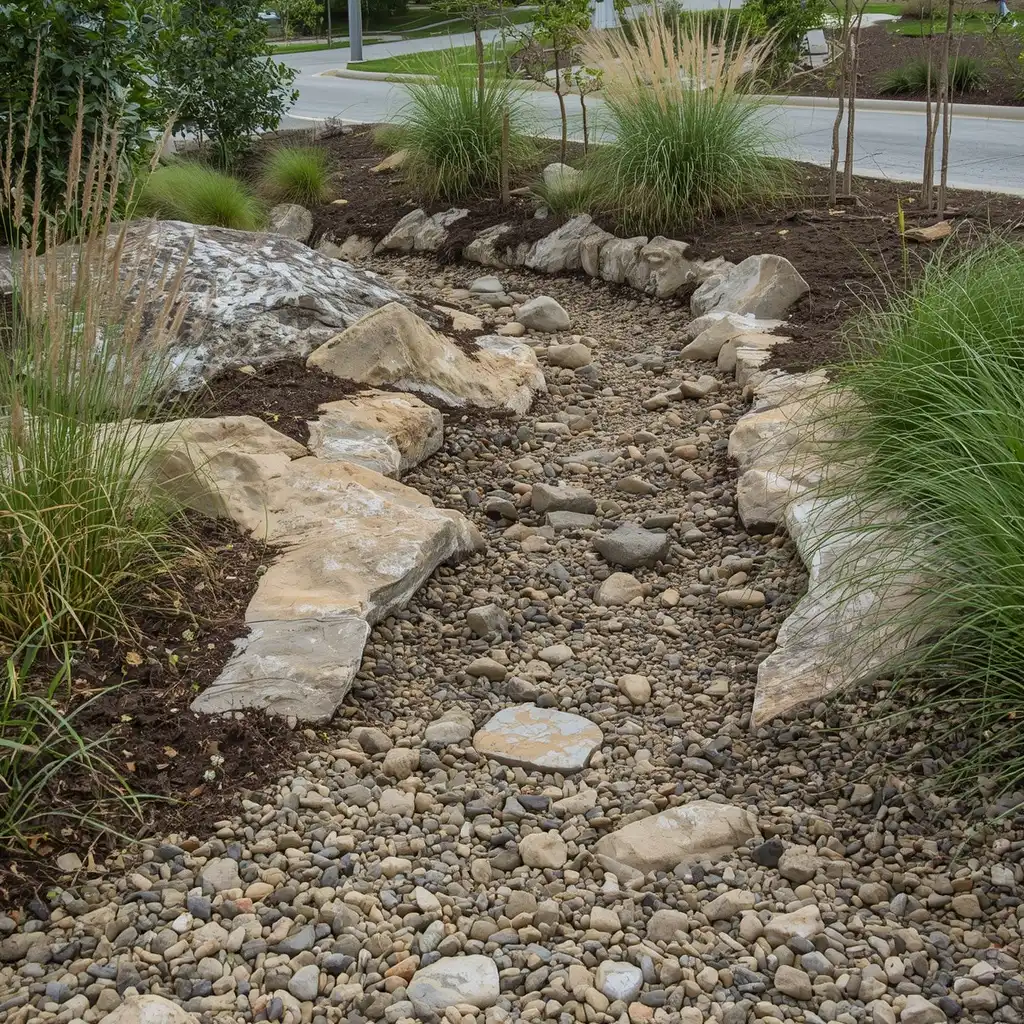
Rainwater can turn a low part of your yard into a muddy mess. A dry creek bed gives that water a clear path while adding an attractive feature.
Create a shallow channel that follows the natural flow of water. A gentle curve will look more natural than a straight trench.
Place larger rocks along the sides. Fill the middle with smaller river rocks and gravel. Use a few partly buried boulders to make the creek bed look as if it formed over time.
Add moisture-tolerant grasses or native plants along the edges. Their roots can help hold soil in place.
Before you start, check where the water will end. Do not send it against your foundation or into a neighbor’s yard. Serious drainage problems may need help from a drainage contractor.
2. Stop Muddy Footprints With a Gravel Garden Path
Best for: Routes between patios, gates, sheds, and gardens
Estimated cost: Low to medium
Maintenance level: Low
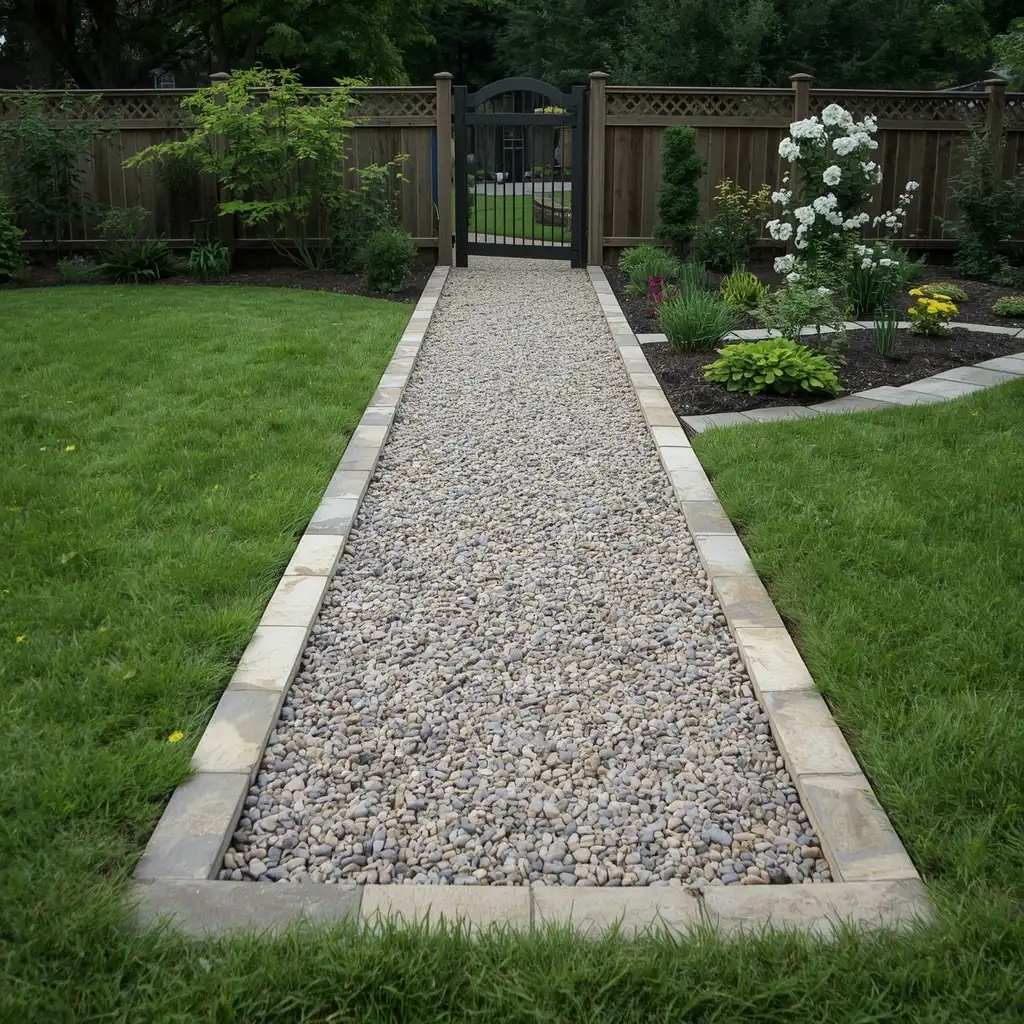
A worn dirt path becomes muddy during rain and dusty during dry weather. Gravel can turn it into a clean walking route.
Mark the path with a garden hose before removing soil. This lets you test the shape and width before making a final choice.
Prepare a firm base so the gravel does not sink into the soil. Add metal, brick, or stone edging to keep loose pieces out of your lawn.
Rounded pea gravel looks soft but moves under your feet. Angular gravel locks together and often feels more stable. It is usually a better choice for wheelbarrows and regular foot traffic.
Keep the path wide enough for the people and tools that will use it. A beautiful walkway is less helpful when a stroller or garden cart cannot pass through it.
3. Grow More Plants With a Drought-Tolerant Rock Garden
Best for: Sunny yards, dry climates, and poor soil
Estimated cost: Medium
Maintenance level: Low
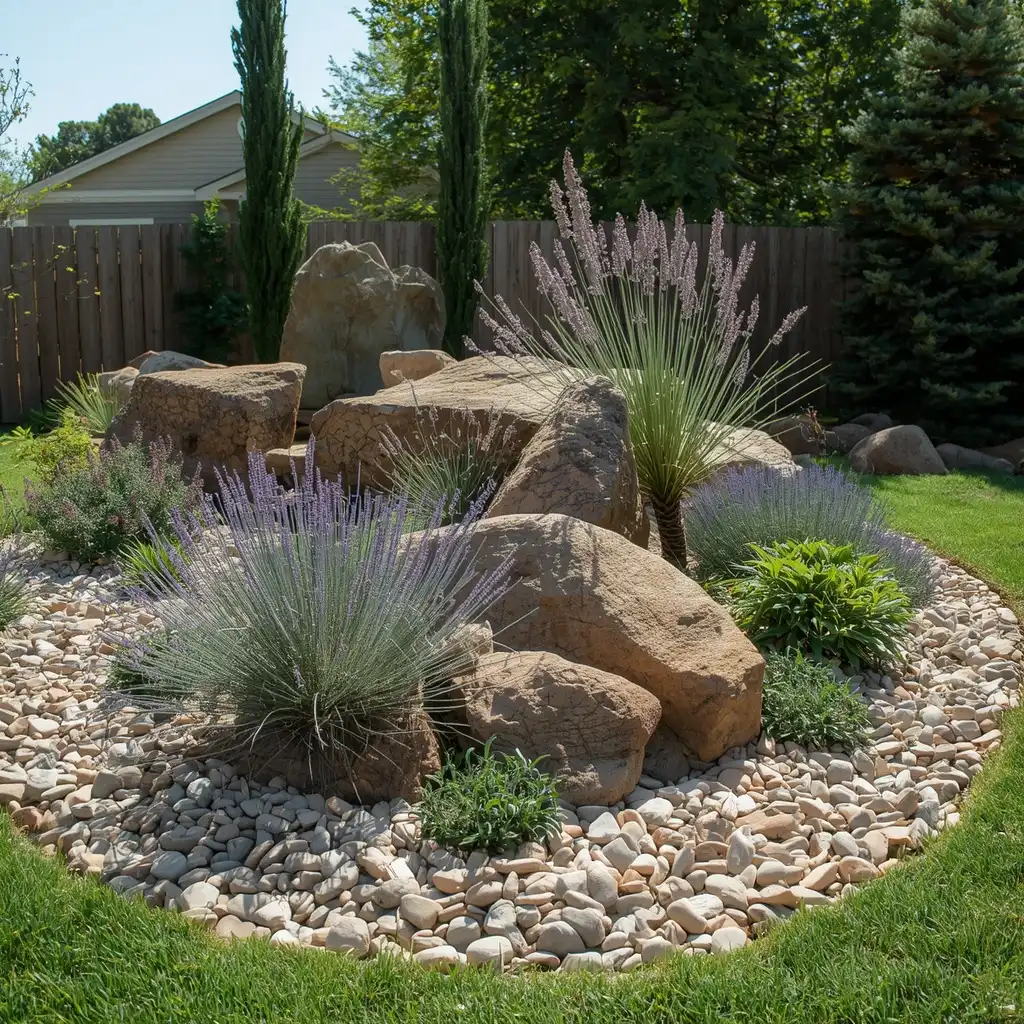
Some garden areas are too hot and dry for common plants. A rock garden can turn that hard spot into a strong feature.
Start with plants that suit your local weather. Good choices may include sedum, lavender, blue fescue, yucca, creeping thyme, or native plants.
Place taller plants near the back or center. Use smaller plants around the front. Repeat two or three plant types instead of adding one of everything.
Leave enough room for each plant to reach its mature size. A new rock garden may look open at first, but the plants will fill the gaps over time.
Stone reflects heat. Some plants may struggle beside pale walls or in areas with strong afternoon sun. Check the plant label and ask a local garden center before planting.
These rock garden ideas work best when the plants and stone feel connected. Choose rock colors that match your home and repeat them across the bed.
4. Give a Small Yard One Strong Boulder
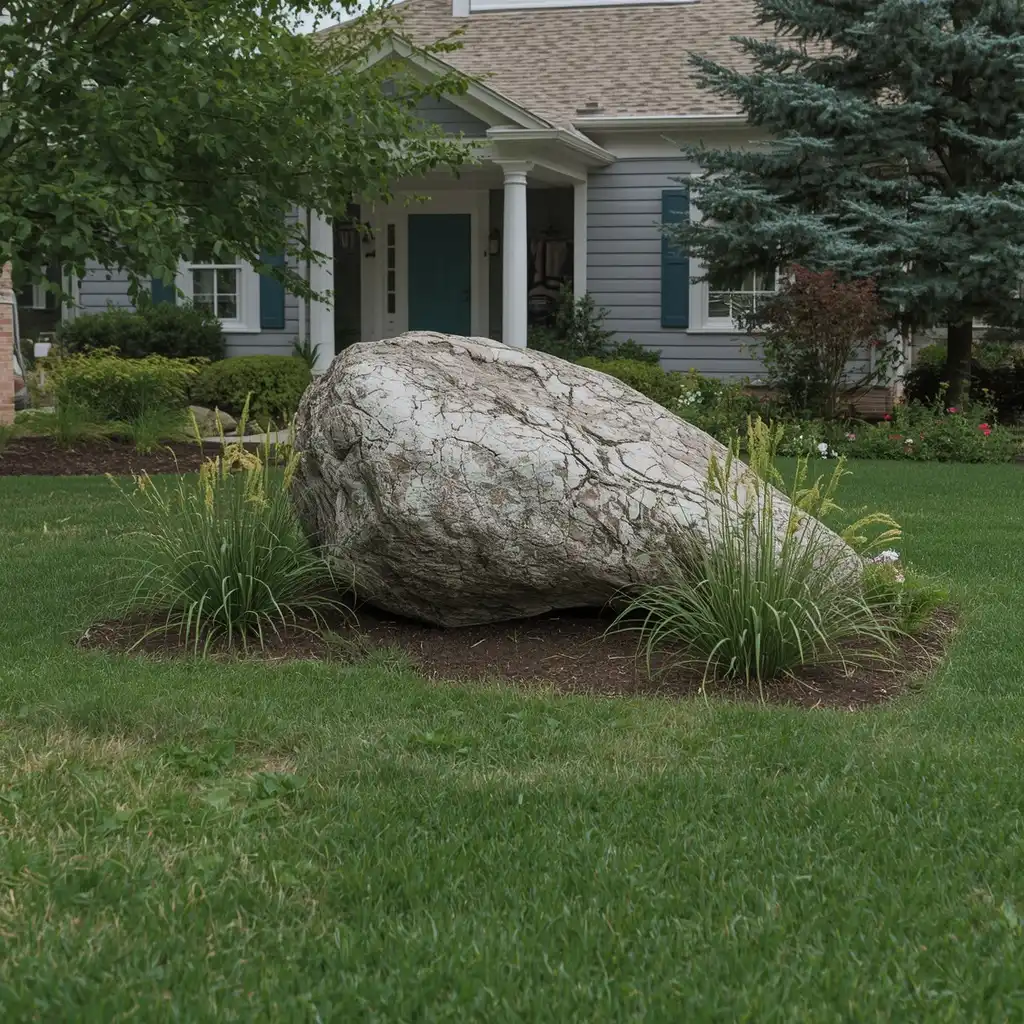
Best for: Small front yards and simple garden beds
Estimated cost: Medium
Maintenance level: Low
A small yard can feel cluttered when it contains too many decorations. One well-placed boulder can create a clear focal point without filling the space.
Choose a rock that matches the colors found near your home. Gray stone suits many modern houses. Warm brown or tan stone often works well with brick and natural wood.
Bury part of the boulder in the soil. A rock sitting fully above the ground may look as if it was dropped there.
Plant low grasses, groundcover, or small flowers around the base. Keep some open space so the boulder remains easy to see.
Do not place a large rock where it blocks your view of the street. This is very important near driveway entrances and corners.
5. Keep Mulch in Place With Natural Stone Edging
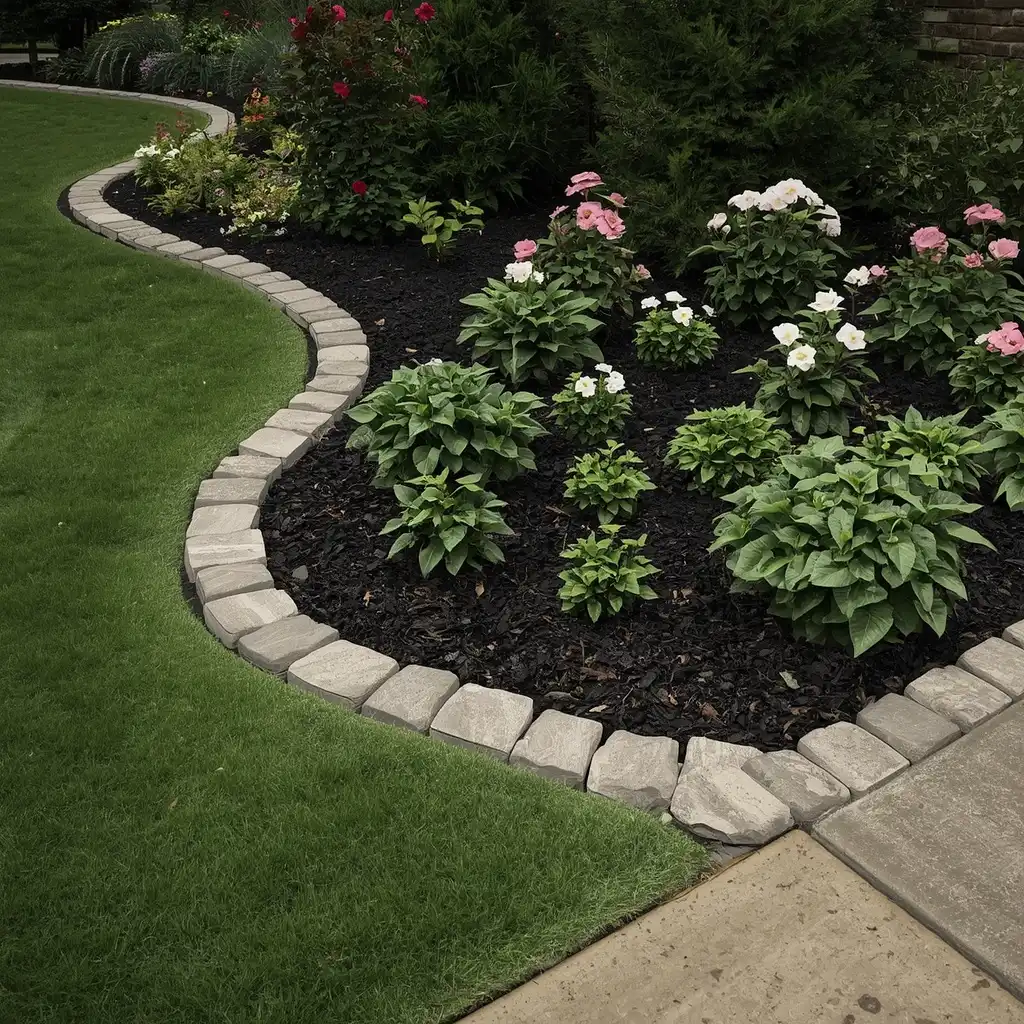
Best for: Flower beds, lawns, and garden paths
Estimated cost: Low to medium
Maintenance level: Low
Mulch and soil often wash out of garden beds after heavy rain. Natural stone edging creates a firm border that keeps materials in place.
Use flat stones if you want a smooth mowing edge. Set the top near ground level so your lawn mower can pass beside it.
Irregular fieldstone gives the yard a softer, rustic look. It works well around curved cottage-style beds.
Prepare a shallow base before setting the stones. This reduces movement and helps the border stay level.
Keep raised edges away from busy walking routes. A border should guide the eye without becoming a trip risk.
For a finished look, repeat the same stone around another feature. You could use it around a tree, mailbox, or front garden bed.
6. Replace Bark Mulch With Decorative Gravel
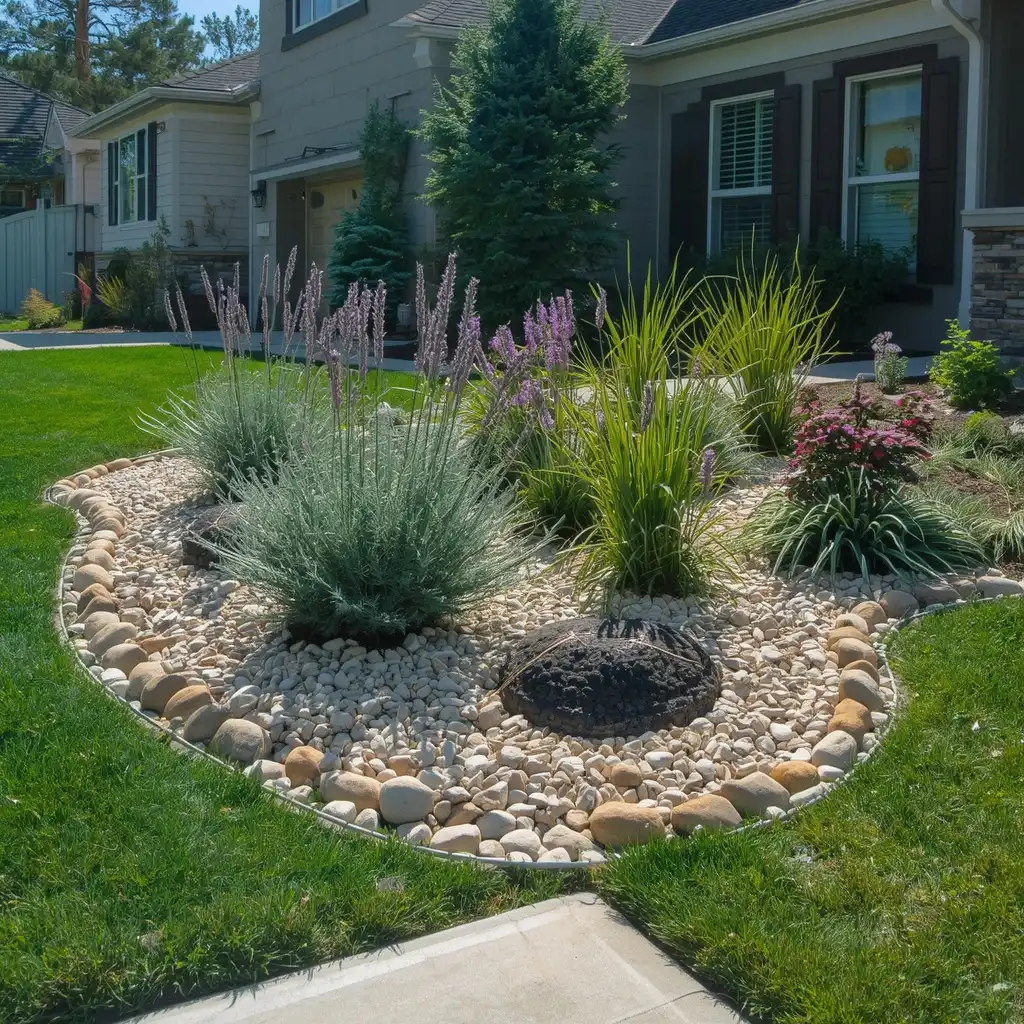
Best for: Dry garden beds and sunny planting areas
Estimated cost: Medium
Maintenance level: Low to medium
Bark mulch fades and breaks down over time. Decorative gravel lasts longer and does not need to be replaced as often.
Use gravel around plants that prefer dry soil. Lavender, sage, sedum, and many ornamental grasses can work well in these beds.
Gravel is durable, but it is not perfect. It does not feed the soil like compost or organic mulch. Leaves and small twigs can also become trapped between the stones.
Dark gravel may become very hot in full sun. This heat can stress plant roots and warm nearby walls. Pale gravel reflects more light, which can also bother sensitive plants.
Use a gravel color that works with your home. Limit the bed to one main rock color for a calm appearance.
This is one of the most useful low-maintenance landscaping ideas for dry areas. Still, you will need to remove weeds and debris from time to time.
7. Protect Your Trees While Adding a Rock Border
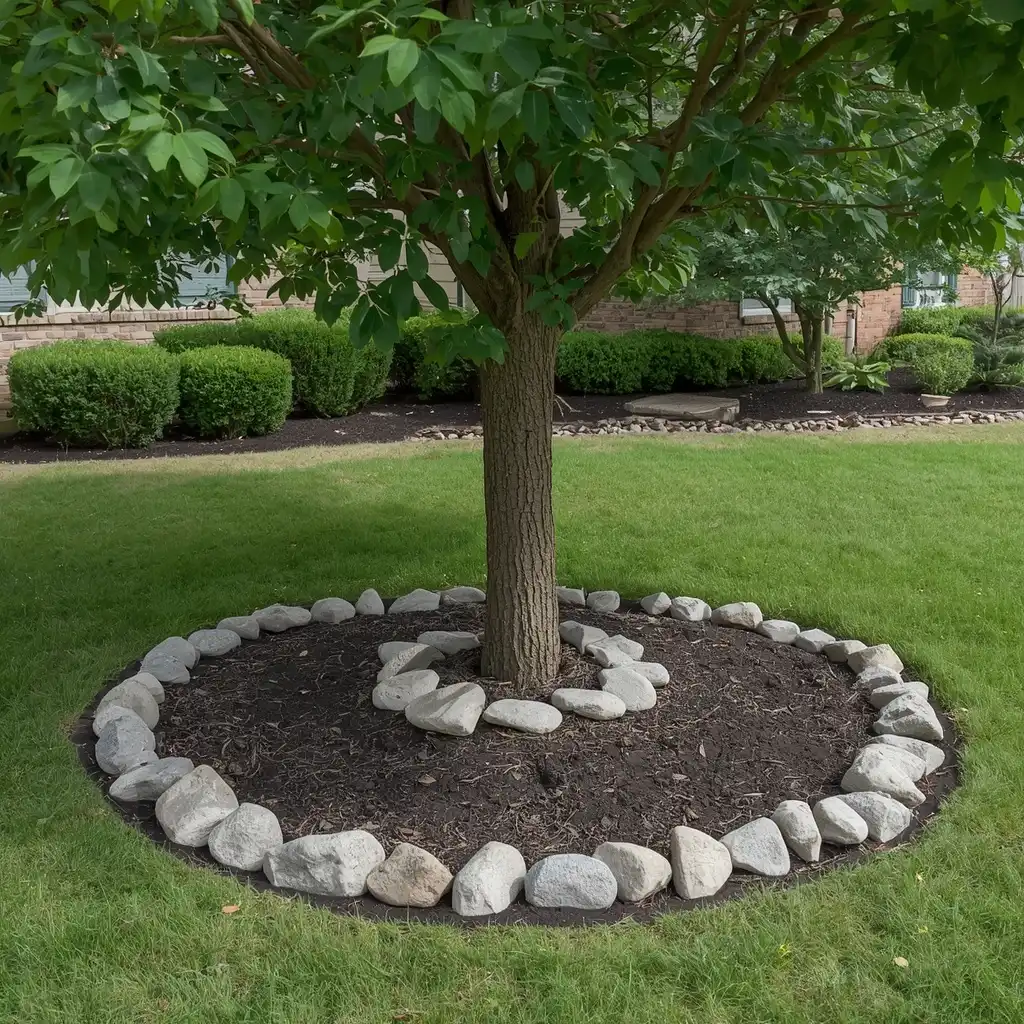
Best for: Mature trees and shaded front yards
Estimated cost: Low to medium
Maintenance level: Low
A ring of rock can make a tree look neat, but poor installation can harm the tree.
Do not pile stones, soil, or mulch against the trunk. The base of the tree should remain open and visible.
Look for the root flare. This is the point where the trunk widens and meets the roots. Covering it can trap moisture and cause decay.
Create a wide, shallow ring instead of a deep raised bed. Leave a clear gap between the trunk and the decorative rock.
You can add shade-tolerant groundcover around the outer part of the ring. Choose plants that can handle dry soil and competition from tree roots.
Keep the design simple. The health of the tree matters more than creating a perfect circle.
8. Make Loose Gravel Easier to Walk On
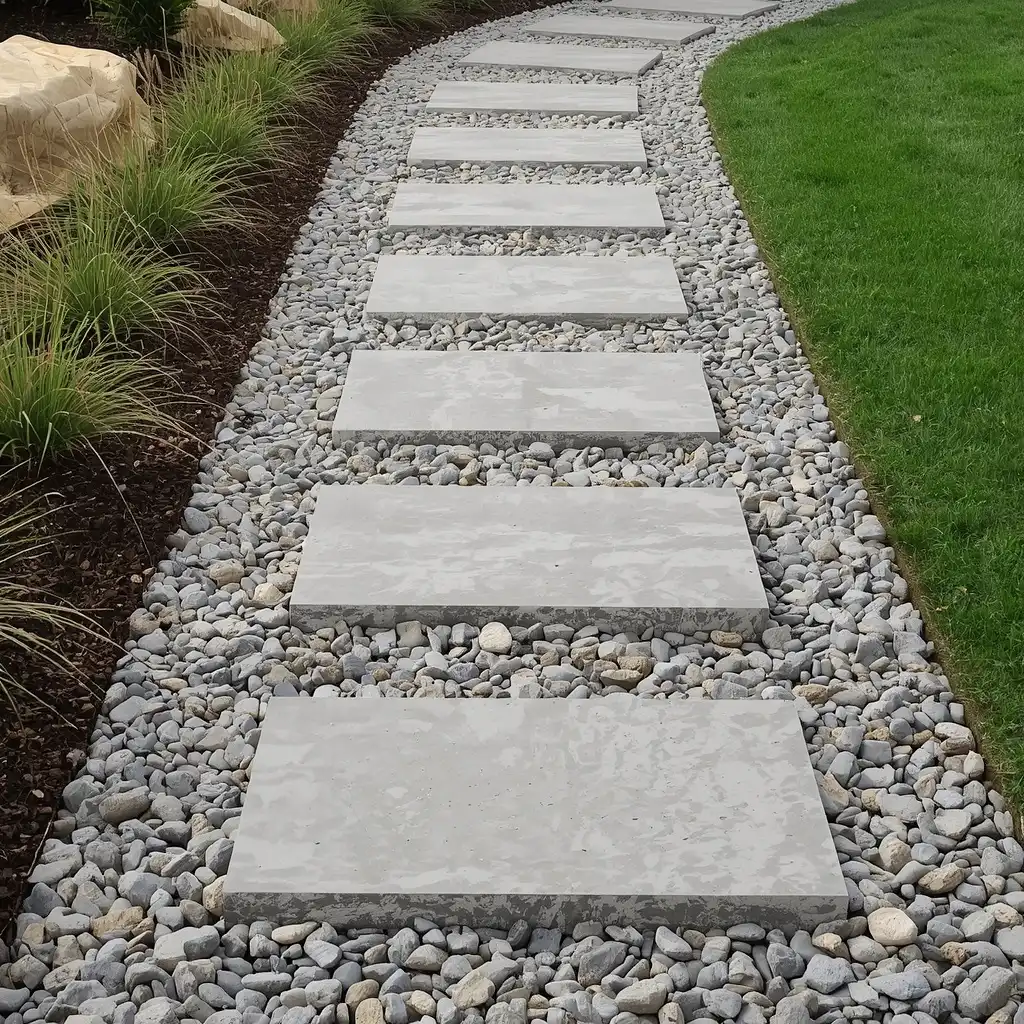
Best for: Modern paths, side yards, and garden routes
Estimated cost: Medium
Maintenance level: Low
Loose gravel can be hard to cross, especially when you are carrying tools or pushing a cart. Large stepping stones give your feet a firm surface.
Place the stones where your feet naturally land. Walk across the unfinished path several times before fixing them into place.
Use flat stones with a rough surface. Smooth stones can become slippery after rain.
Dark rectangular pavers can look sharp over pale gravel. Irregular flagstones create a softer and more natural style.
Keep gravel level with the top of each stepping stone. Deep gravel around low stones may cause people to trip.
Add small plants beside the route. Keep them away from the walking line so they do not cover the stones.
9. Break Up a Large Lawn With a Rock Island
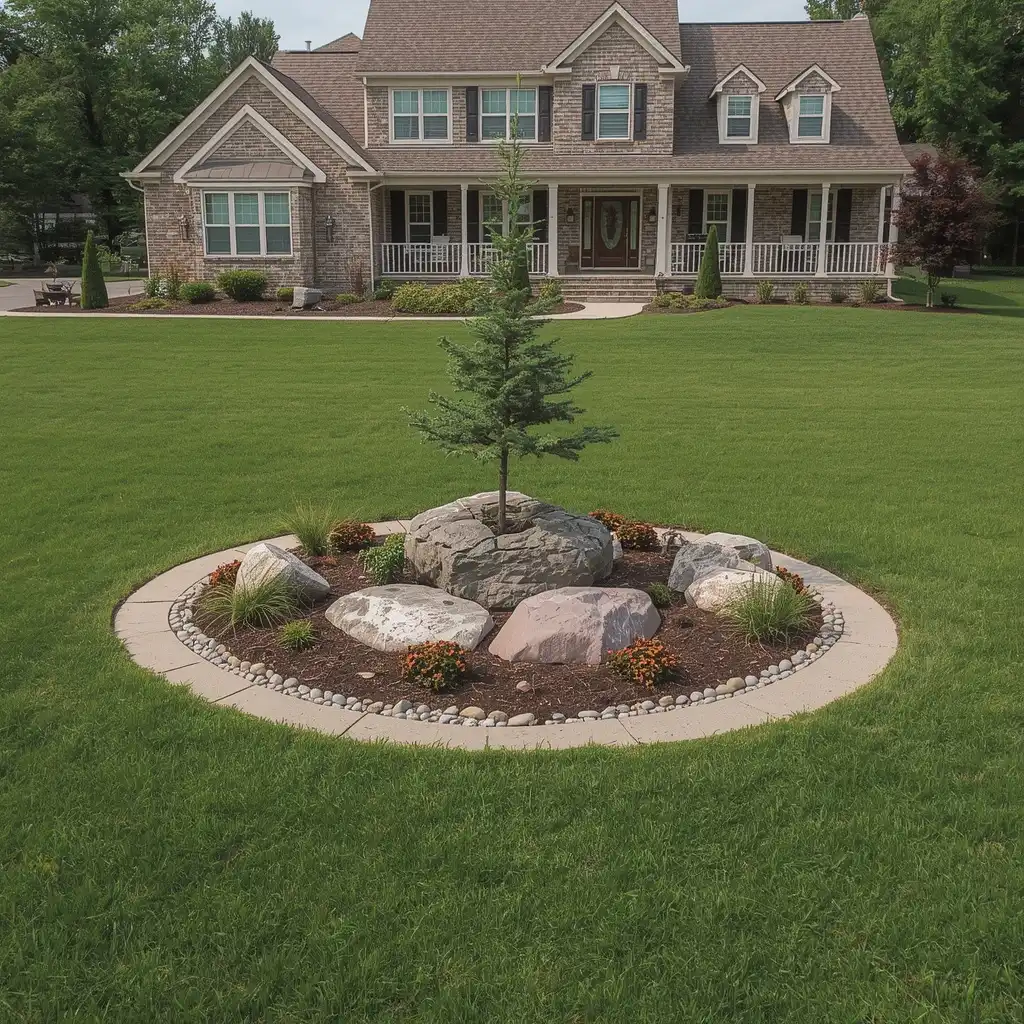
Best for: Flat front yards and open lawns
Estimated cost: Medium
Maintenance level: Low to medium
A wide lawn can look empty even when the grass is healthy. A small rock island adds height, texture, and a clear focal point.
Choose a curved shape for a relaxed yard. Use straight or geometric lines near a modern home.
Place one main feature in the bed. This could be a dwarf tree, a large grass, or a boulder.
Add two or three supporting plants around it. Repeat the same plant in small groups for a more finished look.
Use stone that matches another part of the property. Repeating materials helps the new bed feel connected to the house.
Before building the island, think about mowing. Sharp corners and narrow grass strips can make lawn care harder.
10. Control a Sloped Yard With Rocks and Short Terraces
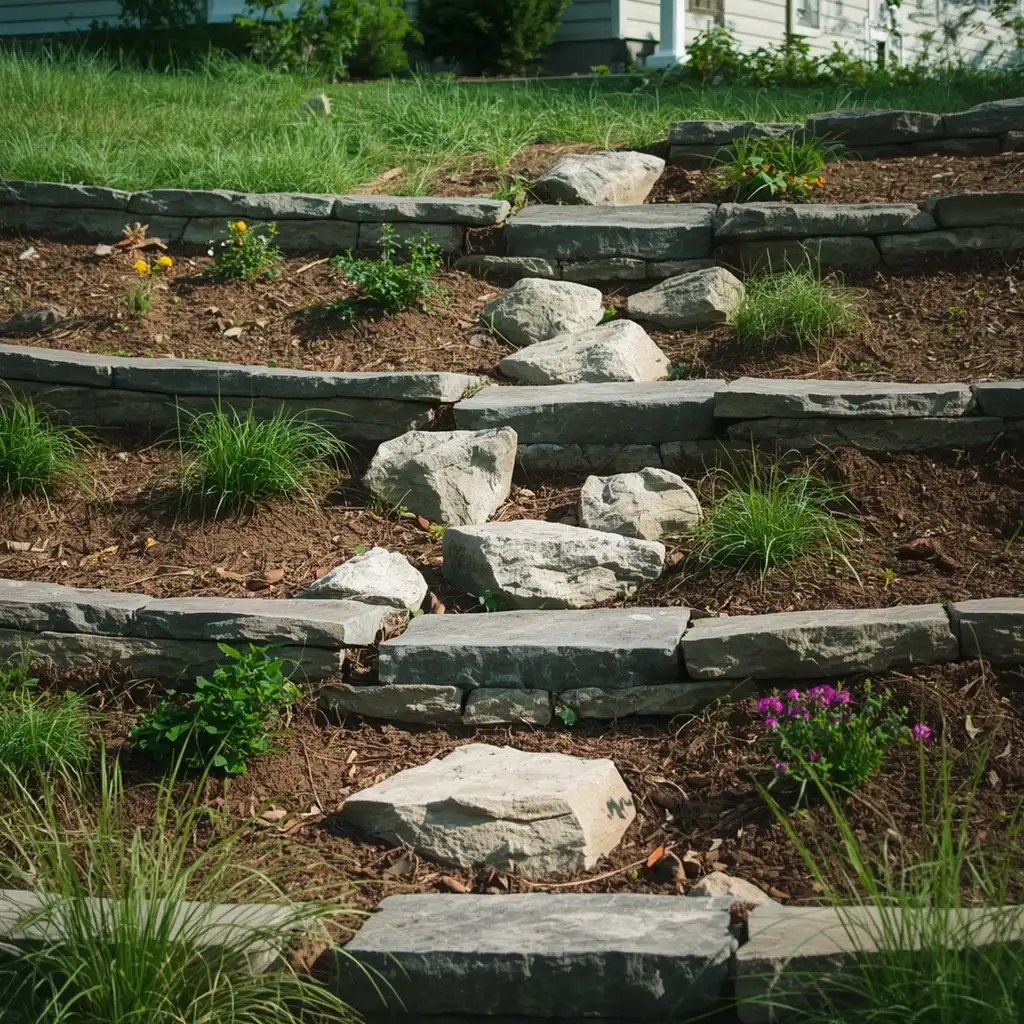
Best for: Erosion-prone slopes and raised garden areas
Estimated cost: High
Maintenance level: Medium
A steep slope can lose soil during every heavy rain. Rocks and short terraces can slow the water and create planting space.
Build several low levels instead of one tall wall. Smaller changes in height often look more natural and place less pressure on the soil.
Add deep-rooted groundcover, grasses, or shrubs between the stone sections. Plant roots help hold the soil.
Do not cover a steep slope with loose rock and expect it to stay in place. Water may carry small stones downhill.
Large retaining walls need proper drainage and a strong base. Some areas also require permits.
Watch for leaning walls, deep cracks, moving soil, or water pushing through stonework. These signs mean you should contact a qualified contractor.
11. Create a Cleaner Fire-Pit Seating Area
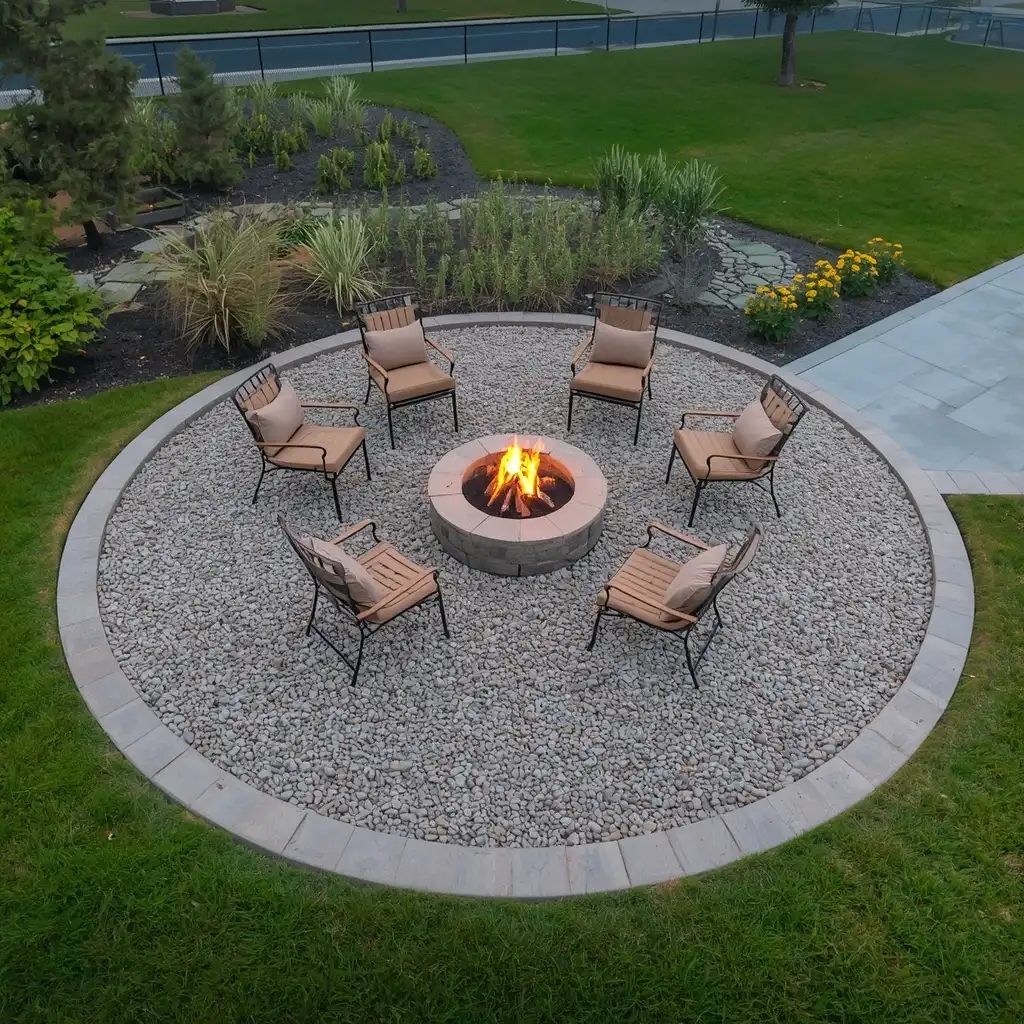
Best for: Backyards and outdoor gathering spaces
Estimated cost: Medium to high
Maintenance level: Low
Grass around a fire pit can become worn, muddy, or unsafe. A gravel seating area gives chairs a clean and steady surface.
Create a circle or square that fits the number of seats you plan to use. Leave enough space for people to move around without getting too close to the fire.
Use firm edging to keep the gravel contained. Metal or stone can work well.
Choose gravel that stays fairly stable under chairs. Very round stone may shift each time someone sits down.
Fire rules differ by location. Check local rules before building the area. You may need limits for fire-pit size, fuel type, or distance from buildings.
Keep the fire away from low branches, fences, sheds, and dry plants. Safety must guide the design.
12. Add Sound With a Small Rock Water Feature
Best for: Patios, shaded gardens, and quiet seating areas
Estimated cost: Medium
Maintenance level: Medium
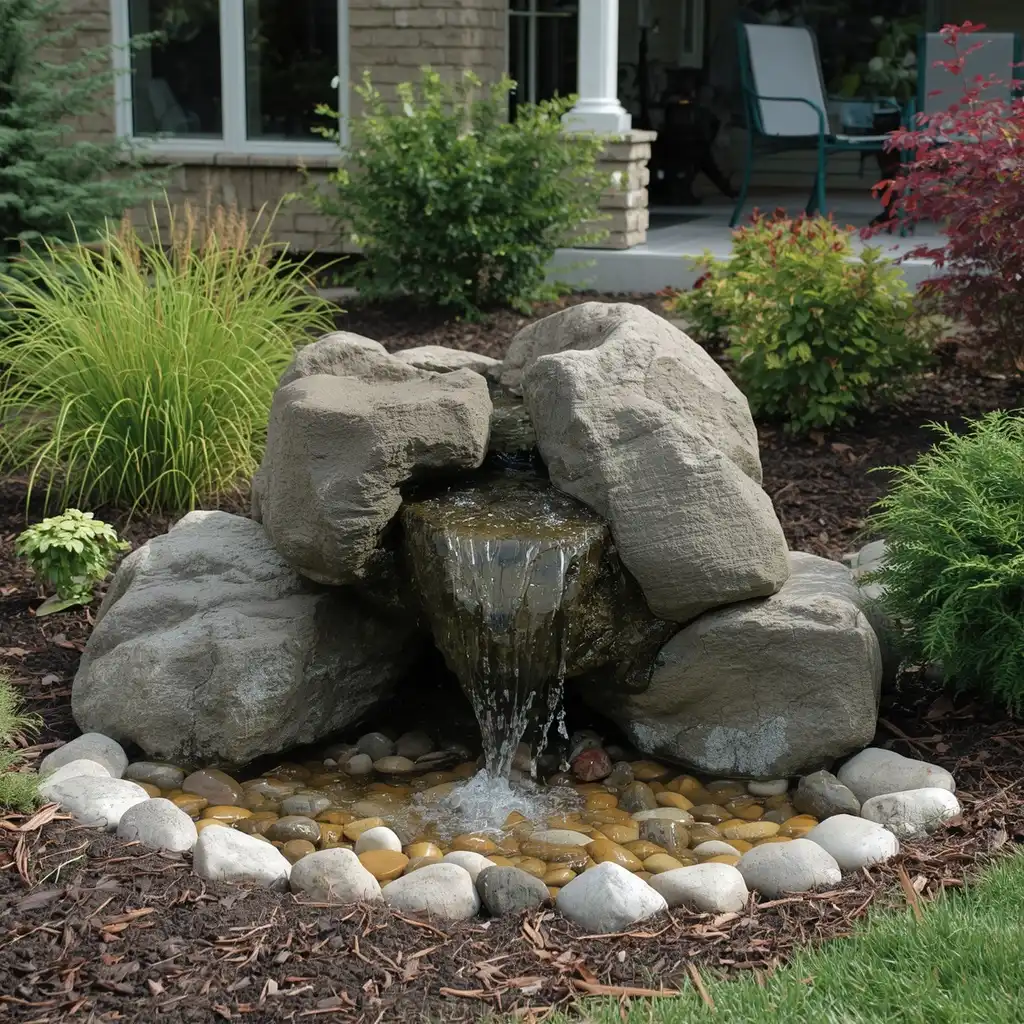
A small water feature can hide traffic noise and make a seating area feel calmer. You do not need a large pond to get this effect.
A bubbling boulder is a good choice for a compact space. Water flows from the top and disappears into a hidden basin below.
Use river rocks to cover the pump and basin. Mix several stone sizes so the feature looks natural.
Place it where you can see and hear it from a window, patio, or garden seat. A hidden water feature adds little value.
A recirculating pump reuses the same water. You will still need to replace water lost through heat and splashing.
Clean the pump and remove leaves when needed. Small water features need less work than ponds, but they still need care.
13. Create a Peaceful Japanese-Inspired Rock Garden
Best for: Quiet corners and small enclosed gardens
Estimated cost: Medium
Maintenance level: Medium
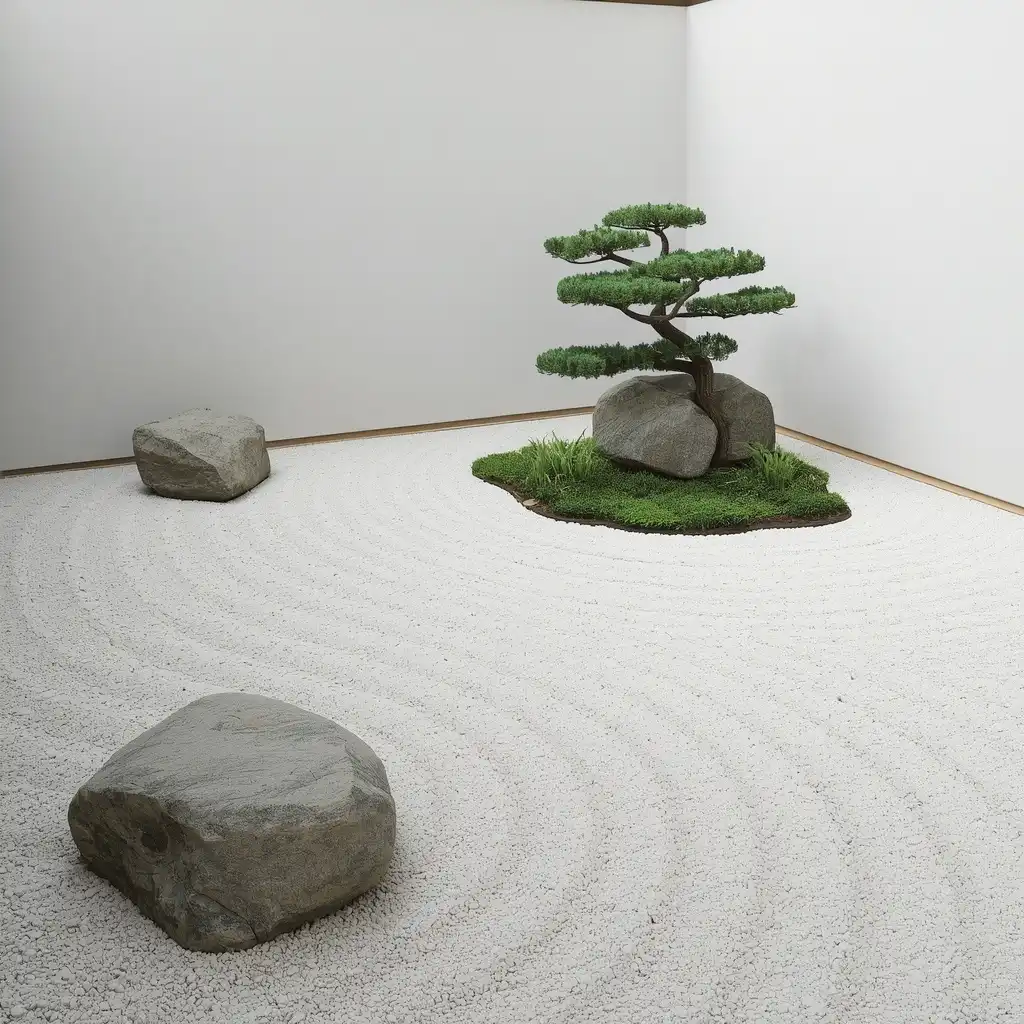
A peaceful garden does not need to be full of plants and decorations. Open space can make a small area feel calm.
Choose a few rocks with interesting shapes. Arrange them in an uneven group rather than a straight line.
Add pale gravel around the stones. You can rake simple lines into the surface for texture.
Use a compact evergreen, moss, fern, or another shade plant where the climate allows. Keep the plant list short.
Avoid filling every gap. Empty space is part of the design.
It is better to call this style Japanese-inspired unless you are following a traditional design with care. This keeps the description respectful and honest.
14. Match a Modern Home With Geometric Rock Beds
Best for: Modern houses and simple front yards
Estimated cost: Medium
Maintenance level: Low
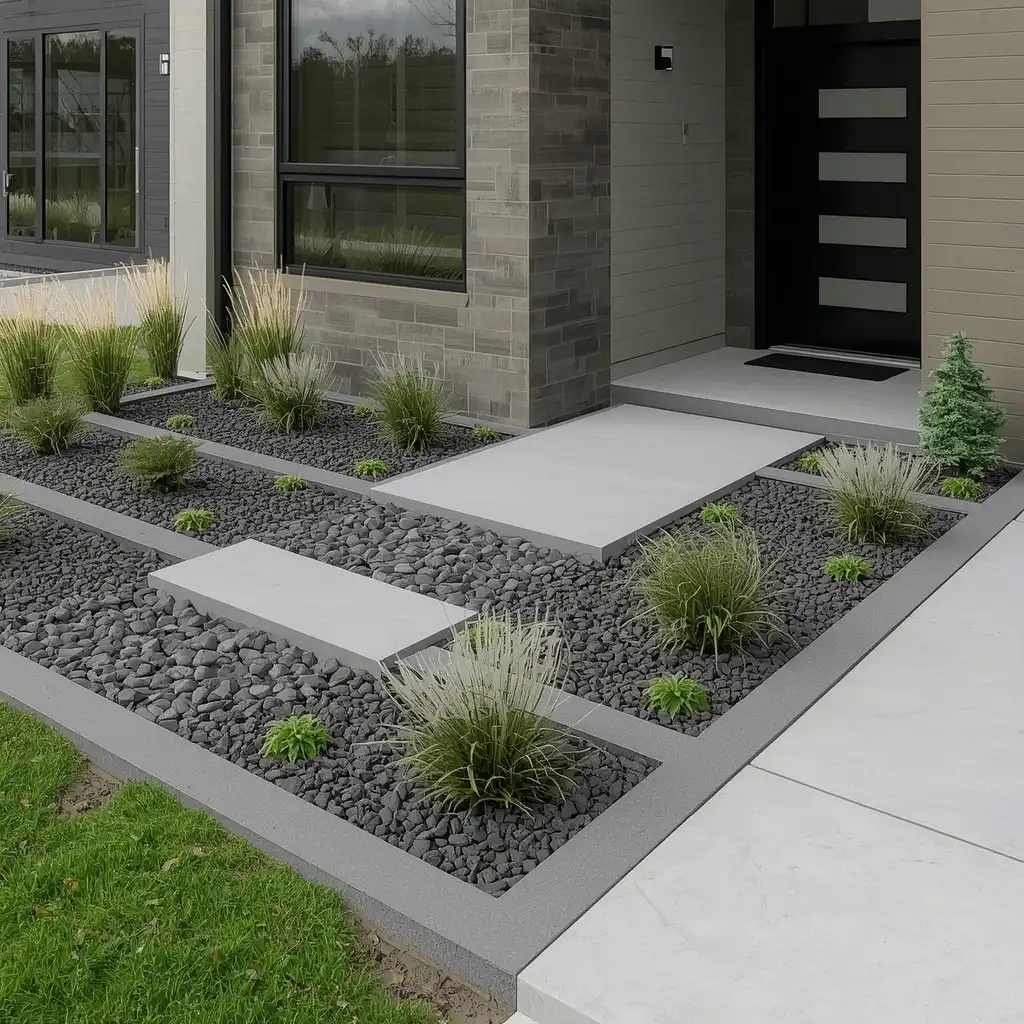
Curved beds do not suit every home. Straight rock beds can repeat the clean lines of modern walls, windows, and paths.
Use steel edging to create sharp rectangles or narrow bands. Fill them with one or two gravel colors.
Charcoal gravel looks strong beside pale concrete. Warm tan stone can soften dark siding.
Choose upright plants with clear shapes. Compact grasses, small evergreens, and simple groundcovers work well.
Limit the number of materials. Too many colors and textures will make a clean design feel busy.
Repeat the same gravel or plant in another part of the yard. This makes the whole space feel planned.
15. Reduce Water Use With a Desert-Style Yard
Best for: Hot climates and sunny front yards
Estimated cost: Medium to high
Maintenance level: Low
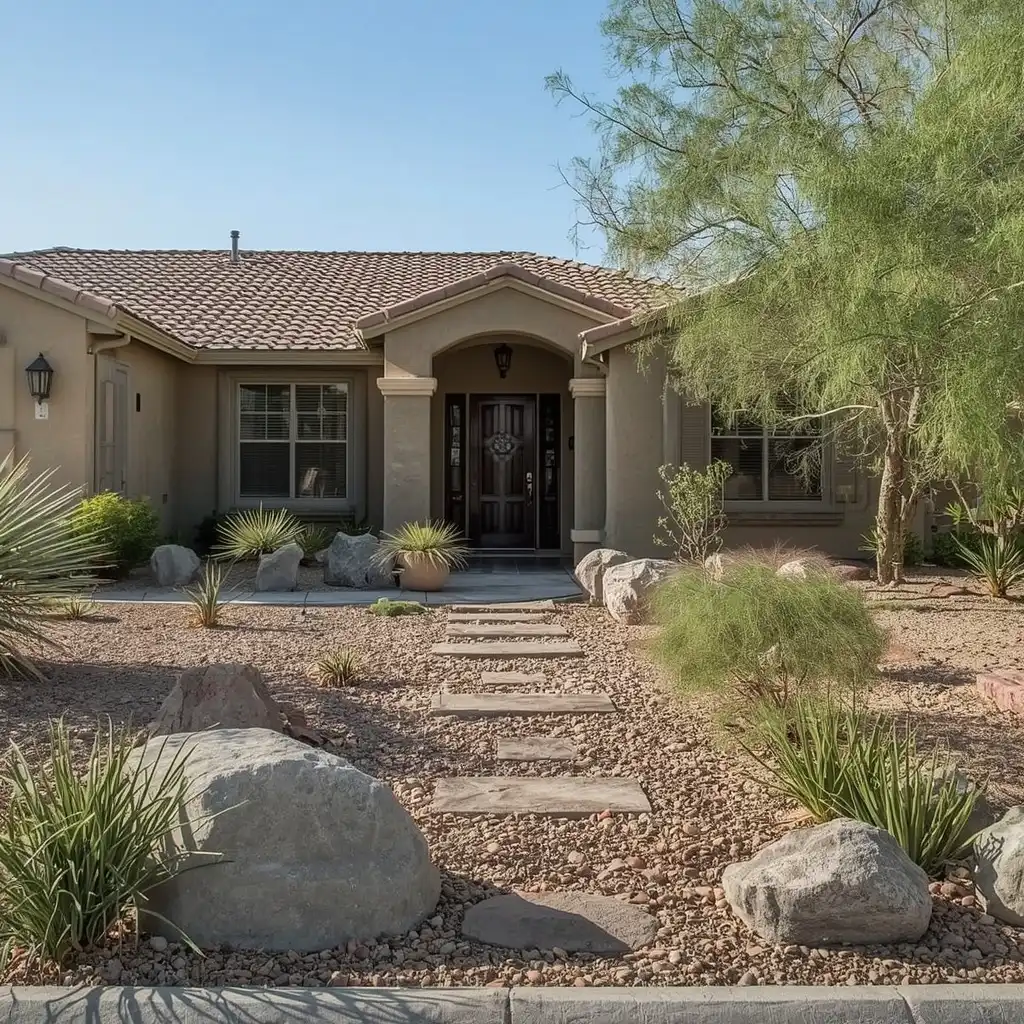
A thirsty lawn can be hard to maintain in a dry climate. A desert-style yard replaces part of that grass with stone and water-wise plants.
Group plants based on how much water they need. Keep plants with similar needs in the same area.
Good choices may include agave, yucca, desert spoon, salvia, or penstemon. Use plants that can survive both your summer heat and winter cold.
Do not cover the whole yard with one layer of gravel. Add plants, larger rocks, shade, and open paths to create depth.
New plants need regular water while their roots grow. A drip system can place water near each plant without soaking the whole bed.
Xeriscape rock landscaping works best when it supports living plants. It should not look like an empty stone lot.
16. Make Rock Beds Look Natural With Mixed Sizes
Best for: Dry creek beds, natural gardens, and large borders
Estimated cost: Medium
Maintenance level: Low
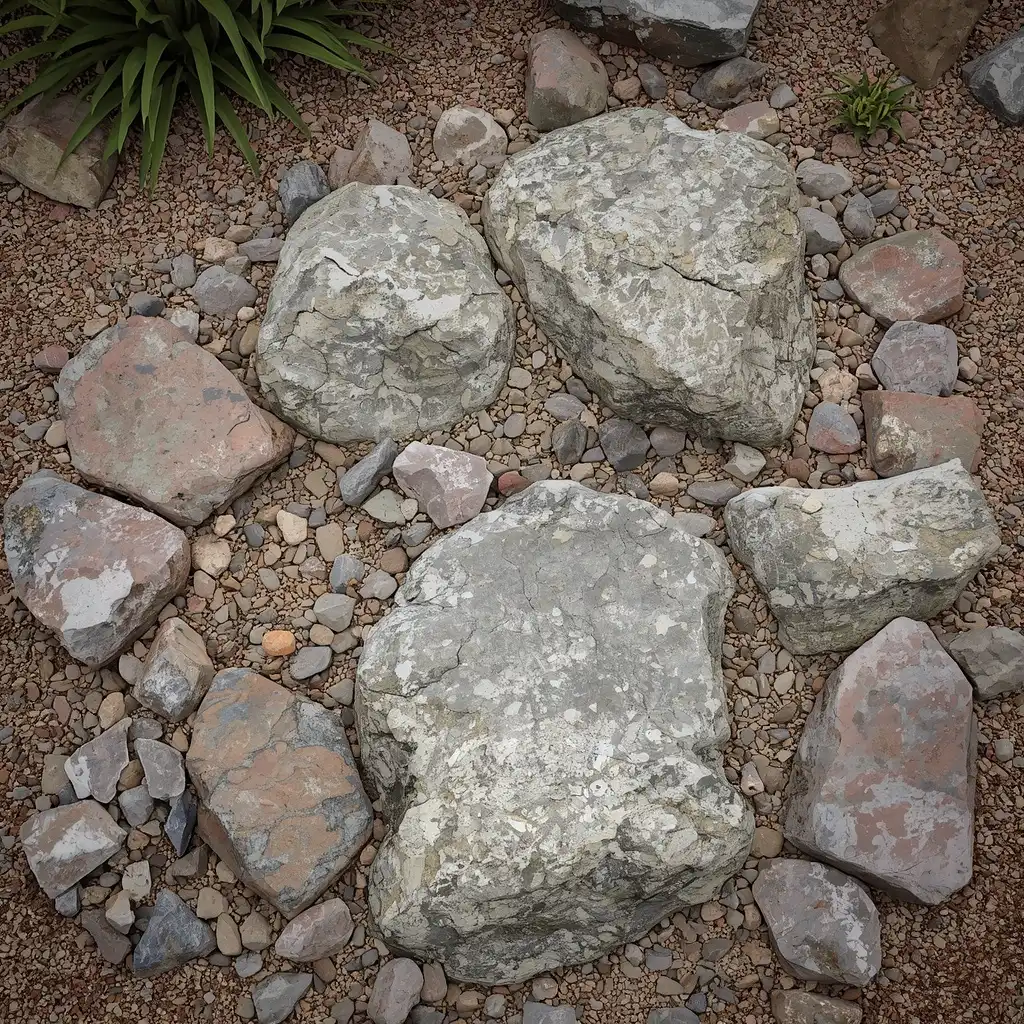
A bed filled with one rock size can look flat. Mixing a few sizes creates more depth.
Start with one or two large boulders. These act as the main anchors.
Add medium river rock around them. Use fine gravel to fill the open areas.
Repeat each rock type in more than one place. This helps the bed look balanced.
Avoid mixing many unrelated colors. Gray river rock, bright white gravel, red lava rock, and tan boulders may compete with each other.
A simple rule is to use no more than three main stone materials. This gives you variety without making the bed look messy.
17. Improve Curb Appeal With a Mailbox Rock Bed
Best for: Small front yards and driveway entrances
Estimated cost: Low
Maintenance level: Low
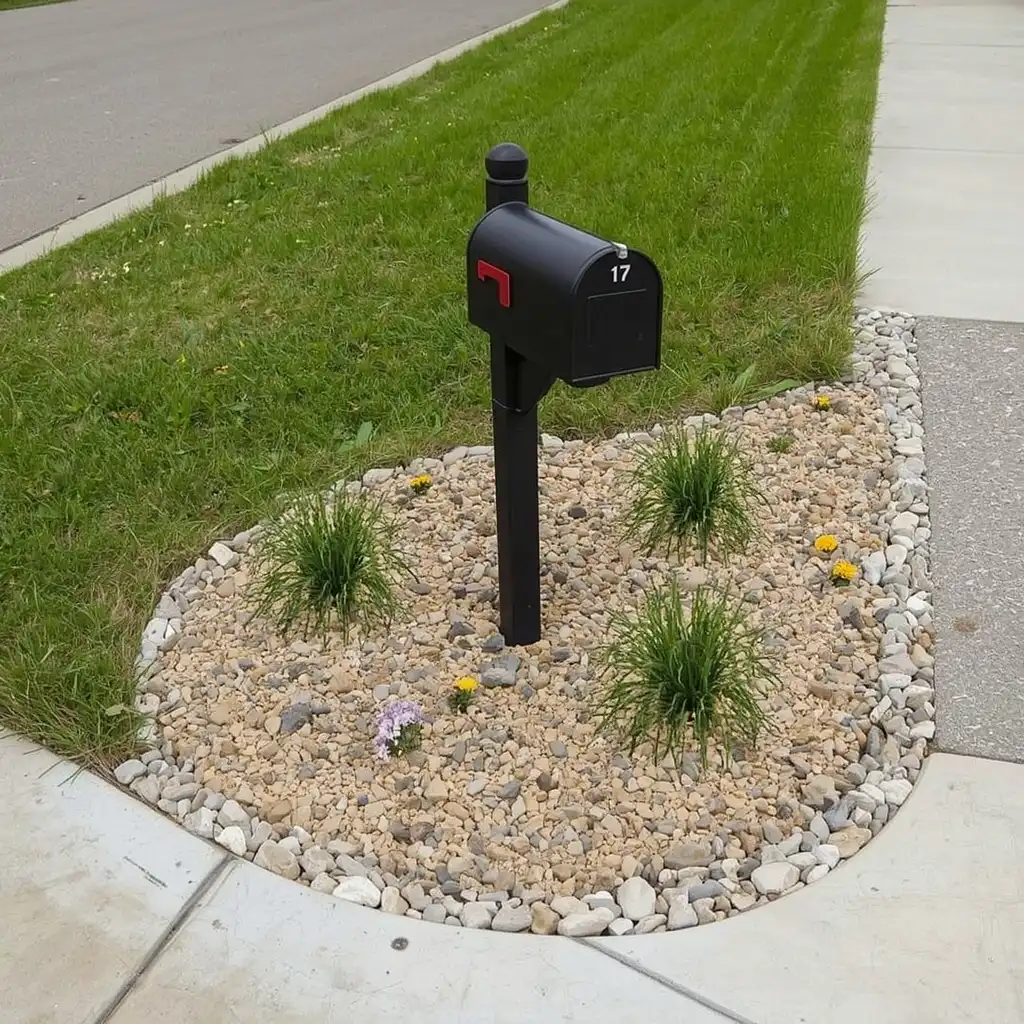
The mailbox is often the first part of your property that visitors see. A small rock bed can make it look cleaner without taking up much space.
Create a narrow bed around the post. Use edging to stop gravel from spreading onto the road or lawn.
Add two small grasses or low flowering plants. Keep them below the mailbox and house numbers.
Choose plants that can handle heat, road dust, and occasional dry soil. Avoid thorny plants near the door of the mailbox.
Leave room for repairs and mail delivery. The design should never make the box hard to reach.
Repeat stone used near your house or pathway. This small detail helps connect the mailbox to the rest of the yard.
18. Turn a Drainage Swale Into a Garden Feature
Best for: Wet channels and low side yards
Estimated cost: Medium to high
Maintenance level: Medium
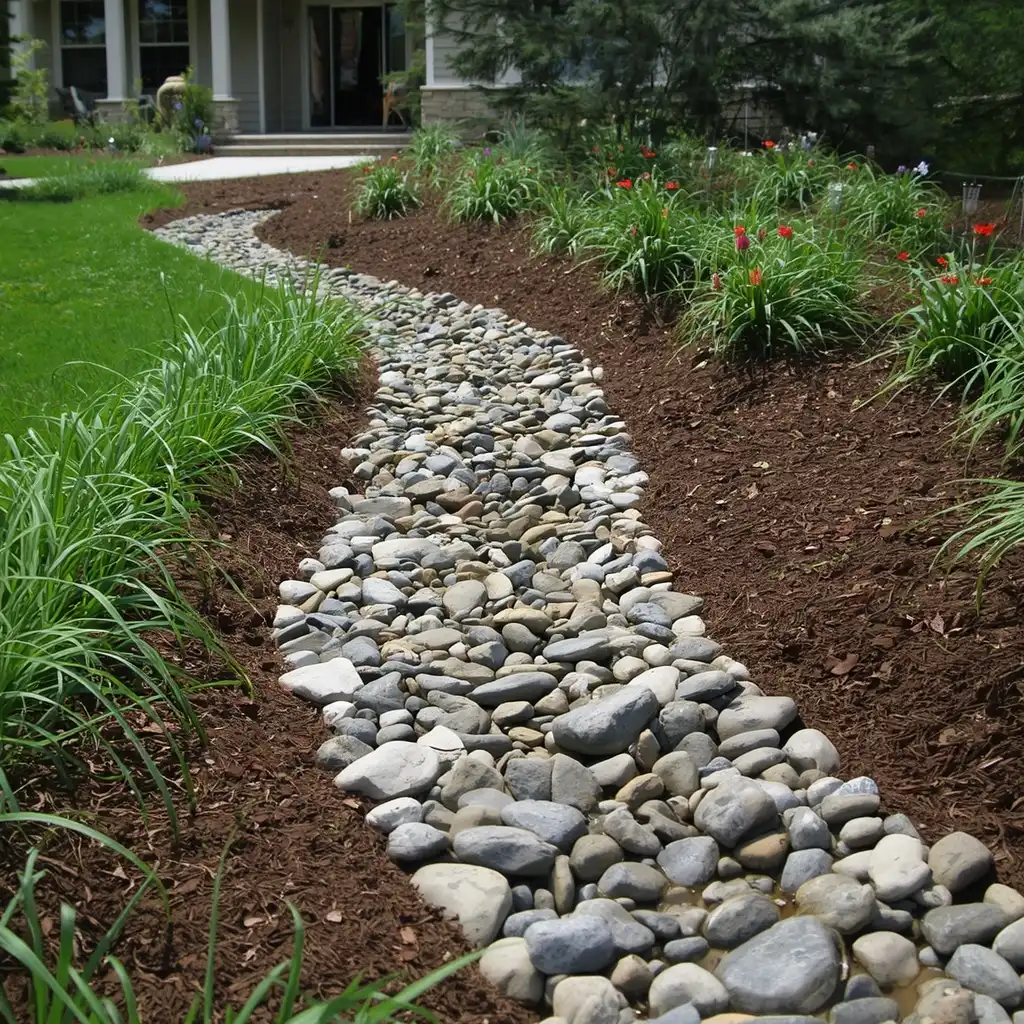
A drainage swale may look like an empty ditch, but it performs an important job. It carries rainwater away from buildings and hard surfaces.
You can line part of it with river rock to reduce bare soil. Use stone that is large enough to stay in place during heavy rain.
Plant moisture-tolerant grasses, sedges, and flowers along the upper edges. Their roots can help control erosion.
Do not build solid borders across the channel. This may trap water and cause flooding in another part of the yard.
Watch the swale during a heavy rain before making changes. Note where the water enters, how fast it moves, and where it leaves.
Frequent flooding or standing water may point to a larger drainage problem. Ask a professional to check it before adding more stone.
19. Soften Rock Landscaping Ideas With Groundcover
Best for: Gravel beds that look bare or feel too hot
Estimated cost: Low to medium
Maintenance level: Low to medium
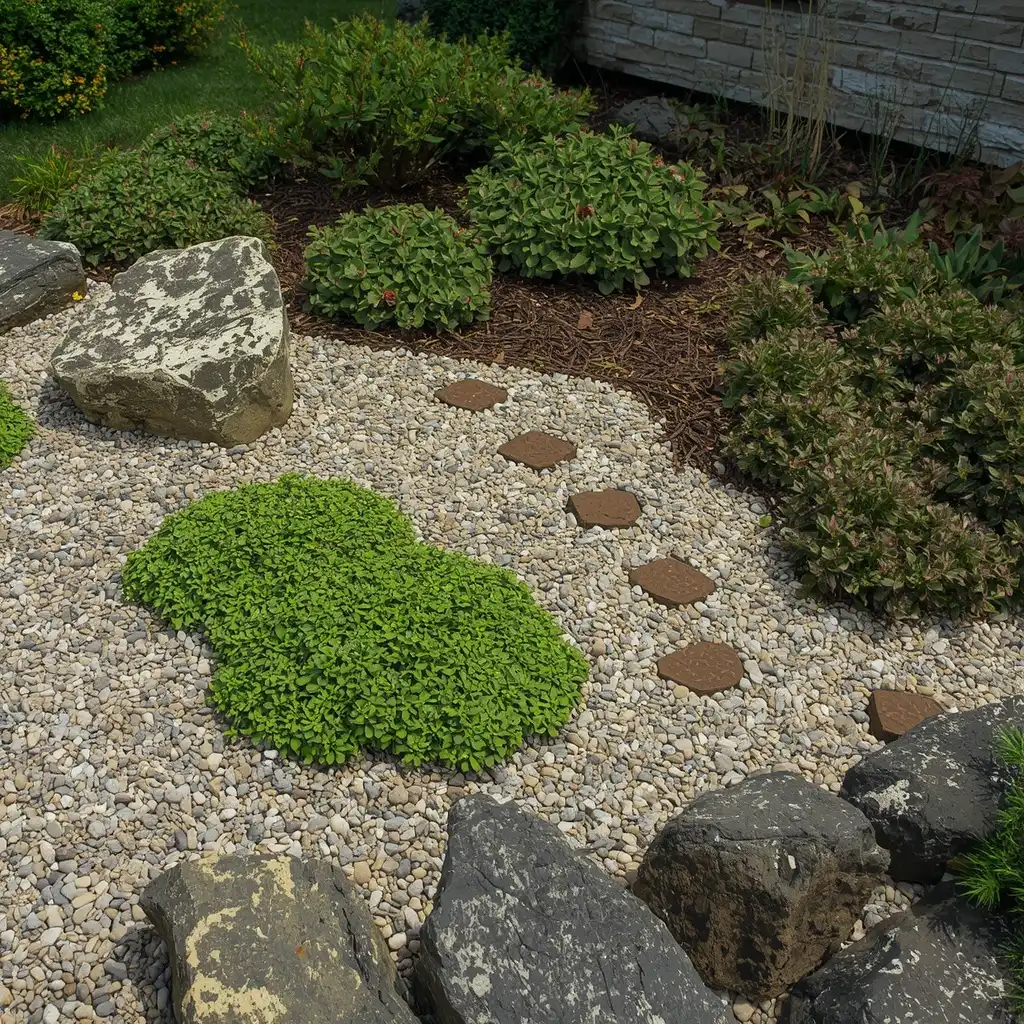
Large areas of gravel can make a yard look hard and unfinished. Groundcover plants add color and soften the space.
Plant them in selected gaps rather than covering the full bed. This keeps the rock visible and gives each plant room to spread.
Creeping thyme and sedum may work in sunny, dry areas. Moss and some native groundcovers may suit damp shade.
Choose plants based on foot traffic. A plant beside a path faces different pressure from one in a quiet garden bed.
Small plants can also shade parts of the soil and reduce heat around nearby roots. This can help other plants during hot weather.
Use one groundcover in several places. Repetition creates a cleaner result than mixing many unrelated plants.
How to Choose the Right Rock for Your Project
The right stone depends on how you plan to use the area.
Use angular gravel for paths because the pieces lock together. Rounded river rock works better in dry creek beds and decorative drainage areas.
Flat fieldstone is useful for edging and stepping paths. Large boulders work as focal points or anchors on slopes.
Think about color before ordering. Pale stone can brighten shade but may show dirt. Dark stone hides stains but becomes hotter in direct sun.
Always view the rock in person when possible. Wet stone may look very different from dry stone.
Buy a small sample before ordering a full truckload. Place it beside your house, plants, and paving to check the color.
Mistakes That Can Make Rock Landscaping Harder
Rock landscaping can reduce some yard work, but poor planning may create new problems.
Avoid these common mistakes:
- Installing stone without firm edging
- Blocking natural drainage routes
- Placing gravel against tree trunks
- Using slippery river rock on walking paths
- Choosing plants that cannot handle reflected heat
- Covering large areas with one plain rock
- Mixing too many rock colors
- Forgetting how mature plants will spread
- Using loose gravel near regular vehicle traffic
- Assuming weeds will never appear
Landscape fabric may slow some weeds, but it is not right for every bed. Soil and leaves can collect above it, allowing new weeds to grow.
Fabric may also make it harder to move plants or improve the soil later. Use it with care and choose a type that allows water to pass through.
Plan Your Rock Landscaping Before You Buy Materials
Start by choosing one problem area. It may be a muddy path, an empty lawn, a wet channel, or a dry garden bed.
Measure the length and width. Mark the planned shape with a garden hose or string.
Watch how sun and rain affect the area. Some problems only appear during a storm or on a hot afternoon.
Choose the plants before ordering rock. This helps you leave enough planting space and select a stone color that works with them.
Check delivery access as well. A truck may not be able to reach a narrow backyard.
Rock is heavy. Ordering too much can leave you with a pile that is hard to remove. Ordering too little may lead to extra delivery costs.
Choose One Rock Idea and Start Small
Rock can define paths, improve drainage, protect soil, and add shape to a plain yard. It can also reduce the amount of lawn and bark mulch you need to maintain.
The best design uses rocks for a clear reason. It also includes plants that fit your soil, sunlight, and climate.
Begin with one small section before changing the full yard. Measure the space, watch the water flow, and compare local material prices.
Start with one of these rock landscaping ideas, test it in a small area, and build the rest of your yard around what works.