
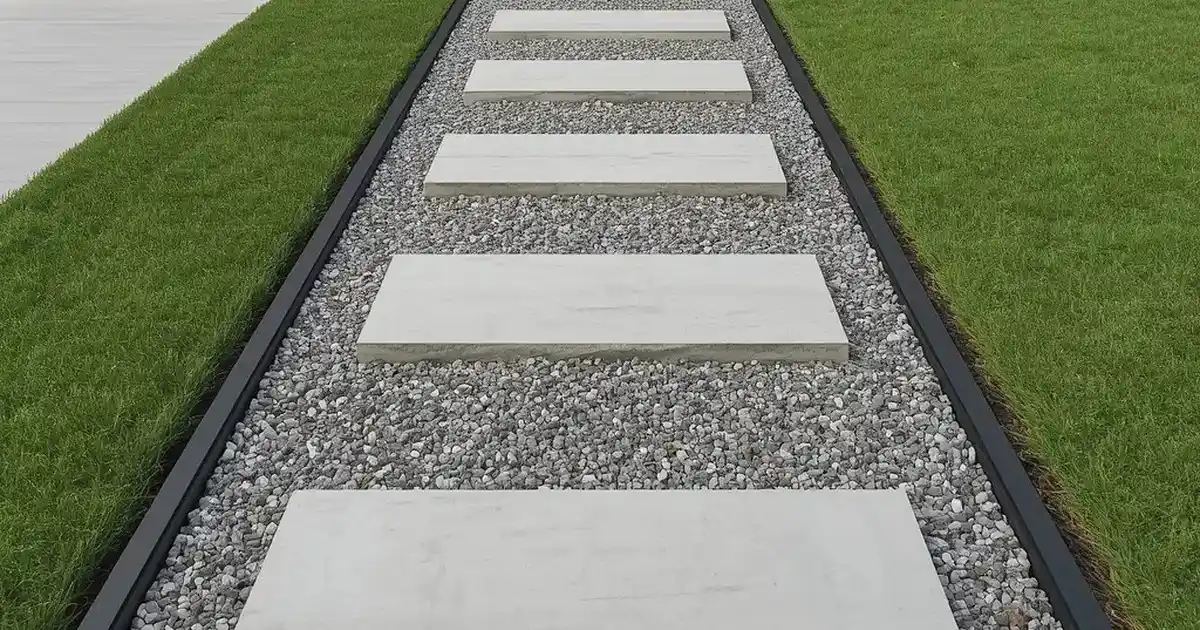
A muddy path, bare side yard, or empty garden corner can make your whole yard feel unfinished. Concrete and stone pavers may fix the problem, but they can also cost more than you planned.
That is where pea gravel can help.
These pea gravel landscaping ideas can turn problem areas into useful outdoor spaces. You can use pea gravel for paths, patios, garden beds, fire pit areas, and quiet seating corners. It also works well in narrow spots where grass will not grow.
Pea gravel is easy to spread and comes in several natural colors. But it can move underfoot. It may also scatter into the lawn when the base and edging are weak.
Good planning matters.
Below, you will find 19 practical ideas for large yards, small patios, and tight side spaces. You will also learn how to prepare the ground, keep the stones contained, and care for the finished area.
What You Need to Know Before Using Pea Gravel
Pea gravel is made of small, smooth stones. Water and natural wear have rounded the edges over time.
The smooth shape gives pea gravel a soft and natural look. It also makes the stones more likely to roll and shift than crushed gravel.
Pea gravel works best in:
- Garden paths
- Patios with light foot traffic
- Seating areas
- Container gardens
- Side yards
- Flower bed borders
- Spaces around stepping stones
It may not be the best choice for steep slopes. The stones can move downhill after rain or heavy use.
Loose gravel can also be hard for wheelchairs, walkers, rolling carts, and narrow chair legs. Add firm stepping stones or another stable surface when access is important.
A Good Base Saves Work Later
Do not spread pea gravel over soft soil and expect it to stay level. The stones may sink into the ground after rain.
Start with firm soil and a compacted base. Crushed stone is often used below pea gravel because its sharp edges lock together.
Strong edging also helps. Brick, stone, steel, concrete, and thick plastic edging can keep the gravel out of nearby grass and soil.
Check drainage before you begin. Gravel does not fix a poorly graded yard. Water should still move away from your house and outdoor structures.
4 Pea Gravel Path Ideas That Fix Muddy Walkways
A worn route across your lawn can turn into mud after one storm. These pea gravel path ideas create cleaner ways to move through your yard.
1. Build a Winding Garden Path
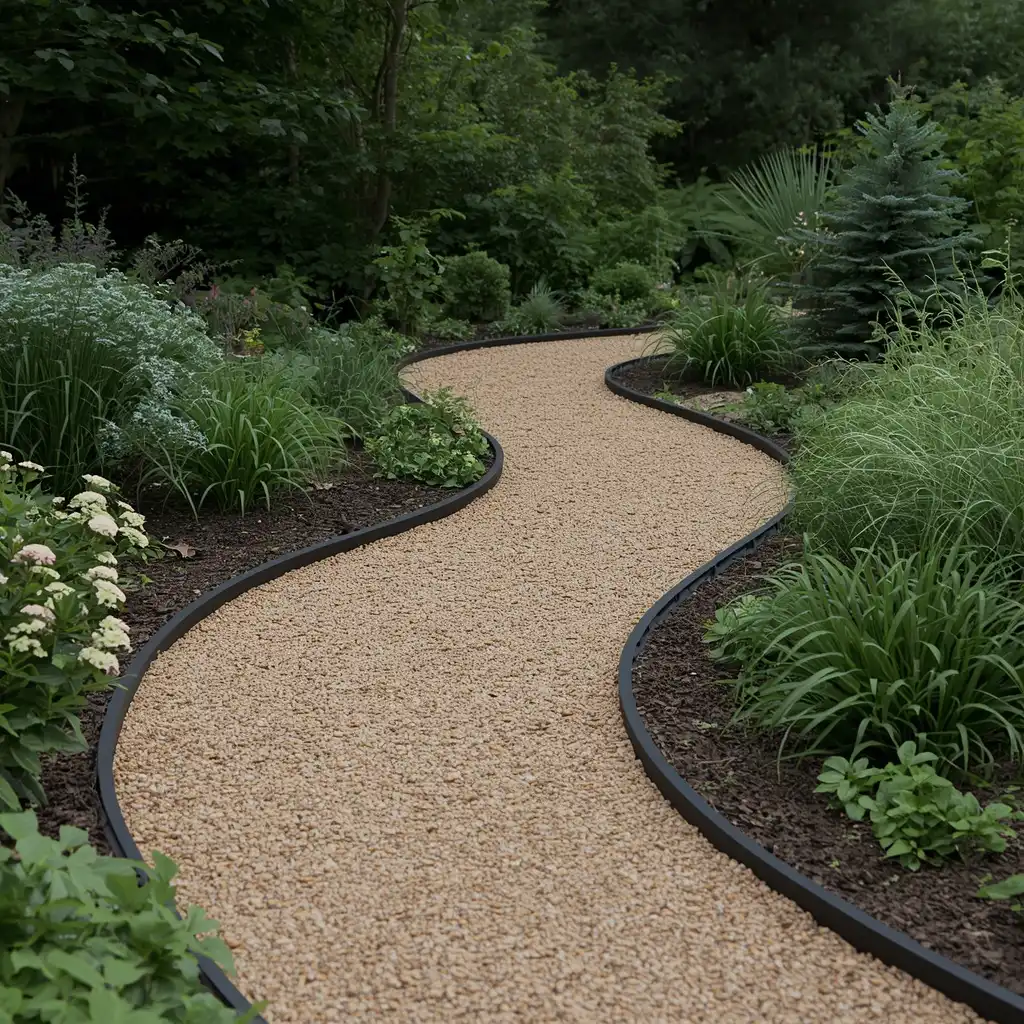
A curved pea gravel path can make a small garden feel larger. The bends hide part of the path and make the space feel deeper.
Use a garden hose to test the shape before digging. Soft curves look more natural than sharp turns.
Make the path wide enough for the way you plan to use it. A narrow path may work for one person. A wider path is better when you carry tools or push a wheelbarrow.
Add edging along both sides. Brick works well in cottage gardens. Steel gives the path a cleaner and more modern look.
Plant low flowers or herbs near the border. Keep taller plants farther back so they do not block the path.
Best for: Informal gardens and backyard paths
Avoid: Tight curves that are hard to walk through
2. Add Stepping Stones Through the Gravel
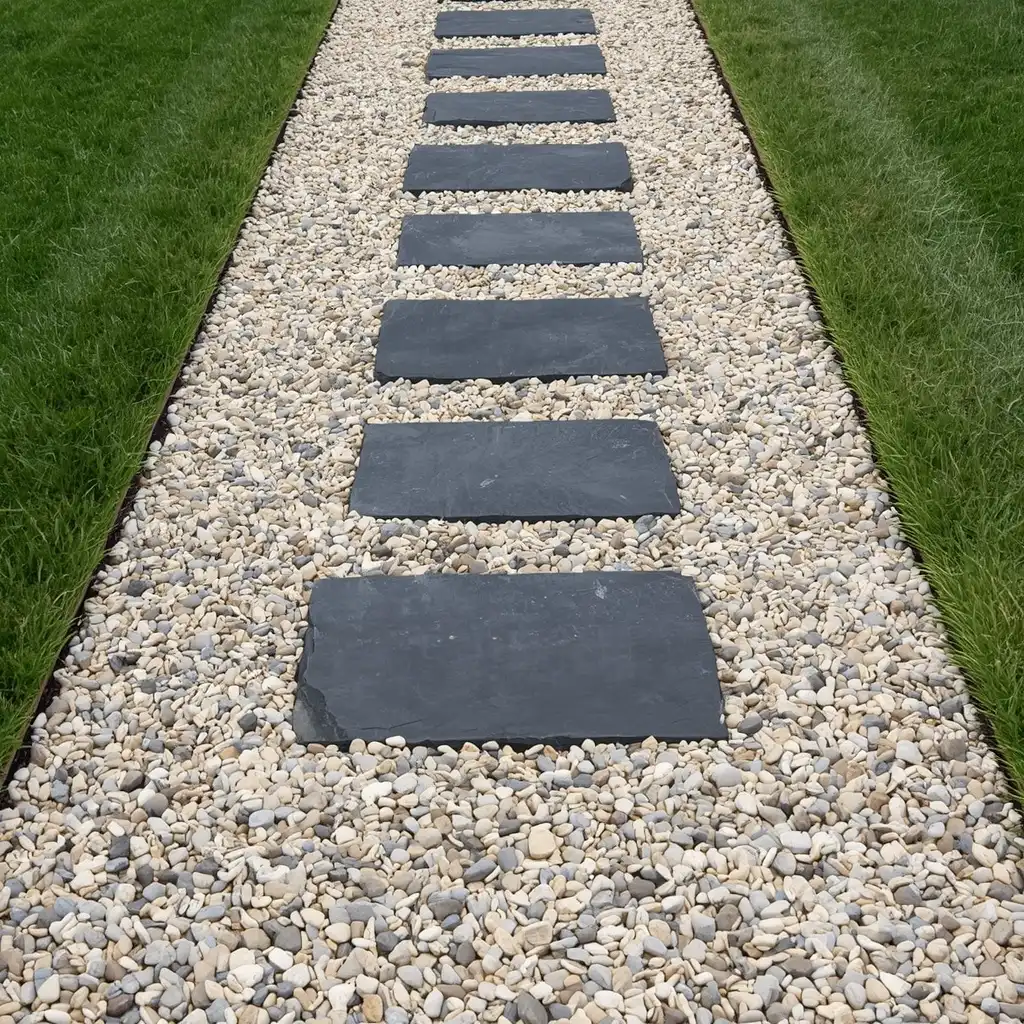
Pea gravel may shift under your feet. Large stepping stones can give you a firmer place to walk.
Lay the stones in the path before you set them. Walk across them and adjust the spacing until each step feels natural.
Choose flat stones with a rough surface. Smooth stones may become slippery when wet.
Set each stone into the base so it does not rock. The top of the stone should sit close to the finished gravel level.
Dark slate looks sharp against pale gravel. Warm sandstone creates a softer garden style.
The stepping stones will take most of the foot traffic. This can help reduce movement in the gravel.
Best for: Main garden routes and paths used each day
Quick tip: Use wide stones when children or older adults use the path
3. Create a Straight Modern Walkway
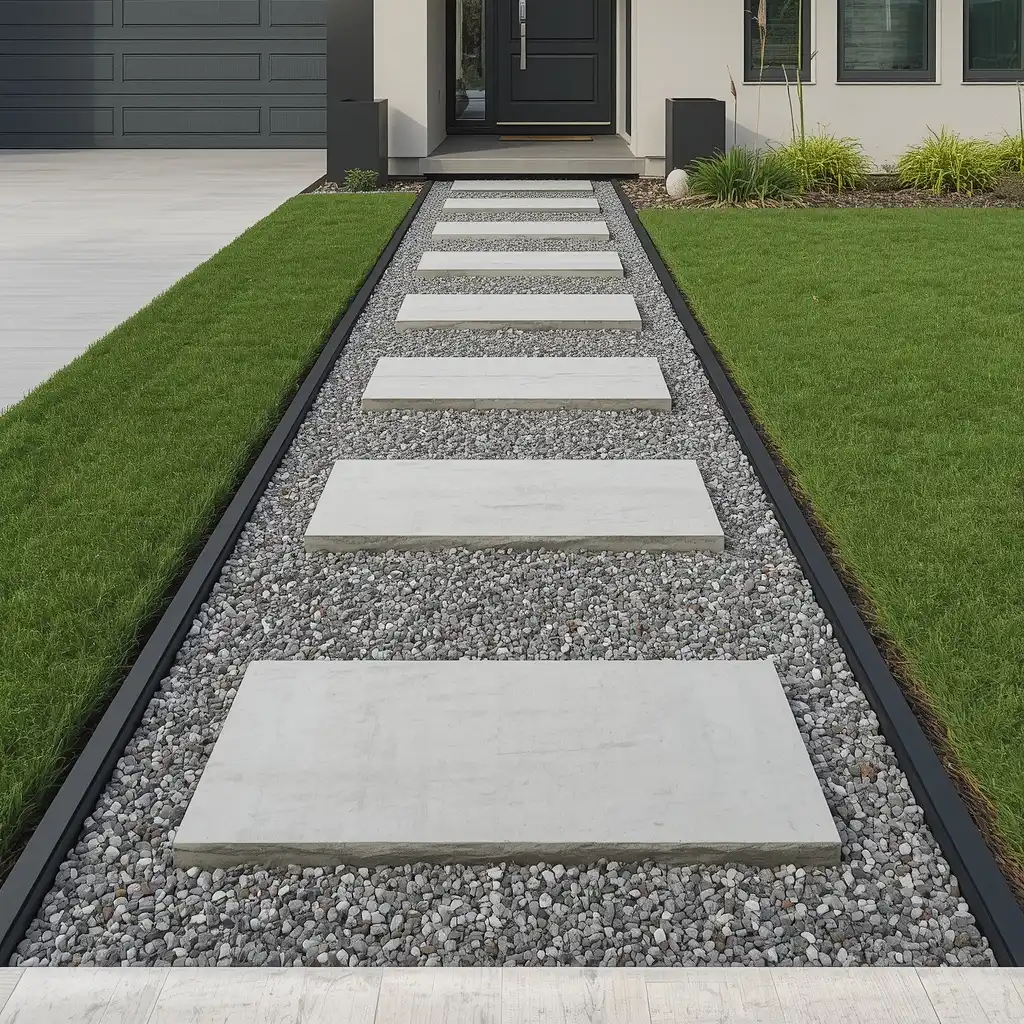
A straight pea gravel walkway can connect your driveway to a side door or backyard gate.
Use metal edging to create clean lines. Keep the path width even from one end to the other.
Add large concrete slabs through the center. Leave equal gaps between each slab for a neat pattern.
Choose gray or mixed-color gravel for a modern look. Black planters and simple grasses can add contrast.
Low landscape lights can mark the edge at night. Space them evenly so the path does not feel crowded.
Keep nearby plants simple. Too many shapes and colors can weaken the clean design.
Best for: Modern homes and narrow front yards
Avoid: Loose gravel directly beside a busy driveway
4. Fix Mud Between Raised Garden Beds
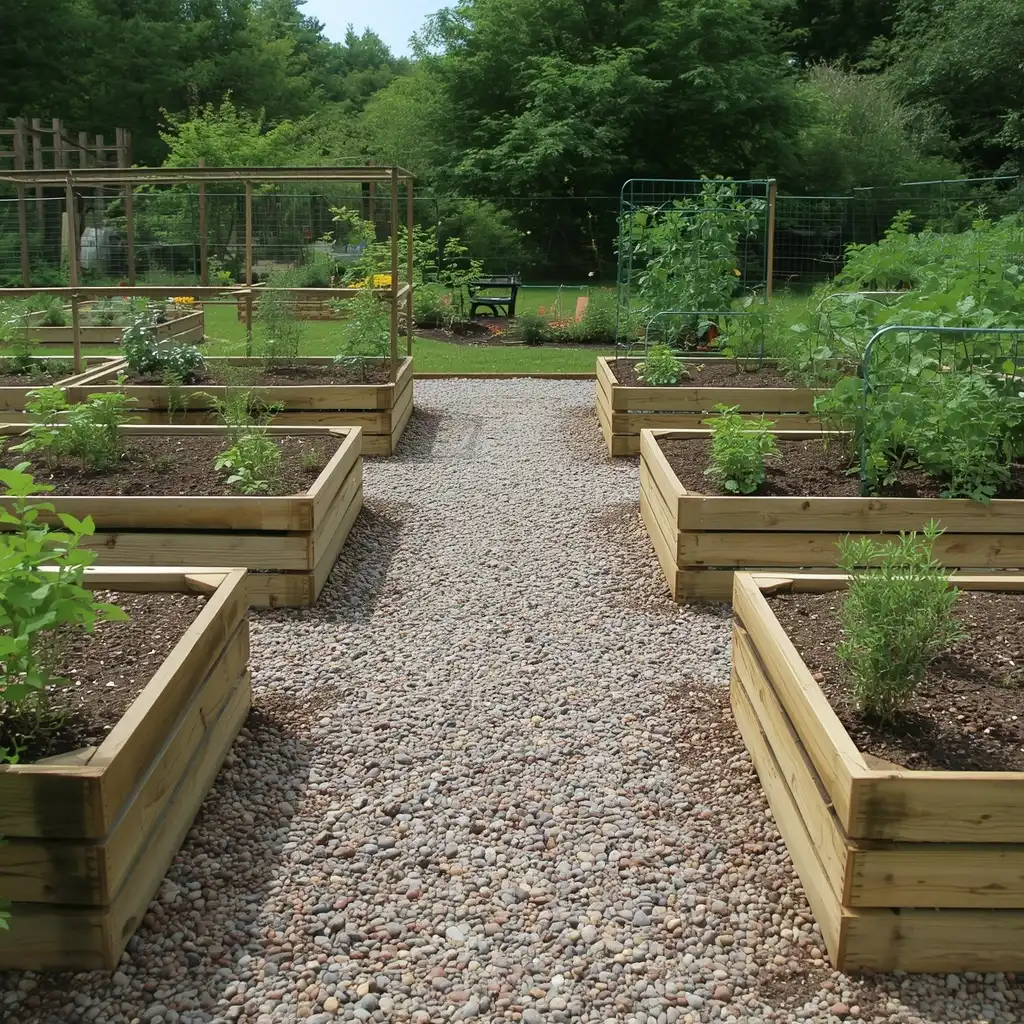
Paths between raised beds often become muddy during watering or rain. Pea gravel can keep the area cleaner.
Remove weeds and loose soil first. Add a compacted base before spreading the top layer.
Make each aisle wide enough for your tools. Leave extra room when you use a cart or wheelbarrow.
Install a solid border around each bed. This stops gravel from mixing with the garden soil.
Keep the pea gravel lower than the top of the bed frame. Stones that sit too high may spill into the planting area.
This is one of the most useful pea gravel garden ideas for people who grow vegetables or herbs.
Best for: Raised beds and greenhouse paths
Quick tip: Use stepping slabs near water taps and gates
5 Pea Gravel Patio Ideas for Comfortable Outdoor Spaces
A new concrete patio can take a large part of your budget. Pea gravel gives you another option.
These pea gravel patio ideas can help you create a place to sit, eat, or relax without a major building project.
5. Make a Simple Pea Gravel Patio
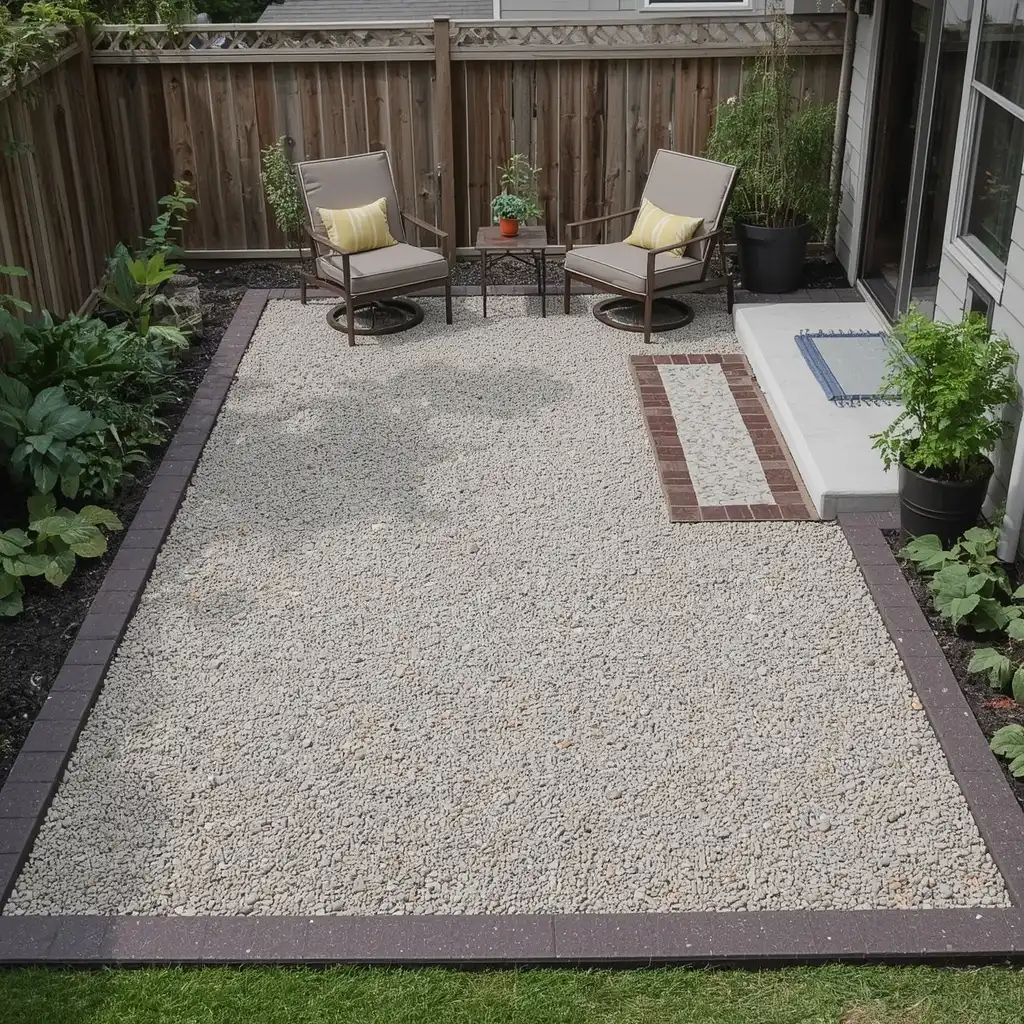
A square or rectangle is the easiest patio shape for a beginner. A curved edge works well in a relaxed garden.
Mark the area with stakes and string. Remove weeds, roots, and loose topsoil.
Compact the soil before adding the base. Then install edging around the full patio.
Spread the pea gravel in an even layer. Rake it flat and check for low spots.
Choose chairs and tables with wide feet. Thin legs can sink into loose stone.
An outdoor rug can help define the seating area. It may also make the surface feel more comfortable underfoot.
Best for: Small backyard seating areas
Avoid: Rolling chairs and tables with very narrow legs
6. Design a Safe Fire Pit Area
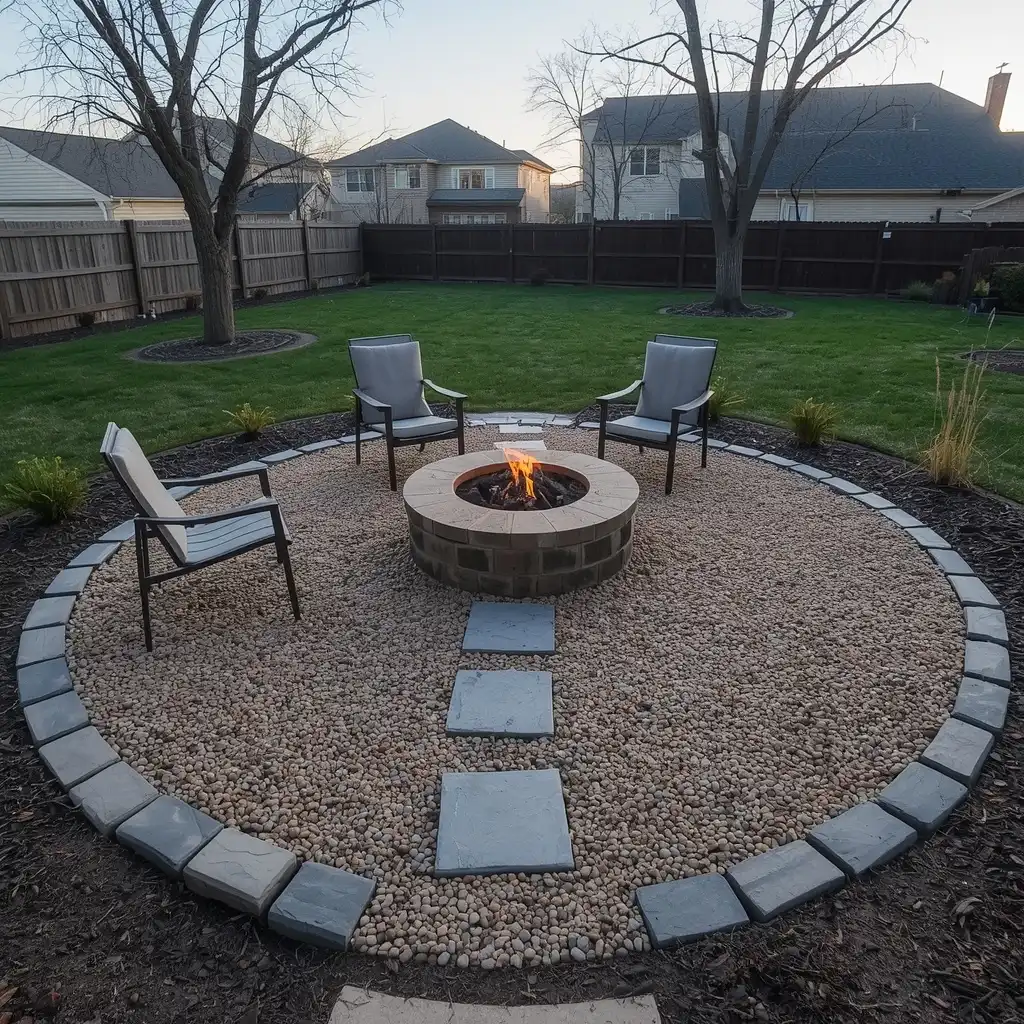
A pea gravel fire pit area can give your yard a clear place for evening gatherings.
Start by checking local fire rules. Also read the instructions that came with your fire pit.
Keep the fire feature away from fences, dry plants, buildings, and low branches. Required distances can change by location and product.
Use stone, brick, or metal edging around the space. Avoid wood edging close to open flames.
Place chairs far enough from the fire for comfort and safety. Set pavers under the chair legs when the gravel feels loose.
Pea gravel should not be treated as full fire protection. The fire pit must still sit on a surface approved by its maker.
Best for: Open backyard areas with safe clearance
Safety tip: Keep a hose or fire extinguisher nearby
7. Create a Small Outdoor Dining Nook
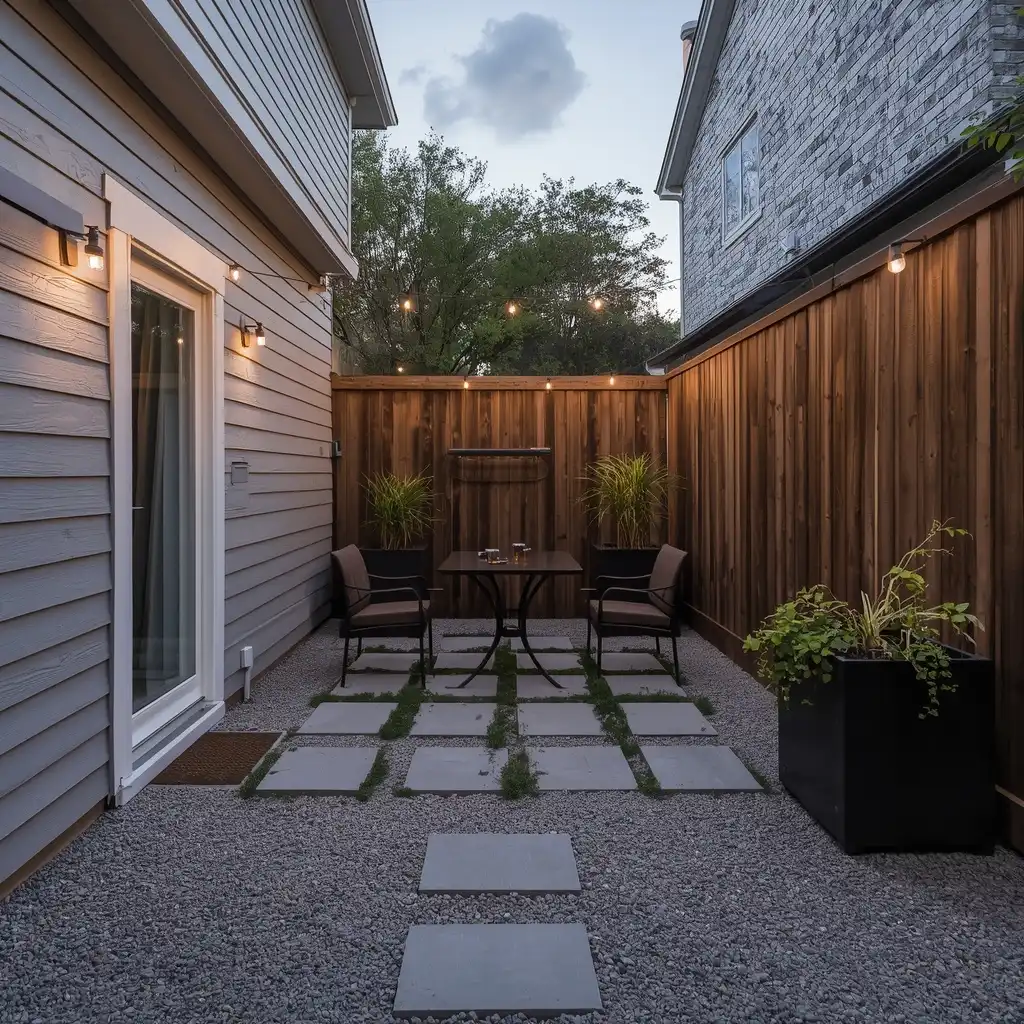
You do not need a large patio for outdoor meals. A small corner near the kitchen door can work well.
Use pea gravel as the main ground cover. Add a square of large pavers under the table.
The pavers give the table and chairs a stable base. They also create a clear center for the dining space.
Choose a small table that matches the size of the area. Leave enough room to pull out each chair.
Tall planters can add privacy. Wall lights or string lights make the space easier to use after sunset.
Keep the route from the kitchen clear. Carrying food across an uneven path can be awkward.
Best for: Small backyards and side patios
Quick tip: Place the dining area close to the house
8. Build a Quiet Reading Corner
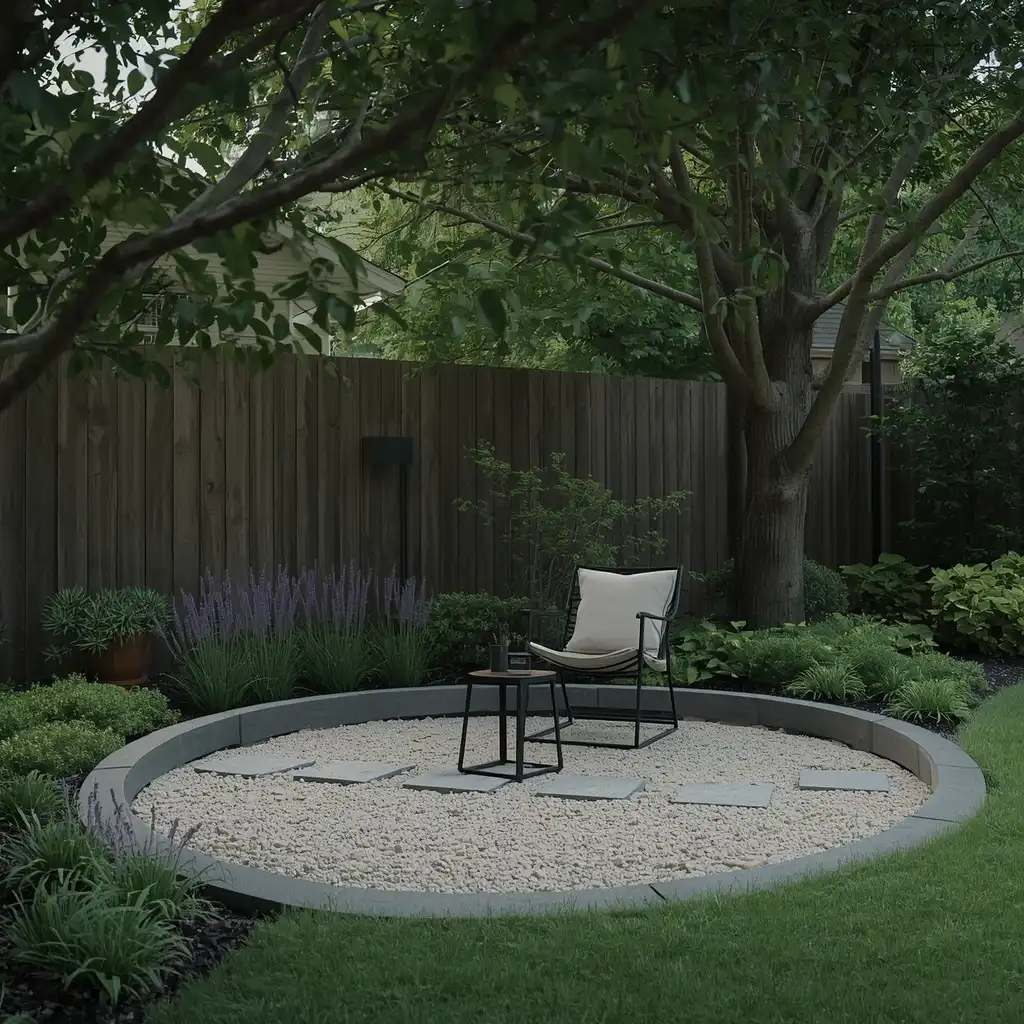
An unused garden corner can become a calm place to read or rest.
Choose a spot with shade during the hottest part of the day. A tree, pergola, or large umbrella can help.
Create a small curved area with gravel and solid edging. Add one comfortable chair and a side table.
Use a paver under each furniture leg if the chair feels unsteady.
Plant lavender, thyme, or other scented plants around the edge when they suit your climate. Their scent can make the space feel more private and relaxing.
Add a small solar light for evening use.
Best for: Empty corners and shaded areas
Avoid: Placing the chair under weak or damaged tree branches
9. Create a French-Inspired Courtyard
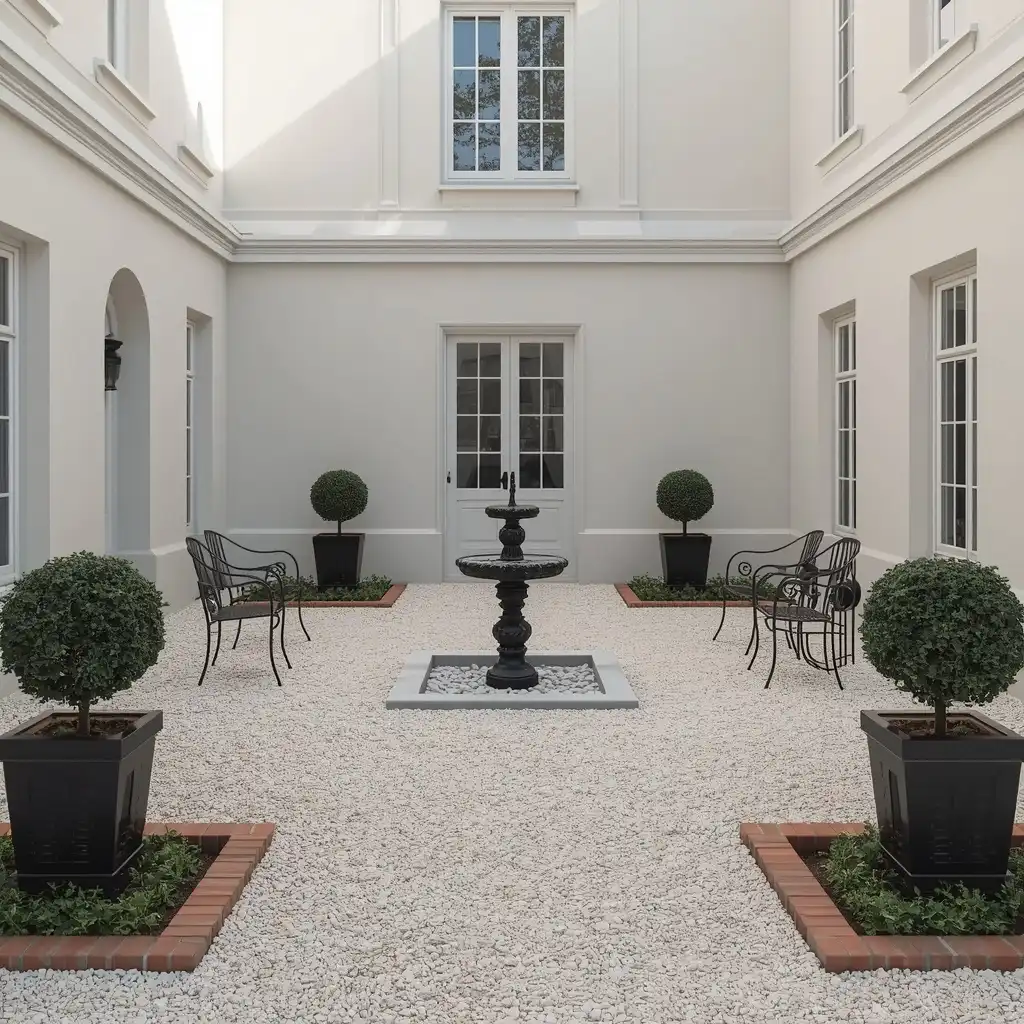
Pale pea gravel works well in a simple courtyard design.
Start with a square or round space. Place a planter, birdbath, or fountain in the center.
Add matching pots on both sides. Small trees or clipped shrubs can create a balanced look.
Use metal chairs and a small table for a classic garden feel. Keep the number of colors low.
Brick or stone edging gives the area a finished border. It also stops gravel from spreading into nearby beds.
A 12-by-12-foot space can hold four chairs and a small center feature without feeling crowded.
Best for: Formal garden corners and enclosed patios
Quick tip: Repeat the same plant or pot shape for a neat look
6 Pea Gravel Garden Ideas for Beds and Borders
Bare soil can grow weeds and turn muddy. Organic mulch helps, but it breaks down over time.
These pea gravel garden ideas use stone as a border, background, or clean walking surface.
10. Use Pea Gravel Around Drought-Tolerant Plants
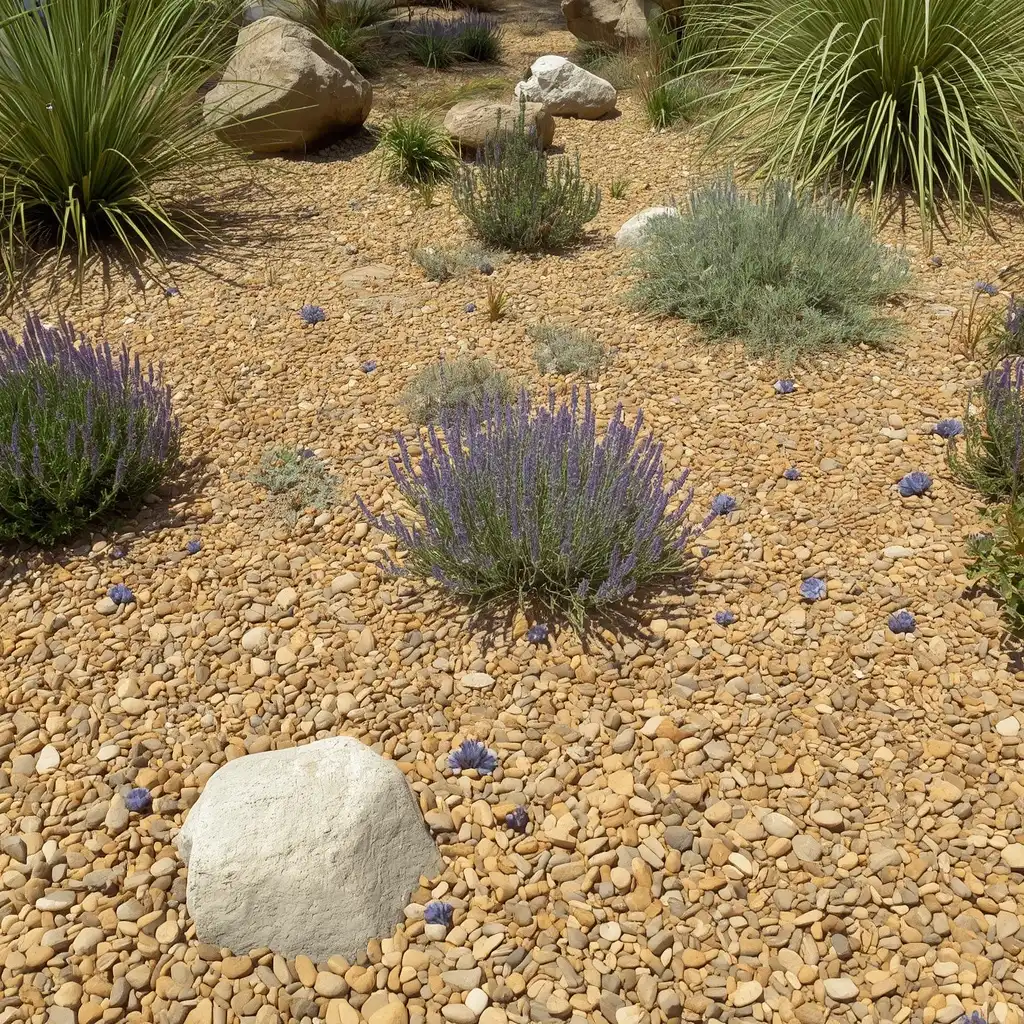
Pea gravel can look great around plants that prefer dry soil.
Choose plants that match your heat, rain, soil, and winter weather. Lavender, salvia, sedum, thyme, and ornamental grasses are common choices in many areas.
Do not pile stones against plant stems. Leave a small open ring around each plant.
Gravel can become hot in full sun. Some plants may struggle when the soil gets too warm.
Plan your drip lines before you add the gravel. Fixing irrigation later can mean moving a lot of stone.
Add a few larger rocks to break up the flat surface. They can make the bed feel more natural.
Best for: Sunny, low-water planting beds
Avoid: Plants that need cool and damp soil
11. Add a Clean Border Around Flower Beds
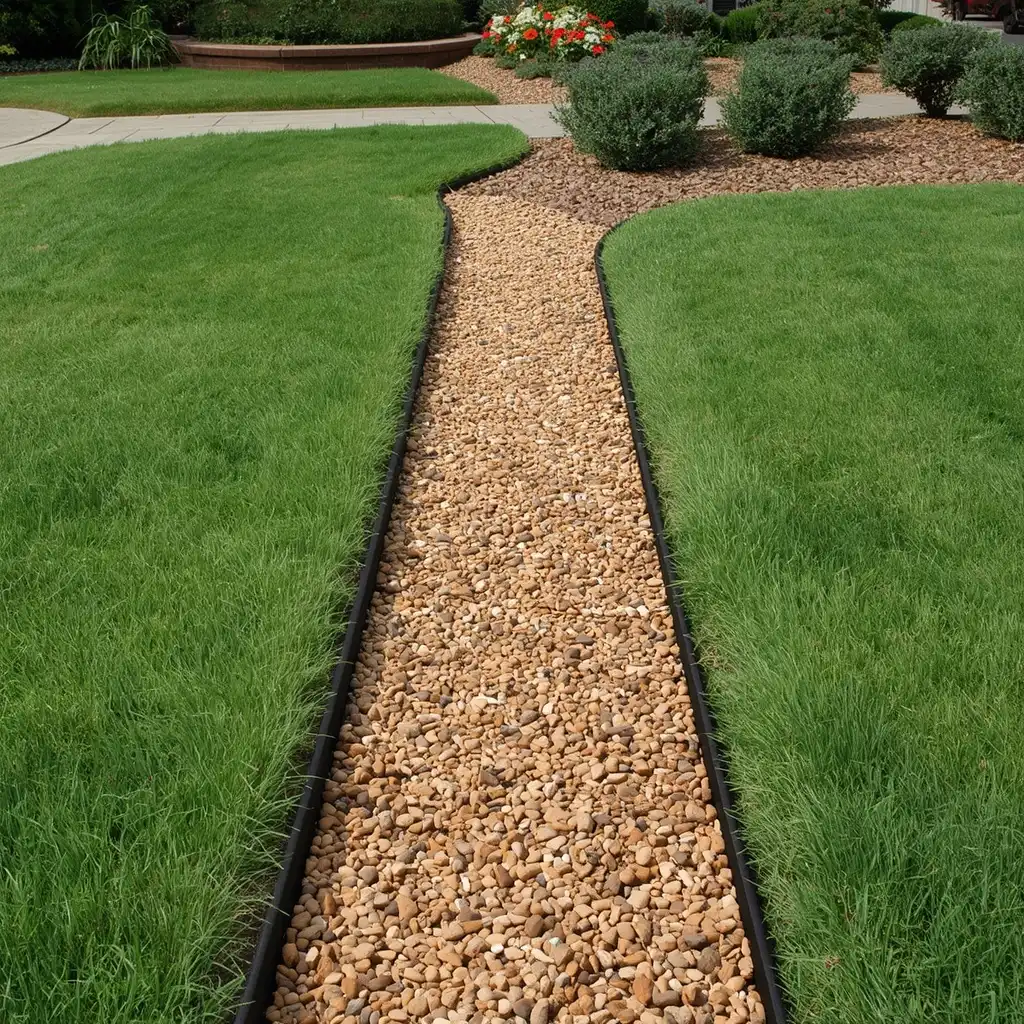
A narrow gravel strip can separate your lawn from a flower bed.
Install edging on both sides of the strip. One edge holds back the lawn. The other holds back the planting soil.
Keep the width even for a clean look. A strip wide enough for one foot can also give you a place to stand while pruning.
This border may reduce mud around the bed. It can also make lawn care easier.
Pull grass roots before adding the base. Grass may grow through weak or shallow edging.
Use a gravel color that works with your house and garden stones.
Best for: Long flower beds and front yard borders
Quick tip: Make the strip wide enough for easy maintenance
12. Surround a Water Feature With Gravel
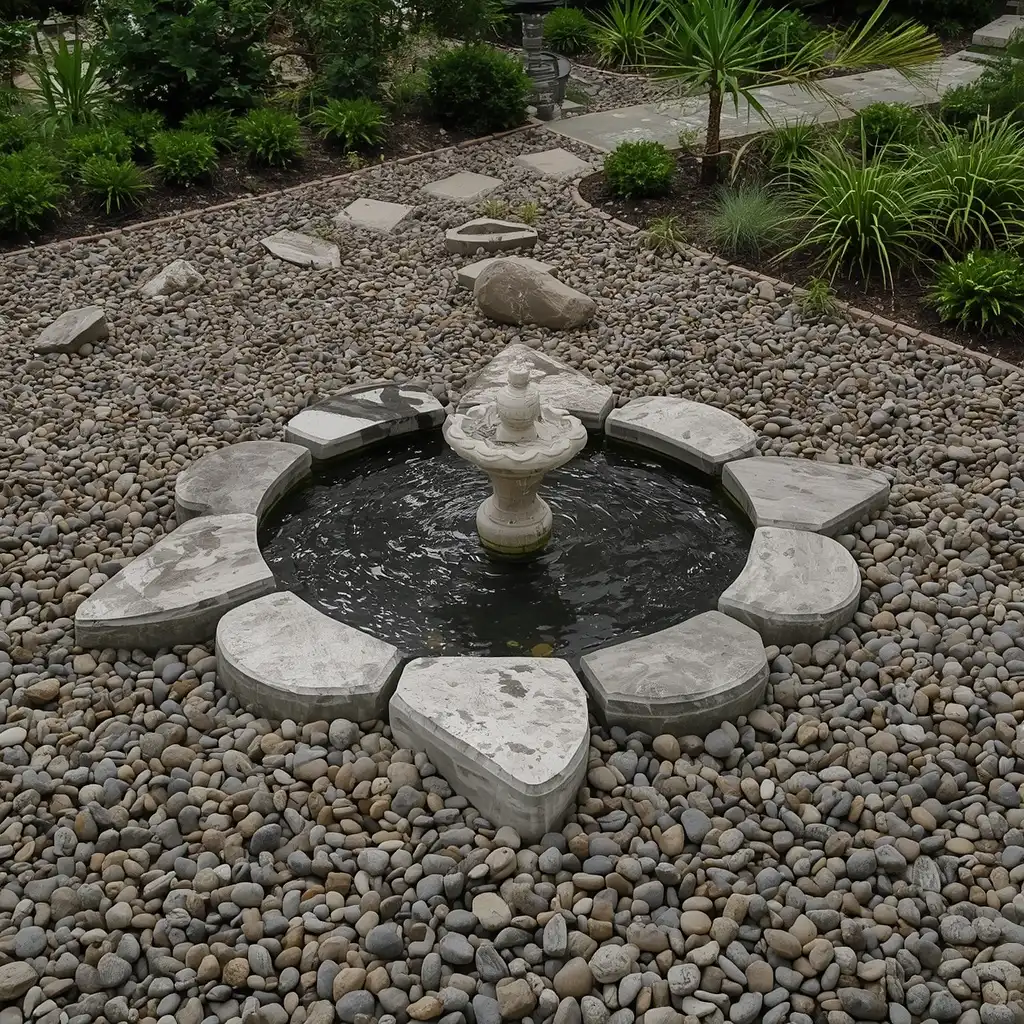
Pea gravel can soften the hard edge of a fountain or small water basin.
Choose a color that matches the stone or metal finish. Pale gravel can brighten a shaded corner. Darker gravel can make a light fountain stand out.
Add three or five larger rocks around the feature. Odd numbers often look more natural.
Keep access to the pump and power parts clear. You should not need to move heavy stones for basic repairs.
Make sure water drains away from your house. Do not build a water feature where leaks could reach the foundation.
Low grasses and small ground plants can finish the look.
Best for: Fountains and small garden basins
Avoid: Covering service panels or drainage points
13. Create a Dry Creek Look
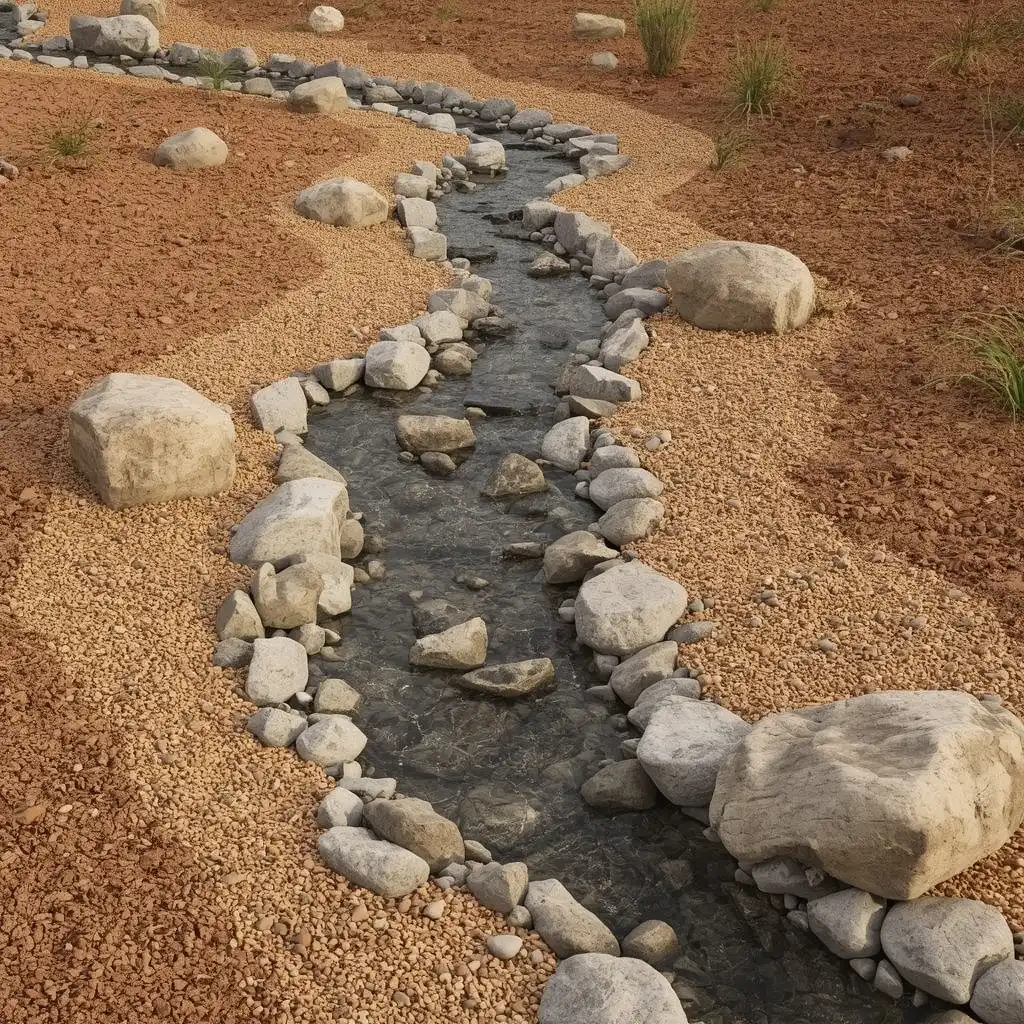
A dry creek can add shape to a flat yard.
Use larger river rocks along the sides. Place pea gravel in the wider center areas.
Follow the natural slope of the ground. Curves should look soft and uneven.
Add larger stones at bends to copy the way rocks collect in a real stream.
A decorative dry creek does not fix every drainage problem. Poor grading may still send water to the wrong place.
Ask a drainage expert for help when the area carries a lot of stormwater.
Best for: Decorative slopes and wide planting beds
Important: Do not block natural water flow
14. Build a Clean Base for a Container Garden
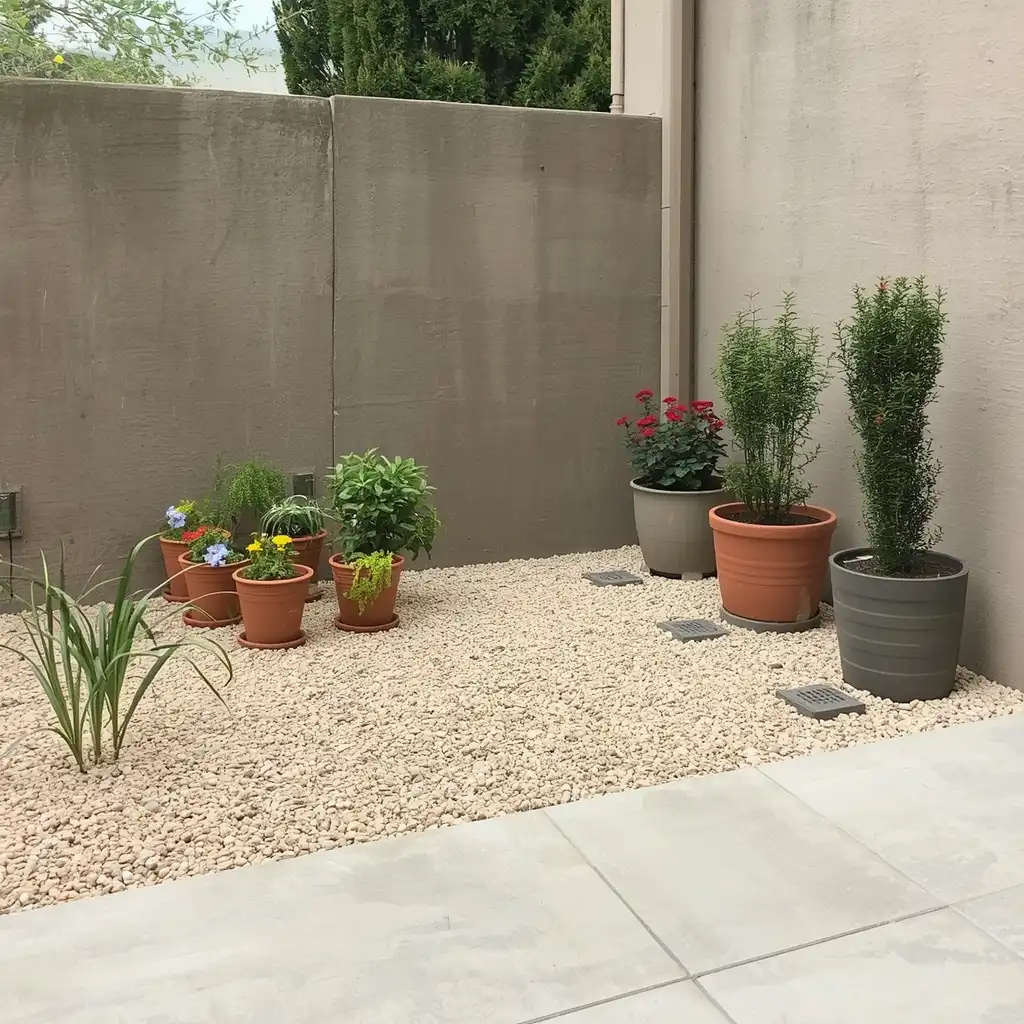
Pots can stain concrete and create muddy rings on bare soil. A pea gravel base keeps the display cleaner.
Mark a small area near a wall, fence, or patio. Install edging before adding the gravel.
Use pot feet or small pavers under each container. This keeps the drainage holes open.
Group pots in different heights. Place the tallest pots at the back.
Leave enough space to water and move each pot. Crowded containers can be hard to care for.
Renters may like this idea because the pots can move with them.
Best for: Renters, patios, and small yards
Quick tip: Use matching pots in two or three sizes
15. Improve the Area Around a Mailbox
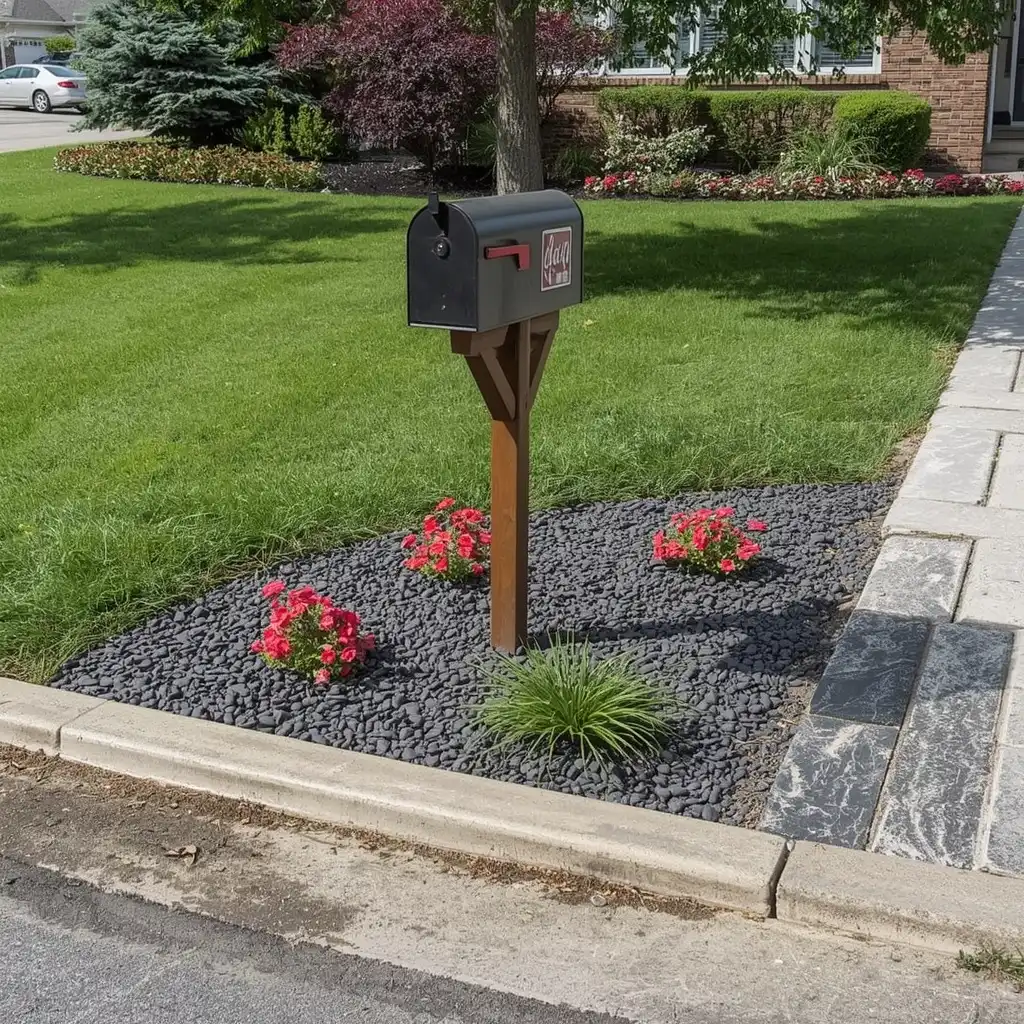
The soil around a mailbox often becomes thin, dry, or damaged.
Create a small round or square bed around the post. Use brick, stone, or steel edging.
Add compact plants that will not block drivers or people walking nearby. Keep the mailbox easy to reach.
Choose plants that can handle heat from the road. They may also need to handle salt in cold areas.
Use a gravel color that matches your driveway or house trim.
Do not place loose gravel where car tires may throw it into the road.
Best for: Small front yard updates
Avoid: Tall plants that block views
4 Practical Pea Gravel Backyard Ideas for Hard-to-Use Areas
Some of the hardest yard problems are found in places guests rarely see.
These pea gravel backyard ideas can improve side yards, storage zones, equipment areas, and pet spaces.
16. Build a Cleaner Bin or Storage Area
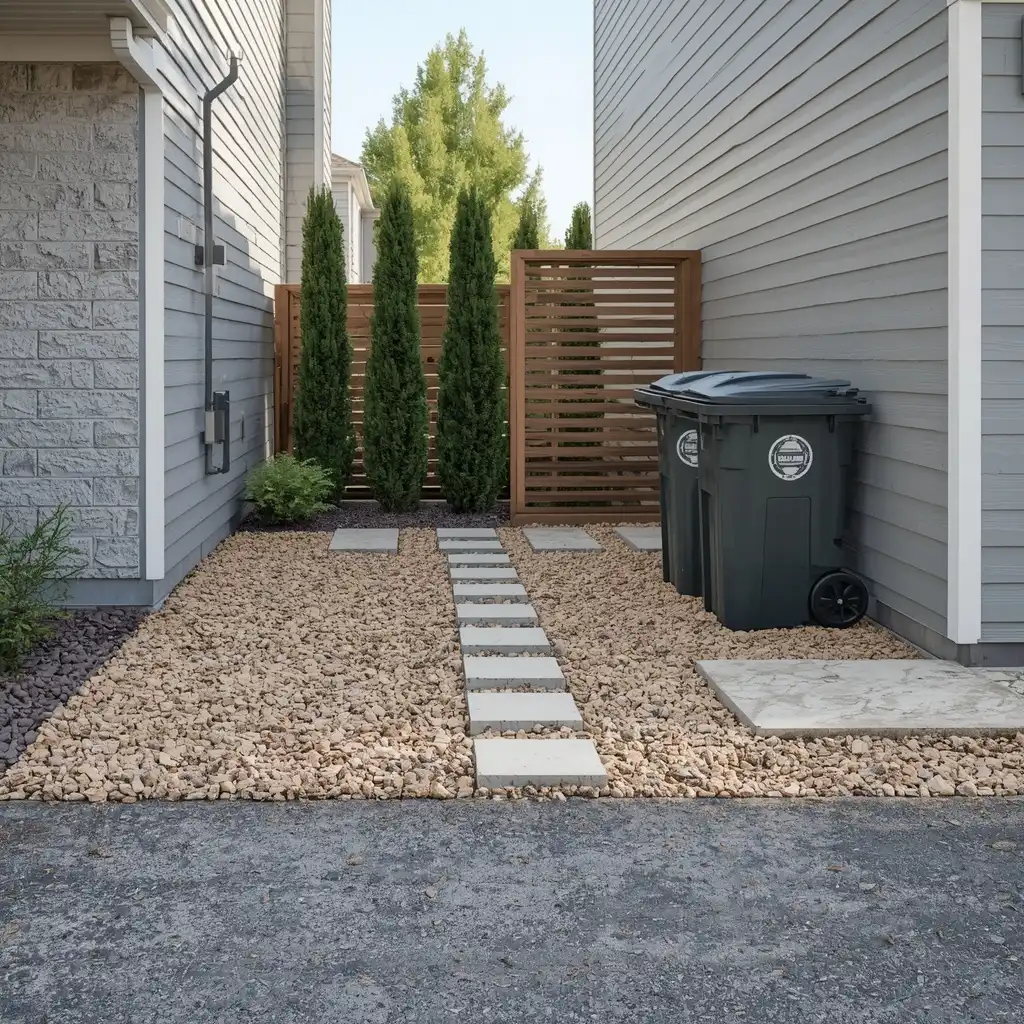
Grass often fails in narrow side yards because the area gets little sun.
Remove the weak grass and create a pea gravel side yard path. Add stepping stones for a firmer walking surface.
Keep the path clear around gates, water taps, and utility meters.
Use wall planters when the space is too narrow for beds. This adds color without blocking the route.
Check the slope before adding gravel. Water should move away from the house.
A four-foot-wide side yard can often hold a path and a narrow planting strip.
Best for: Shaded spaces between homes
Quick tip: Use light-colored gravel to brighten dark areas
17. Build a Cleaner Bin or Storage Area
Trash bins and garden tools can leave deep marks in soft ground.
Create a small gravel pad beside the house or fence. Make it wider than the items you plan to store.
Add a short path from the driveway. This keeps your shoes cleaner on wet days.
Use a screen or tall plants to hide the bins. Leave enough airflow around the storage area.
Place flat pavers where bin wheels will roll. Loose pea gravel can make heavy bins hard to move.
Keep drains, vents, and utility lines clear.
Best for: Trash bins, hoses, and garden tool storage
Avoid: Loose gravel on the main rolling route
18. Add a Gravel Strip Around an Air Conditioner
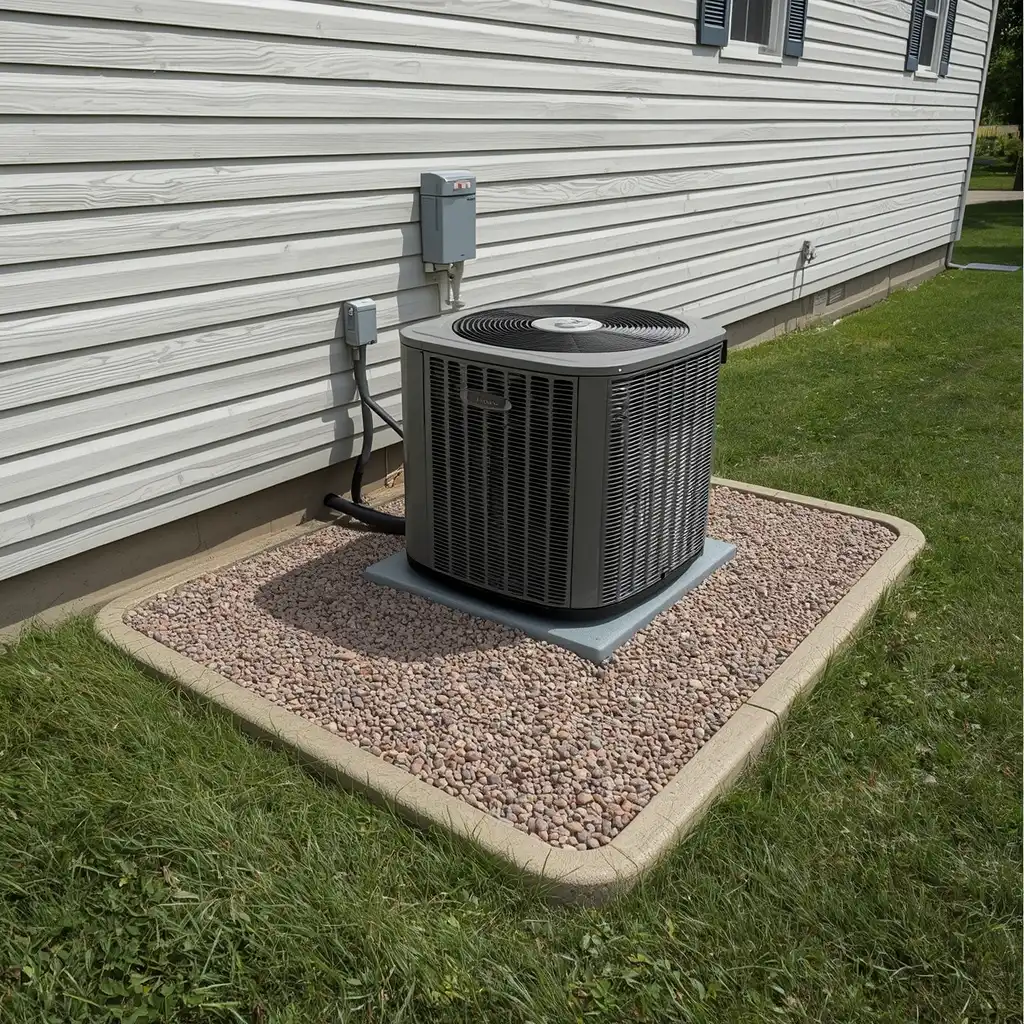
Bare soil around an outdoor air unit can become muddy and full of weeds.
A narrow gravel strip can keep the area cleaner. It may also make service access easier.
Follow the clearance rules from the equipment maker. Air must move freely around the unit.
Do not pile gravel against the equipment base or house wall. Keep the finished level below siding and vents.
Make sure water does not collect below the unit.
Leave a clear route for repair workers.
Best for: Muddy equipment areas
Important: Check the unit manual before changing the space
19. Create a Simple Dog Relief Area
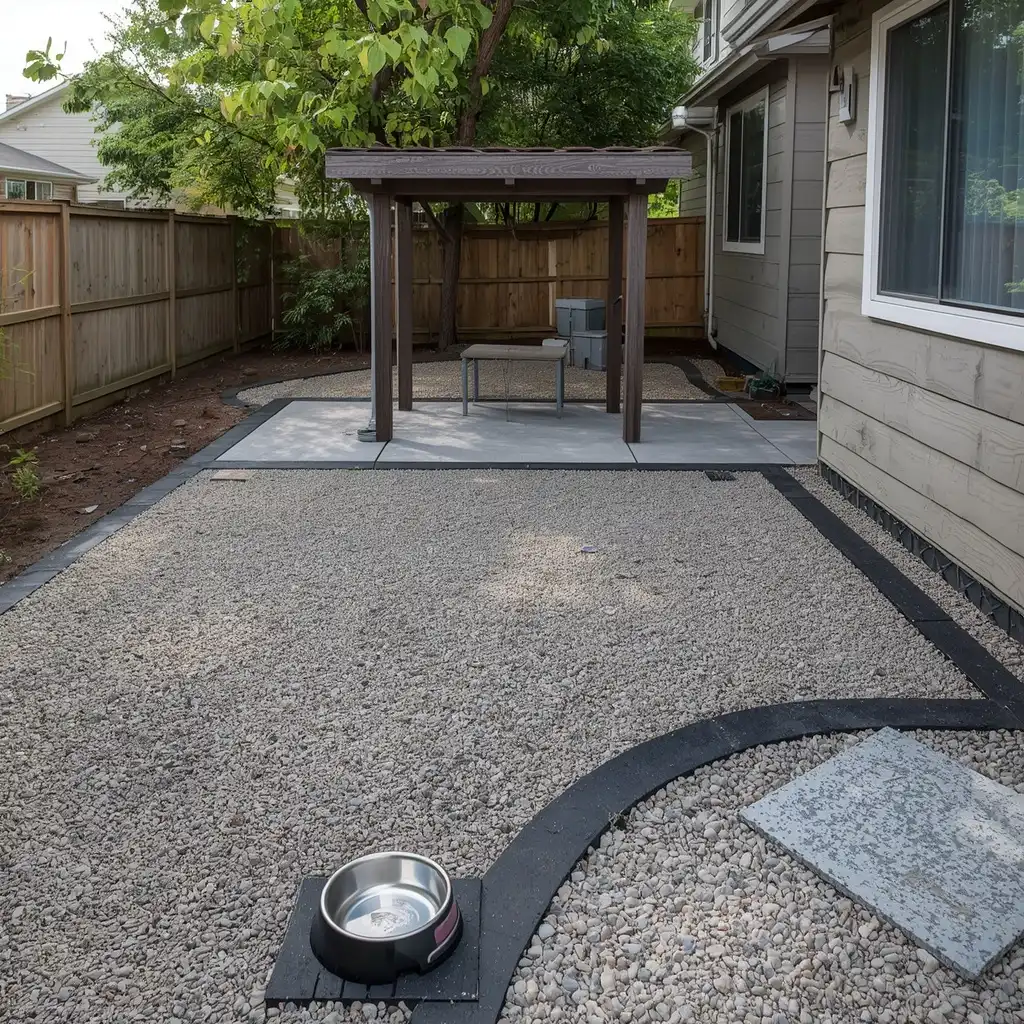
Pea gravel may work in a dog run or pet relief zone. But it is not right for every dog.
Choose smooth, washed gravel. Sharp or dirty stones may hurt paws.
Provide shade and fresh water. Gravel can become hot in direct sun.
Plan good drainage so the area is easier to clean. Remove waste each day.
Watch your dog during the first few uses. Some pets may dig, chew, or swallow stones.
Dogs with sore paws, joint problems, or limited movement may need a softer surface. Ask your vet when you are unsure.
Best for: Healthy dogs that accept gravel
Avoid: Puppies or dogs that chew stones
How to Install Pea Gravel So It Stays in Place
Most pea gravel problems begin below the surface. Good pea gravel installation starts with a firm base and clear border.
Here is how to keep pea gravel in place from the start.
1. Measure the Area
Measure the length and width of the project.
For a round area, measure across the widest point. Use an online gravel calculator to estimate the amount needed.
Order a little extra for low spots and future touch-ups.
2. Mark the Shape
Use stakes and string for straight lines.
Use a garden hose for curves. Step back and check the shape from several angles.
3. Check the Drainage
Watch how water moves through the space.
Do not build a patio where water collects. Fix the slope before adding the base.
Water near the house should move away from the foundation.
4. Remove Weeds and Loose Soil
Dig out weeds, roots, and soft soil.
Do not place gravel over thick grass. The plants may grow through the surface or create uneven spots.
Call your local utility marking service before deep digging.
5. Compact the Soil
Use a hand tamper for a small space.
A plate compactor may work better for a large patio or long path.
Firm soil helps stop the base from sinking.
6. Add a Crushed Stone Base
Spread crushed stone over the prepared ground.
Compact it in thin layers. A firm base will support the pea gravel above it.
The exact depth may change with the soil, weather, and type of project.
7. Install Strong Edging
Set the edging around the full area.
The border should be strong enough to handle foot traffic and weather.
Brick, steel, concrete, stone, and thick plastic are common choices.
8. Add the Pea Gravel
Spread the gravel in a level layer.
Do not add more than the border can hold. Deep loose gravel may be harder to walk through.
Rake the surface until it feels even.
9. Test the Finished Area
Walk across the path or patio.
Move the furniture into place. Add pavers where legs sink.
Check the surface again after heavy rain.
How to Keep a Pea Gravel Landscape Clean
Pea gravel needs less care than some lawn areas. But it is not free from work.
A few regular tasks can keep it looking neat.
Remove Leaves Early
Dry leaves are easier to remove than wet, broken leaves.
Use a rake with light pressure. A leaf blower may work on a low setting.
Do not point a strong blower directly at the gravel.
Pull Small Weeds
Landscape fabric may block some weeds from below. It cannot stop seeds from landing on top.
Pull new weeds before their roots grow deep.
You can also use a hand tool to loosen them.
Rake Stones Back Into Place
Foot traffic and rain may move the gravel.
Rake thin areas once a month or when needed. Pay attention to gates, steps, and patio edges.
Check the Edging
Look for loose or bent borders after storms and cold weather.
Repair small gaps before stones spread into the grass.
Fill Low Areas
Low spots may hold water and collect dirt.
Do not cover the problem with more gravel until you check the base. The ground may need to be raised and compacted.
Keep Gravel Away From Mowers
Loose stones can damage mower blades or fly through the air.
Sweep or rake gravel away from the lawn edge before mowing.
8 Mistakes That Make Pea Gravel Hard to Manage
Avoid these common problems:
- Spreading gravel over grass or soft soil
- Skipping the compacted base
- Using weak or shallow edging
- Building a path that is too narrow
- Placing rolling furniture on loose gravel
- Adding gravel to a steep slope
- Piling stones against siding or tree trunks
- Ignoring drainage before installation
Fixing the base later can mean removing all the gravel. It is easier to prepare the space well before the first stone is spread.
Frequently Asked Questions About Pea Gravel Landscaping
Is Pea Gravel Good for Landscaping?
Yes, pea gravel works well for patios, paths, borders, side yards, and container areas. It offers a soft look and allows water to pass between the stones.
It may move under heavy use. Strong edging and a firm base make it easier to manage.
What Should You Put Under Pea Gravel?
Start with firm, compacted soil. Add a layer of crushed stone when the area needs more support.
Landscape fabric may help separate the soil from the gravel. It should not replace good ground preparation or proper drainage.
How Deep Should Pea Gravel Be?
The right depth depends on the project and base.
A decorative garden strip may need less gravel than a patio or walkway. Deep loose gravel can feel hard to walk through.
Ask a local supplier or contractor for advice based on your soil and weather.
How Do You Stop Pea Gravel From Spreading?
Use strong edging around the full space.
A compacted base can reduce sinking and movement. Stepping stones can also take pressure off busy paths.
Rake scattered stones back into place before they mix with the soil.
Do Weeds Grow Through Pea Gravel?
Yes, weeds can still grow in pea gravel.
Some may come from roots below the surface. Others grow from seeds that land on top.
Good preparation helps. Regular weeding is still needed.
Is Pea Gravel Hard to Walk On?
Loose pea gravel may feel unstable underfoot.
It can be hard for people using wheelchairs, walkers, canes, or strollers. Add firm pavers or choose a more stable surface for important access routes.
Can You Put Patio Furniture on Pea Gravel?
Yes, but furniture with wide feet works best.
Narrow legs may sink or tilt. Place flat pavers below the table and chairs when you need more support.
Which Pea Gravel Idea Is Best for a Small Yard?
Start with one useful area, such as a path, reading corner, or container garden.
The best pea gravel landscaping ideas solve a clear problem. They also include good drainage, firm edging, and a stable base.
Choose One Small Area and Start There
Pea gravel can turn bare soil, mud, and unused corners into cleaner outdoor spaces. You can use it for a garden path, patio, flower bed border, fire pit area, or side yard.
The final result depends on what sits below the gravel. A firm base, strong edging, and good drainage will prevent many common problems.
Start with one area you already avoid or dislike. Measure it, watch how water moves, and decide how you want to use it.
With careful planning, these pea gravel landscaping ideas can help you create a yard that looks better and works harder without a major building project.