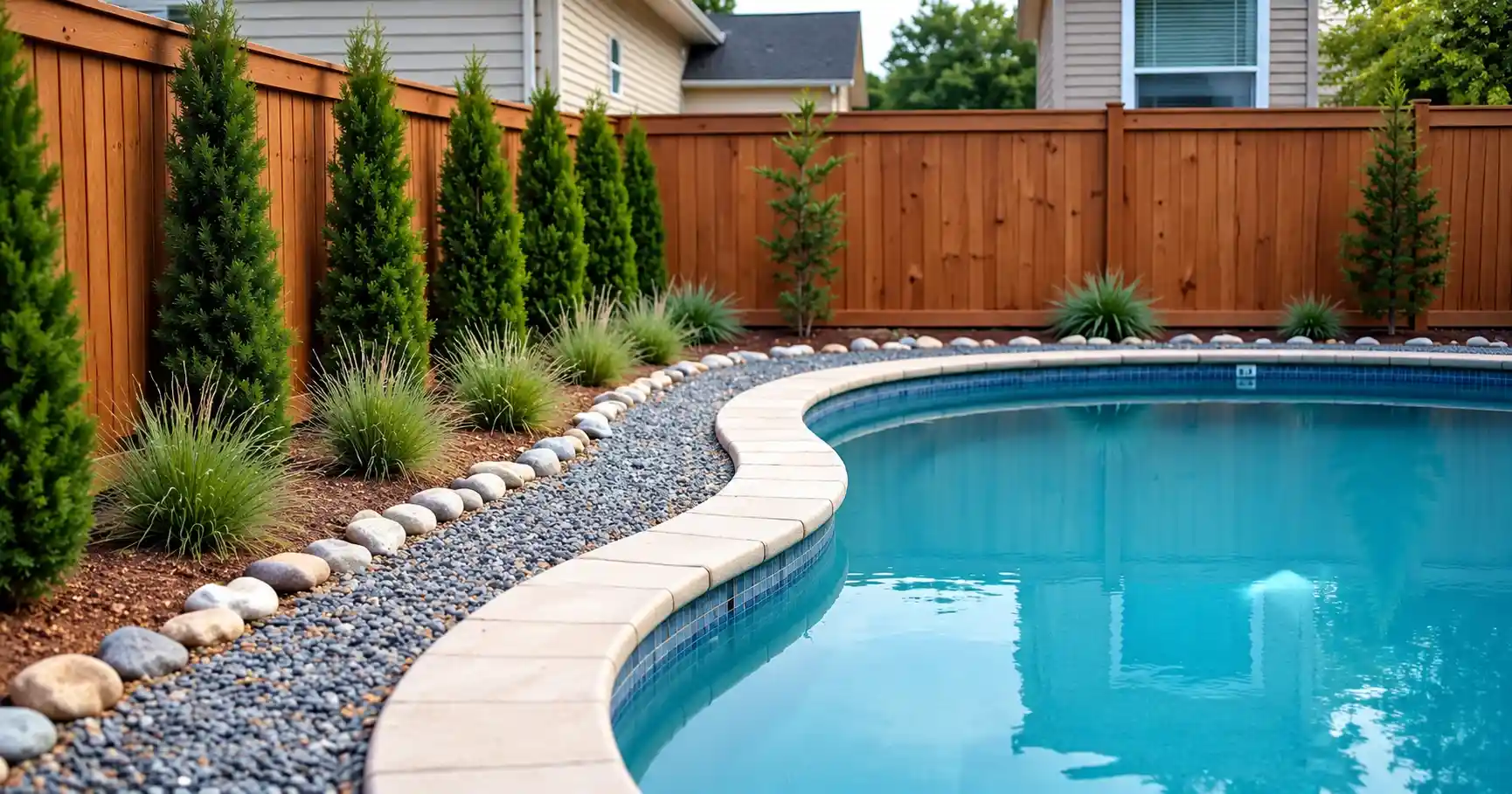
A pool can look unfinished when the space around it is plain concrete, patchy grass, or bare soil. You may also have muddy spots, poor drainage, or narrow areas that are hard to mow.
The right pool landscaping ideas with rocks can fix many of these problems. Rocks can form clean borders, control runoff, cover bare ground, and add color to your yard. They can also reduce some weekly yard work.
Still, rock landscaping needs a good plan. Loose gravel can fall into the water. Dark stones may become too hot in full sun. Large boulders may block pipes, drains, or pool equipment.
This guide shares 19 ideas for landscaping around a pool with rocks. You will learn how to use river rock, gravel, cobbles, and boulders in safe and useful ways. You will also find ideas for modern, tropical, desert, small, inground, and above-ground pools.
How to Choose the Right Rocks for Your Pool Area
A rock may look great in a sample. But it also needs to handle water, sun, foot traffic, and regular pool cleaning.
Start by deciding where the rock will go. Stone used in a plant bed has different needs than stone used near a walkway.
Smooth river rock works well in borders and drainage beds. Its round shape gives a yard a soft and natural look. However, round stones can shift when people walk on them.
Pea gravel is often affordable. It works best in seating areas that sit away from the pool edge. The small pieces move easily, so strong edging is a must.
Crushed stone has rough sides that lock together. This makes it a better choice for firm paths and stable beds. It may feel sharp under bare feet, so keep it away from busy walking areas.
Lava rock is light and easy to spread. It can work well in modern or desert-style yards. Dark lava rock may become very hot during sunny weather.
Large cobbles stay in place better than small gravel. They work well beside the pool deck or around plant beds. Large boulders can form a strong focal point, but delivery and placement may cost more.
Color also matters. White stone can make a small pool area feel brighter. It also shows dirt, leaves, and algae faster than gray or tan rock.
Dark stone suits many modern pools. But it can collect heat. Test a sample in full sun before you cover a large area.
Try to match the rock with your pool coping, deck, house, or fence. You do not need a perfect match. Warm colors should work with other warm colors. Cool gray stones often look best with gray, white, black, or blue features.
| Rock type | Best use | Main benefit | Possible drawback |
| River rock | Borders and drainage beds | Smooth, natural look | Can shift |
| Pea gravel | Seating areas | Often affordable | Moves easily |
| Crushed stone | Paths and firm beds | Packs together well | Rough on bare feet |
| Lava rock | Modern or desert beds | Light and easy to spread | Can become hot |
| Cobbles | Borders near the deck | Stay in place well | Cost more than small gravel |
| Boulders | Focal points and waterfalls | Strong visual effect | Harder to move |
One cubic yard of rock covers about 108 square feet at a depth of three inches. Actual coverage will change based on stone size, bed depth, and ground conditions.
Choose the location first. Then compare shape, size, heat, color, movement, and cost.
19 Pool Landscaping Ideas With Rocks
Some projects need only edging and a few bags of stone. Others involve drainage work, heavy equipment, or pool plumbing.
Choose an idea that solves a real yard problem first. You can add extra design details after safety, drainage, and access are handled.
1. Add a River Rock Border Beside the Pool Deck
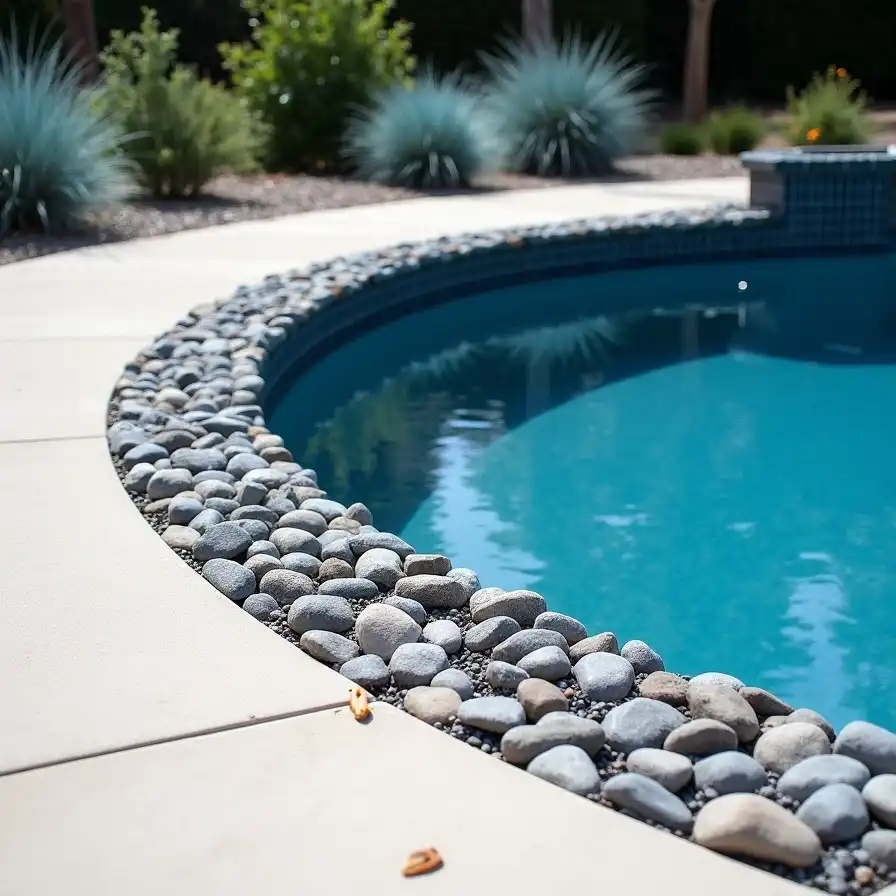
A river rock border creates a clean line between the pool deck and nearby plant beds. It can also cover soil that becomes muddy after rain or pool use.
Choose a rock color that works with the pool coping. Gray river rock looks clean beside light concrete. Tan or brown stone often works well with brick, wood, or warm-colored pavers.
Install metal, concrete, plastic, or stone edging to hold the rocks in place. Keep small loose stones a short distance from the water. Larger river rocks are often better in areas with heavy rain.
For a simple design, pair gray stone with blue-green ornamental grasses. This type of river rock landscaping around a pool looks neat without feeling too formal.
2. Build a Dry Creek Bed to Improve Drainage
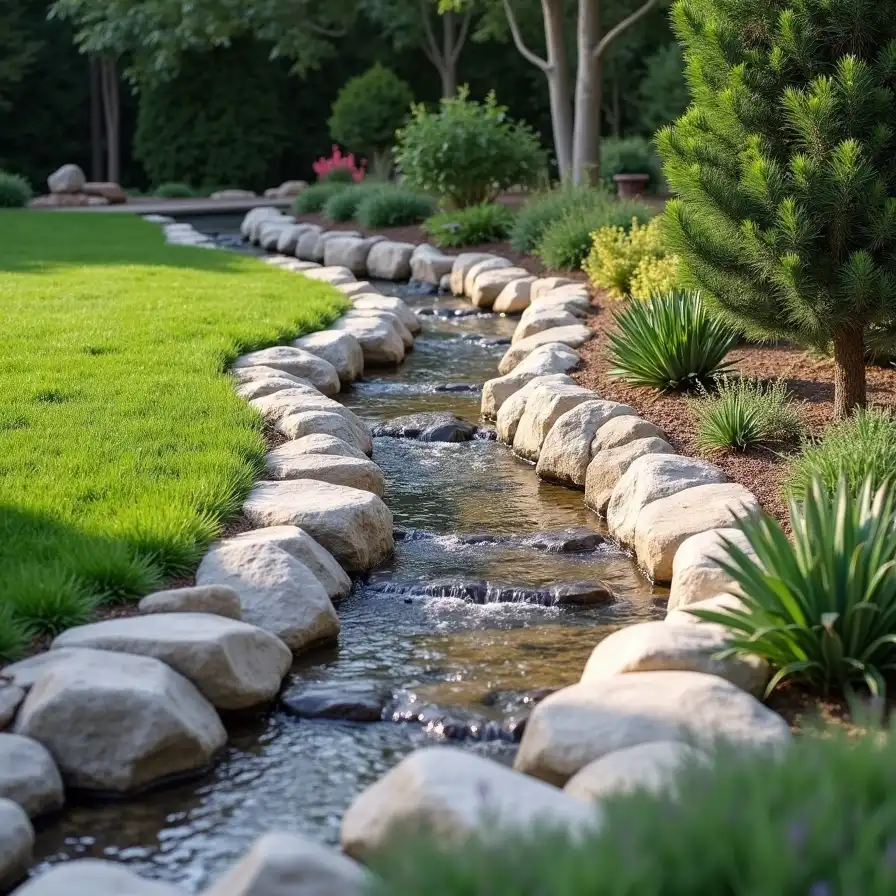
Water that collects near a pool deck can damage plants, soften soil, and create muddy areas. A dry creek bed can guide some runoff through the yard while adding a natural feature.
Follow the yard’s existing slope. Place larger stones along the sides of the channel. Fill the middle with smaller river rock.
Do not direct water onto a neighbor’s property or against the pool structure. The water needs a safe place to drain.
A shallow creek bed can work well between a sloped lawn and the pool deck. Add a few low plants along the edges to soften the stones.
Drainage problems can be serious. Ask a drainage contractor for help if water collects near pool walls, electrical parts, or underground pipes.
3. Use One Large Boulder as a Focal Point
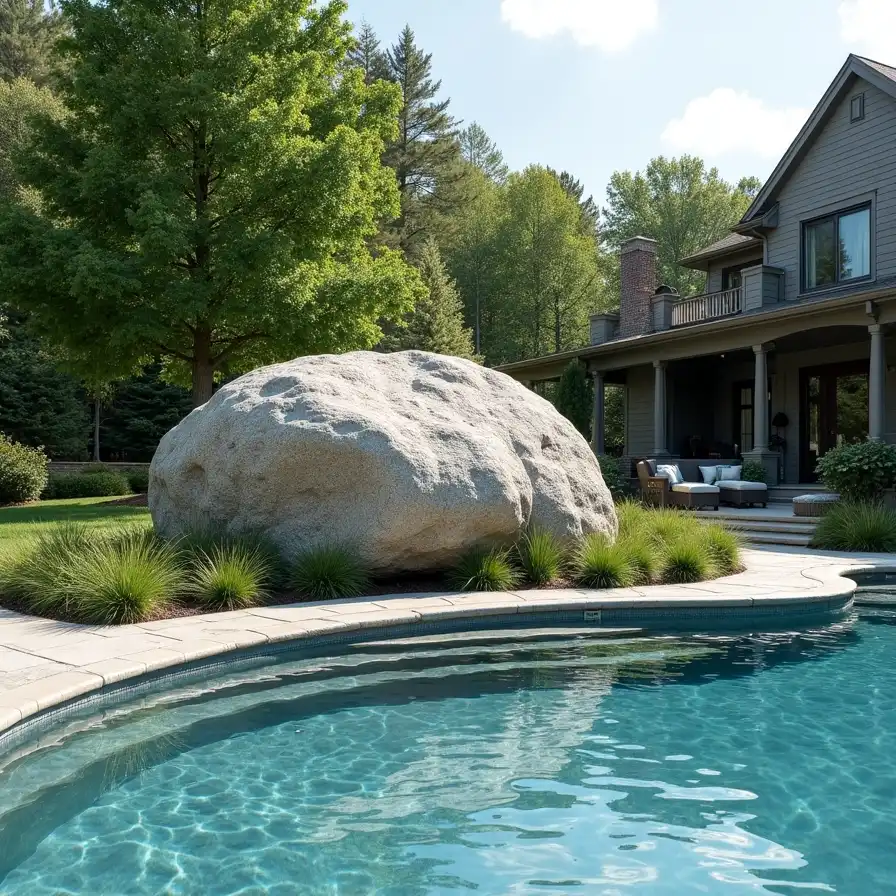
One well-placed boulder often looks better than several small rocks placed at random.
Choose a boulder that fits the size of the yard. A huge rock can make a small pool area feel crowded. A very small rock may look lost beside a large pool.
Partly bury the base so the boulder looks settled into the ground. Many designers bury about one-quarter to one-third of the base when the site allows it. This is a design guide, not a fixed rule.
Place the boulder where you can see it from the house, patio, or main seating area. Keep it away from walkways, pool pipes, and service paths.
Add soft grasses or low plants around the base. This creates contrast and stops the feature from looking too hard.
4. Create a Gravel Path With Large Stepping Stones
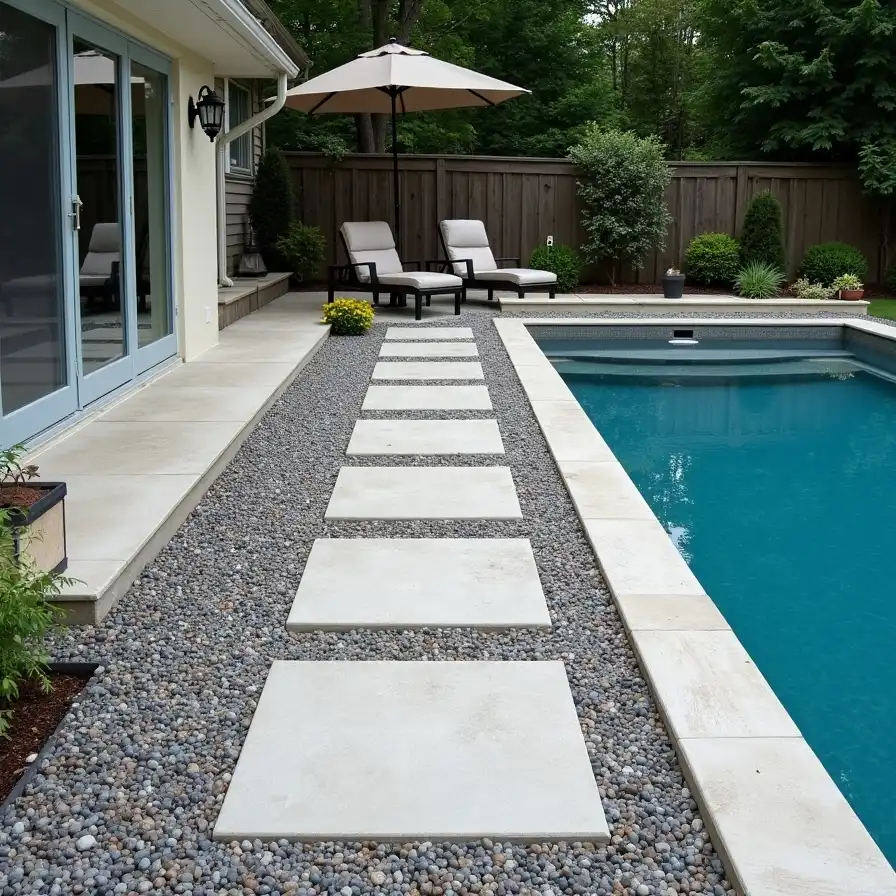
A gravel path can connect the house, pool gate, deck, outdoor shower, or seating area.
Use large, flat stepping stones with stable surfaces. Set each stone at a comfortable walking distance. Walk across the layout before you finish the path.
The ground below the path should be firm and level. A compacted base can stop the stepping stones from rocking or sinking.
Use edging to keep the gravel from spreading into the lawn or pool deck. Avoid very small loose stone near the water.
Rectangular concrete slabs set in gray gravel work well beside a modern pool. Irregular flagstone can create a softer and more natural look.
5. Turn an Empty Corner Into a Small Rock Garden
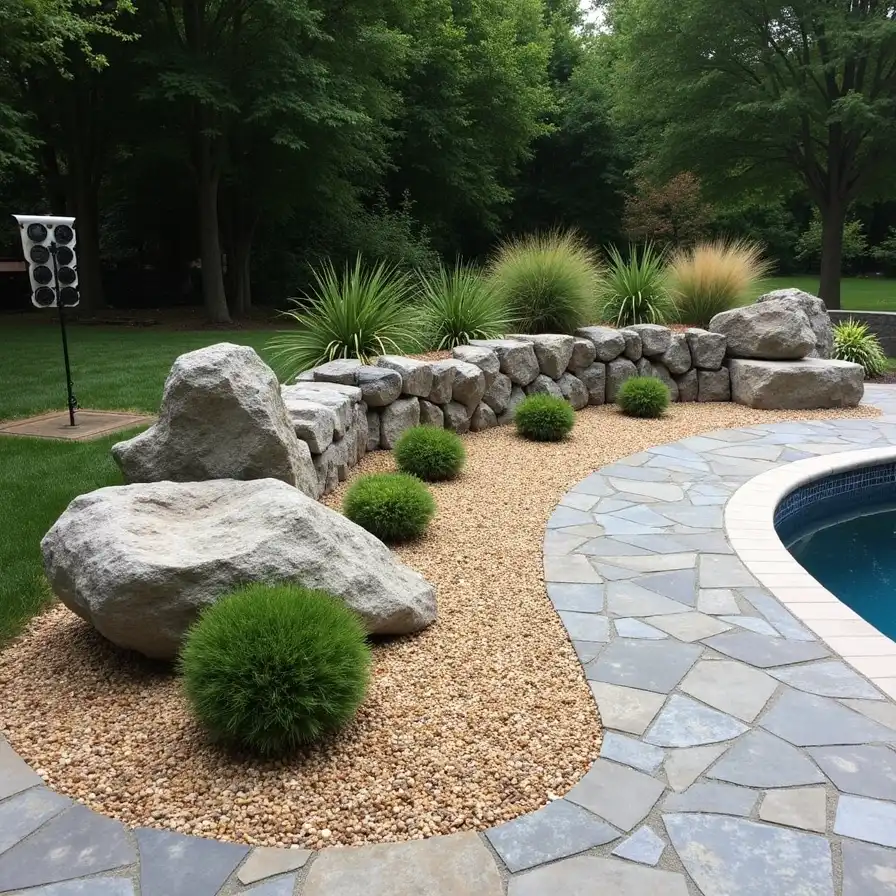
An unused corner can collect weeds or become hard to mow. A small rock garden can make that space look planned.
Choose one main rock type. Add two or three plant types and one small accent boulder. Too many materials will make a small corner feel busy.
You can use this simple visual guide:
- 60% base stone
- 30% plants
- 10% accent rocks
These numbers do not need to be exact. They simply help you avoid filling every inch with plants or boulders.
Choose plants that do not drop large amounts of leaves, fruit, or flowers into the pool. Leave enough room for each plant to reach its full size.
6. Build a Raised Rock Planter Behind the Pool
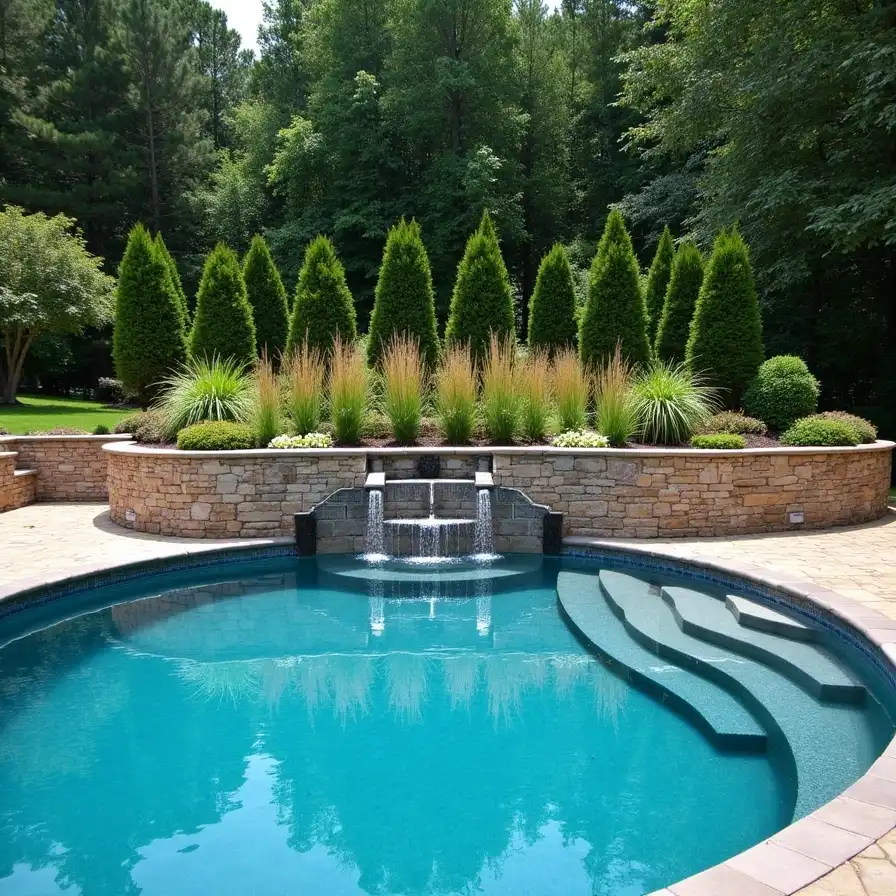
A raised planter adds height and color without taking up much deck space. It can also separate the pool from a fence, wall, or upper part of the yard.
Build the planter with natural stone, concrete blocks, or stacked wall stone. Use materials that match other hard surfaces around the home.
Good drainage is key. Wet soil can press against the wall and cause cracks or movement.
Avoid trees and large shrubs with strong roots near the pool structure. Low grasses, dwarf palms, and compact flowering plants are often easier to manage.
Keep soil and mulch inside the planter. Heavy rain should not wash dirt onto the pool deck.
7. Pair White Stones With Tropical Plants
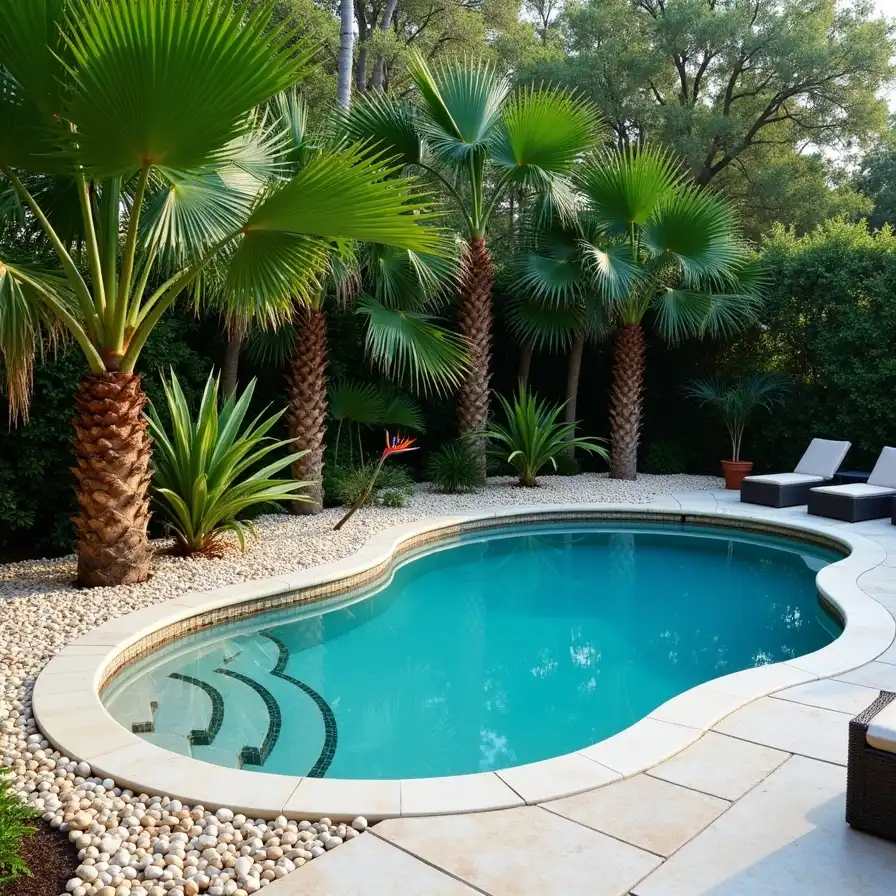
White or cream stones can brighten a shaded or compact pool area. They also create a strong contrast with deep green leaves.
Pair light stone with bird of paradise, dwarf palms, canna, or other tropical-looking plants that suit your climate. Use only a few plant types to keep the bed calm and clean.
White stone is not perfect for every yard. It can show soil, fallen leaves, algae, and stains. It may need more cleaning than gray or brown rock.
Place the bed where you can reach it with a leaf blower or garden rake. Do not use light stone under trees that drop heavy amounts of leaves.
This tropical pool landscaping idea works best when the rest of the yard uses a simple color plan.
8. Use Dark Gravel for a Modern Pool Design
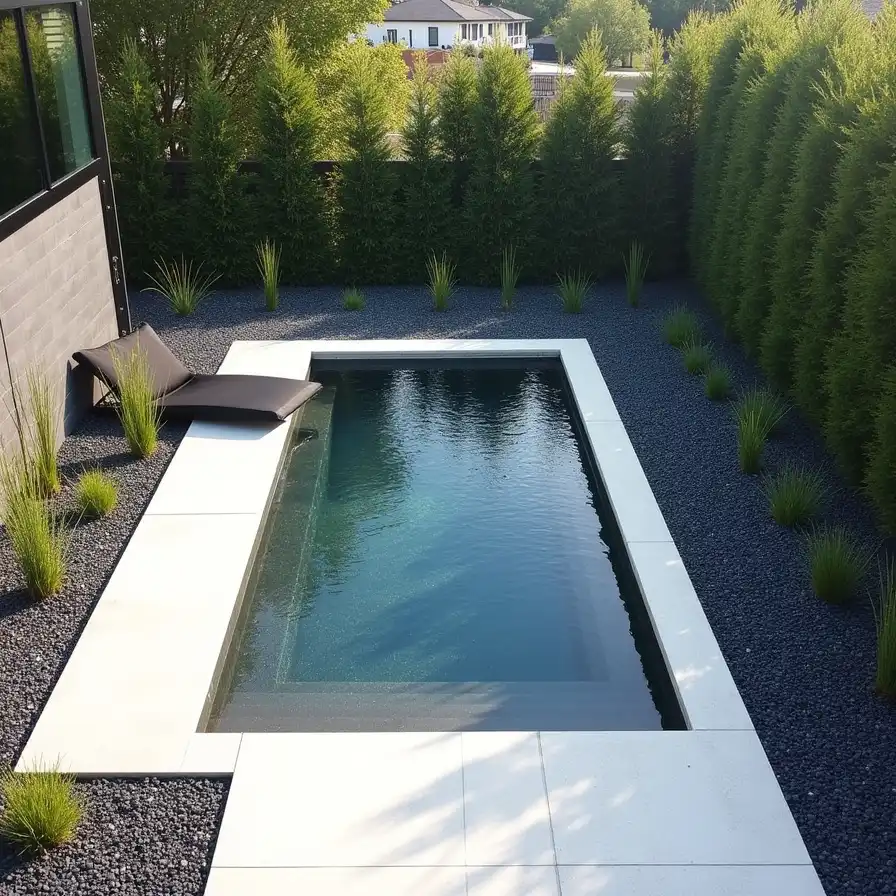
Charcoal or black gravel can give a pool area a clean and modern style.
Pair dark stone with pale concrete, square pavers, simple furniture, and plants with strong shapes. Upright grasses and slim evergreen plants work well.
Use a small range of colors. Too many stone and plant shades can weaken the modern look.
Dark rock may become hot in full sun. Keep it away from places where people walk barefoot. You can also use it in narrow plant beds that people do not enter.
Low landscape lights can soften the dark surface at night. They can also mark the edge of paths and steps.
9. Create a Gravel Lounge Area Away From the Pool
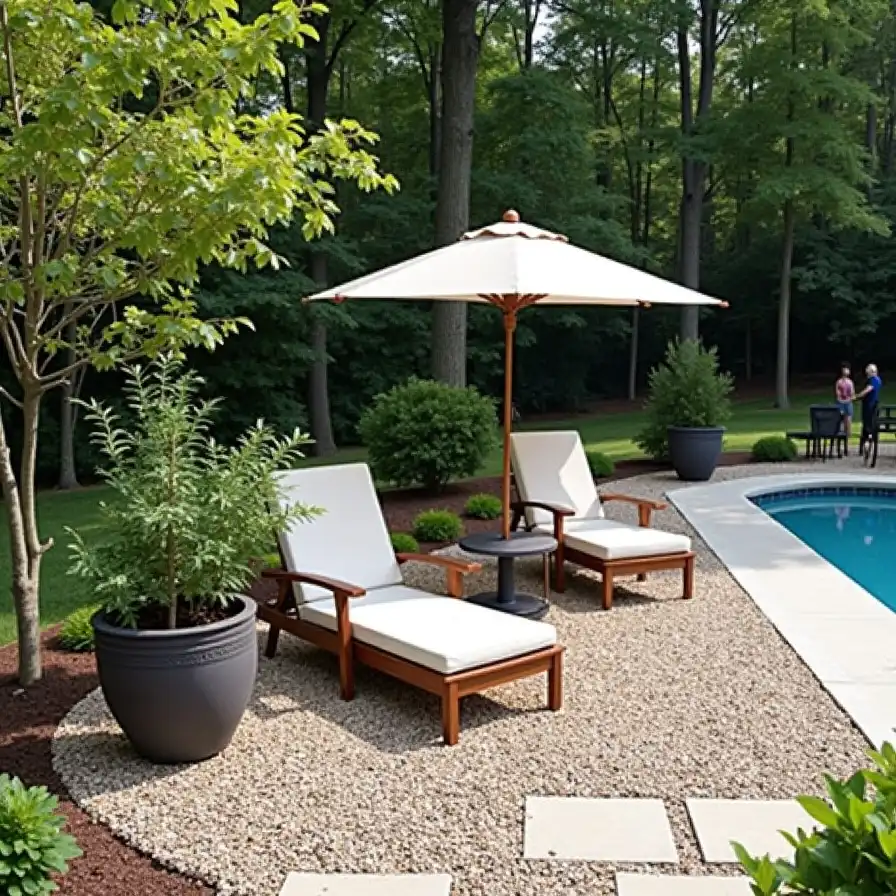
A gravel lounge area can give you a quiet place to read, talk, or rest. It may cost less than building a second paved patio.
Place it far enough from the pool so gravel does not enter the water. Add clear edging around the full area.
Prepare a firm base under the gravel. Chairs and tables can sink into loose stone, especially when they have narrow legs.
Choose furniture with wide feet. Larger gravel may hold furniture better than tiny pea gravel.
A shaded corner with two chairs and a small table can be enough. Add a large pot or one accent plant to finish the space.
10. Edge Planting Beds With Rounded Cobbles
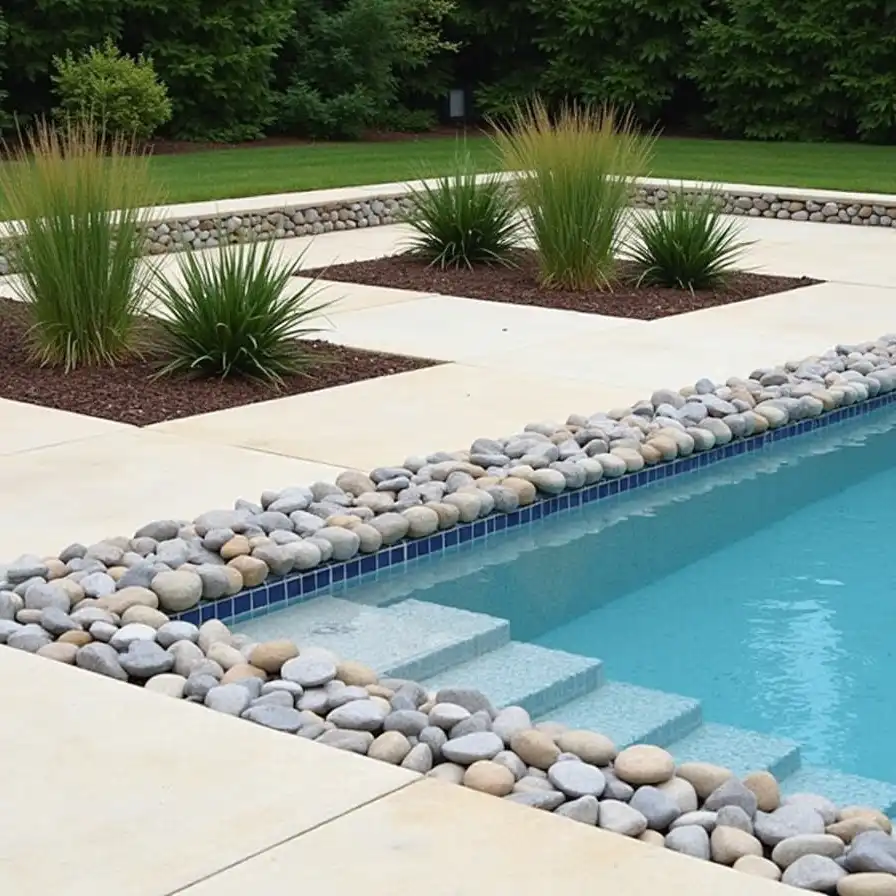
Rounded cobbles can form a strong border between planting beds and the pool deck.
Choose stones that are large enough to stay in place. Small pieces may move during cleaning, rain, or heavy use.
Repeat the same cobble in two or three areas around the pool. Repeating one material helps separate spaces feel connected.
Do not use a different rock color for every bed. A small yard can quickly look messy.
Cobbles can also hold soil and mulch inside a raised or sloped bed. Make sure they do not block the natural flow of water.
Decorative beds improve the view. The next ideas give rocks a larger practical job.
11. Add a Boulder Waterfall to an Inground Pool
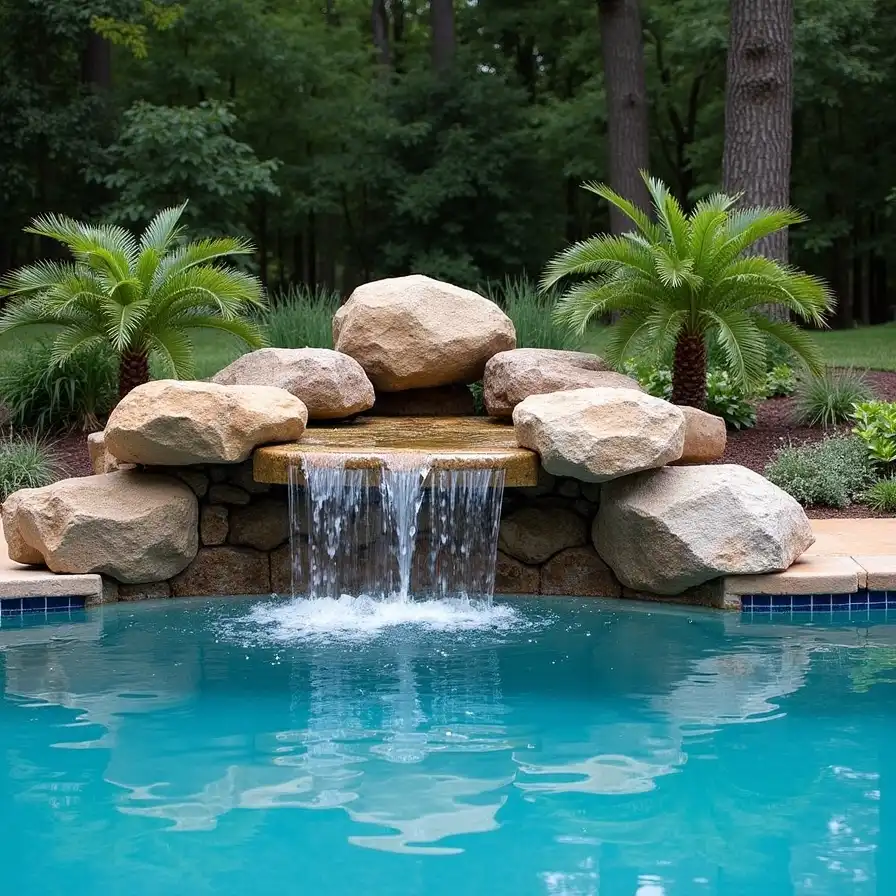
A boulder waterfall can make an inground pool feel more natural. It can also soften noise from nearby roads or homes.
Keep the design in scale with the pool. A low waterfall with three main boulders often looks more natural than a tall pile of rocks.
Match the waterfall stone with other rocks in the yard. This makes the feature feel connected to the full landscape.
Waterfalls need a pump, water line, safe electrical work, and service access. They also need regular cleaning.
Artificial rock can weigh less than natural boulders. It may also be easier to shape around pool parts.
Hire an experienced pool contractor for this project. Poor placement can damage the pool shell, plumbing, or electrical system.
12. Build a Stacked-Stone Retaining Wall
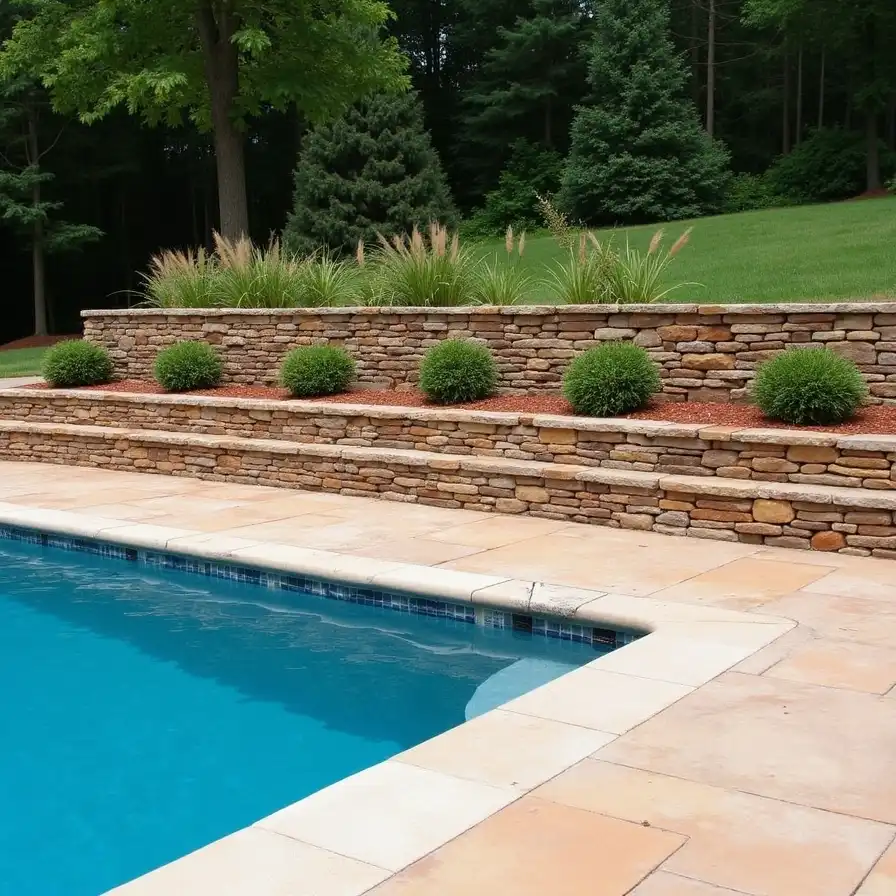
A retaining wall can turn a sloped yard into a safer and more useful pool area.
Use the wall to hold back soil and create a flat plant bed. A low curved wall can also add seating if it is built for that use.
Water must be able to drain from behind the wall. Without drainage, wet soil can push the wall out of place.
Wall height, soil pressure, and nearby structures affect how the wall should be built. Local permit rules may also apply.
Small decorative walls may be suitable for skilled homeowners. Tall walls and walls that hold heavy loads need a qualified contractor or engineer.
Leave access to pool drains, pipes, lights, and equipment.
13. Replace Wood Mulch With Decorative Rock
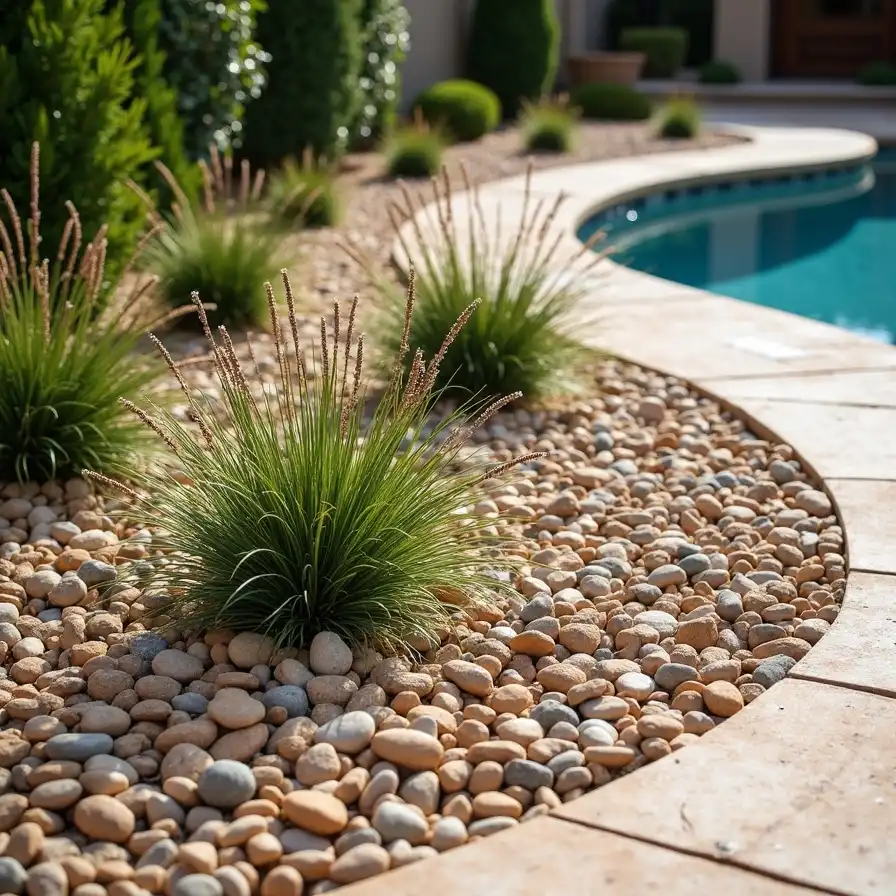
Wood mulch can float, wash away, or blow onto the pool deck. Decorative rock stays in place better during rain and pool use.
Choose a rock that works with your plants and climate. Tan gravel looks good with drought-tolerant grasses and flowering plants. Gray stone works well with green shrubs and pale concrete.
Rock can hold more heat than wood mulch. Select plants that can handle warm soil and reflected sunlight.
Do not pile hot stone against plant stems. Leave a small open space around each plant.
Rock may cost more at the start. It is also harder to remove if you change the design later.
Use proper edging so the material stays in the bed.
14. Fill the Narrow Strip Between the Pool and Fence
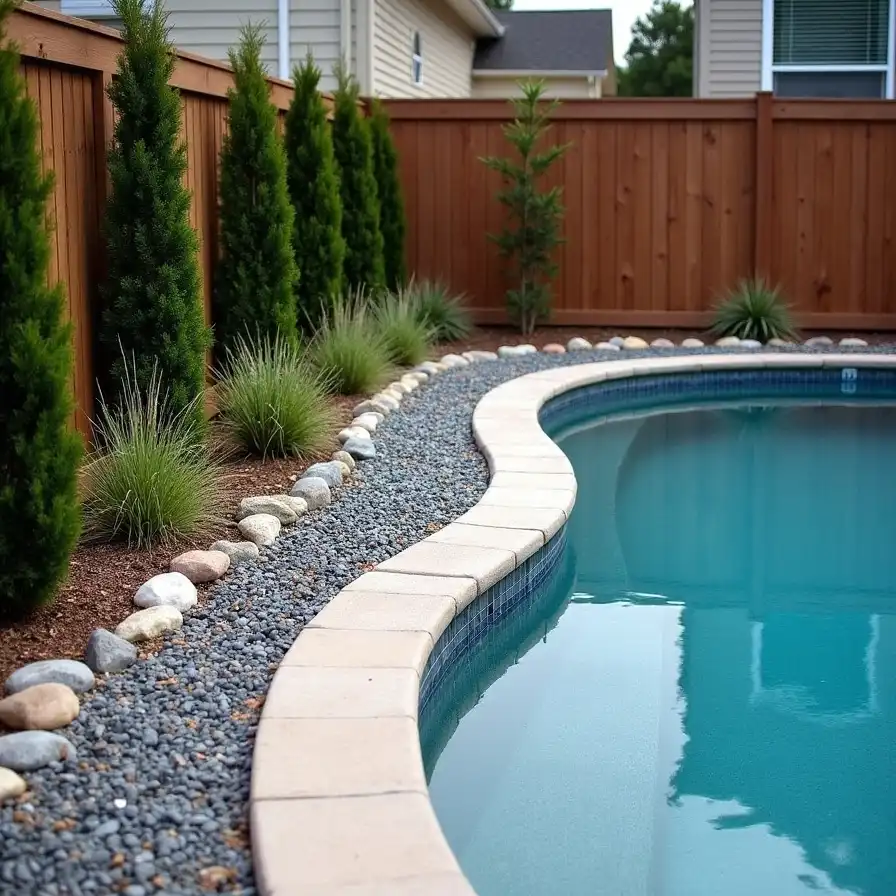
The narrow strip between a pool and fence is often hard to mow. It may also collect water and weeds.
Turn the strip into a simple rock bed. Use one stone color and a few upright plants.
Choose larger gravel that does not move easily. Avoid wide shrubs that will block the path as they grow.
You still need access to fence panels, drains, pool pipes, and equipment. Do not fill the full strip with plants.
Gray gravel with narrow grasses or slim evergreen shrubs can make the area feel wider. Keep the layout simple.
Fix drainage before adding the rock if the strip stays wet after rain.
15. Hide Pool Equipment With Rocks and Plants
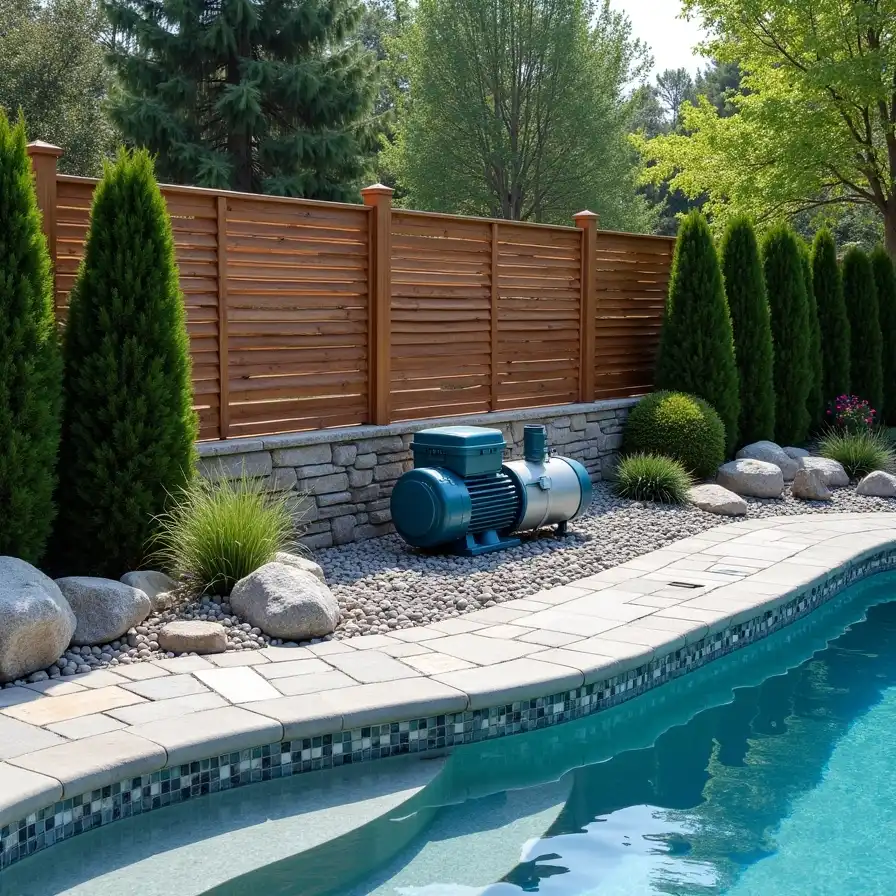
Pumps, filters, heaters, and pipes are useful. They are rarely attractive.
A planned rock bed can make the equipment area feel connected to the rest of the yard. Add a screen, fence panel, or a few tall plants to block the main view.
Do not close the equipment inside a tight box. Pumps and heaters may need airflow.
Leave enough room for a technician to open, remove, and repair each part. The screen should improve the view without blocking service access.
Keep loose gravel away from moving parts and drains. Do not cover pipes or electrical lines with large rocks.
Use the same stone found in nearby plant beds. This simple choice can make the screen look less like an afterthought.
16. Add a Rock Border Around an Above-Ground Pool
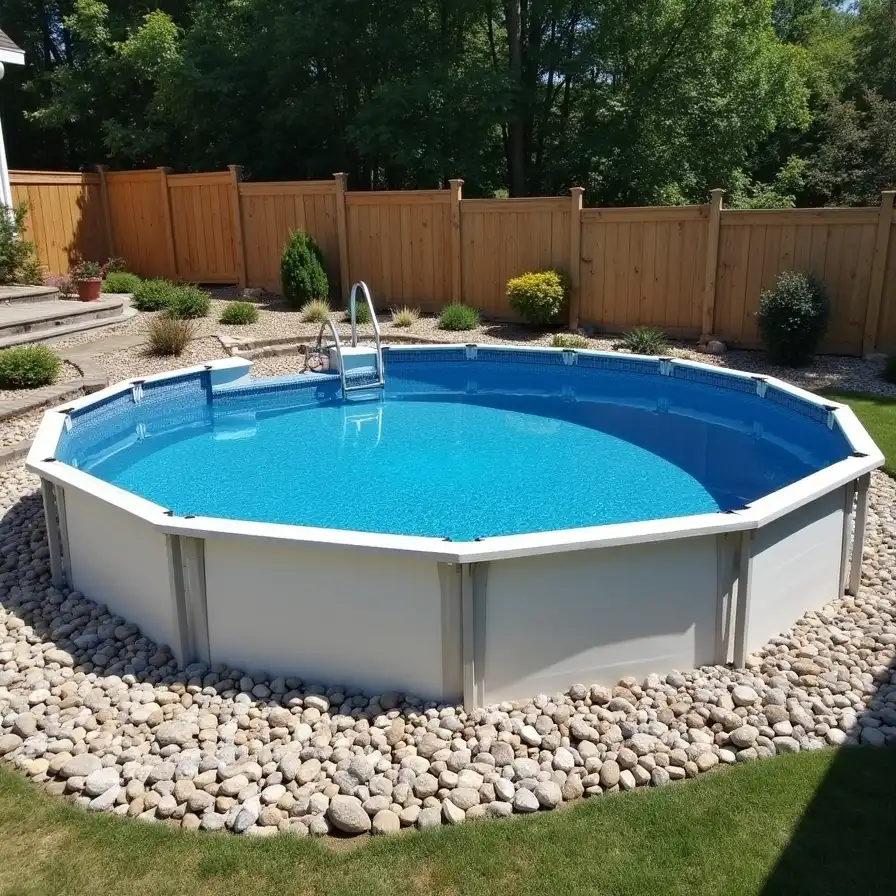
The ground around an above-ground pool can become muddy after rain or swimming. A rock border can keep the area cleaner.
Choose smooth, medium-size river rock. Keep sharp stone away from the pool wall or liner.
Install a safe barrier between the stone and the pool base. Use materials approved for your pool type.
The ground should slope so water moves away from the pool. Do not build a rock bed that traps water against the wall.
Add a wider section near the ladder, steps, or deck supports. These high-use areas often need a firmer surface.
Check the pool maker’s guide before changing the ground around the base.
17. Create a Desert-Style Pool Landscape
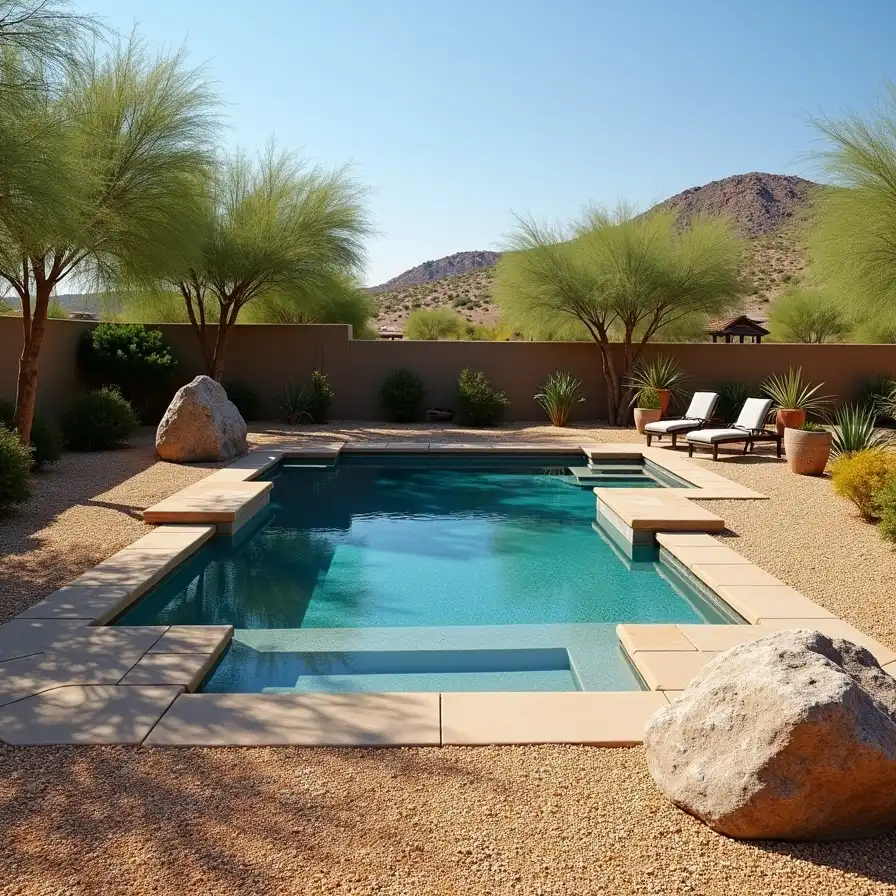
A desert-style yard uses open space, warm gravel, large boulders, and plants with strong shapes.
Start with tan, buff, or warm gray gravel. Add one or two weathered boulders instead of many small accent rocks.
Choose drought-tolerant plants that suit your area. Keep sharp plants away from walkways and the pool edge.
Agave and cactus can look great, but their spines can cause injuries. Place them in low-traffic areas or choose softer plants.
Add drip watering under or beside the rock layer. This sends water to plant roots without soaking the full bed.
Leave open space between plant groups. The empty areas are part of the design.
18. Build a Gravel Fire Pit Area Near the Pool
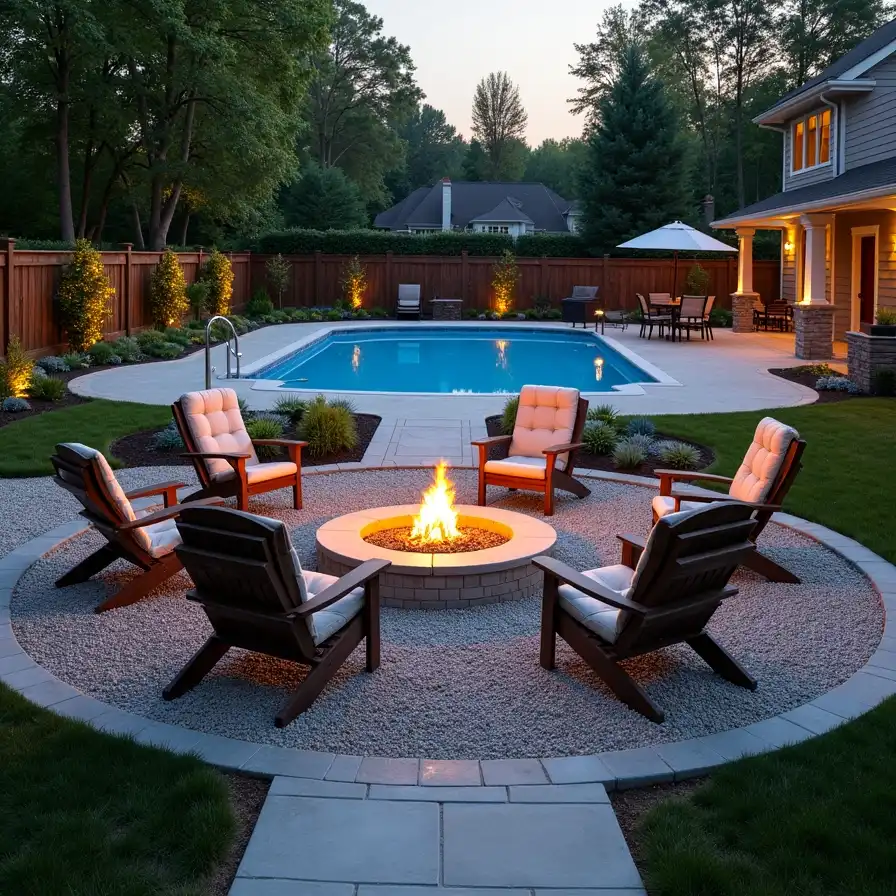
A fire pit area can create a second place to sit after swimming.
Use a nonburning ground material such as gravel or approved pavers. Add firm edging so the material stays in place.
Keep the area away from pool chemicals, pumps, heaters, fences, roofs, and low tree branches.
Fire pit rules change by city and product type. Check local laws and the maker’s instructions before you choose the location.
Use stable chairs with wide feet. Loose gravel can cause narrow furniture legs to sink.
Do not place the fire pit in a busy path between the house and pool. People need a clear route around the seating area.
19. Mix Three Rock Sizes for a Natural Finish
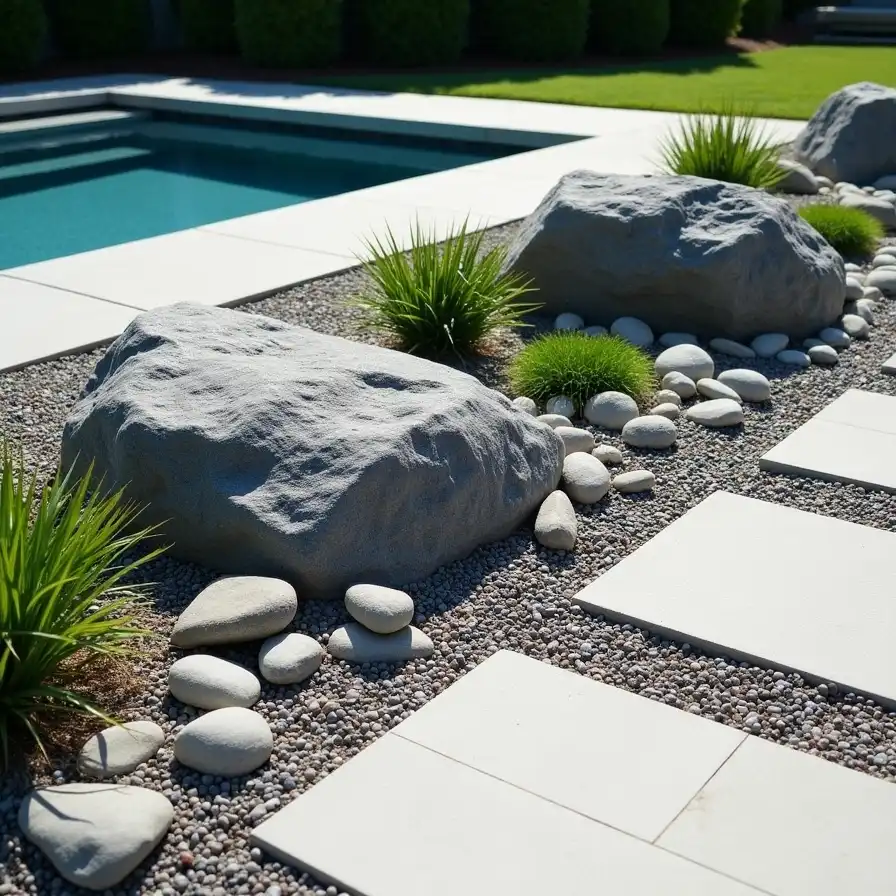
Using one rock size can make a large bed look flat. Mixing three sizes can create a more natural finish.
Start with small gravel as the base. Add medium cobbles and a few large boulders.
Keep all three sizes in a similar color family. Fine gray gravel, rounded gray cobbles, and dark gray boulders can work well together.
Place the largest rocks first. Then add medium stones around them. Fill open areas with smaller gravel.
Avoid placing boulders at equal distances. Natural stone groups are rarely spaced in a perfect pattern.
Use plants to soften some edges. Do not hide every large rock.
Choose one idea that fixes a problem first. Add extra details after drainage, access, and safety are in place.
How to Match Rocks With Your Pool Style
Rock landscaping looks more connected when the stone shares a color or shape with the pool deck, coping, house, or fence.
Start with the main color already around the pool. Decide whether it feels warm or cool.
Warm colors include cream, tan, brown, rust, and soft red. Cool colors include white, gray, charcoal, blue-gray, and black.
Choose a main rock from the same color group. Then add contrast with plants, furniture, or pots.
For a modern pool, use charcoal gravel, pale concrete, square pavers, and a few upright plants. Keep lines clean and colors limited.
For a tropical pool, use light river rock, rounded shapes, and broad green leaves. Add dwarf palms or other plants suited to your weather.
For a rustic yard, use weathered boulders, irregular flagstone, and warm stone colors. The layout can feel loose, but paths still need firm and level surfaces.
For a desert-style pool, use tan gravel, open space, sculptural plants, and one large boulder.
For a coastal look, use pale stone, soft grasses, weathered wood, and blue-gray details.
Small yards need fewer materials. Use one main stone color, one other stone size, and two or three plant types.
Follow this simple process:
- Find the main color in the pool coping.
- Choose a rock with a similar warm or cool tone.
- Add one contrast color with plants or furniture.
- Repeat the main rock in at least two areas.
You do not need to match every material. A simple and repeated color plan often looks better.
How to Install Rocks Without Causing Drainage Problems
Most rock bed problems begin below the surface.
You need to measure, clear, grade, edge, and test the area before spreading stone.
Measure the Area
Measure the length and width of the bed. Decide how deep the rock layer needs to be.
Use this formula:
Length × width × depth = total volume
Convert inches into feet before you calculate:
- 2 inches = 0.167 feet
- 3 inches = 0.25 feet
- 4 inches = 0.333 feet
A bed that is 12 feet long and 6 feet wide needs 18 cubic feet of rock at a depth of three inches.
The calculation is:
12 × 6 × 0.25 = 18 cubic feet
Divide by 27 to convert cubic feet into cubic yards:
18 ÷ 27 = 0.67 cubic yards
Order a little extra for uneven soil and settling. Ask the stone supplier how its material is measured.
Mark Pipes and Utility Lines
Pool areas may contain water lines, electrical wires, gas lines, drains, and lighting cables.
Use a local utility marking service before deep digging. Ask your pool company to mark private lines that the public service may not cover.
Do not place heavy boulders over pipes or wires.
Clear and Grade the Ground
Remove weeds, roots, old mulch, and loose soil.
Check where rainwater flows. The bed should not trap water against the pool, house, deck, or fence.
Add or remove soil where needed. A level and string line can help you check the slope.
Prepare Walking Areas
Paths and seating areas need a firm base. Loose soil may cause stepping stones and chairs to sink.
Compact the base in layers. Use material that works with your soil and project type.
Keep walking surfaces level. Fix rocking pavers before adding the final gravel.
Add Edging
Edging stops rocks from moving into the pool, lawn, path, or drain.
Choose metal, concrete, plastic, brick, or natural stone edging. Secure it well.
The finished edge should not create a trip point.
Decide Whether You Need Fabric
Landscape fabric can keep stone from mixing with the soil. It may also slow some weed growth.
It does not stop every weed. Seeds can grow in dust and leaves that collect above the fabric.
Fabric can also make future planting harder. Use it based on the site, not as an automatic step.
Place and Test the Stone
Wash dusty rock before placing it near the pool. Spread it at an even depth.
Keep drains, filters, cleanouts, and service panels open.
Test the area with a garden hose. Watch where the water moves and where it collects.
Call a contractor when the project affects pool plumbing, electrical lines, retaining walls, or major drainage routes.
Pool Rock Landscaping Mistakes That Can Cost You More
Fixing a poor rock layout can cost more than doing the job correctly the first time.
Using Small Gravel Beside the Pool Edge
Tiny gravel moves easily. Swimmers can carry it into the pool on wet feet.
Use larger stone near the deck. You can also add firm edging or a paved strip between loose rock and the water.
Choosing Sharp Stone Near Bare Feet
Crushed stone may work well in plant beds and firm paths. It may hurt bare feet.
Use smooth rock in places where children and adults may step off the deck.
Blocking Drains
Never cover a drain because it looks unattractive.
Blocked drains can cause standing water and damage nearby surfaces. Keep all drainage points clear and easy to inspect.
Using Dark Stone Without Testing It
Black and dark gray stones can become hot.
Place a sample in full sun for several hours. Touch it with care before you order a large amount.
Mixing Too Many Colors
White gravel, black lava rock, red stone, and tan boulders may compete in a small space.
A cleaner plan may use gray gravel, matching cobbles, and two dark accent boulders.
Blocking Pool Equipment
Plants and screens may hide equipment. They should never block repairs, airflow, or service panels.
Leave room for a worker to move around each part.
Choosing Messy Plants
Plants that drop fruit, thorns, sticky flowers, or many leaves can create more pool cleaning.
Choose low-litter plants that suit your climate. Keep large trees at a safe distance from the pool.
Forgetting Mature Plant Size
A small shrub can become wide enough to block a path.
Read the plant tag. Plan for its full height and width.
Skipping Edging
Without edging, gravel spreads into the lawn and pool deck.
Install the edge before adding the rock. It is much harder to fix later.
Using Too Little Stone
A thin layer may expose fabric or soil after a few weeks.
Follow the supplier’s depth guide for the chosen stone size and use.
Before you place the stone, walk through the marked area. Check paths, water flow, equipment access, and the view from the house.
Frequently Asked Questions About Pool Landscaping With Rocks
The best pool landscaping ideas with rocks depend on the pool type, climate, yard size, and location of the stone.
What Is the Best Rock to Put Around a Pool?
Smooth river rock works well in borders and decorative beds. Larger cobbles stay in place better than small gravel. Compacted crushed stone can work for firm paths, but it may feel rough under bare feet.
The best choice depends on how close the rock will sit to the water. Heat, movement, drainage, and comfort all matter.
Is River Rock Good Around a Pool?
River rock is a good choice for many pool areas. It handles water well and gives the yard a natural look.
Its round shape can cause it to move. Use strong edging and keep small pieces away from the pool edge.
Larger river rock works well in drainage beds and low-traffic areas.
How Do You Keep Rocks From Falling Into the Pool?
Use secure edging around the rock bed. Choose larger stone near the deck and keep loose material away from the coping.
A narrow paved strip between the bed and pool can also help. Keep the rock level below the top of the edge.
Check the border after heavy rain and busy pool days.
Do You Need Landscape Fabric Under Rocks?
Landscape fabric can stop rock from mixing with the soil. It may also reduce some weed growth.
It will not stop every weed. Dust, soil, and leaves can collect above the fabric and support new weeds.
Fabric may make it harder to add or move plants later. Use it when it solves a clear problem.
What Plants Look Good With Rocks Around a Pool?
Ornamental grasses, compact shrubs, dwarf palms, and drought-tolerant flowers can look good with rock.
Choose plants that suit your weather and sunlight. Avoid plants with thorns, sharp leaves, large fruit, or heavy leaf drop near the water.
Check each plant’s mature size before planting.
Are Rocks Better Than Mulch Around a Pool?
Rock does not float or need yearly replacement in the same way as some wood mulch. It can also help cover muddy ground.
However, rock costs more to install and may hold heat. It is also harder to remove.
Mulch is easier to change and can help some plants during hot weather. It may blow or wash onto the deck.
The better choice depends on the plants, climate, budget, and amount of pool use.
Build a Rock Landscape That Fits Your Pool
A good rock landscape should make the pool area safer, cleaner, and easier to use. It should also match the home and yard.
Start by fixing drainage and access problems. Then choose one main stone color and one or two other sizes.
Keep smooth rocks near places where people walk. Use edging to hold loose material in place. Leave open space around drains, pipes, and pool equipment.
Test rock samples in full sun before you buy a large amount. Check plant sizes and local safety rules as well.
The best pool landscaping ideas with rocks combine good drainage, safe materials, simple plants, and a design that fits your home.