
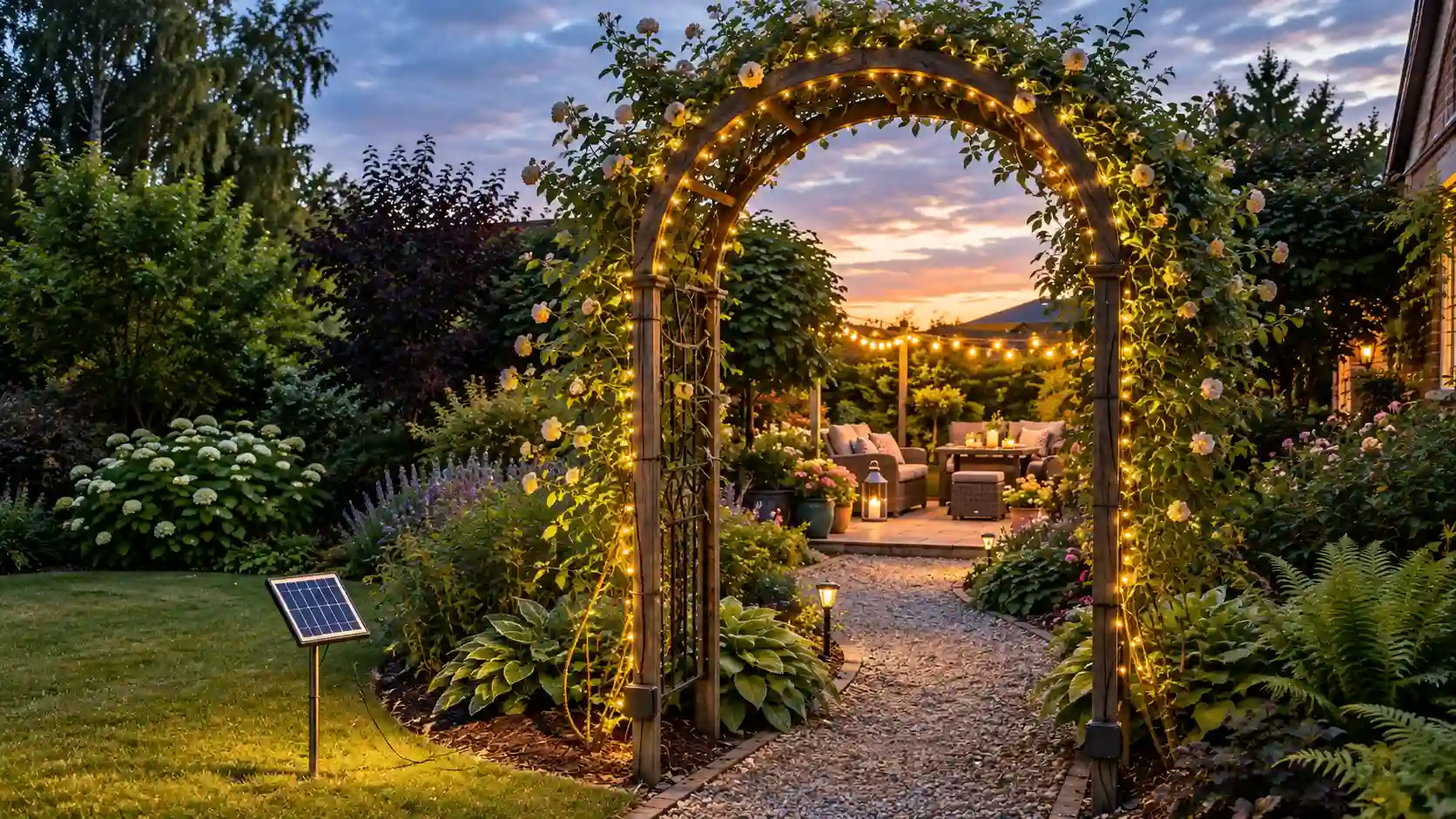
A plain path or gate can make your garden feel unfinished. These garden arch ideas can help you turn that empty spot into a clear and inviting entrance.
A garden arch can also support climbing plants, frame a view, or connect two parts of your yard. But choosing one is not always easy. You need the right size, material, and strength for your space.
Below, you will find arches made from wood, metal, wire panels, planters, and natural branches. Some work well in small yards. Others can carry mature roses, grapes, or vegetable plants.
You will also learn where to place your arch and how to keep it secure. These garden arch design ideas will help you create a feature that fits your garden path, plants, budget, and style.
Plan Your Garden Arch Before Choosing a Design
First, decide what you want the arch to do. It might mark a garden entrance, hold climbing plants, frame a bench, or connect two garden areas.
Next, measure the available space. A walking width of around 3 to 4 feet works for many home gardens. You may need more room if you often move a wheelbarrow or mower along the path.
Many garden arches stand about 7 to 8 feet tall. This gives people enough headroom after plants begin hanging from the top. Check the product’s inside height because thick vines can reduce the open space.
Ask these four questions before choosing your garden arch design:
1. What job will the arch perform?
2. How much walking space do you need?
3. How heavy will the mature plants become?
4. How will you secure the structure?
Sunlight also matters. A rose arch placed in deep shade may produce fewer flowers. A shade-loving climber can struggle in a hot, open area.
Match the arch material with nearby features. For example, a cedar arch can work beside a wooden fence. A slim black arch may suit a modern patio or gravel path.
Finally, plan how you will anchor it. Wind and wet soil can make a weak arch lean. Mature vines add even more weight.
Mark the planned location on the ground. Then walk through it while carrying a watering can or garden tool. This quick test can reveal spacing problems before installation begins.
Classic Garden Arch Ideas for Entrances and Paths
Classic arches help define paths, gates, and entrances. They can also make a large garden feel more organized.
1. Add Warmth With a Traditional Wooden Arch
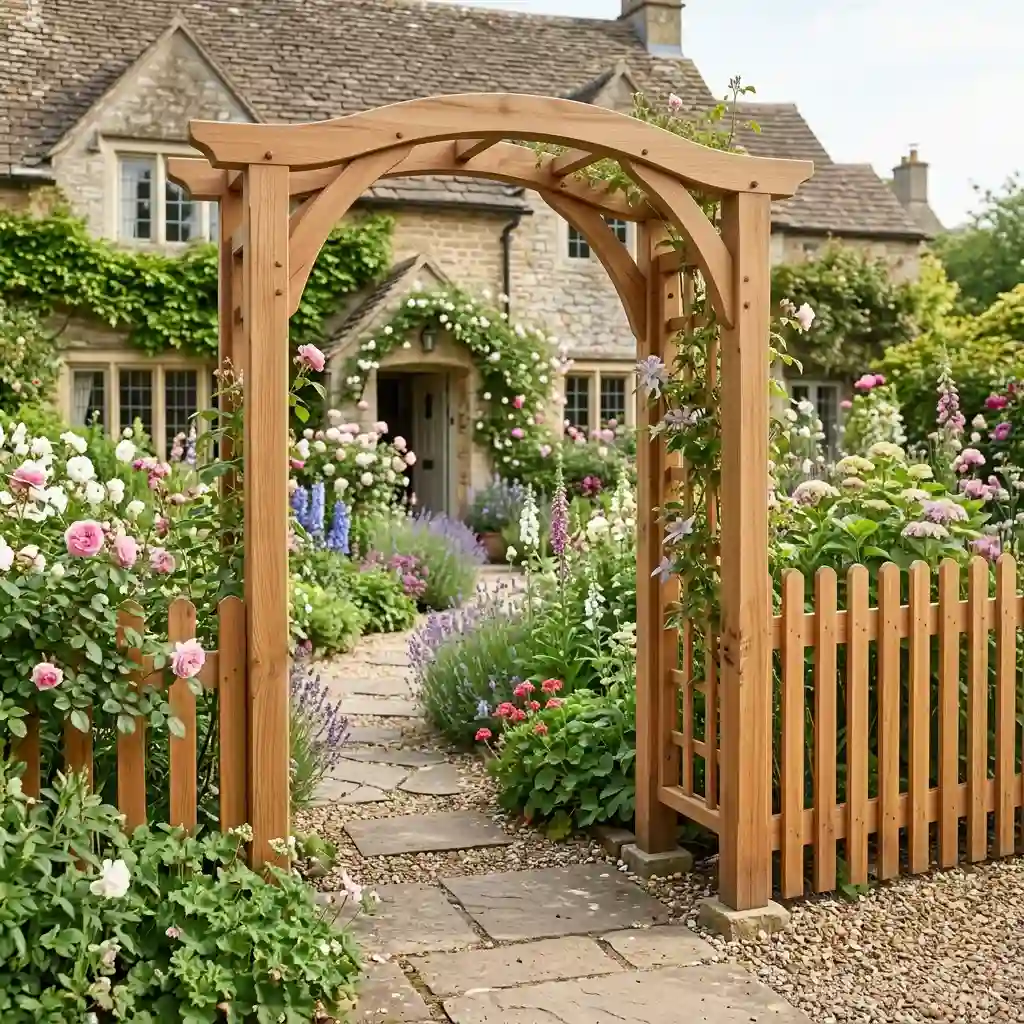
A wooden arch adds a warm and natural look. It works well with cottage gardens, picket fences, and traditional homes.
Cedar and other naturally durable woods are good options. Pressure-treated wood may also last well, but you should check whether it is suitable for your planned use.
Repeat a color already found in the garden. You could stain the arch to match a deck or paint it the same white as your fence.
A flat top feels simple and clean. A curved top creates a softer look.
**Best for:** Cottage gardens and traditional entrances.
**Watch for:** Rot near the ground, peeling paint, and loose joints.
2. Keep the View Open With a Black Metal Arch
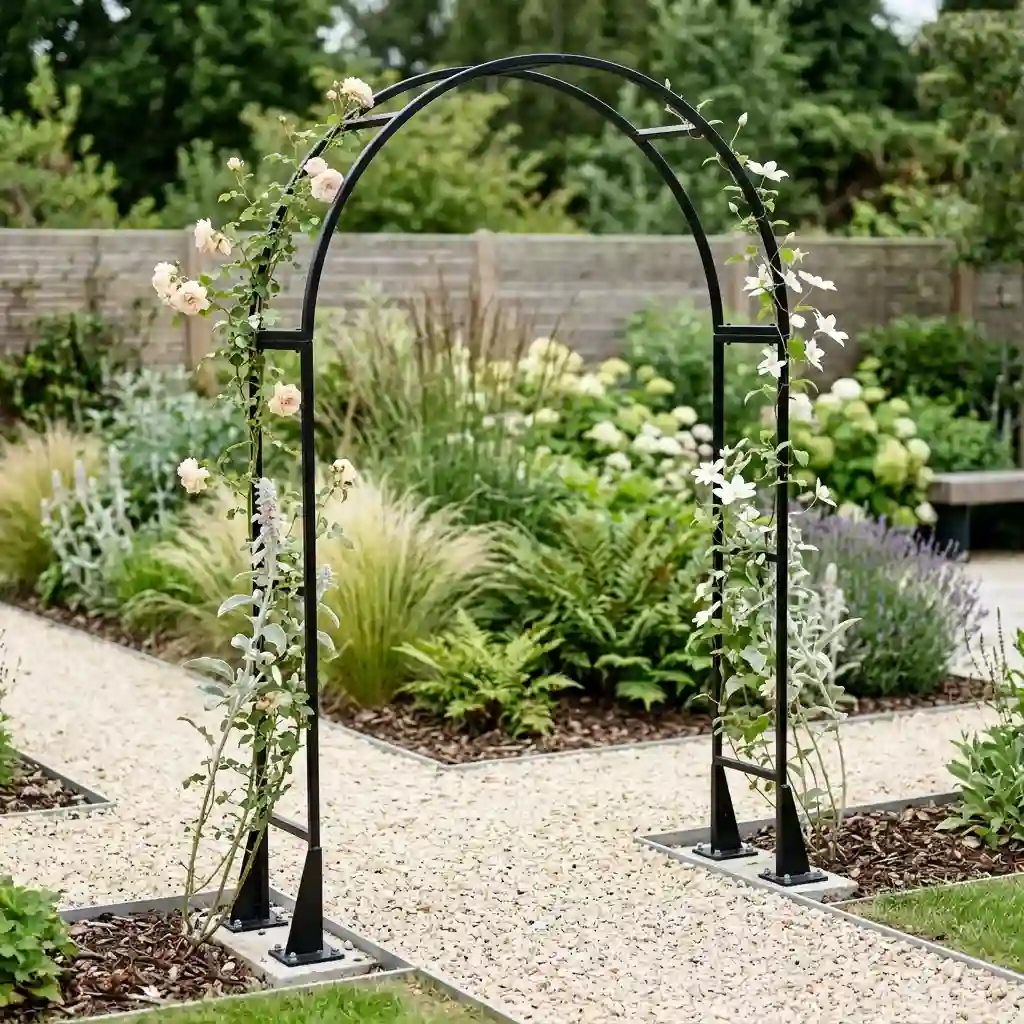
A slim black metal arch adds height without blocking the view. Its narrow frame can make it a good choice for small gardens.
Place it where two paths meet or where one garden area changes into another. Pale roses, white clematis, and silver leaves stand out against dark metal.
Choose a powder-coated product made for outdoor use. The coating can slow rust, but scratches should be repaired before corrosion spreads.
**Best for:** Modern gardens, gravel paths, and small yards.
**Watch for:** Rust, sharp edges, and frames that are too light for the planned plants.
3. Create a Clear Entrance With an Arch and Gate
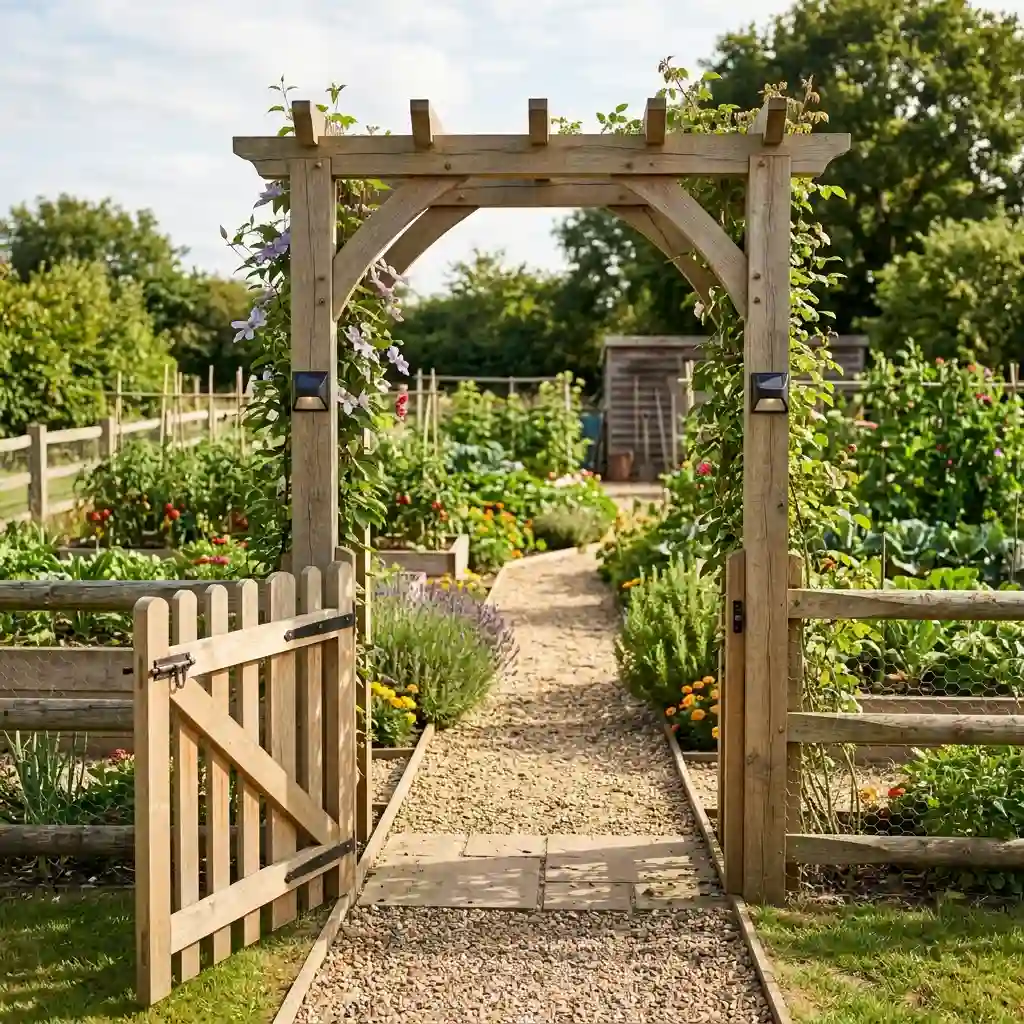
Pairing an arch with a gate makes the purpose of an entrance clear. The gate can also help keep children or pets away from certain areas.
Use the same material for both parts. A wooden gate below a matching wooden arch feels connected. Black metal can create a more formal look.
Leave enough room for the gate to open fully. Plants should not catch on the latch or block the hinges.
You can place solar or low-voltage lights nearby. Keep the light soft so visitors can see the gate without facing harsh glare.
**Best for:** Front gardens, side entrances, and fenced vegetable plots.
**Watch for:** Sagging gates and climbing stems around hinges.
4. Grow a Rose-Covered Cottage Arch
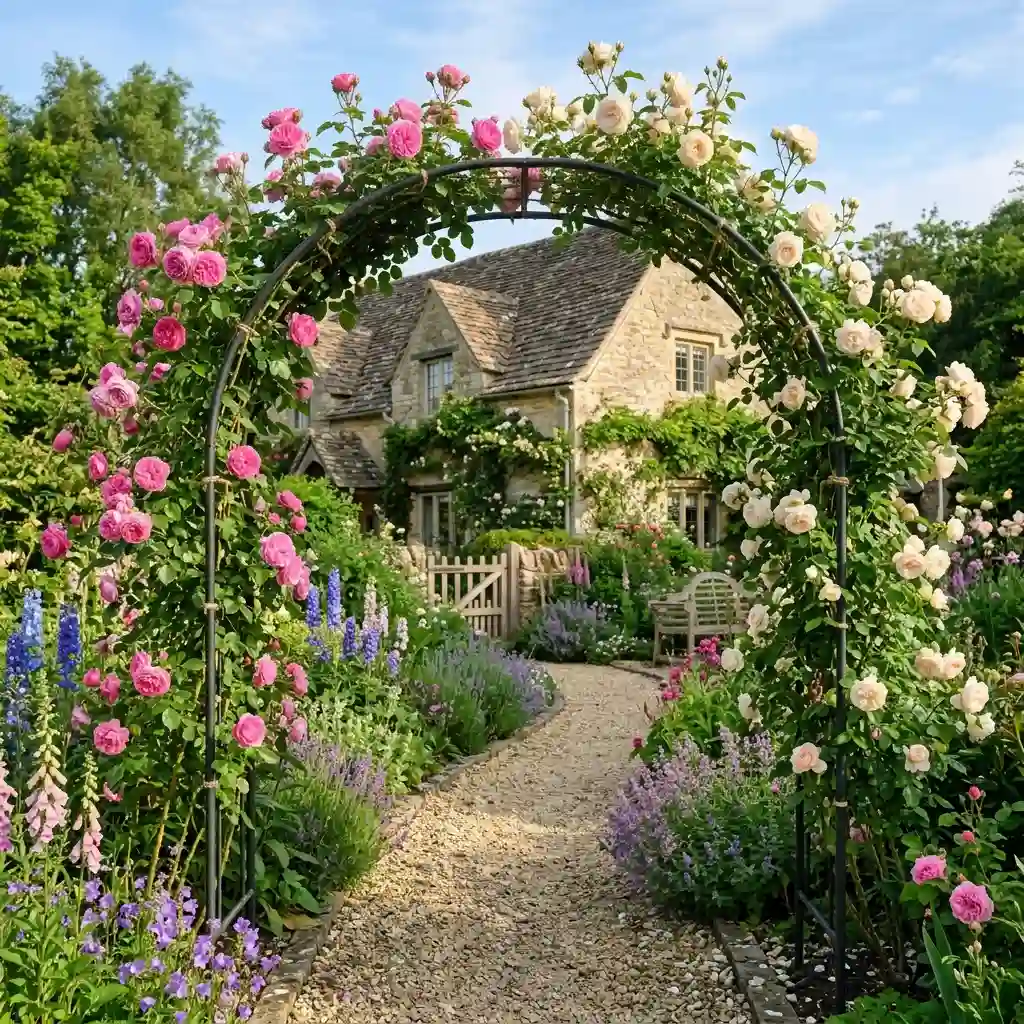
A rose-covered arch can make a simple garden entrance feel full and established. It also brings flowers closer to eye level.
Climbing roses become heavy as their canes grow. Use a strong arch with solid joints and deep anchors.
Guide young canes along the sides with soft plant ties. Spread them across the frame instead of allowing all growth to collect at the top.
Prune dead or damaged growth when needed. Keep thorny stems away from faces, clothing, and the walking area.
**Best for:** Cottage gardens and sunny paths.
**Watch for:** Thorns, heavy mature canes, and limited headroom.
5. Build Rhythm With a Double Arch Walkway
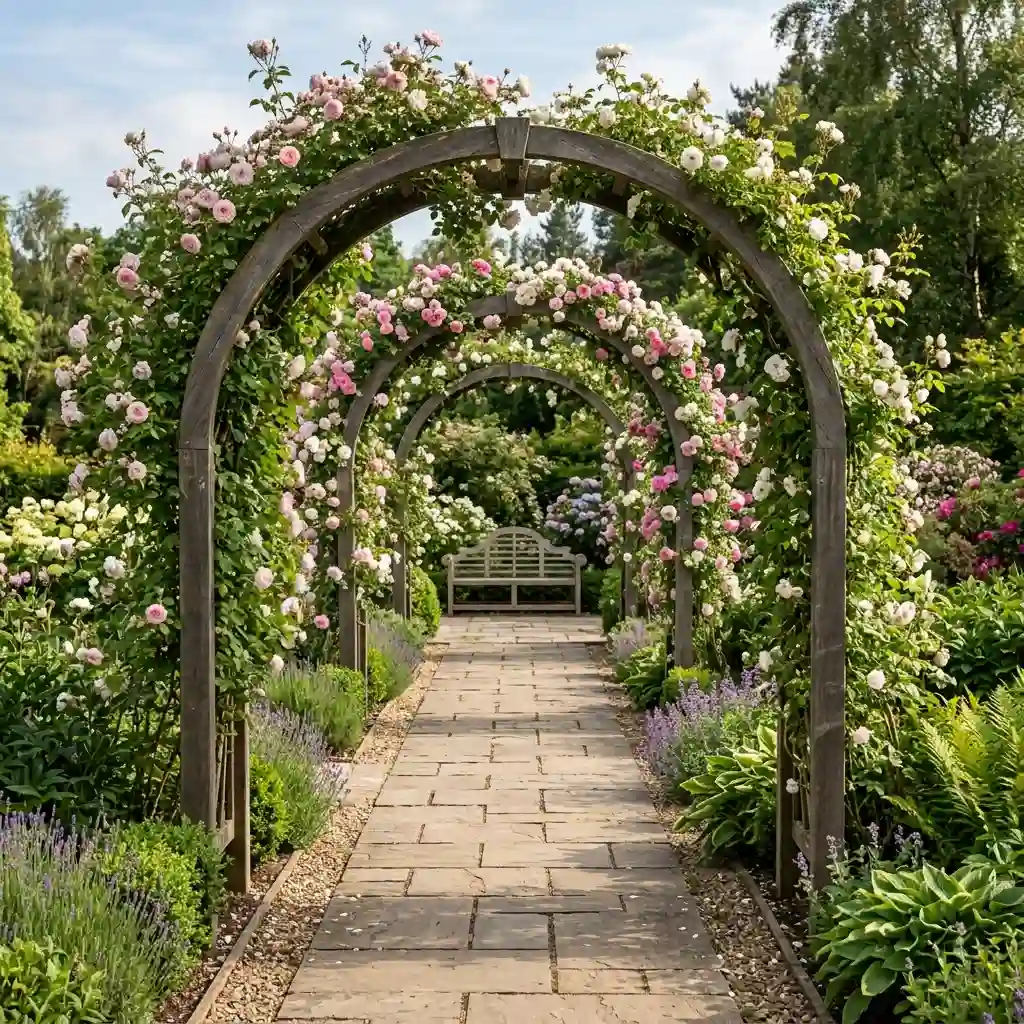
Two or more arches can turn a plain path into a strong garden feature. Repeated frames guide the eye to a bench, shed, fountain, or seating area.
Keep the distance between arches consistent. This creates a calm sense of rhythm.
You can repeat the same plant on each frame. Another option is to use different climbers with similar flower colors.
Do not place the arches too close together. Dense frames and thick plants can make the path feel narrow.
**Best for:** Long paths and larger gardens.
**Watch for:** Uneven spacing and crowded plant growth.
Garden Arch Trellis Ideas for Edible and Flowering Plants
Plants add beauty and shade, but they also add weight. Match each climber with a frame that can hold it when fully grown.
6. Grow More Food With a Vegetable Tunnel Arch
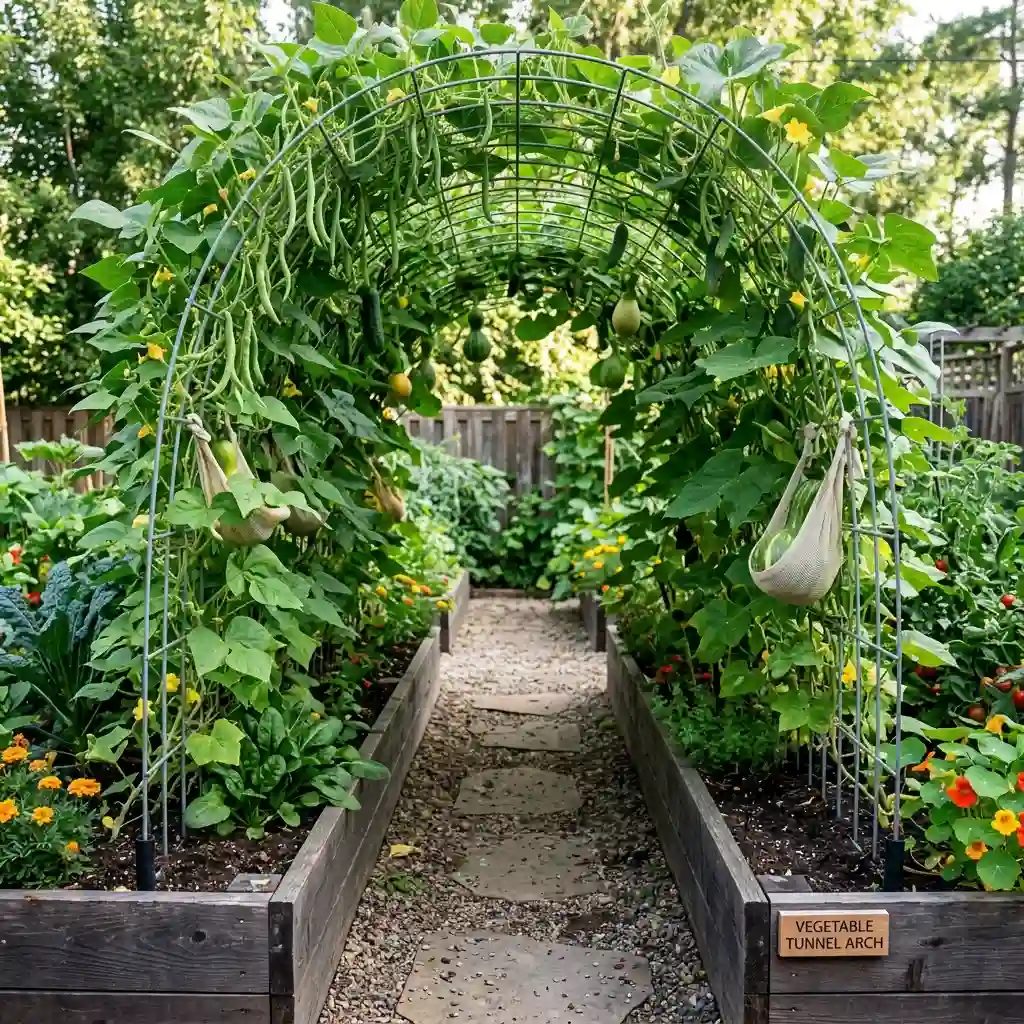
A tunnel arch lets you grow climbing crops above a walkway. It can save bed space and make harvesting easier.
Sturdy wire or livestock panels can be bent between two raised beds. Secure both ends so the tunnel cannot shift.
Good crops may include beans, cucumbers, gourds, and smaller squash types. Plant choice depends on your climate and growing season.
Use slings to support heavy fruit when needed. Keep the middle of the tunnel clear so you can walk and harvest safely.
**Best for:** Productive vegetable gardens and raised beds.
**Watch for:** Heavy fruit, sharp wire ends, and narrow walkways.
7. Connect Two Raised Beds With an Arch
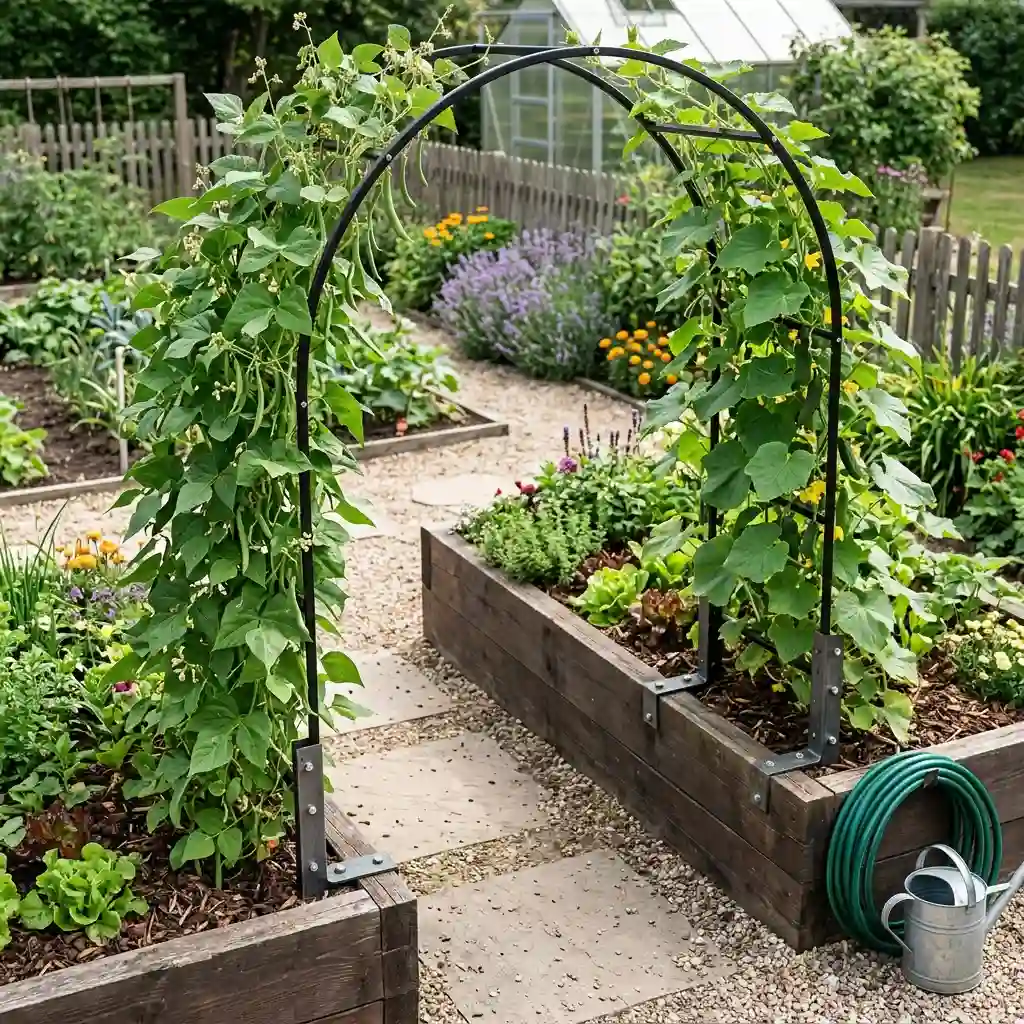
An arch between two raised beds creates a natural doorway. It also gives climbing crops more growing room without taking up another bed.
Fasten the frame to the outer sides of both beds. Do not depend on loose soil to hold the arch upright.
Grow one crop on each side. For example, beans can cover one half while cucumbers grow across the other.
Keep hoses and watering cans away from the center of the path. A clear walkway makes daily garden work much easier.
**Best for:** Small vegetable gardens with limited ground space.
**Watch for:** Weak bed frames and loose mounting brackets.
8. Add a Shaded Seat Beneath a Grapevine Arch
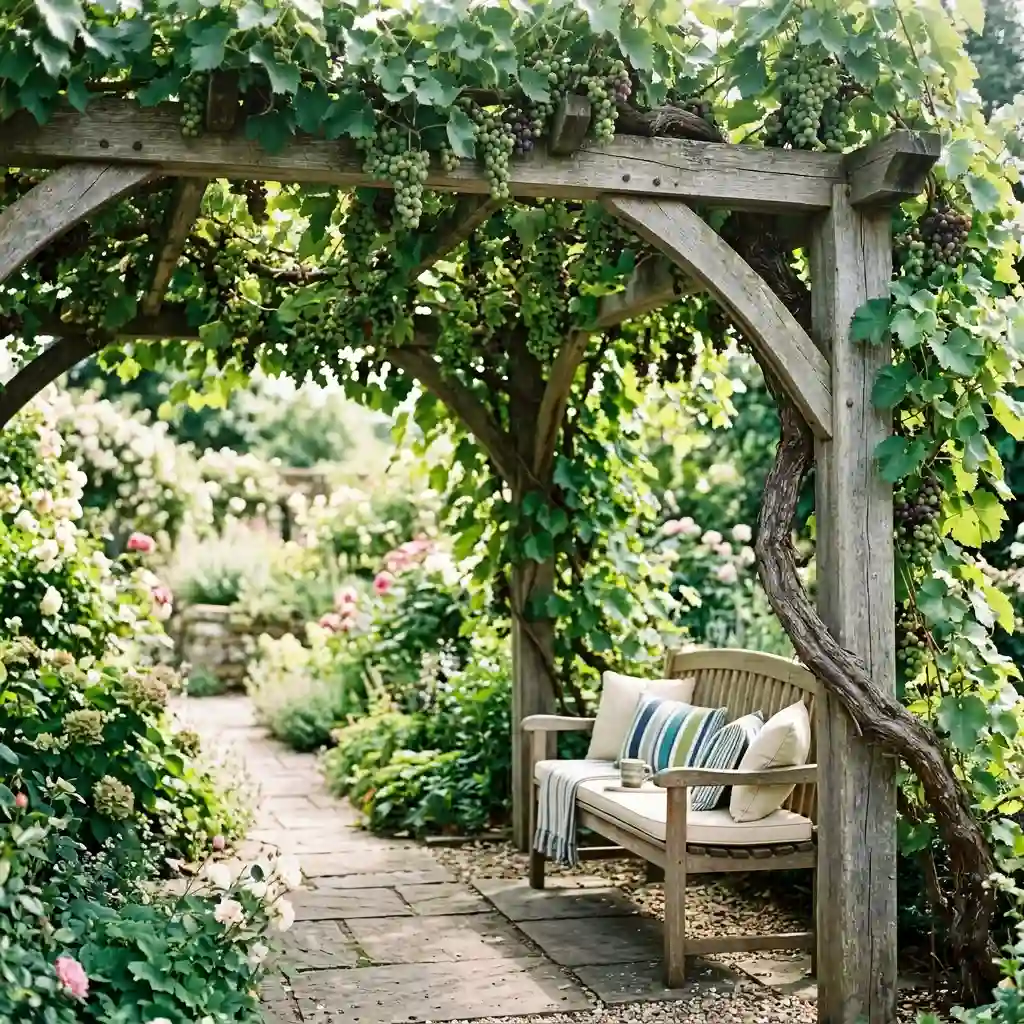
A grapevine arch can create welcome summer shade. Place a bench under the frame or just beyond it.
Grapevines grow into large, woody plants. They need a heavy structure with secure posts and strong top supports.
Regular pruning helps control growth and lets air move through the leaves. It can also keep the seat and path from becoming crowded.
Think about fallen leaves and fruit before placing furniture below the vine. The area may need regular cleaning during parts of the year.
**Best for:** Sunny seating areas and large garden structures.
**Watch for:** Heavy vines, fallen fruit, and seasonal cleanup.
9. Extend the Flowering Season With Roses and Clematis
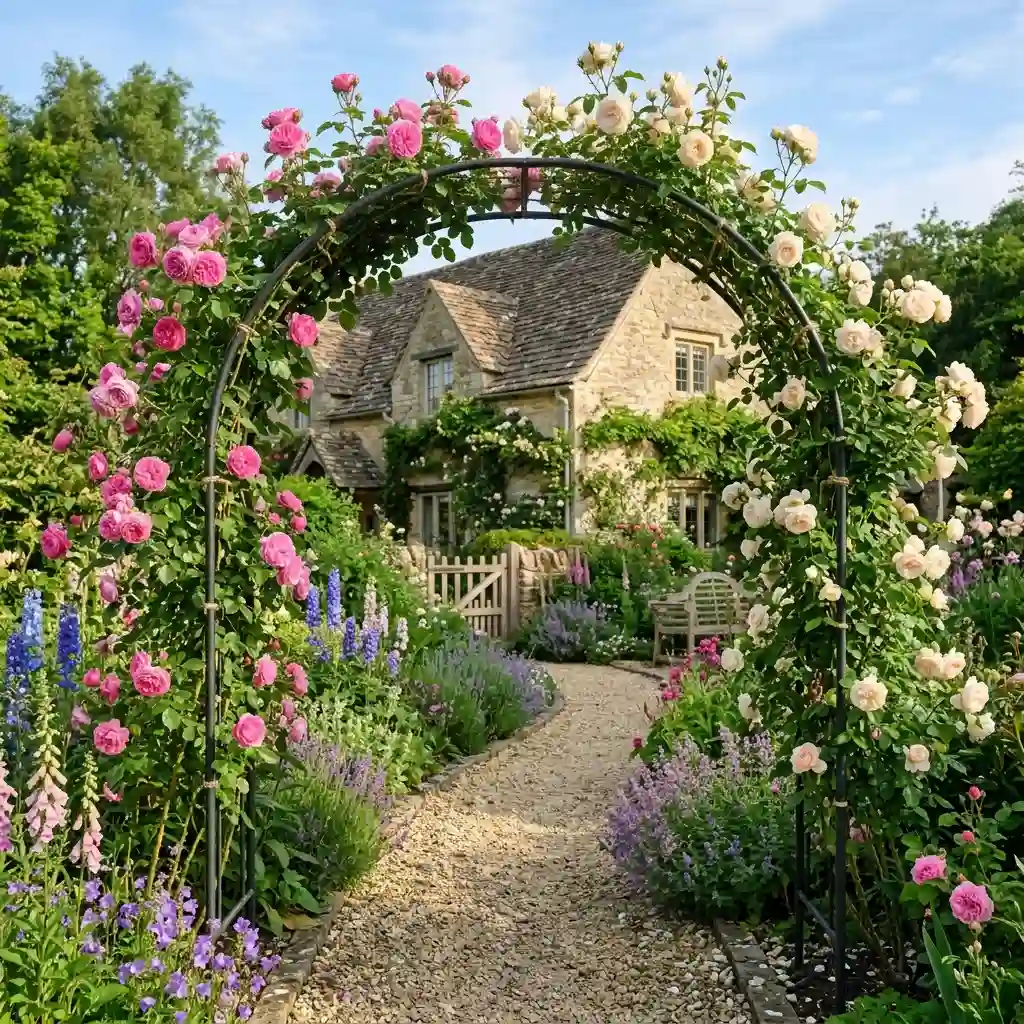
Roses and clematis can share an arch when their needs are compatible. The rose forms the main structure while clematis fills open areas.
Choose plants that suit the same light and soil conditions. Check their mature sizes before planting.
Flowering times matter too. You can select varieties that bloom at different times for a longer display.
Learn the pruning needs of each plant. Different clematis groups can require different pruning methods.
**Best for:** Flower gardens that need color across several seasons.
**Watch for:** Tangled stems and plants with conflicting care needs.
10. Get Fast Color With an Annual Flower Arch
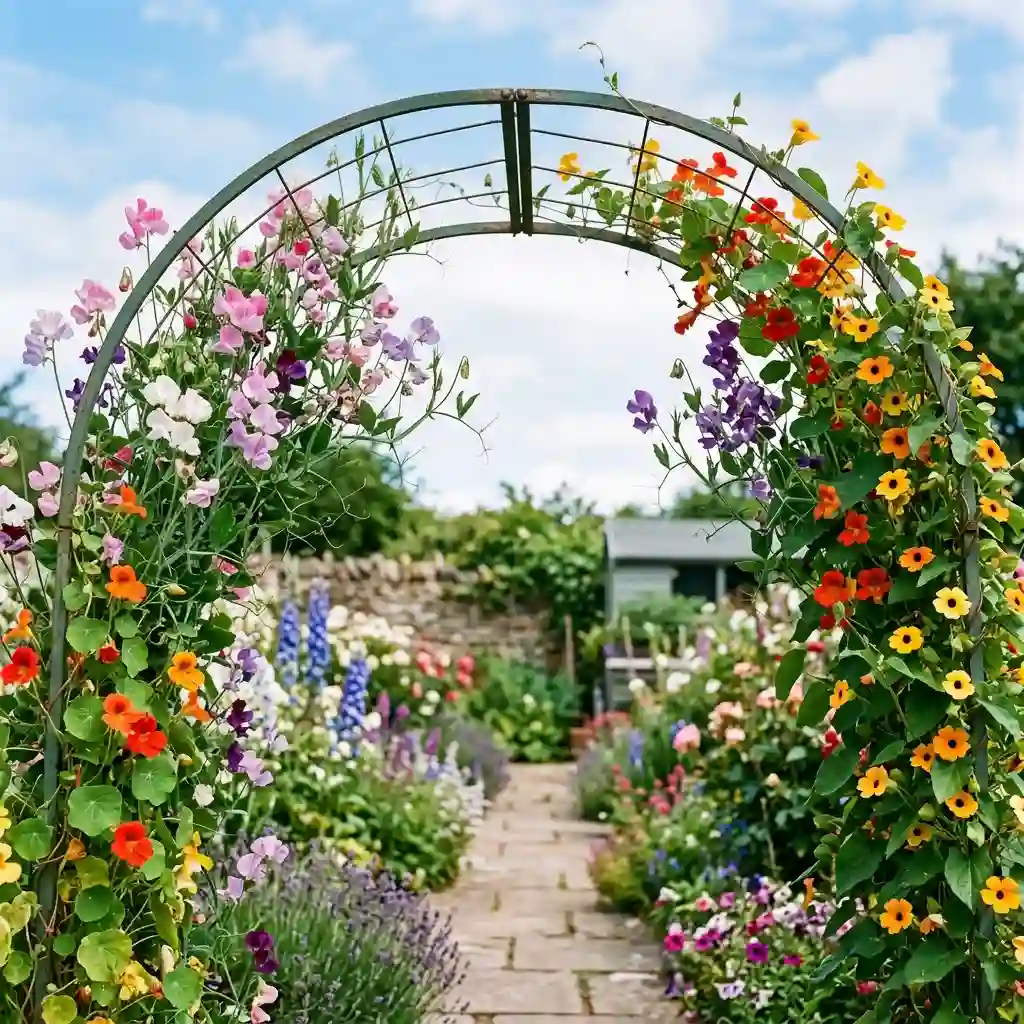
Annual vines can cover an arch during one growing season. They are useful when you want quick color without a permanent woody plant.
Possible choices include sweet peas, climbing nasturtiums, black-eyed Susan vines, and morning glories. Suitability will depend on your region.
Check whether a plant spreads aggressively where you live. Your local extension office can help you choose safer options.
At the end of the season, remove dead stems and prepare the frame for next year. You can then change the flower colors or plant type.
**Best for:** Renters and gardeners who enjoy changing their displays.
**Watch for:** Heavy self-seeding and plants that may be invasive locally.
Space-Saving Garden Archway Ideas
A small yard can still hold an arch. The key is keeping the frame open and protecting the main walking route.
11. Use a Slim Arch in a Narrow Side Yard
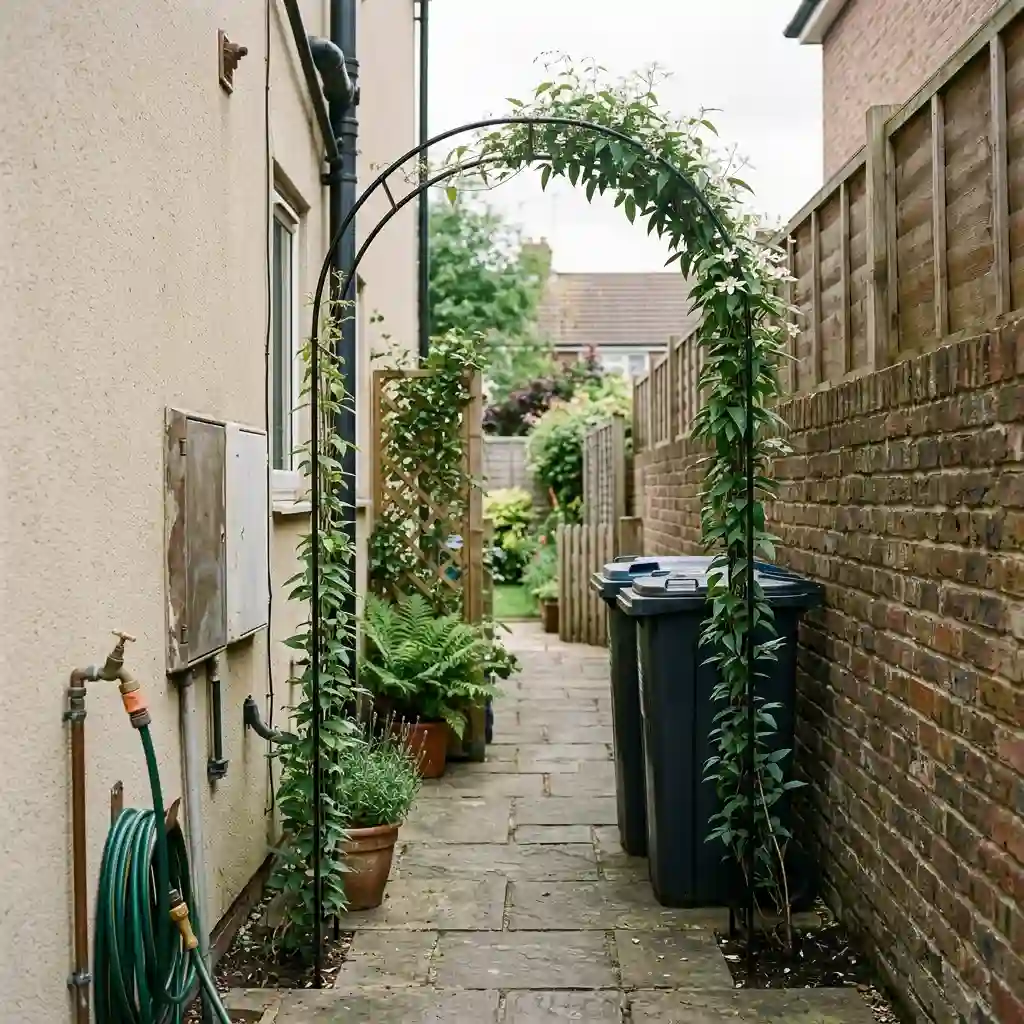
A narrow side yard often feels like a passage instead of part of the garden. A slim arch can make the area feel planned.
Choose a frame with shallow sides. Train plants upward so stems do not spread across the path.
Thin metal or pale paint can reduce the arch’s visual weight. Keep the design simple if the surrounding space already feels busy.
Do not block bins, outdoor taps, meters, or utility boxes. These areas must remain easy to reach.
**Best for:** Side passages and narrow urban gardens.
**Watch for:** Blocked access and spreading plants.
12. Save Floor Space With a Wall-to-Fence Half Arch
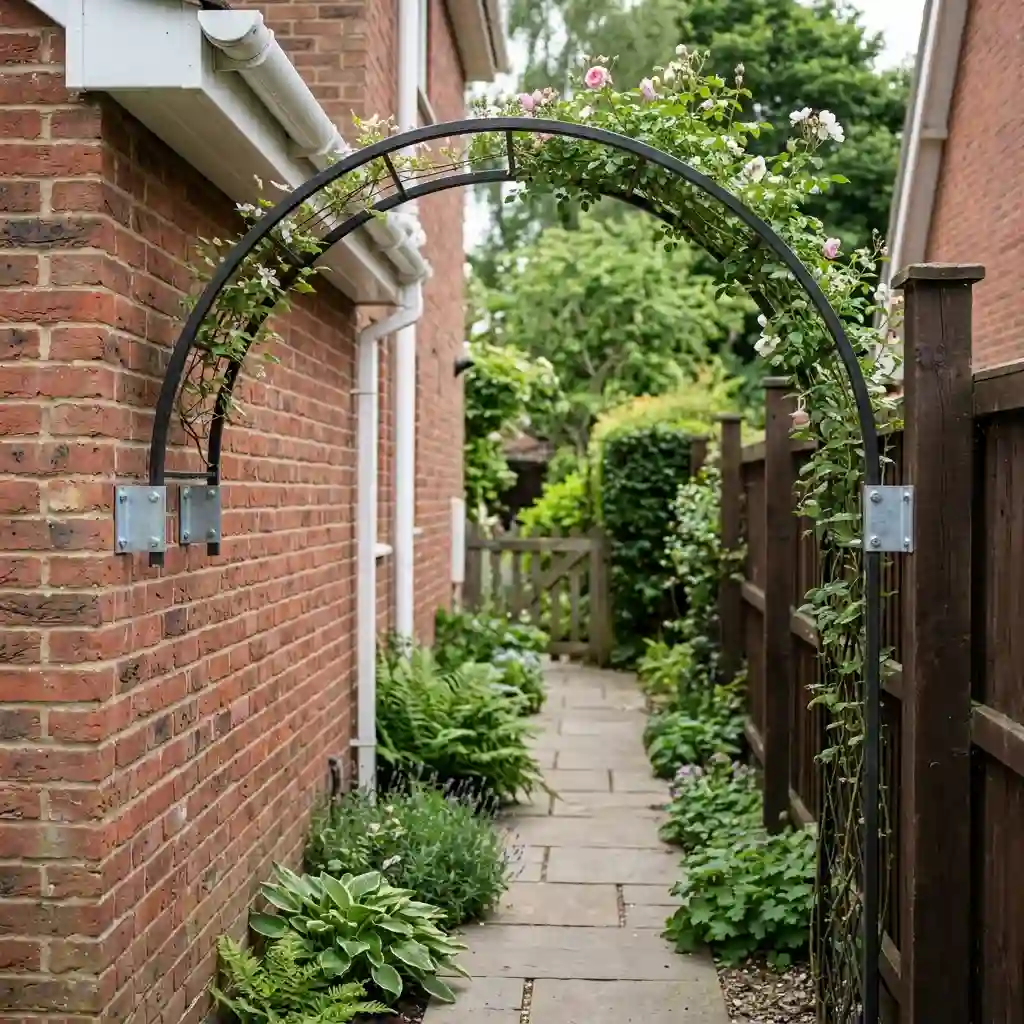
A half arch attaches to a wall on one side and a fence or post on the other. It can provide an archway effect where a full structure will not fit.
Confirm that each surface can support the frame and mature plants. A weak fence panel is not a safe anchor.
Keep vines away from gutters, roof edges, vents, and siding gaps. Removable trellis panels can make future wall care easier.
Leave enough open height for comfortable use. Hanging growth can quickly reduce the available space.
**Best for:** Tight paths between a home and fence.
**Watch for:** Wall damage and vines reaching the roof.
13. Make a Renter-Friendly Planter-Box Arch
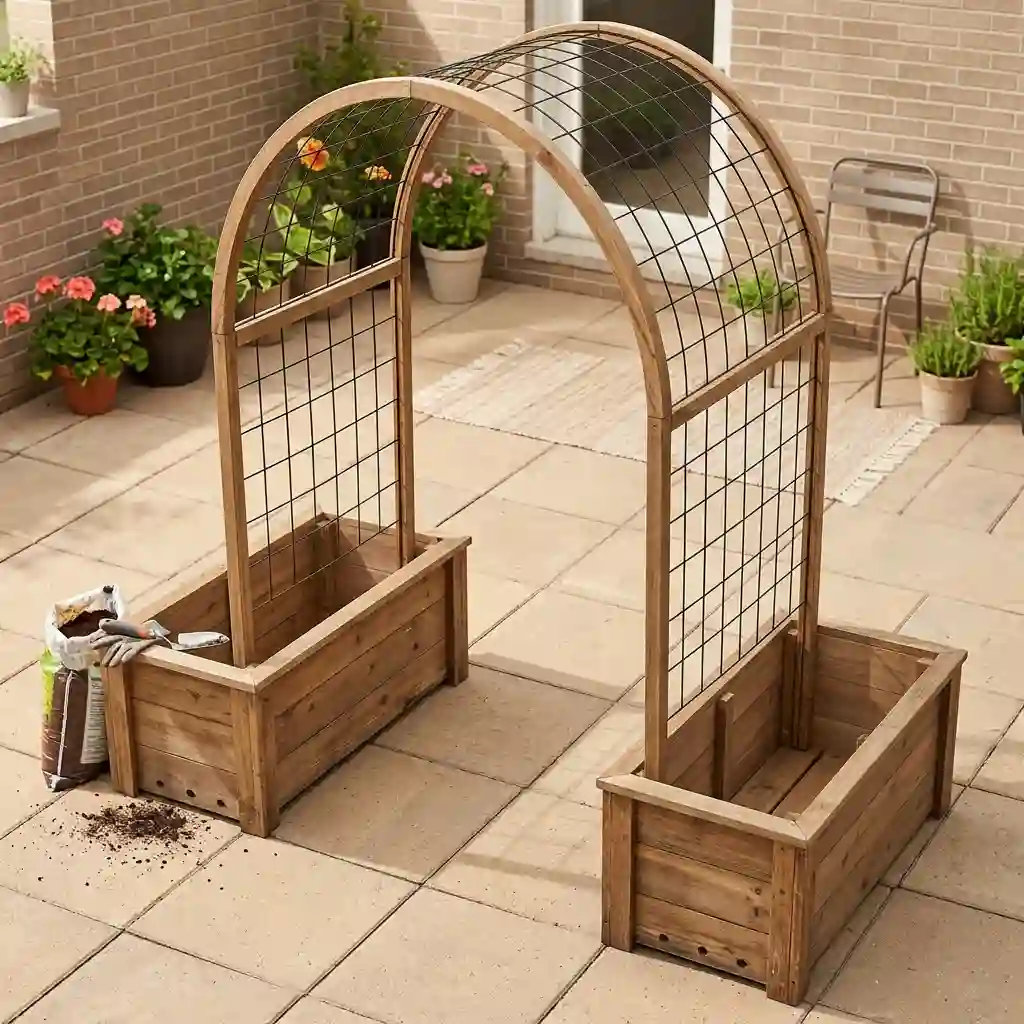
A planter arch can add height without permanent posts. Each side of the arch sits inside or attaches to a large container.
Use wide, heavy planters with drainage holes. A narrow or lightweight pot may tip during strong winds.
Choose compact climbing plants instead of heavy roses or grapevines. Annual flowers and light vegetable vines are often easier to manage.
The structure may be movable, but full planters can become very heavy. Decide where you want it before adding soil.
**Best for:** Patios, rentals, and paved areas.
**Watch for:** Tipping, poor drainage, and top-heavy growth.
14. Frame a Small Gate Without Crowding It
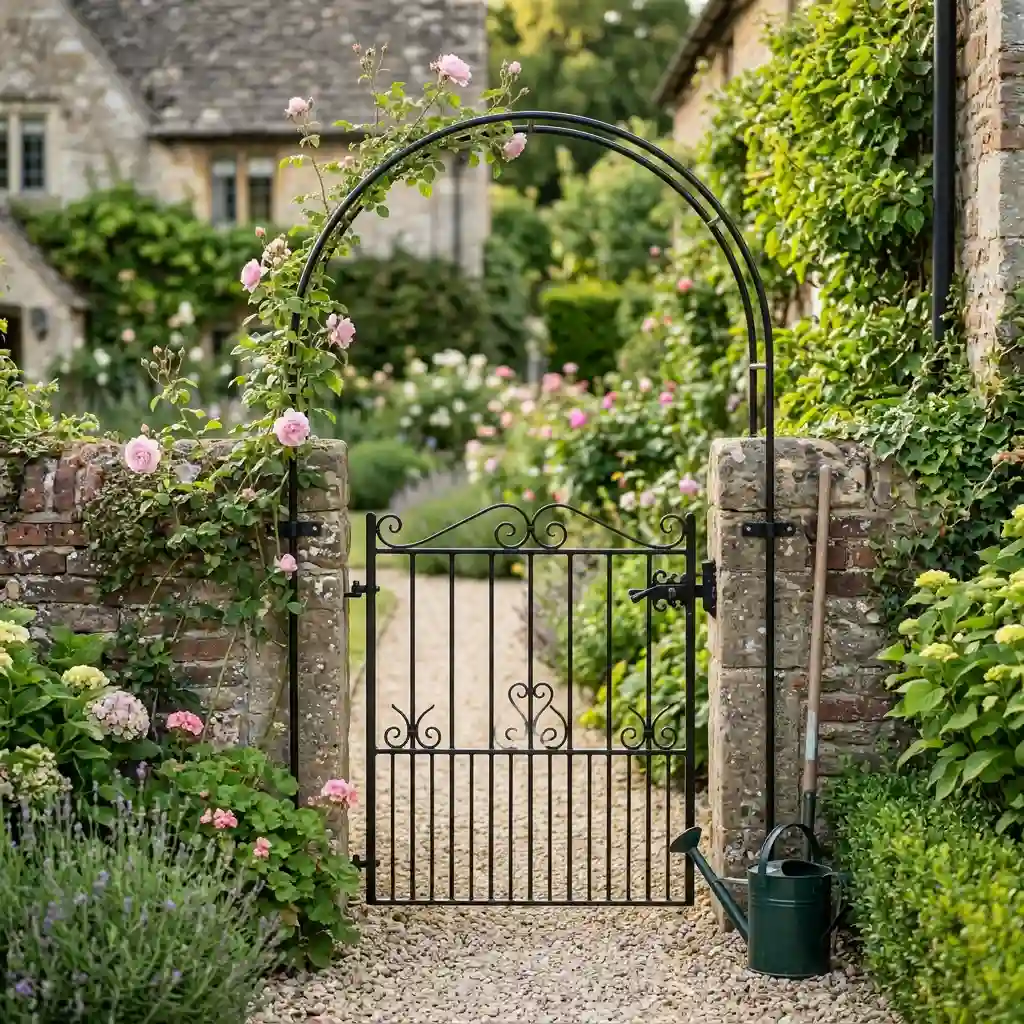
An arch over a small gate should match the scale of the entrance. A thick frame can make a short or narrow gate feel cramped.
Use an open design with slim sides. One controlled climbing plant may be enough.
Repeat a nearby color or material. A black metal arch can match black gate hardware. A painted wooden arch can connect with a fence.
Test the clearance before fixing the arch. Walk through while carrying a bag, watering can, or long garden tool.
**Best for:** Compact front yards and side gates.
**Watch for:** Low headroom and plants around the latch.
Creative Garden Arch Designs With Strong Character
An arch does not need full plant coverage to look good. The frame itself can become the main feature.
15. Build a Rustic Arch From Branches and Twigs
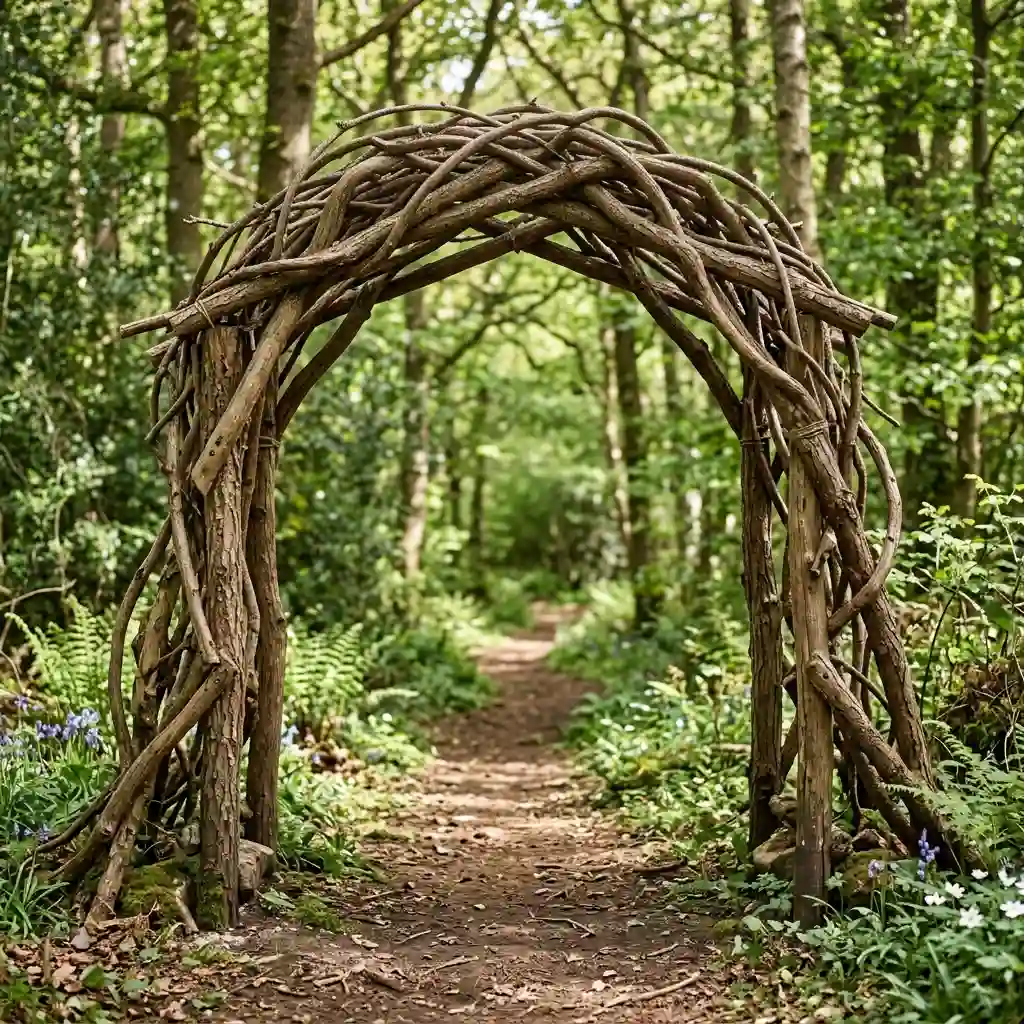
A branch arch fits naturally in a woodland garden. It can also make use of sound branches from garden pruning.
Choose straight pieces without deep cracks, rot, or pest damage. Join them with exterior-rated screws, wire, or strong brackets.
Cut or cover sharp ends near the path. Check the frame often because natural wood can weaken faster than treated materials.
The uneven shape is part of its appeal. However, the structure still needs secure joints and firm ground anchors.
**Best for:** Woodland gardens and low-cost rustic designs.
**Watch for:** Rot, sharp ends, and weak connections.
16. Add Clean Lines With a Modern Geometric Arch
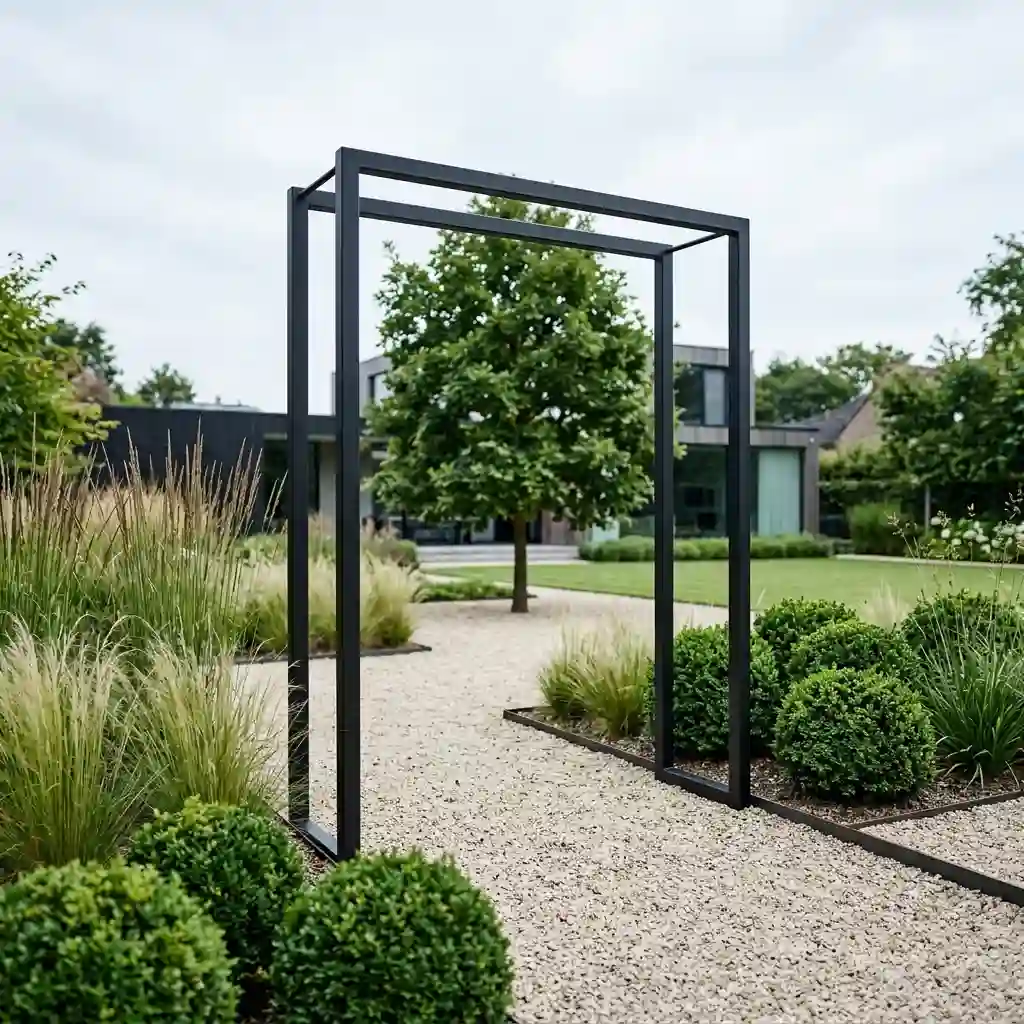
A modern arch can have a square, rectangular, or uneven outline. The clean shape becomes a piece of garden art.
Pair matte-black metal with gravel, clipped evergreens, or ornamental grasses. Repeat the same finish on planters, edging, or furniture.
Keep plant coverage light so the frame stays visible. You can also leave the arch bare for a sharper look.
Position it where the shape can frame a tree, sculpture, or seating area.
**Best for:** Modern homes and simple garden layouts.
**Watch for:** Too many materials or plants hiding the frame.
17. Guide Evening Guests With an Illuminated Arch
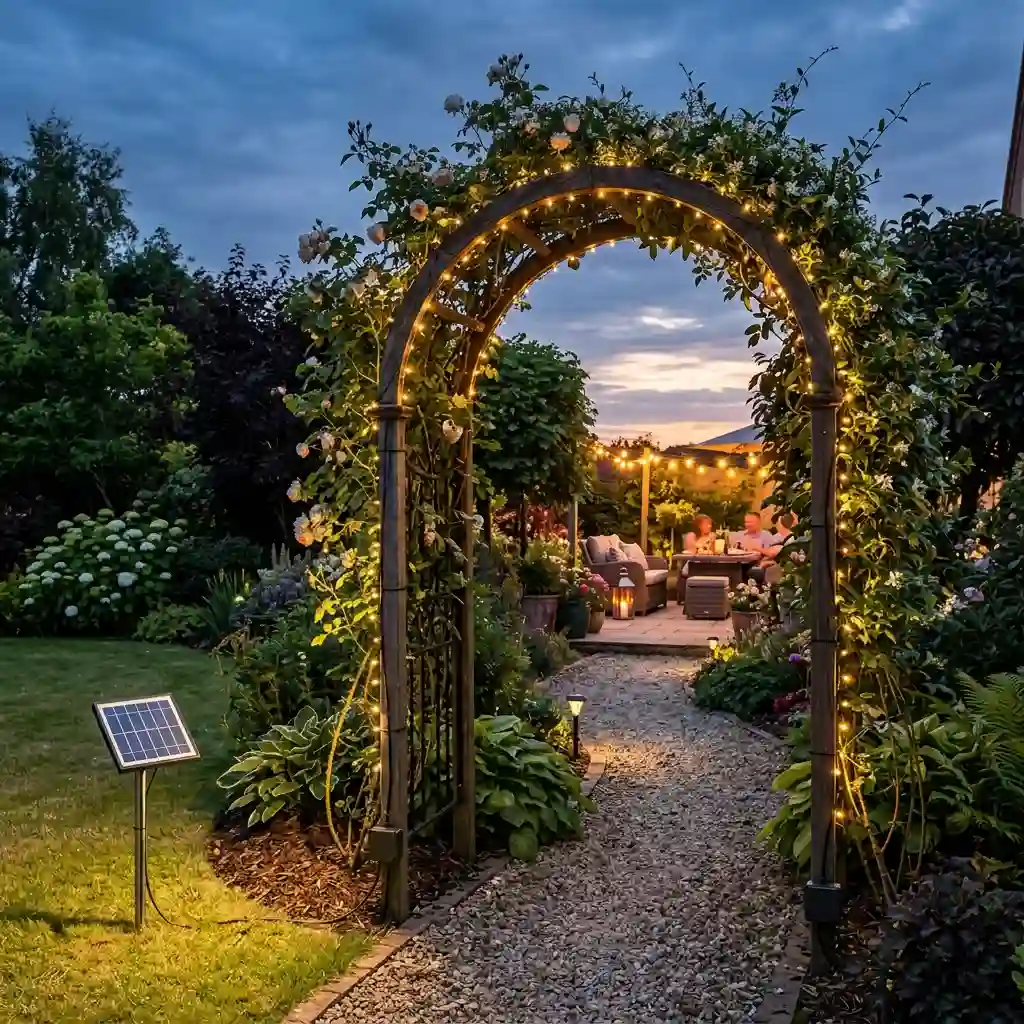
An illuminated arch can mark the route to a patio, gate, or evening seating area. Warm light usually feels softer than bright white light.
Use lights made for outdoor locations. Secure each cable so it cannot catch on clothing, tools, or branches.
Protect electrical connections from water. Follow the product instructions and use a qualified electrician when permanent wiring is needed.
Solar lights can be simpler, but their performance depends on sunlight and battery quality. Place the solar panel where it receives enough direct light.
**Best for:** Evening gardens, patios, and event spaces.
**Watch for:** Exposed cables, water near connections, and harsh glare.
The best garden arch ideas begin with a clear purpose. Your arch should fit the path, carry its mature plants, and match nearby garden features.
You do not need the largest or most expensive design. A simple metal arch can frame a small gate. A wire tunnel can add growing space between vegetable beds. A strong wooden frame can support roses for years with regular care.
Measure one possible location today. Decide whether you need an entrance, plant support, shade, or a framed view. Then shortlist two designs that suit your budget and the amount of maintenance you can manage.