
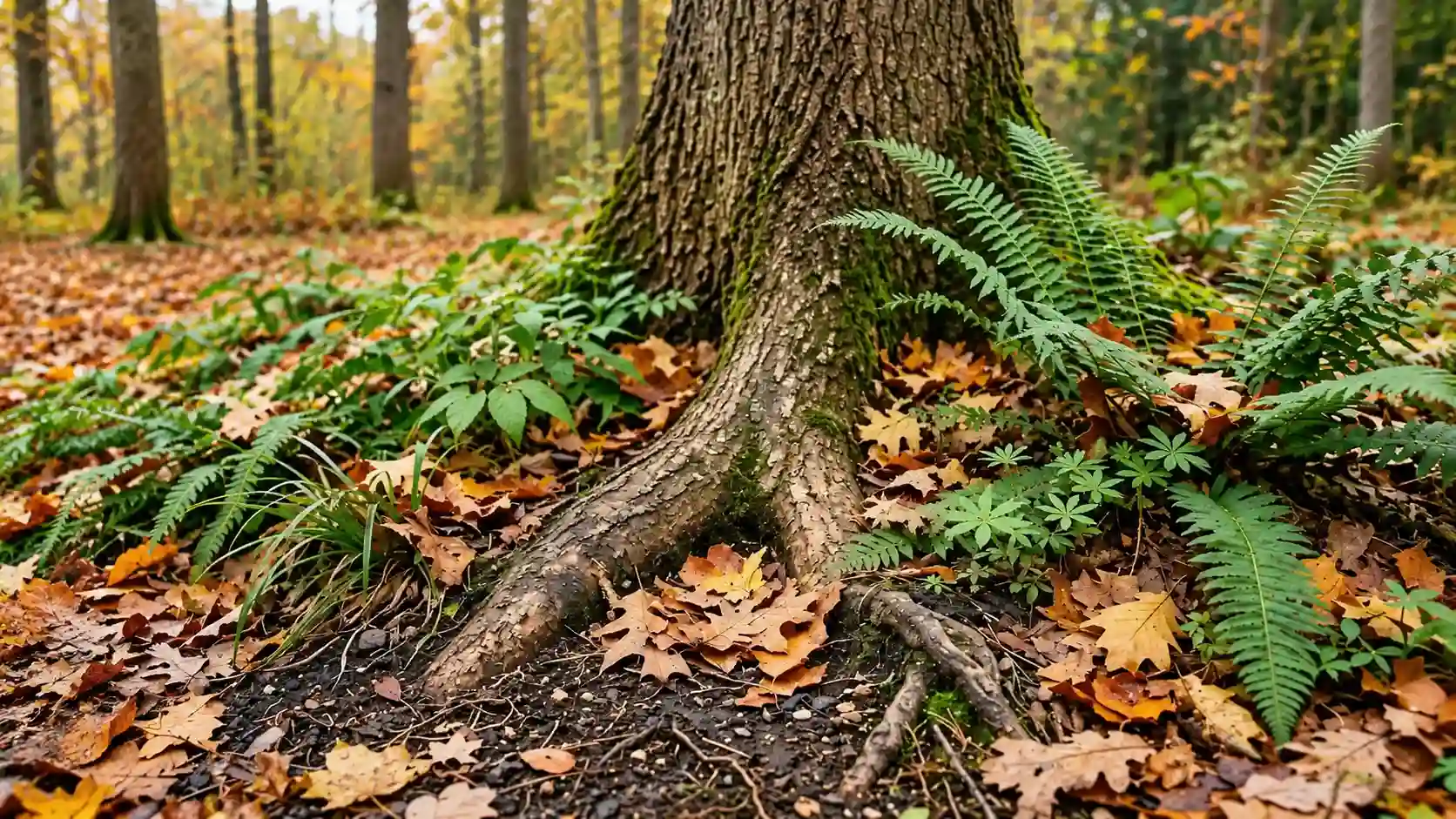
A shaded yard can be hard to manage. Grass grows thin. Bare soil turns muddy. Weeds fill empty spaces. These low-maintenance shade garden ideas can help you turn that problem area into a useful, attractive garden.
The key is choosing plants that suit the site. Some shaded spots stay damp. Others become very dry because tree roots take much of the available water.
You will learn how to check your light and soil before planting. You will also find low-maintenance plants for shade, simple paths, ground covers, and other ways to reduce weekly work.
A good shade garden design does not depend on one perfect plant. It comes from matching each plant and material to the conditions in your yard.
Plan Your Low-Maintenance Shade Garden Before You Shop
A shaded area can still have dry soil. This often happens beneath mature trees, where roots compete with smaller plants for water.
Start by tracking the sunlight for three days. Check the area in the morning, around noon, and again in the late afternoon. Write down when direct sunlight reaches the soil.
The University of Minnesota Extension describes part shade as roughly three to six hours of sunlight. Full shade receives less than three hours. Dappled shade is the broken light that passes through tree branches and leaves. Exact labels may differ between plant sellers, so your own light notes still matter.
Next, check the soil. Does it stay dry even after rain? Does water collect near a downspout? Is the ground hard and compacted?
Look at these four details:
- Hours and strength of direct sunlight
- Soil moisture after dry and rainy weather
- Existing roots and nearby structures
- Your USDA plant hardiness zone
The USDA Plant Hardiness Zone Map helps you find plants that can handle your local winter temperatures. It does not tell you whether a plant can handle your soil, summer heat, pests, or rainfall. You must check those needs separately.
Choose plants by their mature height and width. Repeating three to five reliable varieties often creates a cleaner look and less work. Record your conditions before you visit a nursery.
20 Low-Maintenance Shade Garden Ideas
Less work starts with smart design choices. The following ideas use plants, paths, mulch, and simple focal points to limit watering, weeding, and pruning.
1. Replace Weak Grass With Shade Ground Covers
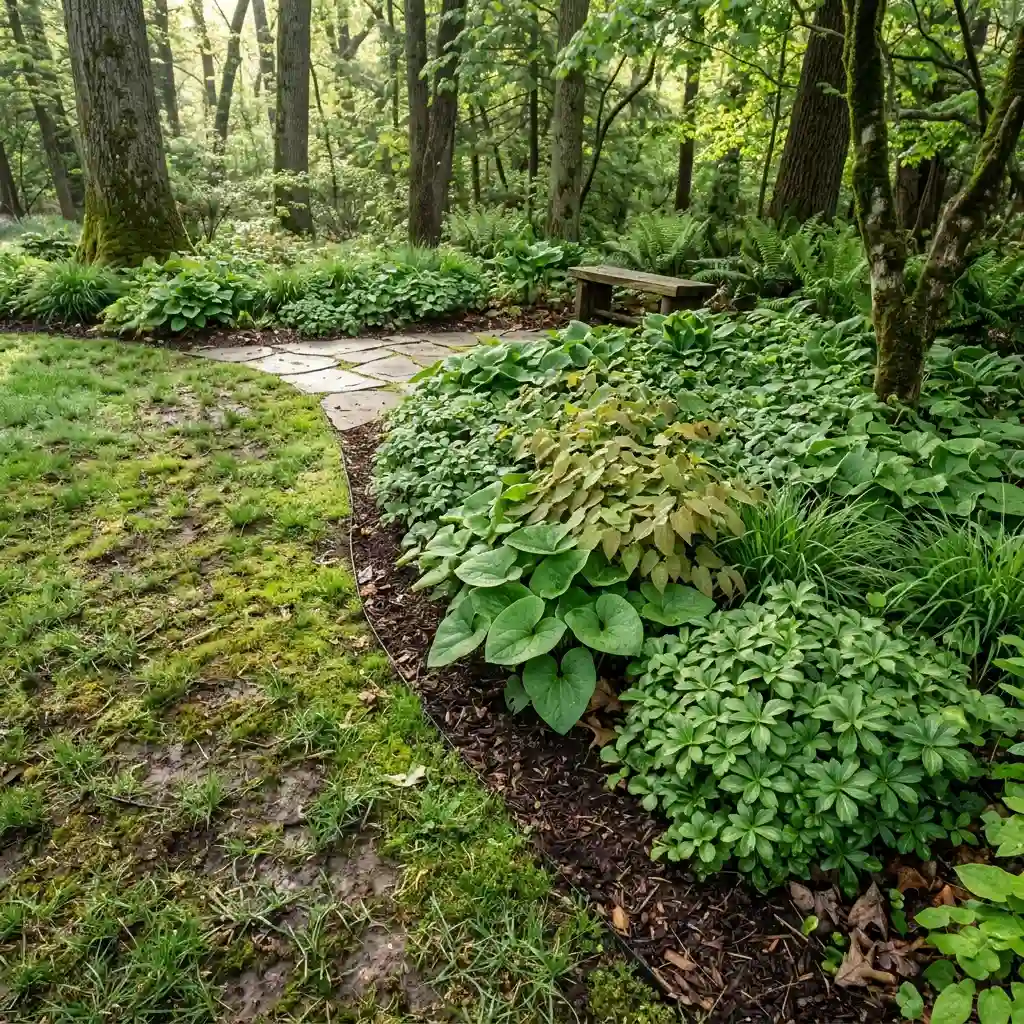
Stop fighting to keep grass alive where it receives too little light. Replace thin turf with a ground cover that matches your soil and climate.
Wild ginger, barrenwort, Allegheny spurge, and some sedges may work well. Check each plant’s growing range before buying it.
Best for: Thin, muddy lawn beneath trees or beside a building.
Care-saving benefit: Dense foliage covers open soil and leaves fewer spaces for weeds.
Watch for: Some ground covers spread too fast in certain regions. Check your state’s invasive plant list before planting.
2. Build a Hosta and Fern Planting
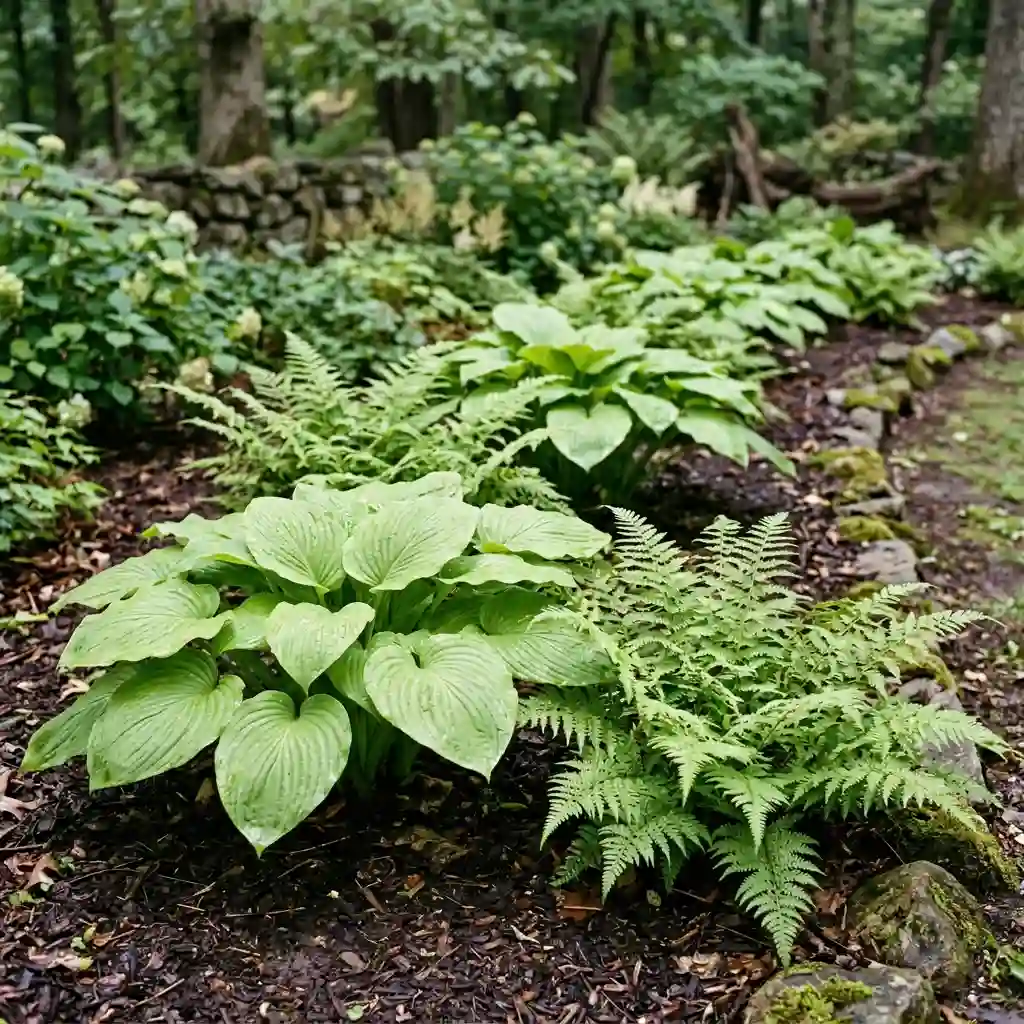
Hostas have wide leaves, while ferns add a softer texture. The contrast makes a bed look full without using many plant types.
Plant three to five groups instead of placing single plants across the bed. These easy shade garden ideas work best where soil has enough moisture for the selected varieties.
Best for: A damp north-facing side yard or shaded border.
Care-saving benefit: Large leaves cover soil and provide color for much of the growing season.
Watch for: Deer may eat hostas. Slugs can also damage their leaves. Use resistant plants if these pests are common.
3. Use Native Woodland Plants
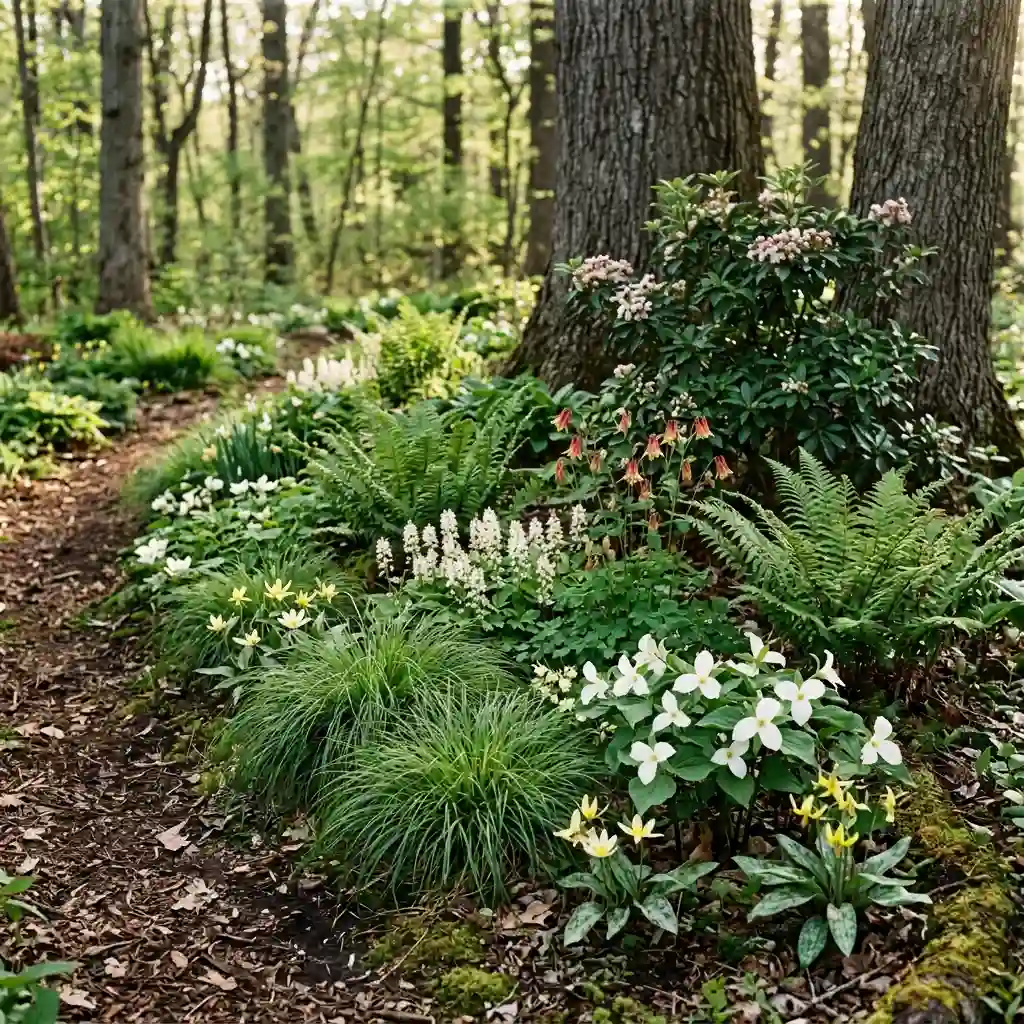
Native plants can be a good fit for local rain, soil, and seasonal temperatures. Start with a regional native plant database or Native Plant Society.
Mix spring flowers with plants that keep attractive leaves through summer and fall. Your choices will depend on where you live.
Best for: A natural bed near mature trees.
Care-saving benefit: Well-matched native plants may need less extra water once established.
Watch for: Native does not mean no care. Even low-maintenance plants for shade need proper spacing, water during establishment, and occasional weed control.
4. Cover Bare Soil With Leaf Mulch
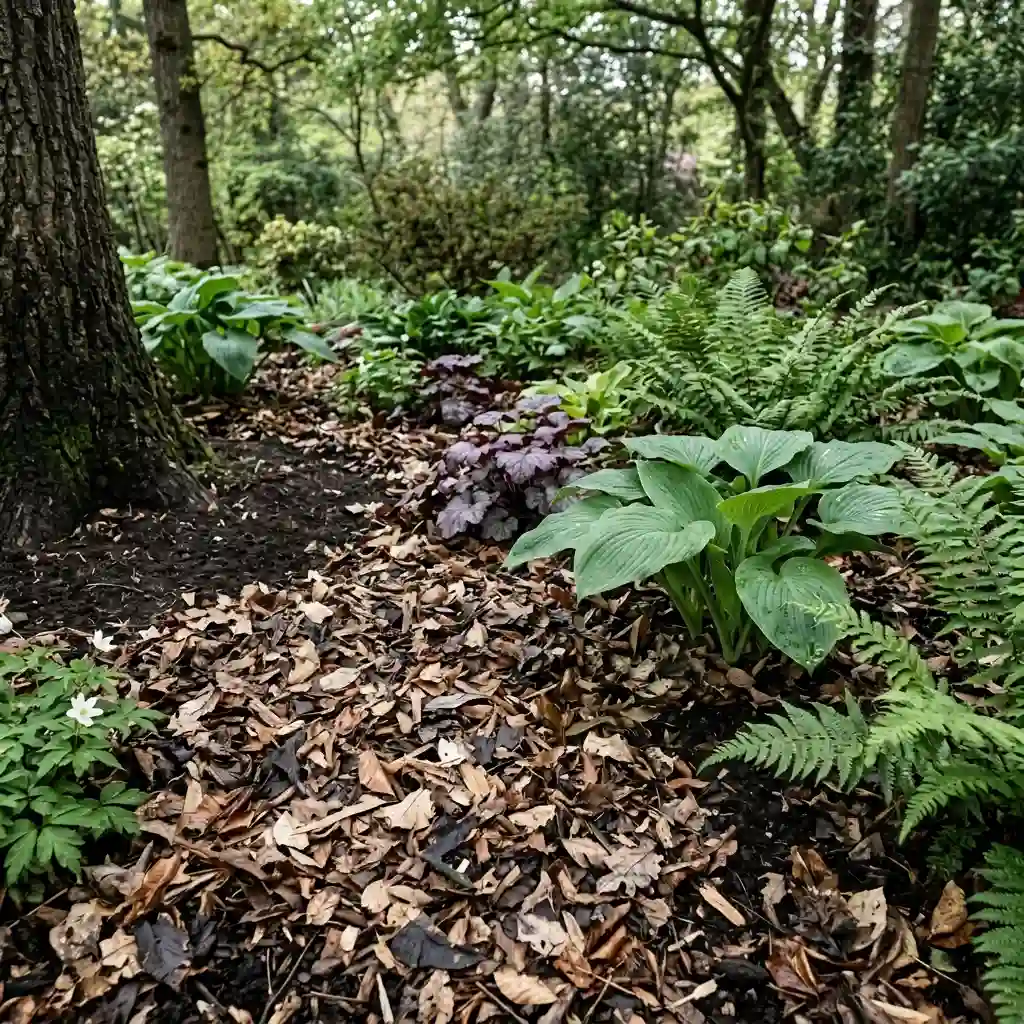
Turn shredded leaves into free mulch instead of sending every leaf away. Leaf mold, which is partly broken-down leaf material, can also improve the surface of the soil.
Spread a light, even layer around established plants. Keep it away from trunks, stems, and plant crowns.
Best for: Woodland beds and areas beneath shrubs.
Care-saving benefit: Leaf mulch slows water loss and blocks some weed growth.
Watch for: Do not pile deep mulch against a tree. Penn State Extension recommends keeping mulch away from the trunk rather than building a “mulch volcano.”
5. Create a Dry-Shade Bed Under Trees
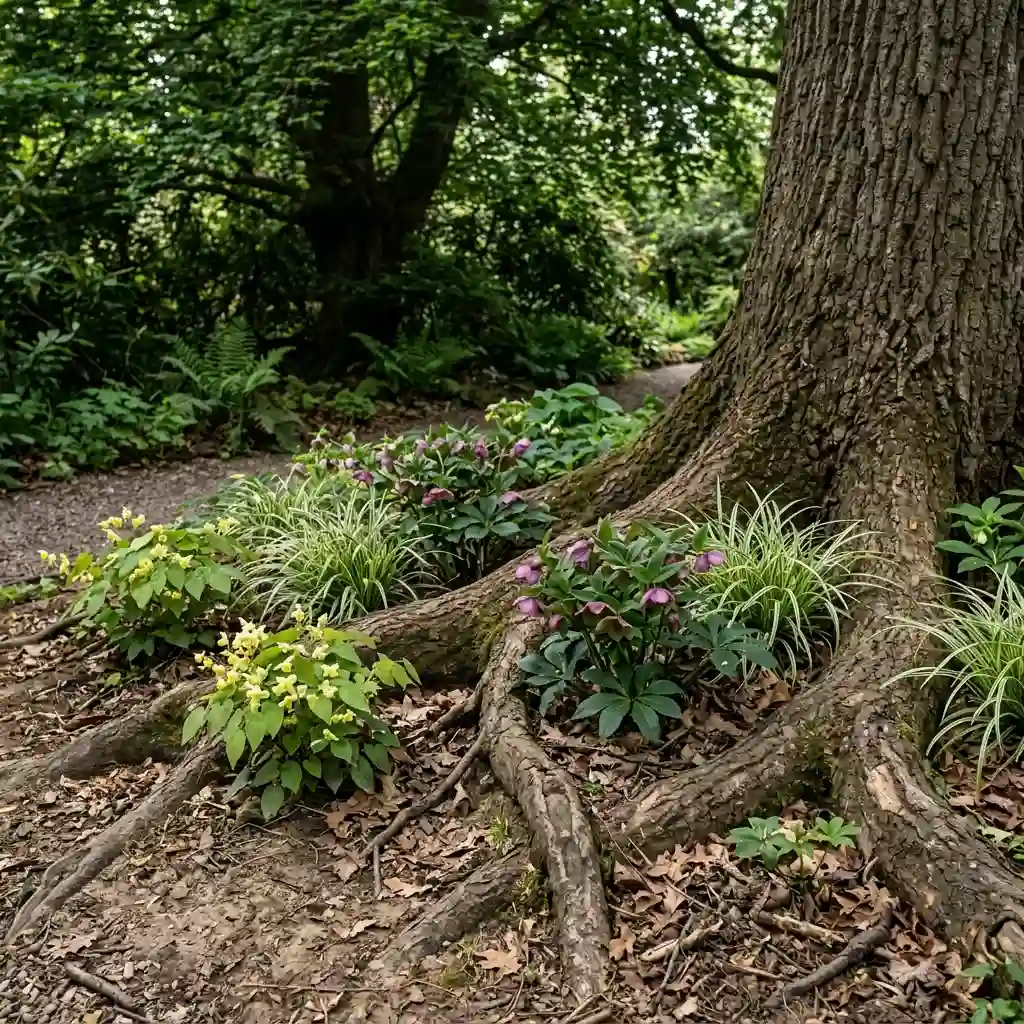
Shade beneath a mature tree is often dry because its roots use much of the available water. Pick plants that can handle both shade and root competition.
Barrenwort, hellebores, clumping sedges, and locally suitable woodland plants are options to research. Use small nursery plants that fit between roots.
Best for: Bare soil beneath a healthy, mature tree.
Care-saving benefit: Plants suited to dry shade need less rescue watering later.
Watch for: Never cut major roots to make planting holes. Do not add a deep layer of soil over existing roots. Ask a certified arborist for help if you are unsure.
6. Repeat Three Reliable Plant Varieties
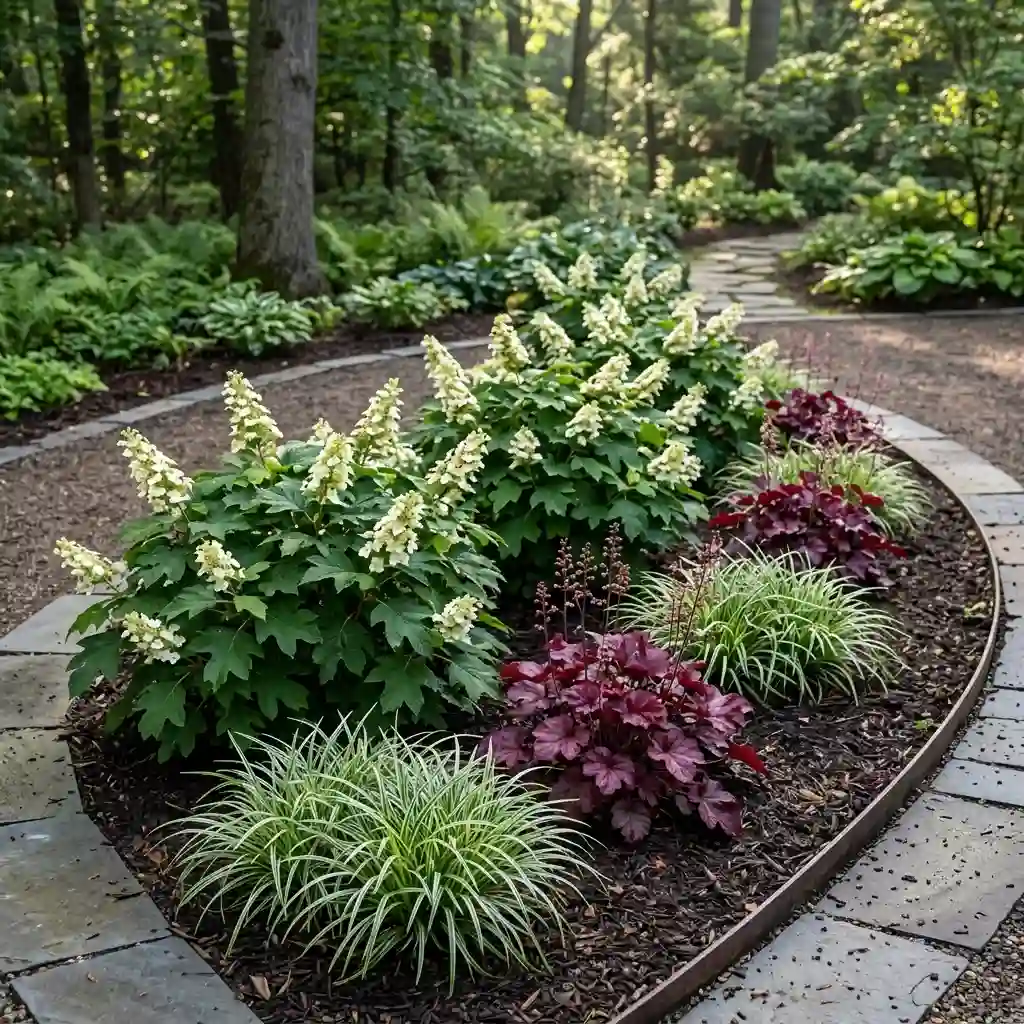
Choose one ground cover, one medium-height perennial, and one taller anchor plant. Repeat that group across the bed.
For example, you might combine a clumping sedge, heuchera, and a compact oakleaf hydrangea. Confirm that all three suit your climate and soil.
Best for: Beginners who want easy shade garden ideas without a complicated plant list.
Care-saving benefit: Repetition makes watering, seasonal cleanup, and plant replacement simpler.
Watch for: Match all three plants by moisture needs. A thirsty plant should not share a dry bed with drought-tolerant plants.
7. Plant Evergreen Structure
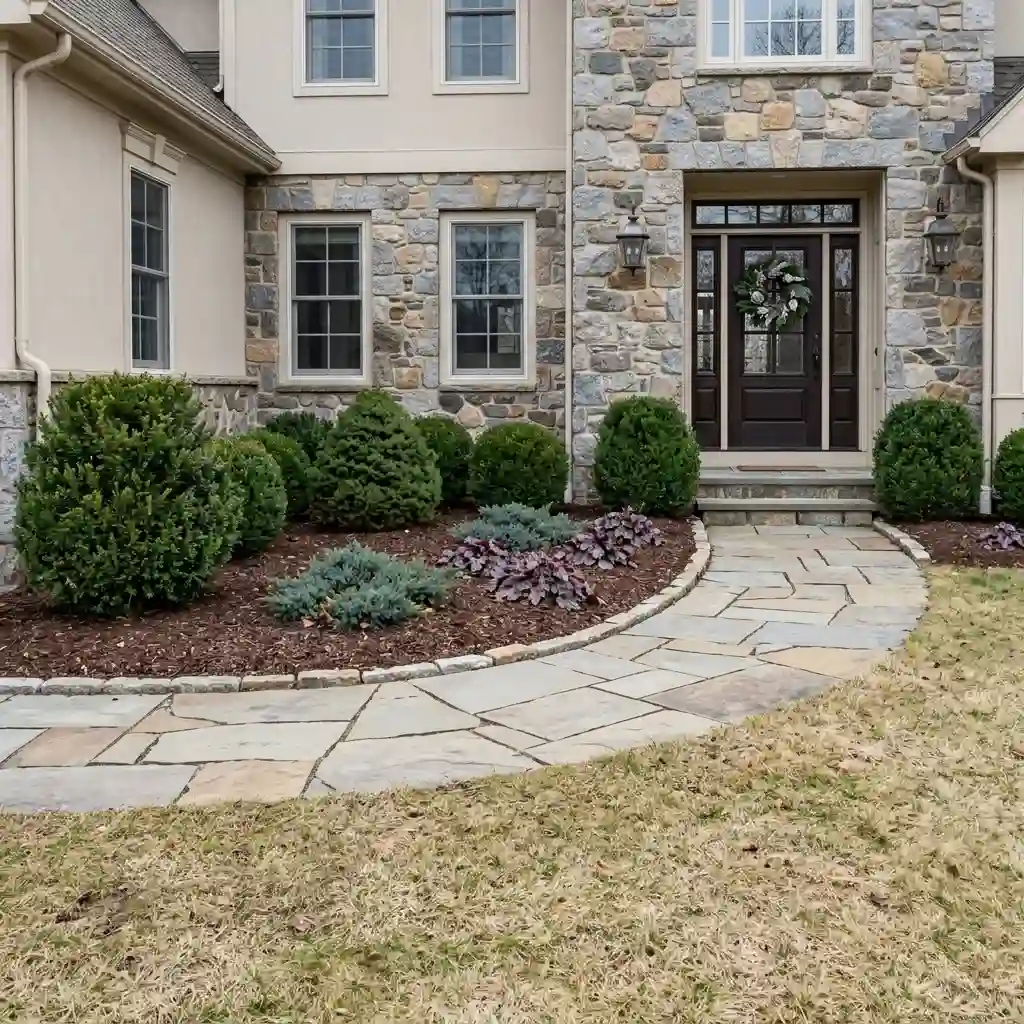
Evergreen shrubs keep some color and shape through winter. Place them at the back of a border, beside an entrance, or at the corners of a bed.
Look for shade-tolerant varieties that fit your hardiness zone. Check both mature height and width before planting.
Best for: Front yards and shaded foundation beds.
Care-saving benefit: A few well-placed shrubs can provide structure without seasonal replanting.
Watch for: A large shrub in a narrow bed will need repeated pruning. Pick a naturally compact variety when space is tight.
8. Add a Simple Gravel Path
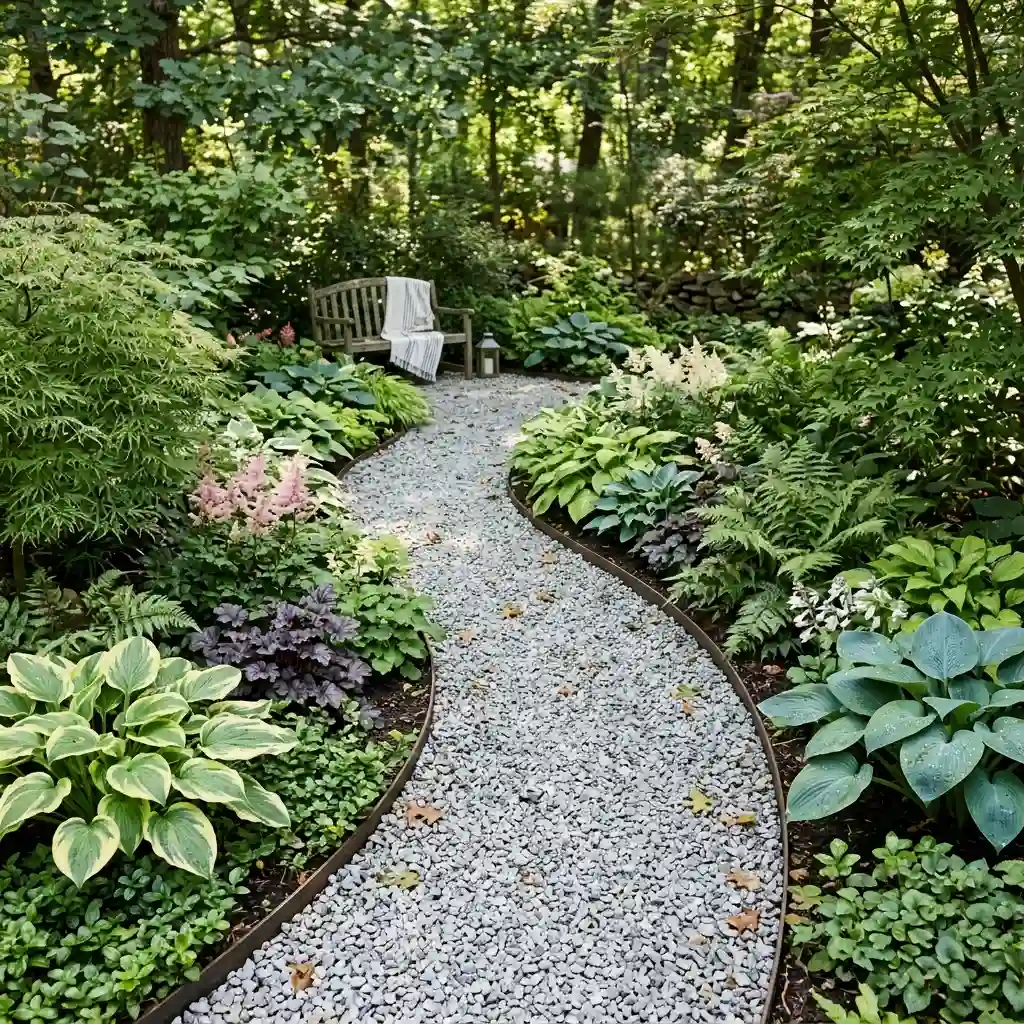
A path keeps people from walking on garden soil. This reduces compaction around plant roots and creates a clear route through the bed.
Use edging to keep the gravel in place. Angular gravel usually stays more stable underfoot than smooth, round stones.
Best for: Medium or large shade gardens that need regular access.
Care-saving benefit: A defined path makes watering, weeding, and cleanup easier.
Watch for: Falling leaves can become difficult to remove from gravel. A rake, broom, or leaf blower may also disturb small stones.
9. Use Stepping Stones Through Ground Covers
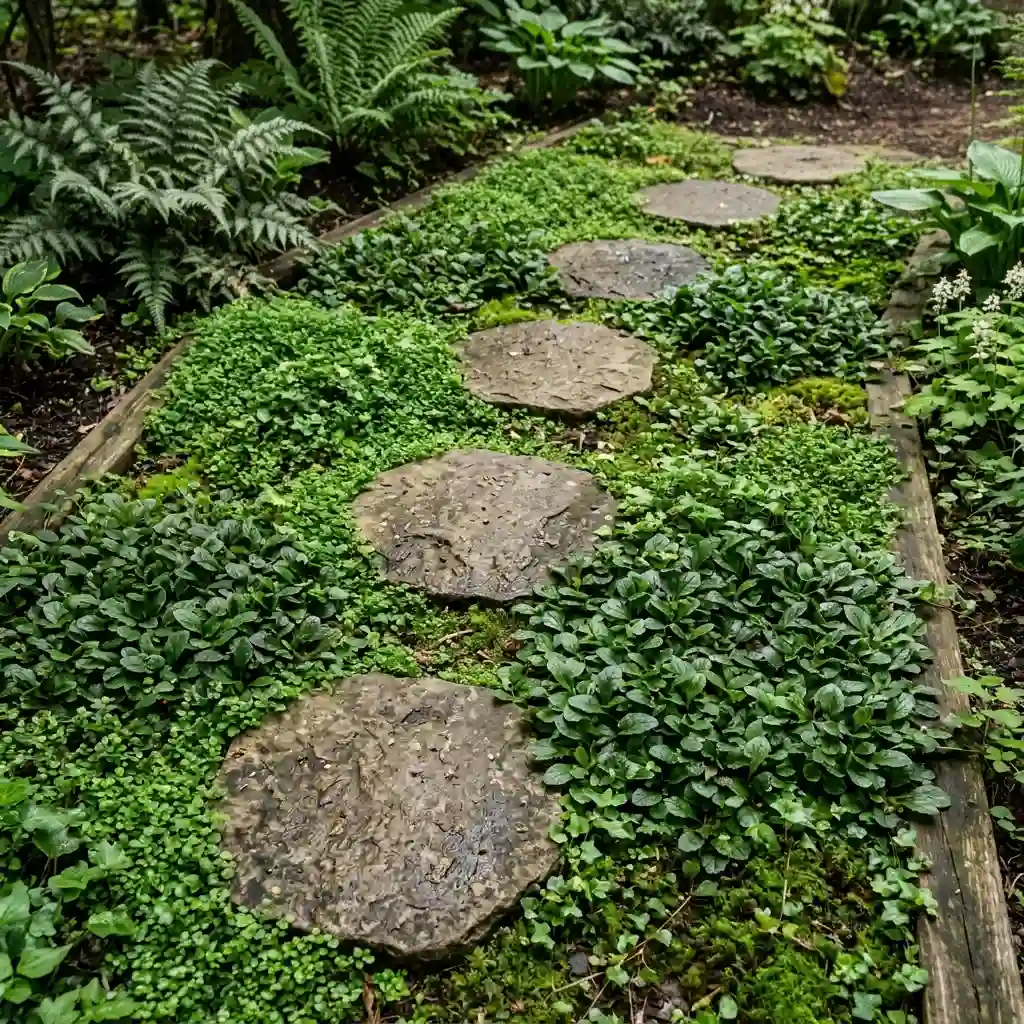
You do not always need a full path. A line of stepping stones can provide access while leaving more room for plants.
Set the stones at a natural walking distance. Keep nearby ground covers below the top surface so they do not create a trip risk.
Best for: Small beds that need occasional access.
Care-saving benefit: Stepping stones require less material than a complete path.
Watch for: Damp shade can make smooth stone slippery. Choose a textured surface and make sure each stone sits firmly.
10. Create a Moss-Friendly Garden
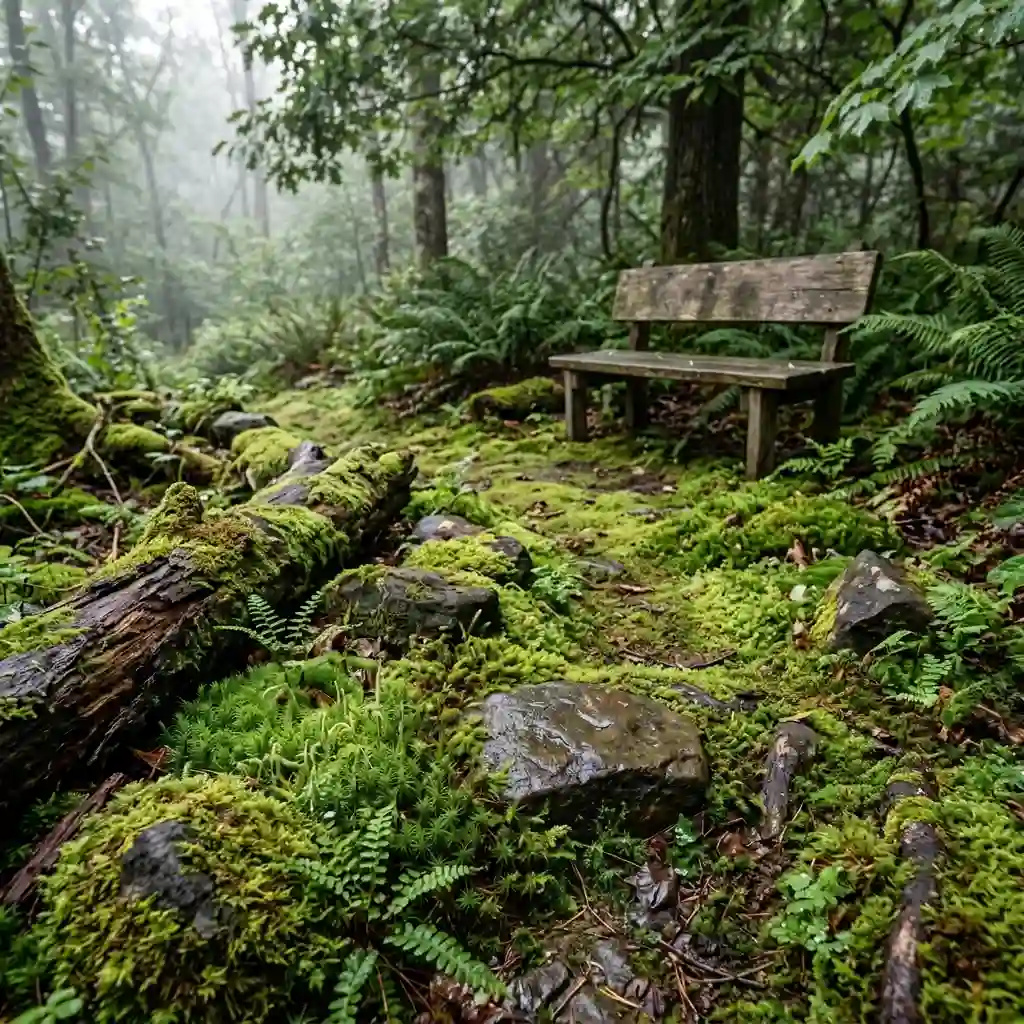
If moss already grows well in your yard, you may be able to make it part of the design. Add weathered stones, a log, or a simple bench.
Moss needs the right mix of moisture, light, soil, and low foot traffic. It will not grow well in every shady space.
Best for: Naturally damp, calm areas where moss already appears.
Care-saving benefit: Existing moss can cover soil without mowing.
Watch for: Moss is not a universal lawn replacement. Do not waste time forcing it into dry soil or a busy walking area.
11. Group Containers Near a Shaded Entrance
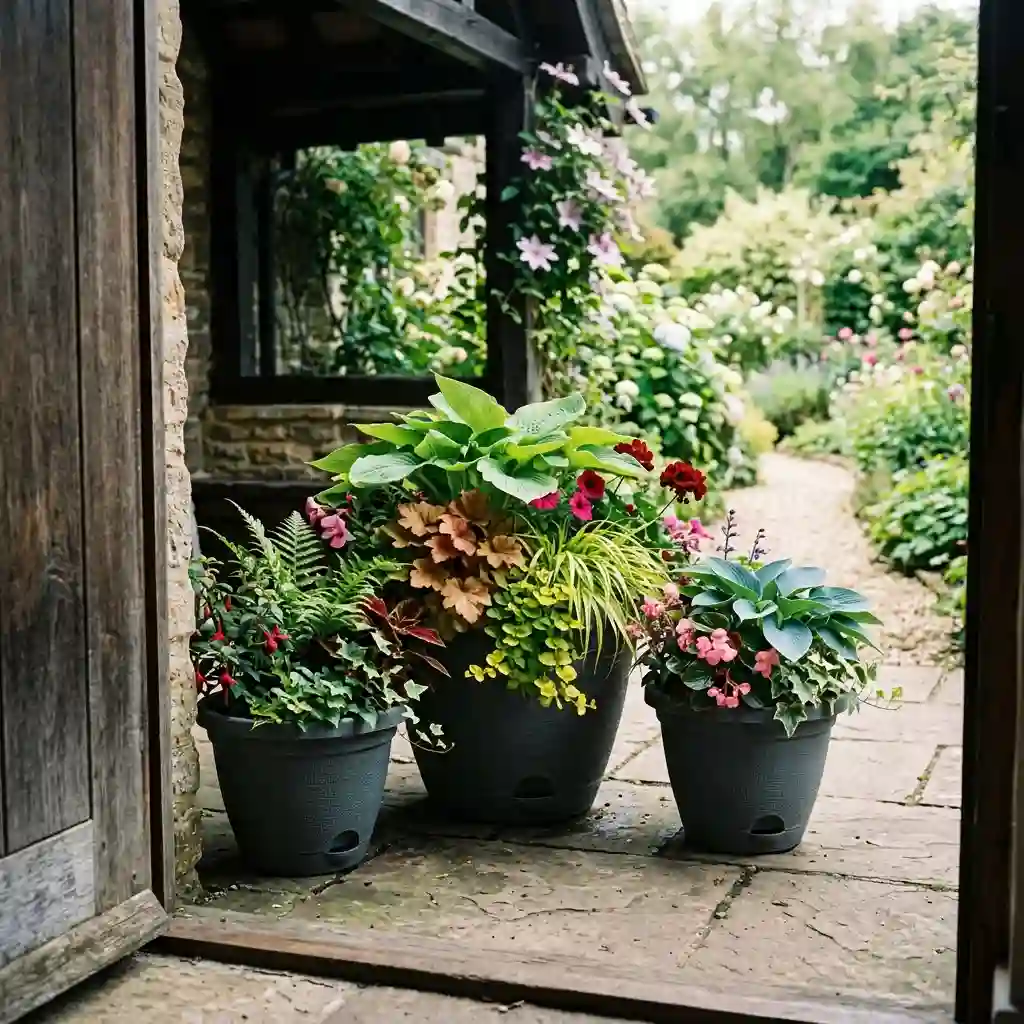
Place three large containers near a porch, doorway, or shaded patio. A small group looks more organized than many separate pots.
Combine foliage plants with a small amount of seasonal color. Self-watering containers can help during hot or busy weeks.
Best for: Renters, paved entrances, and yards with poor soil.
Care-saving benefit: Large containers dry more slowly than small pots and need less frequent watering.
Watch for: Containers still need drainage. Check the soil by touch rather than watering on a fixed schedule.
12. Add a Bench as the Main Focal Point
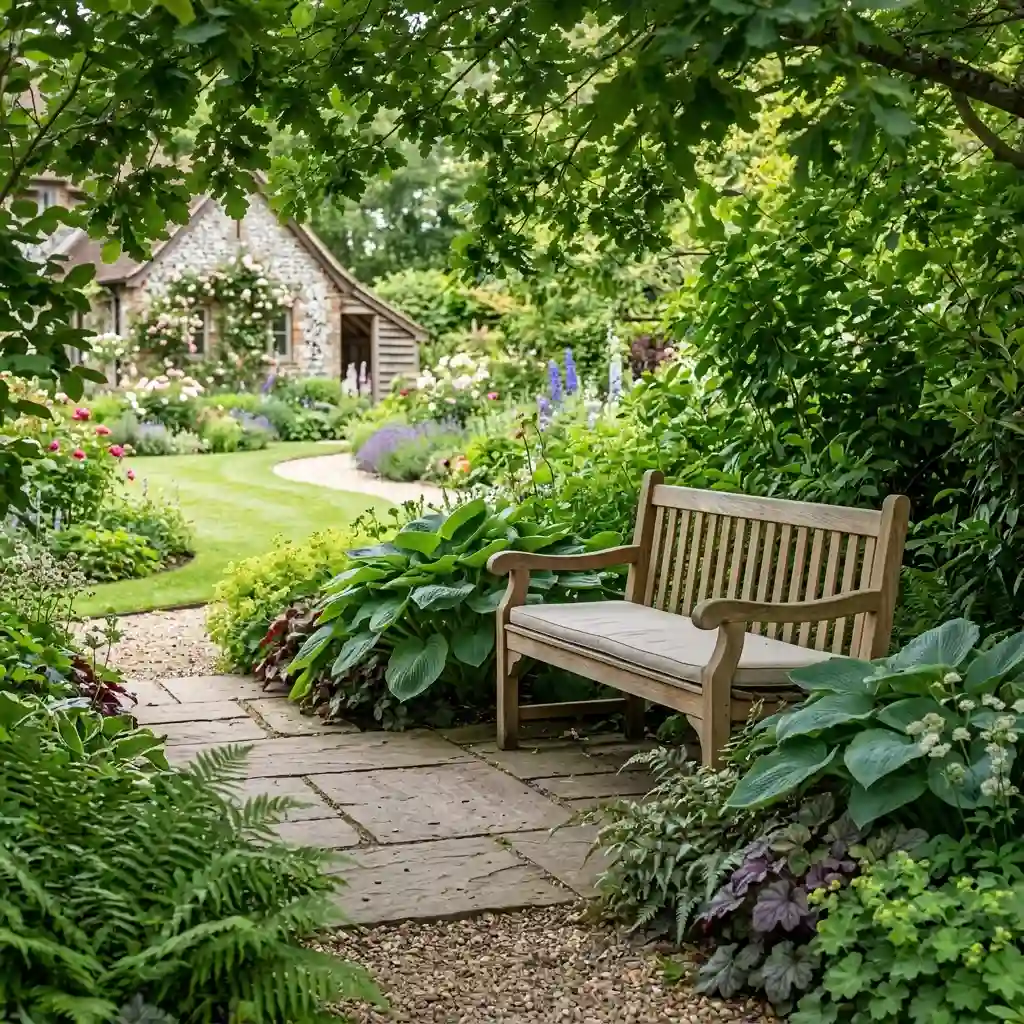
One useful feature can have more impact than several small decorations. A bench gives the garden a clear purpose and draws attention away from difficult corners.
Place it where you can see the best plants or look across the yard. Surround it with tough foliage plants.
Best for: A quiet corner or wide shaded border.
Care-saving benefit: One strong focal point reduces the need for extra decorations and seasonal displays.
Watch for: Choose weather-resistant material. Place the bench on a level, stable surface away from major tree roots.
13. Plant a Fern-Lined Path
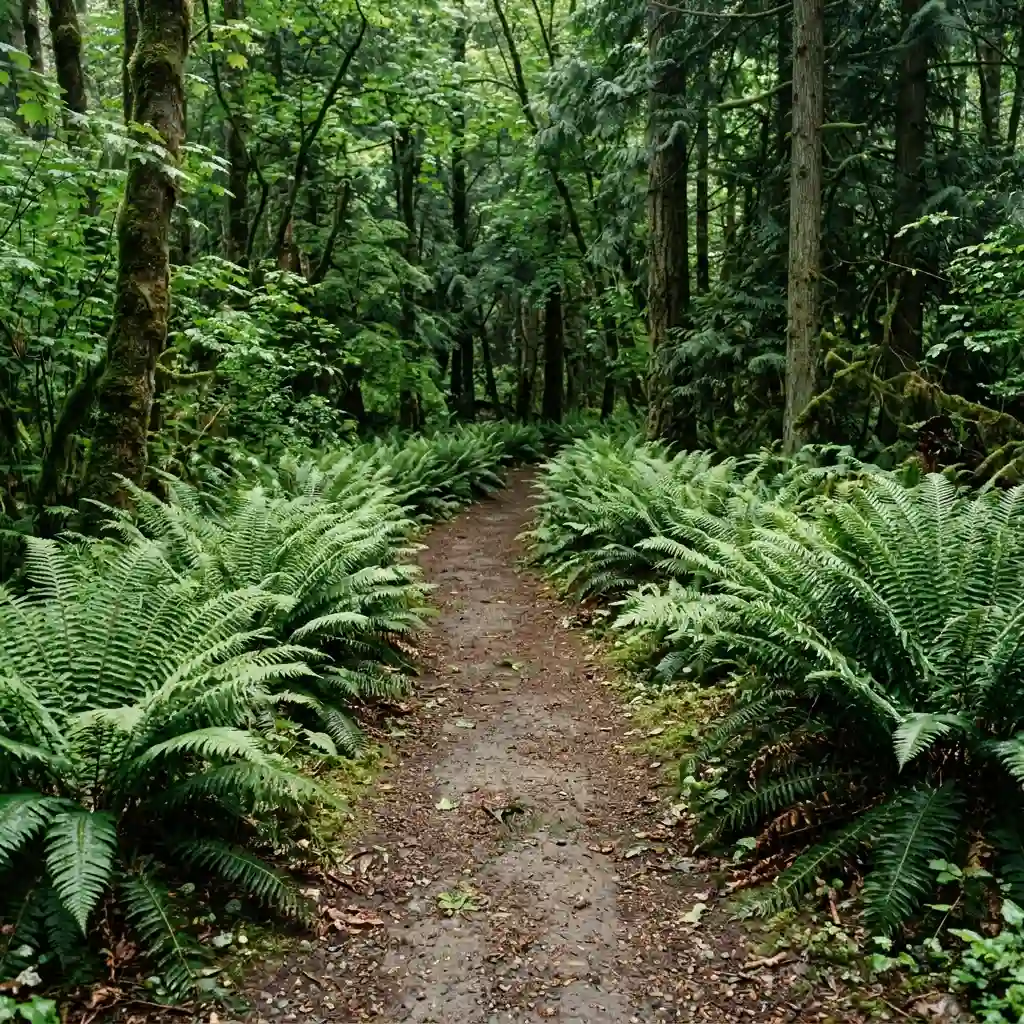
Repeat one or two fern varieties along a shaded walkway. The repeated fronds create a soft edge and guide the eye through the yard.
Some ferns need damp soil. Others handle drier sites. Read the label for the exact species rather than assuming all ferns need the same conditions.
Best for: Woodland paths and damp side yards.
Care-saving benefit: Repetition makes the bed feel complete with fewer plant types.
Watch for: Leave enough room for mature fronds. Plants that lean across the path will need frequent cutting.
14. Use Shrubs to Fill Large Shaded Areas
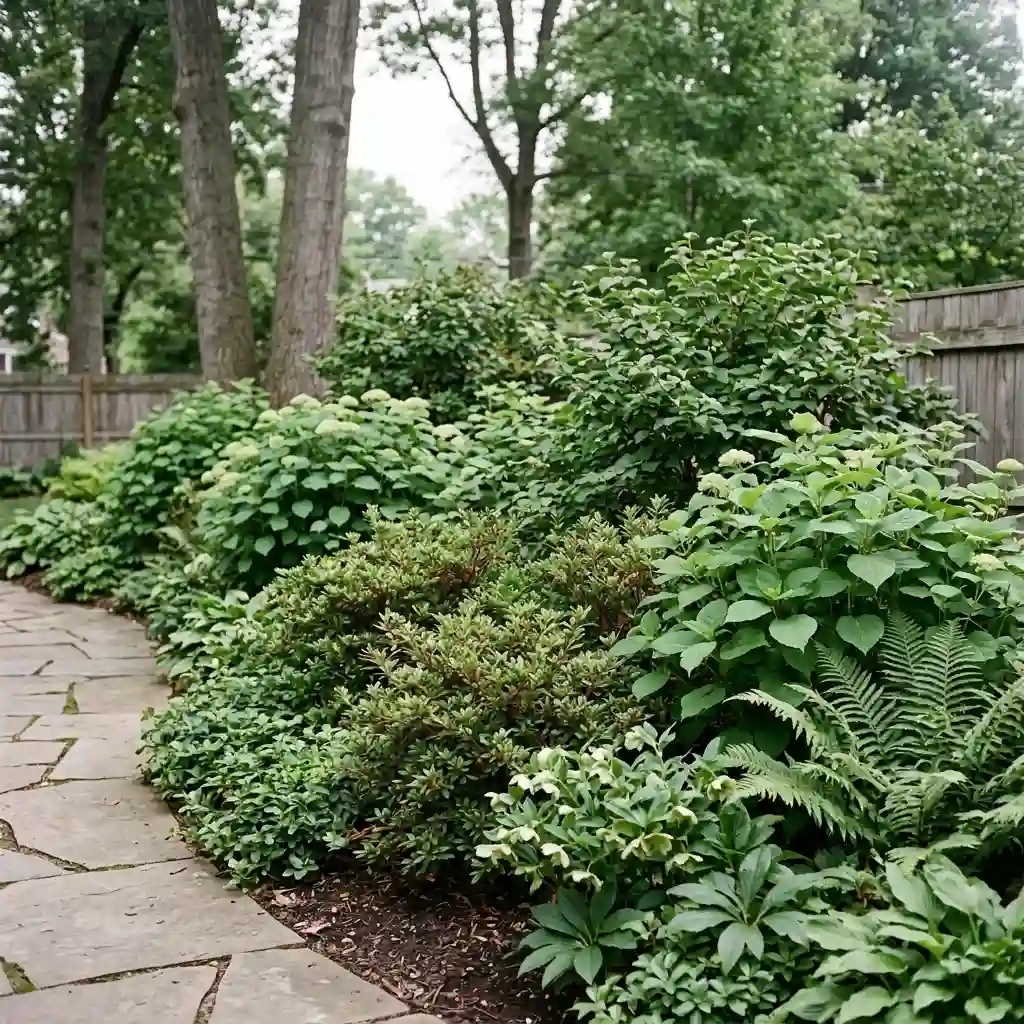
Shrubs cover more ground than small perennials. A few well-sized shrubs can fill a large bed while limiting open soil.
Depending on your region, you might research hydrangeas, azaleas, viburnums, or native woodland shrubs. Some varieties need more light than others.
Best for: Large shaded backyards and deep foundation beds.
Care-saving benefit: Long-lived shrubs may need less dividing and replanting than perennials.
Watch for: Compare pruning needs before buying. The best low-maintenance plants for shade keep a useful natural shape without constant trimming.
15. Create a One-Color Foliage Scheme
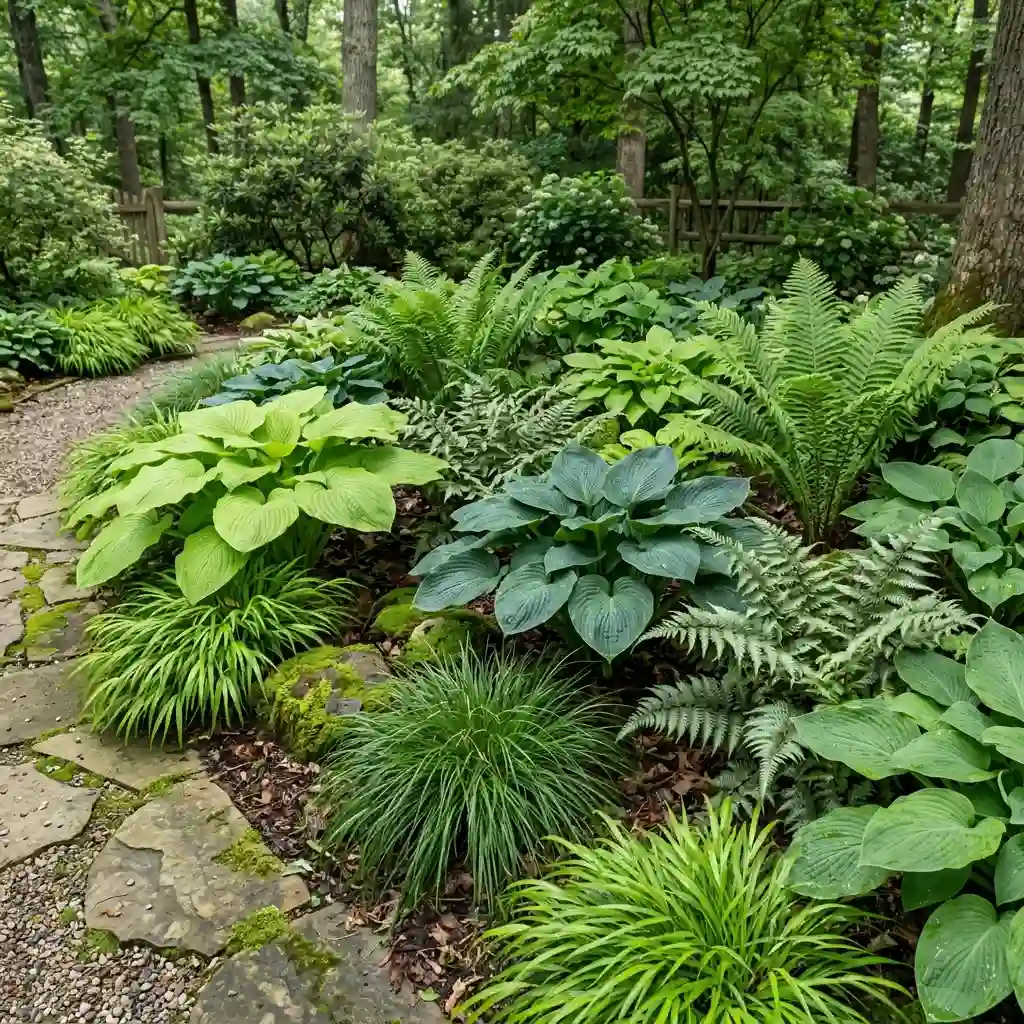
Pick green, silver, or burgundy as the main foliage color. Then create contrast with different leaf shapes and sizes.
For example, combine wide hosta leaves with fine fern fronds and narrow sedge blades. The garden stays attractive after flowers fade.
Best for: A calm, modern shade garden design.
Care-saving benefit: Foliage provides a longer display than many short-blooming flowers.
Watch for: A single color can look flat. Use light and dark shades, different heights, and varied leaf textures.
16. Edge the Bed With Shade-Tolerant Sedges
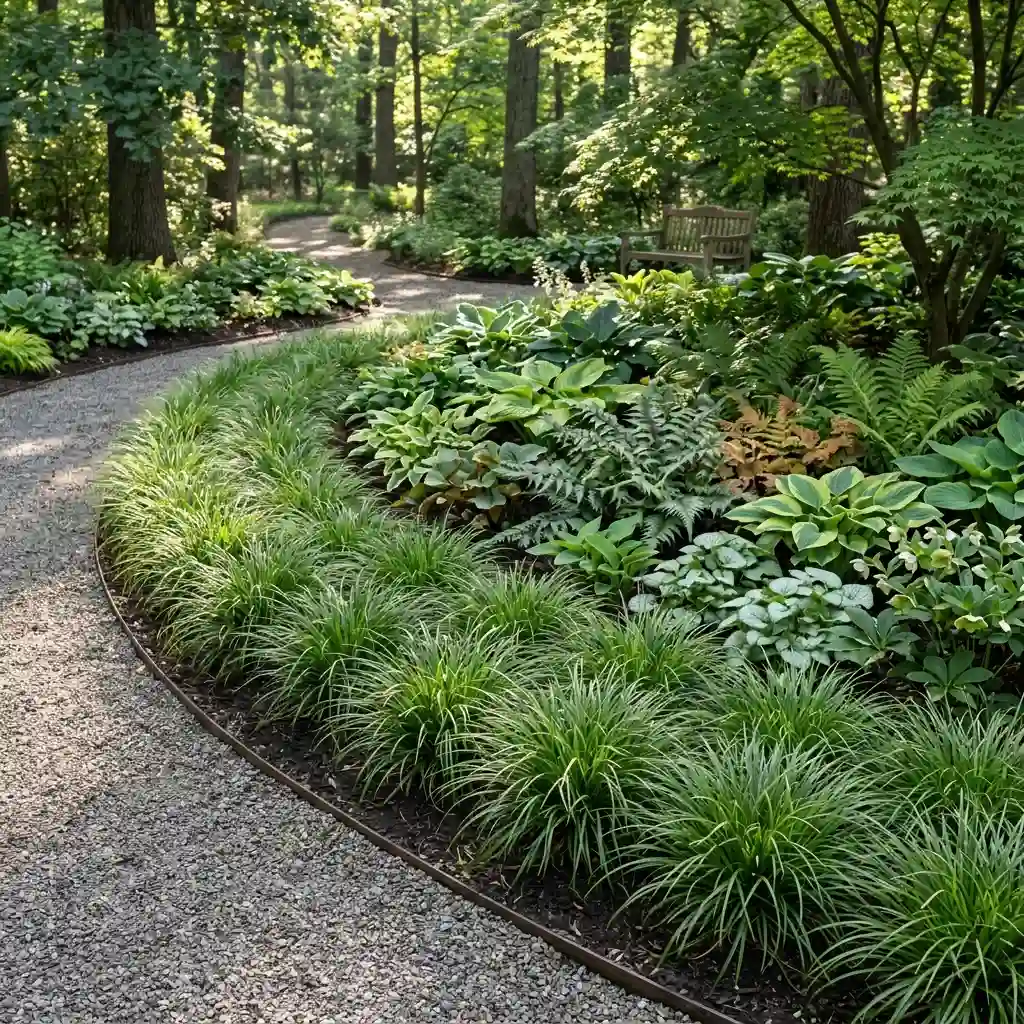
Clumping sedges can create a soft border along a curve or path. Their narrow leaves contrast well with broad-leaved shade plants.
Repeat one suitable type instead of mixing several different sedges. Check whether it stays in a clump or spreads through underground stems.
Best for: Curved beds, woodland paths, and informal borders.
Care-saving benefit: A clear edge makes the garden look tidy and can hide small weeds behind it.
Watch for: Avoid aggressive spreaders. Some sedges need a yearly cutback, while others need very little trimming.
17. Build a Small Woodland Corner
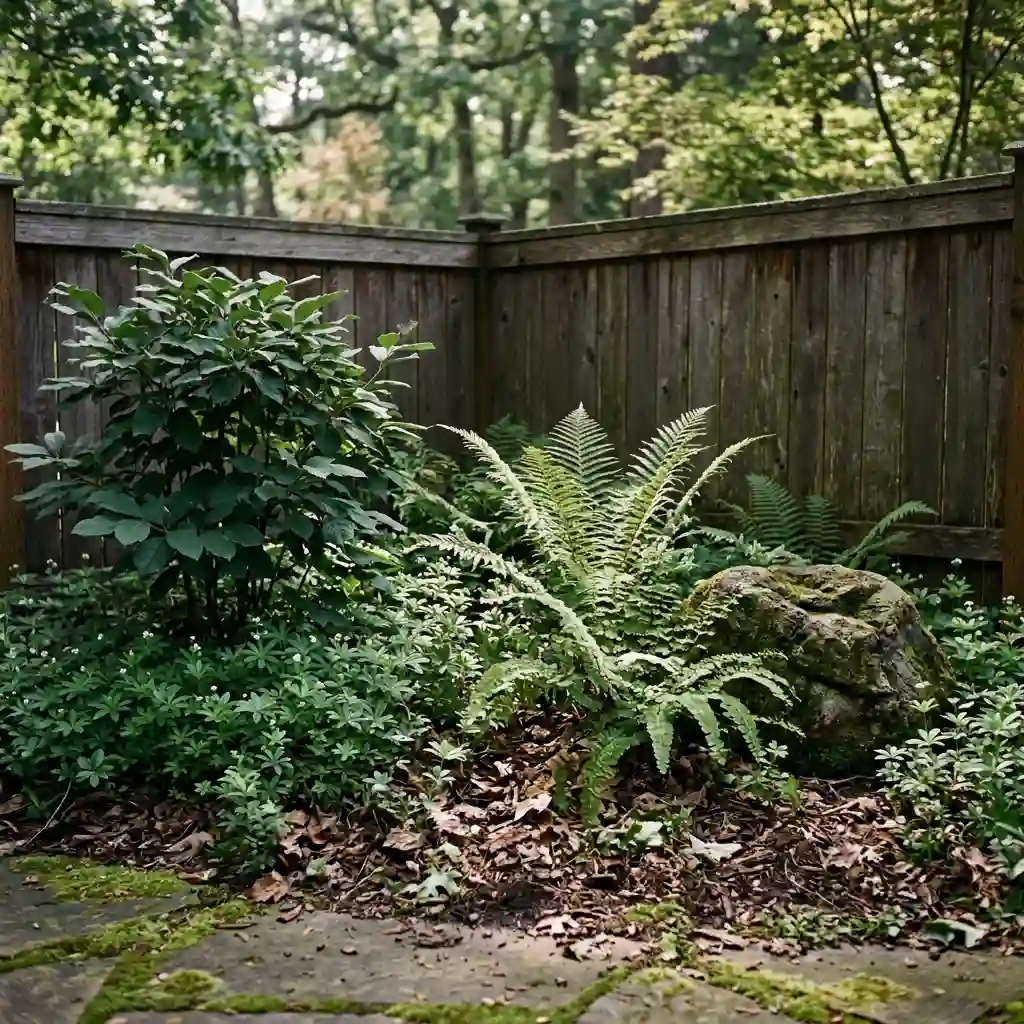
You do not need a large yard to create a woodland look. Combine one compact shrub, a few ferns, and a spreading ground cover.
Add a weathered stone or fallen branch as a natural accent. Leave open space for every plant to reach its mature width.
Best for: A small shaded corner near a fence or tree.
Care-saving benefit: A short plant list is easy to manage and repeat.
Watch for: A loose design can still become crowded. Place plants with their mature size in mind, not their size at the garden center.
18. Add a Mulched Seating Area
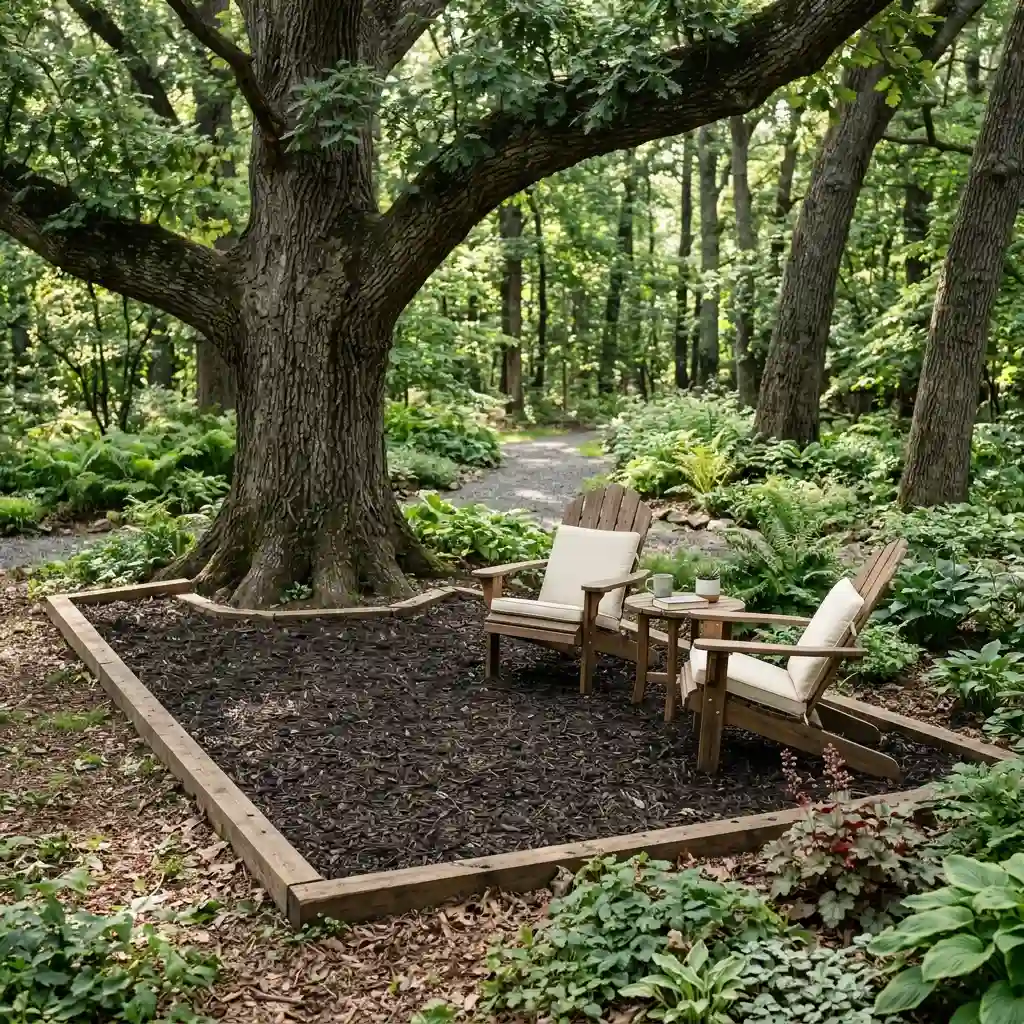
Mulch can form an affordable surface beneath trees where grass will not grow. Install a firm edge to stop it from spreading into nearby beds.
Place two chairs and a small table on the finished area. Keep heavy furniture away from visible roots.
Best for: A tree-covered yard that needs a simple sitting space.
Care-saving benefit: The area requires no mowing and little weeding.
Watch for: Refresh mulch only when it becomes thin. Deep yearly layers can build up around trees and cause problems.
19. Plant in Wide Drifts
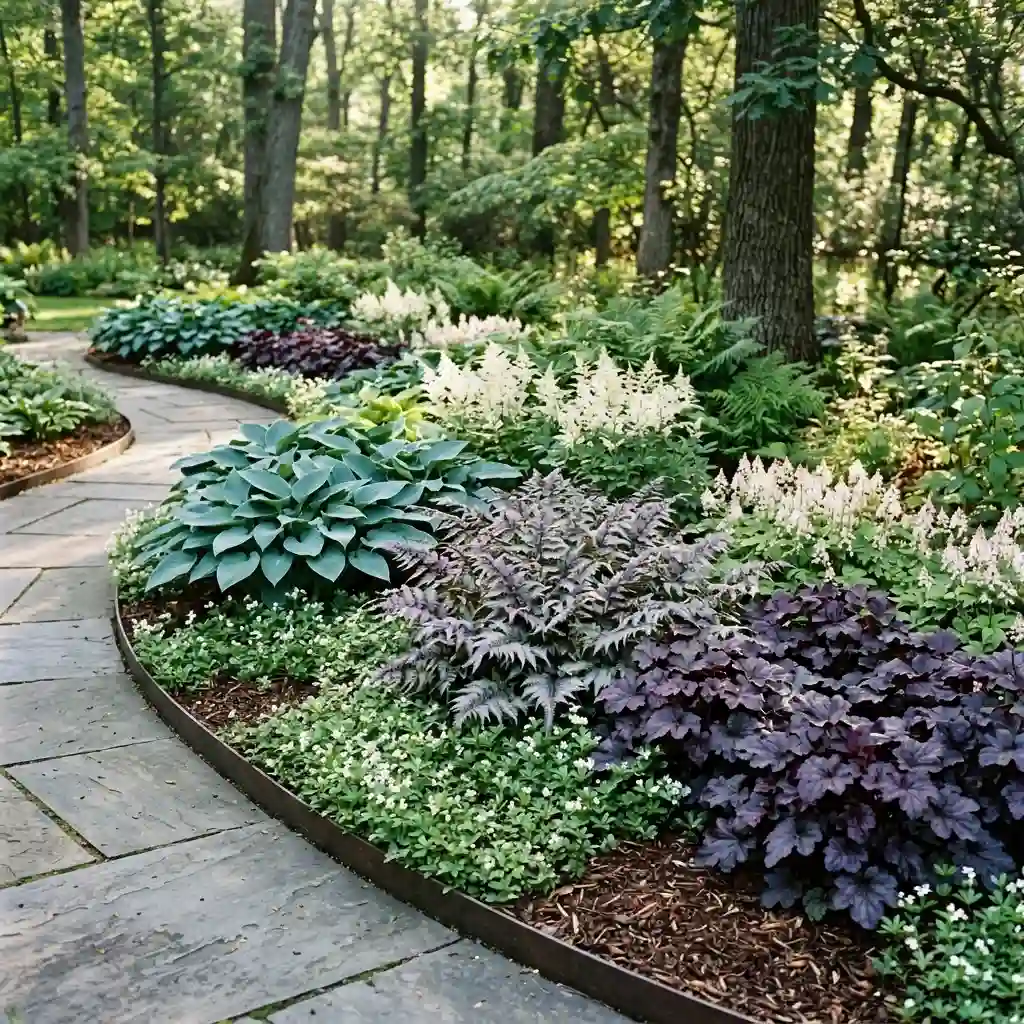
A drift is a wide group of the same plant. Use groups of five, seven, or more small plants instead of scattering single plants around the bed.
Connect several drifts with a repeating ground cover or edging plant. Match the plants within each group by water needs.
Best for: Medium and large beds that need a stronger visual shape.
Care-saving benefit: Large groups are easier to water and maintain in the same way.
Watch for: Check mature spread before setting quantities. A good shade garden design looks full without forcing plants together.
20. Let Leaves Protect the Back of the Bed
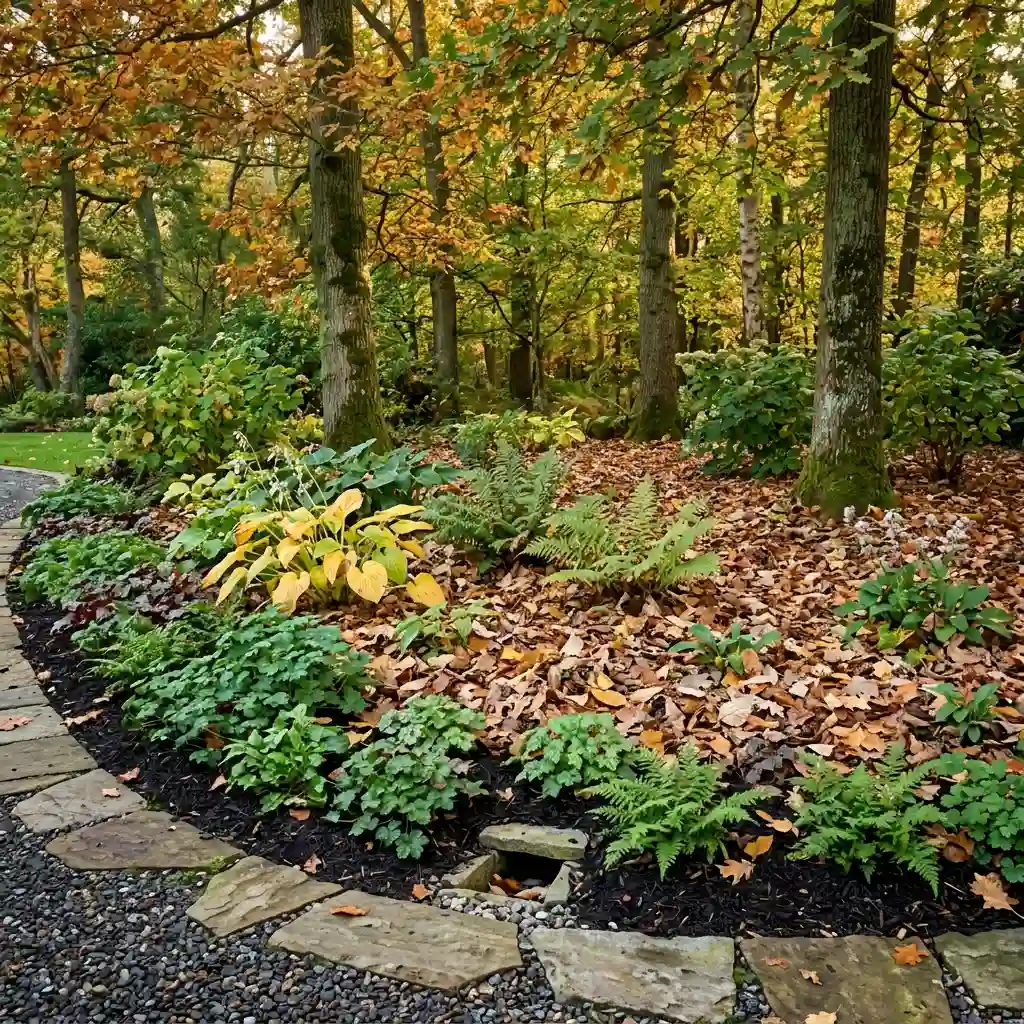
Healthy fallen leaves can remain in informal parts of a woodland garden. They cover soil, return organic material, and provide shelter for small garden animals.
Keep the front edge neat. Move leaves off paths and away from drainage openings.
Best for: The back of a natural bed beneath trees and shrubs.
Care-saving benefit: You spend less time bagging leaves and buying mulch.
Watch for: Remove diseased plant material. Shred or move thick, wet layers that form a mat over small plants.
Suggested image alt description: “Low-maintenance shade garden ideas with ferns, sedges, stepping stones, and leaf mulch beneath mature trees.”
Choose Low-Maintenance Plants for Shade by Site Conditions
“Right plant, right place” is a useful garden rule. A plant that thrives in damp shade may fail beneath a dry-rooted maple.
Use this table as a starting point. Plant needs vary by species, variety, and location.
| Site condition | Plants to research | Main benefit |
| Dry shade | Barrenwort, clumping sedges, wild ginger | May handle root competition |
| Moist shade | Ferns, astilbe, ligularia | Suited to steady soil moisture |
| Deep shade | Ferns, hostas, woodland natives | Strong foliage in low light |
| Light shade | Heuchera, hellebores, some hydrangeas | More options for seasonal color |
| Year-round structure | Shade-tolerant evergreen shrubs | Keeps shape and color in winter |
Before buying any plant, check:
- Your hardiness zone
- Mature height and spread
- Soil and drainage needs
- Deer and rabbit resistance
- Slug or insect problems
- Regional invasive plant lists
Favor long-lived plants that do not need frequent division. A fast spreader may cover the soil quickly, but it can create years of removal work if it escapes the bed.
Deer, rabbits, and slugs can also change what “easy care” means. Ask a local garden center or Cooperative Extension office which plants hold up well in your area.
Reduce Watering, Weeding, and Pruning
Watering, weeding, and pruning take most of the routine time in a garden. Good spacing, mulch, and careful plant choices can reduce all three.
Apply about two to three inches of organic mulch in most established beds. Adjust the depth for the material you use. Keep mulch away from trunks, crowns, and main stems.
Group plants with similar moisture needs. This prevents you from giving too much water to one plant while another remains dry.
New plants still need regular checks while their roots grow. Water deeply enough to moisten the root area. A soaker hose or drip line can send water to the soil without soaking the leaves.
Give shrubs and perennials enough space to reach full size. Crowded plants can trap moisture, block airflow, and require repeated cutting. Closely spaced ground covers are helpful only when their mature spread has been calculated.
Use this simple seasonal routine:
- Spring: Remove damaged growth, pull young weeds, and check mulch depth.
- Summer: Check soil before watering and remove weeds before they produce seeds.
- Fall: Move leaves off paths and remove diseased material.
- Winter: Review crowded areas and plan changes before buying new plants.
A rain gauge and simple soil check can prevent needless watering. University of Minnesota Extension advises checking moisture below the surface rather than relying only on how the topsoil looks. University of Minnesota Extension
Fix Mistakes That Make Shade Gardens Harder to Maintain
A moisture-loving fern planted beneath a dry-rooted tree may struggle even though the label says “shade.” The shade level fits, but the soil does not.
Here are common mistakes and practical fixes:
- Mistake: Treating all shade as equal.
Fix: Record the hours, timing, and strength of direct light. - Mistake: Putting moisture-loving plants in dry shade.
Fix: Check soil after rain and during a dry week before choosing plants. - Mistake: Adding deep soil over tree roots.
Fix: Plant small plants between roots and keep the existing soil level. - Mistake: Cutting large roots to make planting holes.
Fix: Move the plant or ask a certified arborist about safe options. - Mistake: Choosing aggressive ground covers.
Fix: Check regional invasive lists and choose clumping or controlled spreaders. - Mistake: Planting by nursery size.
Fix: Use mature width when planning the spacing. - Mistake: Expecting instant zero-care results.
Fix: Water and weed during establishment. Care usually drops as suitable plants fill the bed.
Fix one issue at a time. You may only need to change the mulch, move two thirsty plants, or widen the space around a shrub.
Follow This Simple Weekend Shade Garden Plan
For a small 8-by-10-foot bed, you might use one compact shrub, five to seven perennials, nine or more clumping ground-cover plants, mulch, and three stepping stones. Adjust every quantity for the mature spread listed on the plant label.
- Track the direct sunlight.
Check the area in the morning, at noon, and during the afternoon. - Test the soil moisture.
Feel below the surface after rain and again during dry weather. - Mark existing roots and plants.
Do not plan planting holes over major tree roots. - Choose three to five plant types.
Match them by light, moisture, zone, and mature size. - Place the pots before planting.
Use mature spacing rather than the current size of each plant. - Plant without damaging major roots.
Use a hand trowel and move a plant if you meet a large root. - Add mulch and water the bed.
Keep mulch away from trunks, stems, and crowns. - Make a monthly care list.
Check soil moisture, pull young weeds, and look for pest damage.
During the first month, inspect the bed at least once a week. Do not water automatically. Check the soil first, then water if the root area is becoming dry.
Build a Shade Garden That Fits Your Time
Your bare or overgrown shaded space does not need a complicated makeover. Start by matching plants to the exact light, soil, and moisture conditions.
Use ground covers to replace weak grass. Add shrubs for structure. Cover open soil with mulch, and leave enough room for mature growth. Remember that new plants still need water and weed control while their roots become established.
Track the light in one problem area this week. Then choose one of these low-maintenance shade garden ideas and begin with a small, manageable bed.