A dry yard does not have to look empty, dusty, or dull.
You may be tired of watching plants wilt during hot weather. Water bills can also rise fast when your garden needs daily watering. In some areas, local watering limits make the problem even harder.
The right drought-tolerant plants can help. These plants still need water when they are young. But once their roots grow strong, they can often handle longer dry periods.
Plant choice can make a real difference. The average American home uses more than 30% of its water outdoors. That figure can reach 60% or more in dry regions.
This list covers 17 of the best plants for dry gardens. You will find flowering plants, groundcovers, grasses, shrubs, and bold accent plants.
Each choice includes its best use, common size, sun needs, hardiness range, and main drawback. Use the comparison chart near the end to find a plant that fits your climate and space.
How We Picked These 17 Low-Water Plants
A plant list can be misleading when it ignores local weather.
A plant that handles a dry summer in California may struggle with wet soil in Florida. It may also fail during a cold Minnesota winter.
For this list, each plant had to offer more than basic drought resistance. We also looked at:
- Heat tolerance
- Sun needs
- Mature size
- Flowering season
- Landscape value
- Availability at nurseries
- Pollinator value
- Possible safety concerns
- Problems with cold, moisture, or spreading
The USDA Plant Hardiness Zone Map can help you check whether a perennial is likely to survive winter in your area. The map is based on the average lowest winter temperature, not summer heat, rainfall, soil, or humidity.
Zone ranges and sizes may change between species and named varieties. Always check the label on the exact plant before buying it.
5 Drought-Tolerant Flowers That Add Lasting Color
Saving water does not mean giving up bright flowers.
These drought-tolerant plants bring color to sunny beds and borders. Several also provide nectar, pollen, or seeds for local wildlife.
1. Lavender: Best for Fragrance
Botanical name: Lavandula species
Sun: Full sun
Common zones: 5 to 9, depending on the type
Common size: 1 to 3 feet tall and wide
Bloom time: Late spring through summer
Best use: Paths, borders, gravel gardens, and pots
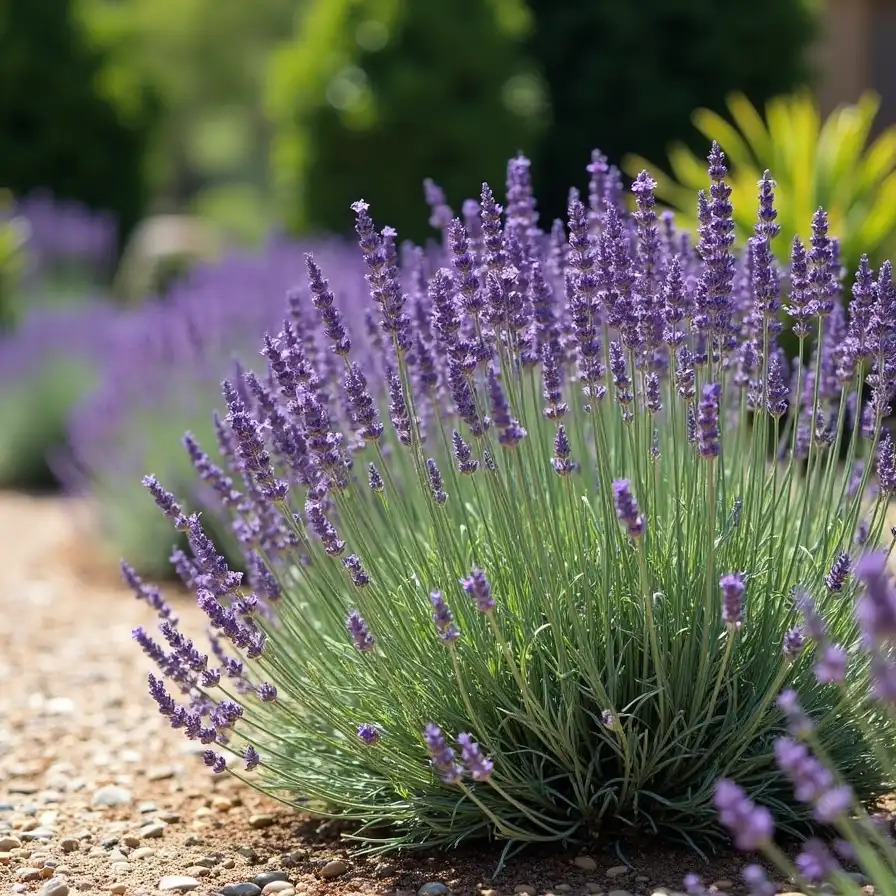
Fragrance is the main reason many people choose lavender. Its gray-green leaves and purple flower spikes also add soft color to dry planting areas.
English lavender often handles colder winters better than French or Spanish types. However, each variety has its own limits.
Place lavender where you can brush past it along a path. It also works well near patios where you can enjoy its scent.
The main problem is moisture. Lavender needs fast-draining soil. Wet roots and high humidity can shorten its life. English lavender commonly grows about 2 feet tall and up to 3 feet wide.
Skip it if: Your soil remains wet after heavy rain.
2. Russian Sage: Best for Long-Lasting Color
Botanical name: Salvia yangii
Sun: Full sun
Common zones: 4 to 9
Common size: 2 to 4 feet tall and wide
Bloom time: Summer into early fall
Best use: Sunny borders, gravel beds, and large planting groups
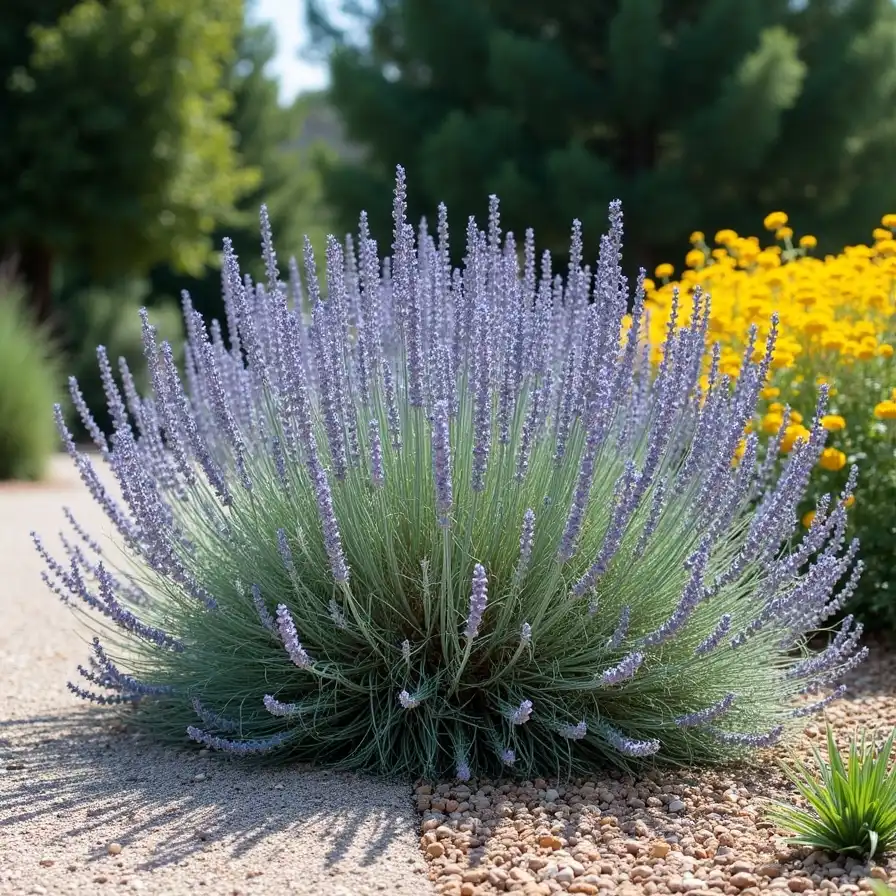
Russian sage creates a cloud of soft blue-purple flowers above silver-gray stems. It can remain colorful for much of the summer when many other plants begin to fade.
Use it near warm-colored flowers such as yellow yarrow or orange blanket flower. The cool blue color keeps a bright garden from feeling too busy.
Standard types can spread into a loose, open shape. They may lean when planted in rich soil or too much shade.
Choose a compact variety when your bed is narrow. Russian sage is now listed under the botanical name Salvia yangii, though some nursery labels may use its former name.
Skip it if: You need a small plant with a tight, formal shape.
3. Yarrow: Best for Bees and Butterflies
Botanical name: Achillea millefolium
Sun: Full sun
Common zones: 3 to 9
Common size: 1 to 3 feet tall and wide
Bloom time: Late spring through summer
Best use: Pollinator gardens, meadow beds, and sunny borders
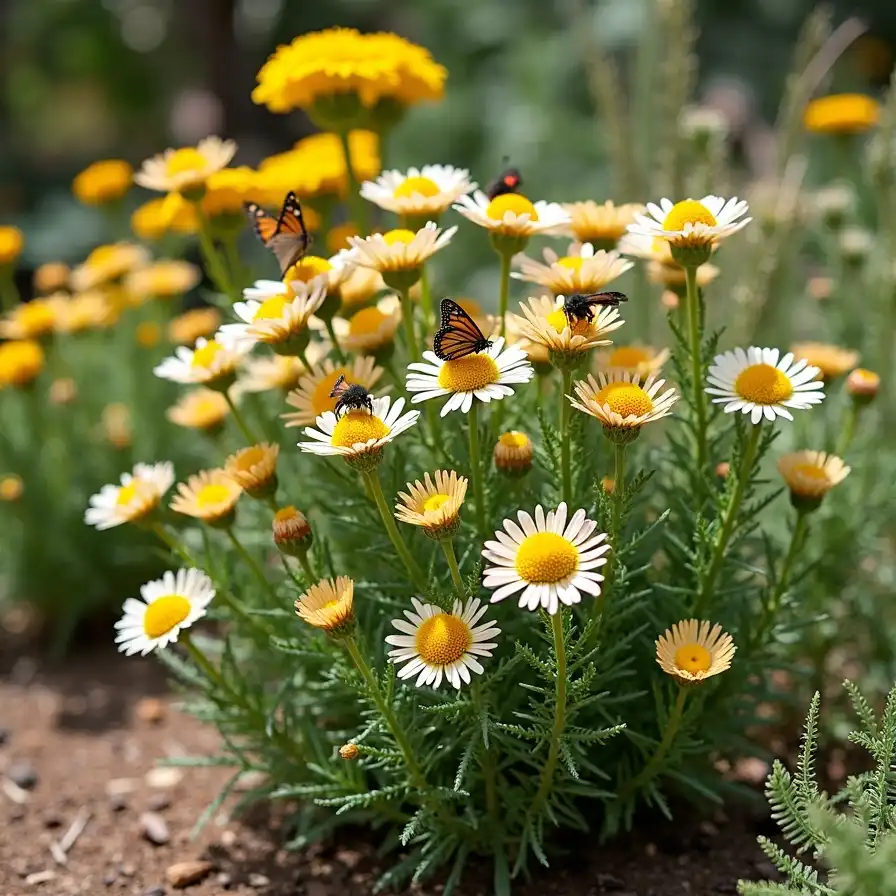
Yarrow produces flat flower clusters above soft, fern-like leaves. Flower colors include white, yellow, pink, red, and peach.
The flat blooms give bees and butterflies an easy place to land. The flowers also contrast well with upright plants such as Russian sage and red hot poker.
Yarrow accepts poor soil and dry conditions once established. Rich soil can cause weak, floppy growth.
Some types spread through underground stems and seeds. Give them room in a relaxed garden. Use a less aggressive named variety in a small bed.
Common yarrow grows about 1 to 3 feet tall and can spread quickly in suitable conditions.
Skip it if: You do not want a plant that may spread beyond its planned area.
4. Coneflower: Best for a Natural Garden Look
Botanical name: Echinacea species
Sun: Full sun to light partial shade
Common zones: 3 to 8
Common size: 2 to 4 feet tall and 1 to 2 feet wide
Bloom time: Early summer into fall
Best use: Native-style beds, cottage borders, and pollinator gardens
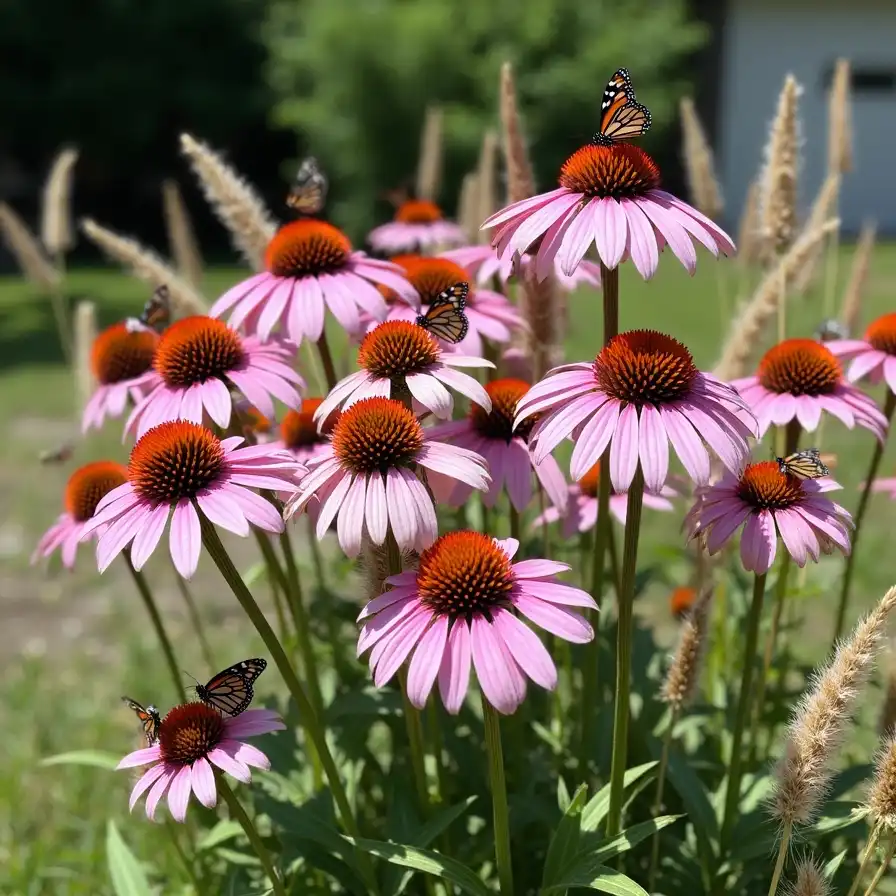
Coneflowers have large, daisy-like blooms with raised centers. Purple is the classic color, but named varieties also come in white, yellow, orange, pink, and red.
Butterflies visit the flowers during summer. Birds may feed on the seed heads later in the year.
Established plants can handle dry periods. Newly planted coneflowers still need steady water while their roots grow.
Choose a plant by its mature size, not just its flower color. Some compact varieties remain under 2 feet tall. Others can reach 4 feet.
Many coneflower varieties bloom from early summer into fall and attract butterflies.
Skip it if: Your planting site stays wet or receives deep shade.
5. Blanket Flower: Best for Bright Summer Color
Botanical name: Gaillardia species and hybrids
Sun: Full sun
Common zones: 3 to 10, depending on the variety
Common size: 1 to 3 feet tall and wide
Bloom time: Early summer into fall
Best use: Hot borders, curbside beds, containers, and informal gardens
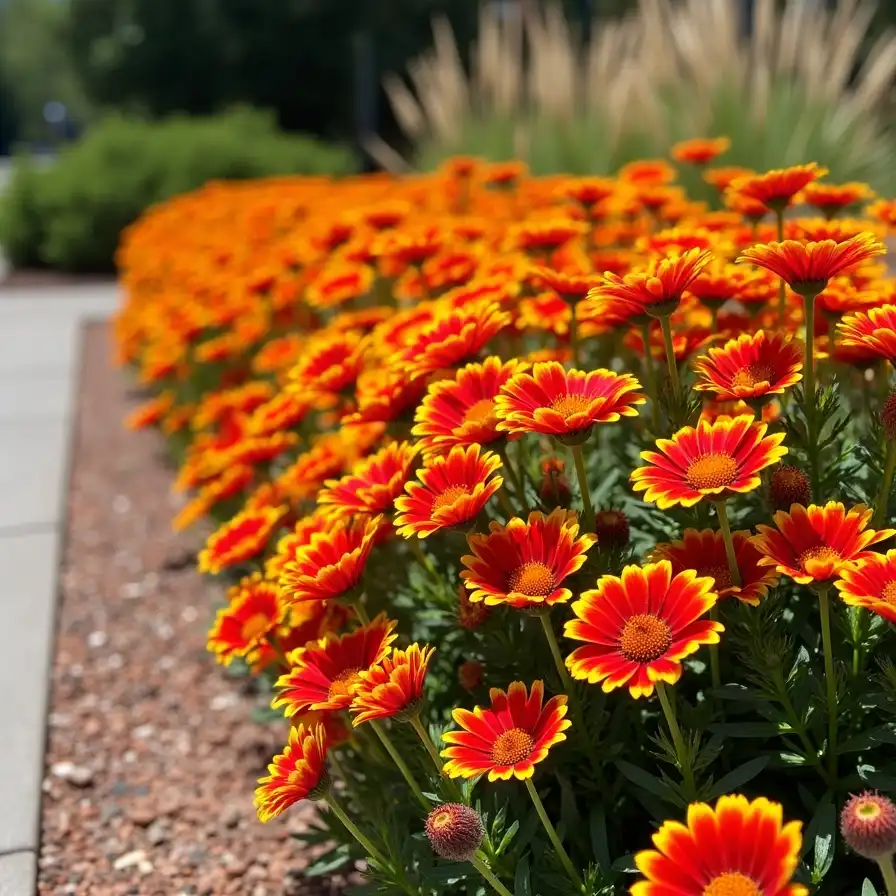
Blanket flower brings strong shades of red, orange, and yellow to dry gardens. Its daisy-like flowers suit casual beds and sunny container displays.
This is a good choice when you want fast color in a hot, open area. Compact varieties fit near the front of a border. Taller types blend well with ornamental grasses.
Blanket flower likes fast-draining soil and does not need rich ground. Once established, it can handle heat and dry periods.
The drawback is its life span. Many perennial types are short-lived. You may need to replace them or allow a few seedlings to grow.
Blanket flowers are heat tolerant, drought tolerant once established, and available in a wide range of sizes.
Skip it if: You need a perennial that will stay in the same spot for many years.
4 Low-Water Groundcovers and Grasses for Bare Areas
Bare ground can make a dry yard look unfinished.
These low-water plants can soften path edges, cover open soil, or add movement without creating another thirsty lawn.
6. Sedum: Best Easy Groundcover
Botanical name: Sedum and Hylotelephium species
Sun: Full sun to partial sun
Common zones: 3 to 9, depending on the type
Common size: 3 inches to 2 feet tall
Bloom time: Summer through fall
Best use: Rock gardens, walls, borders, slopes, and pots
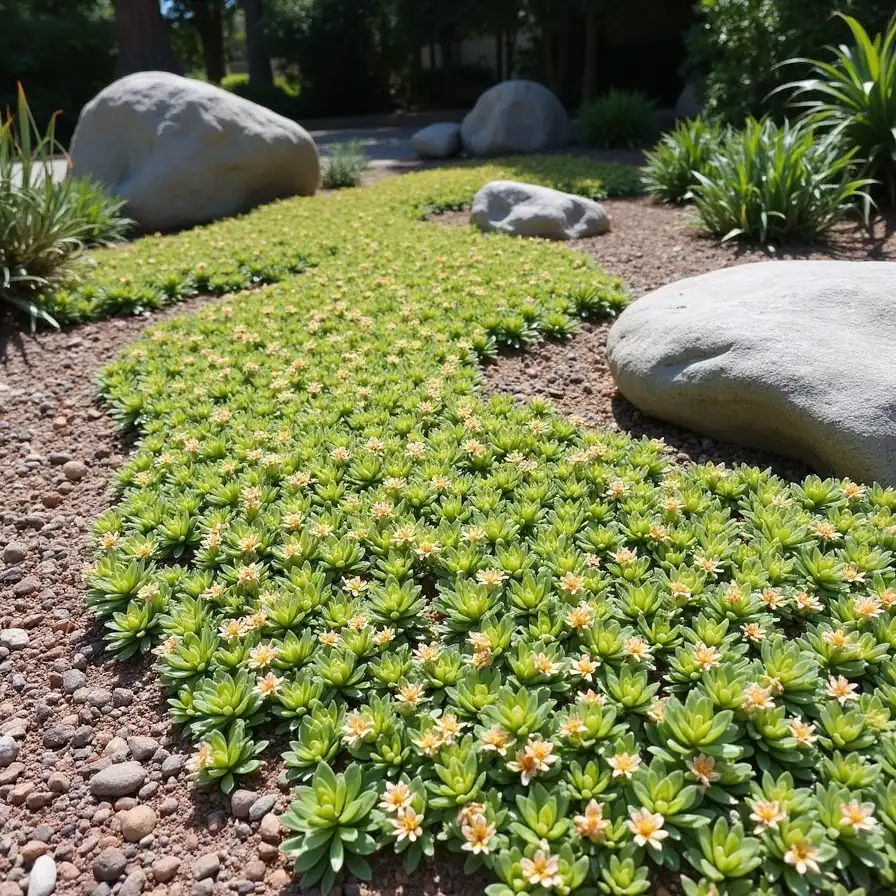
Sedum is a large group of plants with thick leaves that store water. Low-growing types spread over rocks and dry soil. Upright types form neat clumps with broad flower heads.
Choose a low sedum when you need groundcover. A type such as the SunSparkler group often stays 6 to 8 inches tall.
Upright stonecrops work better when you need late-season flowers and more height.
Most sedums handle poor, rocky ground. Their biggest need is good drainage. Too much moisture can cause weak growth or root problems.
Some types spread faster than expected, so check the exact variety.
Skip it if: Water collects in the planting area.
7. Creeping Thyme: Best Between Stepping Stones
Botanical name: Thymus serpyllum and related types
Sun: Full sun
Common zones: 4 to 9
Common size: 1 to 4 inches tall and 12 to 18 inches wide
Bloom time: Late spring through summer
Best use: Path edges, stone gaps, walls, and small slopes
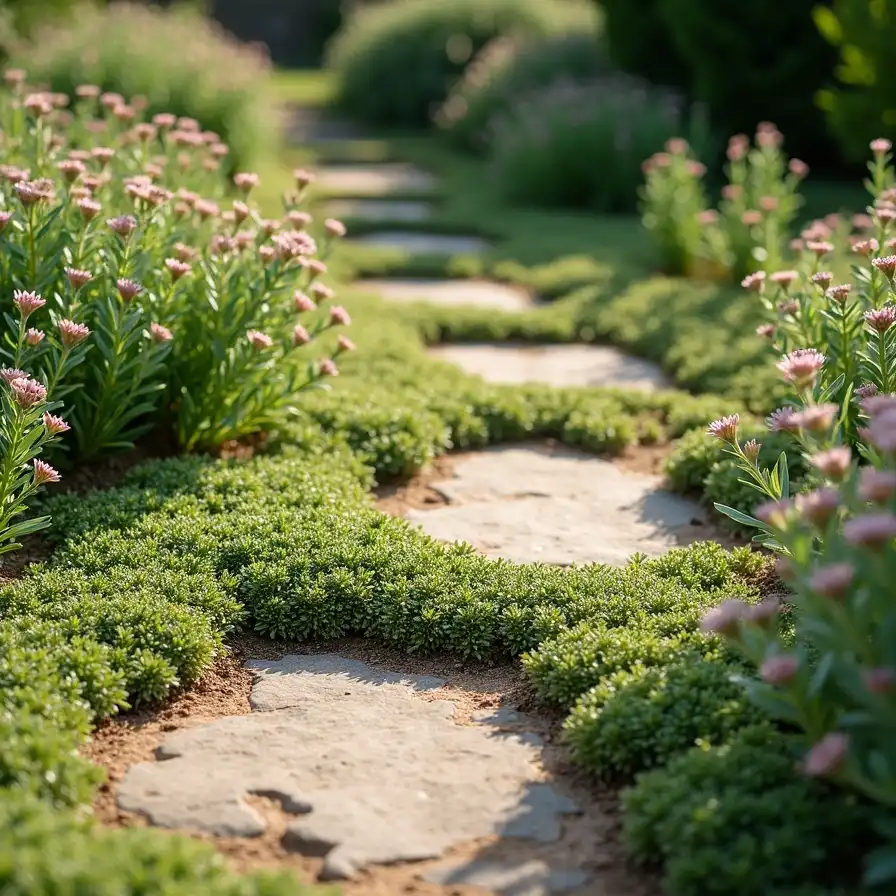
Creeping thyme forms a low mat of tiny leaves. Small pink, purple, or white flowers may cover the plant during its bloom period.
Use it between widely spaced stepping stones or along the edge of a sunny path. The leaves release a light scent when touched.
Creeping thyme can handle occasional footsteps. It will not cope with constant running, games, or heavy daily traffic.
Drainage is important. Wet, heavy soil may cause bare patches or woody growth.
The small ‘Elfin’ type grows about 1 to 3 inches tall and spreads up to 18 inches. Its summer flowers also attract pollinators.
Skip it if: You need a groundcover for a busy play area.
8. Blue Fescue: Best Small Ornamental Grass
Botanical name: Festuca glauca
Sun: Full sun
Common zones: 4 to 8
Common size: 8 to 12 inches tall and wide
Bloom time: Late spring to early summer
Best use: Edging, small beds, modern gardens, and pots
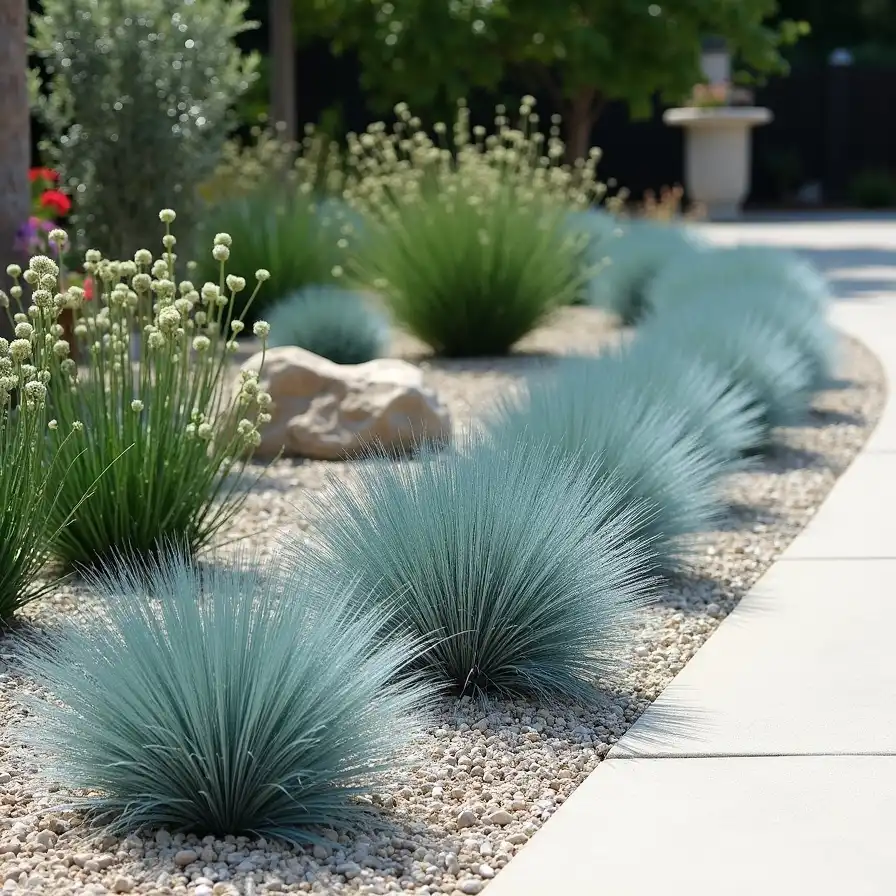
Blue fescue forms neat clumps of fine blue-gray leaves. Its rounded shape adds order to dry borders and gravel gardens.
Repeat the same variety along an edge for a clean look. You can also place small groups between low flowers and rocks.
The foliage color is often strongest in full sun. Some plants may turn greener during humid weather or extreme summer heat.
Blue fescue is compact, but it may develop a dry center as it ages. It also tends to perform better in cooler, less humid regions.
Skip it if: Your summers are very hot and humid.
9. Little Bluestem: Best Native Grass for Seasonal Color
Botanical name: Schizachyrium scoparium
Sun: Full sun
Common zones: 3 to 9
Common size: 2 to 4 feet tall and 18 to 24 inches wide
Bloom time: Late summer
Best use: Slopes, prairie beds, large borders, and natural gardens
Few native grasses provide as much seasonal change as little bluestem.
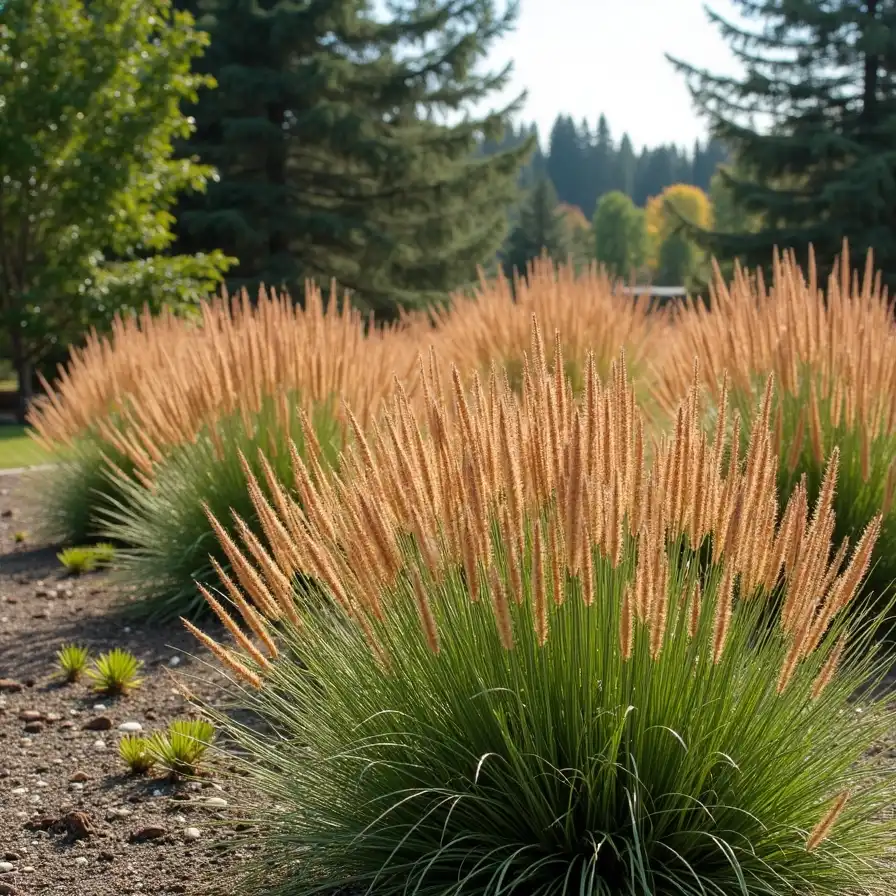
Its leaves may appear blue-green during summer. They often turn copper, orange, or red during fall. The standing stems can also add winter texture.
Little bluestem has deep roots and handles poor, dry sites once established. It works well on sunny banks where other plants struggle.
Give it full sun. Rich soil, extra water, and shade can make the stems fall outward.
The grass usually grows 2 to 4 feet tall and offers strong drought resistance once established.
Skip it if: You want a clipped, formal garden with very short plants.
4 Drought-Tolerant Shrubs That Add Structure
Flowers can fill small gaps. Shrubs help shape the whole yard.
These drought-tolerant shrubs add height, year-round form, screening, or fragrance. Check their mature width before placing them near paths or windows.
10. Rosemary: Best Edible Shrub
Botanical name: Salvia rosmarinus
Sun: Full sun
Common zones: 8 to 10, with some hardy types in zone 7
Common size: 2 to 6 feet tall and wide
Bloom time: Often winter through spring in warm climates
Best use: Herb gardens, warm borders, pots, and low hedges
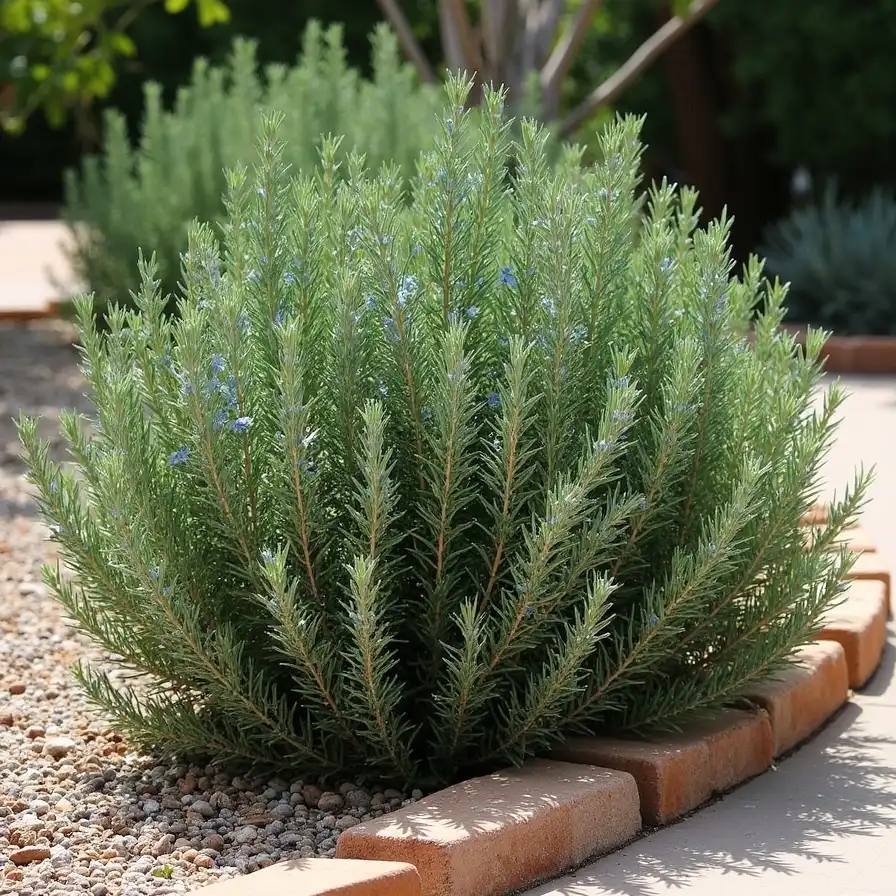
Rosemary gives you evergreen leaves, pale flowers, fragrance, and an edible herb in one plant.
Upright types can form loose hedges. Trailing rosemary works well over walls or raised planters.
This shrub likes sun, warmth, and fast drainage. Once established, it handles dry periods better than many common herbs.
Cold is the main limit. A hard freeze can damage or kill tender types. Gardeners in colder climates can keep rosemary in a large pot and move it to a protected place for winter.
Check whether you are buying an upright or trailing variety because their mature shapes are very different.
Skip it if: You cannot protect it from severe winter cold.
11. Rockrose: Best for Mediterranean-Style Gardens
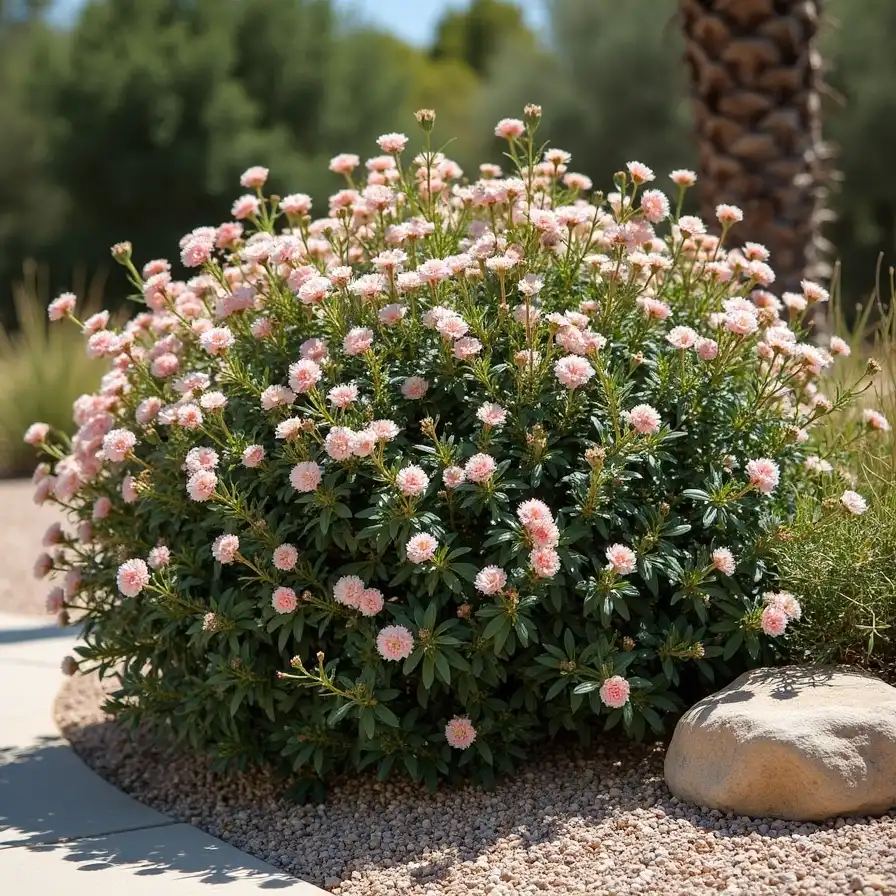
Botanical name: Cistus species and hybrids
Sun: Full sun
Common zones: 8 to 10
Common size: 2 to 5 feet tall and 3 to 6 feet wide
Bloom time: Spring into early summer
Best use: Banks, dry borders, coastal gardens, and large beds
Rockrose produces thin, paper-like flowers above evergreen leaves. The flowers may be white, pink, or purple, depending on the type.
Each bloom may last for a short time. However, a healthy shrub can keep opening new flowers during its main season.
Use rockrose where you need a wide, relaxed shrub. It works well on dry banks and in Mediterranean-style planting.
Many types need little extra water once established. They also prefer full sun and quick drainage.
Some varieties are damaged by severe frost. A white rockrose hybrid can reach about 5 feet tall and 6 feet wide.
Skip it if: Your area has very cold winters or wet, heavy soil.
12. Texas Sage: Best for Extreme Heat
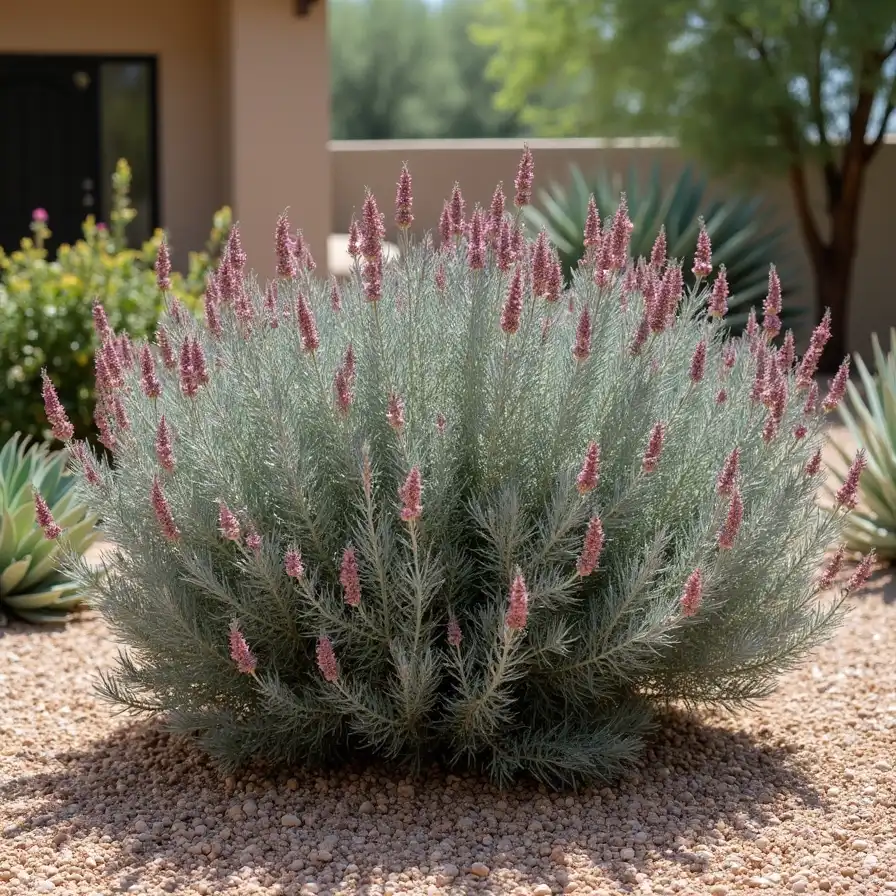
Botanical name: Leucophyllum frutescens
Sun: Full sun
Common zones: 8 to 11
Common size: 3 to 8 feet tall and wide
Bloom time: In warm months, often after rain or humid weather
Best use: Screens, loose hedges, desert gardens, and exposed sites
Texas sage combines soft silver leaves with pink or purple flowers. The flower display often appears after a change in moisture or humidity.
This shrub works well in hot areas where many green-leaved plants look stressed. Its pale foliage also pairs well with agave, yucca, and warm-colored flowers.
Give it enough room to keep its natural shape. Cutting it into a tight box can hide its flowers and create bare inner growth.
Texas sage handles heat, drought, and conservative watering well. High humidity and wet soil can cause problems.
Skip it if: Your climate is cold, very humid, or often wet.
13. Manzanita: Best Evergreen Shrub for Western Gardens
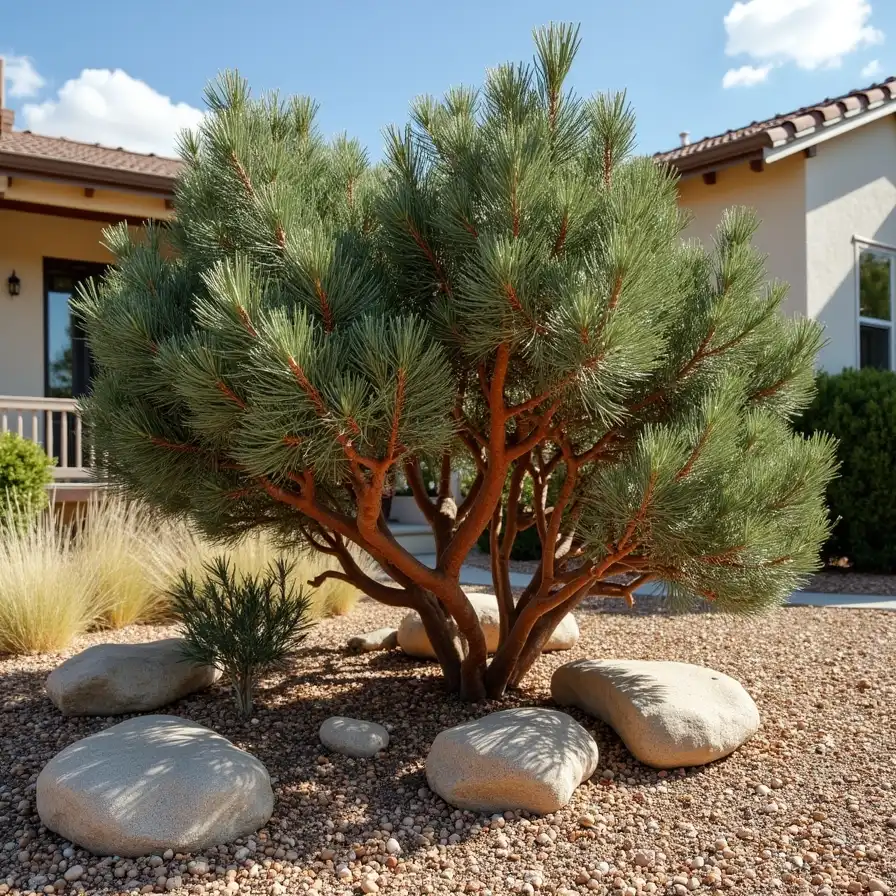
Botanical name: Arctostaphylos species
Sun: Full sun to partial sun
Common zones: About 5 to 10, depending on the species
Common size: 1 to 15 feet tall, depending on the type
Bloom time: Winter through spring
Best use: Western native gardens, slopes, screens, and focal points
Manzanita is known for smooth red or mahogany bark, evergreen leaves, and small bell-shaped flowers.
The group includes low groundcovers, medium shrubs, and small trees. This wide range makes the plant useful, but it also means you must check the exact species.
Many manzanitas suit western climates with wet winters and dry summers. Some dislike rich soil or frequent summer watering after they become established.
Choose a type that grows naturally in your region or has been tested in a similar climate.
Oregon State notes that manzanitas range from low groundcovers to shrubs and small trees. Their natural range is mainly in western North America.
Skip it if: You cannot find a species suited to your soil and local climate.
4 Bold Plants That Create a Strong Focal Point
Some dry gardens need more than small flowers and soft grasses.
The next four plants offer strong shapes, tall flowers, or thick leaves. Use them where their size and form can stand out.
14. Agave: Best Desert Focal Point
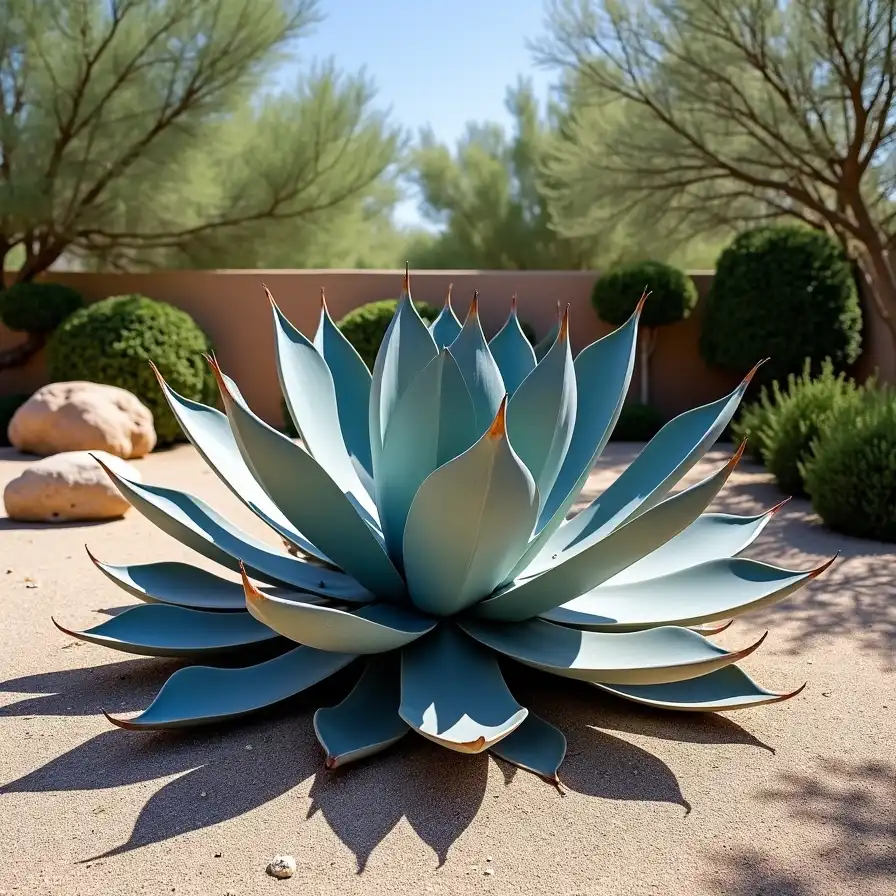
Botanical name: Agave species
Sun: Full sun
Common zones: 5 to 11, depending on the species
Common size: 1 to more than 10 feet wide
Bloom time: Once at maturity, depending on the type
Best use: Gravel beds, courtyards, large pots, and open focal points
For a bold focal point, agave is hard to miss.
Its thick leaves form a strong rosette. Colors range from deep green to pale blue, gray, or striped cream.
Size is the first detail to check. Some agaves fit in small pots. Large species can grow more than 10 feet wide and send up huge flower stalks.
Many types produce offsets around the main plant. This can create an attractive group, but it can also take over a narrow bed.
Sharp teeth and leaf tips can cause injuries. Keep agave away from doors, play areas, sidewalks, and tight paths. The group is valued for drought, dry-soil, and heat resistance.
Skip it if: The only available space is beside a busy walkway.
15. Yucca: Best for Both Heat and Cold
Botanical name: Yucca species
Sun: Full sun
Common zones: 4 to 11, depending on the species
Common size: 1 to 10 feet tall, plus flower stalks
Bloom time: Late spring through summer
Best use: Gravel beds, slopes, entrances, and large containers
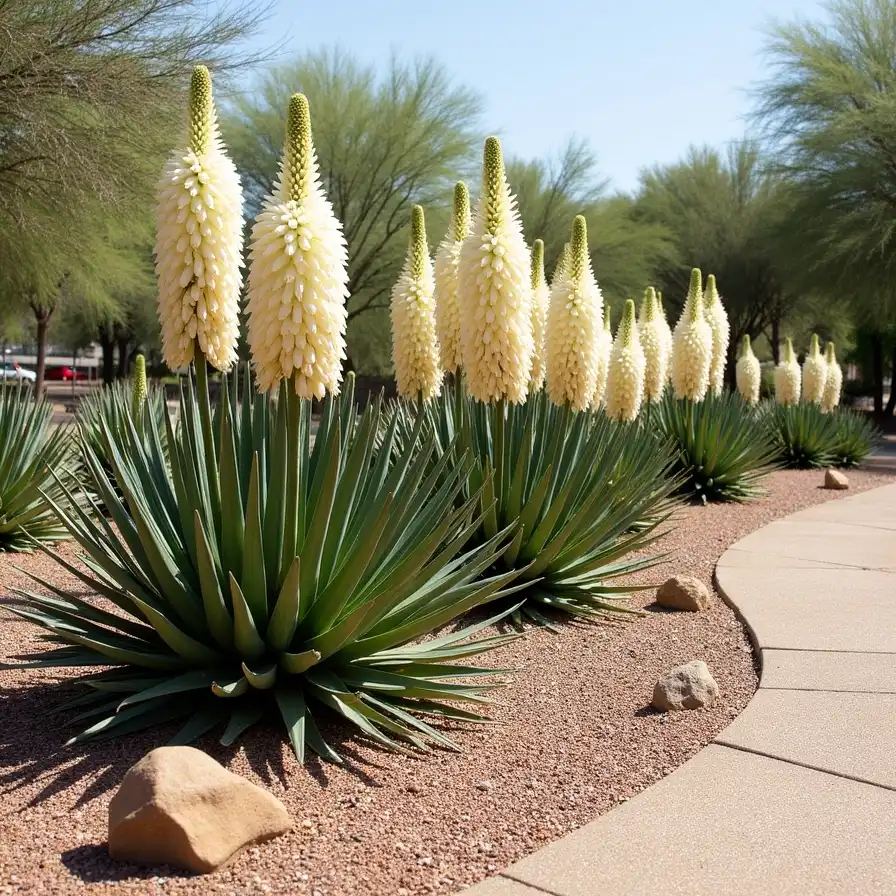
Yucca has sword-shaped leaves and tall stems of bell-shaped flowers.
Some species handle winter cold better than many plants with a desert look. Great Plains yucca, for example, grows naturally in dry, rocky areas from Canada to Texas.
Use yucca as a single accent or repeat it through a large bed. The white flowers can soften its stiff leaf shape.
The leaves may have needle-sharp tips. Place the plant where people and pets will not brush against it.
Choose a species by its final size. Some remain low, while trunk-forming types become much taller.
Skip it if: Children or pets often play near the planting area.
16. Aloe: Best Warm-Climate Container Plant
Botanical name: Aloe vera and other Aloe species
Sun: Full sun to partial shade
Common zones: 10 to 12 for aloe vera
Common size: 1 to 3 feet tall and wide
Bloom time: Often winter or spring in warm areas
Best use: Pots, patios, rock gardens, and frost-free beds
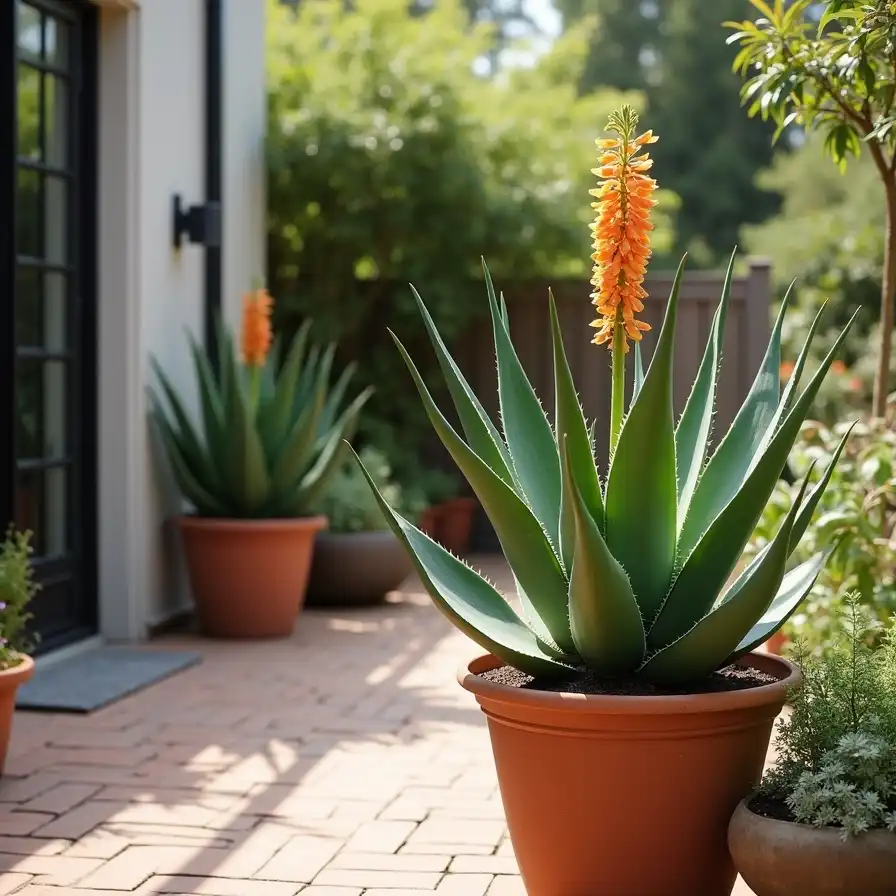
Aloe adds thick leaves and strong form without taking up as much space as a large agave.
Aloe vera usually grows 1 to 2 feet tall, though its flower stem can reach close to 3 feet. Mature plants may produce orange or yellow tubular flowers.
Use aloe in a pot when winter frost is a risk. The container can be moved to a bright, protected space before cold weather arrives.
Aloe needs very good drainage. Too much water is a bigger problem than dry soil.
Keep the plant away from pets that chew leaves. Aloe vera is listed as toxic to dogs and cats when eaten.
Skip it if: You have outdoor pets that often chew plants.
17. Red Hot Poker: Best for Tall Flower Spikes
Botanical name: Kniphofia species and hybrids
Sun: Full sun
Common zones: 5 to 9
Common size: 2 to 5 feet tall and 2 to 3 feet wide
Bloom time: Late spring through summer
Best use: Sunny borders, pollinator gardens, and bold planting groups
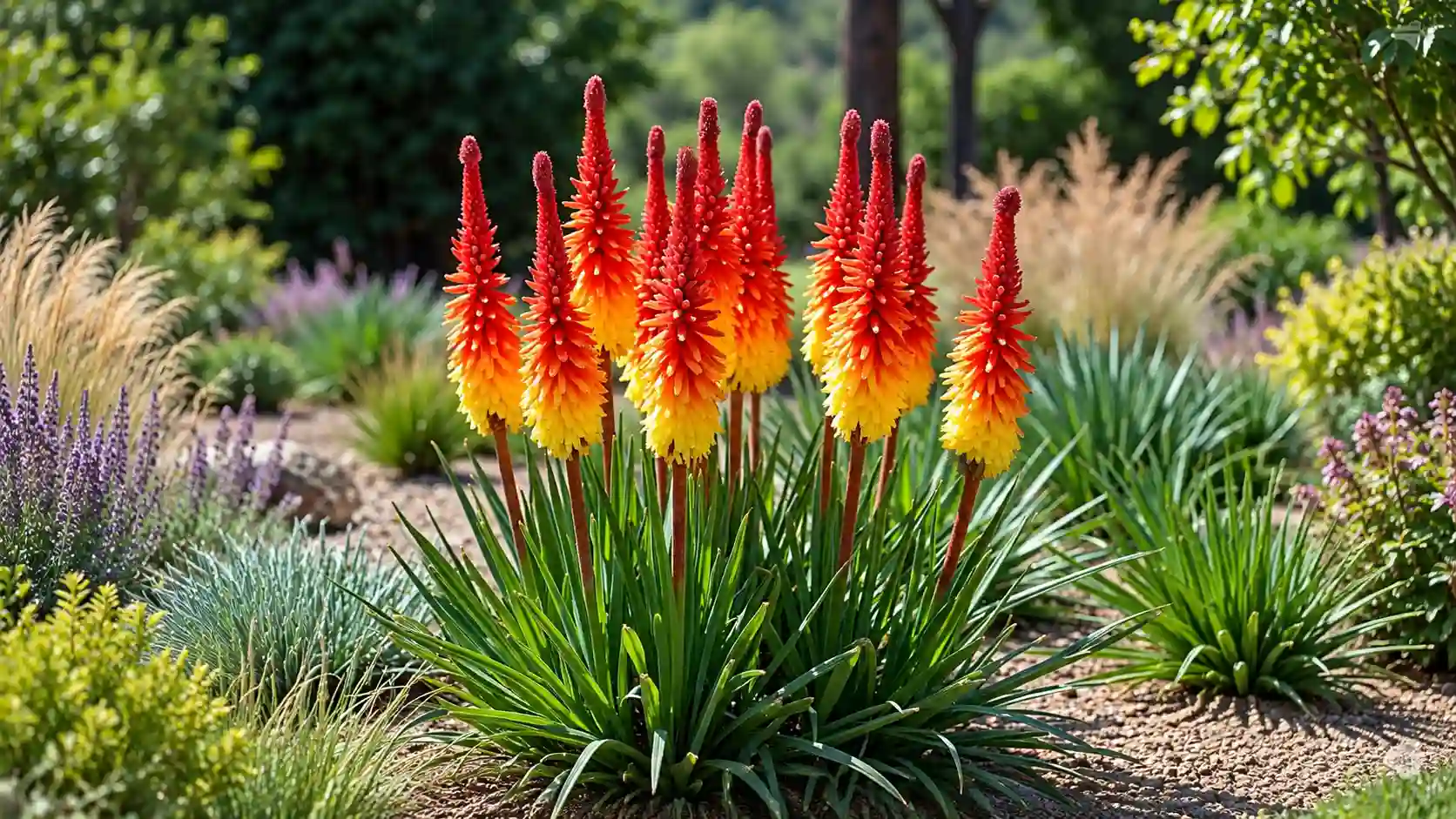
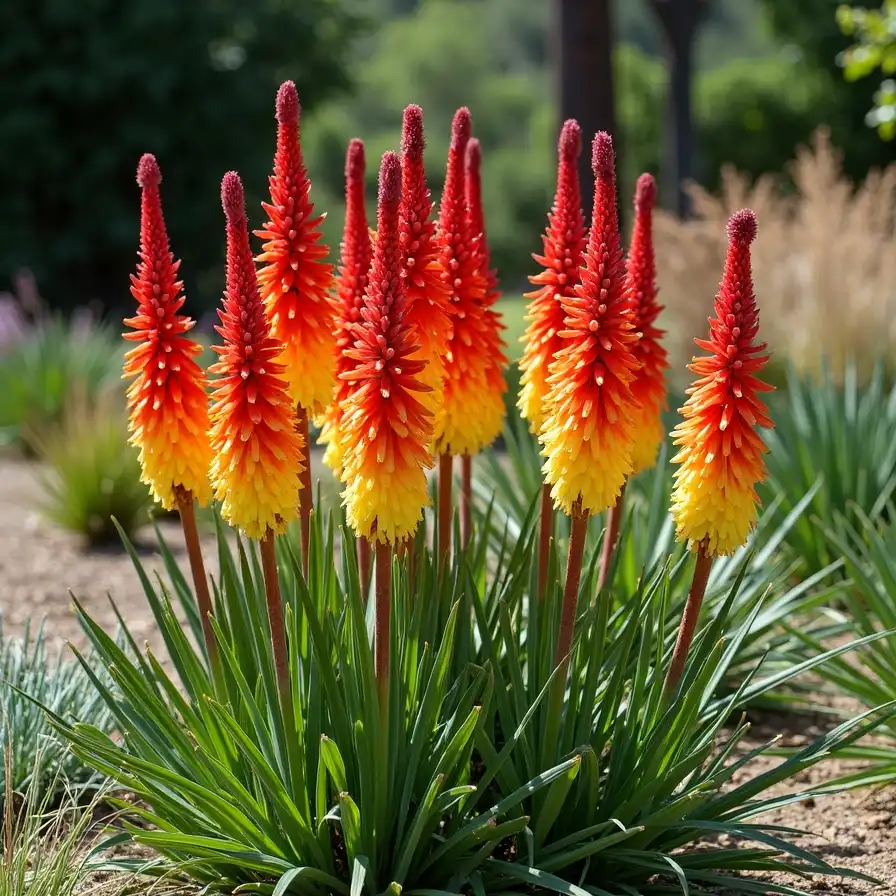
Red hot poker sends tall flower spikes above narrow, grass-like leaves. Flower colors include red, orange, yellow, cream, and coral.
This plant gives you a strong upright shape without the sharp leaves found on agave and yucca. Hummingbirds and other pollinators may visit its tubular flowers.
Compact varieties fit smaller borders. Taller plants work better near the middle or back of a bed.
Red hot poker needs drainage, especially during winter. Wet, heavy soil can cause root and crown rot. Some types spread through underground stems or seeds.
Common torch lily is hardy in zones 5 through 9 and can reach about 4 feet when flowering.
Skip it if: Your soil stays wet during winter.
Compare the 17 Best Drought-Tolerant Plants
No single plant is right for every dry yard.
Use this chart to narrow the drought-tolerant plants list by size, climate, and landscape use. The zone ranges are general. Confirm the exact species or variety before buying.
| Plant | Type | Common Zones | Common Size | Best Feature | Best Use | Skip It If |
| Lavender | Flowering shrub | 5–9 | 1–3 ft. | Fragrance | Paths and borders | Soil stays wet |
| Russian sage | Perennial | 4–9 | 2–4 ft. | Long blue bloom | Large sunny beds | You need a tight shape |
| Yarrow | Perennial | 3–9 | 1–3 ft. | Pollinator value | Meadows and borders | Spreading is a concern |
| Coneflower | Perennial | 3–8 | 2–4 ft. | Wildlife value | Native-style beds | The site is deeply shaded |
| Blanket flower | Perennial | 3–10 | 1–3 ft. | Hot flower colors | Borders and pots | You need a long-lived plant |
| Sedum | Succulent perennial | 3–9 | 3 in.–2 ft. | Thick leaves | Rocks and slopes | Drainage is poor |
| Creeping thyme | Groundcover | 4–9 | 1–4 in. | Low scented mat | Stone gaps | Foot traffic is heavy |
| Blue fescue | Grass | 4–8 | 8–12 in. | Blue-gray leaves | Edging | Summers are very humid |
| Little bluestem | Native grass | 3–9 | 2–4 ft. | Fall color | Slopes and prairie beds | You want a formal look |
| Rosemary | Evergreen shrub | 8–10 | 2–6 ft. | Edible leaves | Herb beds and pots | Winters are severe |
| Rockrose | Evergreen shrub | 8–10 | 2–5 ft. | Paper-like flowers | Banks and dry borders | Soil is wet or winters are cold |
| Texas sage | Evergreen shrub | 8–11 | 3–8 ft. | Heat resistance | Screens and hedges | Your climate is cold and wet |
| Manzanita | Evergreen shrub | Varies | 1–15 ft. | Bark and winter flowers | Western gardens | No local type is available |
| Agave | Succulent | Varies | 1–10+ ft. | Strong rosette shape | Open focal points | Space is beside a path |
| Yucca | Evergreen perennial | Varies | 1–10 ft. | Cold and heat range | Gravel beds and slopes | Sharp leaves pose a risk |
| Aloe | Succulent | 10–12 | 1–3 ft. | Container-friendly form | Warm patios and pots | Pets chew plants |
| Red hot poker | Perennial | 5–9 | 2–5 ft. | Tall flower spikes | Sunny borders | Winter soil stays wet |
Which Drought-Tolerant Plant Fits Your Yard?
Choose by the job you need the plant to do.
- Best for fragrance: Lavender
- Best for long-lasting flowers: Russian sage
- Best for bees and butterflies: Yarrow
- Best for a native-style flower bed: Coneflower
- Best for bright summer color: Blanket flower
- Best low groundcover: Sedum
- Best between stepping stones: Creeping thyme
- Best small grass: Blue fescue
- Best native ornamental grass: Little bluestem
- Best edible shrub: Rosemary
- Best Mediterranean-style shrub: Rockrose
- Best for extreme heat: Texas sage
- Best evergreen shrub for western regions: Manzanita
- Best bold focal point: Agave
- Best desert-style plant for colder areas: Yucca
- Best warm-climate pot plant: Aloe
- Best tall flower spike: Red hot poker
Choose Plants That Match Your Climate and Space
The best plants for dry gardens still need the right conditions.
Start with your winter zone. Then check summer heat, humidity, drainage, sun, and mature plant size.
Flowering perennials can add seasonal color. Groundcovers fill gaps. Grasses add movement. Shrubs give the yard structure. Agave, yucca, aloe, and red hot poker create strong focal points.
Choose three plants from the chart that match your available space. Check them with a local nursery or extension office before buying.
The right drought-tolerant plants can lower the need for extra watering while keeping your yard full of color and texture. Choose plants for your local climate instead of picking them by appearance alone.