
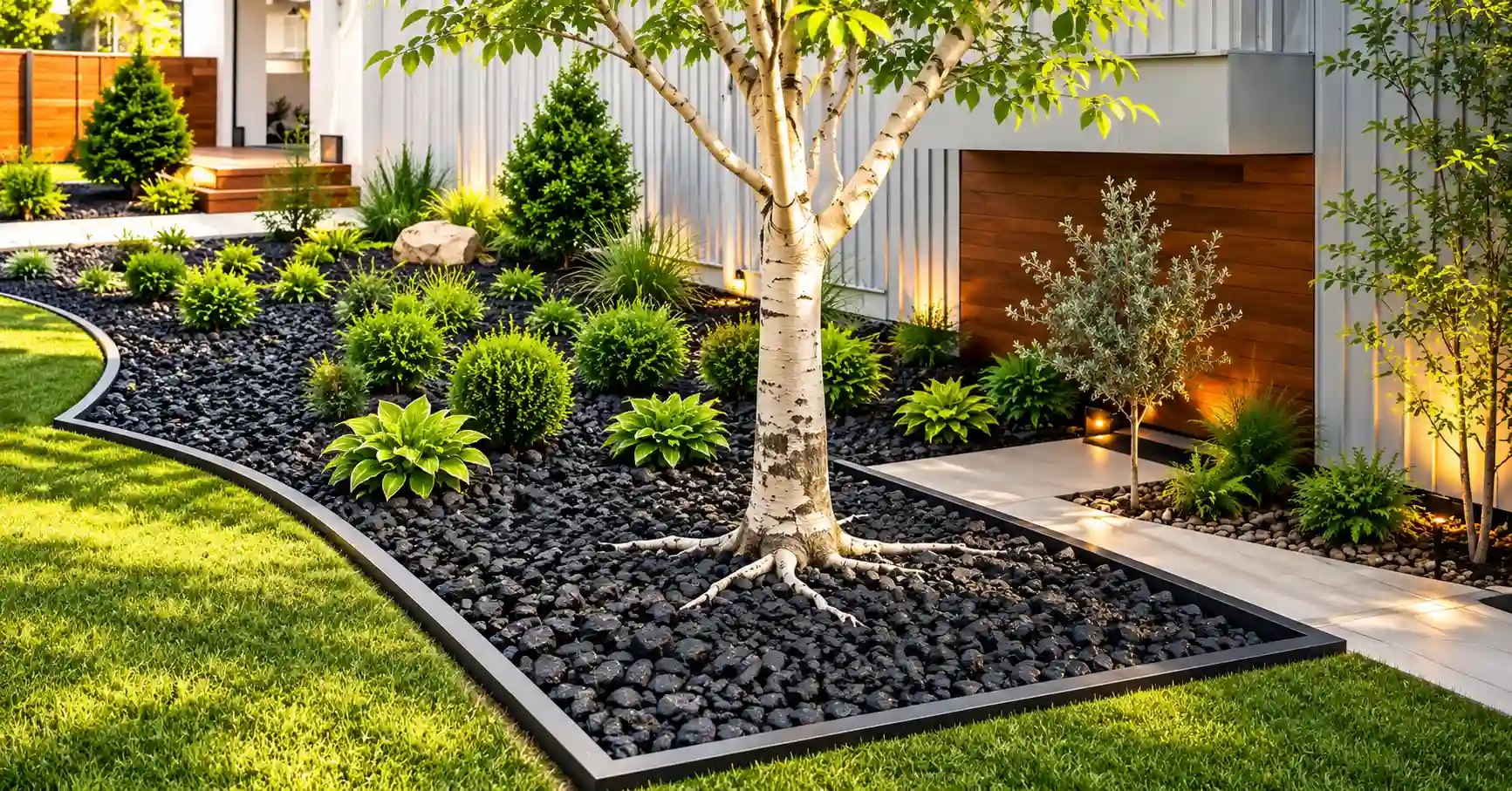
Bare soil, raised roots, and thin grass can make a healthy tree look unfinished. Mowing around those roots can also be hard. One wrong move may damage the mower or scrape the tree.
These rock landscaping ideas around trees can solve many of those problems. Rocks can create a clear border, cover worn areas, and reduce trimming around the trunk. They can also connect the tree bed with your walkway, patio, or home exterior.
But rocks must be used with care. A thick pile against the trunk can trap moisture. Deep digging can also damage important roots.
This guide shares 17 practical ideas for front yards and backyards. You will also learn how to choose the right rock, protect the tree, and avoid common mistakes.
Check These 6 Things Before Adding Rocks
A tree bed should improve the yard without placing the tree at risk. Start by checking the area before buying stone.
Find the Root Flare
The root flare is the wider section at the bottom of the trunk. It is where the trunk begins to spread into the main roots.
This area should remain visible. Do not cover it with rocks, soil, or deep mulch.
Leave Space Around the Trunk
Rocks should not touch the bark. Leave an open gap around the trunk so air can move and water can drain.
The gap may need to grow wider as the tree matures.
Avoid Deep Digging
Many trees have roots close to the surface. Digging a deep trench for edging can cut these roots.
Use shallow edging when possible. You can also place flat stones on the soil surface.
Watch the Sun
Dark rocks can become hot in direct sun. This may dry the soil faster during warm weather.
Light-colored gravel stays cooler, but it may show leaves and dirt more clearly.
Check How Water Moves
Look at the area after rain. Water should not sit against the trunk.
Do not create a deep rock bowl that sends water to the bark.
Think About Cleanup
Small gravel can be hard to clean under trees that drop leaves, flowers, fruit, or seed pods.
Larger river rock may be easier to clear with a leaf blower. Still, leaves can settle in the gaps.
1. Build a Flat Fieldstone Tree Ring
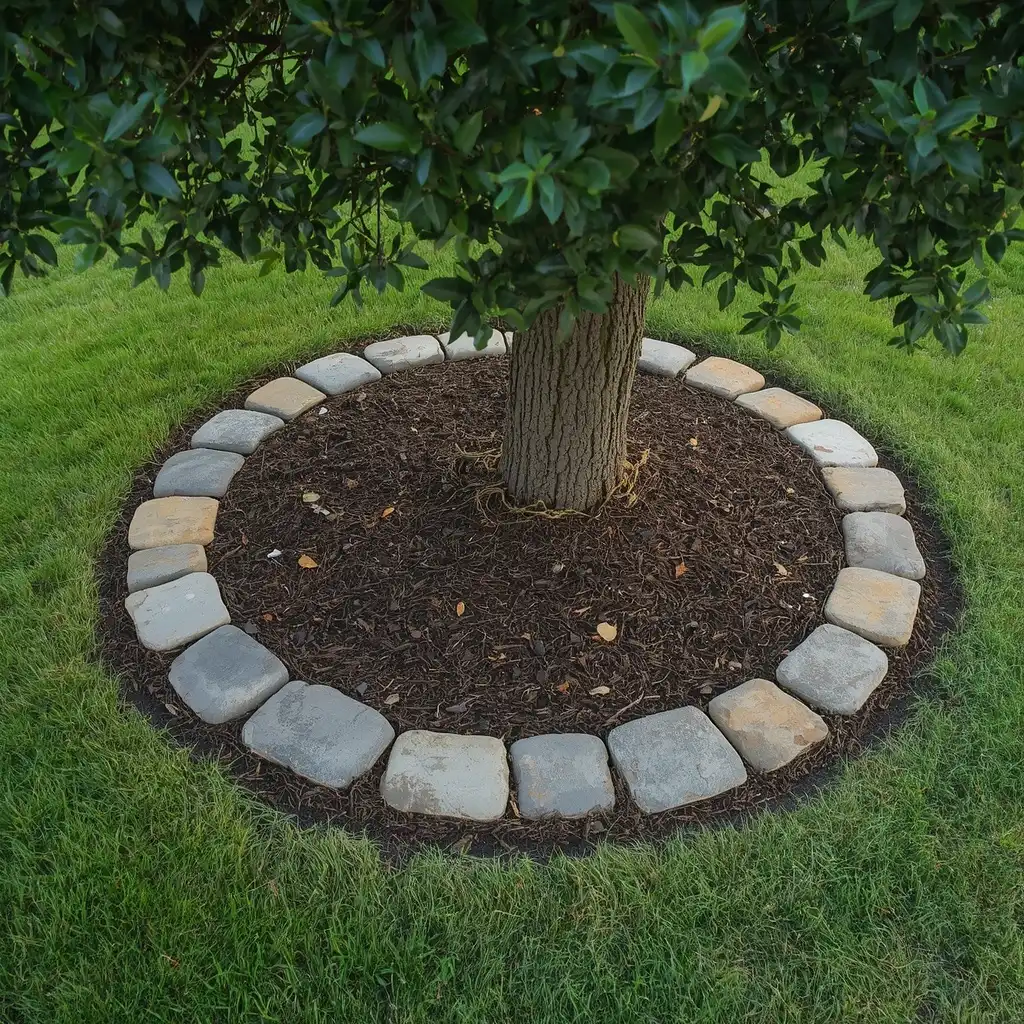
A flat fieldstone ring is one of the easiest tree ring landscaping ideas. It creates a clear edge without needing a tall wall.
Choose stones with natural shapes and similar thicknesses. Place them in one low row around a wide bed.
Do not make the circle too tight. A tiny ring can look cramped and may leave no room for trunk growth.
Set the stones on the soil surface when possible. This lowers the risk of cutting roots.
Fill the bed with shallow organic mulch, a small amount of gravel, or shade-friendly plants.
Best for: Traditional and cottage-style yards
Maintenance: Low
Watch out for: Stones pressing against the trunk
2. Create a Wide River Rock Border
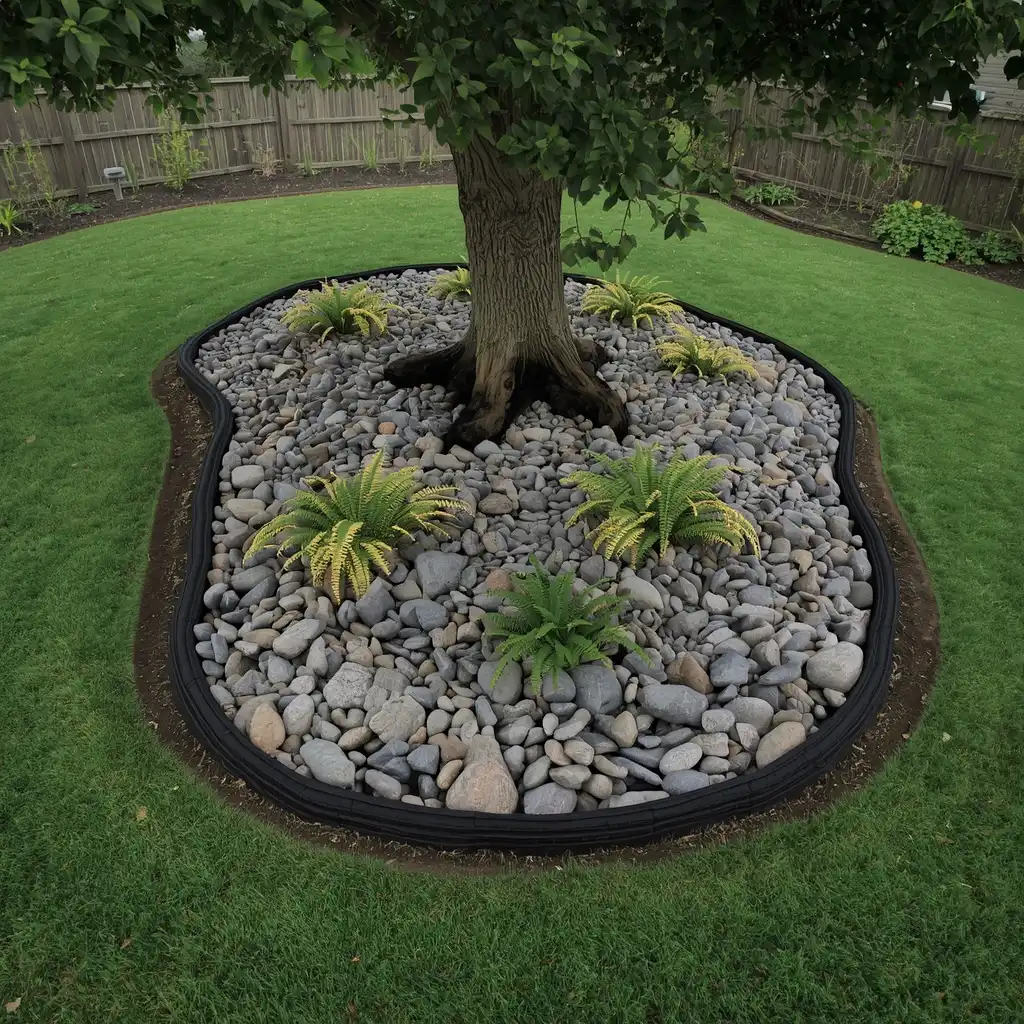
Smooth river rock gives the tree bed a soft and natural look. It works well with curved lawns, garden paths, and informal planting areas.
Create a wide oval or flowing bed instead of a narrow circle. This gives the design more space and helps it feel connected to the yard.
Use metal or flexible edging around the outer edge. This keeps the stones from spreading into the grass.
Add a few shade plants to break up the hard surface. Ferns, sedges, and coral bells may work, based on your climate.
Best for: Large shade trees and curved lawns
Maintenance: Low to moderate
Watch out for: Leaves collecting between the stones
3. Add a Narrow Gravel Ribbon
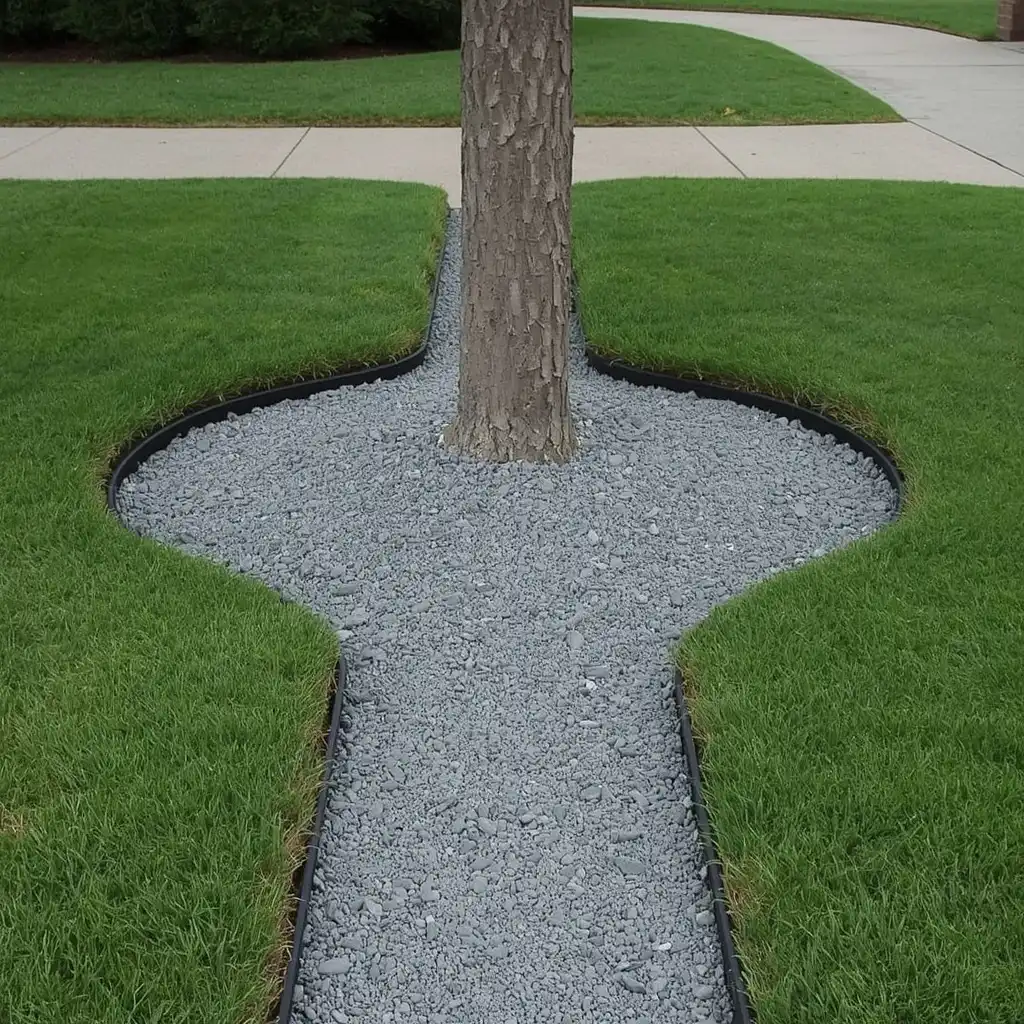
A gravel ribbon is a good choice when you want a clean border on a small budget.
Mark a circle, oval, or curved line around the tree. Use a garden hose to test the shape before installing the edge.
Add a narrow strip of gravel between two edging lines. Match the gravel to your walkway or house color.
Fine gravel may move during heavy rain. It can also enter the lawn if the edge is too low.
Keep it away from areas where a mower may throw loose stones.
Best for: Small yards and simple updates
Maintenance: Moderate
Watch out for: Gravel spreading into the grass
4. Use a Stone Crescent Instead of a Full Circle
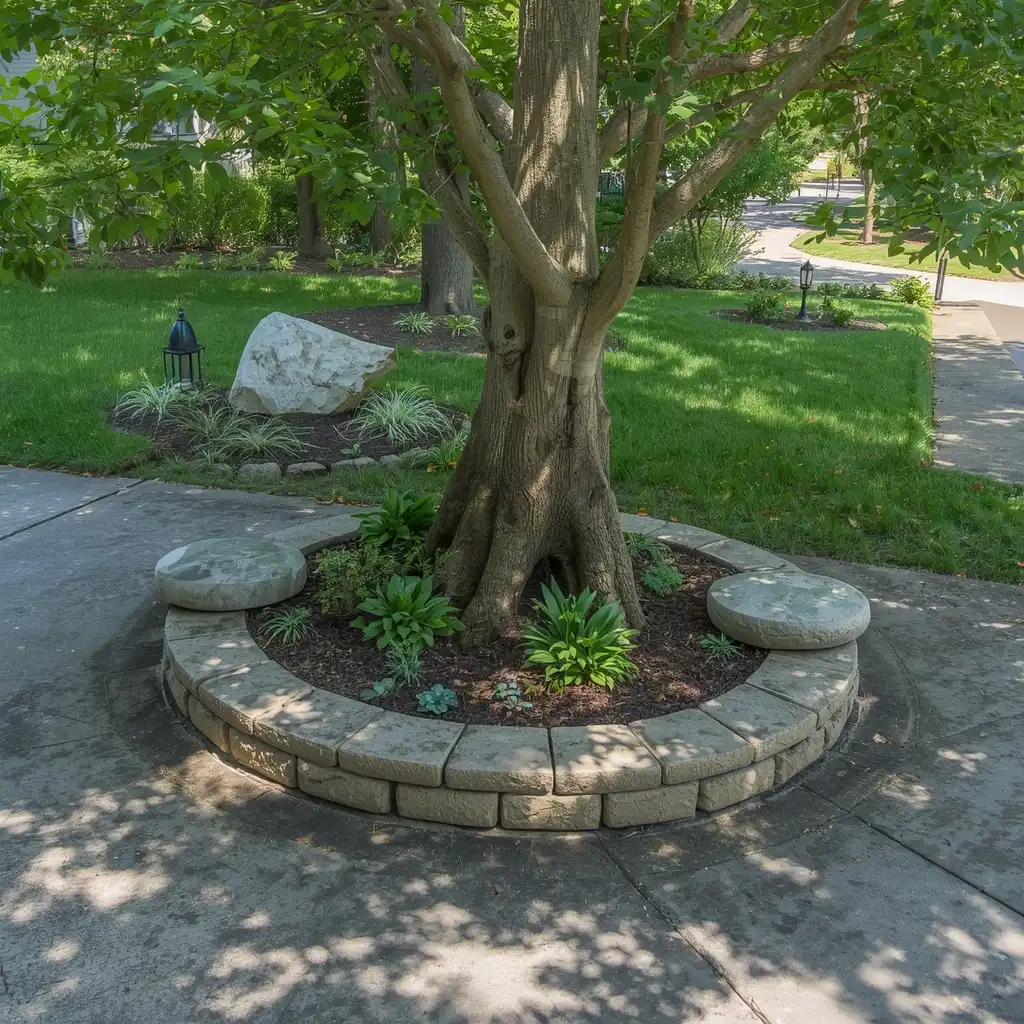
You do not need to surround the whole tree.
A stone crescent can frame the most visible side while leaving the other side open. This works well when the tree sits near a fence, driveway, or sidewalk.
Use one large stone as a focal point. Add two or three smaller stones beside it.
You can also include a small plant group inside the curve.
The uneven shape often looks more natural than a perfect circle.
Best for: Trees near hard surfaces
Maintenance: Low
Watch out for: Making the crescent too small to look planned
5. Mix a Rock Border With Organic Mulch
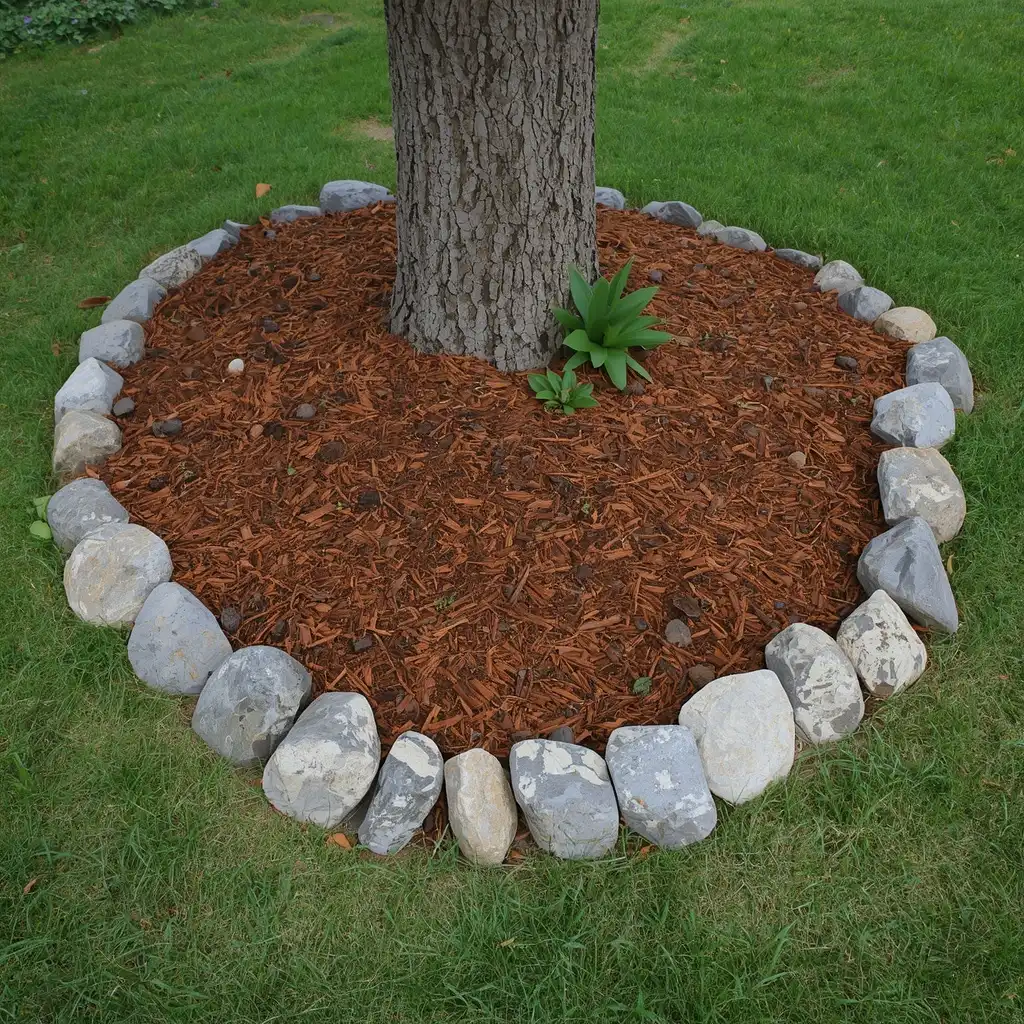
A full bed of rock can feel hard or dry. Mixing stone with mulch creates a softer look.
Use rocks around the outer edge. Fill the main bed with two to three inches of organic mulch, but keep it away from the trunk.
The mulch can help reduce weeds and slow water loss. It is also easier to refresh than a full rock bed.
Choose a mulch color that works with the stone. Brown bark pairs well with tan, gray, and cream rocks.
This design gives you the neat edge of stone with the softer look of a woodland bed.
Best for: Large trees and shaded gardens
Maintenance: Moderate
Watch out for: Piling mulch against the bark
6. Group Boulders With Shade Plants
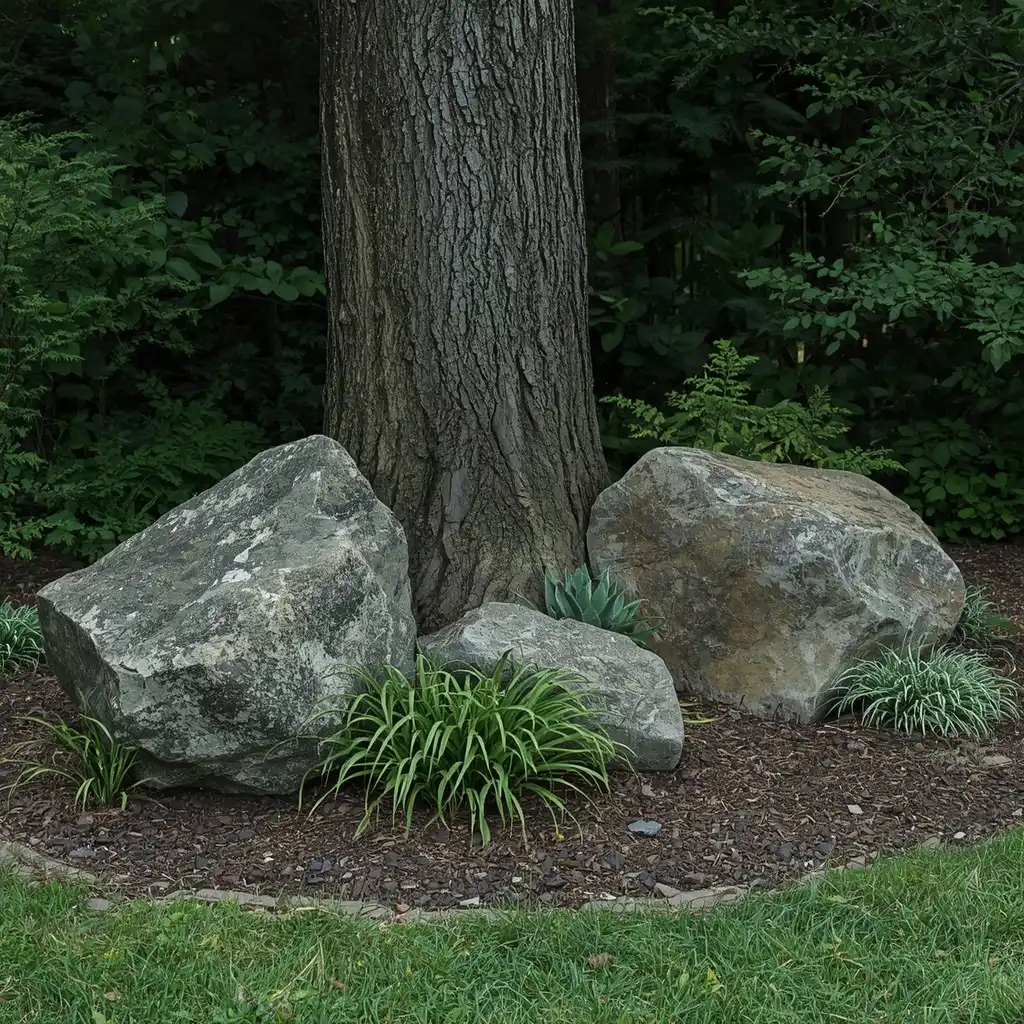
Two or three boulders can make a tree bed feel like part of the natural land.
Choose different sizes. A group of matching boulders may look too formal.
Place the largest stone first. Add the smaller ones at different angles.
Heavy rocks should not sit on large visible roots. Do not drag them across the root area.
Fill the open spaces with plants suited to dry shade or moist shade. Plant choice depends on your soil, rainfall, and tree type.
Best for: Natural backyards and wide planting beds
Maintenance: Moderate
Watch out for: Heavy stones placed over major roots
7. Run a Dry Creek Bed Past the Tree
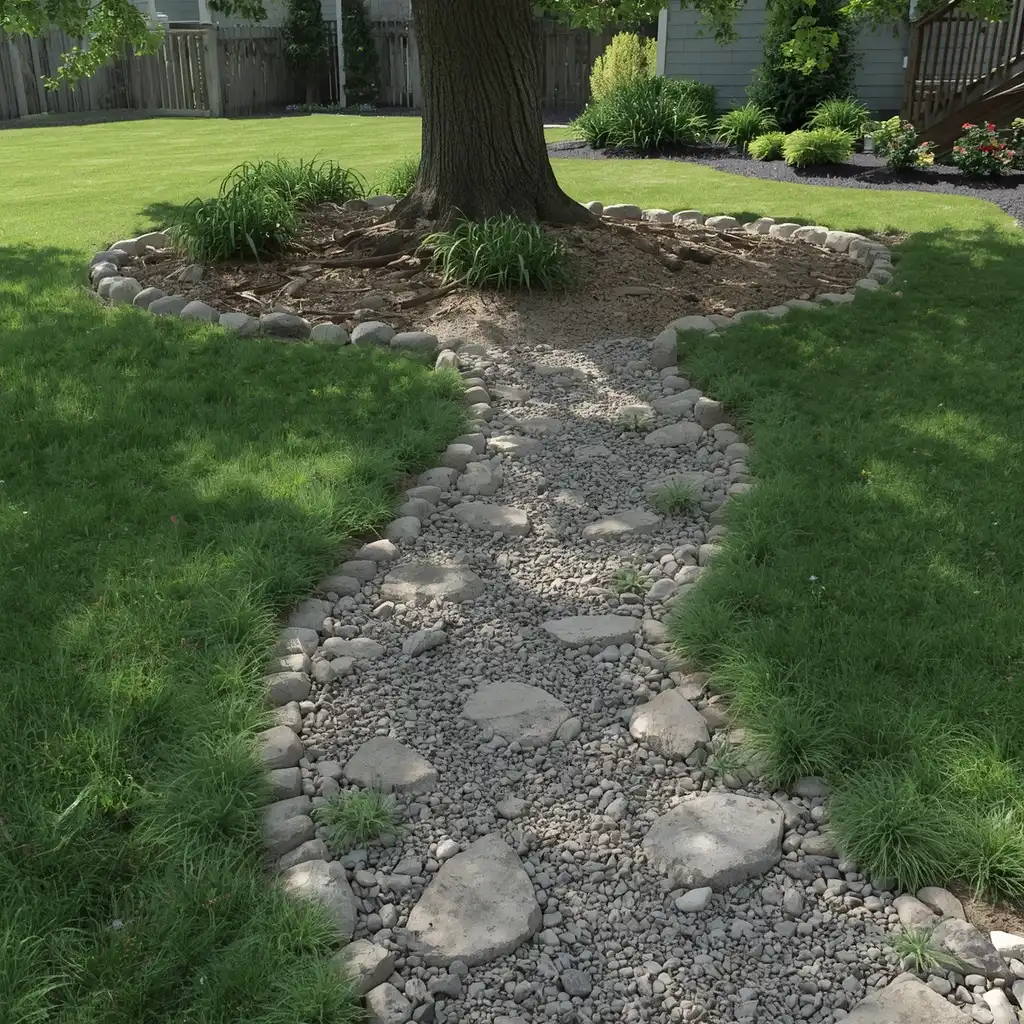
A dry creek bed can help connect a tree to the rest of the garden.
Curve it beside the tree instead of wrapping it tightly around the trunk. Mix small gravel, medium river rock, and a few larger stones.
The creek should have a clear starting point and ending point. It may begin near a downspout and end in a safe drainage area.
Do not send large amounts of water onto the tree without checking the soil and tree needs.
A dry creek can look attractive even when it does not carry water.
Best for: Slopes and yards with light runoff
Maintenance: Moderate
Watch out for: Directing standing water near the trunk
8. Create Planting Pockets Between Rocks
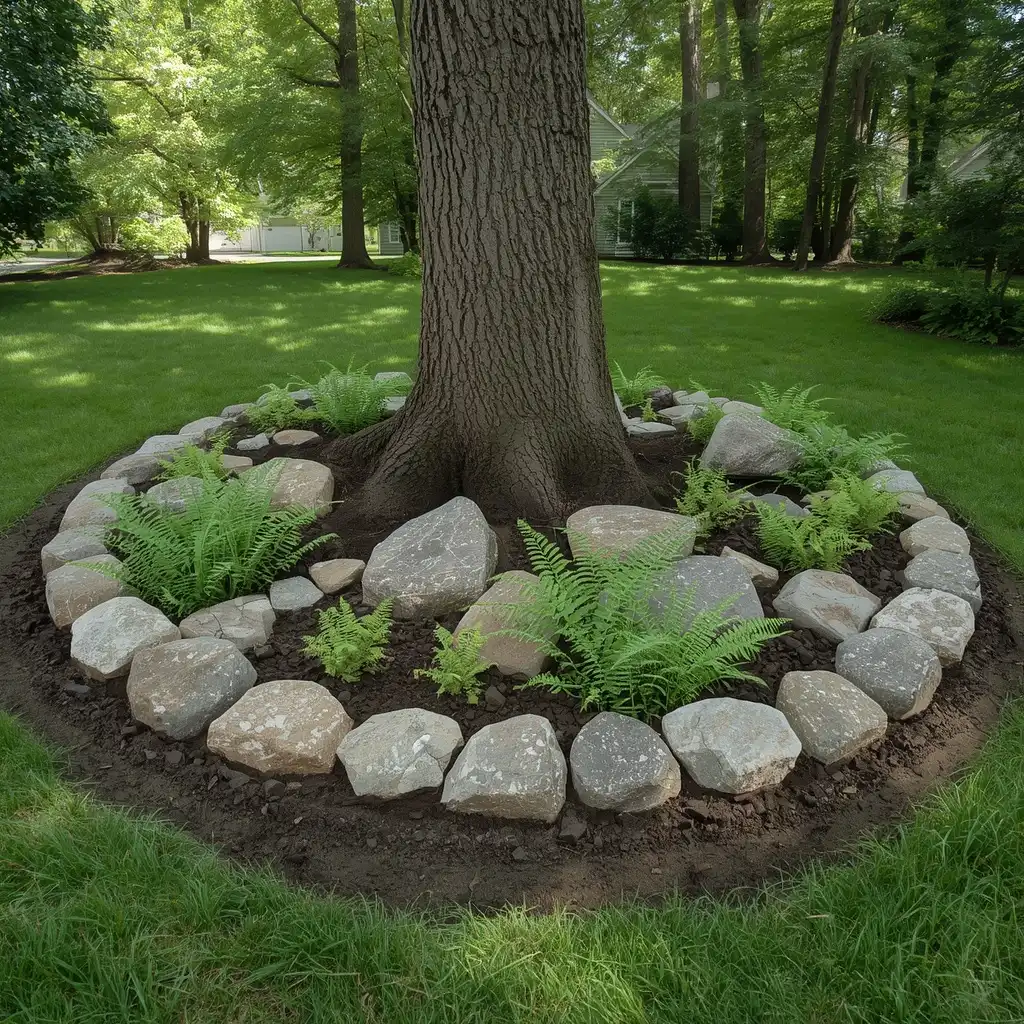
A rock garden around a tree does not need to be covered from edge to edge.
Leave small pockets of open soil between rock groups. Use these areas for low plants that can handle shade and root competition.
Repeat two or three plant types. Too many different plants can make the bed look busy.
Keep the current soil level around the tree. Adding a thick layer of new soil can reduce the air that reaches roots.
Planting pockets add color while keeping much of the bed easy to maintain.
Best for: Homeowners who want rock and plants
Maintenance: Moderate
Watch out for: Adding deep soil over existing roots
9. Use Black Lava Rock for Strong Contrast
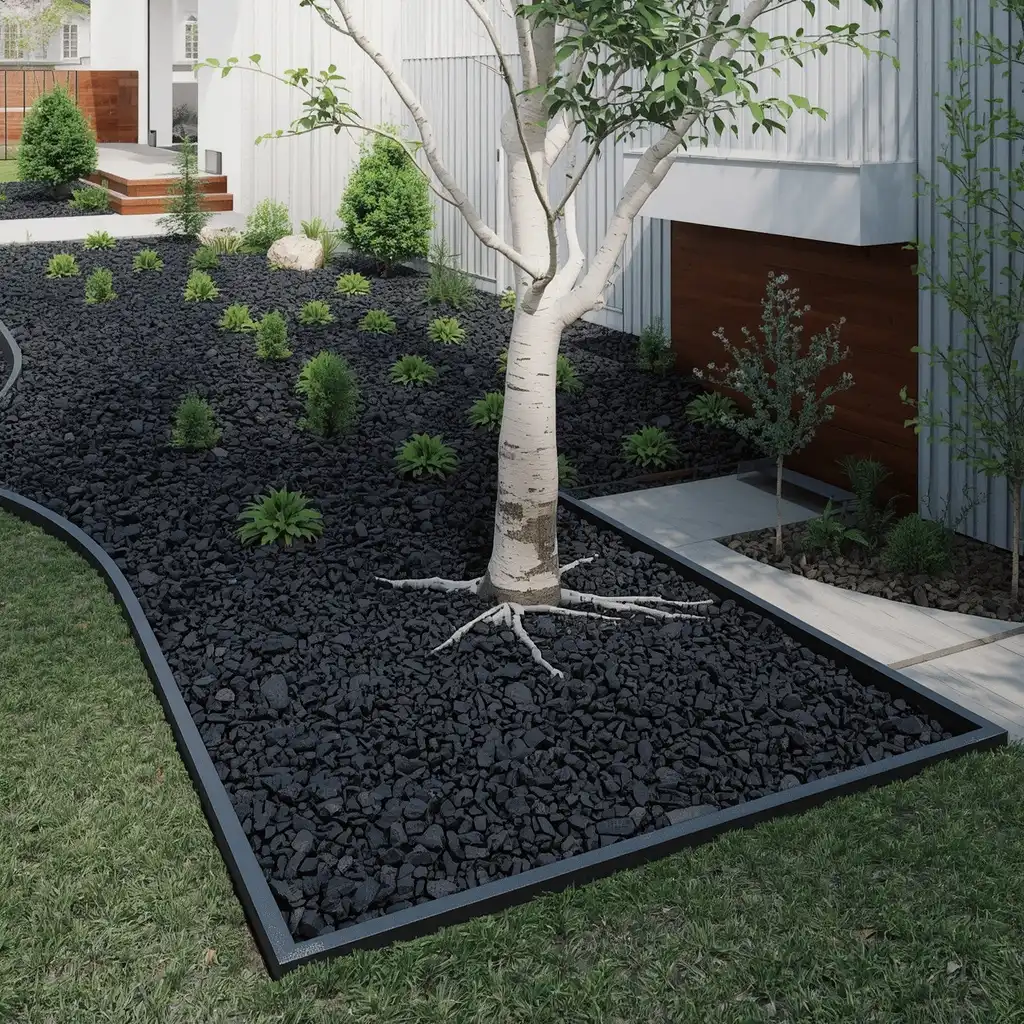
Black lava rock creates a bold look around pale tree trunks, white walls, and light paving.
Use it inside a clear metal, stone, or concrete edge. Keep the plant list simple.
One type of green plant may be enough. Too many colors can compete with the dark rock.
Black stone can become hot in direct sun. It may work better in partial shade or climates without extreme summer heat.
It can also show pale leaves and dust.
Best for: Modern and desert-style yards
Maintenance: Moderate
Watch out for: Heat buildup in full sun
10. Brighten the Bed With Cream or Tan Gravel
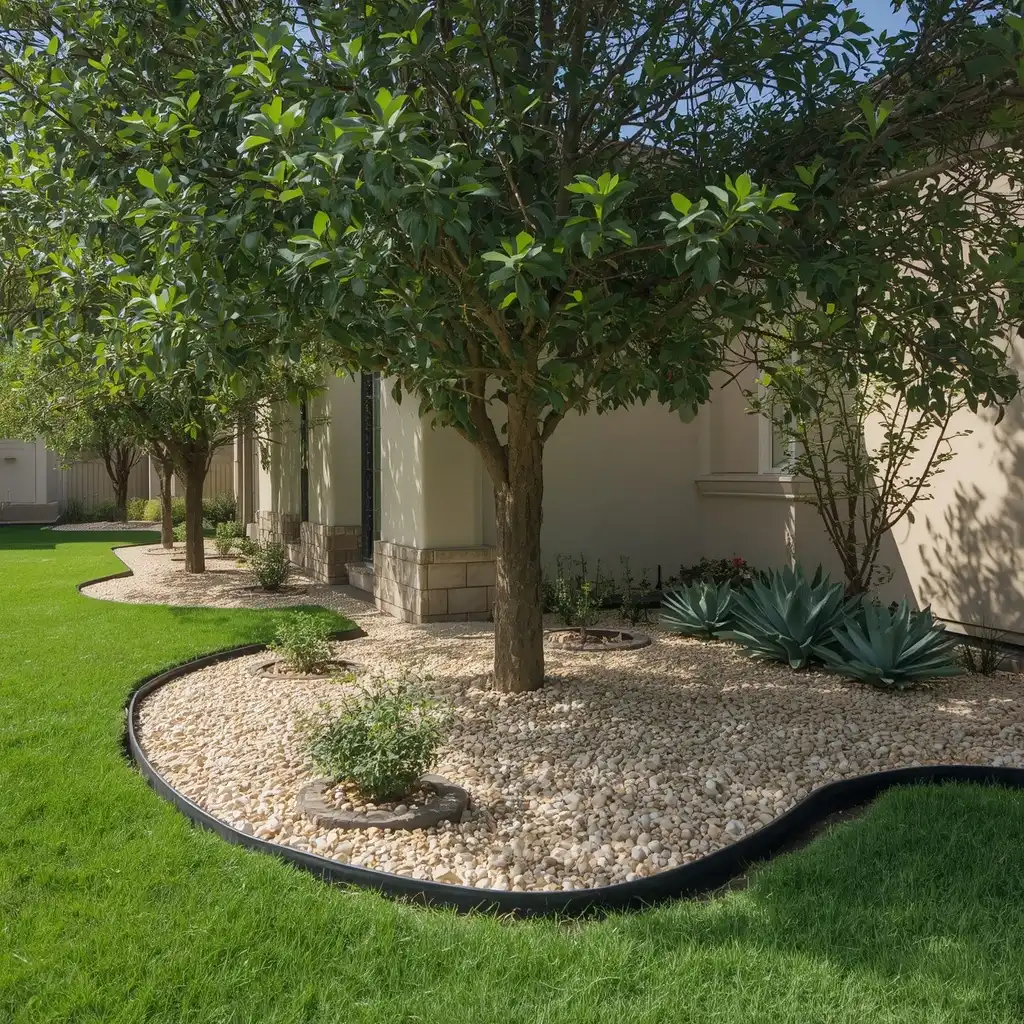
Cream and tan gravel can make a shaded tree bed look brighter.
These colors work well with brick, stucco, beige siding, and natural stone walls. They also feel softer than bright white rock.
Use dark metal edging to give the pale stone a clean outline.
Light gravel may show soil, leaves, and dark mulch. It often needs regular blowing or raking.
Test a small sample when it is wet and dry. Some gravel changes color after rain.
Best for: Mediterranean and modern homes
Maintenance: Moderate
Watch out for: Visible dirt and leaf stains
11. Create a Geometric Tree Bed
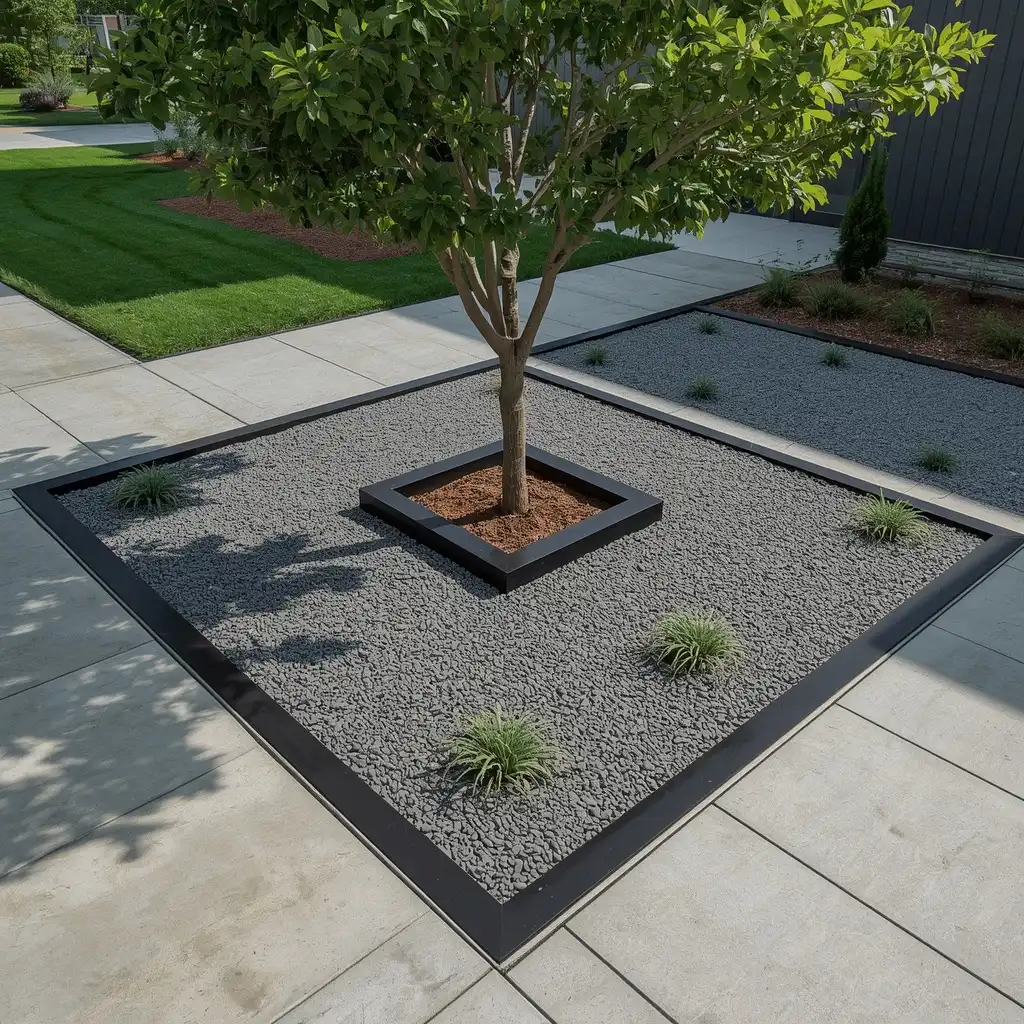
A square, rectangle, or hexagon can give the yard a more formal look.
Align the shape with the home, driveway, or walkway. This makes the bed feel connected to the property.
Keep a wide open space around the trunk. The tree should not look trapped inside a tight box.
Use metal strips, pavers, or surface-set stones for the edge. Avoid deep walls near large roots.
A geometric bed works best when the rest of the yard also has straight lines.
Best for: Formal and modern properties
Maintenance: Low
Watch out for: Rigid edges crossing major roots
12. Add a Small Pebble Mosaic
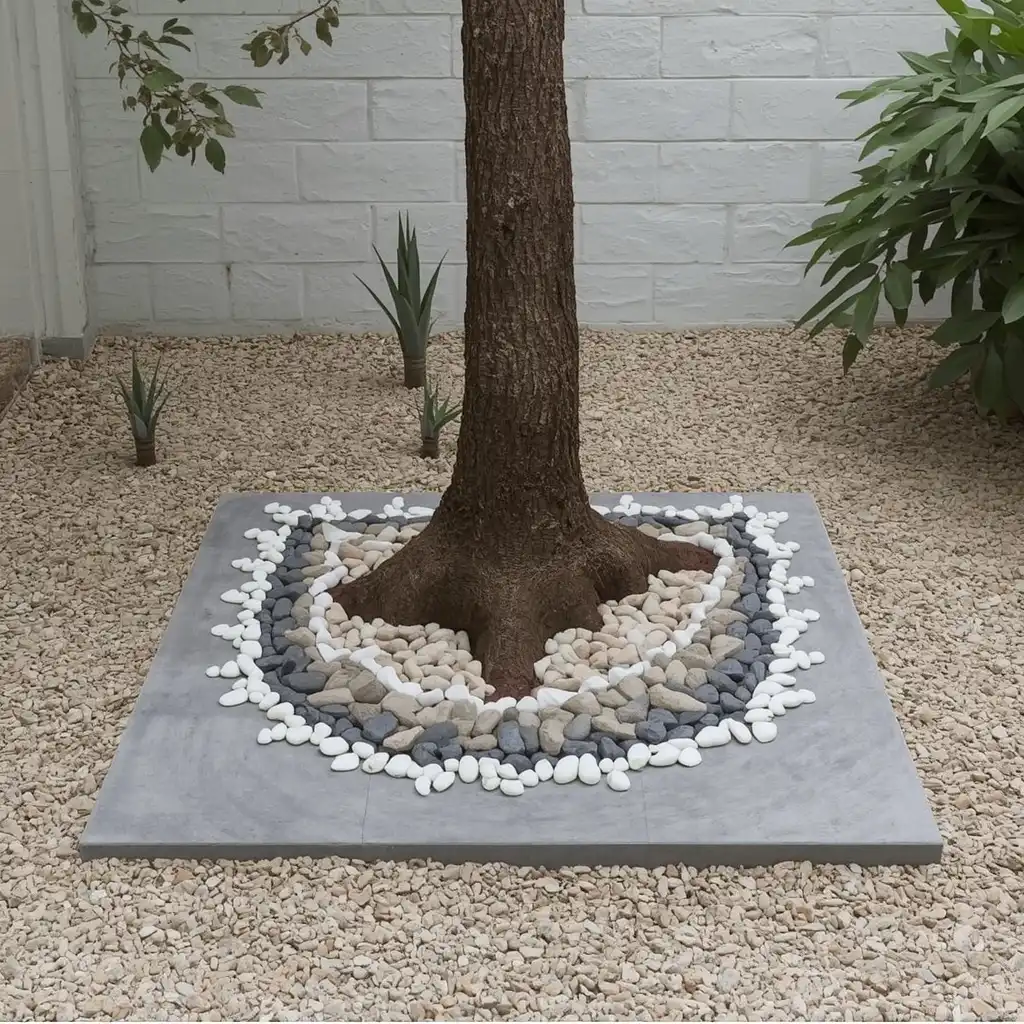
A pebble mosaic can turn part of the tree bed into a small art feature.
Use it in one section instead of covering the full area. A simple wave, leaf, circle, or sun pattern is easier to build and maintain.
Choose two or three pebble colors. More colors may make the pattern hard to read.
The base must be stable so the stones do not move. This project takes more time than a loose gravel bed.
Place the mosaic where people can see it from a walkway or patio.
Best for: Courtyards and patio trees
Maintenance: Moderate
Watch out for: Loose stones breaking the pattern
13. Form a Shallow Rock-Lined Watering Basin
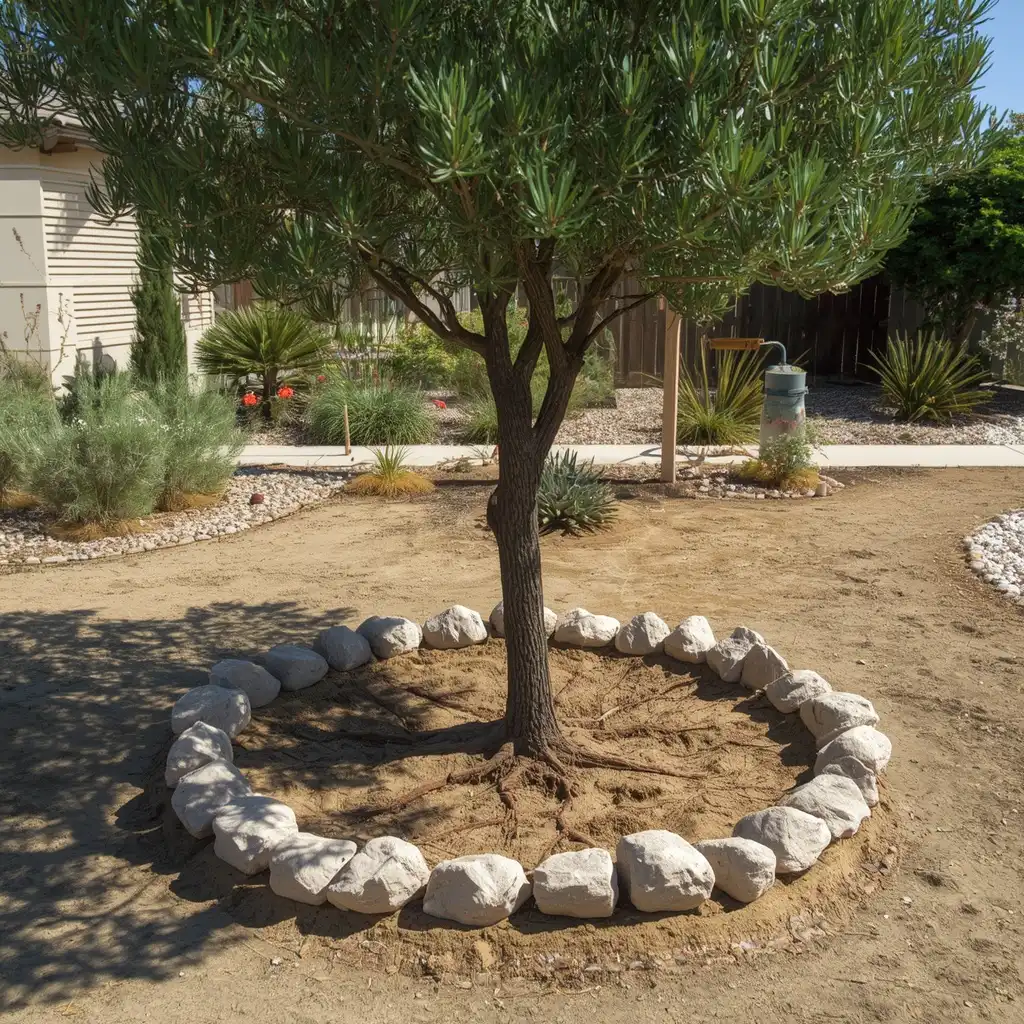
A broad, shallow basin can slow water and help it soak into the soil.
Place the basin edge away from the trunk. Use medium stones to mark the outside curve.
Do not create a deep bowl around the bark. Water should spread across the root area instead of sitting against the trunk.
This design may help newly planted trees in dry areas. It may not suit trees that need fast-draining soil.
Check how quickly the water disappears before using the basin often.
Best for: Dry climates and young trees
Maintenance: Low
Watch out for: Water collecting against the trunk
14. Add a Rain Garden Near the Tree
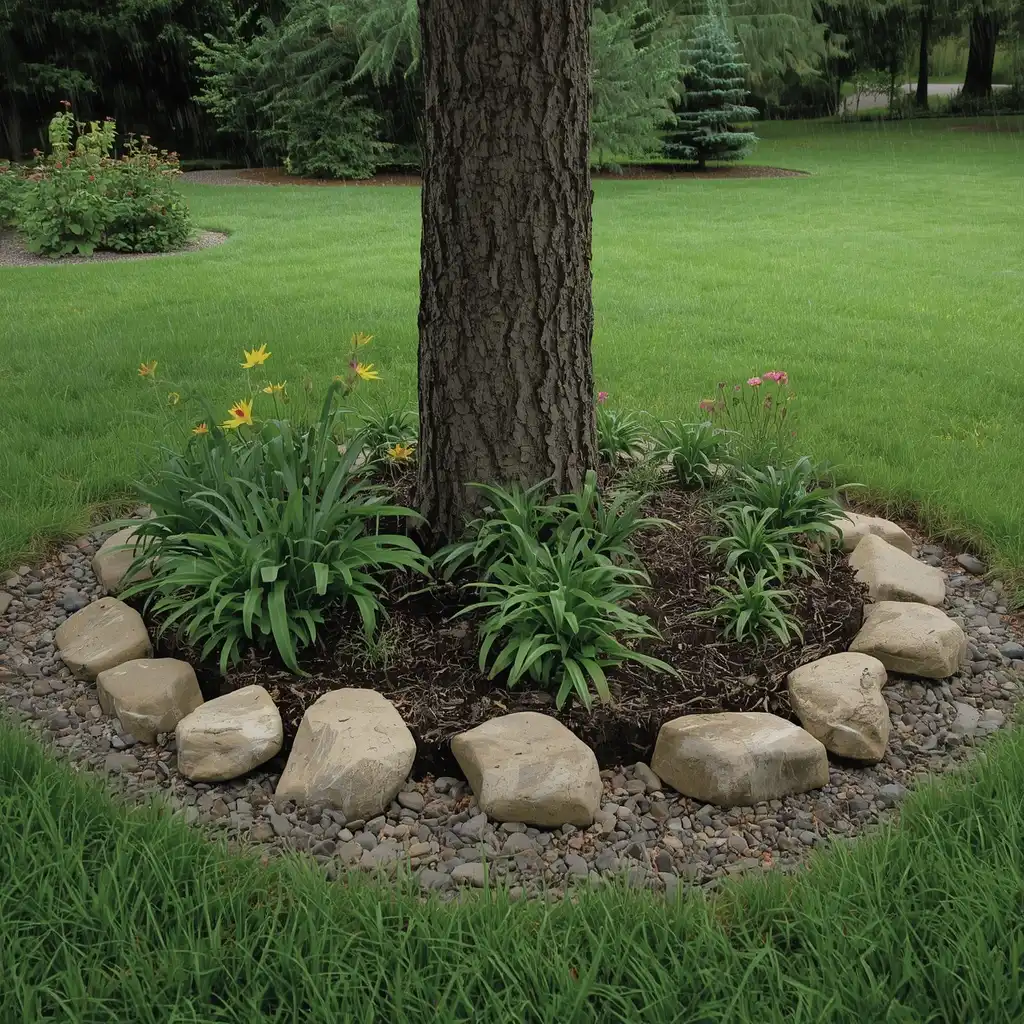
A rain garden can collect runoff from a roof, patio, or driveway.
Place it outside the immediate trunk area. Use rock where water enters to slow erosion.
Choose plants that can handle short wet periods and longer dry periods.
Do not build a rain garden over major roots. You should also avoid changing the water level around a mature tree without proper advice.
Check local drainage rules before directing runoff.
Best for: Yards with a safe low point
Maintenance: Moderate
Watch out for: Keeping the tree’s root area too wet
15. Add Stepping Stones Through a Wide Tree Bed
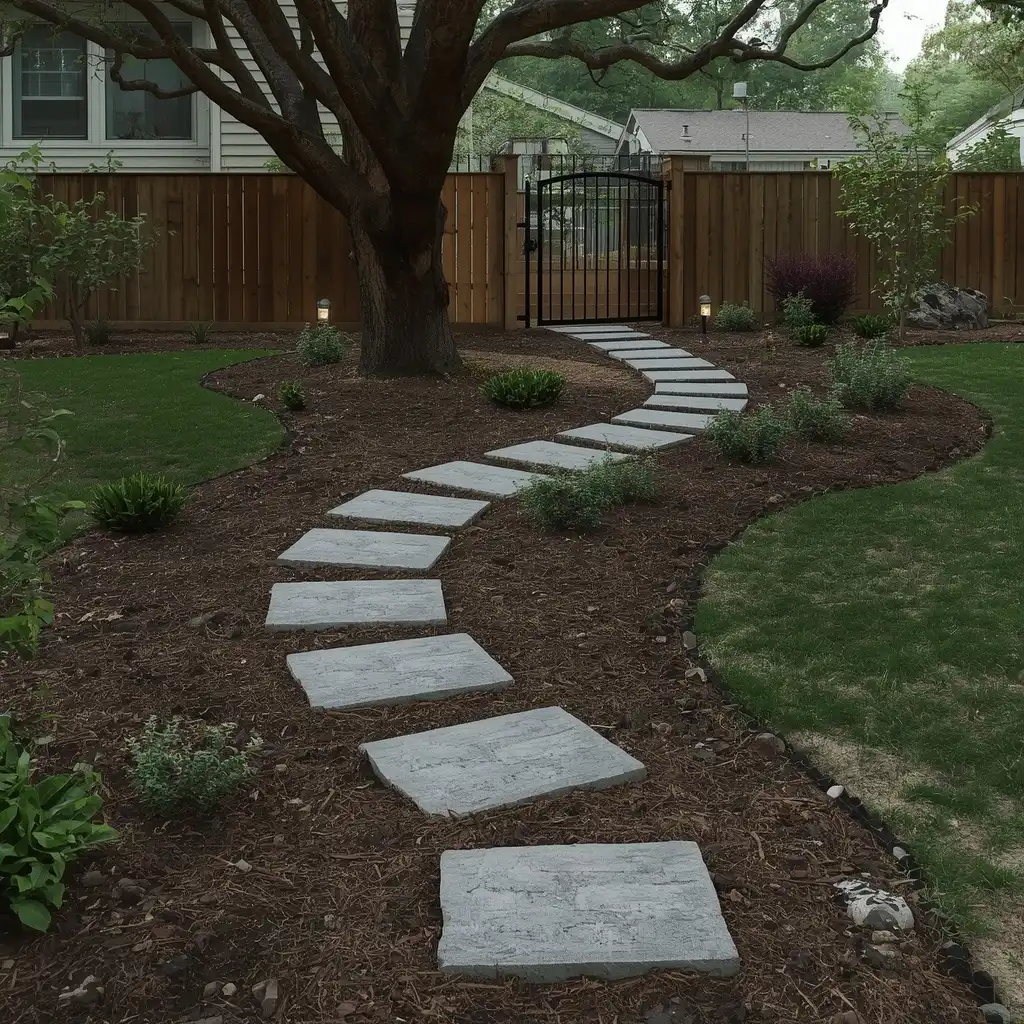
People often walk across a tree bed to reach a gate, bench, or garden area.
Stepping stones create a clear path and help keep feet away from open soil.
Choose flat stones with a rough, slip-resistant surface. Place them where the ground is firm.
Do not cut large roots to make the stones perfectly level. A slight change in the route is better than root damage.
Low lights can make the path safer at night.
Best for: Large backyard tree beds
Maintenance: Low
Watch out for: Uneven stones and hidden roots
16. Place a Low Seat Wall Outside the Main Roots
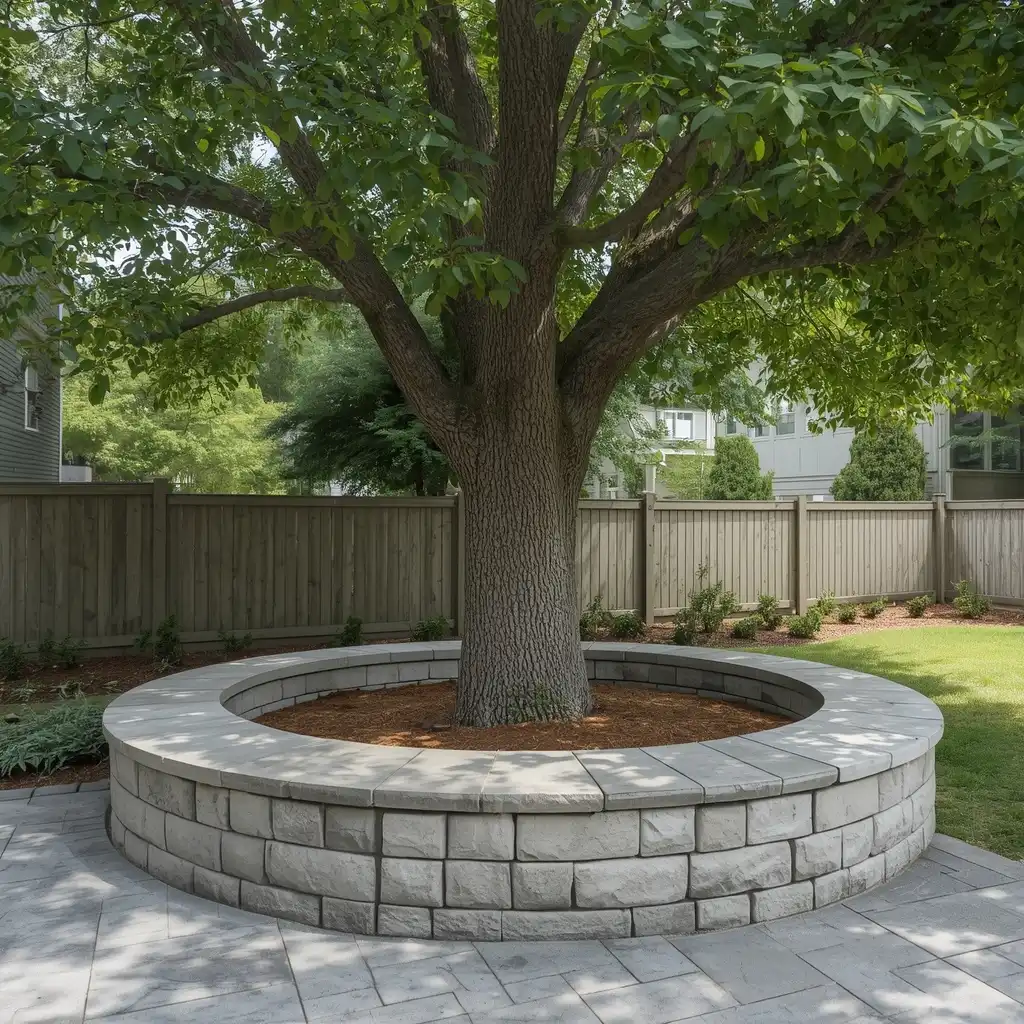
A low wall can add seating and define a large planting island.
Place it far from the trunk and major visible roots. Deep footings can harm the tree.
A professional should inspect the area before heavy wall work begins.
Use a smooth capstone for comfortable seating. Match the wall to nearby steps, patios, or garden walls.
This is a larger project, but it can turn a plain tree area into a useful gathering space.
Best for: Large yards and patio areas
Maintenance: Low
Watch out for: Deep foundations near the tree
17. Connect Several Trees With One Curved Rock Island
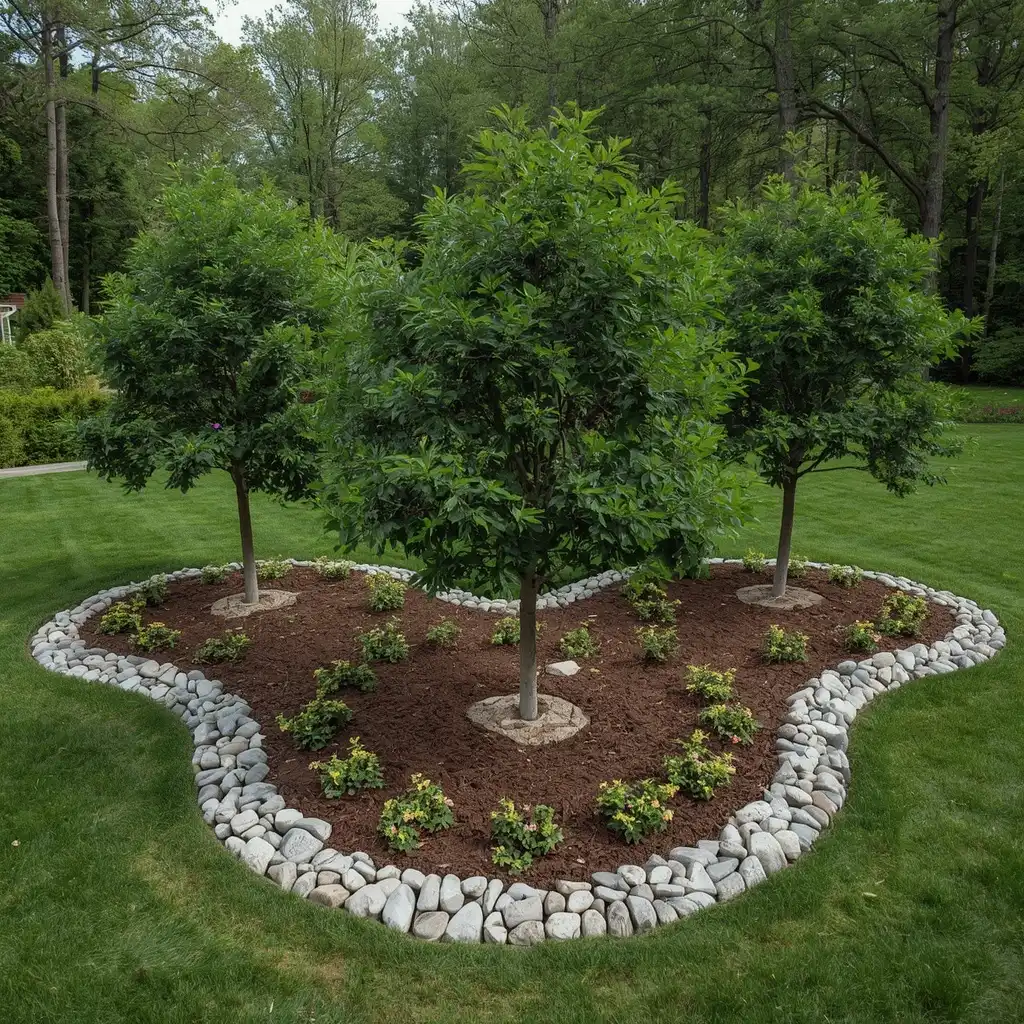
Several small circles can make a lawn look broken into pieces.
A single curved island often looks cleaner. It can connect two or more trees with one shared border.
Repeat the same rock, mulch, and plant choices across the full bed.
Leave access for watering, pruning, and leaf removal.
One wide island can also reduce tight mower turns between trees.
Best for: Yards with groups of trees
Maintenance: Moderate
Watch out for: Covering large areas with deep stone
How to Choose the Right Rock Size
The rock should fit the size of the bed and the amount of cleanup you expect.
Pea Gravel
Pea gravel works in narrow borders and decorative ribbons. It is affordable, but it can scatter.
Use a strong edge to keep it in place.
River Rock
River rock works well in wide beds and dry creek designs.
Its smooth surface creates a soft look. Leaves may settle between the stones.
Lava Rock
Lava rock is light and easy to move. Dark colors create strong contrast.
It can become hot in sunny areas.
Fieldstone
Fieldstone is useful for borders and low tree rings.
It is heavy, but it often stays in place without mortar.
Boulders
Boulders work best as focal points.
Use one large stone with two smaller ones. Avoid placing them over major roots.
How to Pick a Rock Color That Fits Your Yard
Look at your house, walkway, roof, and nearby walls before choosing a color.
Gray rock works with cool siding and concrete. Tan rock fits brick, wood, and warm stucco.
Black rock creates a modern look. Cream gravel brightens shaded beds.
Bring home small samples. View them in sun, shade, rain, and dry weather.
A rock that looks perfect at the store may look different beside your house.
8 Mistakes That Can Harm the Tree
Landscaping around trees with rocks can look neat, but a poor setup can cause problems.
Avoid these common mistakes:
- Piling rocks against the trunk
- Covering the root flare
- Digging a deep edging trench
- Cutting large surface roots
- Adding a thick layer of soil
- Building a heavy raised bed over roots
- Sending water against the bark
- Creating a tiny ring with no room for growth
The tree should guide the shape of the bed. Do not force the roots to fit a design.
How Much Work Will Each Design Need?
A narrow gravel ribbon or fieldstone ring is usually a simple DIY project.
A river rock bed takes more lifting and edging. A dry creek may need basic grading.
Boulders, drainage work, and seat walls often need professional help.
You should also think about future cleanup. A beautiful gravel bed may become a chore under a tree that drops small leaves all year.
Measure the bed before ordering stone. A landscape material calculator can help you estimate the amount.
Add a small extra amount for low spots and settling.
Frequently Asked Questions
Is It Safe to Put Rocks Around a Tree?
Yes, when the root flare stays open and the rocks do not press against the bark. Avoid deep digging and thick layers over roots.
Should Landscape Fabric Go Under the Rocks?
Fabric may help control some weeds, but it can make future planting and soil care harder. Roots may also grow into it. Avoid sealing the soil with solid plastic.
Are Rocks Better Than Mulch Around Trees?
Rocks last longer, but they can trap heat and collect leaves. Organic mulch is softer and easier to change. A rock border with mulch inside often gives you the benefits of both.
How Far Should Rocks Stay From the Trunk?
Leave a clear open space around the trunk and root flare. The gap should increase as the tree grows.
Can I Build a Raised Stone Ring Around a Mature Tree?
A raised ring can bury the root flare and add soil over roots. Ask an arborist before adding a wall or raised bed around a mature tree.
Choose a Design That Protects the Tree
The best design should make yard care easier while keeping the tree healthy.
Start with the root flare. Check the roots, sunlight, water flow, and leaf drop. Then choose a border that fits those conditions.
A simple fieldstone edge may be enough. A larger yard may suit a dry creek, planting island, or stepping-stone path.
The best rock landscaping ideas around trees balance style with tree care. Choose a design that leaves the trunk open, avoids deep digging, and fits the amount of maintenance you can manage.