
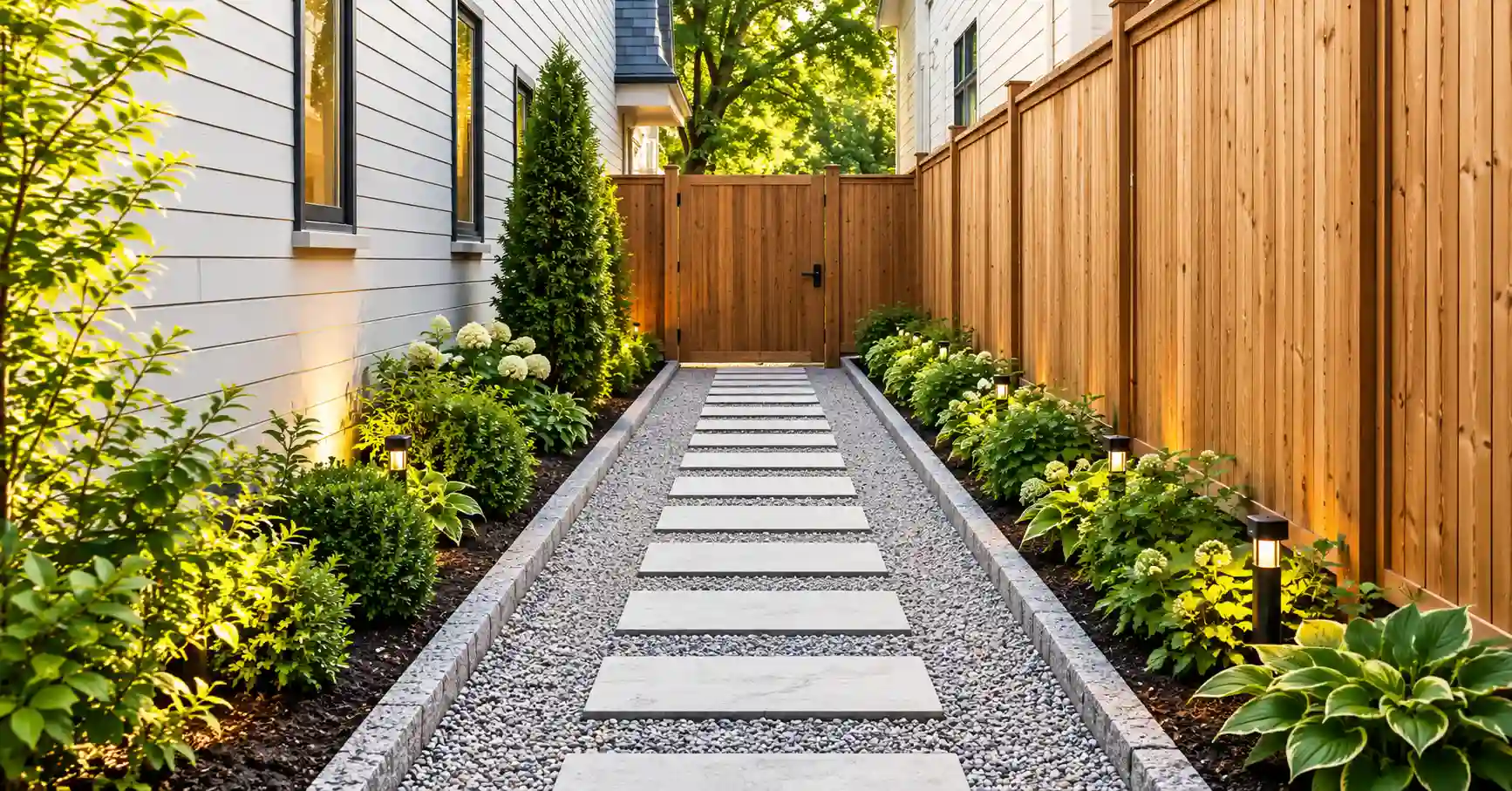
A small yard can feel crowded fast. One large plant, a wide path, or a bulky garden bed may take up most of the open space.
That is why small rock landscaping ideas work so well. Rocks can define edges, improve muddy areas, create paths, and add color without filling every inch of your yard. They also stay in place longer than many soft materials.
Still, rock landscaping is not fully maintenance-free. Stones can spread, weeds can grow between them, and poor placement can trap water near your home. A good plan helps you avoid these problems.
In this guide, you will find 16 practical ideas for front yards, side yards, driveway edges, slopes, and empty corners. You will also learn how to choose the right stone, prepare the ground, and keep your finished area clean.
How to Plan Rock Landscaping Without Crowding Your Yard
Start by measuring the area you want to change. Write down its length and width. You should also note nearby walls, paths, drains, trees, and doors.
Next, decide what the space needs to do.
A wet corner may need better drainage. A narrow side yard may need a walking path. An empty front bed may need one strong focal point. A damaged strip beside the driveway may need a tough ground cover.
Give the area one main job before you choose any materials.
Small yards often look better when you use fewer items. Pick one main rock, one border material, and a small group of plants. Too many colors and textures can make the area feel messy.
For example, a 4-by-6-foot corner may only need:
- One medium accent stone
- Two small grasses
- A thin layer of gravel
- Simple metal edging
Leave some open space around each item. Empty space gives the design room to breathe.
Do not copy a large-yard design and shrink every part. Small yard landscaping works best when each feature has a clear purpose.
Before you buy anything, draw a simple plan on paper. It does not need to look professional. A rough sketch can help you spot problems before you spend money.
How to Choose Rocks That Fit a Small Space
The best-looking stone may not be the best stone for your project. Think about where you will use it and how it needs to perform.
Small gravel works well for filling gaps and covering narrow beds. Medium river rock can handle water flow and add a smooth look. One larger rock can become a focal point without taking over the yard.
Here are some common choices:
- Pea gravel: Small, smooth, and useful for light-use paths or seating areas.
- River rock: Rounded stones that work well in dry creek beds and drainage areas.
- Crushed stone: Angular pieces that lock together better underfoot.
- Lava rock: A light material that works around plants that like dry soil.
- Decomposed granite: Fine stone that can form a firm path when prepared well.
- Boulders: Best used as single statement pieces in a small yard.
Match the rock color to your home. Pale stone can brighten a dark corner. Gray or charcoal gravel may suit a modern house. Warm tan stone often works well with brick, wood, and cream walls.
Texture also matters. Smooth rocks are safer near seating areas and places where children play. Crushed rock gives better grip on paths, but sharp pieces may feel rough under bare feet.
Ask a local supplier for samples. Place them near your wall, plants, and paving. Check them in morning and evening light before you place a large order.
16 Small Rock Landscaping Ideas for Tight Spaces
You do not need a large yard or a truckload of stone. Many small projects can improve one narrow strip, forgotten corner, or muddy patch.
1. Add a Narrow River Rock Border
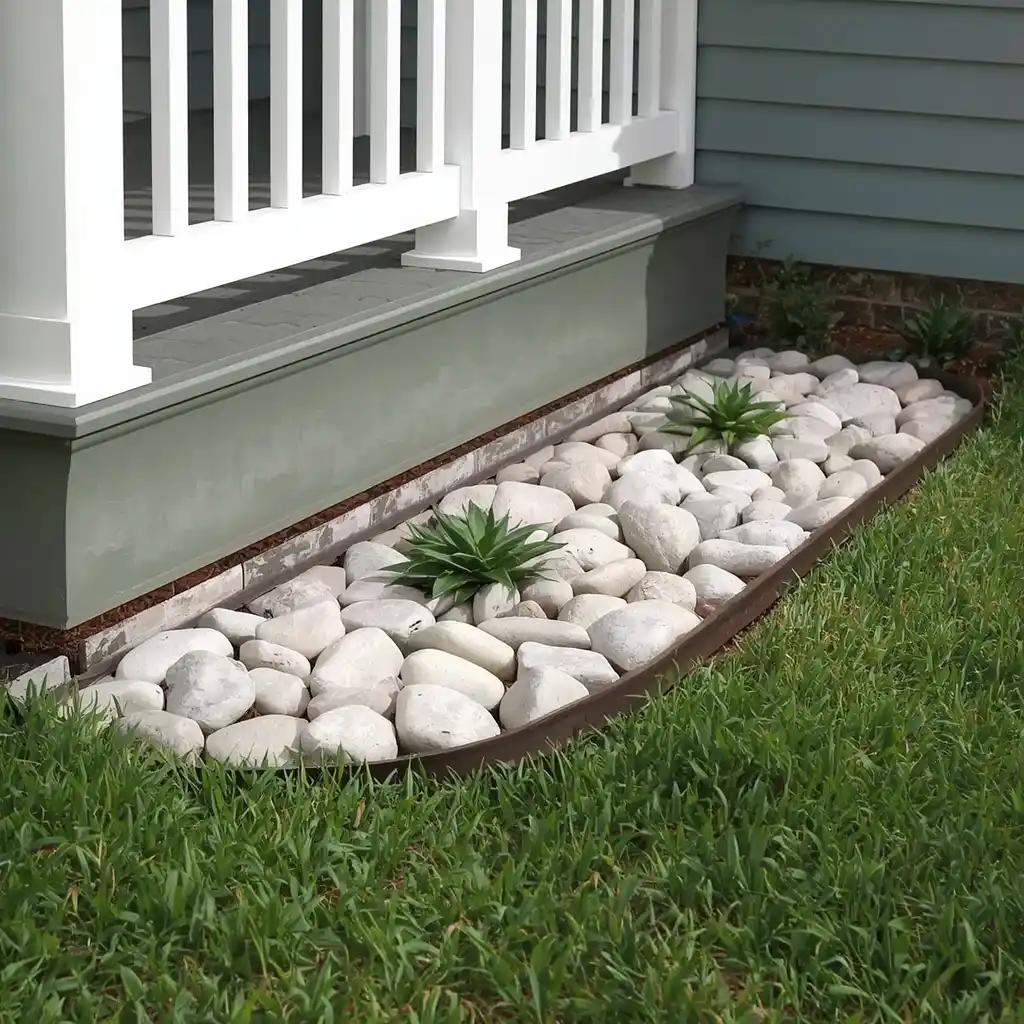
A slim river rock border can make a wall, porch, or flower bed look neat without using much space.
Best for: Porch edges, fences, walls, and narrow beds
Main materials: River rock, edging, and one or two low plants
Maintenance level: Low
Keep the border about 12 to 18 inches wide. Use metal, plastic, brick, or stone edging to stop the rocks from spreading into the lawn.
Choose a color that stands out against the wall. Pale stones can brighten a dark fence. Dark stones can create a clean line beside light siding.
Add one or two low plants if the border feels too hard. Keep enough space between them so the area does not feel packed.
2. Build a Mini Dry Creek Bed
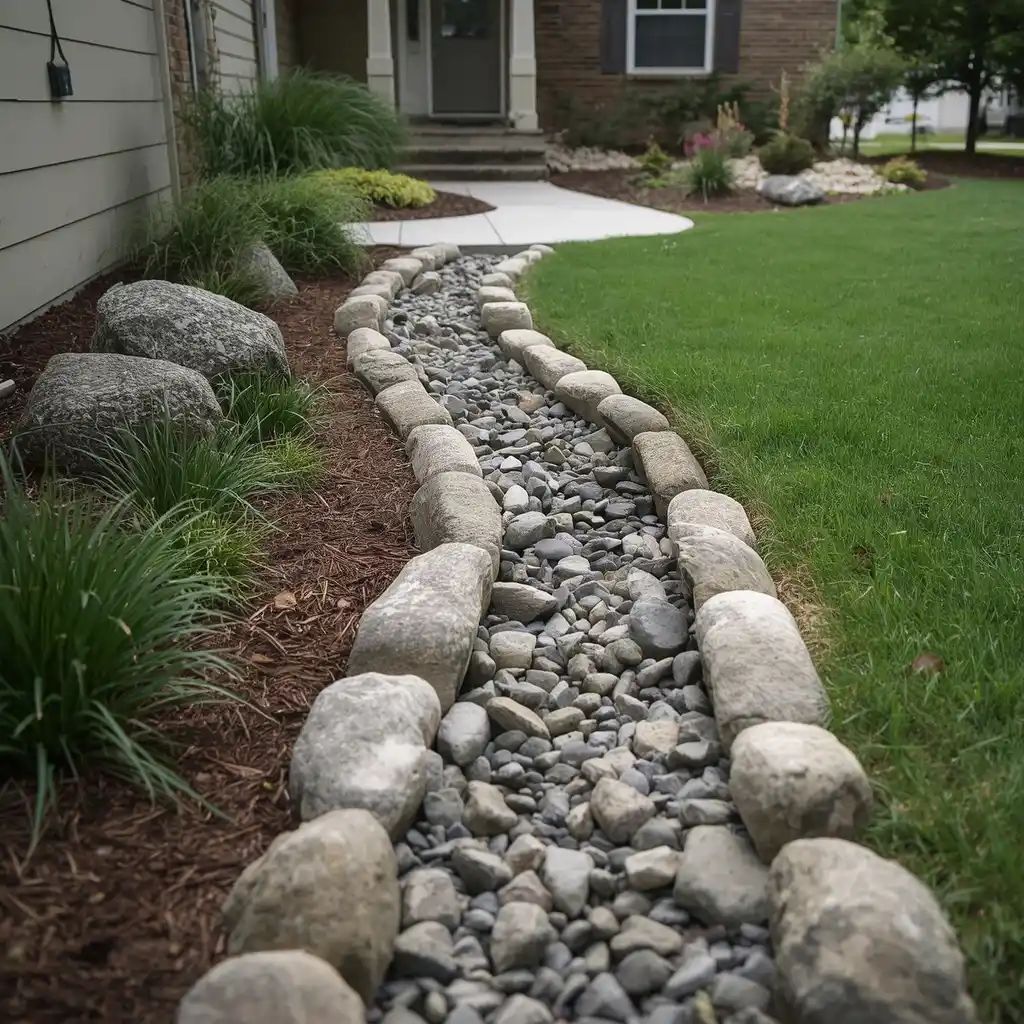
A small dry creek bed can turn a wet or empty strip into a useful feature.
Best for: Low spots and areas near downspouts
Main materials: River rock, larger edge stones, and grasses
Maintenance level: Medium
Mark a soft curve with a garden hose. Avoid a straight channel because natural water paths usually bend.
Place larger stones along the sides. Fill the center with smaller river rocks. Use the natural slope to guide water away from the house.
Add small grasses near the edges for a softer look.
A decorative creek bed cannot fix every drainage problem. Call a drainage expert if water enters your home, stays near the foundation, or causes serious soil loss.
3. Create a Pea Gravel Side-Yard Path
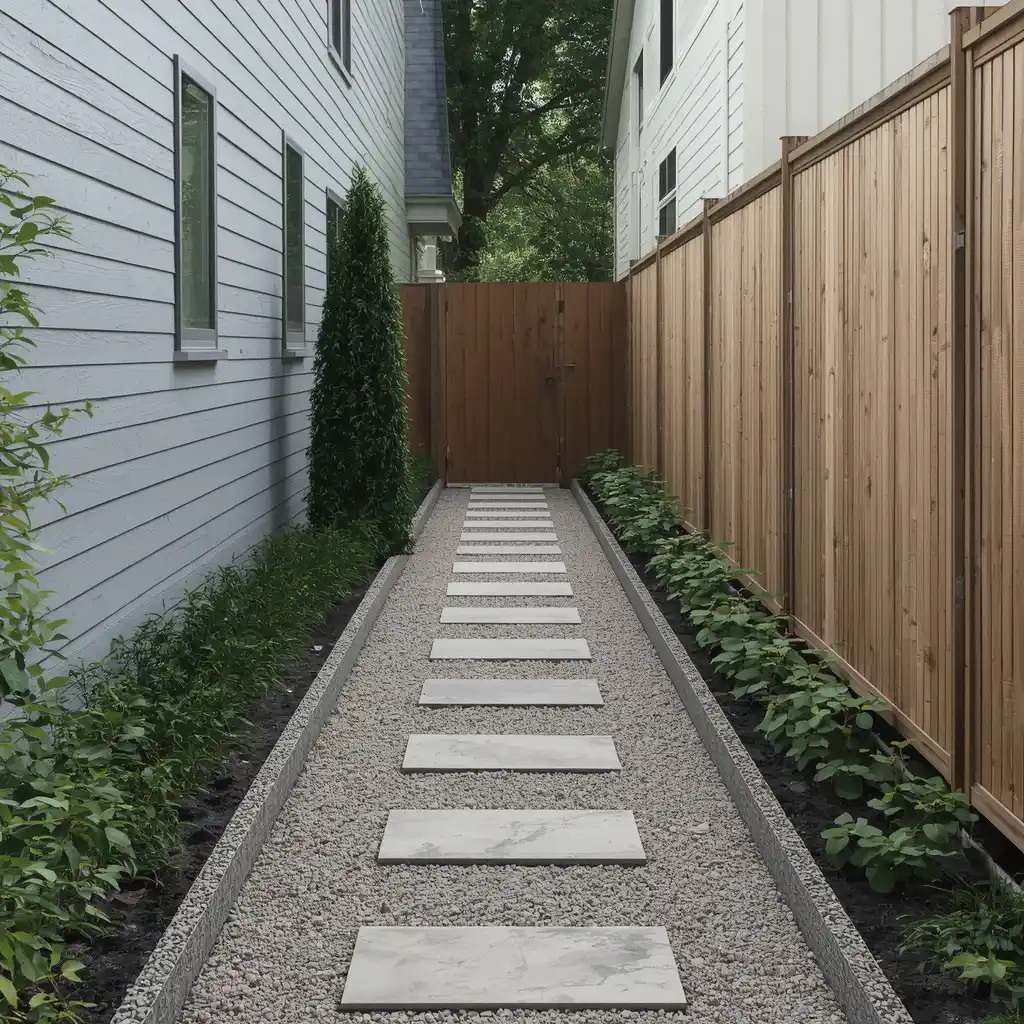
A narrow side yard often turns muddy because it gets little sun and regular foot traffic.
Best for: Side gates and routes to the backyard
Main materials: Pea gravel, stepping stones, and edging
Maintenance level: Medium
Clear weeds and loose soil first. Add a firm base if the ground is soft. Then install edging before spreading the gravel.
A path around three feet wide gives most people enough walking room. Flat stepping stones can make the surface more stable.
Pea gravel looks soft and casual, but it can move underfoot. Use strong edging and avoid placing it on a steep slope.
This is one of the simplest ways to improve a narrow side yard without installing a full paved path.
4. Frame the Mailbox With Rocks and Plants
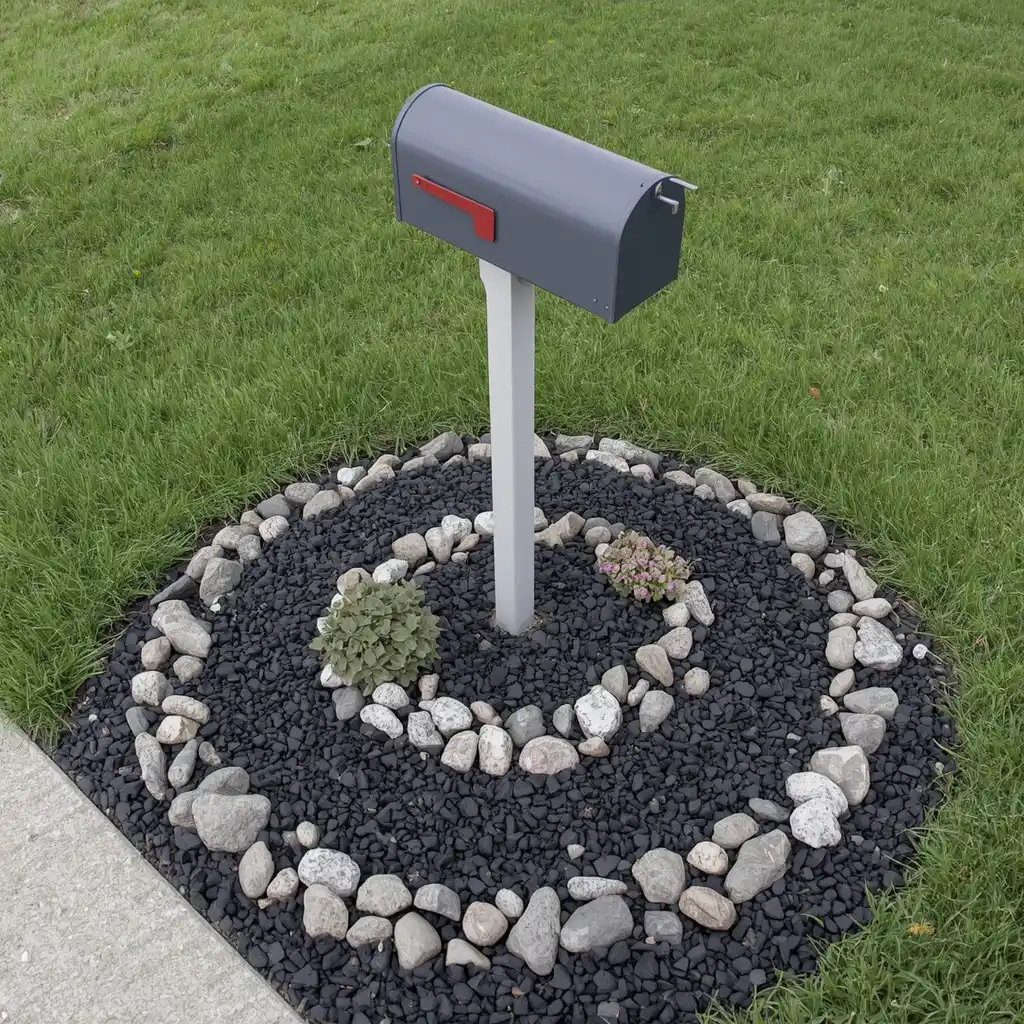
A small bed around the mailbox can make your front yard look more finished.
Best for: Plain or patchy roadside areas
Main materials: Gravel, edging, and one compact plant
Maintenance level: Low
Choose a simple circle, oval, or rectangle. Keep the shape in line with your driveway and walkway.
Use one rock color. Then add a dwarf shrub, short grass, or flowering plant.
Do not let plants block the mailbox door, house number, road view, or driver access. Check local rules before changing the area near the street.
Dark gravel with one flowering plant can create a clean look with very little care.
5. Make a Corner Rock Garden
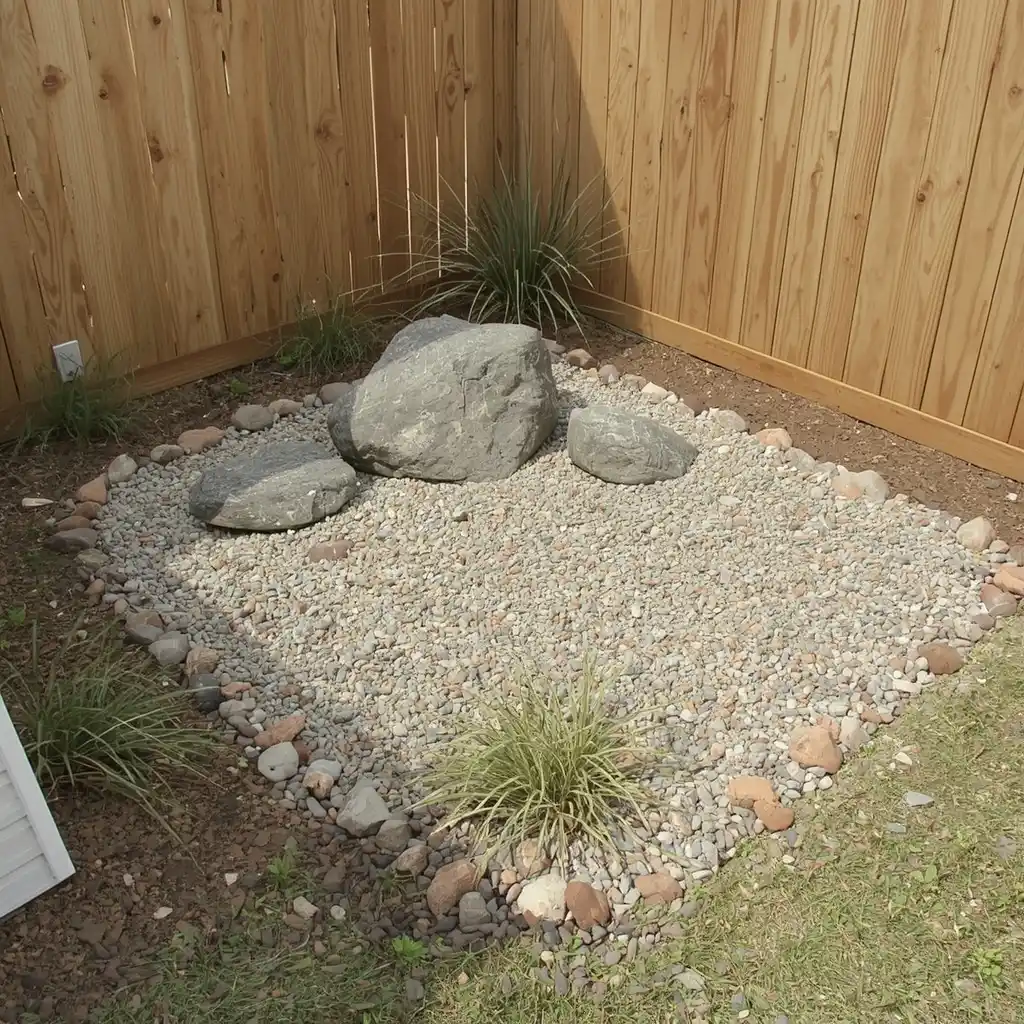
An empty corner can become a focal point without needing a large garden bed.
Best for: Fence corners, porch corners, and bare lawn edges
Main materials: One accent rock, gravel, and two or three plants
Maintenance level: Low to medium
Start with one medium stone. Place two smaller stones near it, but do not line them up.
Add plants at different heights. A dwarf grass can give height. A low ground cover can spread near the front.
Leave visible gravel between each plant. This open space keeps the corner from feeling crowded.
Small rock garden ideas often look best when the layout is uneven. A perfect row can feel stiff, while a loose group feels more natural.
6. Edge a Walkway With Contrasting Stones
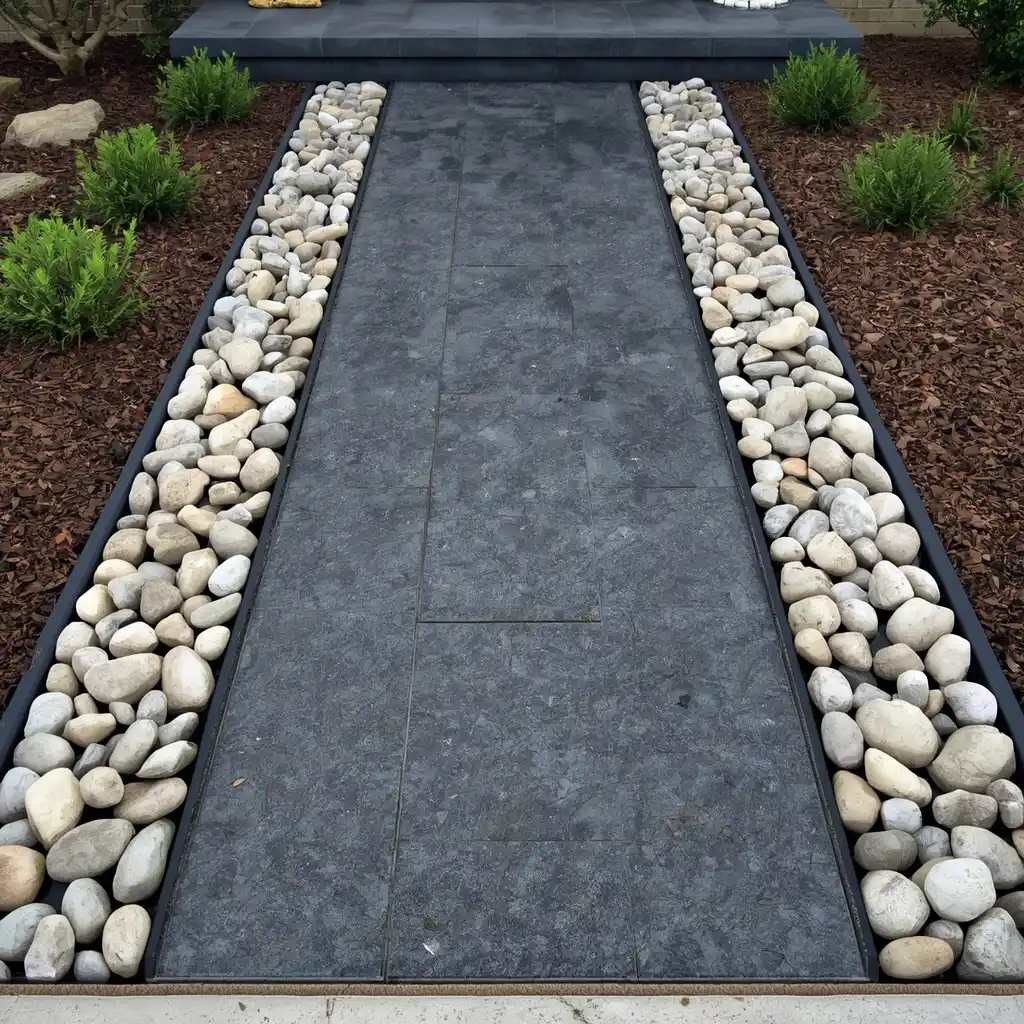
A rock border can make an old concrete or paver path look cleaner.
Best for: Front walks, garden paths, and patio edges
Main materials: Small stones and secure edging
Maintenance level: Low
Choose stones that contrast with the path. Light river rock works well beside dark pavers. Gray gravel can soften bright concrete.
Keep both sides close to the same width. This creates a balanced look.
Make sure loose stones cannot roll onto the walking surface. They may cause slips or get caught under shoes.
Avoid sharp rock near areas where people may walk barefoot.
7. Add a Rock Ring Around a Small Tree
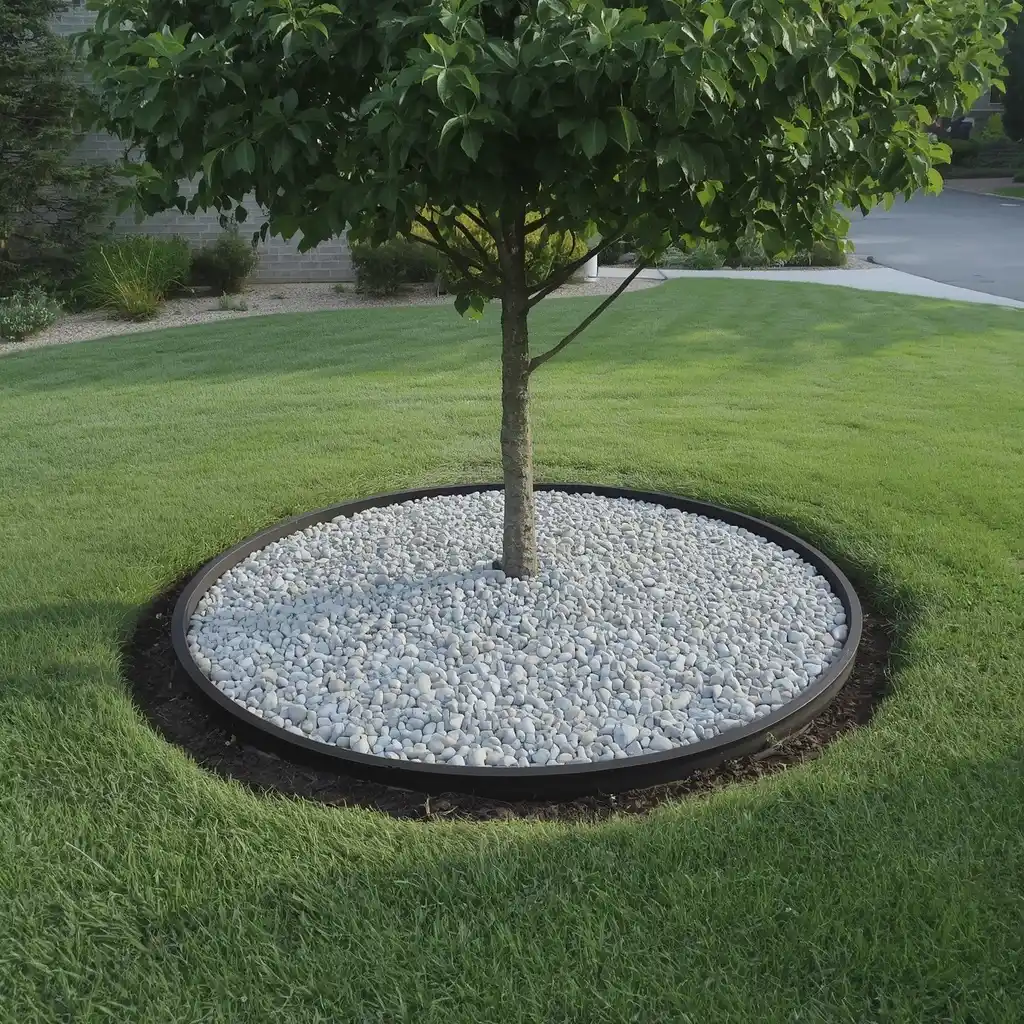
Grass often becomes thin around tree roots. A rock bed can cover the bare ground and create a clear edge.
Best for: Small ornamental trees
Main materials: Medium gravel, edging, and optional ground cover
Maintenance level: Low
Create a wide ring that fits the size of the tree. A tiny ring can look out of place.
Keep the stones away from the trunk. Do not build a deep pile around the base. The trunk needs air and should stay dry.
You can add low plants that handle shade and root competition. Check that they suit your climate and soil.
Never cut large surface roots to create a perfect circle.
8. Turn an Empty Corner Into a Gravel Seating Nook
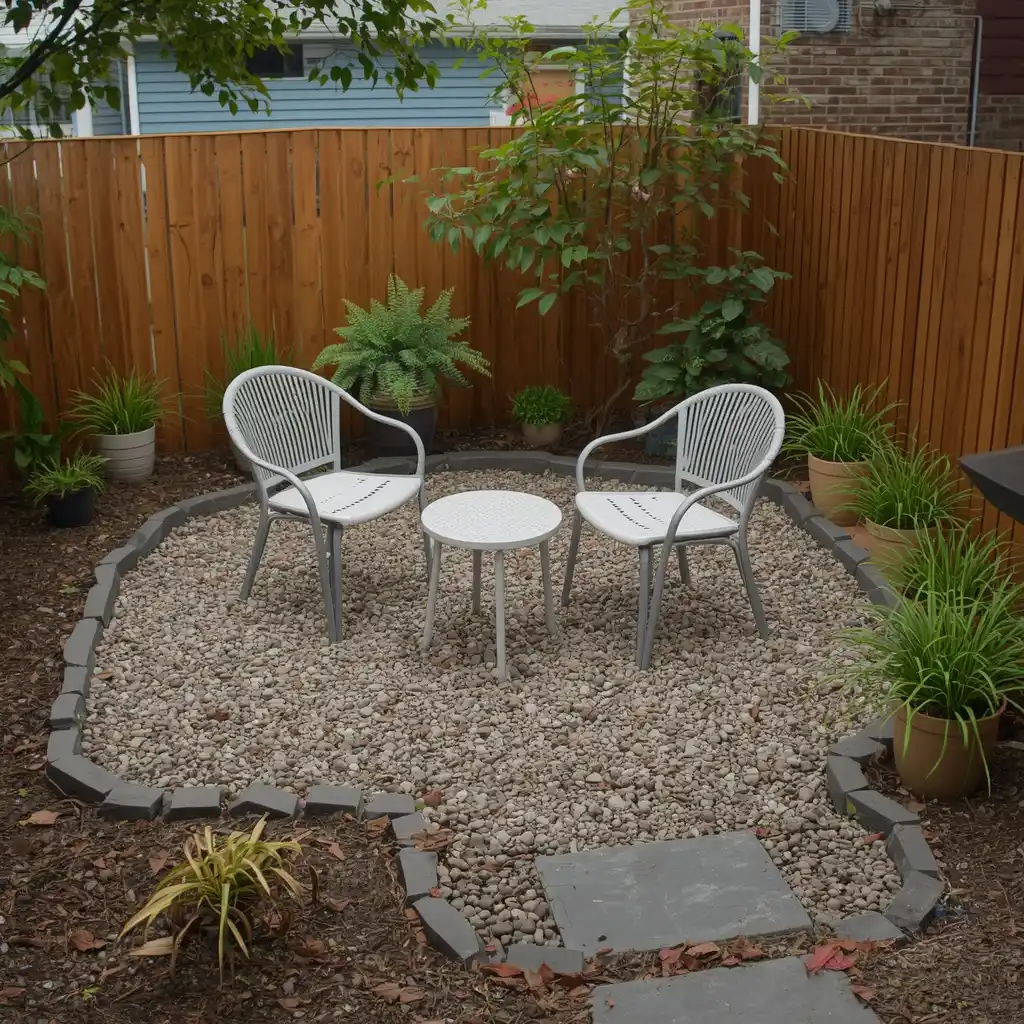
You can create a small seating area without paying for a full stone patio.
Best for: Backyard corners and areas beside a garden
Main materials: Firm gravel, edging, two chairs, and a small table
Maintenance level: Medium
A 6-by-8-foot space may be large enough for two chairs and one small table.
Level the ground and prepare a firm base. Choose angular gravel or decomposed granite so chair legs do not sink as easily.
Add strong edging around the space. Use pots instead of wide garden beds to save room.
Test the area with your chairs before finishing the shape. Make sure you can sit, stand, and move around without stepping into plants.
9. Create a Rain-Chain Rock Basin
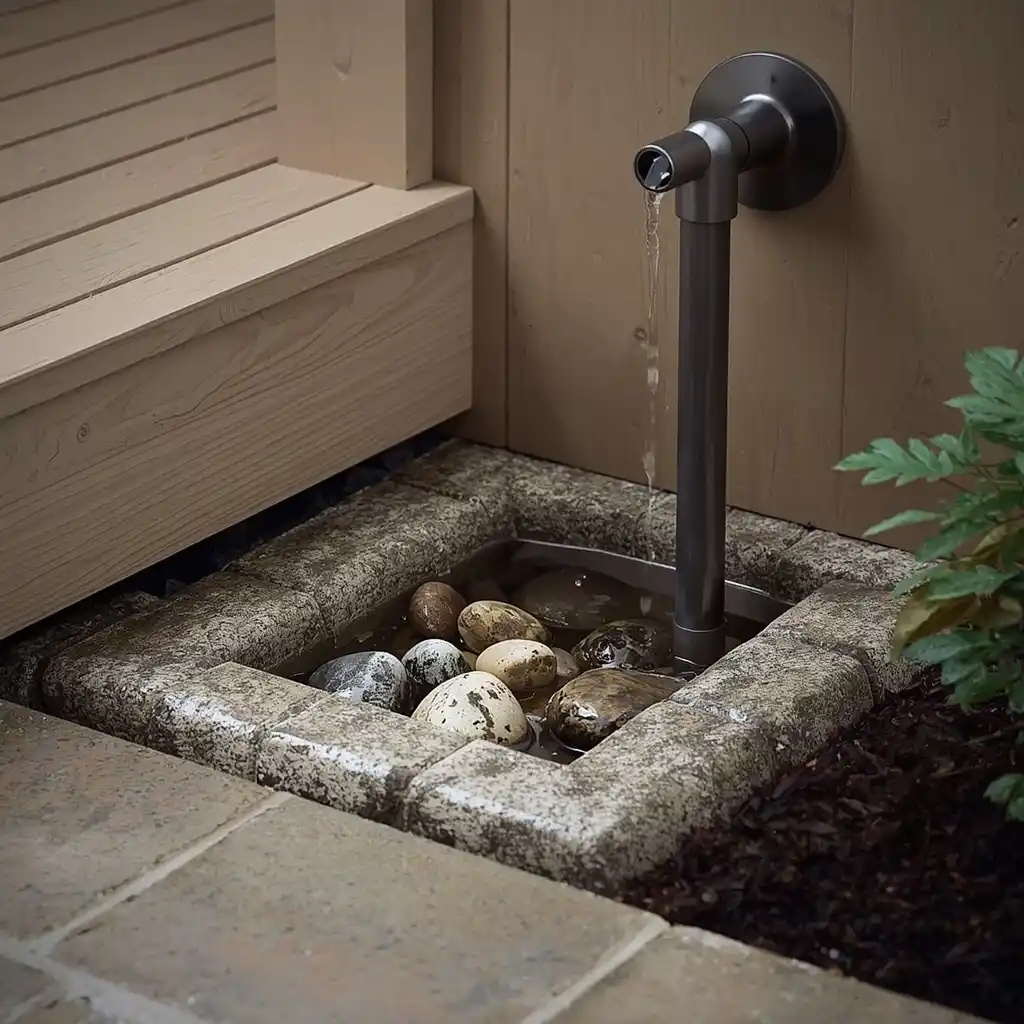
A stone basin can catch splashing water below a rain chain or roof outlet.
Best for: Small spaces beside porches and gutters
Main materials: Smooth stones, a shallow basin, and drainage material
Maintenance level: Medium
Dig a shallow bowl and fill it with smooth stones in mixed sizes. The rocks can slow the water and reduce mud.
Make sure the basin has a safe overflow path. Water should move away from the foundation instead of collecting beside it.
One moisture-loving plant can soften the edge, but keep the plant clear of strong water flow.
Check the basin during heavy rain. Small changes may be needed after you see how the water moves.
10. Improve the Strip Beside Your Driveway
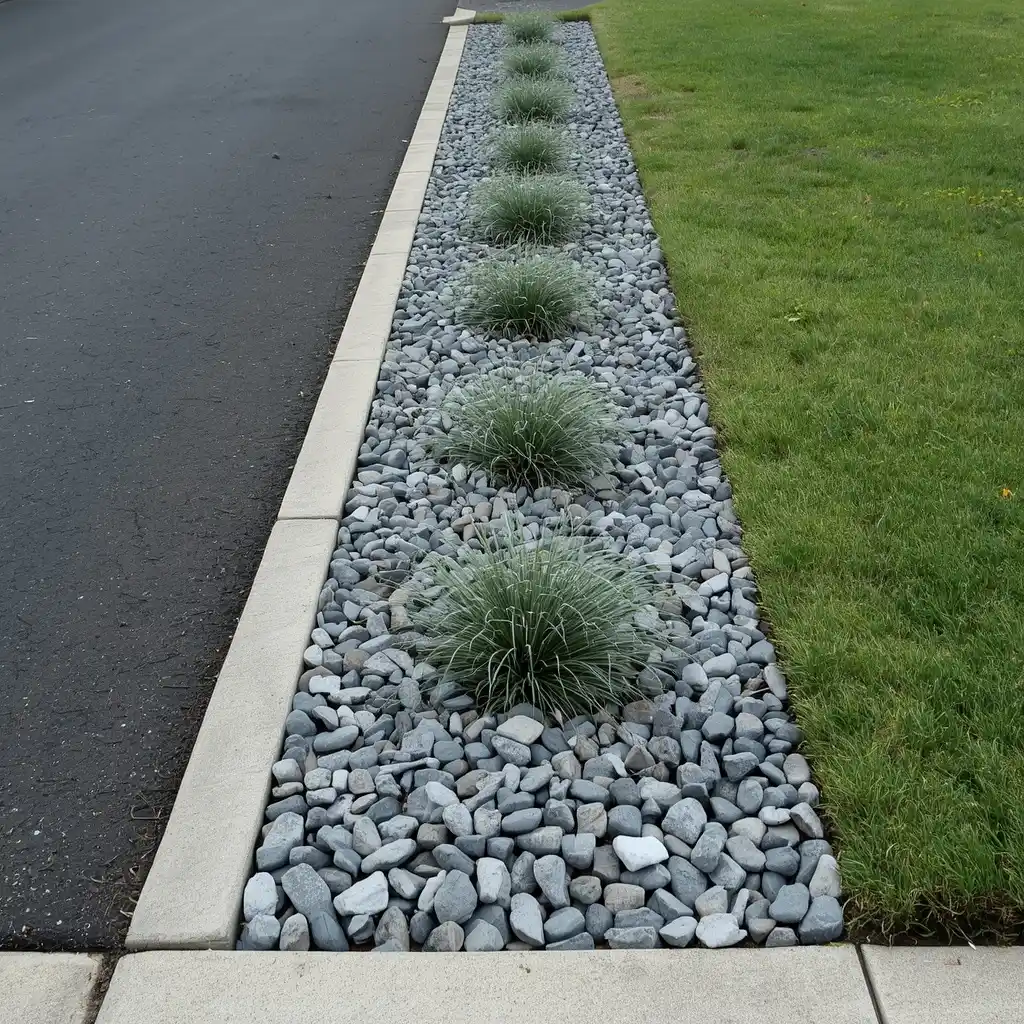
The narrow strip beside a driveway often suffers from tires, heat, foot traffic, and road dirt.
Best for: Damaged lawn edges
Main materials: Crushed stone, strong edging, and low plants
Maintenance level: Low
Use stone that stays in place. Round gravel may roll onto the driveway. Crushed stone is often a better choice.
Install firm edging between the rock and the drive. Keep plants low so they do not block your view when backing out.
Three evenly spaced grasses can add life without creating a crowded bed.
This type of small front yard rock landscaping can also reduce the need to repair worn grass each season.
11. Build Low Rock Terraces on a Short Slope
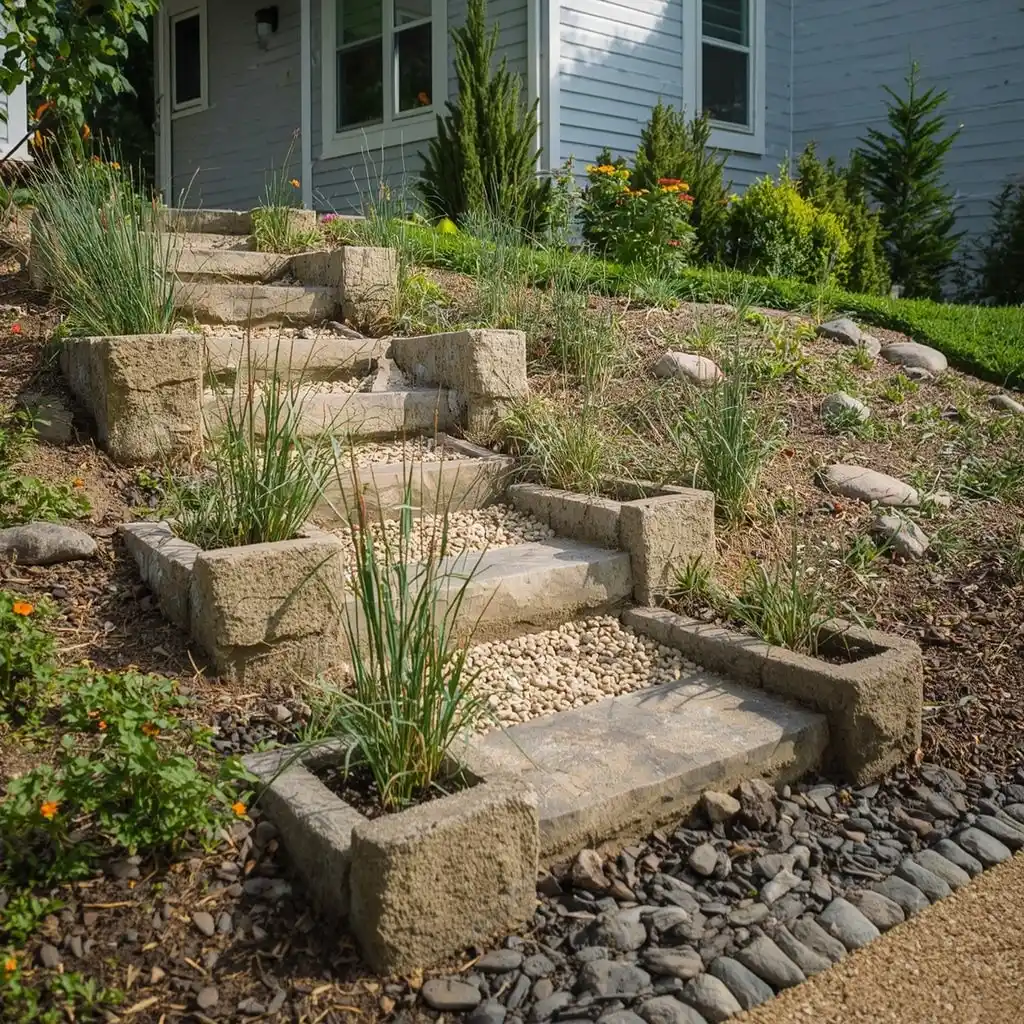
A short slope may be hard to mow and quick to lose soil during rain.
Best for: Small banks and raised garden edges
Main materials: Flat stones, gravel, and spreading plants
Maintenance level: Medium to high
Break the slope into two or three low levels. Each level should create a small flat planting pocket.
Use stones that sit firmly against the soil. Add plants with spreading roots to help hold the ground.
Plan where rainwater will move. A terrace should slow water, not send it into a new problem area.
Tall retaining walls need safe building methods and may need permits. Get expert help when the slope is steep or the wall will carry heavy soil.
12. Add a Gravel Strip Below the Roof Drip Line
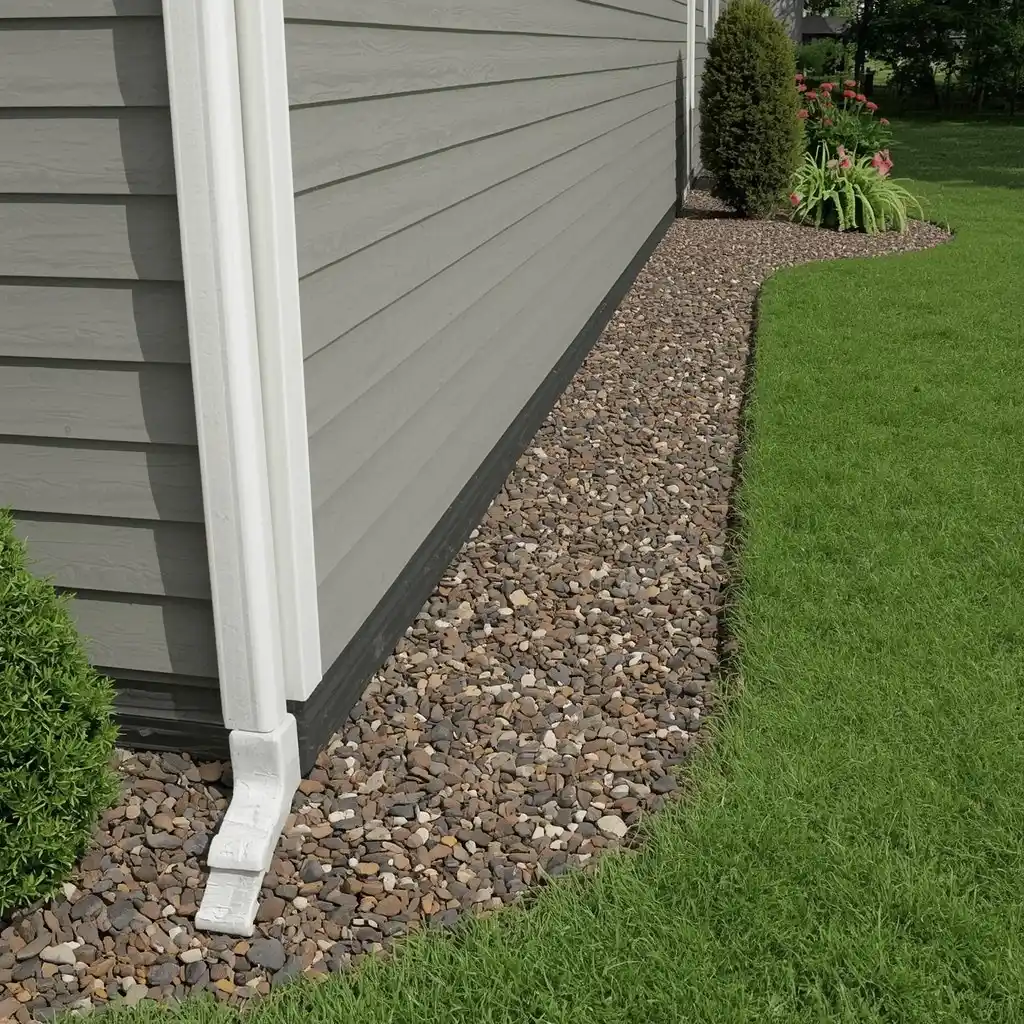
Rain falling from a roof can create mud and splash dirt onto walls.
Best for: Roof edges without gutters and narrow house borders
Main materials: Medium or large gravel and edging
Maintenance level: Low
Create a slim gravel strip below the roof edge. Use larger stones where the water hits hardest.
The ground should slope away from the house. The gravel strip should not hold water beside the foundation.
Keep stones away from plant crowns. Strong water flow and wet rock can damage soft growth.
A gravel drip line looks simple, but drainage comes first. Watch the area during rain before adding plants.
13. Plant a Small Succulent Rock Bowl
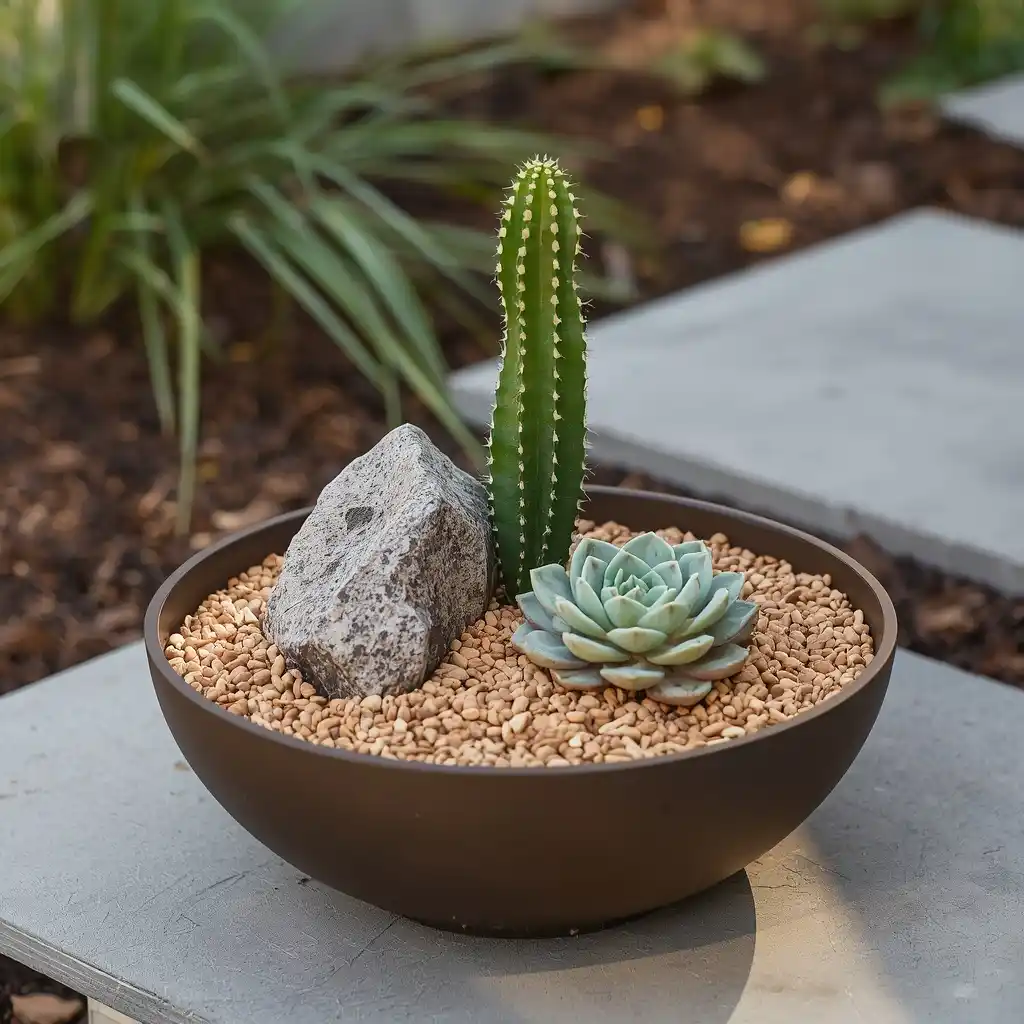
A rock bowl gives renters and small-space owners a garden they can move.
Best for: Patios, balconies, steps, and rental homes
Main materials: Wide pot, fast-draining soil, succulents, and fine gravel
Maintenance level: Low
Choose a wide container with drainage holes. Fill it with a soil mix made for plants that need quick drainage.
Use two or three plants with different shapes. You might pair one upright plant with one low, spreading type.
Add a thin gravel layer on top. Do not use a deep layer that keeps the soil wet.
Move the bowl to shelter during freezing weather or long periods of heavy rain when the plants need protection.
14. Combine Rocks and Mulch in One Bed
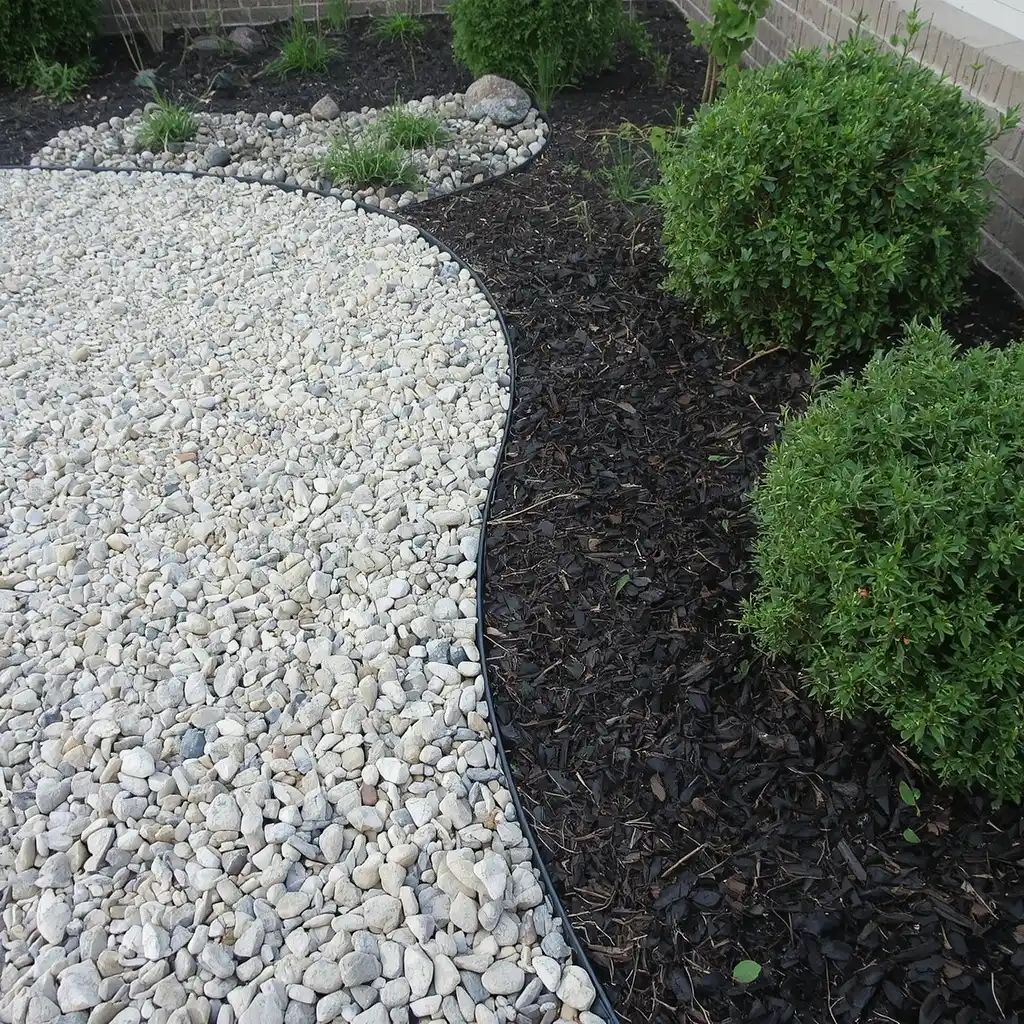
You do not have to cover the full bed with stone. Rock and mulch can do different jobs in the same space.
Best for: Mixed shrub beds and areas with drainage problems
Main materials: Gravel, mulch, edging, and plants
Maintenance level: Medium
Use rock beside a path, downspout, or wet edge. Use mulch around plants that prefer cooler soil.
Separate the two materials with edging. Without a clear border, the mulch and stone will mix.
Limit the design to two main colors. Dark mulch with pale gravel often creates a clear contrast.
Repeat the same pattern in another small area to help the yard feel connected.
15. Mix Square Pavers With Gravel
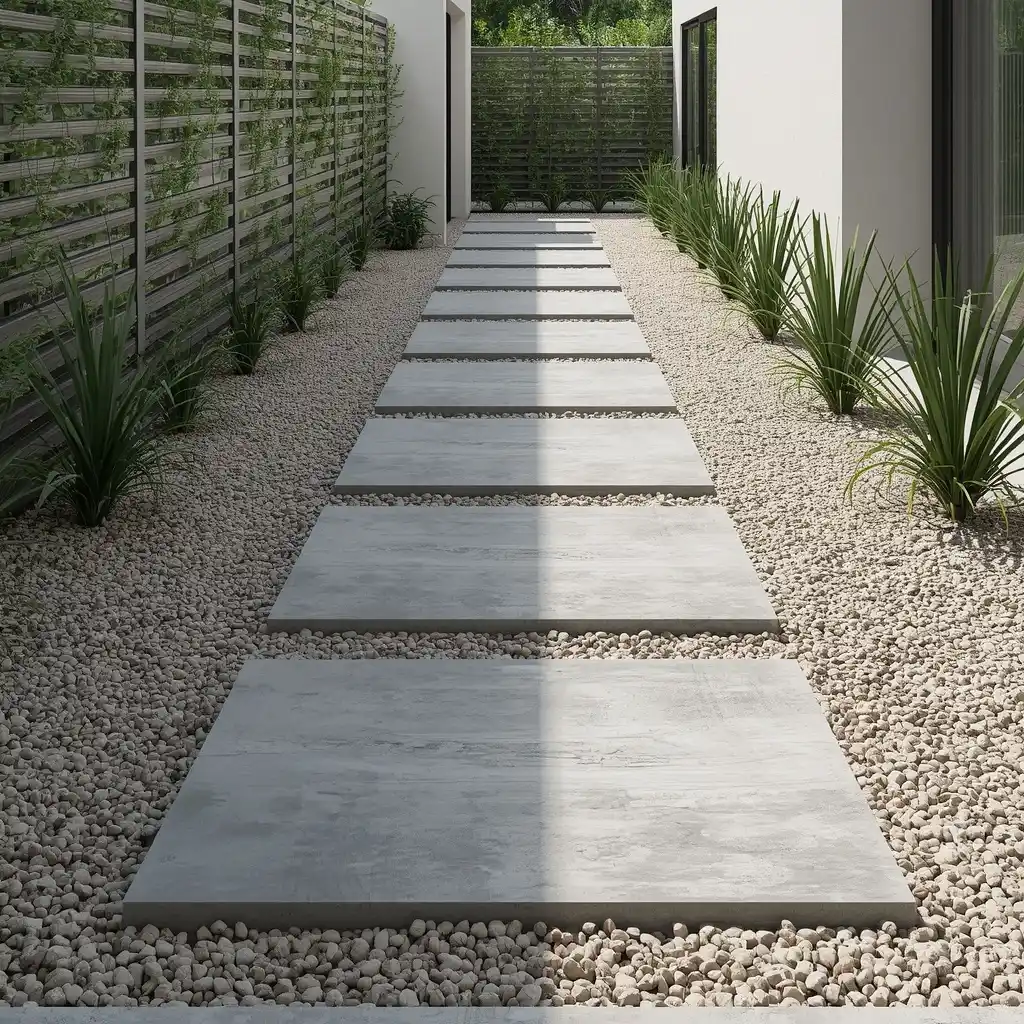
Square pavers and gravel can make a small area look neat and modern.
Best for: Short paths, front entrances, and compact patios
Main materials: Large pavers, gravel, and a firm base
Maintenance level: Medium
Place the pavers in a simple grid. Keep the gaps even and fill them with gravel.
A flat, firm base is important. Uneven pavers can rock underfoot and collect water.
Use fewer, larger pavers instead of many tiny pieces. Large shapes can make a narrow space feel wider.
This idea works well near homes with straight lines, simple colors, and modern details.
16. Design a Mini Zen-Inspired Rock Garden
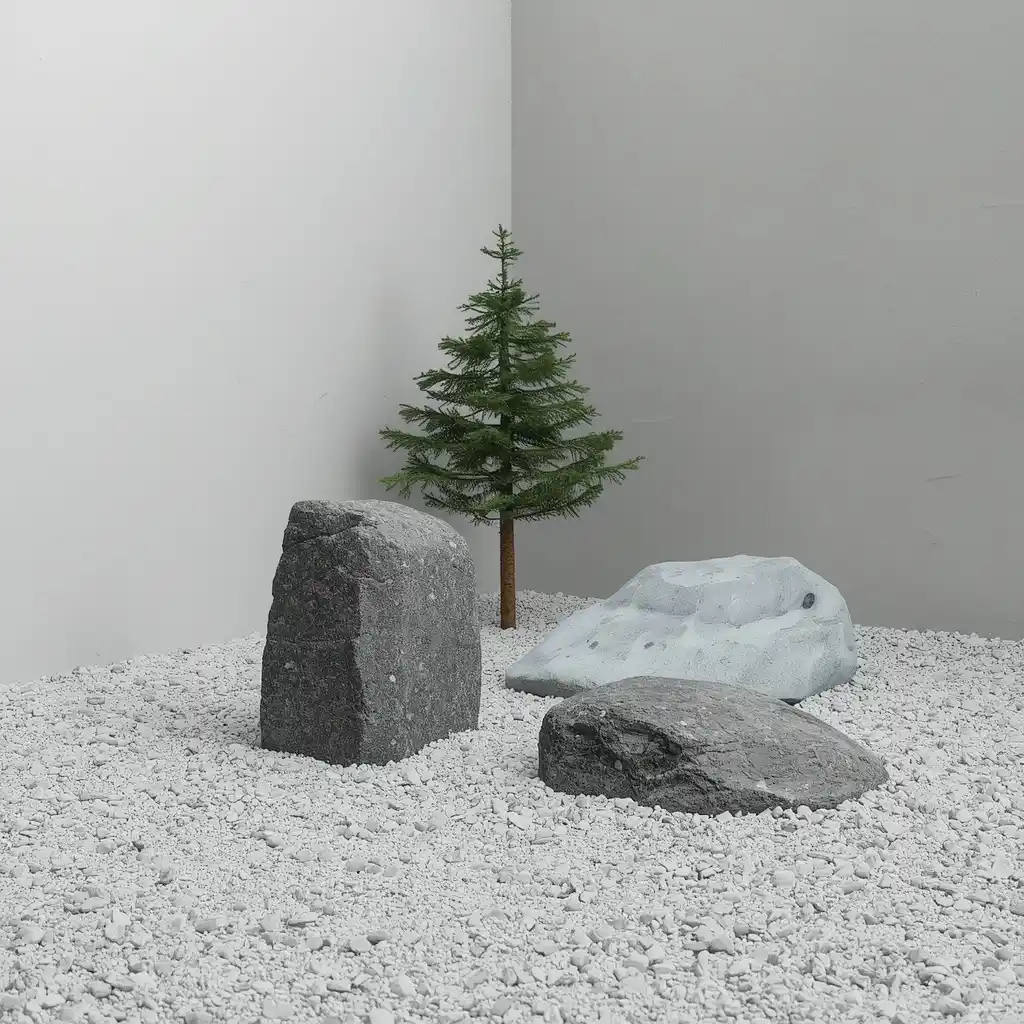
A quiet rock arrangement can fill a small bed without adding many plants.
Best for: Calm corners, patios, and small entry gardens
Main materials: Three rocks, fine gravel, and one compact plant
Maintenance level: Low
Choose three stones with different heights. Place them in a loose group rather than a straight line.
Spread pale or gray gravel around them. Add one small grass or compact evergreen if the area needs color.
Leave open space. The empty parts are a key part of the design.
Avoid filling the bed with statues, lanterns, and many plant types. These small rock landscaping ideas work because the design stays simple.
This is a Zen-inspired home feature. It is not the same as a traditional Japanese garden with cultural and historic meaning.
How to Install Landscape Rocks in 8 Clear Steps
Good ground work keeps stones from sinking, spreading, or mixing with soil.
1. Mark the Area
Use a garden hose for curves. Use string, chalk, or marking paint for straight lines.
Step back and view the shape from several angles.
2. Measure the Space
Measure the length and width. Decide how deep the stone layer needs to be.
Use this basic formula:
Length × width × depth = cubic volume
Make sure every number uses the same unit. A local gravel calculator can help you convert the result into cubic feet or cubic yards.
3. Remove Grass and Weeds
Clear the top growth and remove thick roots. Do not place rock over active grass because it may grow through the new layer.
4. Check the Slope
Water should move away from your home. Fix low spots before adding stone.
5. Install Edging
Place edging before the rock. It will hold the shape and reduce spreading.
6. Prepare the Base
A path or seating area needs a firmer base than a simple garden bed. Compact the ground where people will walk or sit.
7. Place Plants and Large Rocks
Set large items first. This makes it easier to adjust the layout.
Keep rocks clear of tree trunks and plant stems.
8. Spread the Gravel
Add an even layer and rake it smooth. Rinse dusty decorative stone when the product allows it.
Check the finished area after the first heavy rain. Watch for low spots, moving stones, and trapped water.
How to Keep Rock Landscaping Clean and Weed-Free
Rock landscaping still needs care. The work is usually light, but ignoring it can lead to weeds and dirty stone.
Install edging first. A strong border keeps gravel out of the lawn, path, and driveway.
Remove leaves before they break down. Old leaves can settle between stones and turn into a thin layer of soil. Weeds can then grow in that soil.
Pull small weeds as soon as you see them. Young roots are easier to remove.
A leaf blower can help, but use a low setting. Strong air may move fine gravel.
Rake the area when stones collect in one spot. Add more rock when the ground starts to show through.
Landscape fabric may help under some gravel paths and beds without plants. It does not stop all weeds forever. Dust, soil, and leaves can collect above it.
Fabric can also make future planting harder. Check advice from a local garden or extension service before using it in a planted bed.
A few minutes of regular care is easier than cleaning a bed that has been ignored for a full season.
8 Rock Landscaping Mistakes That Make Small Yards Look Worse
Small spaces show every design mistake. A busy bed may make the full yard feel smaller.
1. Using Too Many Rock Colors
Choose one main stone color. Add a second material only when it has a clear job.
2. Picking Rocks That Are Too Large
One large focal rock may work. Several large boulders can take over the whole space.
3. Skipping Edging
Loose gravel will spread into grass and paths without a strong border.
4. Blocking Water Flow
Do not build a stone bed that sends rainwater back to your house.
5. Piling Rocks Against Plants
Keep stones away from trunks, stems, and plant crowns. Deep rock may hold heat or moisture where plants do not need it.
6. Using Round Gravel on a Slope
Smooth gravel can roll and shift. Choose a material with better grip for sloped paths.
7. Covering Every Open Area
A mix of plants, stone, and open space often looks better than a yard covered from edge to edge.
8. Forgetting About Heat
Dark rocks can become hot in strong sun. Check the needs of nearby plants before using them in a sunny bed.
A simple plan often works best. Use one rock color, one focal point, and a small group of plants.
Frequently Asked Questions About Small Rock Landscaping
What Size Rock Works Best in a Small Yard?
Fine or medium gravel fits most small beds and paths. It fills narrow spaces without looking too heavy. You can add one larger stone as a focal point.
Match the size to the job. Drainage areas may need larger rock than a decorative garden border.
How Deep Should Landscaping Rock Be?
The right depth depends on the stone, the base, and how you will use the area.
A decorative bed does not need the same base as a path or seating area. Check the stone supplier’s coverage guide before placing your order.
Should Landscape Fabric Go Under Rocks?
Fabric may help under some paths and gravel-only spaces. It can slow weeds that grow from the soil below.
Still, new weeds may grow in dirt that collects above the fabric. It can also make future planting harder.
Use it only when it fits the purpose of the area.
Is Rock Landscaping Cheaper Than Mulch?
Rock often costs more at the start. It may stay in place for many years.
Mulch often costs less at first, but it breaks down and needs to be replaced. Local prices, delivery fees, and bed size will affect the final cost.
What Plants Grow Well in a Small Rock Garden?
Good choices may include dwarf grasses, sedums, creeping thyme, small evergreens, and dry-climate perennials.
The best plant depends on your sun, soil, rainfall, and winter weather. Check local growing advice before buying.
Make One Small Area Work Better
You do not need to change your full yard at once. Start with one area that causes trouble.
Measure the space. Decide what it needs to do. Then choose a rock size, border, and small group of plants that fit that job.
Keep the design simple. Prepare the base well. Plan where water will go. Leave clear space around tree trunks and plant stems.
The best small rock landscaping ideas make a limited yard feel cleaner, more useful, and easier to care for. Pick one muddy strip, bare corner, or worn path and turn it into a space that works better for you.