
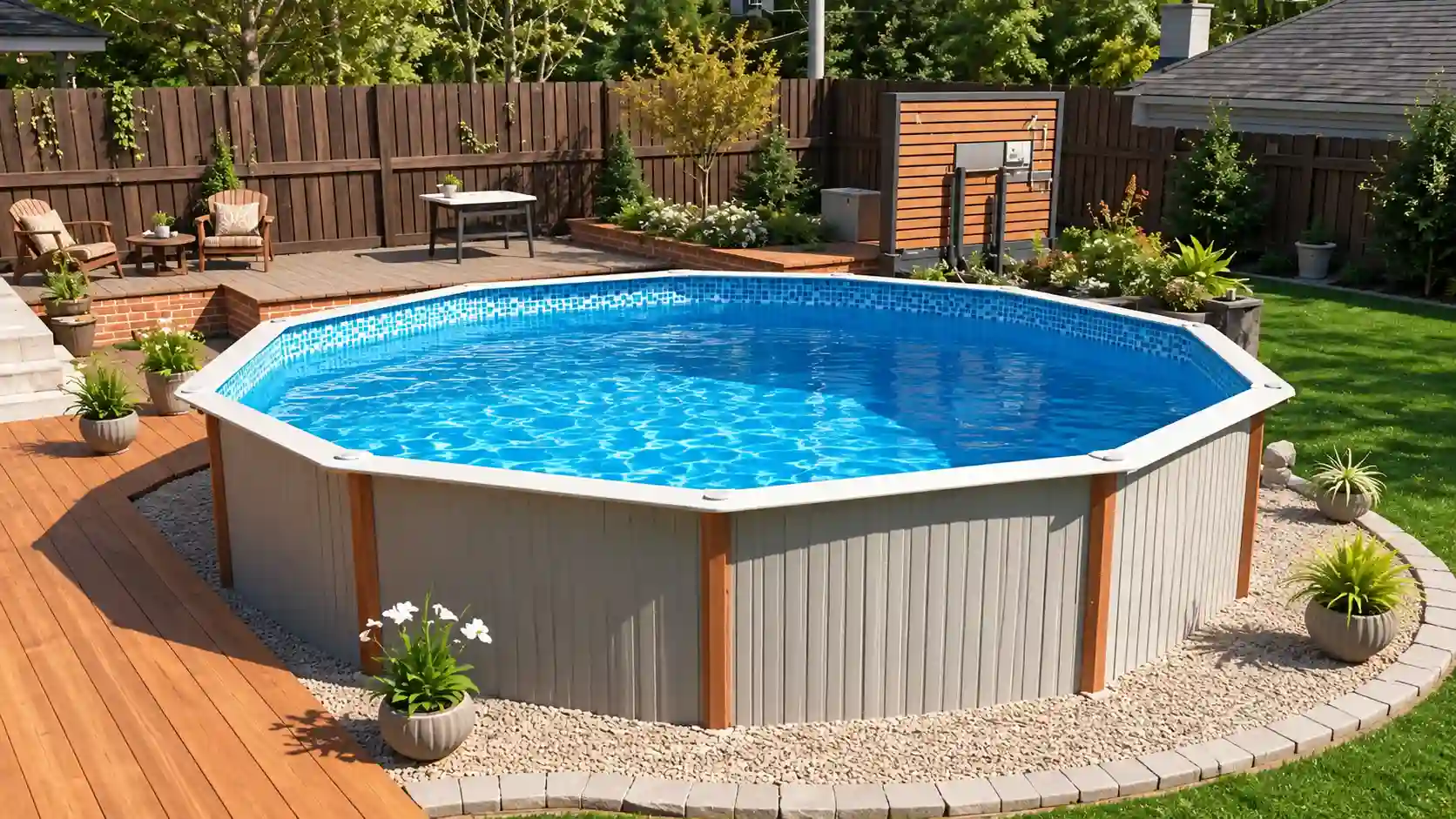
A bare pool deck can make even a beautiful swimming pool feel unfinished. You may have too much concrete, little privacy, poor shade, or plants that fill the water with leaves.
The wrong choices can also create more work. Loose mulch may wash into the pool. Sharp plants can make narrow paths unsafe. Large roots may lift nearby paving.
These pool landscaping ideas will help you add privacy, shade, color, and comfort without making your pool harder to maintain. You will find options for inground pools, above-ground pools, small yards, and large outdoor spaces.
Some ideas require professional work. Others can be completed with pots, gravel, plants, or a few outdoor lights.
Start with the problem that bothers you most. You may need privacy from a nearby house. You may need a shaded place to sit. You may simply want the pool to feel connected to the rest of your yard.
A clear goal will help you spend your money in the right places.
How to Plan Pool Landscaping Without Making Costly Mistakes
A good-looking plan can still fail when it ignores drainage, walking space, or plant size. Plan the layout before buying plants or building new features.
Start by watching how people use the area. Look at the path from the house to the pool. Check how guests reach the seating area, gate, outdoor shower, and pool equipment.
These paths should stay open and easy to use.
Next, study the space at different times of day. Mark the areas that receive full sun, deep shade, strong wind, or standing water. A plant that grows well in one corner may struggle in another.
Draw a simple plan of the yard. Add the pool, deck, doors, fence, equipment, and current planting beds. You do not need special design software. Graph paper works well.
Use a garden hose to mark the shape of new beds. Then walk around the area. Make sure the beds do not make paths too narrow.
Before landscaping around a pool, check:
- The mature size of each plant
- How much litter the plant drops
- Whether roots may spread near paving
- How water drains after heavy rain
- Access to pumps, filters, and pipes
- Local rules for fences and structures
- The location of underground lines
Your pool area landscaping should support safe movement and easy cleaning. Good planning also keeps you from moving plants or rebuilding beds later.
1. Add Layered Plants for More Pool Privacy
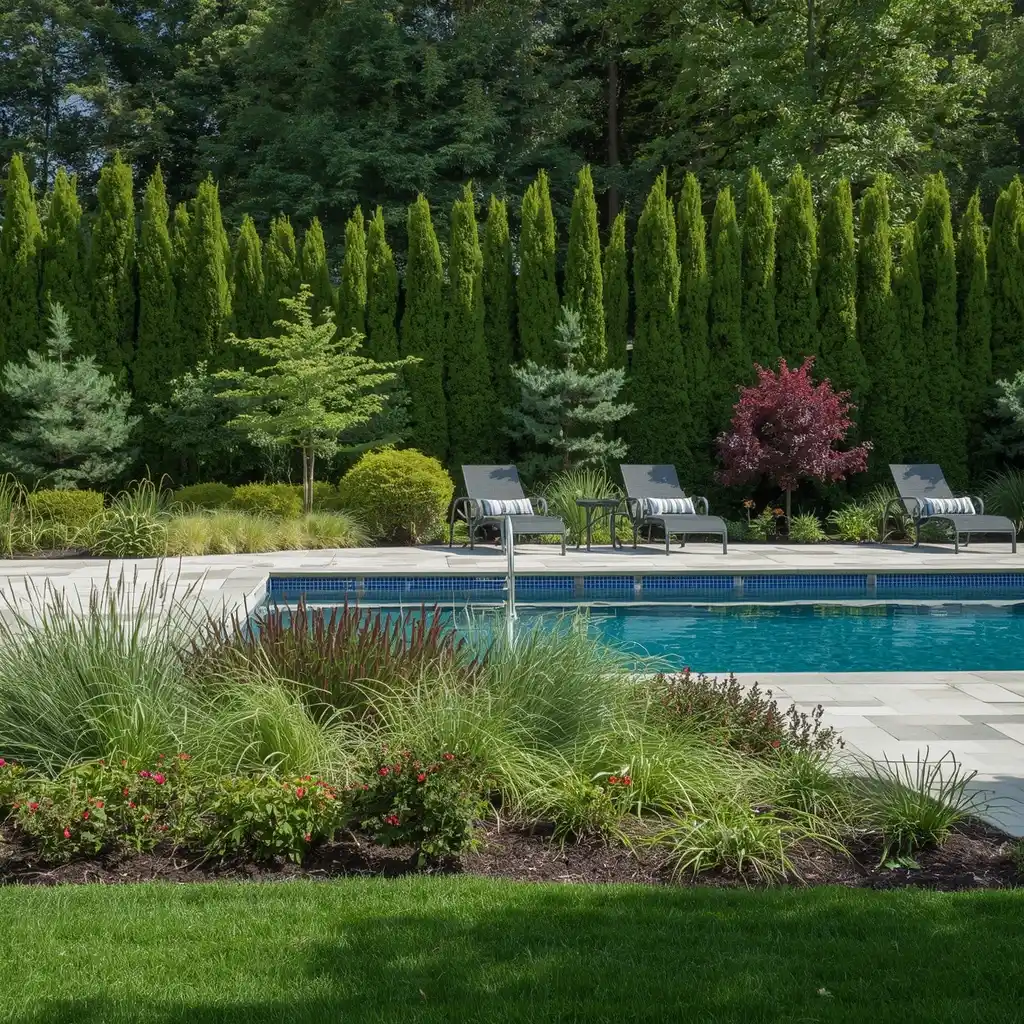
A pool does not feel relaxing when neighbors can see every part of it. A layered planting screen can create privacy without making the yard feel boxed in.
Start with tall plants at the back. Add medium shrubs in front of them. Finish with low grasses or ground cover near the edge.
This creates a soft screen with more depth than one straight hedge.
Possible plant groups include:
- Podocarpus with low ornamental grasses
- Narrow evergreen trees with compact shrubs
- Boxwood in front of taller screening plants
- Clumping bamboo inside a root-controlled bed
Evergreen plants can provide coverage during every season. Still, you should check how each plant performs in your climate.
Leave enough space behind and between the plants for trimming. Avoid placing a dense hedge against the pool deck. You need room to remove leaves and care for the plants.
For better backyard pool landscaping, stagger the plants instead of placing them in one flat line. The result will look more natural and cover more viewing angles.
2. Pick Low-Litter Plants to Spend Less Time Cleaning
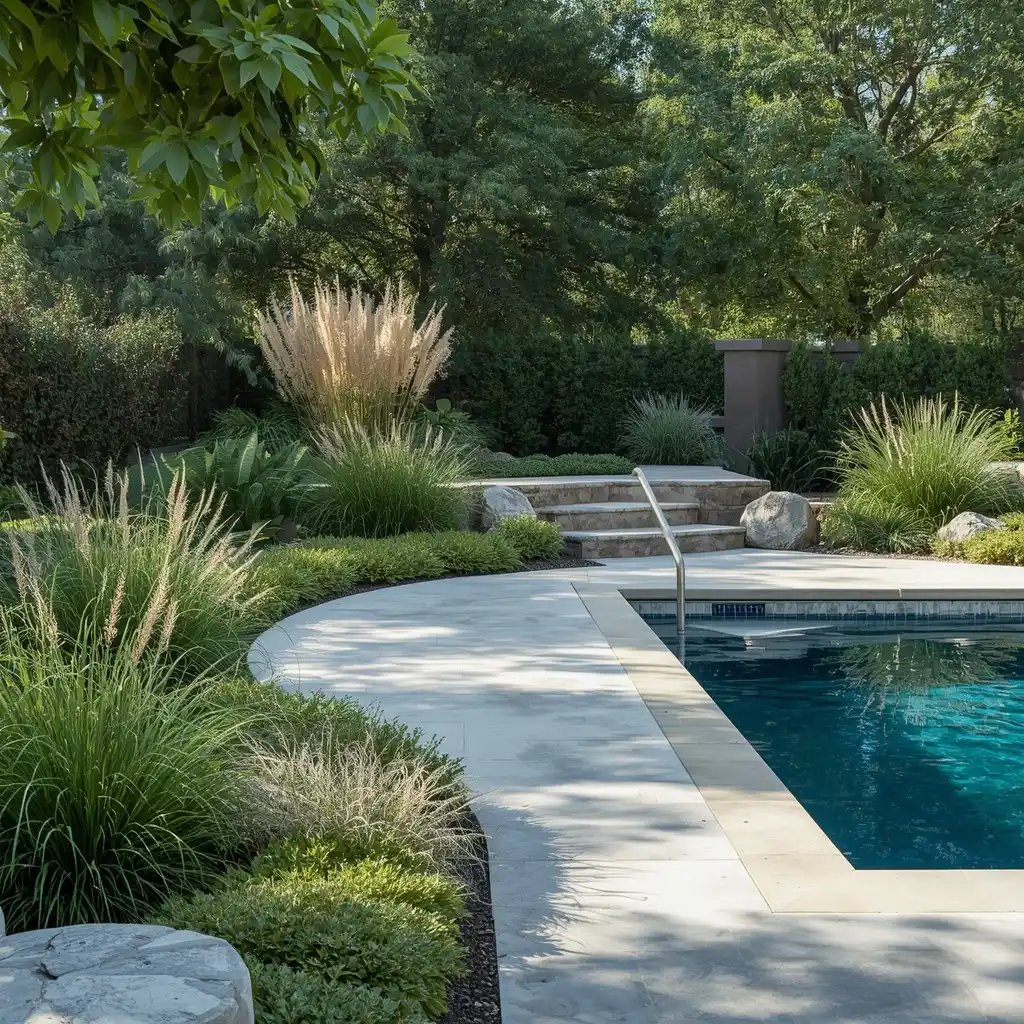
The wrong plant can add hours of pool cleaning. Flowers, berries, seeds, and small leaves may fall into the water every day.
Choose plants that keep their shape and produce little litter. Soft leaves are also safer near people wearing swimsuits or walking barefoot.
Good options may include:
- Dwarf mondo grass
- Liriope
- Podocarpus
- Pittosporum
- Compact palms
- Clumping ornamental grasses
Plant needs change by climate. A low-maintenance plant in one region may struggle in another. Ask a local nursery which plants stay clean and healthy in your area.
Avoid placing fruit trees beside the pool. Fallen fruit can stain paving, attract insects, and create slippery spots.
Thorny plants are also a poor choice near paths and seating. Keep roses, cactus, and sharp-leaved plants away from busy areas.
Low-maintenance pool landscaping starts with plants that fit the site. Choose based on mature size, root growth, water needs, and seasonal cleanup.
3. Soften Hard Pool Edges With Ornamental Grasses
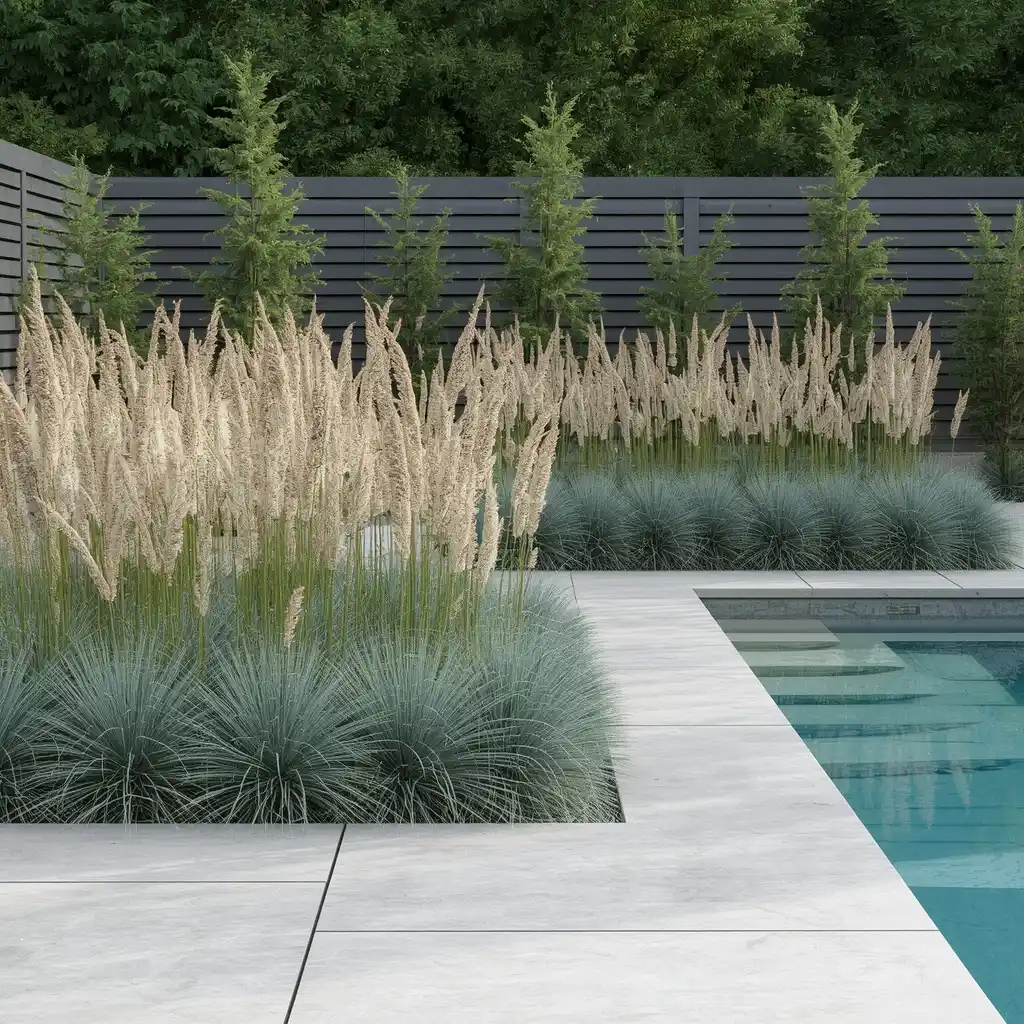
Large areas of concrete can make a pool feel cold and plain. Ornamental grasses add movement, texture, and color without taking up much space.
Use clumping grasses because they are easier to control. Spreading grasses may move into paths, lawns, or other planting beds.
Popular options include:
- Muhly grass
- Blue fescue
- Feather reed grass
- Fountain grass
- Lomandra in suitable regions
Plant grasses in groups of three, five, or seven. A group looks fuller and more planned than single plants placed far apart.
You can also mix heights. Place taller grass near a fence or wall. Add shorter grass along the front of the bed.
Check how large each type becomes. A grass that looks small at the nursery may become several feet wide.
Some grasses need to be cut back once a year. Others may drop dry blades during certain seasons. Learn the care needs before planting them close to the water.
This idea works well in modern pool landscaping because it softens straight lines without hiding them.
4. Build Raised Planters to Add Height and Structure
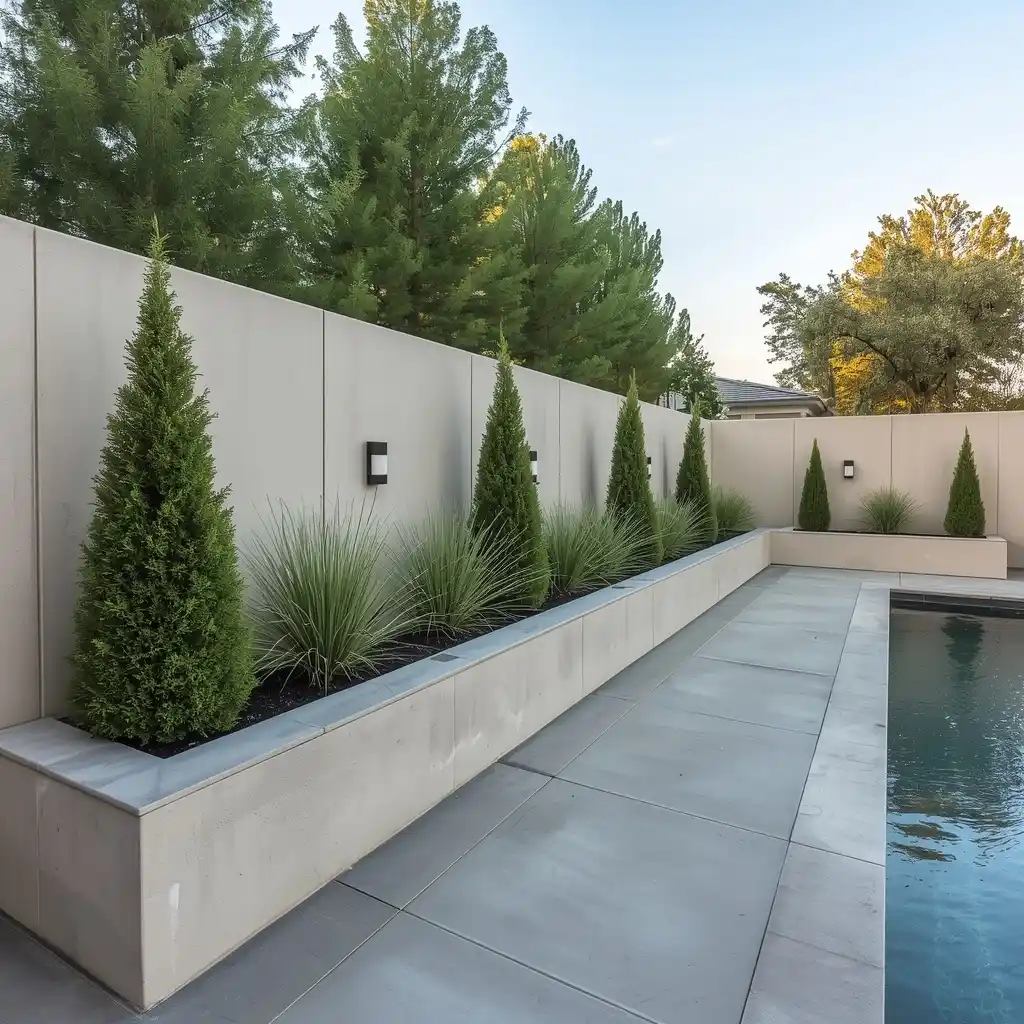
A flat pool area can look empty, even when it has plenty of paving. Raised planters add height and help break up wide areas of concrete.
They also work well when there is little open soil near the pool. A narrow raised bed can fit along a blank fence, behind a bench, or beside a seating area.
Possible materials include:
- Natural stone
- Brick
- Concrete block with stucco
- Wood-look composite boards
- Lined metal planters
Choose a material that matches the house or pool deck. Too many unrelated finishes can make the space feel busy.
Plan the drainage before filling the bed with soil. Water should not collect inside the planter or run across the pool deck.
You may also need a drip irrigation line. Watering a large raised bed by hand can become tiring during hot weather.
Keep the planter away from equipment doors and service paths. Leave enough room to trim plants and clean around the base.
A raised bed can also form the back of a built-in bench. This saves space while adding plants and seating to the same area.
5. Use Large Pots When You Cannot Add New Beds
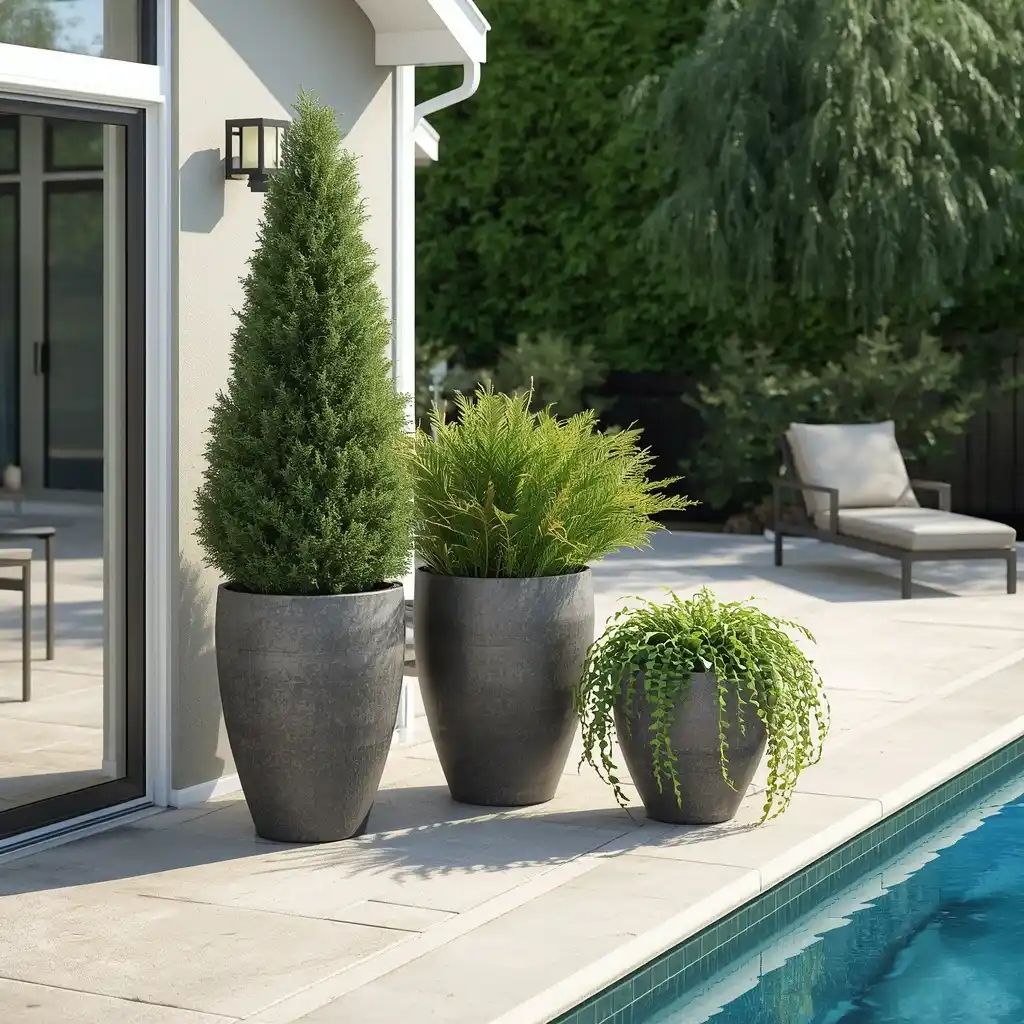
Large pots are one of the easiest small pool landscaping ideas. They add color without digging into the yard or changing the pool deck.
This makes them useful for renters, small patios, and finished spaces.
Use two or three large containers instead of many small pots. Small pots dry out fast and can make the area look cluttered.
A simple container can include:
- One tall plant for height
- One medium plant for fullness
- One trailing plant around the edge
Place matching pots on each side of a gate, pool step, or outdoor shower. This creates balance and gives the area a clear focal point.
Make sure each pot has drainage holes. Place a protective base under the pot if water may stain the deck.
Choose heavy containers for windy spaces. Lightweight plastic pots may tip over during storms.
Do not place pots in narrow walking areas. Leave enough room for people carrying towels, toys, and food.
Large containers also let you move sensitive plants indoors during cold weather.
6. Create a Tropical Look Without Crowding the Pool
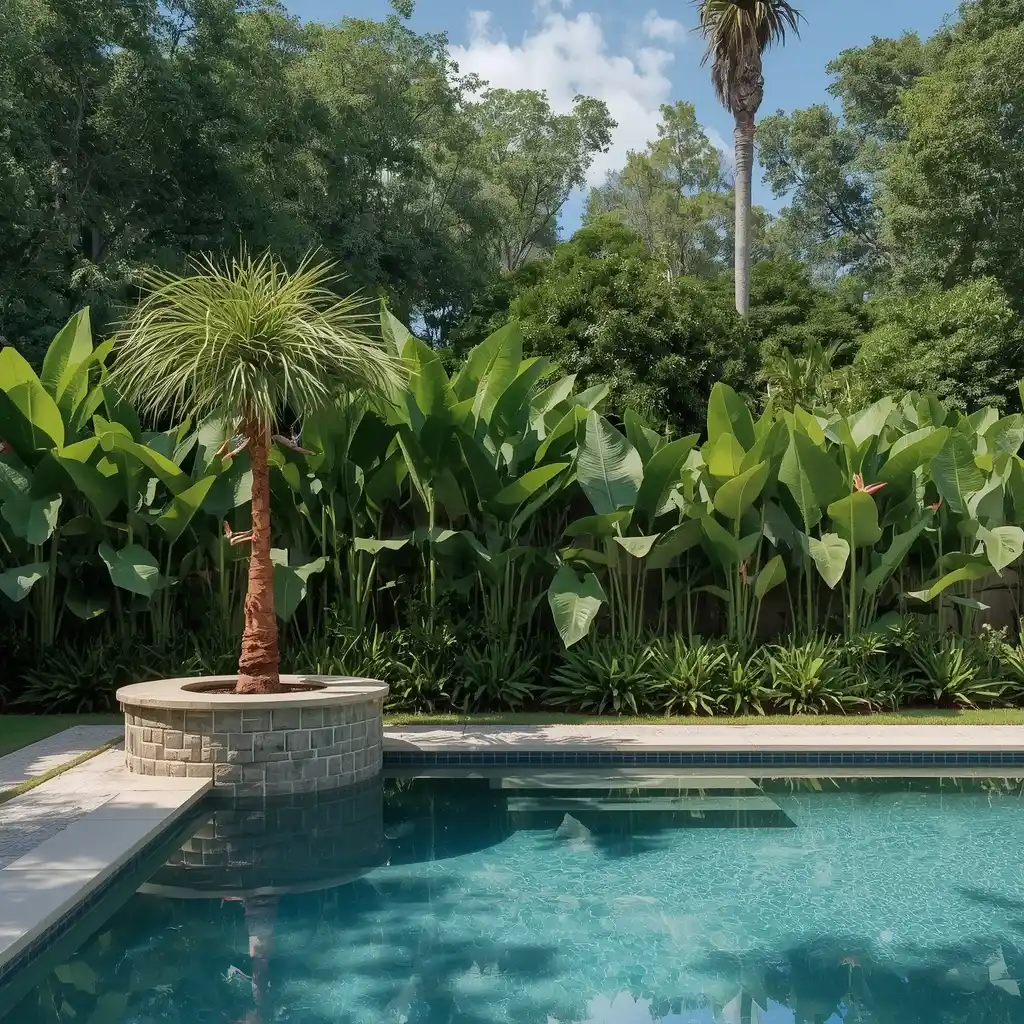
Tropical pool landscaping can make a yard feel private and relaxed. The key is using bold plants without filling every open space.
Start with broad leaves and clear plant shapes. Repeat the same plants across the area so the design feels connected.
Possible options include:
- Bird of paradise
- Canna
- Elephant ear
- Hibiscus
- Banana plants
- Compact palms
Warm climates may support these plants in the ground. In colder areas, grow tender plants in large containers. You can move them to a protected place before winter.
Check the mature size before planting. Banana plants and elephant ears can become much larger than expected.
Also check whether the plants are safe for your pets. Some common outdoor plants can cause problems if eaten.
Avoid mixing too many tropical plants in one small bed. Choose three to five types and repeat them.
A simple group may include one compact palm, several broad-leaved plants, and a low border. This creates a lush look while keeping paths and seating areas open.
7. Replace Difficult Lawn With Gravel or Stone
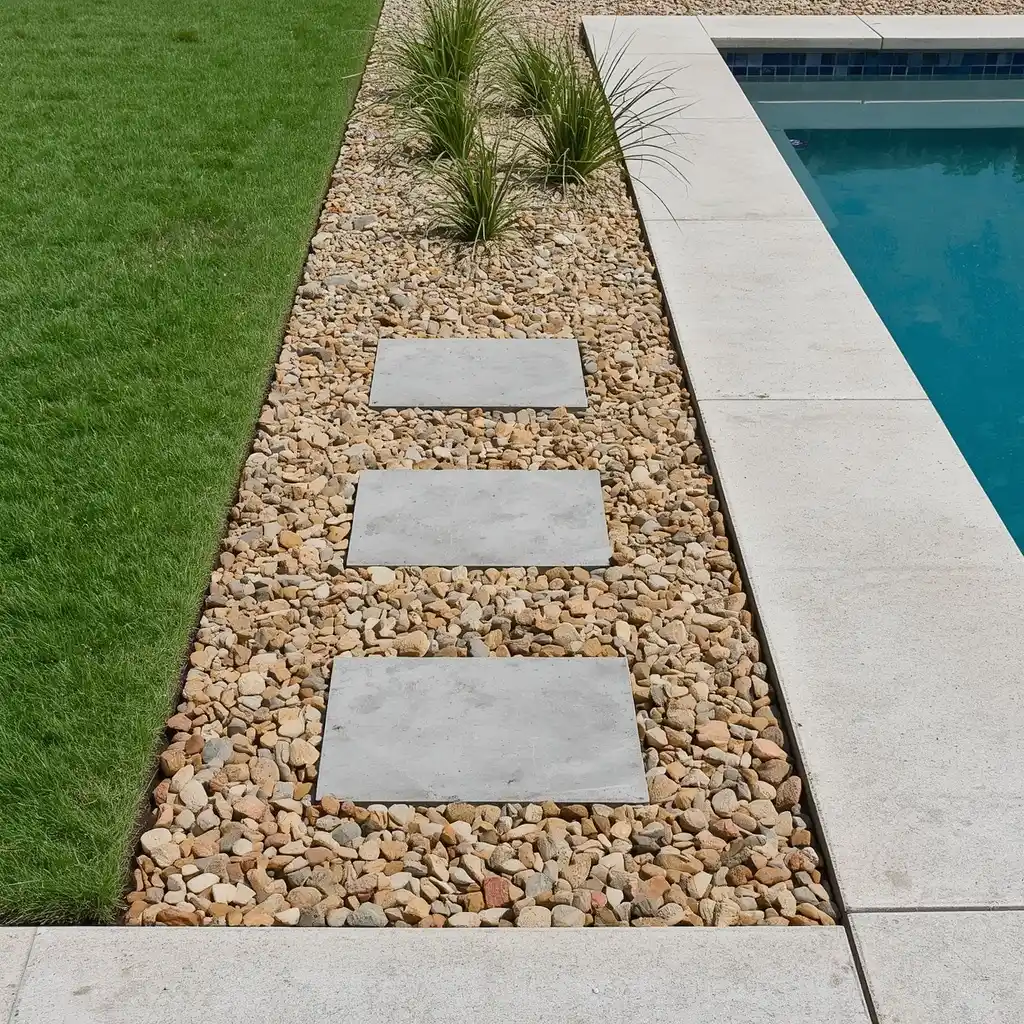
Grass beside a pool can become muddy, worn, and hard to mow. Water from swimmers may keep the edge wet. Lawn clippings may also end up in the pool.
Gravel or decorative stone can solve these problems.
Common options include:
- Pea gravel
- River rock
- Decomposed granite
- Decorative crushed stone
- Large pavers with gravel joints
Choose a material that feels safe around bare feet. Some crushed stone has sharp edges. Dark stone can also become very hot in full sun.
Install strong edging between the stone and the pool deck. This helps keep loose pieces out of the water.
Do not place tiny gravel directly beside the coping. It may stick to wet feet and enter the pool.
A stable base can reduce movement and sinking. Weed barrier may also help in some areas, but water must still drain properly.
Rock landscaping around a pool works best in low-traffic zones, side yards, and spaces between planting beds.
For a lower-cost project, replace one problem section of lawn instead of the whole yard.
8. Add Shade Where People Sit and Rest
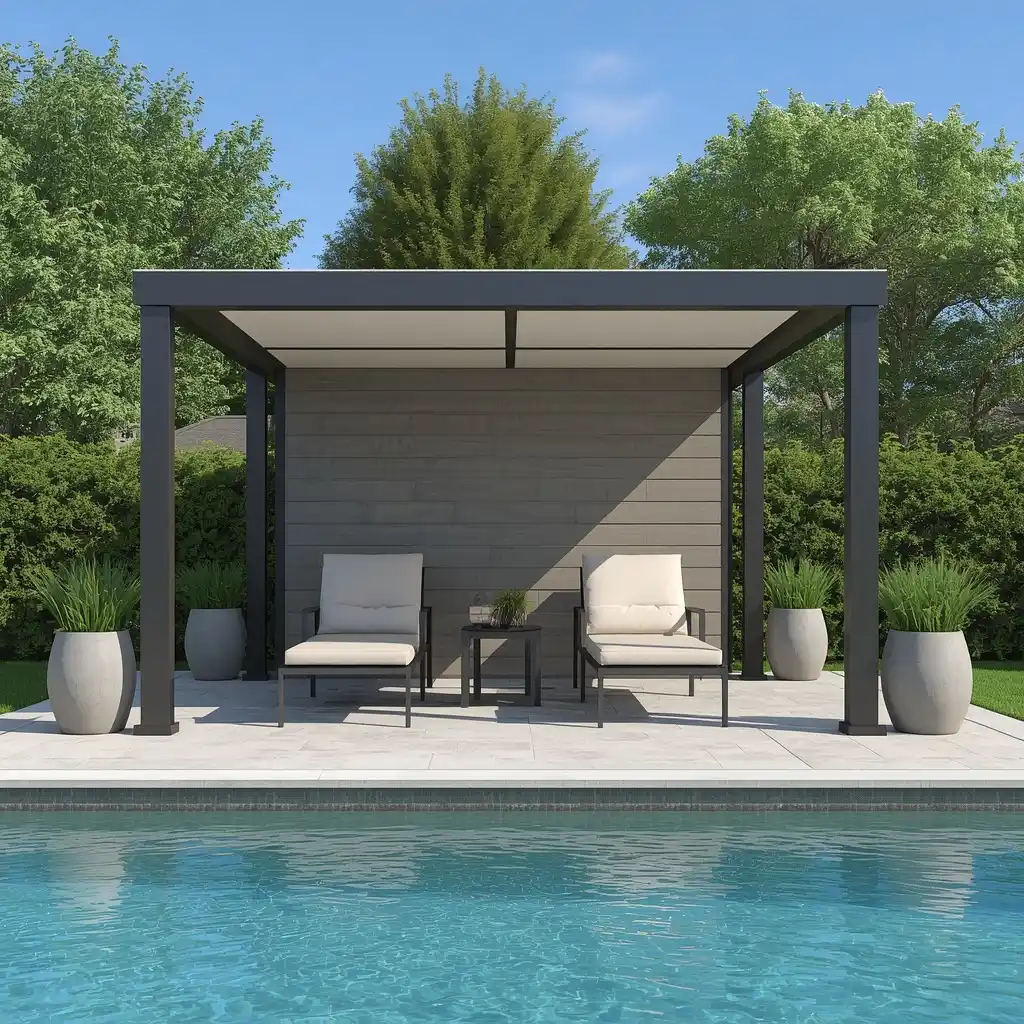
A pool area can become too hot to enjoy during the middle of the day. Shade makes seating, eating, and watching children more comfortable.
You do not need to shade the whole pool. Focus on lounge chairs, dining tables, and conversation areas.
Three common options are:
- A permanent pergola
- A removable shade sail
- A carefully placed small tree
A pergola creates a clear outdoor room. It can support lighting, curtains, or climbing plants. It also costs more and may need local approval.
A shade sail takes up less ground space. It can work well in a small yard. Check the wind rating and use strong support posts.
Trees provide natural shade, but choose them with care. Avoid trees with aggressive roots, messy fruit, weak branches, or heavy leaf drop.
Watch the sun before choosing a location. Check the space in the morning, at midday, and in late afternoon.
Good pool shade ideas should protect people without blocking gates, paths, or important views of the water.
9. Grow Soft Ground Cover Between Pavers
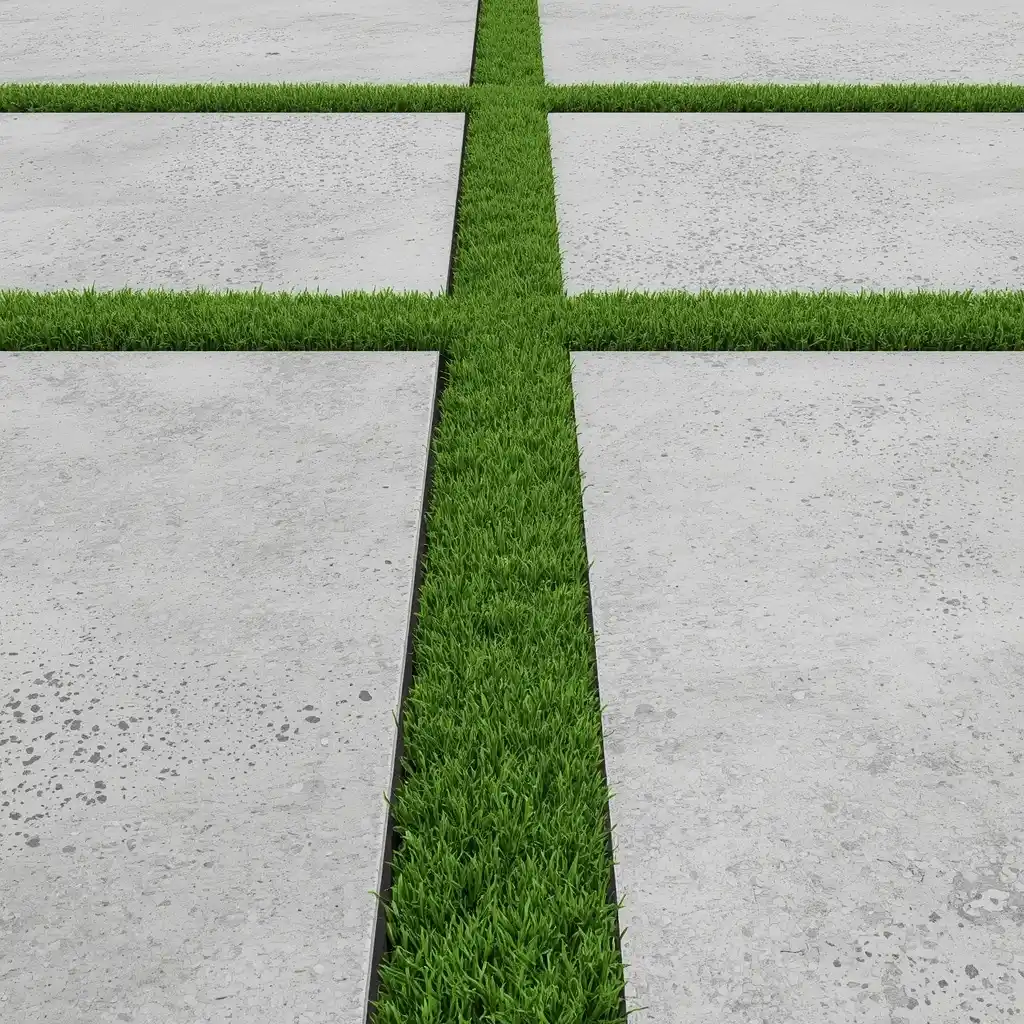
Wide areas of pavers can feel hard and disconnected from the garden. Low ground cover can soften the gaps and add a small amount of color.
Possible plants include:
- Creeping thyme
- Dwarf mondo grass
- Dichondra
- Irish moss
- Low-growing sedum
Your choice should match the local climate and the amount of foot traffic. Some plants handle light steps. Others need a quiet spot.
Use ground cover in low-traffic areas instead of the main path. It should not create a trip risk or make the surface slippery.
Keep the soil level even with the paving. Deep or uneven gaps can catch toes.
Also think about insects. Flowering ground cover may attract bees. That can be helpful in a garden, but it may not suit a busy path beside the pool.
Test a small area before filling every gap. Watch how the plant handles heat, water, and foot traffic.
This idea works best around an inground pool with wide paver areas and good drainage.
10. Install Soft Lighting for Safer Evenings
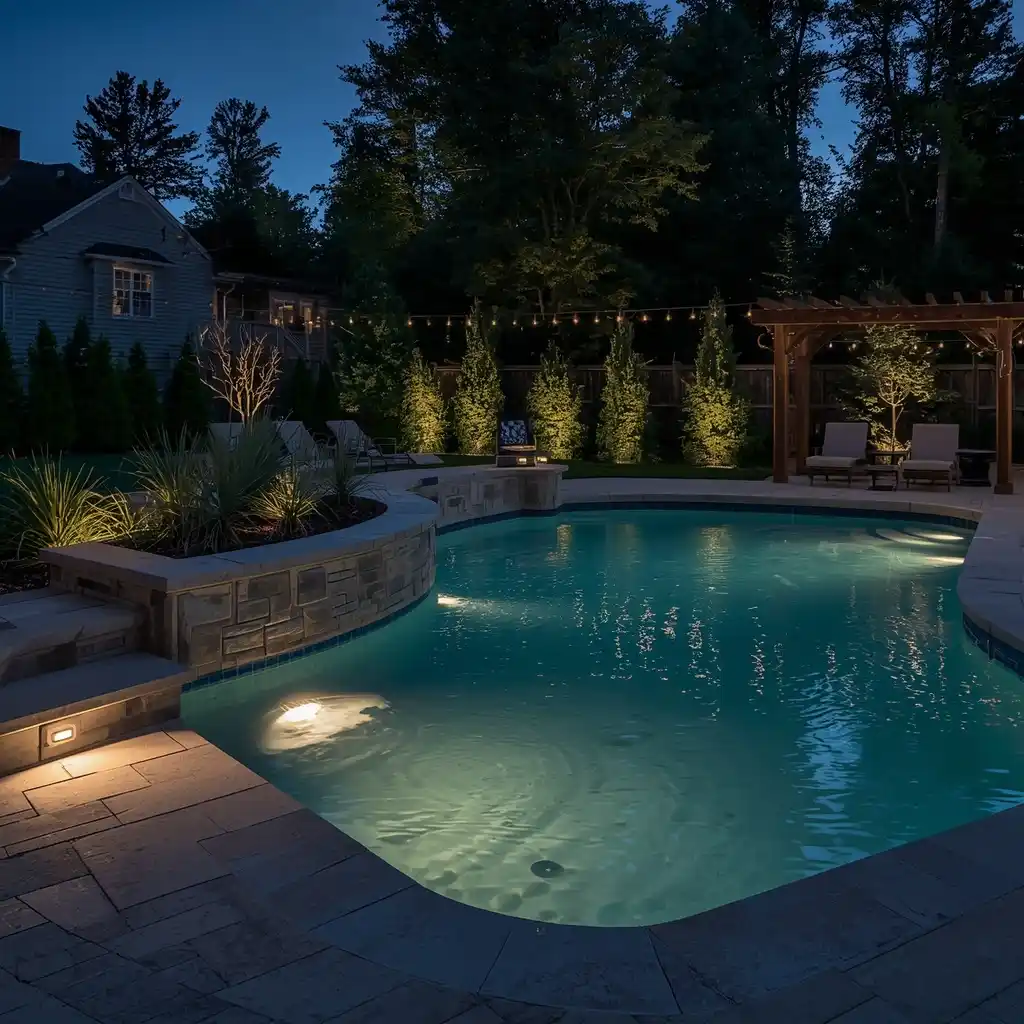
Dark steps, gates, and paths can make evening pool use unsafe. A few well-placed lights can improve visibility and make the area feel warm.
Use several soft lights instead of one bright floodlight. Strong glare can make it harder to see the pool edge.
Focus on five areas:
- The pool gate
- The path from the house
- Steps and level changes
- Seating areas
- Trees or feature plants
Low-voltage path lights work well beside walkways. Step lights can mark changes in height. Under-cap lights can brighten raised walls and benches.
Uplights can show the shape of a tree or tall grass. String lights work well under a pergola.
Choose outdoor-rated products that are made for wet areas. Keep cords away from walking paths and water.
Electrical work near a swimming pool may require a qualified professional. Check local rules before installing permanent fixtures.
Good pool landscaping lighting should improve safety without shining directly into swimmers’ eyes or nearby homes.
11. Build a Clean Path From the House to the Pool
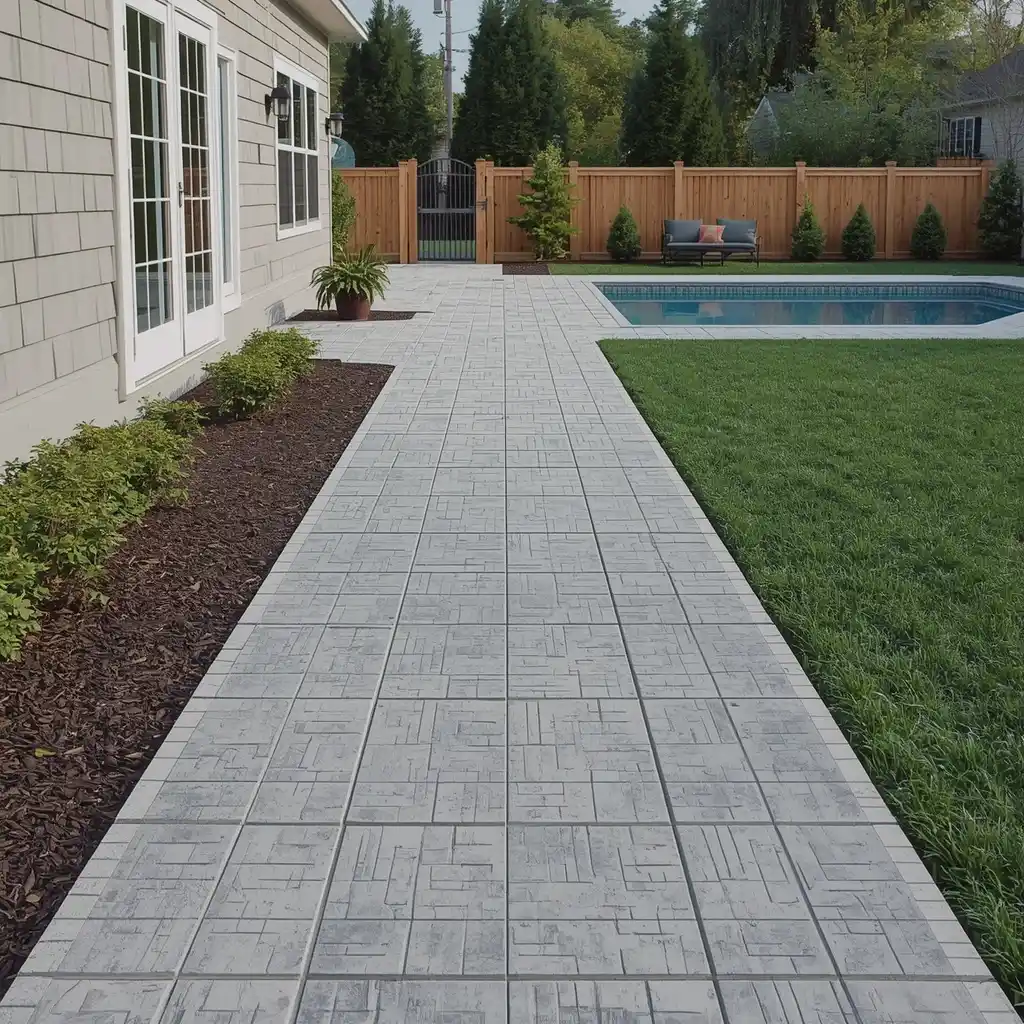
A poor path can bring mud, grass, and dirt into the pool. It can also make the yard feel confusing.
Create one clear route from the back door to the pool area. Connect it to the gate, seating zone, and outdoor shower when possible.
Useful materials include:
- Textured concrete
- Large pavers
- Natural stone
- Composite decking
- Stepping stones with firm joints
Choose a slip-resistant surface. Smooth stone may look attractive, but it can become dangerous when wet.
Make the path wide enough for daily use. People may carry towels, pool toys, food trays, or cleaning equipment.
Avoid sudden changes in height. If a step is needed, make it easy to see with good lighting.
In a small yard, one well-planned path can serve several areas. It may connect the house, a storage box, the seating area, and the pool steps.
Before building, walk the proposed route while carrying a large basket. This simple test can show where the path feels too tight.
12. Set Up a Seating Area That Stays Out of the Way
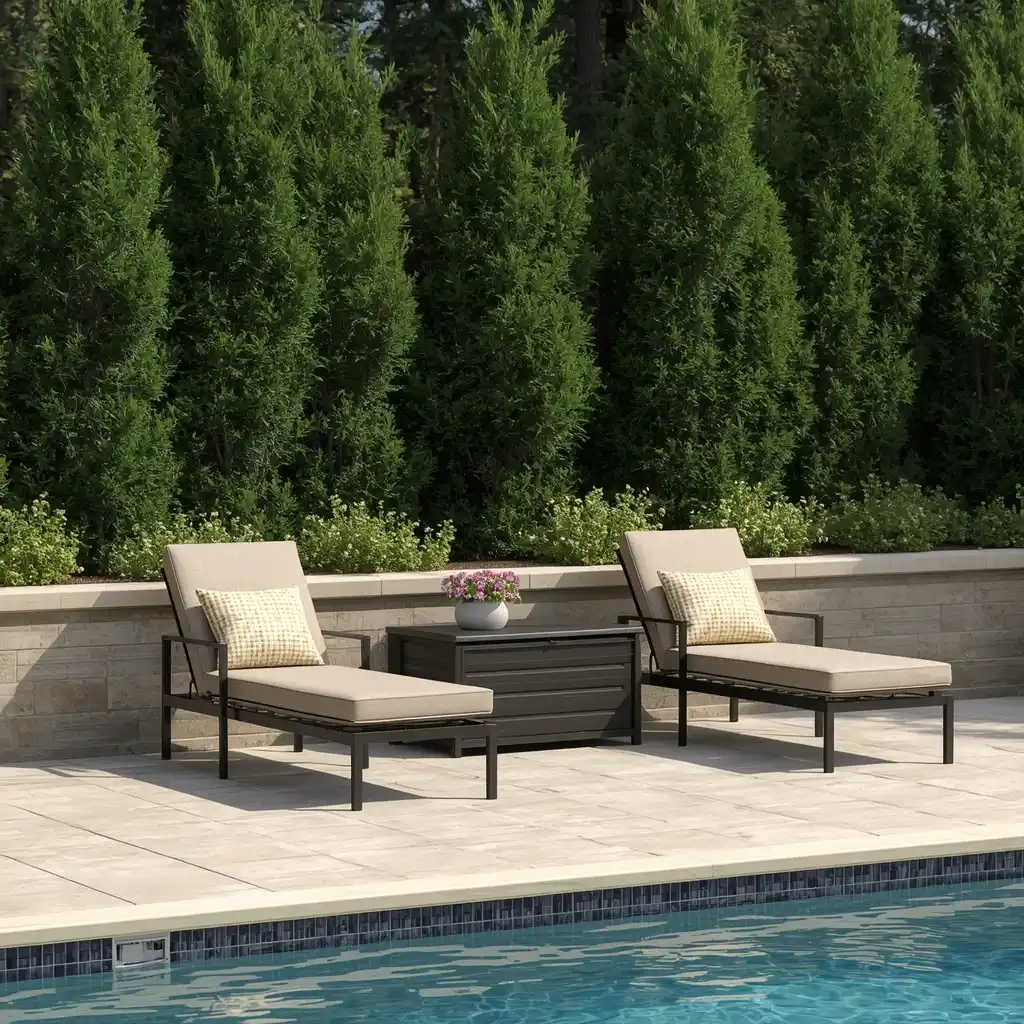
A pool area needs space for people who are resting, watching children, or talking with friends. Without a clear seating zone, chairs often block paths and pool access.
Place furniture away from the main splash area. This helps cushions stay dry and gives swimmers more room.
A simple layout may include:
- Two lounge chairs with a side table
- A built-in bench beside a planter
- A small dining table under shade
- Four chairs around a low outdoor table
Choose outdoor furniture that dries fast. Heavy pieces may stay in place during wind, but they can be hard to move for cleaning.
Add a table or ledge for drinks, sunscreen, and towels. A weather-safe storage box can hold pool toys and spare cushions.
Keep furniture away from gates, ladders, and equipment access. Do not reduce the safe walking space around the water.
Measure the furniture before buying it. Mark its size on the ground with tape. This helps you see how much room will remain.
A clear seating plan makes pool area landscaping feel useful instead of crowded.
13. Cover a Blank Fence With a Vertical Garden
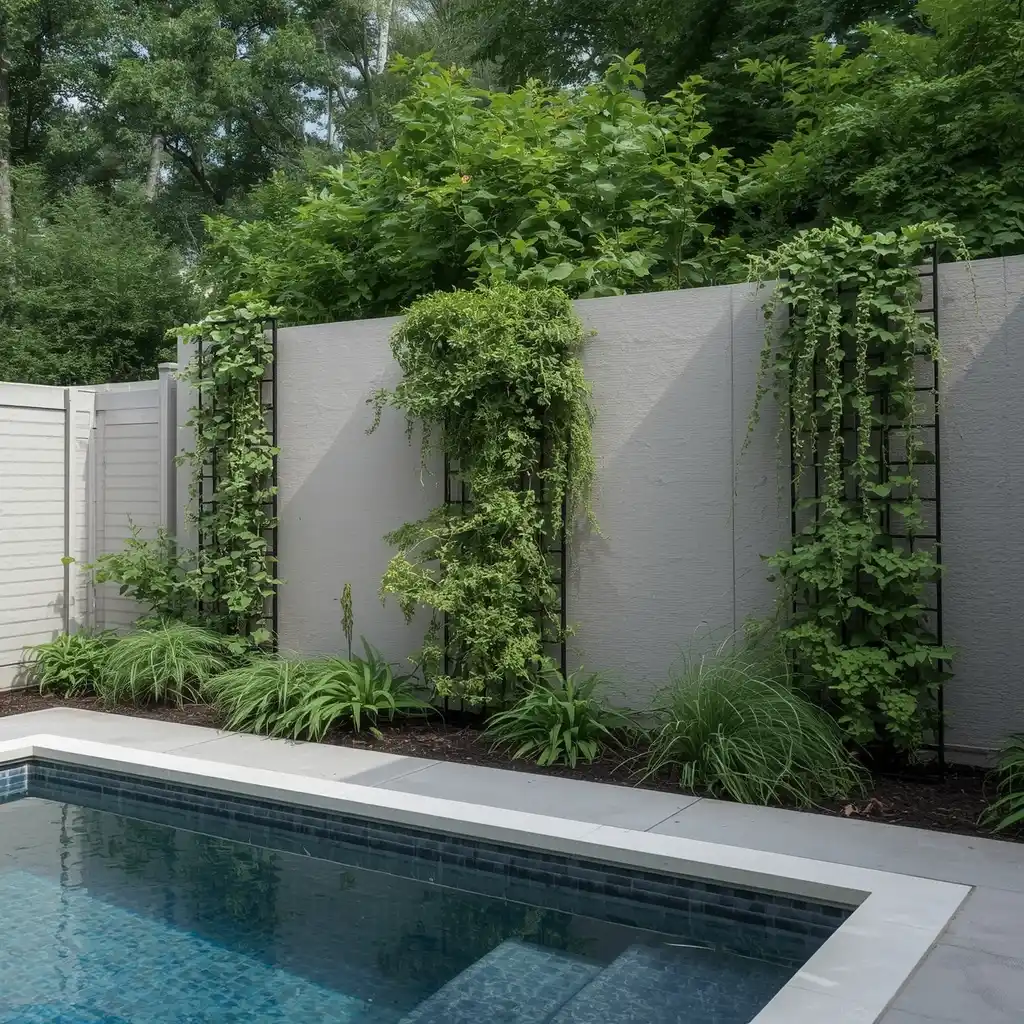
A tall blank fence can make a small pool area feel closed and dull. A vertical garden adds greenery without using much ground space.
You can use:
- A freestanding trellis
- Narrow planter boxes
- Wall-mounted planters
- A modular planting panel
- Controlled climbing plants
A trellis with star jasmine may provide flowers and light screening in a suitable climate. Narrow planters can hold small grasses or trailing plants.
Keep mounted systems away from surfaces that may suffer water damage. Add a liner or air gap when needed.
Watering can become difficult when plants sit at different heights. A drip system can make care easier.
Choose vines carefully. Some plants spread fast or damage wood fences. Others become heavy and need strong support.
Do not place a thick vertical garden where it blocks airflow or access.
This idea works well for small pool landscaping because it adds color and privacy without making the deck narrower.
14. Make an Above-Ground Pool Feel Part of the Yard
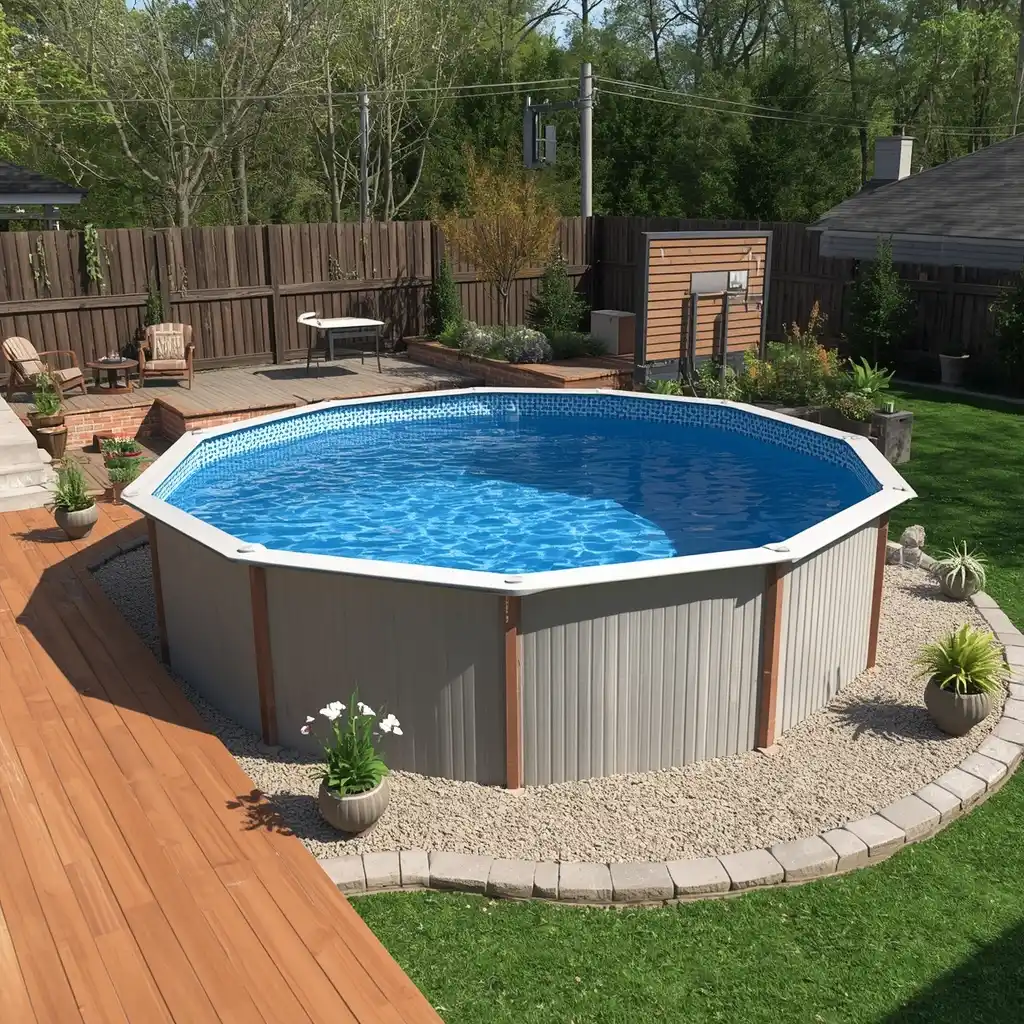
An above-ground pool can look separate from the rest of the backyard. Decking, plants, and matching materials can help it fit the space.
Start with a simple gravel border. Add a few large pots or a narrow planting bed. Keep soil and mulch away from the pool wall.
For a medium project, build a partial deck near the steps. This creates an easier entry point and space for two chairs.
A larger plan may include a full deck, privacy screen, lighting, and planting beds.
Three project levels are:
- Gravel with potted plants
- Partial decking with a seating zone
- A full surround with plants and screens
Leave clear access to pumps, filters, drains, and support parts. Do not cover areas that need regular checks.
Repeat materials already used near the house. A deck that matches the patio will make the pool feel connected to the yard.
Above-ground pool landscaping can be completed in stages. Start with safe access, then add privacy and decorative features.
15. Add One Focal Point to Pull the Design Together
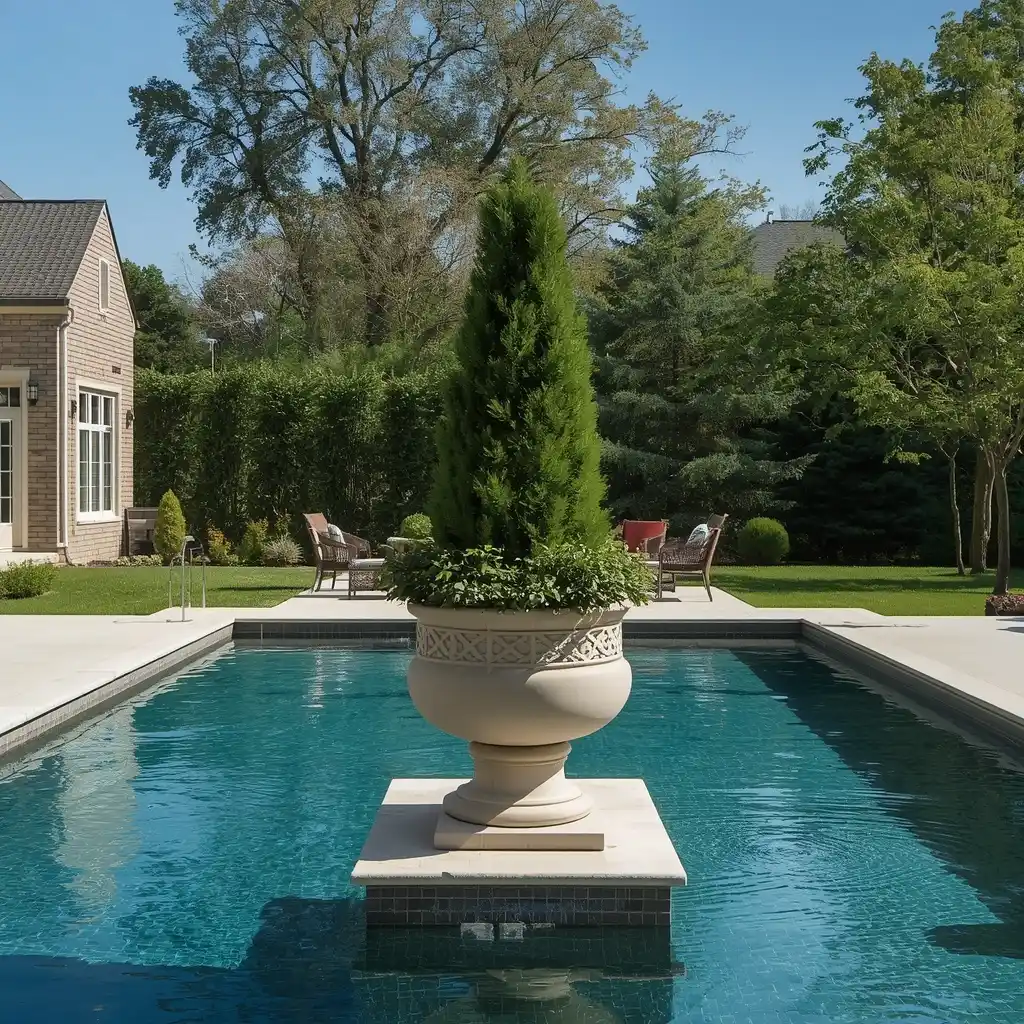
Some pool areas have plenty of furniture and plants, yet they still feel unfinished. The problem may be a lack of one clear focal point.
A focal point gives your eyes a place to rest. It also helps the whole plan feel more organized.
Possible features include:
- A large decorative planter
- A specimen tree
- A stone wall
- A small water feature
- Outdoor art
- A fire bowl placed at a safe distance
Choose a feature that matches the size of the yard. A large wall may overwhelm a small pool. A tiny planter may disappear in a wide space.
Place the feature where people naturally look. This may be the far end of the pool or the main view from inside the house.
Check the maintenance needs before buying. Water features may need cleaning. Fire features may need fuel, permits, and safe clearances.
Do not add several features that compete for attention. One strong choice often looks better than five small ones.
How to Choose Pool Landscaping Ideas for Your Budget
You do not need to rebuild the whole yard at once. Choose projects based on your main problem and the money you can spend.
Low-Cost Changes
Start with tasks that use the current layout:
- Move furniture to create a clear seating area
- Add two large matching pots
- Use gravel in one muddy section
- Paint or screen an unattractive fence
- Add simple path lighting
- Divide and move plants you already own
These changes can improve the space without major building work.
Mid-Range Projects
A larger budget may cover:
- Raised planters
- A shade sail
- A paver path
- A vertical garden
- New privacy plants
- A partial deck for an above-ground pool
Price soil, delivery, drainage, and labor before starting.
Higher-Cost Projects
Large projects may include:
- A permanent pergola
- Custom seating
- A feature wall
- Permanent outdoor lighting
- A full pool deck
- Major drainage work
Complete the work in phases if needed.
A smart order is:
- Fix drainage and unsafe paths.
- Add privacy and shade.
- Finish with plants, pots, and lighting.
This keeps pool landscaping on a budget focused on changes that solve real problems first.
8 Pool Landscaping Mistakes That Create More Work
An attractive choice can still cause long-term trouble. Review each idea based on cleaning, safety, and future plant size.
1. Planting Messy Trees Beside the Water
Flowers, berries, bark, and leaves may fill the pool.
Choose a low-litter plant and place it farther from the deck.
2. Using Thorny Plants Near Paths
Sharp leaves and thorns can scratch people.
Keep these plants in areas where swimmers will not brush against them.
3. Blocking Pool Equipment
Plants and walls may look better when they hide pumps. Still, you need space for repairs and cleaning.
Use a removable screen or leave a service path.
4. Choosing Slippery Paving
Polished stone can become dangerous when wet.
Test samples with water before buying a large amount.
5. Ignoring Drainage
Standing water can damage beds and create muddy paths.
Watch the area after heavy rain before changing the layout.
6. Forgetting Mature Plant Size
A small shrub may grow across a path in two years.
Read the mature height and width on the plant label.
7. Mixing Too Many Materials
Several types of stone, wood, tile, and metal can make the yard feel busy.
Repeat two or three main materials across the space.
8. Placing Loose Mulch Beside the Pool
Bark may wash onto the deck and into the water.
Use gravel, ground cover, or firm edging near splash areas.
Frequently Asked Questions About Pool Landscaping
What Plants Are Best Around a Pool?
The best plants are soft, low-litter, and suited to your local climate. Look for controlled roots and simple care needs.
Good choices may include podocarpus, dwarf mondo grass, compact palms, pittosporum, and selected ornamental grasses. Ask a local nursery which options perform well in your soil and weather.
What Is the Cheapest Way to Landscape Around a Pool?
Start with one problem area. Add gravel to a muddy edge, move current furniture, reuse pavers, or place two large pots near the pool steps.
You can also divide plants from other parts of the yard. Complete the work in small phases instead of buying everything at once.
How Can I Add Privacy Around My Pool?
Use a mix of tall plants, medium shrubs, and low grasses. A freestanding screen or trellis can provide faster cover while plants grow.
In small spaces, use narrow evergreen plants or a vertical garden. Check local fence and pool barrier rules before adding a solid screen.
What Should I Avoid Planting Near a Pool?
Avoid plants with thorns, aggressive roots, messy fruit, heavy flower drop, or weak branches. You may also want to avoid plants that attract many insects beside lounge chairs.
Check the mature size before planting. Keep large trees away from paving, pipes, and pool walls.
How Do You Landscape a Small Pool Area?
Use narrow beds, large pots, vertical planting, and built-in seating. Choose a small number of materials and repeat them.
Keep the main path open. Avoid filling every corner with plants or furniture. The best pool landscaping ideas for a small yard make the area feel calmer, cleaner, and easier to use.
Start With the Pool Problem That Bothers You Most
Good pool landscaping should make your yard easier to use. It should improve privacy, shade, safety, comfort, and cleaning.
You do not need all 15 ideas. Start with one or two changes that solve your main problem.
Sketch the area before buying anything. Mark paths, sunny spots, wet areas, and equipment access. Then choose plants and materials that fit your climate and budget.
Check mature plant sizes and local safety rules before starting major work.
The best pool landscaping ideas do more than improve the view. They help you create a pool area that feels comfortable, practical, and connected to your home.